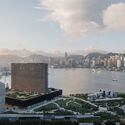
Happy 63rd Birthday Pierre de Meuron

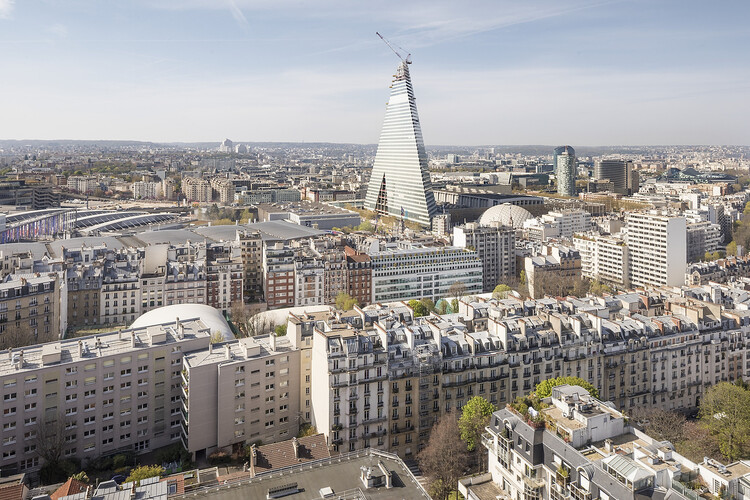
Pierre de Meuron, founding partner of internationally-renowned architecture firm Herzog & de Meuron was born on this day in 1950. Throughout the course of his career, he and Jacques Herzog have developed a reputation (in the words of ArchDaily founder David Basulto for being “one of the few practices pushing new forms on architecture. They always start with something vernacular, extracting its inner essence and materializing it into something new that you will immediately understand”.
Most descriptions of the work of Herzog & de Meuron sound almost paradoxical: in one paragraph they will praise the firm’s dedication to tradition and vernacular forms, and in the next they will describe their thoroughly modern innovation. However, in the hands of Herzog & de Meuron this is no paradox, as they combine tradition and innovation in a way that the two elements actually enhance each other.
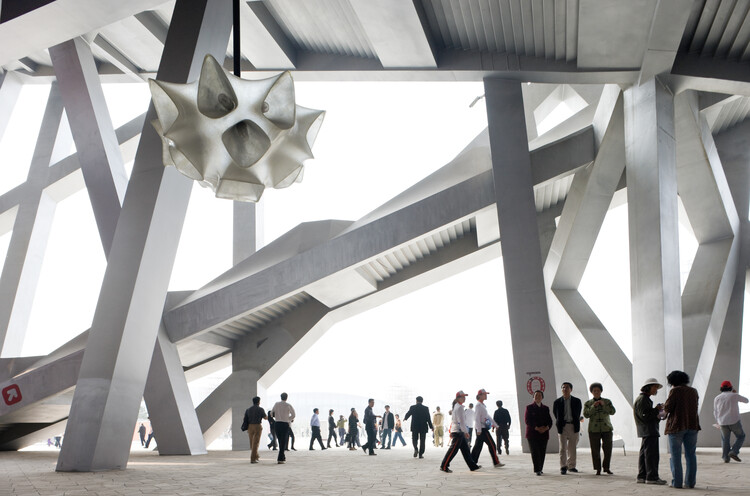
Pierre de Meuron and Jacques Herzog were awarded the Pritzker Prize in 2001, and since have only gotten better, producing some of their most recognizable works in the past 12 years: after their 2000 design of London’s Tate Modern, they have added its recent extensions; their VitraHaus is among best known components of the outstanding Vitra Campus; their Bird’s Nest Stadium was the outstanding element of the 2008 Beijing Olympics; and they offered one of the most memorable incarnations of the Serpentine Pavilion last year.
On the occasion of Pierre de Meuron’s 63rd birthday, we invite you to look over just part of his firm’s astounding body of work, after the break:
Herzog & de Meuron to Design the National Library of Israel

After carefully considering six international architecture firms – Ammar Curiel; Frank Gehry; Herzog & de Meuron; Kimmel Eshkolot, Kolker Kolker Epstein and Renzo Piano – an esteemed selection committee has chosen Herzog & de Meuron to design the new National Library of Israel in Jerusalem. The result comes after a controversial first attempt that ended in the dismissal of the initial competition winner for alleged copyright infringement.
More information after the break…
Parking Is Hell (But Designers Can Help)

Most parking is free – but that doesn’t mean it doesn’t have a high cost. A recent podcast from Freakonomics Radio (which you can listen to at the end of this article) examined parking in US cities, investigating the “cost of parking not paid for by drivers” – a cost paid not just by the government, but by the environment – due to congestion and pollution caused by people searching for kerbside parking. For example, in a 15 block area of Los Angeles the distance traveled by drivers looking for parking is equivalent to one trip across the USA per day.
One potential solution which they discuss is a San Francisco project called SF Park, which makes use of sensor technology to measure the demand for parking in certain areas of the city and adjust price according to demand. In theory, this would create a small number of empty spaces on each block and dramatically reduce the time that many drivers spend cruising for parking spaces.
Though the idea is certainly an intelligent approach to the problem of kerbside parking, unsurprisingly all this talk of supply, demand and pricing sounds very much like an economist’s answer to a problem. But what can designers do to help the situation?
Perhaps, from the designer’s point of view, the real problem with kerbside parking and surface lots is that they are always seen as a provision “coupled with” a building or area of the city. There have been a number of attempts by architects – some successful and some tragically flawed – to make parking spaces less of a rupture in a city’s fabric and more of a destination in themselves. Could these point to another way?
Read about 3 examples of parking’s past, and one of its potential future, after the break…
Herzog & de Meuron Breaks Ground on ‘Grand Stade de Bordeaux’

Nearly two years after unveiling the design to the public, Herzog & de Meuron broke ground this morning on the new ‘Grand Stade de Bordeaux’ in France. Surrounded by lush vegetation typically found in this green belt district, the stepped concourse transitions visitors through a forest of slender white columns to the stadium’s bowl, whose form ensures maximum flexibility and optimal visibility for all 43,000 spectators.
Completion is set for 2015, just in time to host the Euro 2016 football championship.
The architect’s description after the break…
Herzog & de Meuron Breaks Ground on Public “Bathing Lake” in Riehen

In 1979, just a year after founding their practice, Herzog & de Meuron won a competition to design a public swimming pool for the Swiss municipality of Riehen. After developing several unrealized iterations over the following years, the project was put on hold indefinitely in 1982. Twenty-five years later, in 2007, Herzog & de Meuron were commissioned to rethink the project and proposed to abandon the conventional pool concept with its mechanical and chemical water treatment systems in favor of a pool closer to natural condition with biological filtration.
Architects Selected for Competition to Design Nobel Prize’s New Home

Out of 140 architects considered, 12 architects have been selected by the Nobel Foundation to compete to design their new home, a Nobel Center in Blasieholmen, Stockholm. The conspicuously European selection, chosen for their “design and artistic abilities and experience working in intricate urban environments,” includes some very big names – including BIG, David Chipperfield Architects, Herzog & de Meuron, and OMA. The only non-Europeans to compete will be SANAA’s Kazuyo Sejima and Ryue Nishizawa.
See the full list of competitors, and more information on the competition, after the break…
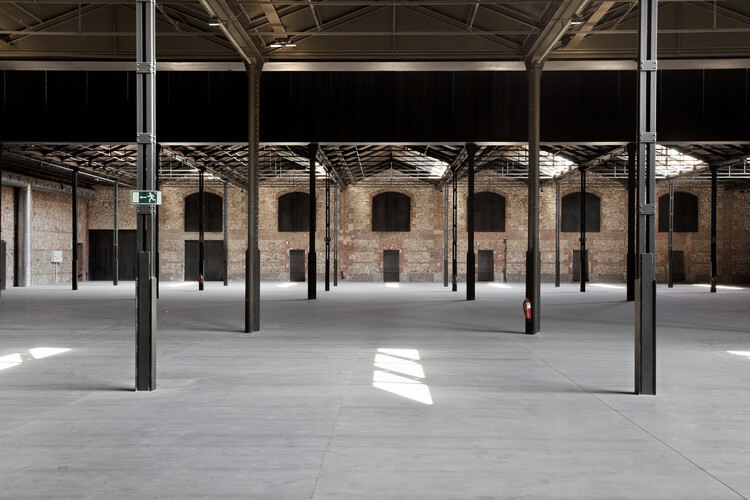
Messe Basel New Hall / Herzog & de Meuron

Architects: Herzog & de Meuron
Location: Basel, Switzerland
Partners: Jacques Herzog, Pierre de Meuron, Stefan Marbach (Partner in Charge), Wolfgang Hardt
Client: MCH Swiss Exhibition (Basel) Ltd.
Area: 83,297 sqm
Year: 2013
Photographs: Courtesy of Messe Basel
Herzog & de Meuron’s Elbphilharmonie to be Completed by 2017

Sitting idle since November 2011, Herzog & de Meuron’s long-running Elbphilharmonie concert hall in Hamburg, Germany, has left residents wondering when will the music ever begin?
First envisioned back in 2003, the enormous crystalline glass structure stands nearly complete on top a historic warehouse on the edge of the River Elbe. Rising costs, delayed schedules and legal issues with the contractor, have plagued this magnificent concert hall with controversy. However, according a report in the German news magazine Der Spiegel, contractor Hochtief has initiated a new deal to ensure the completion of the building.
A revised contract, which is expect to adjust the architect’s fee’s to €94 million (€17 million over the original project cost), has projected Elbphilharmonie will be completed within the next four years. The news is bittersweet, as the architectural community and the residents of Hamburg have been waiting years for this highly anticipated concert hall to be complete, yet they cringe at the news of an overblown €575 million price tag.
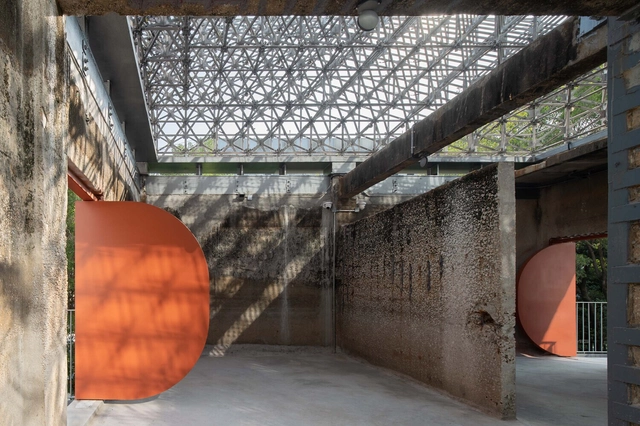
Ruins of an Alternate Future (Jinhua Architecture Park)

Originally published on the author’s website and blog on Archinect, ‘Ruins of an Alternate Future (Jinhua Architecture Park)’ was written by Shanghai-based architectural designer and theorist Evan Chakroff.
One of the great, if seldom realized, promises of architecture is its capacity to affect change. The best architects seem to have this potential in mind constantly as they structure career-length narratives around the social impact that good design can achieve. While this is often hyperbole, and most projects are driven by functional or economic considerations, there is the occasional opportunity for artists and architects to create purely speculative work, where radical departures from established typologies suggest alternatives to the status quo. In these rare cases, novelty is embraced not for its own sake, but for its potential to generate new archetypes, to provide a glimpse into a parallel world where architecture truly has agency: where design can change society for the better.
Continue reading after the break…
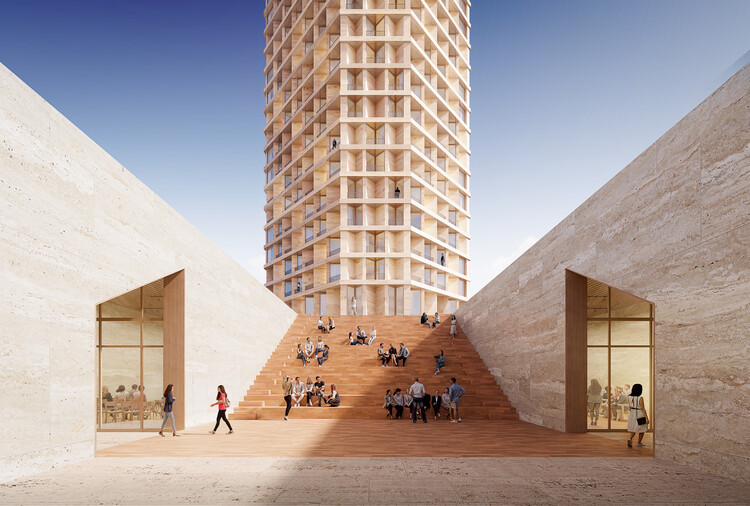
Herzog & de Meuron to Design Residential High-Rise in London

An impressive team has been pieced together by Canary Wharf Group to design portions of the first phase for the Wood Wharf development in London’s major business district of Tower Hamlets. Already home to some of the UK’s tallest buildings, Canary Wharf has announced its plan to add a Herzog & de Meuron-designed residential high-rise to its glowing skyline on a redeveloped eight-hectare site.
Ascan Mergenthaler, senior partner at Herzog & de Meuron stated, “The new high-rise building will mediate between the city and the individual, the public and private, and will inject a new component of daily residential life into the evolving mixed-use Canary Wharf district. It will be both a symbol and the heart of the new Wood Wharf urban quarter, an extension of a dynamic global community and the start of a new vibrant neighborhood.”
See who else has been commissioned to partake in the first phase of the Canary Wharf development after the break.
Despite Controversy, Herzog & de Meuron’s Porta Volta Breaks Ground

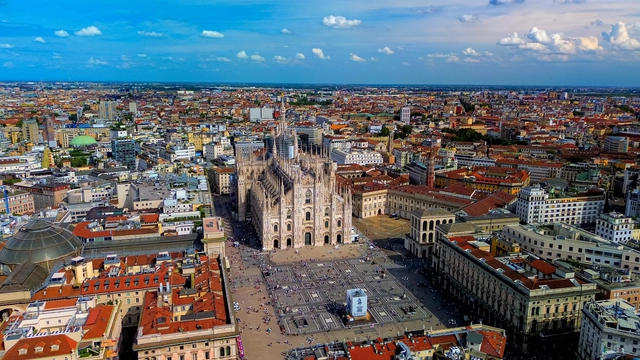
After two years in waiting, Porta Volta, the project by Swiss firm Herzog & de Meuron to redevelop Milan’s north-western Spanish gate, has finally broken ground. The project, which spurred some controversy when architect and critic Vittorio Gregotti accused the Swiss-led project of being an act of “architectural colonialism,” is nevertheless scheduled to be completed in 2015.
According to Herzog, the 2,500 sqm project, which consists of Fondazione Giangiacomo Feltrinelli’s 7,500 sqm Headquarters and 15,000 sqm of greenery, is “intrinsically” Milanese, having been inspired by “the Gothic tradition that is expressed in important buildings in the city of Milan [and the] farms that dot the landscape of slender Lombardy.”
Story via Herzog & de Meuron
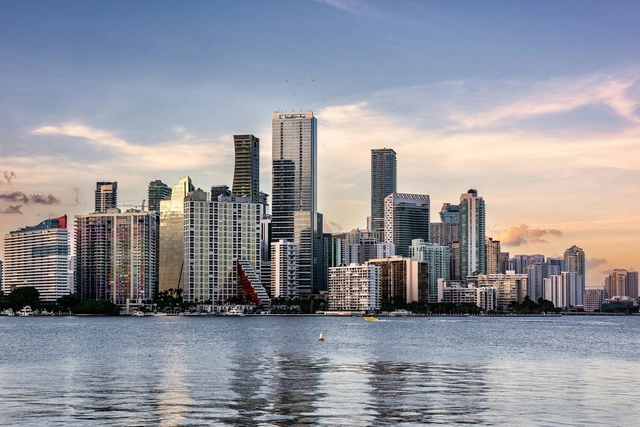
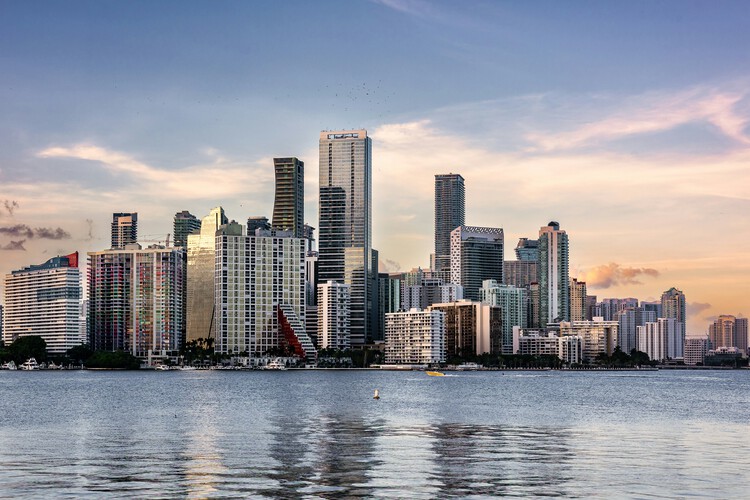
Miami: America’s Next Great Architectural City?

Miami, Florida is booming with new architectural projects by big names: everything from new condominums by BIG,to the new Miami Beach Convention Center. So why are so many big projects migrating to Miami Beach? The city is turning itself into an American cultural and civic center.
Join us after the break for more.
Video: 1111 Lincoln Road / Herzog & de Meuron
One of the centers of cultural and civic life, the 1111 Lincoln Road project by Herzog & de Meuron is featured in the video above, made by Elizabeth Priore. This project was chosen as it has changed people’s perception about what a utilitarian structure can be; and has ignited conversations worldwide about its design and use. This garage has reshaped the urban fabric of the city and people are going there to get married, relax, and enjoy a cocktail. The video is a Semifinalist in the $200,000 FOCUS FORWARD Filmmaker Competition and is in the running to become the $100,000 Grand Prize Winner. More information after the break.
Parrish Art Museum / Herzog & de Meuron

Architect: Herzog & de Meuron
Location: Water Mill, Long Island, New York
Client: Parrish Art Museum
Photos: Matthu Placek
Herzog & de Meuron’s 56 Leonard Street Restarts After a 4 Year Delay

ArchDaily’s previous coverage of Herzog & de Meuron‘s 56 Leonard Street was around the time when construction was just about to begin. Now four years later, construction seems about ready to restart, according to bdOnline. Join us after the break for more details.
One Week Left of the Serpentine Pavilion!

The summer months have come and gone, which means one thing: the Serpentine Gallery Pavilion is winding to an end (on October 14th, to be exact)!
This year’s underground pavilion was designed by Herzog & de Meuron and Ai Weiwei as a kind of archaeological discovery of pavilions past. As they explain: “Like a team of archaeologists, we identify [the] physical fragments as remains of the eleven Pavilions built between 2000 and 2011. […] These remains testify to the existence of the former Pavilions and their greater or lesser intervention in the natural environment of the park.”
Although most of the public events that made up the Park Nights programme have already occurred (including a showing of the incredible documentary on Ai Weiwei and a talk by Herzog & de Meuron), you can still catch the culminating event of the Pavilion, the Memory Marathon (October 12-14), which kicks off with Lebanese sound artist Tarek Atoui performing La Suite. The three-day, multi-disciplinary festival will feature over 60 participants, including former REM vocalist Michael Stipe, filmmaker David Lynch (who will present a new film), and the Pavilion architects, Herzog and de Meuron themselves.
For more info, check out our past coverage on the Serpentine Gallery Pavilion.
Venice Biennale 2012: Elbphilharmonie / Herzog & de Meuron

Herzog & de Meuron’s exhibition at the Biennale is focused on the architecture of a symbolic project, with a complex history: The Elbphilharmonie, a concert hall on top of a former industry in Hamburg, which also includes a 250 room five-star hotel, and 47 apartments. The project, in a very advanced state, remains halted since last year due to legal issues with the contractor.
In the exhibition, the history of the project is documented with three-dimensional representations of the complex building services; camera shots panning through the construction site; and large-scale models, whose spatial and physical presence represent what the architects wished and still wish to foreground: architecture.
Parrish Art Museum Sets Opening Date / Herzog + de Meuron

After a long design process, Herzog & De Meuron’s Parrish Art Museum is set to open the 10th of November. The project marks the first art museum to be built on the East End of Long Island in more than a century, and intends to become a cultural centerpiece as one of the most recognizable architectural landmark in the region. “We could not be prouder of this amazing accomplishment,” Director Terrie Sultan said. “The new building is a beautiful embodiment of the creative legacy of the East End…The Parrish will take its place as a real center for cultural engagement for the entire East End.”
More about the museum after the break.
Video: Goetz Gallery building by Herzog & de Meuron
The Sammlung Goetz, an internationally renowned collection of contemporary art in Munich housed in a purpose-built Herzog & de Meuron building, is home to private collector Ingvild Goetz’s eclectic acquired works of paintings and video projections.
Flashback: Signal Box / Herzog & de Meuron

Architects: Herzog & de Meuron
Location: Basel, Switzerland
Project Year: 1994
Photographs: Nelson Garrido

The Tanks Open / Tate Modern / Herzog + de Meuron

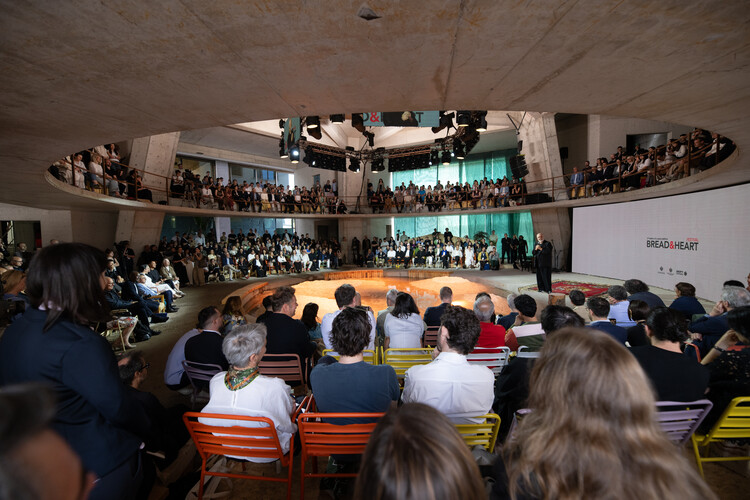
With the success of the Tate Modern (the museum hosts approximately 2 million visitors a year), in 2005, the museum selected Herzog and de Meuron to expand its gallery space by nearly 70%. Since that time, we have shared the transformation of the design which began as an irregularly stacked pyramid of glass boxes to a geometric faceted volume clad in perforated brick. Yet, the expansion plans also include a vital component that is buried underground – the Tanks – which opened earlier this week.
More about the Tanks after the break.