Libeskind Selected to Design Ohio Statehouse Holocaust Memorial

via The Dispatch

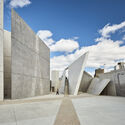
 has been selected among two other renowned artists to design the Ohio Statehouse Holocaust Memorial in Columbus. The 18-foot tall memorial brushed stainless-steel memorial will be punctuated by the six-pointed Star of David and accompanied by a 40-foot walkway with words etched in limestone.

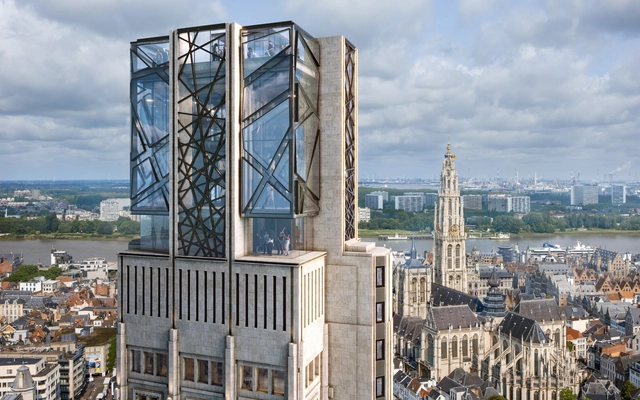
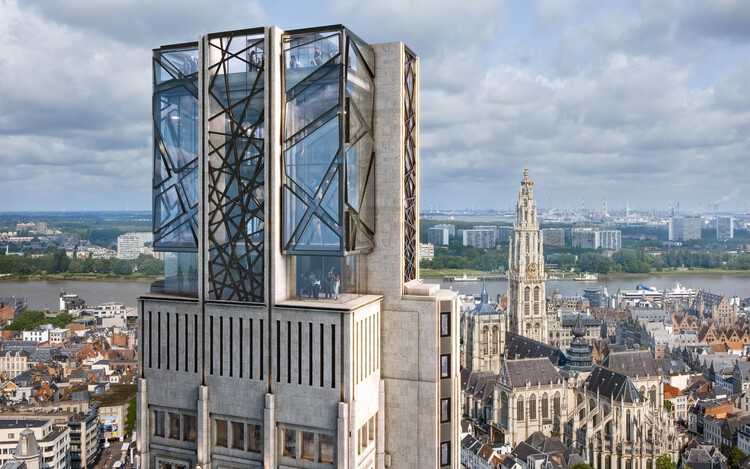
In Progress: Zlota 44 / Daniel Libeskind

© ORCO photo by Krzysztof Wierzbowski

Architects: Daniel Libeskind
Location: , Poland
Architect Of Record: Artchitecture SP ZOO
Area: 804,602 sq ft
Year: 2013
Photographs: ORCO photo by Krzysztof Wierzbowski, Courtesy of

Daniel Libeskind: The Art of Memory Lecture

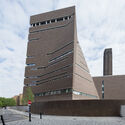
Imperial War Museum North by Studio Daniel Libeskind

A 1970 graduate of Cooper Union‘s architecture program, world-renowned architect Daniel Libeskind will be delivering ‘The Art of Memory’ lecture, a free event, on Tuesday, April 30th, at 6:00pm. The master planner for Ground Zero and the architect of one of Europe’s most visited museums, the Jewish Museum Berlin, will discuss the role that memory played in his work on those projects and others, such as the Danish Jewish Museum in , Denmark; the Imperial War Museum in Manchester, England; the Military History Museum in Dresden, Germany; and the Contemporary Jewish Museum in San Francisco. He will also talk about the acute sense of responsibility he feels, when accepting commissions for projects addressing Jewish history, to create work that honors not only the harsh realities, but also the resilience of the Jewish spirit. For more information, please visit here.

Best Architect-Designed Products of Milan Design Week 2013

Tools for Life / © Ilan Rubin

This week at the 52nd edition of the Salone Internazionale del Mobile in Milan, over 2,500 exhibitors showcased an endless collection of the latest international products and home-furnishing designs. Among them included a variety of elegant and intelligently designed items envisioned by some of our favorite architects. Continue after the break to scroll through a list of the best architect-designed products featured at the .

‘Future of Cities’ Daniel Libeskind Lecture

Courtesy of Washington University in St. Louis

Taking place this coming Tuesday, April 2nd at 6:30pm, Daniel Libeskind, one of the most celebrated architects working today, will be delivering the ‘Future of Cities’ lecture as part of the Assembly Series at Washington University in St. LouisHis presentation, sponsored by the Sam Fox School of Design & Visual Arts and the Architecture Student Council, is free and open to the public and will take place in Graham Chapel. Well known for his Jewish Museum in Berlin, the museum’s radical, strikingly asymmetrical design, is a true icon for the city and the country of He has received numerous awards including the 2001 Hiroshima Art Prize – an award given to an artist whose work promotes international understanding and peace, never before given to an architect. Fore more information, please visit here.

‘Never Say the Eye Is Rigid: Architectural Drawings of Daniel Libeskind’ Exhibition

© Michele Nastasi

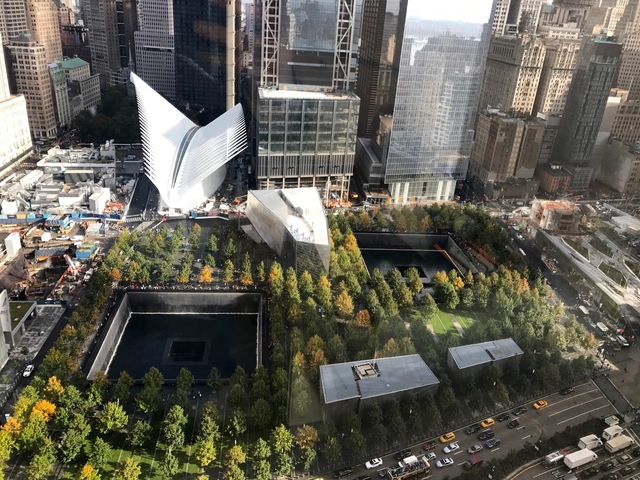
Opening March 11, and on view until April 30, Rome’s Ermanno Tedeschi Gallery (Via del Portico d’Ottavia 7) will offer Never Say the Eye Is Rigid:Architectural Drawings of , the city’s first exhibition of architectural drawings by the world-renowned architect. The exhibition includes 52 original drawings from eight diverse Libeskind projects in , Italy, Poland, United Kingdom and the United States, including the architect’s signature work, the Jewish Museum Berlin (2001), and Memory Foundations, Ground Zero (2003), the master plan for the World Trade Center site. More information on the exhibition after the break.

Libeskind Shortlisted for Ohio Statehouse Holocaust Memorial

Statehouse via Google Maps

Daniel Libeskind is among three semi-finalists competing to design the Ohio Statehouse Holocaust Memorial in Columbus. The privately funded memorial will be built south of the Ohio Statehouse on the grassy 10 acre Capitol Square, just east of the Scioto River.

As stated in the competition brief, “The memorial itself must help everyone who visits and works in the Statehouse understand not just the history of the Holocaust, but also the fact that today we must continue to stand against evil. Artists are asked to create a piece that will serve as a permanent memorial in remembrance of all victims of the Holocaust (1933-1945) and those Ohioans who participated in the liberation of the death camps during World War II. The memorial should provide enlightenment on man’s inhumanity to man and inspire people to think and act differently in the face of discrimination, hatred, antiSemitism and genocide.”

The three semi-finalists are:

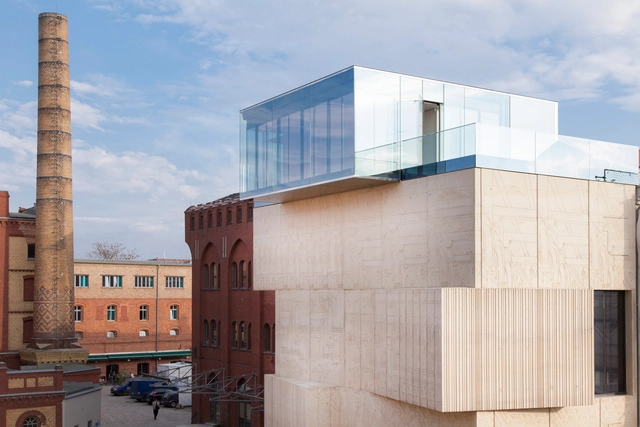
Daniel Libeskind’s Academy of the Jewish Museum Berlin Opens Today

Exterior Rendering; Courtesy of

It’s been nearly twelve years since visitors first experienced the emotionally charged design of ’s Jewish Museum Berlin. Since then, the museum has become an world-renowned icon whose public and education programs have more than doubled in size. With an ever-expanding archive and library, it was decided the museum should be supplemented by an additional facility.

Today, alongside museum officials, Daniel Libeskind celebrates the opening of the Academy of the Jewish Museum Berlin. The facility was created from a former Berlin Flower Market (Blumengrossmarkt), whose shell undergirds the new structure. It’s 25,000 square foot, one story space now houses a library, archives and education center, along with additional office, storage and support space.

A sneak peak and the architects’ description after the break…

Germany’s Leuphana launches Online-University with Urban ThinkTank

’s Leuphana University Lüneburg is venturing into global online learning with the launch of the Leuphana Digital School, a “cost-and-barrier-free” academic platform that offers collaborative web-based learning led by distinguished scholars and experts.

So-called social learning systems are radically changing the field of academic education and setting new standards for the communication of knowledge. Internationally distinguished scientists from the Columbia University New York, the Arizona State University, the School of Economics, the Goldsmiths University of , the Hebrew University of Jerusalem, the ETH Zurich, the Collegium Helveticum and the University of Zurich, the Sun Yat-Sen University Guangzhou and the City University Hong Kong, as well as leading experts from politics, media and economy will be advising students participating in Leuphana’s online-University, starting with the prototype course: “ThinkTank – Ideal City of the 21st Century”.

Renzo Piano is not an architect

© Building Workshop

Well, according to the UK’s Architects Registration Board (ARB) he isn’t.

Last week, received an email from the ARB asking them to refrain from calling Renzo Piano and Daniel Libeskind an architect, since “they are not registered with the ARB they are not entitled to be described as such”.

The statement said: “BD referred to two eminent individuals as architects – neither of whom are on the UK register. This is one of a number of peripheral areas, and architects often contact us when they are concerned about the use of the title ‘architect’ in the press although no breach of the legislation in fact occurs.”

The Emirates Glass LEAF Awards 2012

Musashino Art University Museum & Library, Tokyo /

The results of the 9th Annual Emirates Glass have been announced, honoring the architects designing the buildings and solutions that are setting the benchmark for the international architectural community.

The winners were selected from an impressive shortlist by an international jury of architects that included Irving Brauer (chairman, principal of Brauer Associates), Phil Holden (managing director of Pascall+Watson architects), Lucy Bullivant (architectural curator, critic, author), Paolo Brescia (partner of Open Building Research), and Kasia Fiutowska (founding partner of Sketch Design).

The 2012 award winners are:

Rising from Tragedy: A Conversation with Calatrava, Childs, and Libeskind by Andrew Caruso

1 World Trade Center rendering © SOM / dbox studio

National Building Museum and Metropolis Magazine contributor Andrew Caruso takes you “inside the design mind” of three prominent figures in the rebuilding process with this recent interview conducted at the 2012 AIA National Convention

Heroic. Contemplative. Grieving. Victorious. The rebirth of the former World Trade Center site in lower Manhattan has engendered significant public reaction and reflection. With implications as complex as they are profound, it is not surprising that it has taken more than a decade to heal the urban scars of September 11, 2001.

I had the rare opportunity to sit down with three architects working on the site, Santiago Calatrava, David Childs, and Daniel Libeskind, at the recent American Institute of Architects convention in Washington, D.C., where they were honored along with four others, as “Architects of Healing.” We discussed their experience of reshaping one of the most culturally significant sites in the history of the United States.

AIA 2012: Architects of Healing

Architects of Healing © ArchDaily

After three days of inspirational keynote sessions, informative seminars, exclusive tours, invaluable networking opportunities and an impressive expo, the American Institute of Architects concluded the with a special tribute to the architects responsible for the post- memorials and rebuilding efforts. These “Architects of Healing” tirelessly worked together to transform the darkness of grief brought on by the attacks into the triumph of hope in the wounded areas of Shanksville, Pennsylvania; the Pentagon; and the World Trade Center site. 

TED Talk: Daniel Libeskind’s 17 words of architectural inspiration

Filmed back in 2009, this TED Talk by Daniel Libeskind has yet to diminish in popularity. Once a free-verse poet, an opera set designer and a virtuoso musician, Libeskind has evolved into an internationally-renowned architect with an illustrious style that has been praised and criticized by many. In just seventeen words, Libeskind describes what inspires his unique approach to architecture. Believing that optimism is what drives architecture forward, he begins by stating, “Architecture is not based on concrete and steel and the elements of the soil. It’s based on wonder.”

Enjoy the talk and continue after the break to review Libeskind’s seventeen words of architectural inspiration.

Architecture City Guide: Singapore

Thanks to our readers’ help like, Jonathan Choe, we bring you an Architecture City Guide to . The city’s “recent prosperity and extremely dense urban situation has lead to a wealth of incredible architecture from architects around the world,” says Choe. Today we bring you only 12 buildings as a starting point. Please leave some of your favorites in the comment section below as we intend to expand it in the near future.

To check out other visit our world map or our Architecture City Guide page.
The Architecture City Guide: Singapore list and corresponding map after the break.

Luce/Light by Studio-due

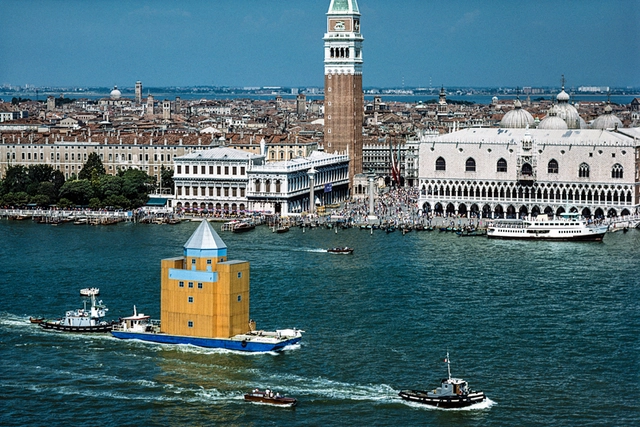
Brought to you by Studio-due, Luce/Light explores four contemporary buildings of concrete, iron, water and glass that share a unique and indissoluble relationship with light. The Italian buildings featured are Fabrica by Tadao Ando, Il Cubo Nero (The Black Cube) by Silvia Dainese Studio + dns dsn, the Nardini Grappa Distillery Bolle by Massimiliano Fuksas and Memoria e Luce ( Memorial) by Daniel Libeskind.

Directed and Edited: Francesco Mansutti
Photography: Daniele Gobbin
Music: Paolo Agostini
Executive Production: Studio Due
Art Direction: Venice International University
Supervision: Anna Guolo, Giulio Bodon
Production: Regione Veneto – Direzione Beni Culturali

Reflections / Daniel Libeskind

Courtesy of Keppel Bay Pte Ltd-a

Architects: Studio Daniel Libeskind
Location: Keppel Bay,
Building Size: 2,000,000 sqm; 1,129 units
Client: Keppel Land International
Architect of Record: DCA Architects PTE LTD
Mechanical/Electrical/Plumbing Engineer: Beca Carter Hollings&Ferner (S.E.Asia) Pte Ltd
Civil Engineer: T.Y. LIN International
Landscape Architect: Hargreaves Associates + Sitetectonix
Completion: 2011
Photographs: Courtesy of Keppel Bay Pte Ltd-a, SDL, VMW Obilia

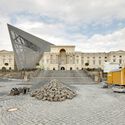
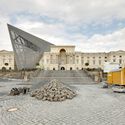
Dresden’s Military History Museum / Daniel Libeskind

© Bitter Bredt Courtesy of

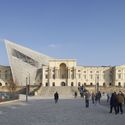
’s Military History Museum opens today in Dresden. “I wanted to create a bold interruption, a fundamental dislocation, to penetrate the historic arsenal …” – , 2011

“It was not my intention to preserve the museum’s facade and just add an invisible extension in the back. I wanted to create a bold interruption, a fundamental dislocation, to penetrate the historic arsenal and create a new experience. The architecture will engage the public in the deepest issue of how organized violence and how military history and the fate of the city are intertwined.”—Daniel Libeskind

Architect: Daniel Libeskind
Location: Dresden, Germany
Text: Provided by Studio Daniel Libeskind
Project Year: 2011
Photographs: Bitter Bredt, Courtesy of Holzer Kobler Architekturen, Courtesy of Studio Daniel Libeskind

Architecture City Guide: Berlin

This week, with the help of our readers, our is headed to . The twentieth century changed nearly all cities, but perhaps none more so than . From its destruction in World War II that left few historic buildings intact to its division until 1989 that brought together the architecture of two competing ideologies into one city, ’s modern and contemporary architecture speaks to a past that seldom accompanies such recent additions. The city is filled with new and wonderful architecture that might not have found space in other cities in Europe. With that in mind, we were unable feature all our readers’ suggestions on the first go around. We will be adding to the list in the near future, so please add more of your favorites in the comment section below. Once again, thanks to all our readers for your help.

The Architecture City Guide: Berlin list and corresponding map after the break.

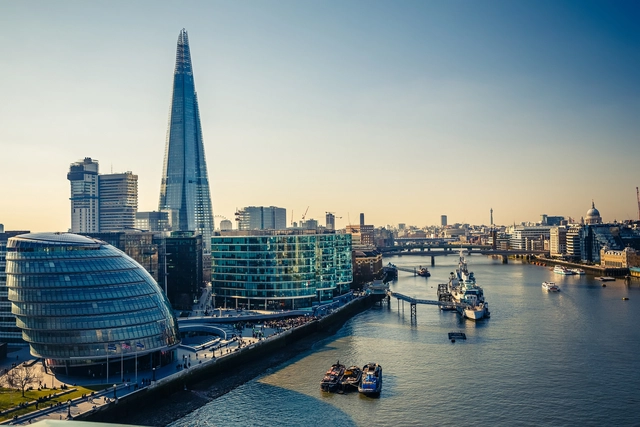
Architecture City Guide: London

This week, with the help of our readers, our is headed to . This is our second stop in Europe, and once again I had to capitulate and double the number of buildings that we normally feature. We could not feature all of the suggestions, and will be adding to the list in the near future. We really appreciate those readers who offered their suggestions and the use of their pictures to make up this list.

Samuel Johnson famously said, “When a man is tired of London, he is tired of life.” As home to a long tradition of kings and queens, the Royal Society, and the roots of the Industrial Revolution, it is not surprising that there is a rich tension and collaboration between the historic and contemporary architecture in London. This reflects a city and culture that has a strong history of celebrating the past while also moving forward. Conflicts often emerge, as the goals of one side clash with those of the other. This relationship, however, is why I find walking the streets of London so appealing - those beautiful moments when history and progress collide.

Once again, thanks to all our readers for your help. We encourage you to add more of your favorites in the comment section below.

The Architecture City Guide: London list and corresponding map after the break.

Architecture City Guide: Copenhagen

This week, with the help of our readers, our is headed to Copenhagen. This is our first stop in Europe, and admittedly the selection was not completely unbiased. While studying at the Danish Building Research Institute a few years ago I couldn’t help but fall in love with Copenhagen’s architecture. The Danish attention to detail is absolutely stunning. Besides the wonderful historic architecture, Copenhagen is filled with contemporary architecture of the highest quality. Remarkably, you rarely find the new clashing with the old. More often than not, the contemporary architecture in Copenhagen actually heightens the experience of the historic buildings and streets. Last week our readers suggested so many great buildings I decided to double the usual number of buildings to 24. This still did not come close to including all the suggestions or even some of my favorites, so we will be looking to expand on this list in the near future. Once again thanks to all our readers for your help. As the list is incomplete please add your favorites in the comment section below.

The Architecture City Guide: Copenhagen list and corresponding map after the break.