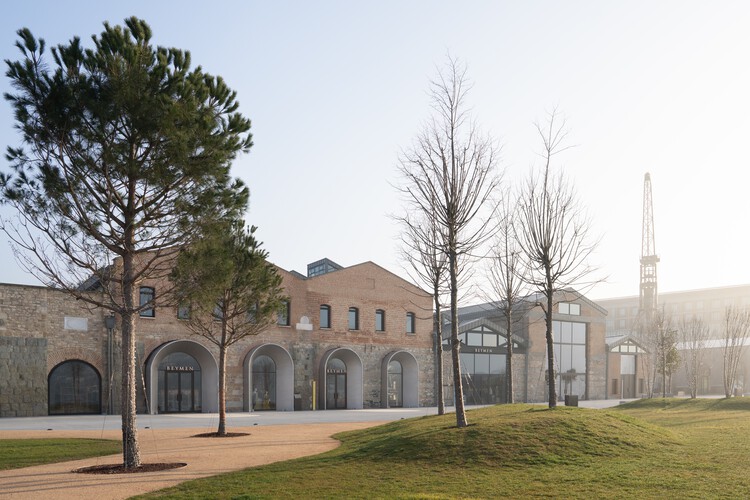
Architects: SANAL Architecture/Urbanism, Murat Şanal, Alexis Şanal, Begum Öner
Location: Karaköy, Istanbul, Turkey
Gross Floor Area: 700 sqm
Structure: Historic 19th Century Load Bearing + Timber
Project Team: Ozlem Ozdemir Orkun Beydağı, Pillippa Tamsin, Sedef Zorbozan
Complete year: 2011
Client: Salt
Photographs: Refik Anadol
Istanbul
The first stage in the Augmented Structures project by Salon2 is the Augmented Structures v1.1: Acoustic Formations / İstiklâl Caddesi installation which reanimates phenomena (architecture, sound and visual arts) that appear to be completed and concluded. The acoustic memory of İstiklâl Caddesi is first transformed into an architectural surface and then this solid form becomes a dynamic visual performance through a 400m2 installation on the facade of Yapı Kredi Bank Culture Building. More images and architects’ description after the break. read more »

Courtesy of 109 Architectes
109 Architectes recently took home the third prize at the 12th annual ThyssenKrupp Elevator Architecture Awards with their design for for the Disaster Prevention and Education Center in Bakırköy, Istanbul. A total of 287 projects from 59 countries were submitted to the competition. Participants were required to propose an Istanbul Disaster Prevention and Education Center on a 27,000m2 piece of land. The center will be equipped with educational resources including audiovisual equipment, simulation systems to recreate the experience of natural disasters, first aid supplies and emergency communication systems. In the center, a planetarium, library, information boards and meeting halls will serve to inform visitors. More images and project description after the break. read more »

Courtesy of DRA&U
Given the particular nature of the program described in the competition brief, the proposal for the Istanbul Disaster Center by DRA&U focuses on the realization of a visually striking building that also represents a challenge to traditional architecture and engineering. More images and architects’ description after the break. read more »

Courtesy of Vulmaro Zoffi
Vulmaro Zoffi shared with us a proposal for the Disaster Prevention and Education Center in Istanbul. The design shows the events which involve earth, air and water in a friendly manner, enclosed by a public ETFE greenhouse, where all the inhabitants can found harmony with nature, under the shade of the trees. More images and architects’ description after the break. read more »

Courtesy of Superunion Architects
On a site almost without context because of its vast scale and open development plans, the Istanbul Disaster Prevention and Education Centre (DPEC), designed by Superunion Architects, represents a new beginning for the Expo area adjacent to the Atatürk International Airport. Today, the area is a typical example of a generic, market driven development without a common goal. It consists of tall isolated buildings trying to express their individuality rather than performing as a coherent whole. Situated in a void between city and airport, where public space is nonexistent, isolated buildings are surrounded by their own private sea of parking. The new Istanbul DPEC reverses current planning standards, making the ground surface completely public by elevating the building and letting the park flow freely below. More images and architects’ description after the break. read more »

Courtesy of LEON11
‘Inhabiting the sky’, a project proposal for the Istanbul Disaster and Prevention Center by LEON11, aims both, to provoke a radical impression over the visitants and to take care of nature. In doing so, their design creates an awareness about sustainability through the understanding that nature is not something that we have to fear, but just to respect and love. To get the main point across of understanding nature by being surrounded by it, they are reaching out to show visitors. Once they get in the center, visitors get the feeling of being surrounded by clouds. More images and architects’ description after the break. read more »

Courtesy of OODA
For their competition proposal, OODA believes that in the process of generating architecture, they cannot have success without imagination because that is the most efficient tool or possibility to generate scenarios, predict spaces and reinvent ambiances. For this unique equipment, their approach tries to merge the most efficient program articulation with a strong concept which intends to suggest the overall theme integrated with Istanbul’s context. The main program components require a specific connectivity overlap that generates directly a crossed axis of piled interrelated spaces. Then, as a conceptual driven figuration, this formal arrangement suffers the effect of a natural disaster – earthquake – and falls down until achieving its structural stability on the ground creating as well the landscape topography with the same principle. More images and architects’ description after the break. read more »

Courtesy of GVNM Arquitetos
The construction of the Istanbul Disaster Prevention and Education Center in the Bakırköy district offers the possibility of redefining the territory in this area of the city. It is the perspective of GVNM Arquitetos that they should not extend the logic of the surroundings, with high independent buildings that do not establish relations between each other and do not create an urban fabric. Therefore, with the intent of consolidating the existing fabric and to depart from the image of the nearby constructions, their aim is to create a space and a building truly unique and singular, closer to a natural construction than of an urban structure. More images and architects’ description after the break. read more »

Courtesy of Ryszard Swarabowicz, Marek Golec, Anna Liput, Milena Klecha, Dagmara Olejniczak
The main idea of the urban and architectural plan for this proposal by Ryszard Swarabowicz, Marek Golec, Anna Liput, Milena Klecha and Dagmara Olejniczak was to create a space that will offer visitors a huge advantage of permanent experience and opportunity of being “in the middle of the experiment”. Additionally, the exposed feature of the experience was its unpredictability. This idea was born during the study themes of the center, it is the unpredictability, which is most often associated with the forces of nature. To achieve this goal – ceaseless experience – the building was designed as a dynamic form, equipped with modern glass technology, which allows to set the limits of transparency of the object. More images and project description after the break. read more »

Courtesy of CollectiveArchitects
CollectiveArchitects shared with us their proposal for the Istanbul Disaster Prevention and Education Center. Their building design is articulated according to the four natural elements – earth, fire, air and water. A main atrium is dedicated to each element. These atriums are also orientation points, which makes going around the building easier and more clear. Furthermore, well illuminated by natural light, the atriums provide visitors places where they can relax after what they have experienced in the adjoining rooms. There are no particular actions pre-determined in those spaces. There can be projections on the walls, exhibition of drawings and sculptures or light and sound experiences. These can be changed periodically and attract also the people that have already visited the center. More images and architects’ description after the break. read more »

Courtesy of Design Initiatives
The intention of Design Initiatives in the ThyssenKrupp Elevator Istanbul Disaster Prevention and Education Center Competition is to organize a joyful, integral space where man reconciles with nature. In addition to animate forms, they have manipulated the movement in order to induce the production of new urban opportunities. More images and architects’ description after the break. read more »
Courtesy of Triple O Studio
In consonance with the spirit of this competition, Triple O Studio’s design concept, titled, ‘A Learning Curve’, was to respond with a multi-pronged approach that assimilates, on the one hand, the local ethos of the city; and on the other, answers the design program with a solution that is literally a learning curve. Their design is a building that effectively portrays the face of a vibrant country and provides education on an aspect of modern life – disaster prevention – that many prone countries have still not addressed. More images and architects’ description after the break. read more »
Architects: Kieran Donnellan, Darragh Breathnach, Paul O Brien, with MEDS Participants
Location: Istanbul, Turkey
Project Year: 2011
Project Area: 6 sqm
Photographs: Chapel Workshop Team
Şişli is one of the biggest and busiest districts in Istanbul with a large business district and equally large residential area to support it. So when it was announced that the main Şişli High School design was to be chosen with a national competition, as residents of Şişli, cem kaptan architecture, in collaboration with Mustafa Tural and Yıldırım Gigi, won the mention prize of the competition for taking it upon themselves to create an environment for students that was protected from the outside for maximum concentration, but also had a connection to the heart of the urban way of living. More images and architects’ description after the break. read more »
This new library building design by Akant Tasarim & Restorasyon is desired to be built in addition to Rami Old Military Barracks Restoration Project with a new city museum function which is included in the Istanbul 2010 cultural capital city of Europe program. The Rami Library brings a new perspective to the understanding of librarianship in a national cultural community, and is also totally open to the international community. The building consists of four main parts: library, foyer, event, and auditorium.
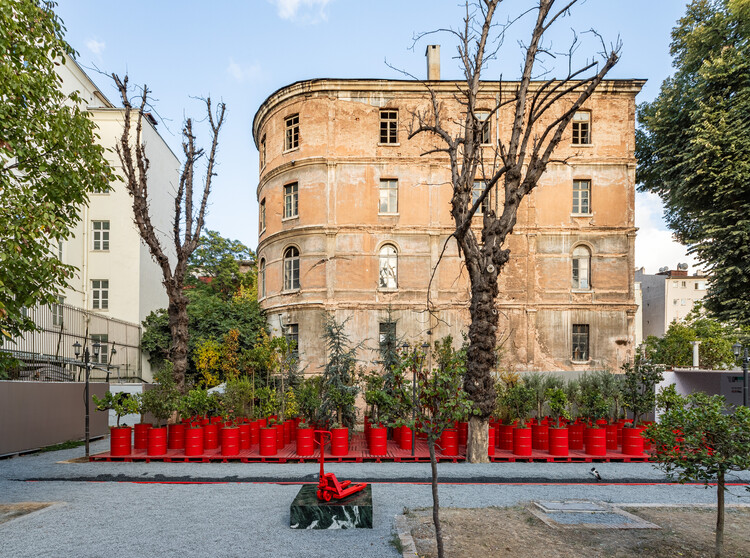
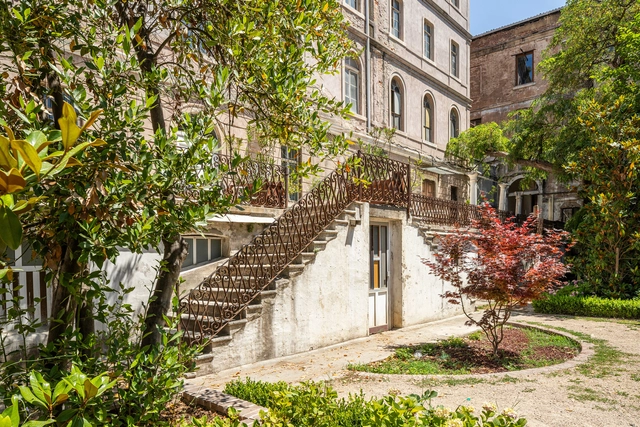
Istanbul based architecture office Suyabatmaz Demirel designed the Walk-in Cinema inside the SALT Beyoglu building which is almost a cul-de-sac attached to Istiklal Street, one of the most important pedestrian zones of Istanbul. The 19th century apartment located here was refurbished to be the home of SALT, a non-profit cultural institution which opened just last month and in a very short time became one of the most active cultural institutions in the city. This open platform is designed to host the events, screenings and impromptu public projects that SALT will program and encourage. More images and architects’ description after the break. read more »
Architects: Tabanlioglu Architects / Melkan Gürsel & Murat Tabanlioglu
Location: Istanbul, Turkey
Project Year: 2011
Project Area: 165,169 sqm
Photographs: Helene Binet, Thomas Mayer
Architects: Hirsch Bedner Associates
Location: Istanbul, Turkey
Project Year: 2011
Photographs: Ken Hayden
Architects: id design
Location: Istanbul, Turkey
Project area: 133 sqm
Project year: 2009 – 2010
Photographs: Ali Bekman