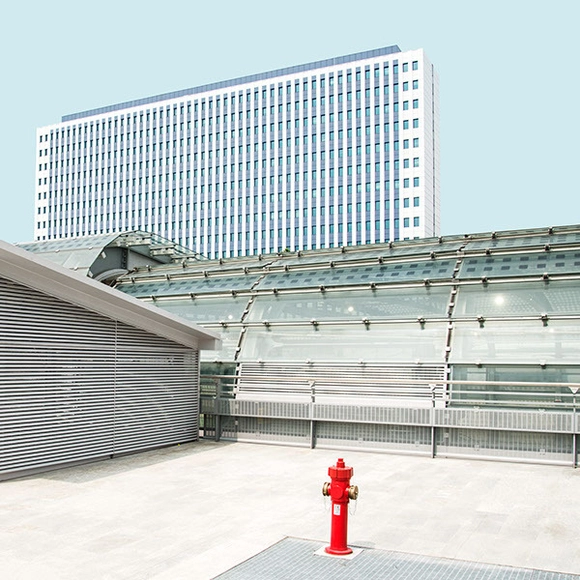
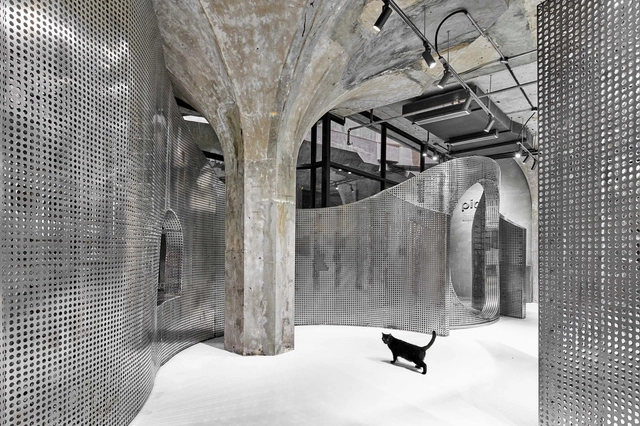
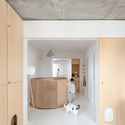
Cats just don’t care. They don’t care if you bought them gourmet food. They don’t care if you got them customized furniture or luxury cardboard boxes, and they definitely don’t care if they are barging into an architectural photo shoot (although, we do think it’s their way of being the center of attention).
Don't believe us? Here's a collection of photographs collected from our projects database where cats are clearly not trying to steal the spotlight.
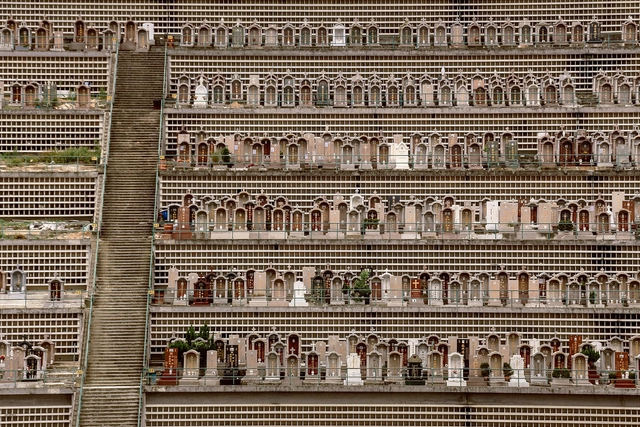
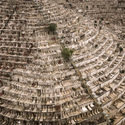
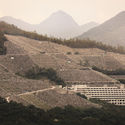
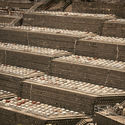
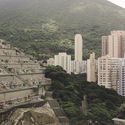
Hong Kong is considered to have one of the most exceptional skylines and urban schemes in the world: contemporary skyscrapers stand amidst the mountains and harbour, ancient houses nestled between futuristic structures, neon lights, landscapes... But among Hong Kong's numerous remarkable architectures, its spatial typology of death is like no other.
Over the course of five years, RIBA-nominated architectural photographerFinbarr Fallon captured the hyper-dense graveyards of Hong Kong, showcasing the sublime geometry of its mountainside burials in a series titled "Dead Space".
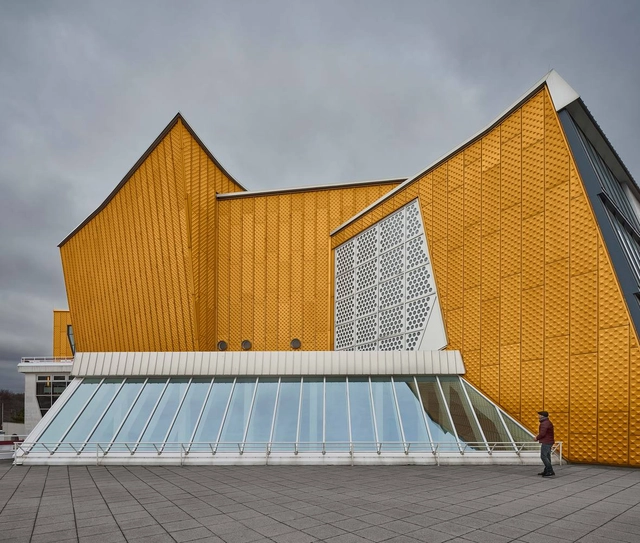
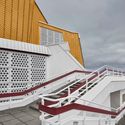
The Berlin Philharmonic by Hans Scharoun is one of the most prominent mid-20th century structures in the German city. The expressionist-style building with its bright-colored facade is the first of its kind by the German architect, as well as his most famous project to date. Scharoun’s design interprets rhythm and music as architecture, both conceptually and physically.
Architectural photographer Bahaa Ghoussainy unfolds Scharoun’s unique architecture by highlighting the concert hall’s dramatic angular geometry, vibrant yellow-hued facade, and play of lines and forms.
Cala d'Oliva agrarian penal colony branch, copyright Paolo Emilio Pisano
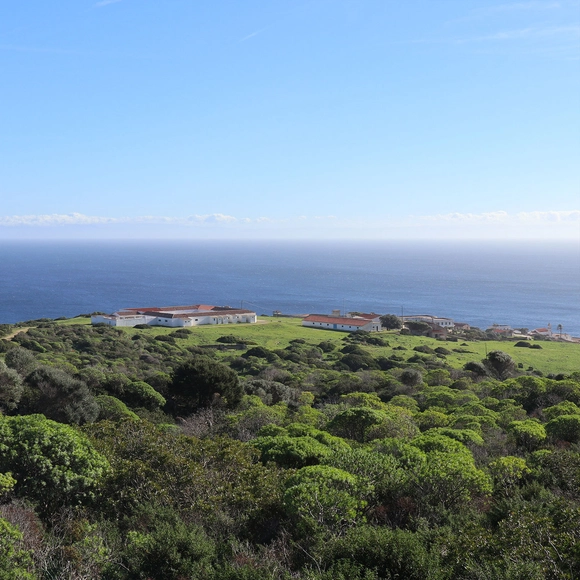
Every human intervention on an island – even those that interpret it as an ideal space for confinement - starts as an act of colonisation aimed at reducing the unescapable condition of insularity. Enacting the power of nomads as decolonising agents, Casting Castaways will migrate every two years from island to island across a former carceral archipelago in the Mediterranean Sea. We will seek for a pedagogy that, while suggesting future scenarios vis a vis current trends in tourism, environmental preservation and heritage, interrogates those territories to understand how and whether architecture can challenge and escape from the very ideas of incarceration and colonisation.
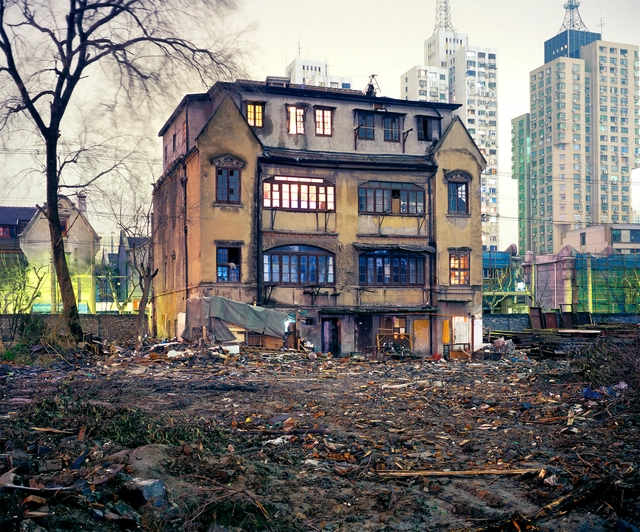
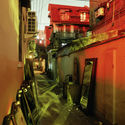
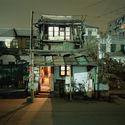
Shanghai is a city full of contradictions. Beneath the towering skyscrapers and contemporary complexes, old houses and shops are tucked away, gradually falling apart. The city's disappearing streets caught the attention of many international photographers. Some displayed the relationship between old vs new, while others focused on the historic districts and their cultural significance.
Canadian photographer Greg Girard, who spent most of his time in Asia, examined the social and physical transformations of the Chinese city and published a photo-book titled “Phantom Shanghai”.
Modern architecture emerged during the late 19th - early 20th century to break away from historical styles and create structures based on functionality and novelty. Regardless of the style's prominence, post-modernist architecture emerged a few decades later as a reaction to modernism's uniformity and formality, adding complexity, asymmetry, and color into architecture.
Between Shanghai’s crowded meat markets, bundles of wires, vivid neon lights, and dense smogs, lie the historic ‘Shikumen’ lane houses. Built between the end of the 19th century and World War II, these houses were inspired by French and British Colonial and Art Deco styles and the Chinese ‘Hutong’ housing style. But time for these aged ornate structures is running out, as all the Shikumen lane houses across Shanghai are being torn down.
As part of his Shanghai Streets series, photographer Cody Ellingham has set out on a mission to freeze time and capture these historic streets before they are completely demolished and forgotten.
Regardless of what field designers specialize in, they are capable of translating their ideas and fantasies into visible and tangible material. After all, a designer's principle is quite simple: If it doesn't exist, create it.
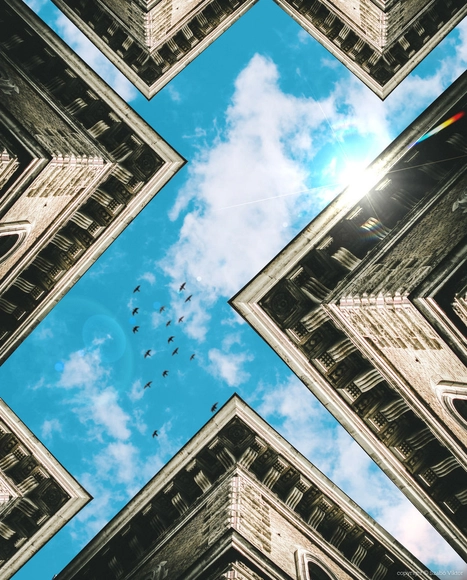
For his final photography exam, Szabó Viktor took photos of existing buildings and manipulated them into structures that only exist in his imagination.
Nothing is ordinary about the Italian city of Venice. Whether it is the vividly-colored architecture that dates back to Gothic and Byzantine eras, or the fact that the city is floating on water, culturally-rich Venice is an intriguing destination for people of all backgrounds and interests.
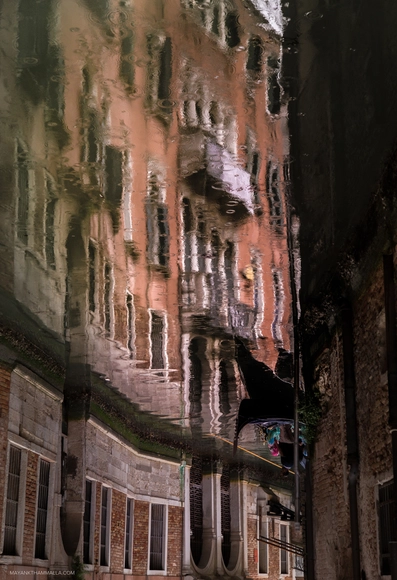
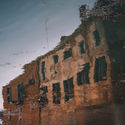
With every visit to Venice, London-based architect and photographer Mayank Thammalla found himself discovering new scenic views of the city, ones that are often tucked beneath its architecture. In his recent photographic series ‘Echoes of Venice’, Thammalla used the canal ripples as his canvas and displayed the deteriorating architecture of Venice from a unique, inverted perspective.
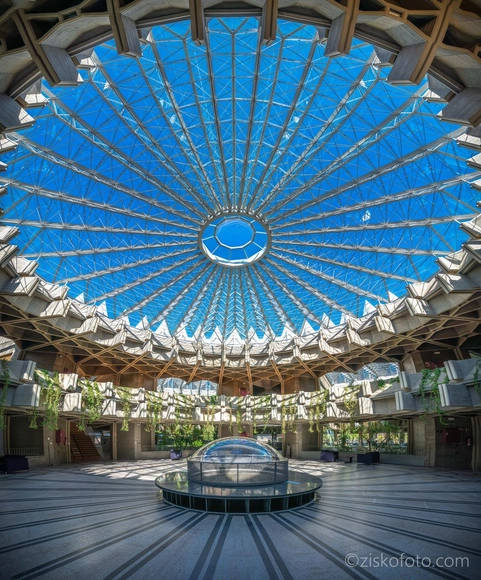
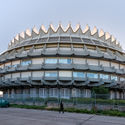
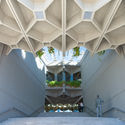
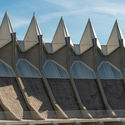
Madrid-based architectural photographer Zisko Gómez captures the recently-growing interest in Spanish architect Fernando Higueras with his photo series of Higueras’ “La Corona de Espinas,” or “The Crown of Thorns.” The building is currently headquarters to the Spanish Cultural Heritage Institute and contemporary art foundation ICO recently organized an exhibition in Madrid of Higueras’ work.
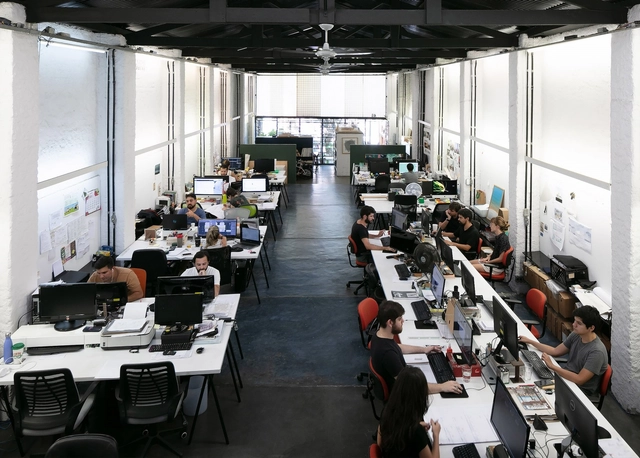
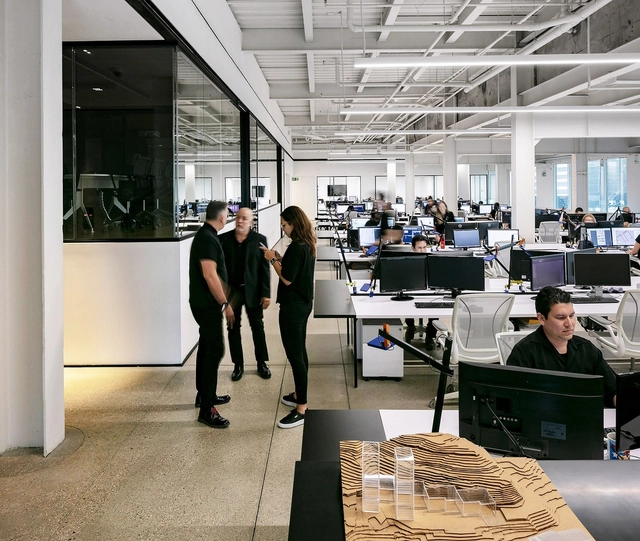
Architectural photographer Marc Goodwin recently visited Brazil to continue on his journey documenting the world's architecture offices. Expanding on his current list, he's already visited Panama City, the Netherlands, Dubai, London, Paris, Beijing, Shanghai, Seoul, the Nordic countries, Barcelona, and Los Angeles. In Brazil, Marc photographed 20 offices across a range of scales and project types. Find out more about the individual offices and the city they are a part of through Marc's feature.
Architectural photographer Marc Goodwin recently visited Panama City to continue on his journey documenting the world's architecture offices. He's already featured an impressive list, including the Netherlands, DubaiLondon, Paris, Beijing, Shanghai, Seoul, the Nordic countries, Barcelona, and Los Angeles. In Panama, Marc photographed a range of work spaces across eight offices, from a studio of five people all the way up to 200. Looking outside and in, he captured both the spaces where designers work and glimpses into the city itself.
“The Flying Photographer” is the name of the documentary that will showcase Sara Nunes (architectural film director from Building Pictures) following the amazing journey of Fernando Guerra during the period of one year of travel to get the best architecture photographs from around the world.
https://www.archdaily.com/910897/new-documentary-on-portuguese-photographer-fernando-guerra-follows-his-journey-through-architecturePedro Vada
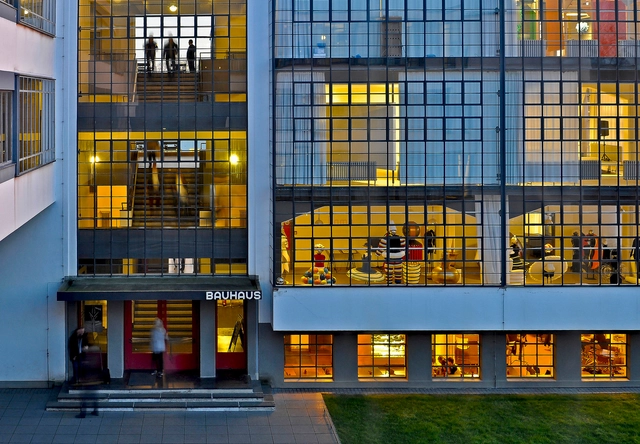
Celebrate Bauhaus 100 through the world's number one visual storytelling platform, Instagram. An essential tool for designers, Instagram is a constantly growing digital database of market sharing and stimulation. Social media has changed not only how we gather precedents and market our designs, but also our designs themselves. "Instagram Culture" drives designers to create more shareable moments. As we continue to seek these dynamic encounters, let us not forget our forefathers of user experience design and the Bauhaus school.
Opening in the late 1980s after more than ten years of construction, the Slovak Radio Tower is an unmissable feature in the landscape of Bratislava. The building, an inverted pyramid of steel frame construction, was designed by Štefan Svetko, Štefan Ďurkovič, and Barnabáš Kissling during the height of socialist realism.
In many parts of the world, more women have architectural degrees than men. However, this fact hasn’t translated past university into the working world as women continue to be underrepresented across nearly all levels of practice.
The conversation regarding women in architecture gained tremendous traction back in 2013 with the petition for Denise Scott Brown to be recognized as the 1991 Pritzker Prize winner, alongside her husband and the consequent rejection of that request by Pritzker. The Architectural Review and Architect's Journal have, since 2015, jointly presented awards to the exceptional female practitioners as part of their Women in Architecture Awards program. The swelling of these movements have helped to promote not only the role but also the recognition of women in architecture.



































.jpg?1549809940)
.jpg?1549809709 "© Alexandra Timpau, Alex Shoots Buildings")
.jpg?1549811238 "© Alexandra Timpau, Alex Shoots Buildings")
.jpg?1549809072 "© Alexandra Timpau, Alex Shoots Buildings")
.jpg?1549809230)
.jpg?1549808705)