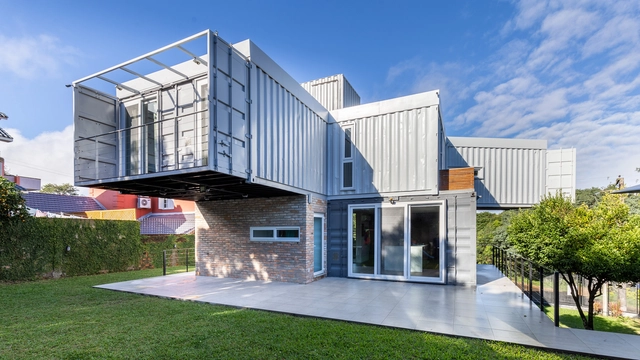
Originally used to transport large cargo on ships, shipping containers feature a rigid and highly durable steel structure available in various dimensions. However, moving beyond their traditional role in storage and cargo transport, these structures have been adopted as the basis for commercial and residential modules for several years. They offer high strength, low cost, fast construction, and, above all, a sustainability-oriented system through reuse. With this in mind, and moving beyond standardized housing, several architects have developed residential projects by reusing containers as modular blocks, stacking or joining them side-by-side to suit the specific program of each client.
Students, faculty, and staff of the Faculty of Architecture & Urbanism & Design of Alagoas, led by professors Adriana Capretz Borges da Silva Manhas and Josemary Omena Passos Ferrare, alongside student Cecília Oliveira do Nascimento Rossé, have organized an online petition to award professor Zélia de Melo Maia Nobre the title of Doctor Honoris Causa from UFAL (Federal University of Alagoas).
On January 19, Japan House São Paulo will open the exhibition Architecture for Dogs, curated by Japanese designer Kenya Hara. Through the work of renowned architects, the exhibition presents doghouses in a pioneering exercise in scale that considers society's current relationship with these pets.
Many buildings pique the curiosity of passersby about what lies behind their doors. Instead of merely imagining the uses and privacy of these typically inaccessible spaces, next weekend—June 29 and 30—visitors will be able to explore the interiors of various architectural works in the cities of Porto, Matosinhos, and Gaia during the Open House Porto festival.
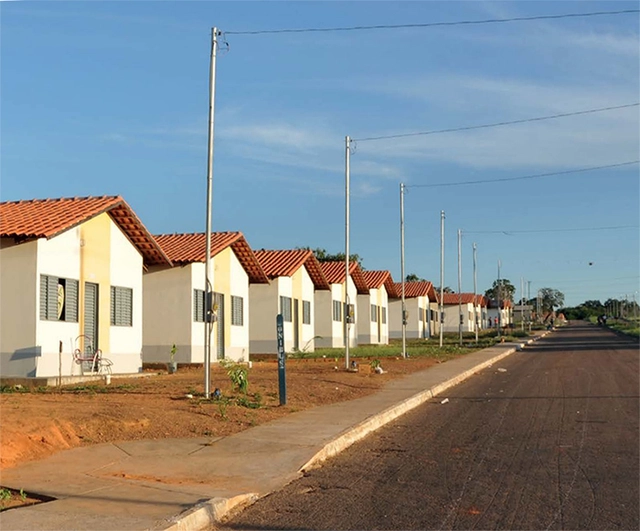
WRI Brasil has launched a free online publication detailing the benefits, costs, and barriers of adopting sustainability measures in social housing developments. Jointly produced by Lara Caccia, Henrique Evers, Luana Betti, and Camila Schlatter, the study examines simple, low-cost actions and technologies aimed at reducing water and electricity consumption in buildings.
The recent budget cuts for federal universities have reignited a debate that deserves to remain permanently active: the quality of education in Brazil. The first edition of theEncontros de Arquitetura, organized by IABsp, set out to address this theme through the lens of architecture, bringing together four professionals with extensive experience in school design: Catherine Otondo, Marina Grinover (Base Urbana), Keila Costa (+K), and Pablo Hereñú (Hereñú & Ferroni Arquitetos).
https://www.archdaily.com/1122467/architecture-and-education-the-construction-of-a-pedagogical-spaceChristina de Castro Melo, Gabriela de Matos, Marco Artigas e Romullo Baratto
Officially debuting the partnership between ArchDaily and Arquicast, episode #68 Interview: ArchDaily Brasil is now live. In this episode, three of the editors from the Brazilian platform—Pedro Vada, Eduardo Souza, and Matheus Pereira—share a behind-the-scenes look at what it is like to work for the world's most visited architecture and urbanism website. The challenges of adapting to a new kind of career in architecture, the speed of industry transformations, and the role of technology and collaboration are among the topics discussed in this casual and informative conversation, which can be accessed here!
St. Mark's Basilica in Venice. Photo: dasu_ on Visualhunt.com / CC BY-SA
Unesp (São Paulo State University), through its virtual communication channel Univesp TV, is offering a free online course in Art History. Comprising 29 video lessons, the course is aimed at undergraduate and graduate students interested in art, history, research, and culture.
Eric Fischer - 5000 normalized walks - Modified. Image via Flickr
The practice of the dérive is a subject that sparks great interest among urban scholars and professionals. The Situationists, a social critique movement founded in 1957, used this practice to propose new interpretations of the city based on individual lived experience. Jacopo Visconti, curator of the 34th Bienal de Artes de São Paulo, analyzed in his doctoral thesis artistic practices that incorporate the act of walking, seeking the characteristics that defined the Situationist practice of the dérive. Advised by Prof. Dr. Luis Antonio Jorge, Visconti defended his thesis in 2012, which was later published as a book by Martins Fontes. Read the thesis abstract below.
https://www.archdaily.com/1122478/new-driftsPedro Vada
The UN-Habitat Public Space Programme has opened a call for proposals to fund public space projects with up to $100,000 in Brazil. According to the New Urban Agenda, the planning and management of quality public spaces are understood as fundamental prerequisites for poverty reduction and the fulfillment of human rights in urban areas.
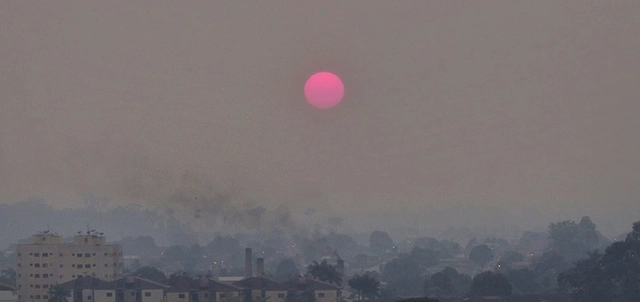
Smoke in Porto Velho, Rondônia, at dawn. Photo: Renata Silva/Personal Archive
Since the beginning of the month, thousands of fire outbreaks have been recorded in Brazil's northern states, spreading through Acre, Rondônia, Mato Grosso, and Mato Grosso do Sul, and reaching the triple border of Brazil, Bolivia, and Paraguay. According to the National Institute for Space Research (INPE), the country is experiencing its worst wave of wildfires in five years.
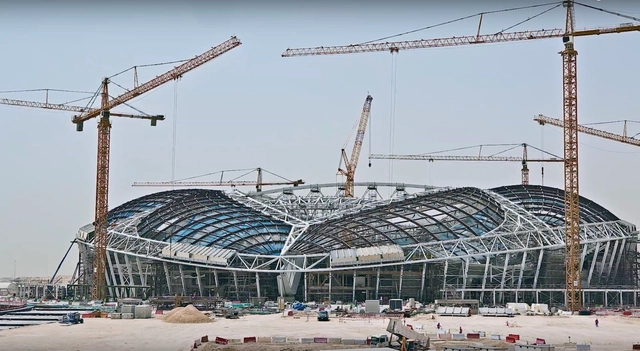
Construção do estádio Al Wakrah. Image Cortesia de Supreme Committee for Delivery and Legacy’
The year is 2010. As the first Arab country selected to host the 2022 FIFA World Cup, Qatar is already ramping up its preparations to host this highly anticipated and costly event 12 years down the line. Extensive construction and reconstruction efforts are being launched, targeting not only the facilities directly demanded by FIFA, but also, more broadly, the urban infrastructure systems of the country's major cities.
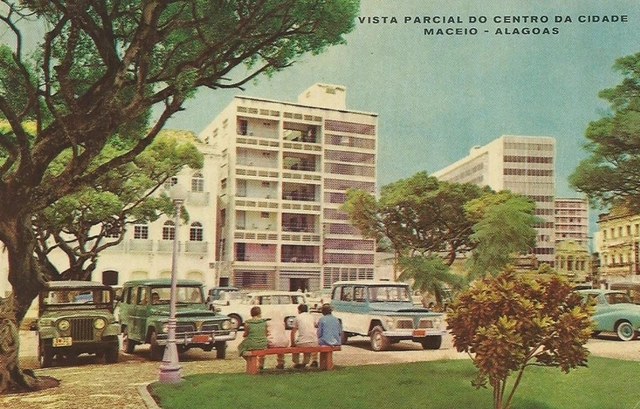
The Federal University of Alagoas unanimously approved the Honorary Doctorate for architect Zélia de Melo Maia Nobre. In a historic moment for architecture in Northeastern Brazil, the “lady of the elegant line,” an icon of the regional modern movement, was recognized as the “first woman to receive the title of Doctor Honoris Causa from UFAL,” in the words of Rector Valéria Correia, president of the University Council.
The search for the ideal city has always permeated human history, constituting a utopia pursued by rulers, artists, philosophers, and, in more recent history, by us, urban planners. Since the 19th century, various models of ideal cities have been proposed—and, at times, built—ranging from Howard's garden cities to mechanized, radial, and walking cities (like those of the Archigram group), to nomadic ones like Constant Nieuwenhuis's New Babylon, and modernist cities, among others.
Today, São Paulo's largest and most visited park, Ibirapuera, celebrates 65 years since its inauguration in 1954. To mark the occasion, the Municipal Secretariat for the Green and the Environment (SVMA) is hosting five days of special programming featuring tours, debates, concerts, meditation classes, performances, and workshops, among other activities.
Proposed Constitutional Amendment No. 80/2019, a collective proposal led by Senator Flávio Bolsonaro, suffers from blatant unconstitutionalities, in addition to posing structural risks to economic and social development. These issues are analyzed in detail below, based on the following aspects:
Infinito Vão: Brasil, the series of talks taking place on March 22 and 23 at IMS, is an extension of the program of activities for the exhibition of the same name, currently on view until April 28 at Casa da Arquitectura in Matosinhos, Portugal.
Curated by Fernando Serapião, Guilherme Wisnik, and Nuno Sampaio, Infinito Vão: Brasil will bring together architects, photographers, and cultural managers over two days for a series of talks and debates on the history of Brazilian architecture, its influence on daily and cultural life, and the connections it builds with other artistic expressions.
Projeto "Um lugar para todas". Autoria de Laura D Valdivieso e Marta Benito. Image Cortesia de Instituto Tomie Ohtake
The Tomie Ohtake Institute has announced the 15 projects selected for the 2nd Tomie Ohtake Institute Leroy Merlin Design Award. This edition's theme, CIRCULAR, prompted proposals and discussions on the word as a form, and as a synonym for displacement, movement, communication, exchange, renewal, and sustainability, among other interpretations.
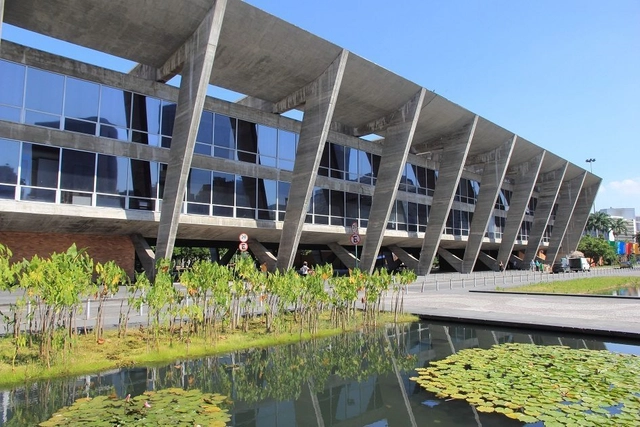
Guilherme Essvein de Almeida's doctoral dissertation presents an analysis of two major works of contemporary architecture: the Casa da Música in Porto, designed by Rem Koolhaas, and the Cidade das Artes in Rio de Janeiro, designed by Christian de Portzamparc. Defended in 2018, the dissertation was advised by Prof. Dr. Carlos Eduardo Dias Comas as part of the graduate program at the Federal University of Rio Grande do Sul. Read the author's abstract and find the link to the full dissertation below.
https://www.archdaily.com/1122173/casa-da-musica-and-cidade-das-artes-towards-monumentalityPedro Vada
Many of the most compelling design solutions stem from site conditions—whether climate, local materials and labor, construction techniques, or, above all, the way these factors are addressed within the highly specific context of the plot. The plot is the ultimate space for putting these strategies into practice. As cities increasingly feature smaller land parcels, designing for narrow lots has become a recurring reality.
The urbanization of Brazilian cities has been concentrated mainly in recent decades, but the process actually began at the end of the 19th century. Photo: Daniel Hunter/WRI Brasil
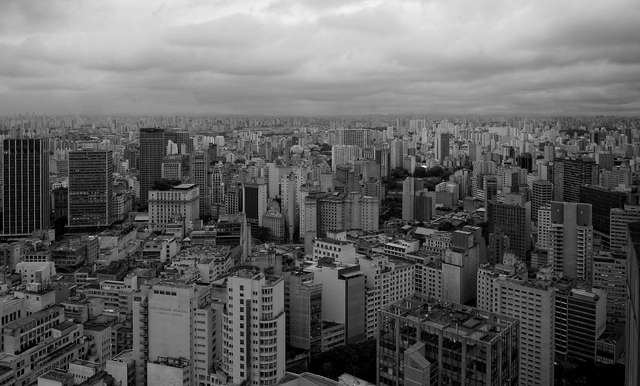
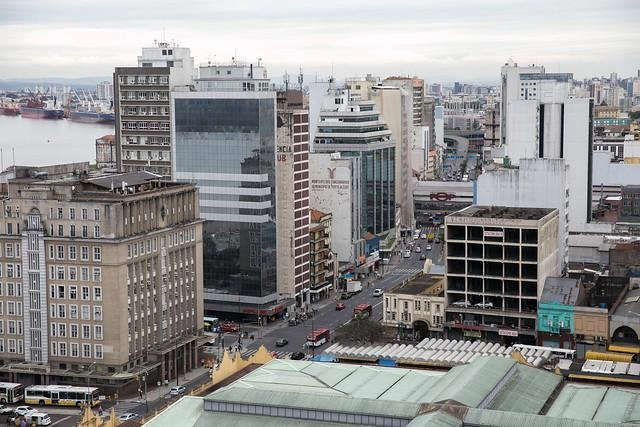
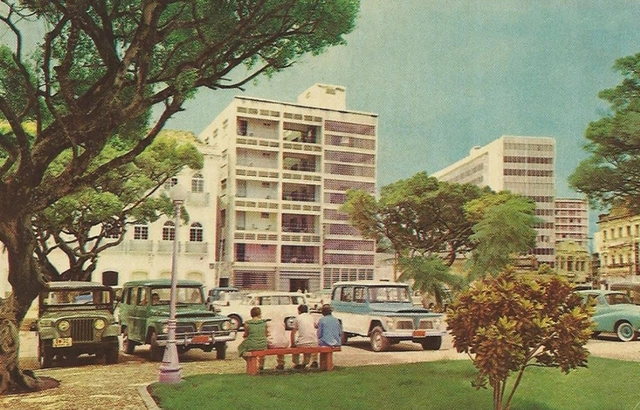
What images come to mind when we think of major Brazilian cities? Perhaps traffic jams, pollution, insecurity, and noise. Perhaps crowds of people coming and going. Pedestres. Bicycles. Buses. After all, eight out of ten Brazilians live in urban areas—regions that have undergone rapid urbanization. Over the last six decades, the country's population grew from 70.2 million to 209.3 million, and the proportion of urban dwellers surged from 44% to the current 85%.
https://www.archdaily.com/1122223/the-history-of-brazilian-urbanizationPriscila Pacheco e Laura Azeredo
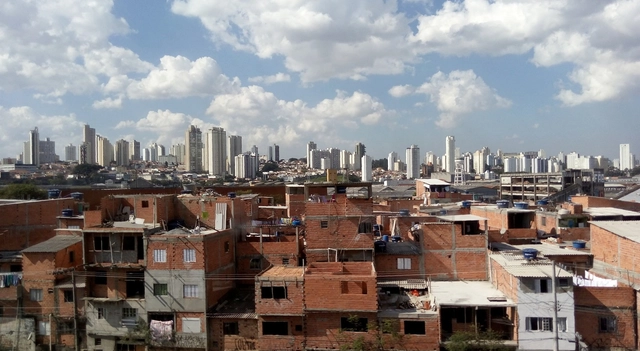
A person living in Moema, a neighborhood with one of the highest income concentrations in São Paulo, lives 20 years longer than someone born in Cidade Tiradentes, in the far east of the capital. Brazil's wealthiest city exposes just how unequal the country is, and how much access to public policies varies depending on where one lives.






.jpg?1563548779&format=webp&width=640&height=580)






.jpg?1566416181&format=webp&width=640&height=580)