At the 2019 AIA Conference on Architecture, Turkish architect Emre Arolat (EAA) shared insights with ArchDaily regarding architectural technology, how the future role of the architect will evolve, and the significance of building materials in his projects.
News
Emre Arolat: "Materials are not chosen by the architect, but emerge with the design"
https://www.archdaily.com/1070654/emre-arolat-materials-are-not-chosen-by-the-architect-but-emerge-with-the-designJosé Tomás Franco
Liu Yuyang: "Not seeking to transform the world, but to bring a ray of light to people"
.jpg?1563170000&format=webp&width=640&height=580)
.jpg?1563171407 "Tongji Experimental Primary School Affiliated to Jiading, Shanghai. Image © CreatAR Images")
.jpg?1563170000)
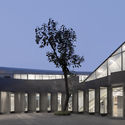
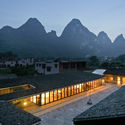
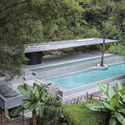
China's unique social development has provided a distinctive breeding ground for contemporary Chinese architecture. As one of the country's primary design hubs, Shanghai can be seen as an ideal entry point to understanding this landscape. Shanghai-based architect Liu Yuyang, who was born in Taiwan and raised in the United States, has forged a unique architectural trajectory shaped by his rich life experiences and multicultural background. Through an extensive portfolio of built work, he has established a distinct voice within the broader professional landscape. In the following excerpt from an interview with author Zhang Yifan (YF), Liu discusses his design approach, the origins of his philosophy, and his professional ethos.
https://www.archdaily.com/1070321/liu-yuyang-not-seeking-to-transform-the-world-but-to-bring-a-ray-of-light-to-peopleYifan Zhang
到2050年,520个城市的气温将会上升(非常严峻)
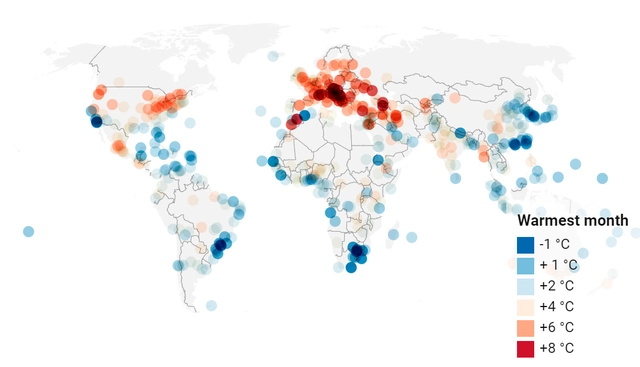
2050年马德里的气候将更像今天摩洛哥马拉喀什的气候,斯德哥尔摩将更像布达佩斯,伦敦更像巴塞罗那,莫斯科更像索菲亚,西雅图更像旧金山,东京更像中国的长沙。
苏黎世联邦理工学院克劳瑟实验室(The Crowther Lab)在科学杂志《公共科学图书馆》(PLoS ONE)上发表了一篇题为《从对相似城市的分析开始理解气候变化》的研究,为世界城市中心的未来描绘了一幅严峻的图景。
https://www.archdaily.com/921886/dao-2050nian-520ge-cheng-shi-de-qi-wen-jiang-hui-shang-sheng-fei-chang-yan-junFabian Dejtiar
*Lotte am Bauhaus*: A Film About the True Story of the Women of the Bauhaus School

https://www.archdaily.com/1070413/star-lotte-am-bauhaus-star-a-film-about-the-true-story-of-the-women-of-the-bauhaus-schoolMónica Arellano
10 Adaptive Wall Solutions for Flexible Architecture
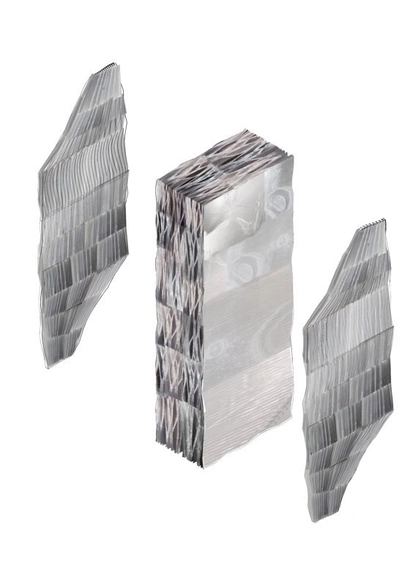
The concept of “resilience” is widely applied across many disciplines. In scientific terms, resilience is the capacity of a material or object to recover its shape after undergoing some form of trauma. In other words, it is quite different from resistance, as it fundamentally concerns the ability to adapt and recover. In ecology, resilience refers to an ecosystem's capacity to respond to disturbances, resist damage, and recover quickly. In architecture, however, integrating resilience into design can yield a wide range of solutions. Resilient design is inherently site-specific, making it essential to anticipate potential building use scenarios, and even disasters that could threaten the structure and its occupants. Beyond this, there is a growing focus on using adaptive structures and materials that can continuously learn from and modify themselves in response to the environment. If we already have software and algorithms that learn from their surroundings, why not apply the same approach to the building process?
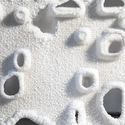
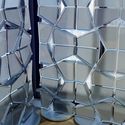
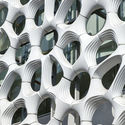
We have selected 10 adaptive materials and design solutions developed under the concept of architectural and construction resilience—innovations that may one day become mainstream, or perhaps remain temporary experiments.


https://www.archdaily.com/1070697/10-adaptive-wall-solutions-for-flexible-architectureEduardo Souza
Past, Present, Future | Li Hu: Have China's Cities 'Bloated'?
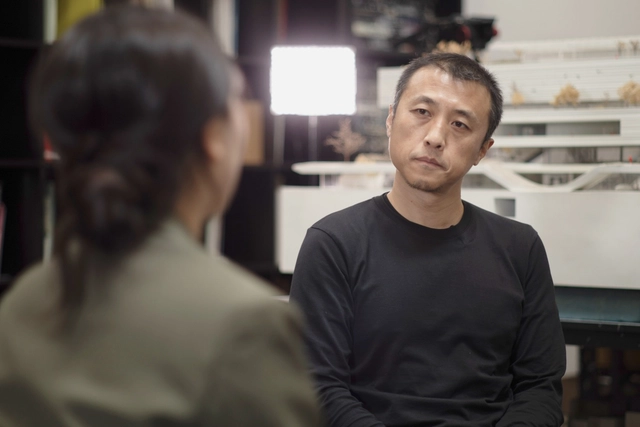
Introduction: This interview is part of the “Echoes for the Future” exhibition, which primarily features video interviews with architects. In 2008, architect Che Fei and international curator Yao Jing co-initiated a series of interviews themed “The Beijing Olympics in Architectural Discourse.” In 2018, we revisited the same nine architects, bridging the fields of media, research, and education to illuminate reflections on the built environment and future visions. For this first installment, we delve into the “past, present, and future” of Li Hu, founding partner of OPEN Architecture.
https://www.archdaily.com/1070691/past-present-future-li-hu-have-chinas-cities-bloated韩爽 - HAN Shuang
What can renderings express?
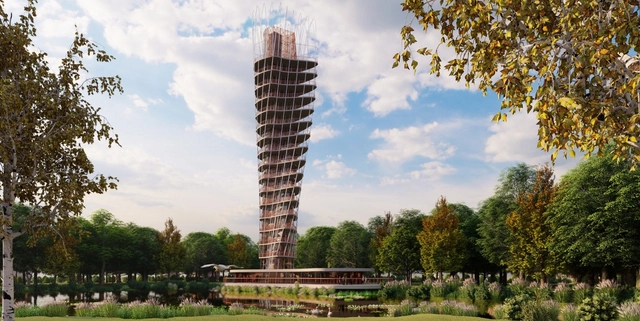
Over the past 20 years, the role of representation and rendering has shifted dramatically across the architecture, engineering, and construction (AEC) industries. New rendering technologies, techniques, and software, such as Lumion, have driven this evolution. By integrating 3D rendering tools, architects and designers can leverage intuitive, versatile visualization technologies to enhance creativity rather than stifle it.
https://www.archdaily.com/1070647/what-can-renderings-expressLumion
Qianhai Public Space Design Bid Selection Results Announced

Project Background
As a strategic pivot of the national "Belt and Road" Initiative and the core engine for innovative cooperation in the Guangdong-Hong Kong-Macao Greater Bay Area, Qianhai is set to become a futuristic, world-class bay area city center. On January 17, 2019, the Qianhai Authority officially launched the global call for proposals for the "Qianhai Public Space Design" project, attracting applications from 42 consortia representing over a hundred leading design firms worldwide.
The primary objective of the "Qianhai Public Space Design" project is to establish a unique bay area city center. Grounded in human-centric design, the project aims to enhance public well-being and the region's overall appeal through the creation of a beautiful, inviting network of public spaces.
https://www.archdaily.com/1070540/qianhai-public-space-design-bid-selection-results-announcedMilly Mo
The First Step Toward Urban Accessibility: Signage Design
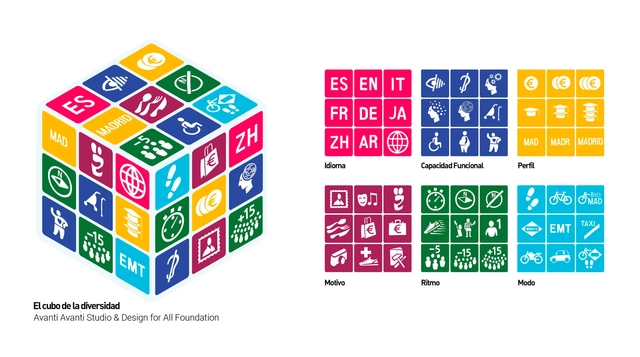
Among the various measures cities can implement to become more pedestrian-friendly, developing a comprehensive signage system is a highly efficient, straightforward improvement that delivers transformative results—as demonstrated by initiatives like Legible London, New York's WalkNYC, or Rio on Foot in Rio de Janeiro.
https://www.archdaily.com/1070707/the-first-step-toward-urban-accessibility-signage-designFabian Dejtiar
Interview with Dong Gong: Changjiang Art Museum, an Architectural Practice of Emotional Response

Yesterday, the Changjiang Art Museum, designed by Vector Architects, opened in Taiyuan, Shanxi Province. Simultaneously, the museum inaugurated three exhibitions: "Backbone: Four Chinese Architects," featuring the work of Dong Gong, Hua Li, Li Xinggang, and Cheng Yanchun; "Reshaping the Block: Qiandu·Dongshanqing Architectural Practice Exhibition"; and "Changjiang Village: A History/Space Exhibition."
https://www.archdaily.com/1070562/interview-with-dong-gong-changjiang-art-museum-an-architectural-practice-of-emotional-response韩爽 - HAN Shuang
Apartments in Higienópolis: 10 Projects with Floor Plans

Great gems of modern Paulista architecture are located in the Higienópolis neighborhood of São Paulo. Predominantly occupied by residential buildings, the curiosity to imagine what their apartments and floor plans look like arises in the minds of those with even a passing interest in these projects. With this in mind, we have gathered ten projects that are the result of renovations in famous buildings—such as the Lausanne and the Louveira—as well as others located in the same vicinity.
https://www.archdaily.com/1053506/apartments-in-higienopolis-10-projects-with-floor-plansVictor Delaqua
Interview with Zhu Xiaodi: How Can "Old" Building Stock Generate the "New"?

Preservation and renewal are constantly unfolding in our cities. Against the backdrop of rapidly evolving lifestyles and the transition of China's economic development to a "new normal," urban renewal and regeneration are gradually superseding new construction as crucial aspects of Chinese urban development. This exhibition focuses on the theme of urban renewal, gathering outstanding projects from home and abroad to comprehensively review successful experiences across various regions, scales, typologies, and stakeholders. In doing so, it showcases the achievements, dilemmas, reflections, practices, current conditions, and futures within the urban development process, contributing diverse voices to the ongoing discourse on China's urban renewal.
We interviewed Zhu Xiaodi, co-curator of the exhibition “Born of the Old,” to discuss the significance of the theme, the rationale behind its unique exhibition design, and the stories behind the project.
https://www.archdaily.com/1070561/interview-with-zhu-xiaodi-how-can-old-building-stock-generate-the-new韩爽 - HAN Shuang
50th Anniversary of the Moon Landing: 15 Designs for Living in Space

July 20, 2019, marked the 50th anniversary of the Apollo 11 moon landing. On July 16, 1969, Apollo 11 departed Earth, touching down on the lunar surface four days later. This historic milestone continues to prompt reflection on how technological advancements are making life on other worlds increasingly viable.
Aided by the evolution of 3D printing and fully automated construction technologies, we have compiled 15 architectural projects that demonstrate how life on the Moon and other celestial bodies is no longer a distant fantasy.
https://www.archdaily.com/1070388/50th-anniversary-of-the-moon-landing-15-designs-for-living-in-spaceBelén Maiztegui
10 Must-Watch Netflix Documentary Trailers

Netflix is much more than a platform for casual entertainment—it is also an excellent resource for learning about architecture and urban planning. We have curated ten architecture-related documentaries that allow you to expand your design horizons while winding down. Below are the trailers for these ten titles, which can be viewed in full on Netflix.
https://www.archdaily.com/1070354/10-must-watch-netflix-documentary-trailersMilly Mo
Stéphane Beel on Architecture and Technology
Past, Present, Future is an interview project by Itinerant Office that invites prominent architects to share their perspectives on the constantly evolving world of architecture. Each interview is divided into a three-part video series—Past, Present, and Future—where interviewees discuss their architectural philosophies and experiences. The project's first installment featured 11 architects from Italy and the Netherlands, while the second edition comprises interviews with 13 architects from Spain, Portugal, France, and Belgium.
The aim of this interview series is to study these successful firms and understand their methodologies. The videos seek to offer a clear picture of what it means to be an architect in the 21st century, while serving as inspiration for the next generation of emerging architects and students entering the field.
https://www.archdaily.com/1070596/stephane-beel-on-architecture-and-technologyMilly Mo
"Flying" Slabs: How Concrete Panels Changed the World
_1963..jpg?1572236106&format=webp&width=640&height=580)
Flying Panels: How Concrete Panels Changed the World is the latest exhibition at ArkDes. Designed by Swedish studio Note Design Studio, it is co-curated by Pedro Ignacio Alonso and Hugo Palmarola, creators of the Monolith Controversies exhibition, which won the Silver Lion at the 14th Venice Architecture Biennale in 2014.
The exhibition brings together an array of models and material culture—such as posters, paintings, films, toys, cartoons, and opera sets—reflecting how concrete panels influenced culture to build a new society.
https://www.archdaily.com/1070594/flying-slabs-how-concrete-panels-changed-the-worldFabian Dejtiar
Diverse Approaches to Hospitality: 10 Brazilian Hotel Projects
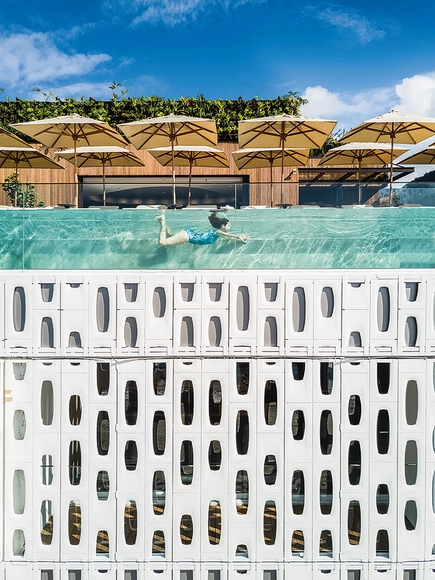
Unlike when they were seen merely as spaces for sleeping and showering, today hotels must enhance the travel experience to attract guests and offer a competitive edge against direct rivals or even new lodging models like Airbnb. Consequently, beyond room quality, leisure areas, restaurants, landscape, and architecture are key factors in the success of a development.
In countries like Brazil, which feature diverse landscapes and a varied population, one encounters a wide range of solutions when designing hotels. For this reason, we have gathered ten national examples where architecture stands out, lending a unique identity to each of these buildings.
https://www.archdaily.com/1053516/diverse-approaches-to-hospitality-10-brazilian-hotel-projectsVictor Delaqua
Public Spaces: 10 Brazilian Projects

Designing the spatial quality of public space and allocating its program for the population is one of the greatest challenges for architects and urban planners. Urban developments, parks, and plazas are some of the interventions these professionals encounter when creating places for democratic use—spaces that often become symbols of the city. To illustrate these projects, we have gathered ten Brazilian examples that explore different contexts and scales.
https://www.archdaily.com/1053501/public-spaces-10-brazilian-projectsVictor Delaqua
2019 UABB "Eyes of the City" Section Guide
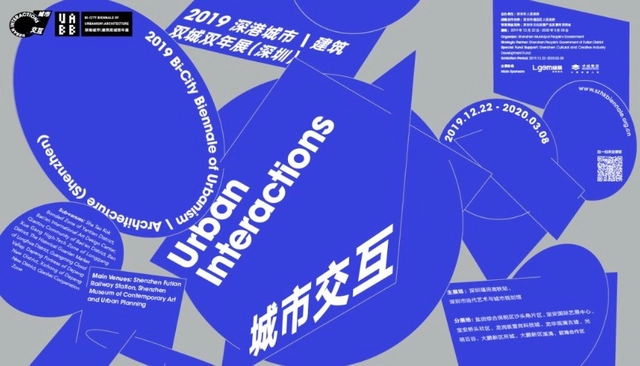
On December 20, 2019, the opening press conference for the eighth **Bi-City Biennale of Urbanism\Architecture (Shenzhen)** (hereinafter "UABB") was held at the **Shenzhen Museum of Contemporary Art and Urban Planning (MOCAPE)**, marking the official launch of this year's biennale.
Under the theme of "**Urban Interactions**," this year's UABB is chief-curated by architect and director of the MIT Senseable City Lab **Carlo Ratti**, academician of the Chinese Academy of Engineering **Meng Jianmin**, and renowned curator and art critic **Fabio Cavallucci**. The South China-Turin Joint Lab (Politecnico di Torino and South China University of Technology) serves as the academic curator. The exhibition **opens on December 21, 2019, at the main venues—the Shenzhen Futian High-Speed Railway Station and the Shenzhen Museum of Contemporary Art and Urban Planning—and will officially open to the public on December 22**. In addition, **nine sub-venues** across various districts of Shenzhen will interface with the main venues, establishing an organic network of interaction throughout the city.
The exhibition comprises two main sections, "**Eyes of the City**" and "**Ascending City**," each exploring the evolving relationship between urban space and technological innovation from distinct perspectives. **The main venues showcase over 140 works, bringing together more than 280 exhibitors from 24 countries and regions**. These include renowned international and domestic architects, artists, and institutions such as MVRDV, Liam Young, Stefano Boeri, Sou Fujimoto, Thomas Heatherwick, Ryoji Ikeda, Wang Shu, Yung Ho Chang, Dominique Perrault, Philip F. Yuan, Liu Cixin, and Academicians Cui Kai and Wang Jianguo.
https://www.archdaily.com/1070560/2019-uabb-eyes-of-the-city-section-guideCollin Chen
Best Houses of 2019
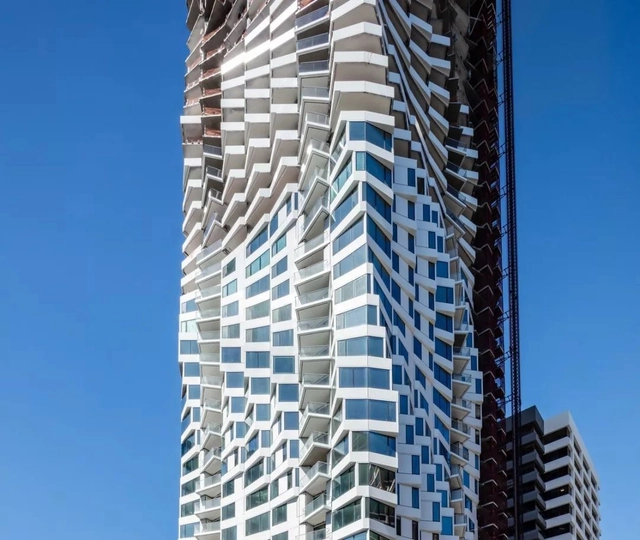
In 2019, ArchDaily published more than 5,000 architectural projects, including hundreds of residential designs. Based on their popularity, we have curated 56 residential projects that stand out for their innovation, technical execution, and design ingenuity. Located across the globe—in cities, countryside, mountains, and coastal areas—they employ a wide range of structural systems and materials, from traditional masonry to cutting-edge prefabricated systems. Most of these designs share a common thread: fostering a powerful dialogue between the home and nature, whether by directly engaging with the surrounding landscape or bringing greenery into dense urban environments. The collection is divided into two sections: Collective Housing, represented by apartment buildings, and Single-Family Homes, represented by private villas and residential renovations.
https://www.archdaily.com/1070438/best-houses-of-2019韩爽 - HAN Shuang
2019 UABB "Ascending City" Section Guide
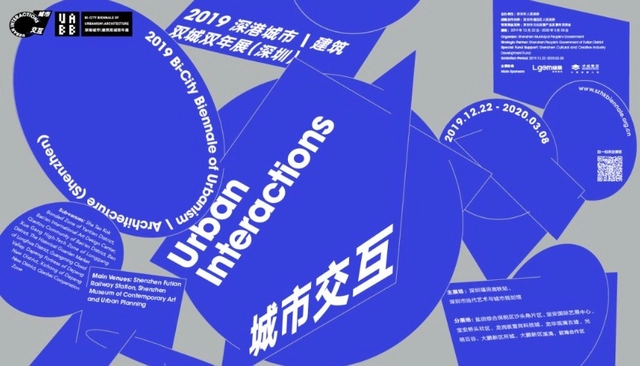
On December 20, 2019, the opening press conference for the 8th Bi-City Biennale of Urbanism\Architecture (Shenzhen) (UABB) was held at the Shenzhen Museum of Contemporary Art and Urban Planning (MOCAPE), marking the official launch of this year’s exhibition.
The theme of this year's UABB is "Urban Interactions." It is chief-curated by architect and director of the MIT Senseable City Lab Carlo Ratti, Academician of the Chinese Academy of Engineering Meng Jianmin, and renowned curator and art critic Fabio Cavallucci. The South China-Torino Collaboration Lab (Politecnico di Torino and South China University of Technology) serves as the academic curator. The exhibition opened on December 21, 2019, at the main venues—Shenzhen Futian High-Speed Railway Station and the Shenzhen Museum of Contemporary Art and Urban Planning (MOCAPE)—and officially opened to the public on December 22. Concurrently, nine sub-venues across various districts of Shenzhen will collaborate with the main venues, forming an organic interactive network throughout the city.
The exhibition features two main sections, "Eyes of the City" and "Ascending City," which explore the evolving relationship between urban space and technological innovation from distinct perspectives. The main venues showcase over 140 works, bringing together more than 280 participants from 24 countries and regions, including MVRDV, Liam Young, Stefano Boeri, Sou Fujimoto, Thomas Heatherwick, Ryoji Ikeda, as well as renowned domestic and international architects, artists, and institutions such as Wang Shu, Yung Ho Chang, Dominique Perrault, Philip F. Yuan, Liu Cixin, Academician Cui Kai, and Academician Wang Jianguo.
https://www.archdaily.com/1070656/2019-uabb-ascending-city-section-guide舒岳康 - SHU Yuekang
Building-Forest (and vice versa)
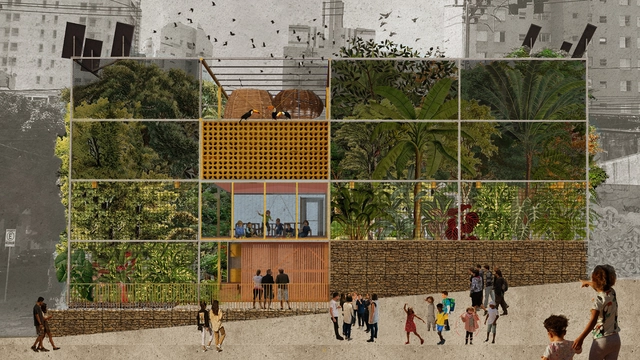
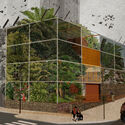
Around 80% of the Brazilian population lives on what was once forest and is not even aware of it. In Brazil, history has been—and continues to be—forged by opposing the city to the forest, within a civilizational matrix fundamentally based on the devastation of native ecologies and their replacement by monocultures and invasive species. In just a few centuries, we have transformed a megadiverse forest continent into sterile environments through urban standardization, bleak architecture, and unsustainable landscaping, imposed as a design project. We live on former forests but resist thinking of cities as forest ruins. [1]



https://www.archdaily.com/1078807/building-forest-and-vice-versaFelipe Carnevalli, Marcela Rosenburg, Márcio Gibram, Wellington Cançado
Research Reveals Disparities in Race and Gender Representation at the Brazilian Pavilion in Venice
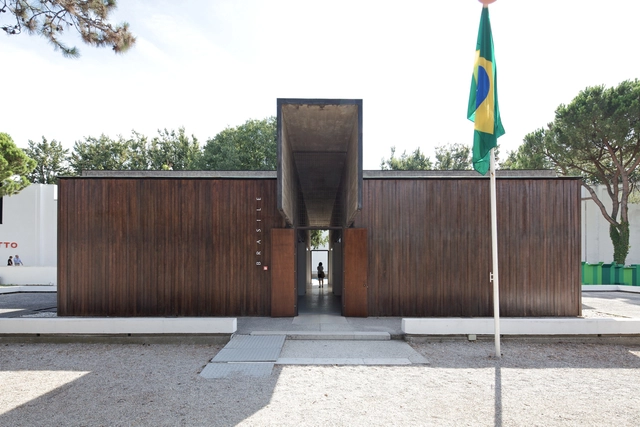
"The history of architecture is incomplete. Not wrong, but incomplete," said Lesley Lokko when announcing The Laboratory of the Future, the theme of the 2023 Venice Architecture Biennale. Echoing the curator's statement, a new study published by Studio Autonoma, led by Paulo Tavares, reveals deep disparities in representation within the Brazilian pavilion at the world's largest architecture event.
Titled Historical Census of the Brazilian Pavilion at the Venice Architecture Biennale (1980-2021), the study reveals a significant discrepancy in the profile of curators and participants over these three decades, with a predominance of white men from Brazil's Southeast region, particularly from São Paulo.
https://www.archdaily.com/1078874/research-reveals-disparities-in-race-and-gender-representation-at-the-brazilian-pavilion-in-veniceRomullo Baratto
Exhibition at Casa da Arquitectura celebrates the role of architecture in 50 years of Portuguese democracy
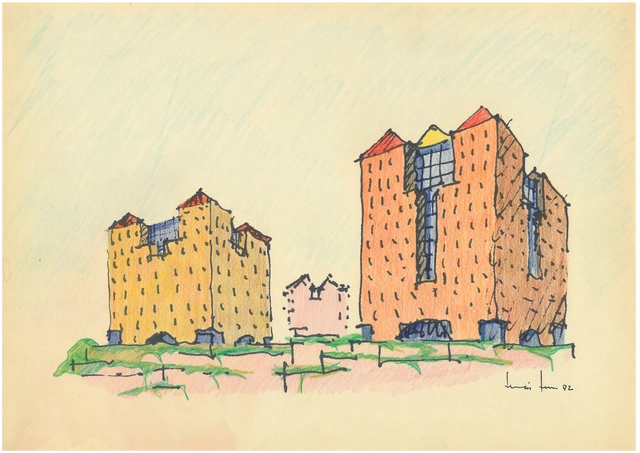
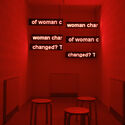
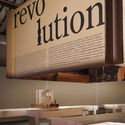
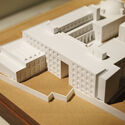
What has architecture done for democracy in Portugal—and what has the democratic era done for Portuguese architecture? These are the questions guiding the exhibition O que faz falta. 50 anos de arquitetura portuguesa em democracia [What is Needed: 50 Years of Portuguese Architecture in Democracy], organized by Casa da Arquitectura, which celebrates the fifty years since the 1974 Carnation Revolution.
Curated by Jorge Figueira with co-curator Ana Neiva, the exhibition highlights the intimate relationship between architecture and the democratic regime in Portugal, exploring how Portuguese architects contributed to democratic consolidation by transforming the country's public and private spaces over five decades.

https://www.archdaily.com/1078871/exhibition-at-casa-da-arquitectura-celebrates-the-role-of-architecture-in-50-years-of-portuguese-democracyRomullo Baratto