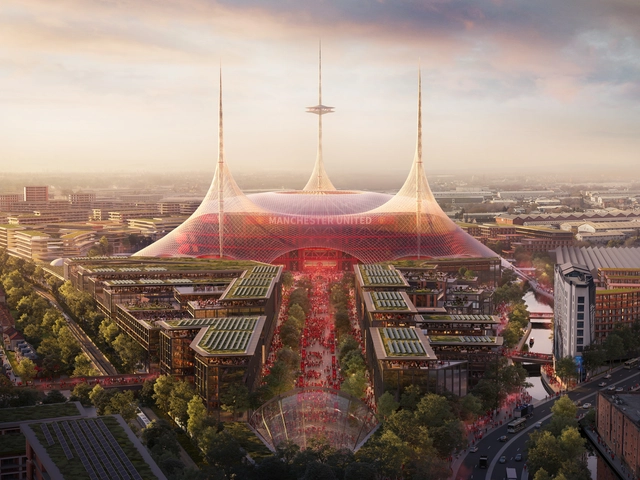
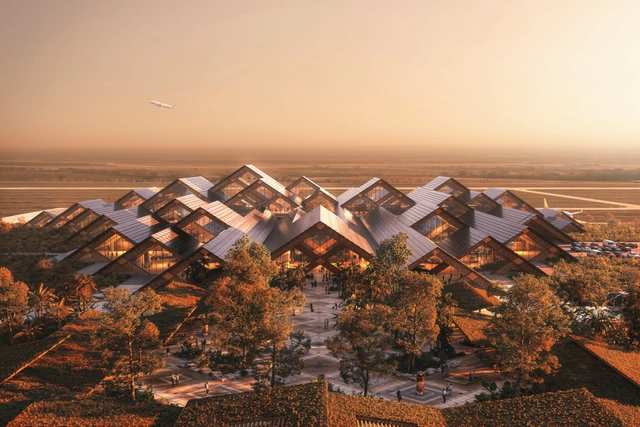
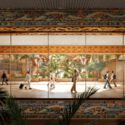
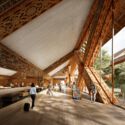
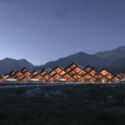
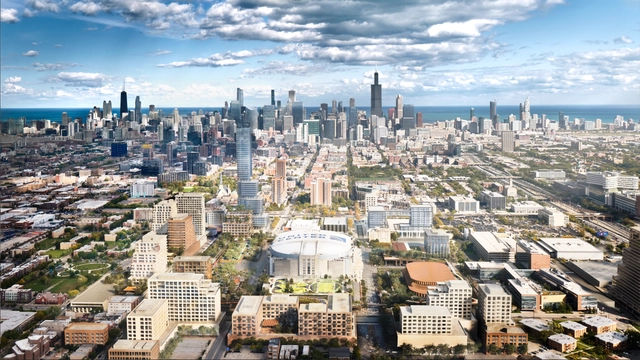
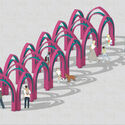
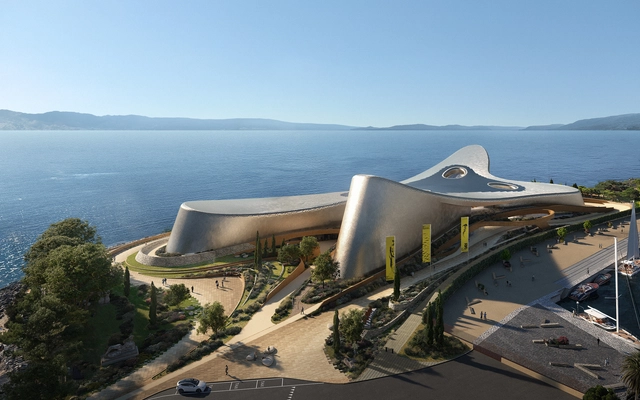
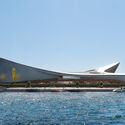
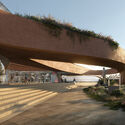
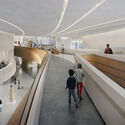
Aerial render. Image Courtesy of Foster + Partners
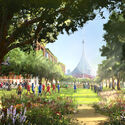
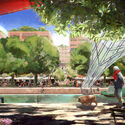
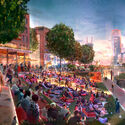
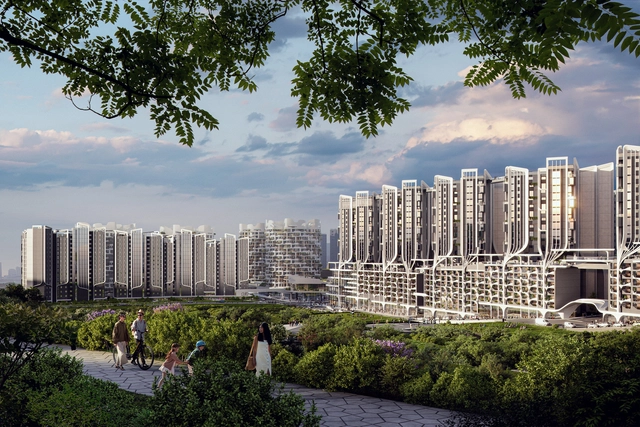
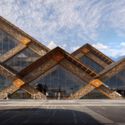
In September 2024, Foster + Partners announced its appointment by Manchester United for the development of a master plan for the Old Trafford Stadium District. The centerpiece of the master plan is a new stadium, set to become the largest football venue in the United Kingdom with a capacity of 100,000 seats. This week, the firm unveiled images of the stadium design along with surrounding public spaces, including parks, mixed-use developments, an open-air cinema, and a renovated train station. These images contain the illustrative concepts that will become the basis for more detailed feasibility, consultation, and planning work as the project enters new stages.
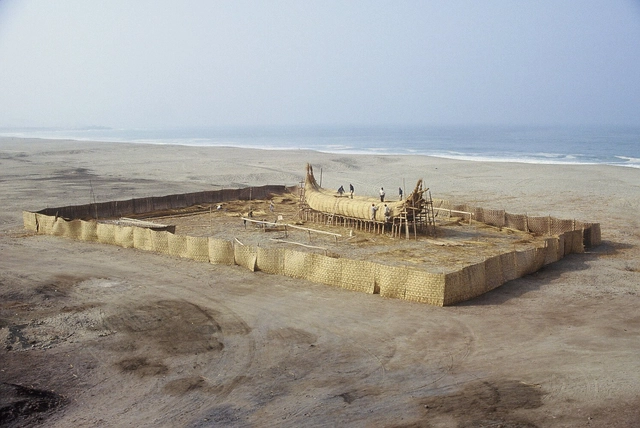
"Living Scaffolding" is the name of the proposal selected to represent Peru at the 19th International Architecture Exhibition – La Biennale di Venezia. Curated by architects Alex Hudtwalcker, Sebastián Cillóniz, and Gianfranco Morales, along with historian José Ignacio Beteta, the exhibition tells the story of a totora reed raft that, in 1988, embarked on a sea journey to other ports in South America and Polynesia. Its unprecedented expedition began on the Peruvian coast south of Lima and lasted 54 days at sea. The raft was the result of a collective, handcrafted effort and a significant structural challenge. The exhibition aims to highlight the importance of ancestral knowledge in addressing such challenges, celebrate materials essential to Peruvian cultural heritage, and expose the value of collective intelligence.
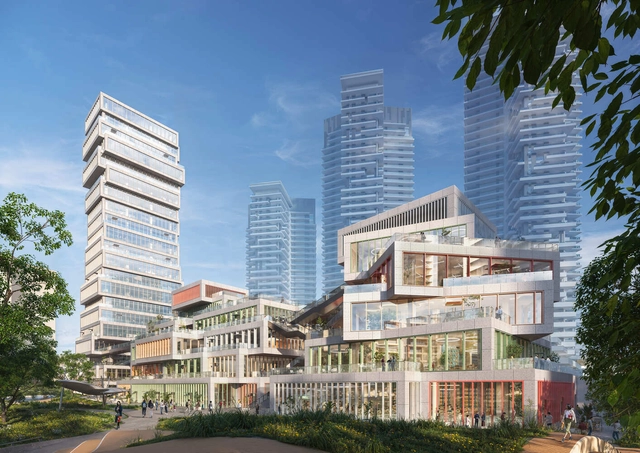
MVRDV has just released its design for LuLa Light Mall, an open-air shopping center under construction in Chengdu's Luxelakes Eco-City, China. The scheme consists of stacked boxes with open spaces between them, creating terraces, walkways, and staircases that integrate the natural surroundings and provide views of the nearby lake. Luxelakes Eco-City, a developing district in southern Chengdu, spans 5.5 square kilometers and features 1.4 square kilometers of lakes and green spaces. The mall's location, positioned between the natural landscape to the southeast and high-rise buildings to the northwest, serves as a transition between urban and natural environments.
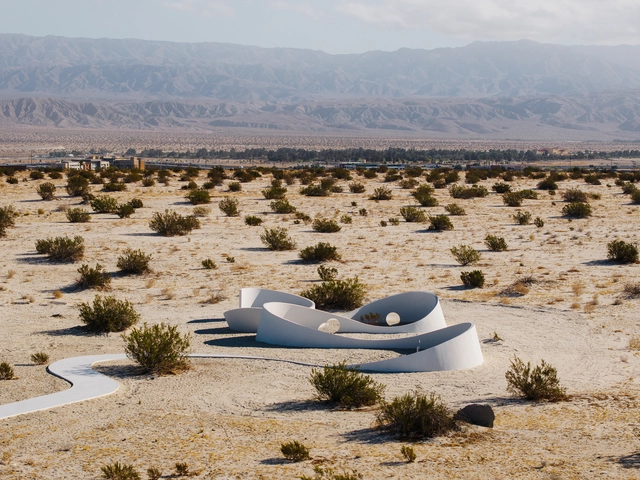
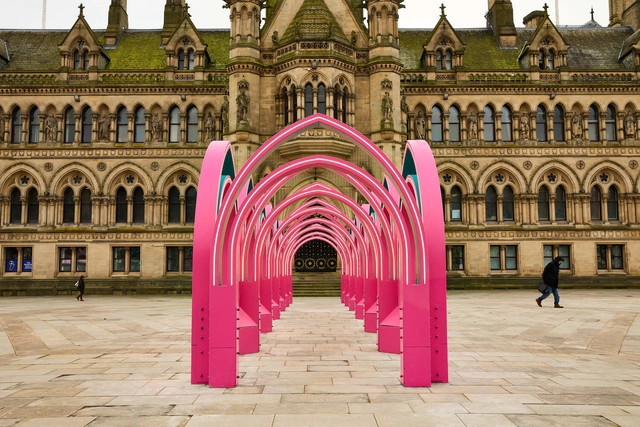
Desert X is a site-specific international art exhibition taking place this year across the Coachella Valley, California. Its fifth edition, curated by Artistic Director Neville Wakefield and co-curator Kaitlin Garcia Maestas, opened on March 10, 2025, featuring eleven installations by international artists integrated into the desert landscape. Artists were invited to propose alternative ways of perceiving a world "increasingly encircled by the transformational effects of nature and humanity," through physical installations in specific locations within the California desert. In this context, architecture is understood as the most visible evidence of human transformation, while immaterial elements, such as wind and light, highlight the transformative effects not only of human activity but also of nature itself. The exhibition is free and open to all, running through May 11, 2025. Below are images and descriptions of the eleven art installations featured in this year's Desert X exhibition.
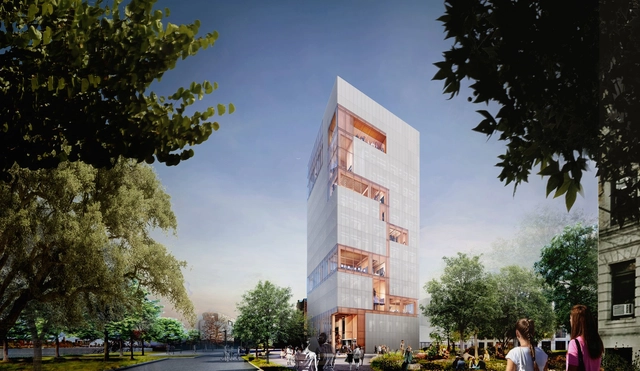
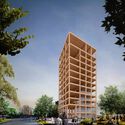
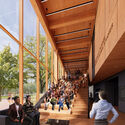
Diller Scofidio + Renfro has unveiled the design for the new Frederick S. Pardee School for Global Studies at Boston University, a project aiming to integrate sustainability, urban density, and interdisciplinary collaboration. The 70,000-square-foot building will rise 186 feet, making it the tallest mass timber tower in the Northeast United States. Situated on a former parking lot at the heart of the university's campus, the structure will occupy just 10% of the site, allowing for the creation of a central green space in the future.
Overall Framework Render. Image Courtesy of Sasaki
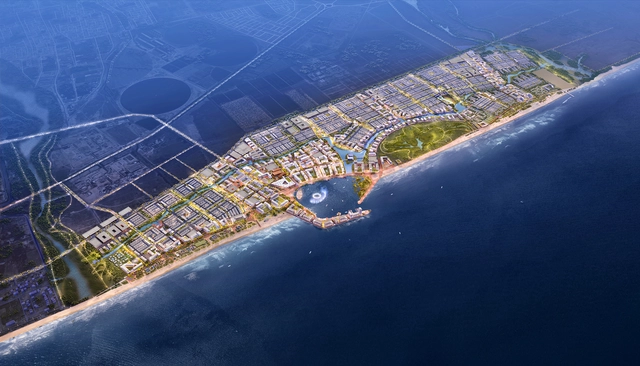
Salalah is Oman's largest logistics port and its second-largest city. Located within a two-hour flight from Dubai and a 90-minute flight from Muscat, the city attracted over one million tourists in 2024. As part of the Oman Vision 2040 investment plan, Oman's Ministry of Housing and Urban Planning has commissioned Sasaki to develop a master plan for redesigning the city's waterfront. The plan includes renovating the city's coastal public spaces and constructing new housing and infrastructure to accommodate projected growth. The project is part of a broader initiative to double tourism's contribution to the nation's GDP by 2030, with on-site construction set to begin later this year, in 2025.
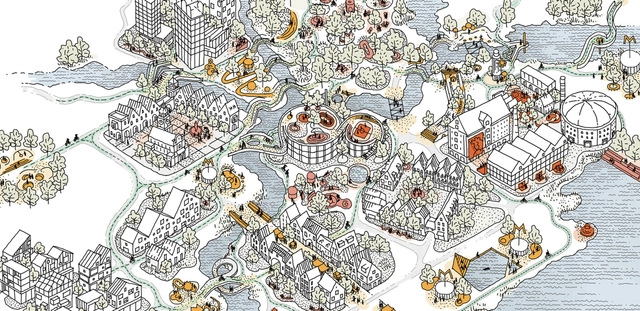
Henning Larsen has just launched a new initiative in Esbjerg, Denmark, aimed at rethinking urban spaces through the perspectives of teenage girls. Developed in collaboration with Esbjerg Municipality, Ramboll, Catapult Projects, and KOMPAN, the project builds on research from the Urban Minded framework to explore how co-creation can shape more inclusive public environments. Supported by a 2.3 million DKK grant from the Villum Foundation and 485,000 DKK from the Ramboll Foundation, the initiative seeks to address an often-overlooked demographic in urban planning. As cities continue to evolve, conversations around gender-inclusive urban spaces have gained momentum, particularly in light of International Women's Day.
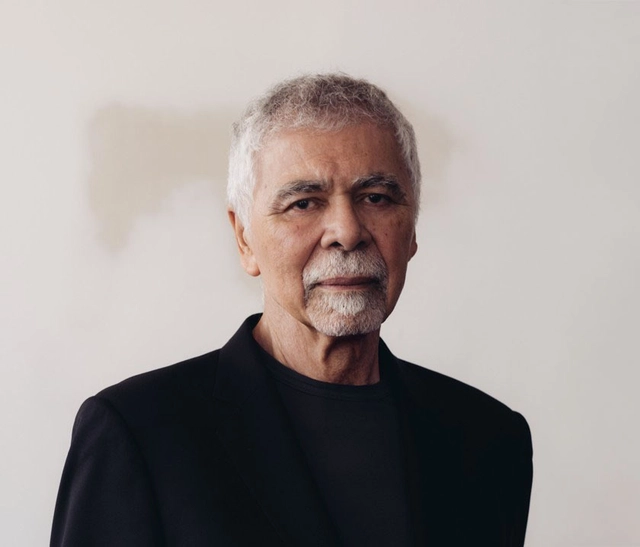
Portrait of Ricardo Scofidio. Image Courtesy of Diller Scofidio + Renfro
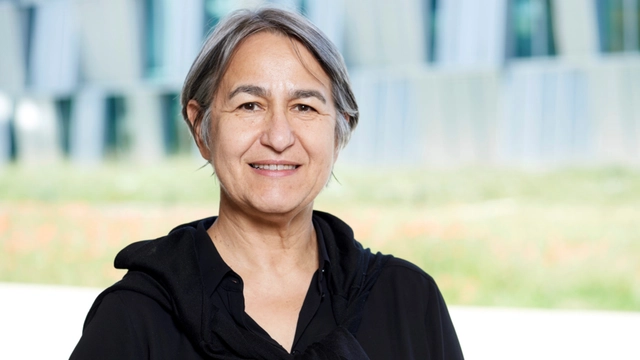
Ricardo Scofidio, a distinguished figure in the world of architecture, passed away on March 6, 2025, at the age of 89. Born in New York City in 1935, Scofidio co-founded the influential architecture firm Diller Scofidio + Renfro (DS+R) with his partner Elizabeth Diller in 1979. Together, they brought to the profession a conceptual art sensibility, influencing the design of globally recognized cultural landmarks and public spaces. Among their most notable projects are the High Line in Manhattan and the transformation of Lincoln Center, each reflecting the studio's ambition of challenging conventional architectural premises.
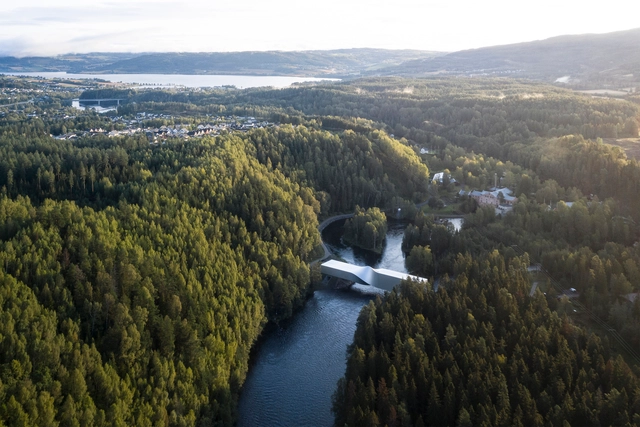
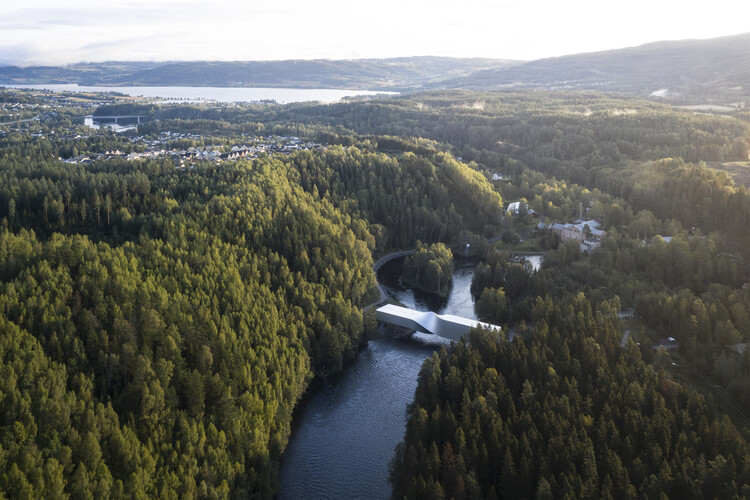
In the autumn of 2024, the Kistefos Museum Foundation invited 28 architectural firms to participate in a prequalification process to design a new site-specific standalone gallery. Scheduled to open in 2031, the new museum building will house the art collection of the museum's founder, Christen Sveaas. The gallery will join Kistefos' sculpture park, which features 55 works by international artists such as Yayoi Kusama, Olafur Eliasson, Fernando Botero, and Anish Kapoor, as well as an industrial museum and BIG's award-winning art gallery, The Twist. Additionally, a new visitor center, designed by the Oslo-based architectural firm Lund Hagem, is set to open in 2026.
This month's architecture news highlights a strong focus on sustainability, adaptive reuse, and innovative community-centered design. From environmentally responsiveurban developments to cultural and recreational spaces, architects are redefining how buildings interact with their surroundings. Notable examples include 3XN's Sydney Fish Market redevelopment, which integrates public accessibility with climate-sensitive design, and CambridgeSeven's Seneca Park Zoo expansion, which blends conservation efforts with immersive visitor experiences. Whether it's the creation of high-performance sports facilities in Portland or the transformation of historic sites into contemporary hubs, these projects showcase the evolving role of architecture in shaping communities. Read on to discover the latest architectural news and developments.
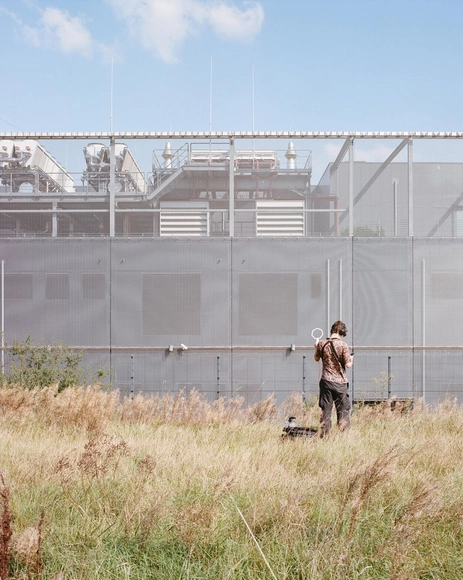
The Luxembourg pavilion at the 19th Venice Architecture Biennale will offer visitors an experience focused entirely on sound. Sonic Investigations, curated by architects Valentin Bansac, Mike Fritsch, and Alice Loumeau, is an immersive invitation to shift focus from the visual to the sonic. The sound installation, located in the Arsenale's Sale d'Armi, is based on a practical and theoretical investigation that re-examines the country's territory through field recordings capturing a range of sounds from biological, geological, and anthropogenic sources woven into the landscape. The installation creates an embodied experience of space, emphasizing the value of sensorial approaches in spatial practices and exploring the question: How can we reveal the entangled character of specific contemporary situations in Luxembourg?
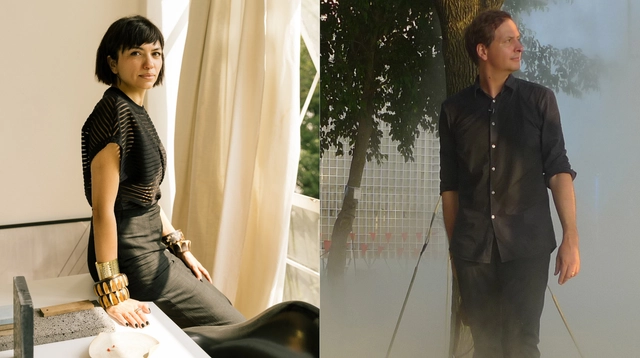
https://www.archdaily.com/1027646/sana-frini-and-philippe-rahm-curate-the-architecture-exhibition-at-the-2025-versailles-biennale-of-architecture-and-landscapeArchDaily Team
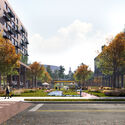
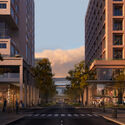
The United Center arena in Chicago, designed by HOK Sport (now Populous), Marmon Mok, and W.E. Simpson Company, was built between 1992 and 1994. With a capacity of over 20,000 seats for sports and general events, it includes more than 6,000 parking spaces in lots surrounding the arena. These parking lots span approximately 55 acres (over 22 hectares) in Chicago's West Side (1901 W. Madison Street). A new master plan, named the 1901 Project, aims to transform this space into a mixed-use neighborhood. Led by design collective RIOS, with contributions from landscape architecture studio Field Operations, this long-term, multi-phase project aims to connect neighborhoods by creating new public spaces and infrastructure on a metropolitan scale. The proposal recently received approval from the Chicago Plan Commission.
Pakistan has unveiled its national pavilion for the 19th International Architecture Exhibition - La Biennale di Venezia, set to take place from May 10 to November 23, 2025, in Venice, Italy. Titled (Fr)Agile Systems), the pavilion explores the dual nature of resilience and vulnerability in the face of climate change, using Pakistan's rich geological and cultural heritage as a lens to examine global environmental inequities. Through a striking installation featuring rock salt, a material shaped by time yet susceptible to change, the pavilion challenges dominant narratives of climate adaptation, advocating for localized, nature-based solutions rather than one-size-fits-all approaches.
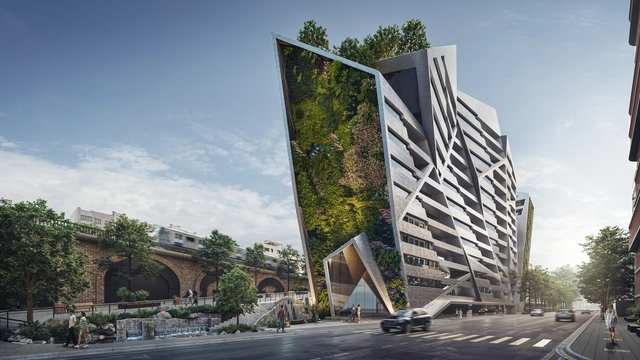
Following an international competition, Polish American architect Daniel Libeskind's firm, Studio Libeskind, in collaboration with La Compagnie de Phalsbourg, has been selected to design the flagship building for the Léon Blum district, adjacent to the future Line 15 station of the Grand Paris Express. The competition featured eight teams, including Snøhetta, Valode et Pistre, Stefano Boeri, Sou Fujimoto, and Jean-Paul Viguier. The winning project is a mixed-use building of over 20,000m², featuring a green wall and incorporating bio-sourced materials. The project is part of a broader urban development strategy for Issy-les-Moulineaux, an extra-wall area of Paris currently undergoing significant transformation.
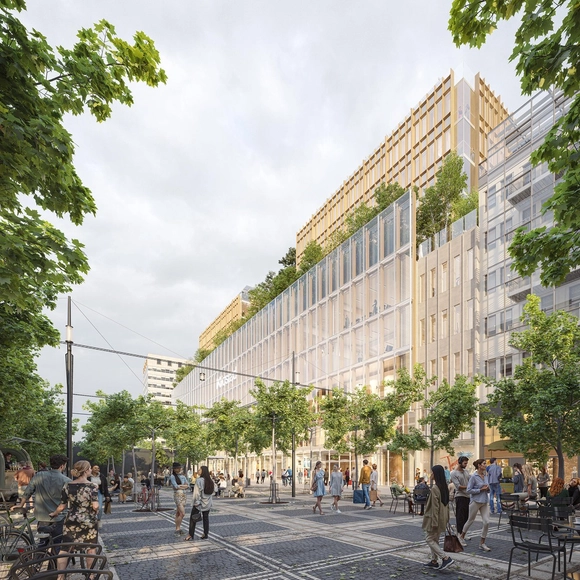
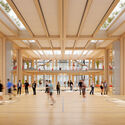
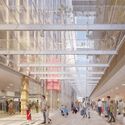
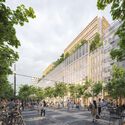
Renzo Piano Building Workshop (RPBW), in collaboration with Holger Meyer Architekten, has won the competition for the new Midstad project in Frankfurt. Led by Joost Moolhuijzen and Erik Volz, the design reimagines the future of European city centers as resourceful and multifunctional. The project involves a 35,000 m² rehabilitation of an existing department store on the Zeil in Frankfurt's city center, integrating a six-story mass timber extension and a mixed-use, community-driven program. The project involves reconstruction during ongoing operation, partial demolition, and the expansion of the existing department store.
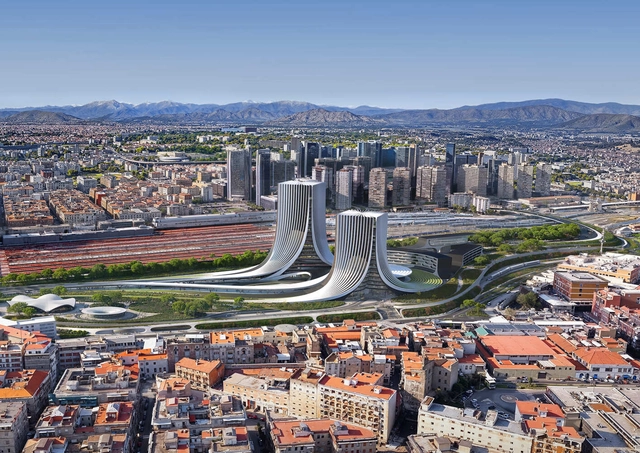
Zaha Hadid Architects (ZHA) has been announced as the winner of the international design competition for the Napoli Porta Est masterplan, a large-scale urban regeneration project in Naples, Italy. The project, which includes the new Campania Region headquarters, aims to reconnect fragmented urban areas and revitalize a district that has long been considered isolated and unsafe due to inadequate public spaces and physical barriers.
The Istanbul Foundation for Culture and Arts (İKSV) has appointed Christine Tohmé as the curator for the 18th Istanbul Biennial, which will take place in three phases over three years from 2025 to 2027. According to the Biennial Foundation, this edition was postponed from 2024 by the Istanbul Foundation for Culture and Arts (İKSV). This Biennial remains Türkiye's largest international exhibition dedicated to contemporary art, offering a significant platform for artists globally. Titled The Three-Legged Cat and will unfold in three distinct phases, exploring themes of self-preservation and futurity, reflecting Tohmé's curatorial approach of engaging deeply with artistic production and local communities.
Zaha Hadid Architects have announced the breaking ground for the Centre of Mediterranean Culture in Reggio Calabria, Italy. The 24,000 square-meter structure houses diverse spaces, including a network of exhibition galleries, both permanent and temporary, capable of showcasing a wide range of displays. An integrated aquarium is a key feature, offering visitors a glimpse into the marine life of the Strait. The building also provides conference facilities, including a large auditorium suitable for performances, presentations, and industry events. Dedicated educational spaces are incorporated to support the region's schools, and visitor amenities include a bookshop and a restaurant and bar overlooking the port.
The United Kingdom Government has announced the shortlisted design teams for the national memorial dedicated to Queen Elizabeth II, following the first stage of a two-stage open competition that attracted creative talent from the UK and beyond. The five teams moving forward in the competition are Foster + Partners with Yinka Shonibare and Michel Desvigne Paysagiste; Heatherwick Studio with Halima Cassell, MRG Studio,Webb Yates, and Arup; J&L Gibbons with Michael Levine RDI, William Matthews Associates, Structure Workshop, and Arup; Tom Stuart-Smith with Jamie Fobert Architects, Adam Lowe (Factum Arte), and Structure Workshop; and WilkinsonEyre with Lisa Vandy, Fiona Clark, Andy Sturgeon Design, Atelier One, and Hilson Moran.
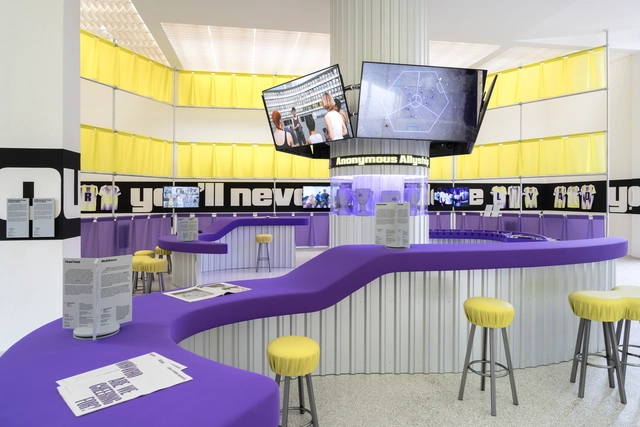
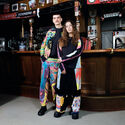
Nieuwe Instituut, the national museum and institute for architecture, design, and digital culture in the Netherlands, has opened the Dutch Pavilion at the 2025 Venice Architecture Biennale. This year, the Giardini pavilion, designed by Gerrit Rietveld in 1953, is transformed into a sports bar. Titled "SIDELINED: A Space to Rethink Togetherness", the exhibition is curated by Amanda Pinatih, Design & Contemporary Art Curator at the Stedelijk Museum in Amsterdam, in collaboration with social designer Gabriel Fontana. Through a queer lens, the project examines sport as an architectural system that regulates spaces, bodies, and behavior, offering an alternative perspective on societal norms related to gender, identity, and group dynamics.