For the most part, rubber isn’t considered a conventional building material – at least not to the same extent that materials like wood, concrete, or glass are. But rubber is commonly used in interiors for flooring of extraordinary color or brightness, and even more unexpectedly for exterior facades with unique aspects or upholstery effects. This functionality is motivated by unique advantages such as smoothness, elasticity, durability, and color consistency.
The digital revolution coupled with the unforeseen environmental, economical and social challenges our world face today, urge architecture to shake much of the traditions and basis upon which it operated for the last decades, if not centuries.
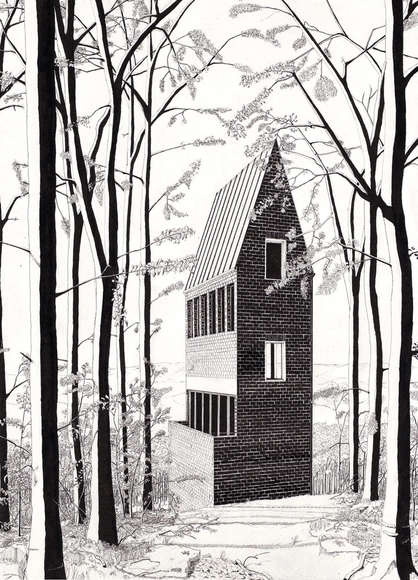
Denis Andernach, Turmhaus, 2010, Ink on paper, 14 1/8 x 18 7/8 in
A century on, the compelling idea that Modern architecture emerged like some blindingly white, crystalline and disruptive phoenix from the darkness, death and destruction of the First World War is, perhaps, a familiar one. And, yet, the charcoal sketches and chiaroscuro montages Mies van der Rohe made during and after the epochal competition for the Berlin Friedrichstrasse Skyscraper of 1921-22 retain the power to catch the eye, provoke and disturb in our own era of overwhelming imagery much of it produced by and with computer programs.
What is so very remarkable about these century-old visionary drawings is that they portray a future building type - verging on the ethereal and more or less impossible to realize at the time - in the earthiest of drawing materials. It had been a stroke of genius to use charcoal to evoke an architecture of lightness rising from the embers of the trenches that would revolutionize the way we shaped tall buildings and with them our city streets. Such is the power of drawing by hand.
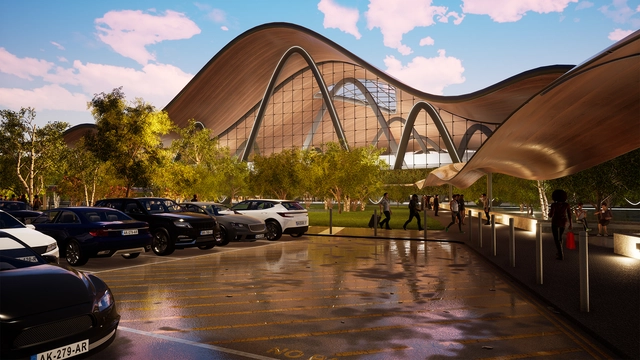
By now, you’ve likely heard about real-time rendering for architectural visualization and how it’s changing the way designs are presented. With real-time rendering, you can edit your design and see the changes updated instantly, at full quality, and you can produce animations and panoramas in minutes instead of days. Real-time rendering also opens the door to immersive experiences like 360° videos and virtual reality.
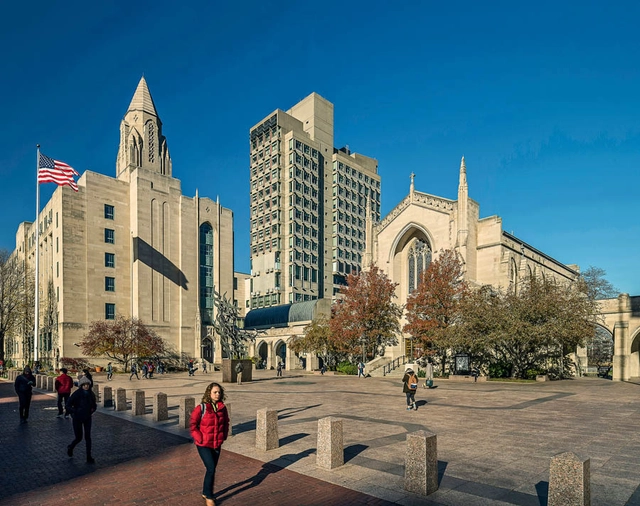
In 1964, the Law Tower at Boston University opened, whereupon it quickly ran afoul of students and faculty. The building, which was designed by Josep Lluís Sert, was unaccommodating and averse to modification. In a bid to rectify these problems, Boston firm Bruner/Cott both renovated and added to the tower in 2015. Courtesy Richard Mandelkorn
Through his campus work, Sert left an incredible built legacy on the Boston area. But his buildings have taken some getting used to.
In hindsight, it seems a bit odd that a Catalan architect with a penchant for concrete buildings and jaunty accents of color—he liked to say, “It’s good to see a parrot against an elephant”—ever held sway over Brahmin Boston and nearby Cambridge. It was midcentury, and he was Josep Lluís Sert, Barcelona-born, a great devotee of Le Corbusier, and dean of the Harvard University Graduate School of Design (GSD) from 1953 to 1969.
The Latvian city of Riga, the largest between the three Baltic states, is undergoing a cultural and urban renaissance. The city's pedestrian-only Old Town is a UNESCO World Heritage Site with several museums, cultural centers, and restaurants, attracting thousands of new visitors every year.
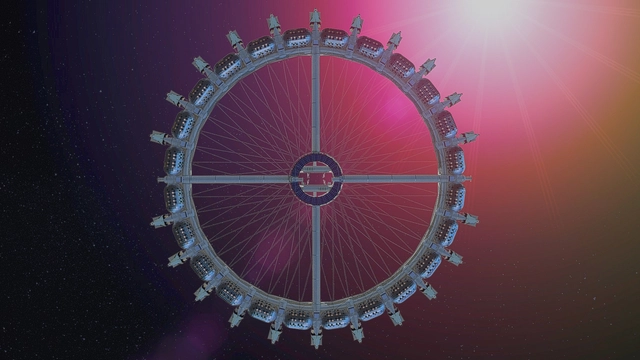
As California makes strides in sustainability, the Von Braun Space Station is taking rather large steps for humankind. Exploring the great unknown does not have to mean abandoning our planet — it can mean just the opposite. In fact, this space station could be our most monumental step toward a sustainable future.
https://www.archdaily.com/925493/sustainability-in-space-what-california-green-building-standards-and-the-von-braun-space-station-have-in-commonSienna Mae Heath
Videos
Courtesy of Richard John Seymour & 3RW Arkitekter
The various practices of mankind over the past decades have taken a huge toll on the environment. People of all nationalities, interests, and career backgrounds have been trying to find means to heal the wounded landscapes and shed light on the environmental crisis.
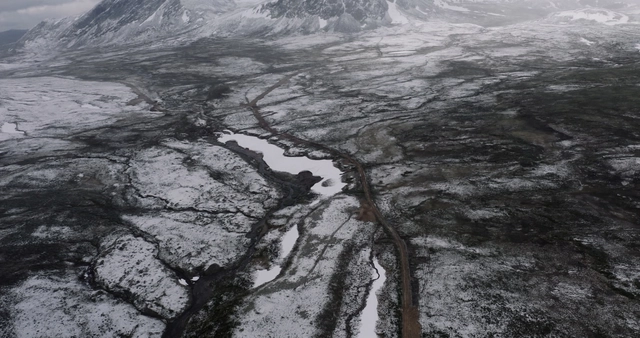
Directed by BAFTA-nominated film director Richard John Seymour and produced by Norwegian design firm 3RW arkitekter, Landscape Healing is a cinematic documentary that follows the journey of a diverse group of people who have been setting a paradigm for humanity's greatest challenge: the rewilding of our planet back to a sustainable level.
What happens when the sensor-imbued city acquires the ability to see – almost as if it had eyes? Ahead of the 2019 Shenzhen Biennale of Urbanism\Architecture (UABB), titled "Urban Interactions," ArchDaily is working with the curators of the "Eyes of the City" section at the Biennial to stimulate a discussion on how new technologies – and Artificial Intelligence in particular – might impact architecture and urban life. Hereyou can read the “Eyes of the City” curatorial statement by Carlo Ratti, the Politecnico di Torino and SCUT.
Nowadays materials are requested to play a more engaging role in the digital society.
They can be customized down to their molecular properties and this capacity has an enormous impact on related fields of science, but they also need to be interpreted in their meaning thanks to our ‘semantic capital’, as Luciano Floridi said.
We cannot reduce materials to their property and performances as, as humans, we use them to interpret the world, they are our continuously changing material culture to find an equilibrium between nature and built environment.
Accessibility and mobility. When perceived through the architectural lens, these terms often evoke a range capped by two extremes. On the one end, the flexibility of circulation systems; the universality of egress networks; and the technicalities of minimums and maximums. On the other end, a project’s capacity to support broad ranges of socioeconomic narratives; its malleability in the face of rapid fluctuations of program and function; and its reactivity in maintaining a productive role amidst the ebbs and flows of societal dynamics.
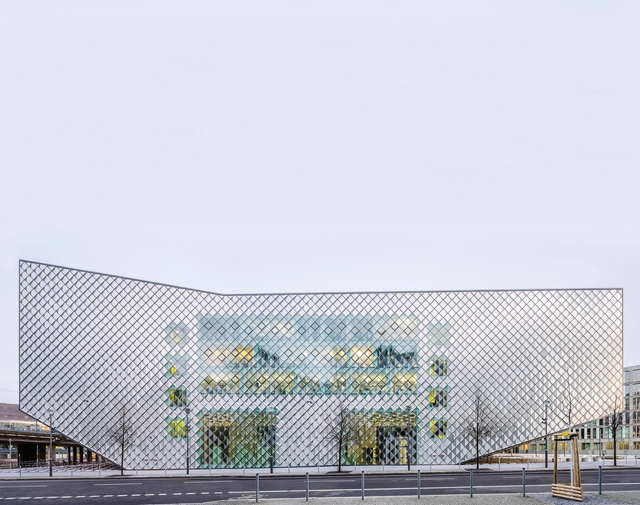
Facades are the interface between the interior and exterior of a building. They are the most striking and visible parts of a building, they protect it from external agents and are one of the main contributors to creating comfortable environments since it is where thermal gains and losses occur. Just like our skin, an extremely versatile organ of our body, it should be natural for it to be the part of the building which bears technology capable of becoming adaptable to the environmental conditions of the place where it is located.
Customization, within the context of interior architectural design, is a resurfacing topic among cross-disciplined design firms focused on interior architecture. Since the reemergence of the Localism trend, individuals and organizations increasingly seek one-of-a-kind experiences, objects, and spaces that can help deepen their connections to their communities.
The Midnight Charette is an explicit podcast about design, architecture, and the everyday. Hosted by architectural designers David Lee and Marina Bourderonnet, it features a variety of creative professionals in unscripted conversations that allow for thoughtful takes and personal discussions. A wide array of subjects are covered with honesty and humor: some episodes provide useful tips for designers, while others are project reviews, interviews, or explorations of everyday life and design. The Midnight Charette is also available on iTunes, Spotify, and YouTube.
On this episode of The Midnight Charette podcast, hosts David Lee and Marina Bourderonnet are joined by Andrew Kovacs - Architect and Founder Office Kovacs and Curator of Archive of Affinities - to discuss the philosophy behind his work, the lack of opportunities young progressive architects have in the United States, designing Colossal Cacti for Coachella, the positives of Postmodernism, using Archive of Affinities as a design resource, and more! Call the hotline to leave feedback and questions by voicemail at 213-222-6950.
https://www.archdaily.com/925399/andrew-kovacs-on-archive-of-affinities-and-postmodernismThe Second Studio Podcast
Architecture is inherently linked to policy, politics, and power. With responsibility for the design and perception of the built environment, architects have a distinct role in shaping the human urban experience. As the world confronts issues of climate change, forced migration, and affordable housing, architects are increasingly putting themselves on the front line of the debate, using a variety of tools and avenues to clamor for change, and indeed design for it. However, while many official avenues exist for architects to advocate for social and environmental reform, there is an under-theorized method of resistance, a ‘road less traveled’ for social progress beyond officialdom.
https://www.archdaily.com/925260/we-need-diy-activist-architecture-to-fight-climate-changeNiall Patrick Walsh
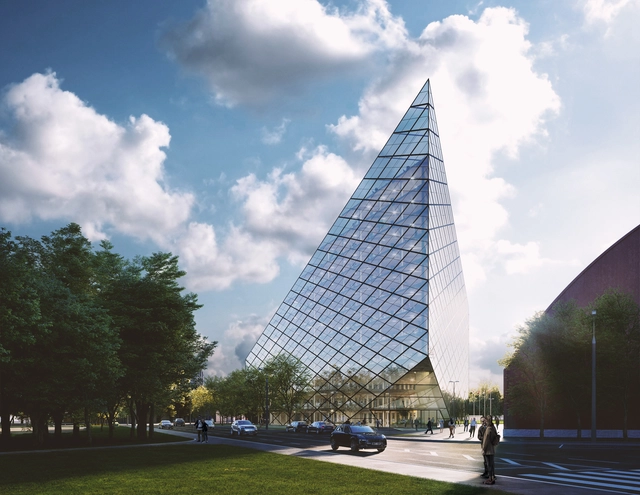
There’s a lot of buzz going on in terms of technology-driven innovation in the AEC industry. Especially the increasing use of 3D renderings and virtual reality for architectural projects is hitting every architect’s newsfeed. Photorealistic images and virtual reality walk-throughs seem to be turning into the new industry standard. That being said, for many architectural firms it seems to be hard to keep up with quickly developing new tech and thereby find ways to differentiate themselves from the competition.
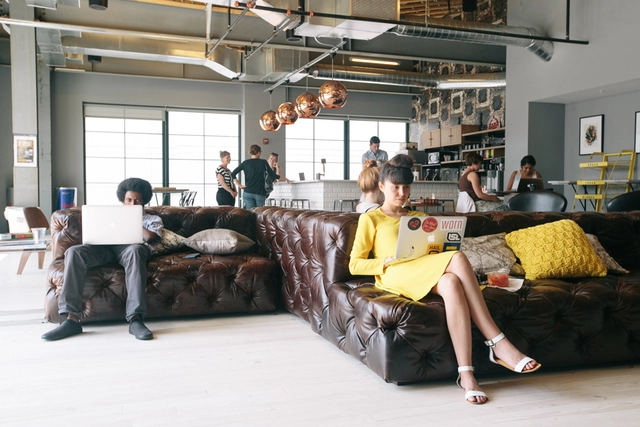
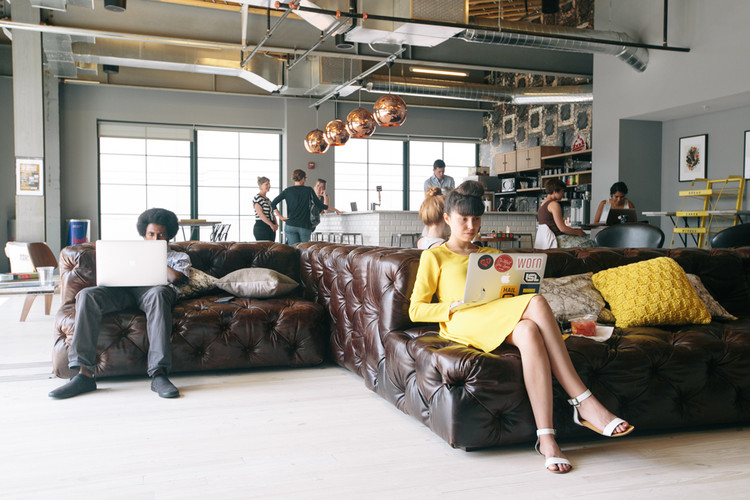
Recent years have seen a dramatic transformation in population distribution: today, more than half of the world's population now lives in cities. In parallel fashion, housing and work spaces have all increasingly embraced the communal, resembling the impulse toward public spaces in new cities.
What happens when the sensor-imbued city acquires the ability to see – almost as if it had eyes? Ahead of the 2019 Shenzhen Biennale of Urbanism\Architecture (UABB), titled "Urban Interactions," ArchDaily is working with the curators of the "Eyes of the City" section at the Biennial to stimulate a discussion on how new technologies – and Artificial Intelligence in particular – might impact architecture and urban life. Hereyou can read the “Eyes of the City” curatorial statement by Carlo Ratti, the Politecnico di Torino and SCUT.
Thanks to the development of the digital world, cities can be part of natural history. This is our great challenge for the next few decades.
The digital revolution should allow us to promote an advanced, ecological and human world. Being digital was never the goal–it was a means to reinvent the world. But what kind of world?


















.jpg?1569016185&format=webp&width=640&height=580)