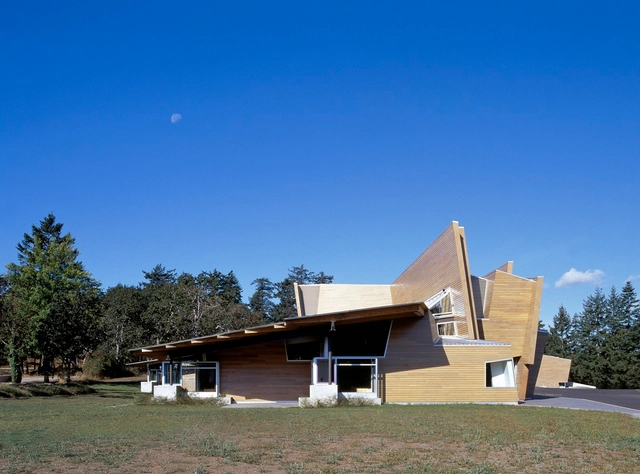
In the struggle against the homogenizing forces of an increasingly globalized architectural culture, the particularized interventions of Patkau Architects in the Canadian southwest proffer a means of resistance, grounded in the immediacy of context and the sacrosanctity of nature. Combining local material palettes with a rich tectonic vocabulary that borrows from the diverging currents of modernity and vernacular practice, the firm’s projects are dynamic and eminently sui generis, the results of an inspired pursuit at the nexus of regionalism, technology, and critical theory.
Videos
Courtesy of Balmond Studio & Studio Libeskind
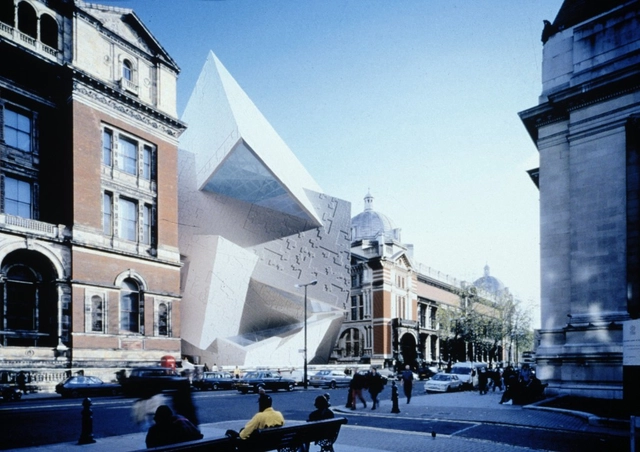
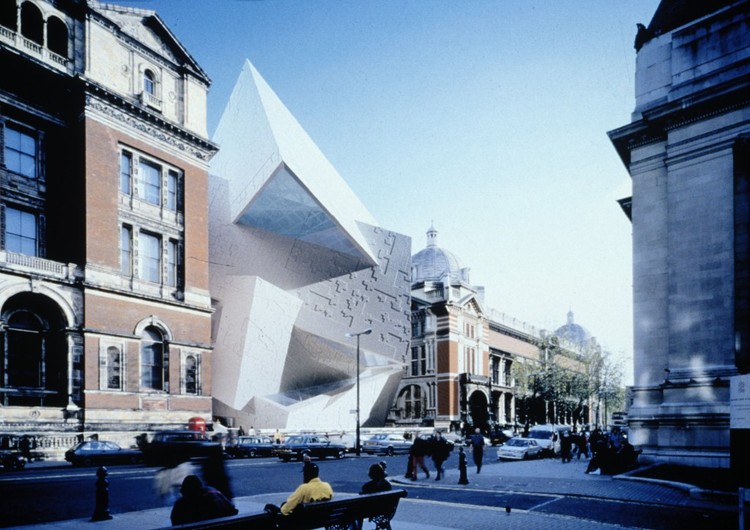
The violent insertion of Daniel Libeskind’s Spiral into the Victorian neighborhood of South Kensington renders a cataclysmic disruption into a landscape of order and propriety. It envisions a rupture in the fabric of space and time, aggressively anachronistic from the building it adjoins, unapologetically appealing not to cultured humanism but to the mathematical logic of complexity and chaos. What is now textbook "Libeskind" was in 1996 a shocking non-starter for the London establishment, an unacceptable risk for a city perpetually torn between its agitated cosmopolitan energies and its quintessential impulse toward nostalgia and restraint. Nearly twenty years after the Spiral was selected as the winner of a distinguished international competition, this controversial extension proposal for the Victoria and Albert Museum remains unbuilt.
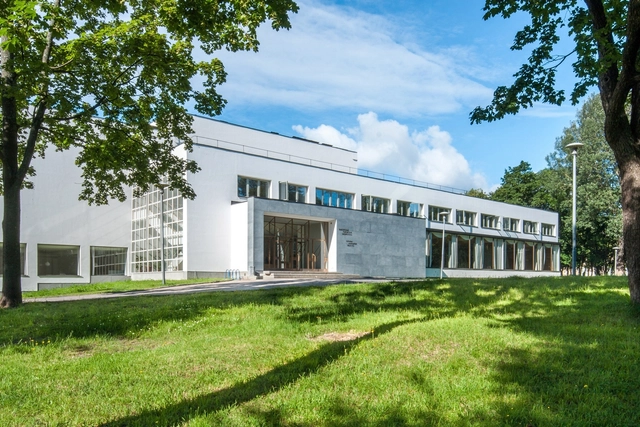
Despite being one of the seminal works of modern Scandinavian architecture, Alvar Aalto’s Viipuri Library languished in relative obscurity for three-quarters of a century until its media breakthrough in late 2014. Its receipt of the World Monuments Fund/Knoll Modernism Prize for a recent renovation was covered by news outlets around the world, bringing the 1935 building previously unseen levels of attention and scrutiny.
This renaissance is nothing less than extraordinary. Abandoned for over a decade and allowed to fall into complete disrepair, the building was once so forgotten that many believed it had actually been demolished. [1] For decades, architects studied Aalto’s project only in drawings and prewar black-and-white photographs, not knowing whether the original was still standing, and if it was, how it was being used. Its transformation from modern icon to deserted relic to architectural classic is a tale of political intrigue, warfare, and the perseverance of a dedicated few who saved the building from ruin.
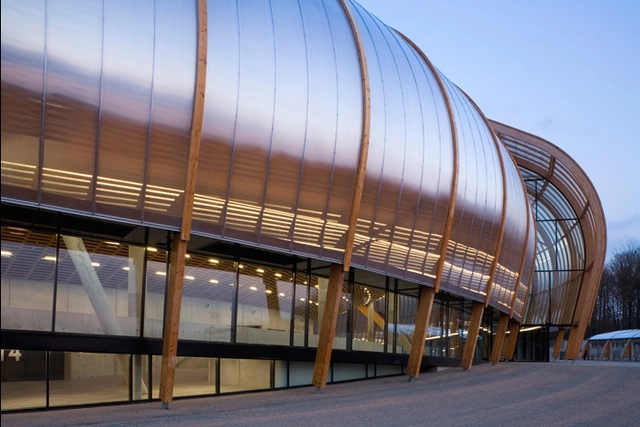
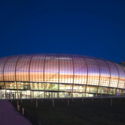
For those familiar with the more canonical work of Bernard Tschumi, the Limoges Concert Hall may seem a puzzlingly conventional departure from the radical, intensively theoretical projects that introduced the world to the Swiss architect. In one sense, the visual clarity of the design doesn’t provoke the same complex discourses on architectural violence and eroticism that guided his early-career pursuits, and it is certainly a more functional evolution of his polemic on non-programmatic space that was famously exhibited at Parc de la Villete. In another sense, the concept and form of Limoges aren't anything novel, either, emerging almost in its entirety from a concert hall prototype Tschumi developed in the late 1990s for a similar venue at Rouen. But Limoges is important for other reasons: in addition to its thoughtful material and spatial choices, it is one of the more articulate illustrations of Tschumi’s explorations of movement and enclosure—“vectors and envelopes”—that inform much of his recent work.
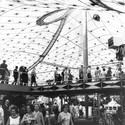
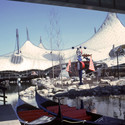
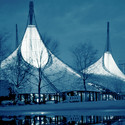
The pivotal turning point in the late Frei Otto’s career – capped by last month’s Pritzker announcement – came nearly fifty years ago at the Expo ’67 World’s Fair in Montreal, Quebec. In collaboration with architect Rolf Gutbrod, Otto was responsible for the exhibition pavilion of the Federal Republic of Germany, a tensile canopy structure that brought his experiments in lightweight architecture to the international stage for the first time. Together with Fuller’sBiosphere and Safdie’sHabitat 67, the German Pavilion was part of the Expo’s late-modern demonstration of the potential of technology, pre-fabrication, and mass production to generate a new humanitarian direction for architecture. This remarkable collection at the Expo was both the zenith of modern meliorism and its tragic swan song; never since has the world seen such a singularly hopeful display of innovative architecture.
If the architectural volte face of the late 1960s heralded the genesis of postmodernism, deconstruction, and a golden age of theory, it came at an equally destructive cost. Escaping the totalizing regime of modernism demanded from architects more than the promise of new ideas; it required the falsification of modernist axioms and the wholesale annihilation of its spiritual eidos. In this critical moment of death and rebirth, some pieces of the modern project survived only by hiding under the cloak of the technological progress, while others—like modern city planning—persisted only because there was no way to turn back the clock.
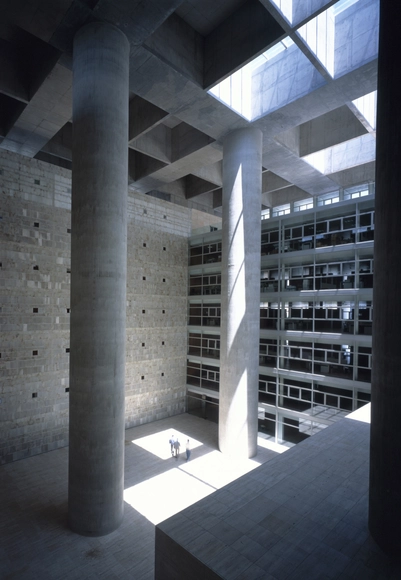
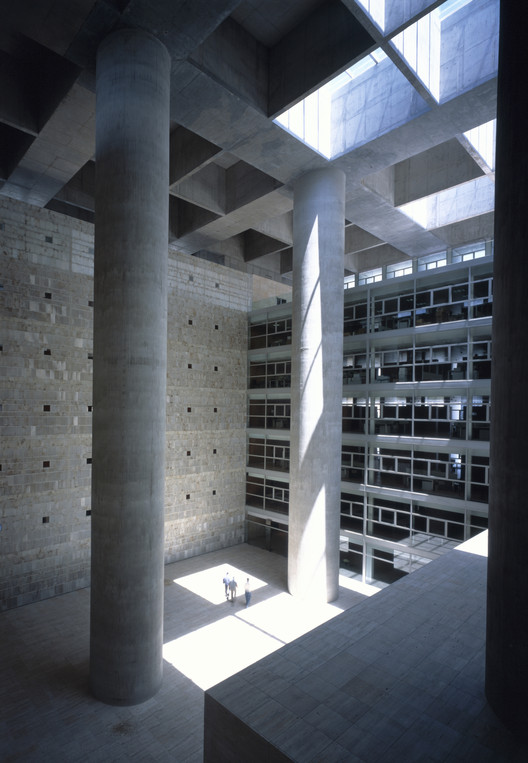
The city of Granada in southern Spain is well reputed for its architectural heritage. It counts among its treasures the Alhambra and the Generalife, two of the finest triumphs of Moorish culture, in addition to countless works of European lineage from the centuries following the Reconquista. Since 2001, Granada has been able to lay claim to one of Spain’s finest contemporary projects as well, the Caja Granada Savings Bank, designed by the since-established firm of Alberto Campo Baeza.
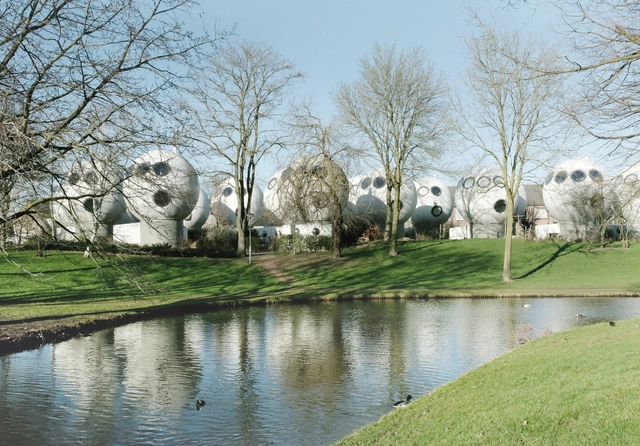
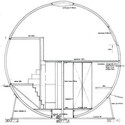
In the quaint Dutch town of Den Bosch, amongst typical brick-clad homes and winding canals, sits the odd community of Bolwoningen: a cluster of globe-shaped stilt houses punctuated with round windows in a sea of wild vegetation. Built in 1984, these oversized “golf balls” are, in fact, homes: an eccentric product of a relatively unknown architectural experiment conducted by a visionary architect, attempting to impose a new morphological dwelling solution, and hoping to generate a new residential typology. Instead, the bizarre neighbourhood remains a secluded, momentary anecdote in architectural history, and today, provides a glimpse into an age of praised radicalism and irrepressible imagination.
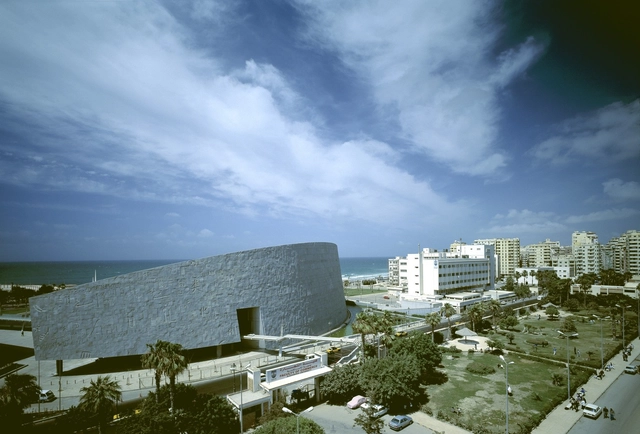
The Bibliotheca Alexandrina on Egypt’s Mediterranean Coast is a spectacular, state-of-the-art facility with an unresolved architectural identity. Commissioned in 1989 as a contemporary resurrection of the fabled Library at Alexandria once venerated throughout the ancient world, the present building was intended to serve as a city’s connection to history and heritage. But its stark modernity and technological innovations make it decidedly more forward-looking than historically referential, a cosmopolitan exploration of form and engineering perhaps longing for a stronger sense of regional belonging.
To some critics, the library has political overtones that obfuscate its architectural message, at worst acting as a monument to political posturing whose utility and conceptual integrity is only of secondary concern. And while critical scrutiny of the project necessitates its political and socio-historical contextualization, the building's architecture—the competition-winning design submitted by Norwegian firm Snøhetta—is worth appreciating and evaluating as an autonomous object and as a precedent for contemporary library design.
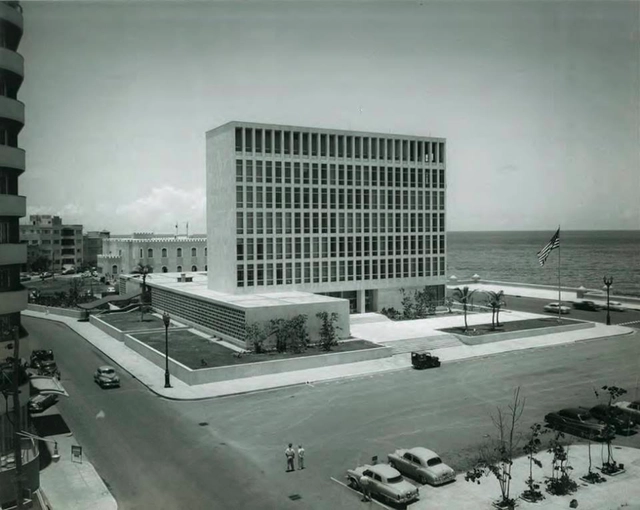
The United States’ diplomatic presence in Cuba is housed in a severe, early-1950s office building perched on the shoreline over Havana Bay. Walled off from the city and pulled back from the street, the building has the uneasy presence of a haunted castle – shunned and maligned by its neighbors, but subjected to the unending scrutiny of suspicious eyes and intrigued gossip of the locals. With its regimented orthogonalities and the unmistakably foreign imprint of modernist efficiencies, both the embassy's architecture and the optimistic political spirit it embodies seem to belong to another era, a cooperative past no longer conceivable in the wake of a half century of underhanded diplomacy, calumnious propaganda, and failed attempts to restore relations between the embattled countries.
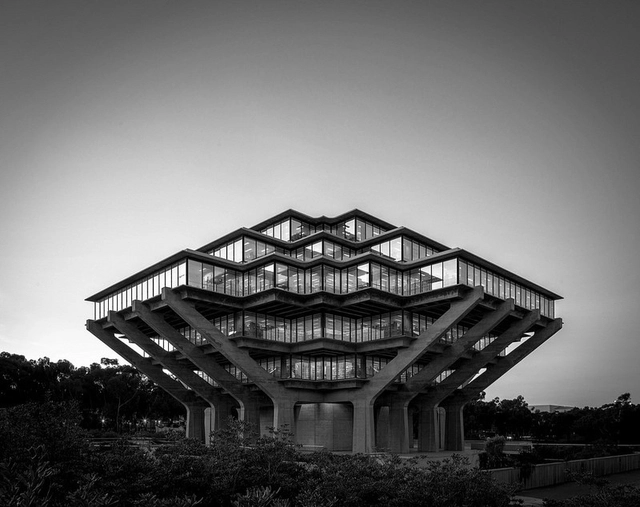
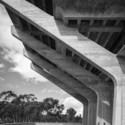
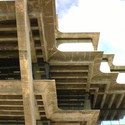
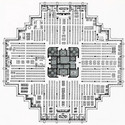
The alien form of the Geisel Library at the University of California, San Diego seems befitting of a backdrop from a science fiction movie. The building occupies a fascinating nexus between brutalism and futurism that its architect, William Pereira, intrepidly pursued throughout his career. With its strong concrete piers and hovering glassy enclosures, the library beautifully occupies an ambiguous state between massiveness and levitation, as if the upper stories have only just been set into their base and can be lifted back out at any moment. The tension between these two conditions gives the library an otherworldly appearance and provides a startling statement about the generative and imaginative power of the architect.
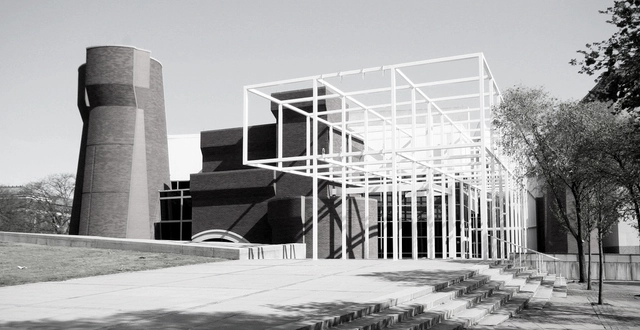
Before it was even completed, New York Times critic Paul Goldberger dubbed the Wexner Center for the Arts “The Museum That Theory Built.” [1] Given its architect, this epithet came as no surprise; Peter Eisenman, the museum’s designer, had spent the better part of his career distilling architectural form down to a theoretical science. It was with tremendous anticipation that this building, the first major public work of Eisenman’s career, opened in 1989. For some, it heralded a validation of deconstructivism and theory, while its problems provided ammunition for others who saw theory and practice as complimentary but ultimately divergent pursuits. The building’s popular reception has been equally mixed, but its influence and intrigue in the academic community is as pronounced and unmistakeable as the design itself.
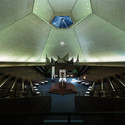
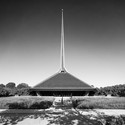
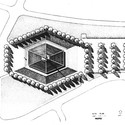
Just off the highway that leads to the town of Columbus, Indiana, the most slender of spires shoots upward from the tree line. With only a small gold cross at the top suggesting its purpose, the spire seems to belong to another world, an expressive gesture reaching into the sky that extends far beyond its visible tip. As visitors approach, the base of the spire fans out and merges with the ground, subsuming it and metaphysically bridging the distance between the heavens and the Earth. This is the famous North Christian Church, Eero Saarinen’s stunning discourse on God, nature and architecture.
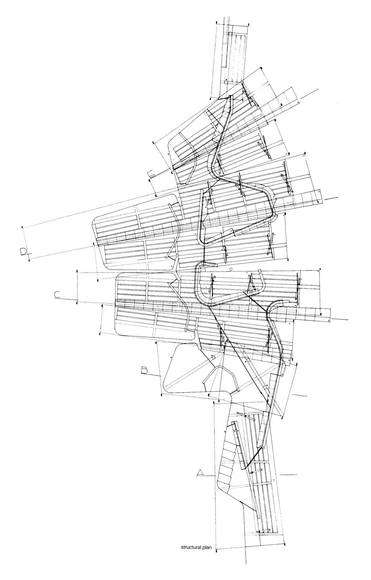
For architects, it is a project perhaps more recognizable in plan than in photograph. The dazzling rhythmic complexity of the construction drawings for Barcelona’s Olympic Archery Range, completed in 1991, brought more fame to the 1992 Olympic event than any arrow shot from the buildings’ shadow. The drawings show an overlay of organic curves and rectilinear shapes working in sublime harmony, producing a composition that clearly conveys both the architects' concept and the process through which it was developed. Amazingly, the project is no less spectacular in person than on paper, and its completion helped launch the husband-and-wife partnership of Enric Miralles and Carme Pinós into international stardom.
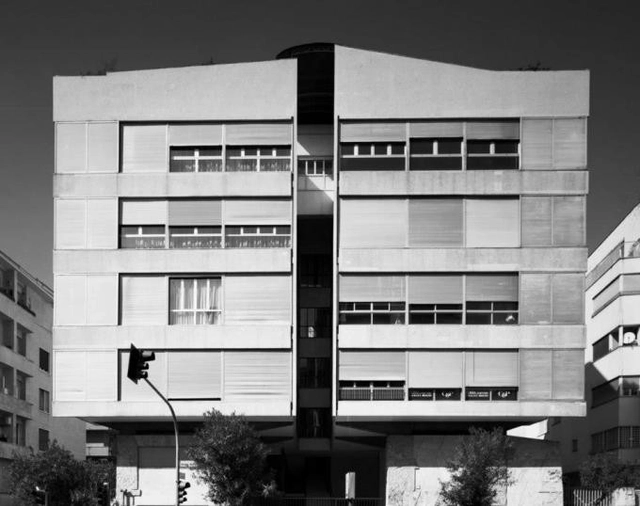
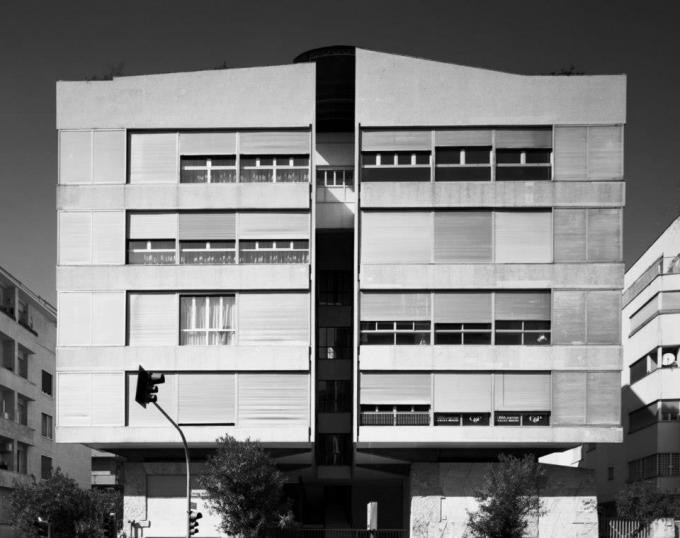
As one architectural scholar described it, Luigi Moretti’s 1950 Casa “Il Girasole” is “a bit of madness on the solidity of Roman walls.” [1] Yet, this clever apartment building in the heart of Rome is far from the work of a madman. Its subtle historical allusions and deliberately ambiguous composition betray the genius of the architect’s creative and analytical mind. Moretti, whose notable commissions include Villa La Saracena (1957), Montreal’s Stock Exchange Tower (1964), and the Watergate Complex (1971), achieves a complexity of form and materiality in “Il Girasole” that distinguishes the project from its mid-century contemporaries and has earned it recognition as one of the earliest forerunners of postmodern design.
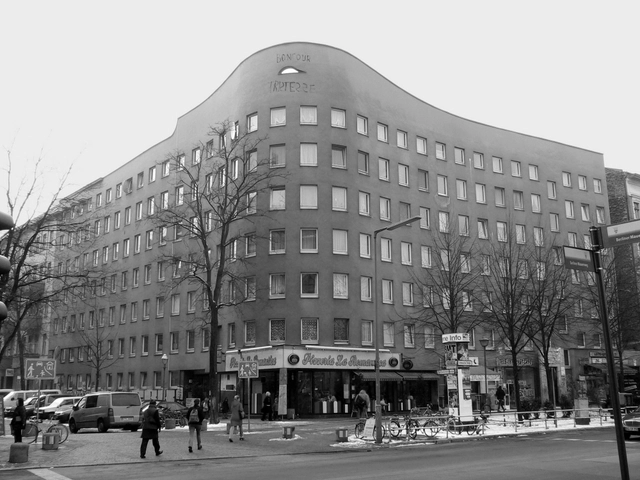
Bonjour Tristesse is a social housing project designed by Portuguese Architect Álvaro Siza Vieira. Located in Berlin, the project was Siza’s first built work outside of his native country. Siza’s design offers a meaningful precedent in urban densification, demonstrating a delicate balance between contextual awareness, creative freedom, and progressive vision.
“Ninety-five percent of the world’s designers focus all of their efforts on developing products and services for the richest 10% of the world’s customers.” - Paul Polak, Design for the 90% [1]
The vast majority of contemporary architectural practice today is service industry based, where a fee-paying client commissions a firm for a defined scope of services. Master of self-effacing cynicism Philip Johnson wryly accepted this structure, calling architects “high-class whores.” The recent surge of interest in designing for traditionally underserved communities, from groups such as Architecture for Humanity, MASS Design, Project H and Public Architecture challenges the traditional firm model. The Prizker Prize jury’s recognition of Shigeru Ban’shumanitarian designs highlights that high design and a socially conscious practice are not mutually exclusive.
Believing that architecture can alleviate societal ills and improve the quality of life for all people is not a new concept. Two eras, the 1920s and 1960s-70s, brought a social agenda to the forefront of the discourse. Hindsight reveals flaws of each. Modernism’s utopian visions for public housing and urban renewal are blamed for the detrimental impact of Post-WWII urban housing projects; participatory design in the 1960s and 70s is criticized for ceding expertise in the name of consensus, ending with projects that were no better than the status quo. Despite this, there are lessons to be learned from those who emphasized the social and humanitarian role of architecture.
https://www.archdaily.com/508534/classic-architecture-with-a-social-agenda-1960-todayMichelle Miller
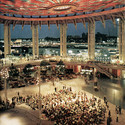
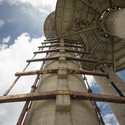
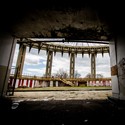
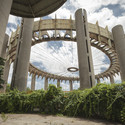
It is rare to find an architectural project whose history makes such strange bedfellows as the New York State Pavilion: a master architect and millions of exhibition patrons, roller skaters and rock stars, stray cats and Iron Man [1]. For three hours on April 22, in honor of the fifty year anniversary of the 1964-65 New York World’s Fair, the city of Queens will open the long shuttered gates to Philip Johnson’s most futuristic work.





















.jpg?1412657909 "© Flickr user: joevare")

.jpg?1412657922 "© Flickr user: joevare")
.jpg?1412657910 "© Flickr user: joevare")