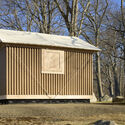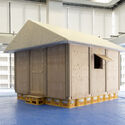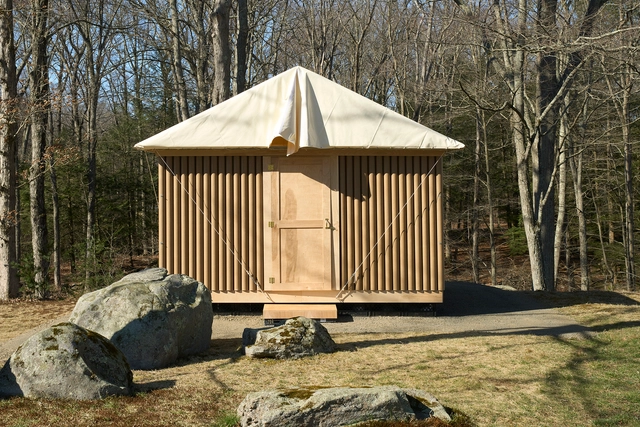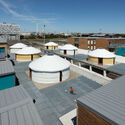
Post-Tsunami Housing / Shigeru Ban Architects

© Dominic Sansoni

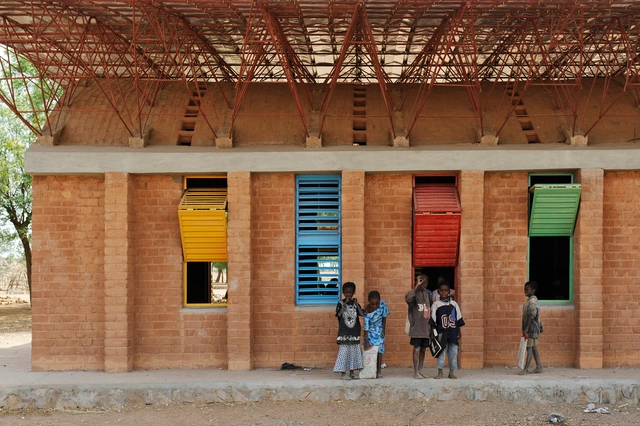
Architects: Shigeru Ban Architects
Location: Kirinda,
Client: Philip Bay
Area: 71 sqm
Year: 2007
Photographs: Dominic Sansoni

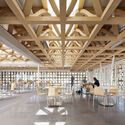
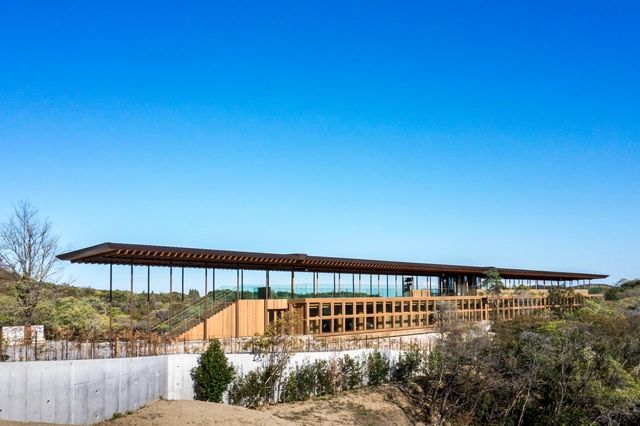
IE Paper Pavilion / Shigeru Ban Architects

© FG + SG

Architects: Shigeru Ban Architects
Location: Serrano 99, Madrid,
Client: IE Business School
Year: 2013
Photographs: FG + SG

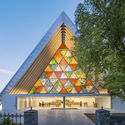
Shigeru Ban’s Cardboard Cathedral Underway in New Zealand

Courtesy of Christchurch City Libraries’ Flickr

Shigeru Ban just can’t get enough of paper tubes. The Japanese architect, renowned for his design of structures that can be quickly and inexpensively erected in disaster zones, is at it again in the city of Christchurch, New Zealand, which was hit hard by a devastating earthquake last February. The earthquake of magnitude 6.3 killed over 200 people and inflicted irreparable damage on the city’s iconic gothic cathedral of 132 years. The cathedral was a copy of one in Oxford, England, and was one of the most famous landmarks of the Christchurch, pictured on postcards, souvenirs and tea towels.

A pioneer in so-called “emergency architecture,” has begun construction on a highly anticipated, unique replacement: a simple A-frame structure composed of paper tubes of equal length and 20 foot containers. The tubes will be coated with waterproof polyurethane and flame retardants that the architect has been developing since 1986 – years before environmental friendliness and the use of inexpensive were even a concern in architecture.

Read more about Ban’s visionary Cardboard Cathedral after the break…

ANTIVJ Transforms Shigeru Ban’s Centre Pompidou Metz with Digital Spectacular

Intrigued by the hexagonal plan and complex structure of Shigeru Ban’s Centre Pompidou Metz in France, ANTIVJ visual artists Simon Geilfus and Yannick Jacquet, and composer Thomas Vaquié transformed the building’s undulating facade into a digital spectacular with a light show that “abolishes notions of scale by contrasting micro-architecture with human construction”. The piece was loosely inspired by the research of deep-sea expert Peter A. Rona, whose work explores the fascinating marks left by unknown, hexagonal-shaped sea creature called Paleodictyon Nodosum, which Rona believes is designed to cultivate bacteria.

Learn more and watch the making of after the break…

Video: Jun Aoki House, Hanegi Park / Shigeru Ban Architects

Watch as JA+U takes a close look at the Jun Aoki House at Hanegi Park designed by Japanese architects Shigeru Ban Architects.  The short tours viewers through this intimate and minimalist home, revealing the nuances and features of the design.  The house has a number of unique features, the most prominent of which is the semi-arched roof vault on the second level, which also gives a penetrating view through the length of the house.  The openness of the architecture is emphasized by the austerity of the material choices.  Stark white walls are set against the lush trees and vegetation of Hangei Park, highlighting the contrast between the natural and man-made.

Click here for images via JA+U.  Check out other work by Shigeru Ban Architects on ArchDaily, like the Metal Shutter House in .

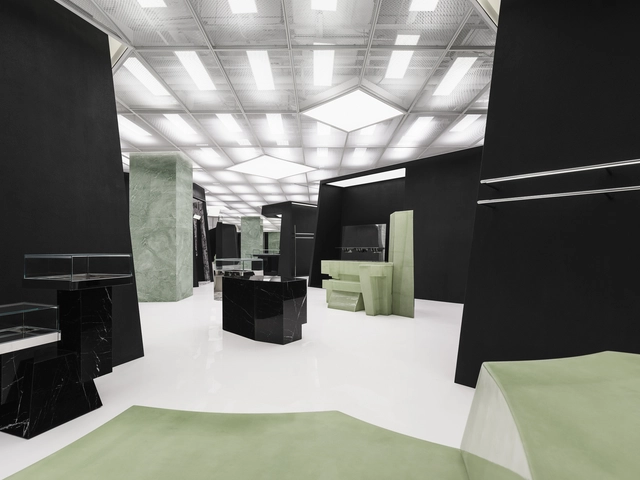
Camper’s House of Shoes / Shigeru Ban Architects + Dean Maltz Architect

Courtesy of Camper

Architects: Shigeru Ban Architects + Dean Maltz Architect
Location: Soho, ,
Client: Camper
Project Year: 2012
Photographs: Marian Montoro

Aspen Art Museum Unveiled / Shigeru Ban Architects

Glass Exterior Entrance © Architects

With ever-expanding traveling exhibitions attracting over 35,000 yearly visitors from around the globe, the Aspen Art Museum (AAM) has outgrown their cozy 9,000 square foot facility that has been their home since the museum was established in 1979. Japanese architect Shigeru Ban has been commissioned to design the new museum, being the first museum he has constructed in the U.S.

Continue reading for more project information.
Metal Shutter Houses / Shigeru Ban Architects + Dean Maltz Architect

© Michael Moran

The Metal Shutter Houses, designed by the internationally renowned Japanese firm Shigeru Ban Architects, are located on the south side of West 19th Street, between 10th and 11th Avenues in West Chelsea’s art gallery district, steps away from the High Line, the Hudson River, Chelsea Piers, and the Hudson River Park. The block offers a bold display of the new New York: the Frank Gehry-designed IAC Headquarters are next door and Jean Nouvel’s 100 11th is across the street. Low-profile warehouse buildings throughout the neighborhood allow for long city views, including the Empire State building, from each floor of the Metal Shutter Houses.

Architects: Shigeru Ban Architects + Dean Maltz Architect
Location: 524 West 19th Street New York City, New York, USA
Executive Architect: Montroy DeMarco, LLP
Structural Engineers: Robert Silman Associates, PC
Mechanical Engineers: ICOR Associates, LLC Consulting Engineers
Interiors: Shigeru Ban Architects +
Developer: HEEA Development LLC
Project Year: 2011
Photographs: Michael Moran

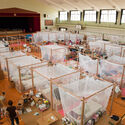
Emergency Shelter Partitions / Shigeru Ban Architects

Architects Modular Partition System

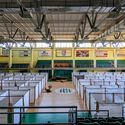
A week ago, we shared our ideas about creating a system of temporary housing that could be rapidly constructed after a natural disaster.  Building upon that idea, today we are sharing Shigeru Ban’s cardboard partition system for the hundreds of people crowded into gymnasiums seeking refuge after the earthquake.  These simple partition shelters are a way to provide a sense of privacy to the families using a low cost, flexible and quick modular solution.

More after the break.

Paper Partition System by Shigeru Ban Architects

Courtesy of Architects

This paper partition system was first implemented in 2004 after an earthquake in Niigata, . Utilizing white cloth for partitions, joints were made of plywood, and ropes were used for braces. Simple cardboard sheets were offered for insulation and to create a border between families who craved privacy from their neighbors. Initially the cardboard was only used to cover the floor, however after the number of evacuees decreased, the cardboard was used to create partitions for night time privacy.

Shigeru Ban Architects adapted and tweaked the initial honeycomb board design changing it out for a strut beam structure using paper tubes. The change in material provides a quicker response and convenience at any site.

More photographs and information about Shigeru Ban Architects paper partition system following the break.

Interview with Shigeru Ban by Martha Thorne

YouTube Preview Image

IE School of Architecture shared with us the interview that Associate Dean of External Relations, Martha Thorne conducted with innovative Japanese architect Shigeru Ban at Hay Festival Segovia, Spain.

Biennale Pavilion / Shigeru Ban Architects

The HZ SZ Bi-City Biennale is in full swing (we just featured the Bug Pavilion a few days ago) and the festival’s catchy “‘Bring Your Own ” (BYOB) slogan aims to stimulate “our collective role in the creation of an innovative Bi-City between Hong Kong and .”  Conversations around the area are focusing on how Hong Kong’s society can make an active imprint on their city’s future.  The BYOB is “at once contextual but also reflective, a unique opportunity to speculate on what our impact on the metropolis could be.”  For the Biennale’s main pavilion, designed by Shiegeru Ban Architects, a paper tube structure provides a semi-open space for events such as forums, workshops and events.

More about the main pavilion after the break.