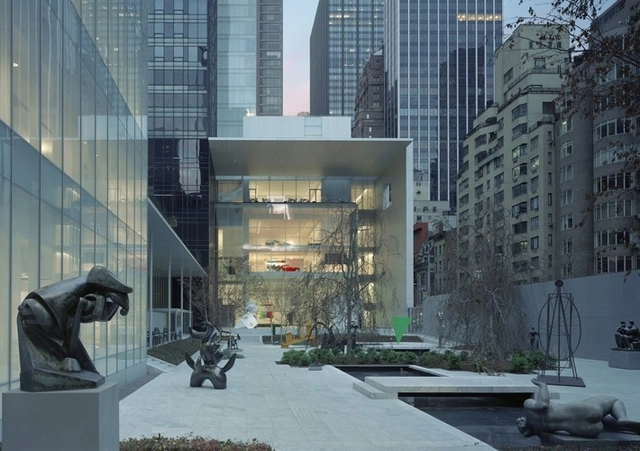
The entrance to the Museum of Modern Art is tucked beneath a demure facade of granite and glass in Midtown Manhattan. Its clean, regular planes mark Yoshio Taniguchi's 2004 addition to the MoMA's sequence of facades, which he preserved as a record of its form. Taniguchi's contribution sits beside the 1984 residential tower by Cesar Pelli and Associates, followed by Philip Goodwin and Edward Durell Stone’s original 1939 building, then Philip Johnson’s 1964 addition. Taniguchi was hired in 1997 to expand the Museum’s space and synthesize its disparate elements. His elegant, minimal solution presents a contemporary face for the MoMA while adhering to its Modernist roots.
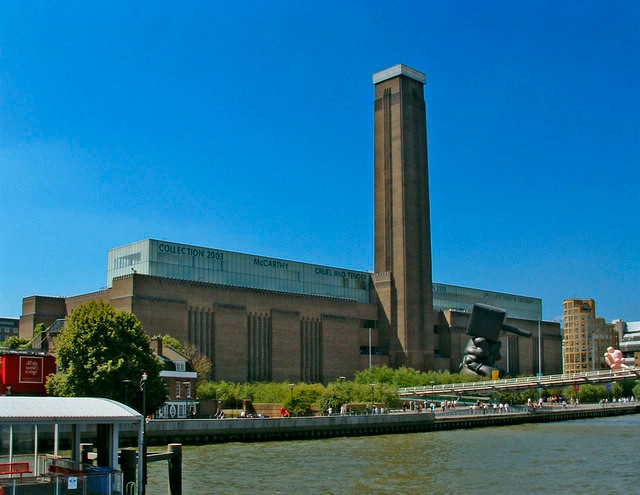
London’s Bankside Power Station stood disused from 1981 until 2000, when it opened to the public as The Tate Modern. Swiss architects Herzog & de Meuron approached the conversion with a relatively light hand, creating a contemporary public space without diminishing the building's historical presence. The impressive cultural icon has since become the most visited museum of modern art in the world, revitalizing its formerly sequestered, industrial neighborhood.
In 1961, Fidel Castro said: “Cuba will count as having the most beautiful academy of arts in the world." The Cuban National Schools of Arts, originally imagined by Castro and Che Guevara, are perhaps the largest architectural achievements of the Cuban Revolution. The innovative design of the schools, which aimed to bring cultural literacy to the nation, encapsulated the radical, utopian vision of the Revolution.
Unfortunately, the nation’s idealistic enthusiasm lasted for a fleeting moment in time and the Schools quickly fell out of favor; they were left to decay before even being completed. Today, following nearly four decades of neglect, the architects have returned to try and bring these derelict schools back to their intended glory.
“Architects today tend to depreciate themselves, to regard themselves as no more than just ordinary citizens without the power to reform the future.” - Kenzo Tange
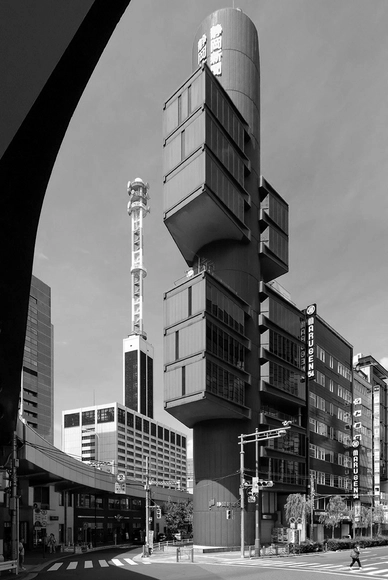
In honor of what would have been Kenzo Tange’s 100th birthday, AD Classics presents one of the Japanese master’s most iconic projects - the Shizuoka Press and Broadcasting Center. Built in 1967, the building was the first spatial realization of Tange’s Metabolist ideas of organically-inspired structural growth, developed in the late 1950s. The Shizuoka Press and Broadcasting Center is far more significant than its relatively small size would suggest, encapsulating the concepts of the new Metabolistic order in architecture and urban planning that prevailed in post-World War II Japan.
More about this icon of Metabolism after the break….
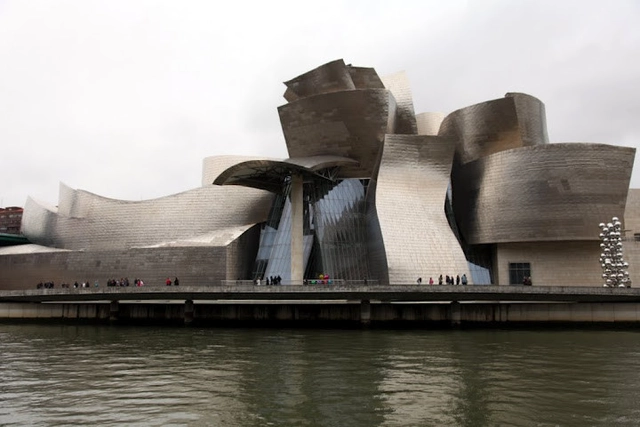
Set on the edge of the Nervión River in Bilbao, Spain, the Guggenheim Museum is a fusion of complex, swirling forms and captivating materiality that responds to an intricate program and an industrial urban context. With over a hundred exhibitions and more than ten million visitors to its recognition, Frank Gehry’s Guggenheim Museum Bilbao not only changed the way that architects and people think about museums, but also boosted Bilbao's economy with its astounding success. In fact, the phenomenon of a city’s transformation following the construction of a significant piece of architecture is now referred to as the “Bilbao Effect.” Twenty years on, the Museum continues to challenge assumptions about the connections between art and architecture today.
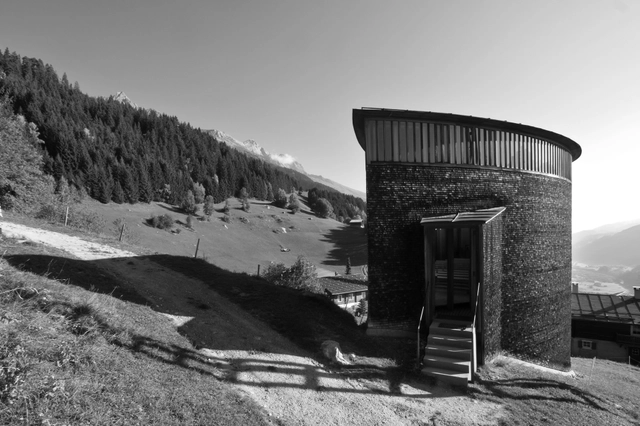
The Saint Benedict Chapel, located in the village of Sumvitg, Graubünden, was designed by the Pritzker Prize Laureate Peter Zumthor in 1988. The modest, human-scaled exterior of the chapel encapsulates the beauty and simplicity of Zumthor’s works, while the interior showcases his unparalleled craftsmanship.
The Niterói Contemporary Art Museum, also know as the MAC, was designed by the famed Brazilian architect Oscar Niemeyer and completed in 1996. This iconic saucer-shaped structure, situated on a cliffside above Guanabara bay in the city of Niterói, brilliantly frames the panoramic views of the city of Rio De Janeiro and encapsulates the simple, yet brilliant signature aesthetic of Niemeyer.
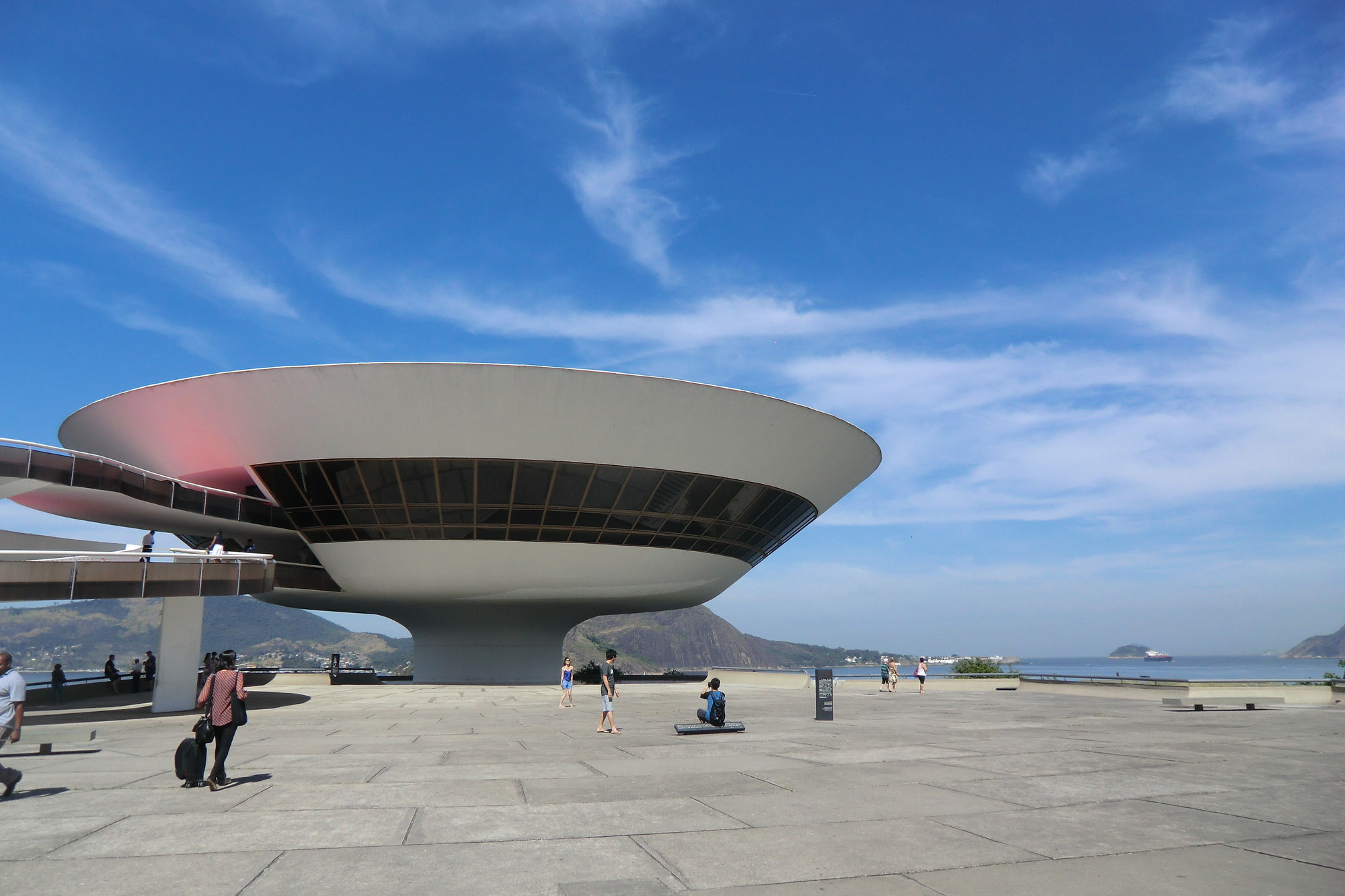
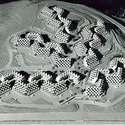
The Ramot Polin neighborhood is a housing project designed by the Polish-born Israeli architect Zvi Hecker, commissioned by the Israeli government in the euphoric aftermath of the Six Day War. The project, which resembles a beehive, is an avant-garde architectural experiment on morphology as well as construction. Since being constructed in the late 1970s, the structure has undergone extensive alteration by its tenants, provoking a debate regarding the capacity of expressive architecture to account for authentic human needs.
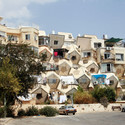
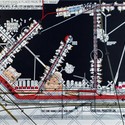
Ville Radieuse (The Radiant City) is an unrealized urban masterplan by Le Corbusier, first presented in 1924 and published in a book of the same name in 1933. Designed to contain effective means of transportation, as well as an abundance of green space and sunlight, Le Corbusier’s city of the future would not only provide residents with a better lifestyle, but would contribute to creating a better society. Though radical, strict and nearly totalitarian in its order, symmetry and standardization, Le Corbusier’s proposed principles had an extensive influence on modern urban planning and led to the development of new high-density housing typologies.
Images from the exhibition: The Object of Zionism, at the SAM (Swiss Architecture Museum, Basel, 2011). Curators: Zvi Efrat and Hubertus Adam
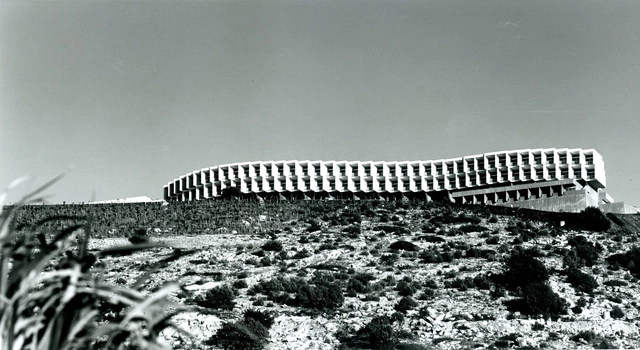
The Mivtachim sanitarium in Zichron Ya’akov is a brutalist masterpiece set on the forested slopes of Mount Carmel, overlooking the Mediterranean Sea. The simple yet complex design of the serpentine-shaped modular structure makes it appear to be “crowning” the mountain.
The building was designed by the Israeli architect Jacob Rechter in 1968 and immediately gained world-wide recognition, appearing in numerous international magazines and earning Rechter the prestigious Israel Award for architecture in 1973. Along with other brutalist icons, the Mivtachim Sanitarium was an idealistic, utopian structure, encapsulating the socialist ideas prevalent in 1960's Israel.
“Modern Architecture: International Exhibition” is the title of an exhibition that took place in 1932 at the Museum of Modern Art in New York City. Curated by Philip Johnson and Henry-Russell Hitchcock, the exhibition introduced an emerging architectural style characterized by simplified geometry and a lack of ornamentation; known as the “International Style,” it was described by Johnson as “probably the first fundamentally original and widely distributed style since the Gothic.” The exhibition, along with an accompanying catalogue, laid the principles for the canon of Modern architecture.
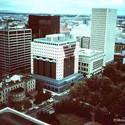
The Portland Building, by architect and product designer Michael Graves, is considered the first major built work of Postmodernist architecture. The design, which displays numerous symbolic elements on its monumental facades, stands in purposeful contrast to the functional Modernist architecture that was dominant at the time. As Graves explains of his architecture: it’s “a symbolic gesture, an attempt to re-establish a language of architecture and values that are not a part of modernist homogeneity.”
Read more about this controversial building after the break...
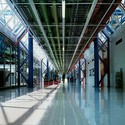
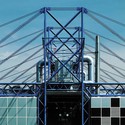
Having made his name with the Centre Georges Pompidou and the Lloyd's building, Richard Rogers - who turns 80 today - was commissioned in 1980 to design the Inmos microprocessor factory in Newport, Wales. The factory's design was targeted for the delicate process of microchip assembly, which requires a clean and controlled space. Built at the time of the computer-chip boom, construction had to be completed within one year, a factor which would greatly influence the design.
Rogers's response, based on his previous high-tech designs, was to move the services to the outside of the building and split the interior into 'clean' spaces for microchip assembly and 'dirty' spaces for other tasks. Moreover, Rogers opted for an off-site prefabrication of parts, which not only increased the speed of construction, but would also allow for the factory to be easily replicated as a model.
Photo by Christopher via flickr.com/photos/identity-chris-is. Used under Creative Commons
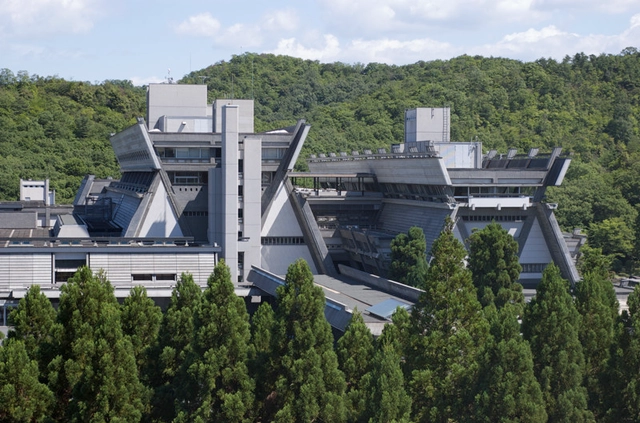
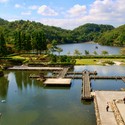
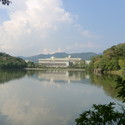
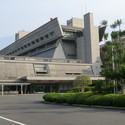
The International conference center in Kyoto is a geometric megastructure of exposed, reinforced concrete designed by Japanese architect Sachio Otani in 1963. Although relatively unknown, the Center is a unique, Modern masterpiece that re-interprets traditional Japanese architecture and asserts itself powerfully into its peaceful, natural surroundings.
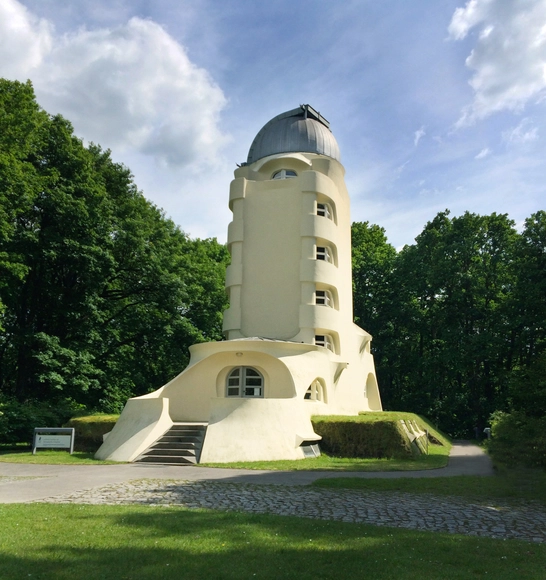
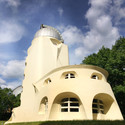
The Einstein Tower, designed by the German architect Erich Mendelsohn, is one of the best-known examples of German expressionist architecture. Designed as an amorphic structure of reinforced concrete, Mendelsohn wanted the tower to represent as well as facilitate the study of Einstein’s radical theory of relativity – a groundbreaking theorem of motion, light and space.
More on this expressionist monument after the break...
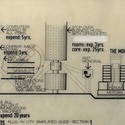
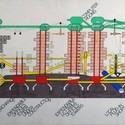
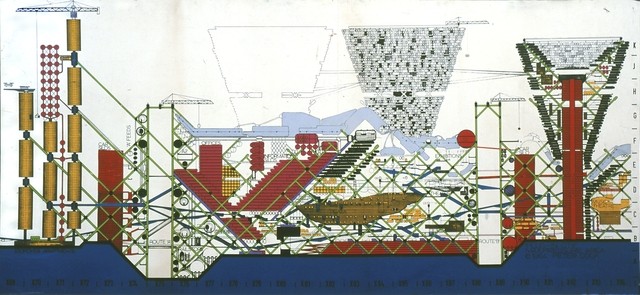
AD Classics presents you with great buildings of the past, providing inspiration and motivation for architects to design for the future. But why must inspiration only come from poured concrete and erected walls? For this edition of AD Classics, we share a work, the Plug-In City, by the avant-garde group Archigram. Though never built, their projects and ideas provoked debates, combining architecture, technology and society; when Plug-In City was proposed in 1964, it offered a fascinating new approach to urbanism, reversing traditional perceptions of infrastructure’s role in the city.
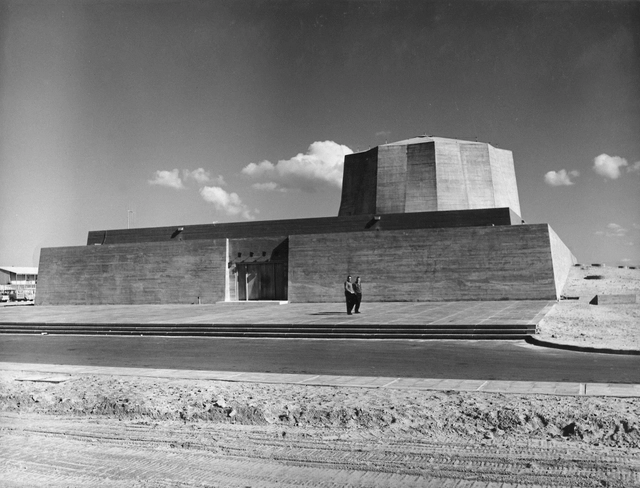
Philip Johnson and Gideon Ziv, Sorek Nuclear Research Center, Israel, 1956-9 (from: Zvi Efrat, The Israeli Project: Building and Architecture 1948-1973)
American architect and Prizker Prize winner Philip Johnson - who would have turned 107 today - is well known for his contributions to 20th century architecture, from the modernist Glass House in 1949 to his later infamous post modernist AT&T building in 1984. But did you know that Johnson designed a brutalistic nuclear plant in Israel? More on this monolithic concrete structure after the break...
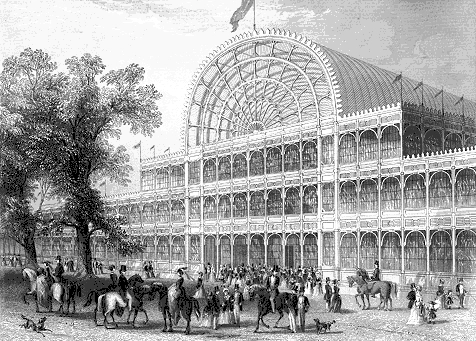
The Crystal Palace was a glass and cast iron structure built in London, England, for the Great Exhibition of 1851. The building was designed by Sir Joseph Paxton, an architect and gardener, and revealed breakthroughs in architecture, construction and design. More on the Crystal Palace after the break...







.jpg?1592594267)
.jpg?1592593315 "© Terry Feuerborn [Flickr] bajo licencia CC BY-NC 2.0")
.jpg?1592592868 "© Owen Lin [Flickr] bajo licencia CC BY-NC 2.0")
.jpg?1592592884 "© Owen Lin [Flickr] bajo licencia CC BY-NC 2.0")
.jpg?1592592655 "© Corbin Keech [Flickr] bajo licencia CC BY-NC-ND 2.0")
.jpg?1592594267)




.jpg?1376960895 "Sketch by Oscar Niemeyer. Image Courtesy of wikiarquitectura.com")