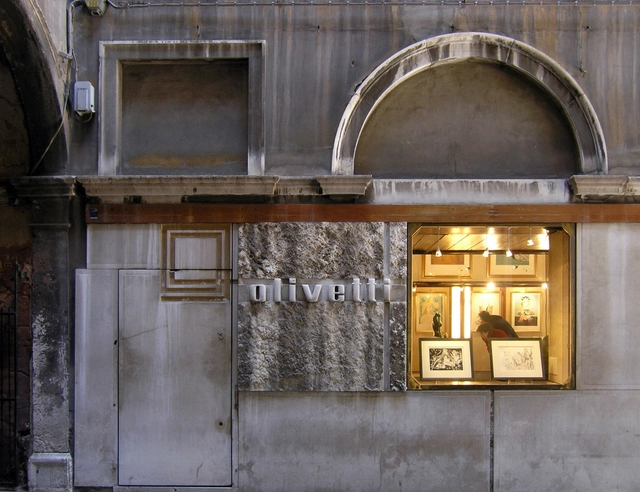
Tucked discreetly beneath the colonnade of Saint Mark's Square in Venice, Carlo Scarpa's Olivetti Showroom exerts a quiet yet unmistakable presence. Though often overshadowed by the grandeur of nearby landmarks—St. Mark's Basilica, the Clocktower, the Loggetta, and the Procuratie Vecchie—it attracts a particular kind of visitor: those who seek out one of Scarpa's architectural gems hidden in plain sight. Modest in scale but rich in detail, the showroom is meticulously maintained by FAI (Fondo Ambiente Italiano), the National Trust for Italy.
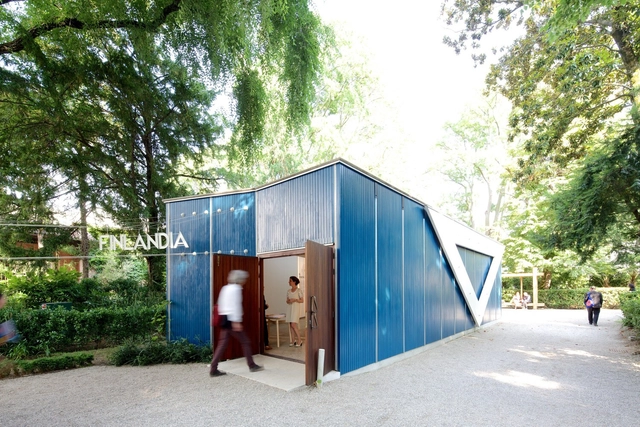
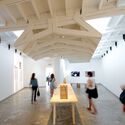
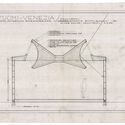
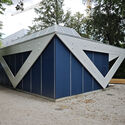
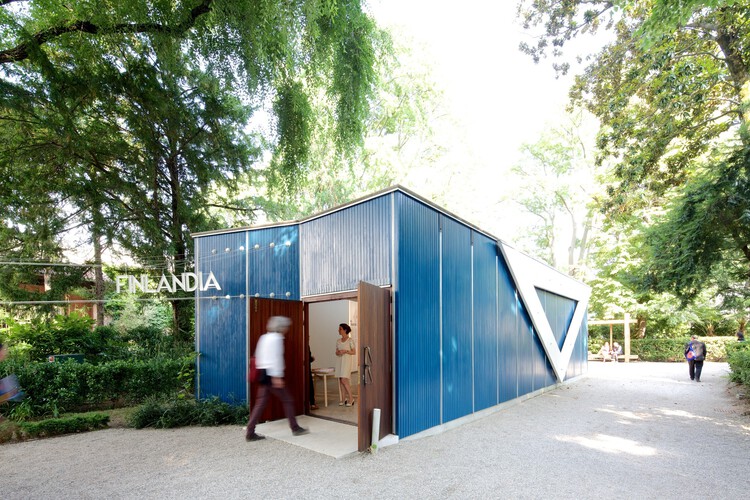
Tucked within the leafy confines of the Giardini della Biennale in Venice stands a structure modest in scale yet immense in quiet conviction: the Finland Pavilion, designed by Alvar and Elissa Aalto for the 1956 Venice Biennale. Unlike the monumental pavilions that surround it, Aalto's structure was conceived not as a permanent structure, but as a temporary exhibition space for a single exhibition season. And yet, nearly seventy years on, it remains—weathered, resilient, and quietly luminous.
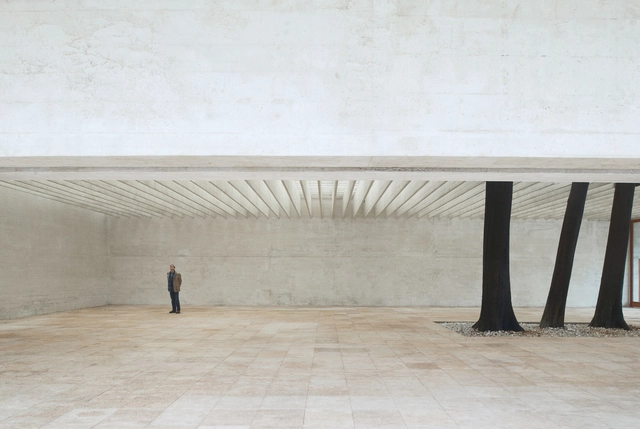
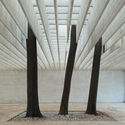
As a result of the ideas competition organized by the governments of Sweden, Finland, and Norway in 1958, Sverre Fehn's Nordic Pavilion won first prize, becoming one of the most significant works of his career and one of the most outstanding Scandinavian architectural achievements during the mid-20th century. Designed to create a space at the Venice Biennale for the biennial exhibitions of these countries, Fehn's proposal addressed several key architectural challenges—ranging from its integration with the site and incorporation of pre-existing elements to the handling of physical boundaries and uniform natural lighting. His design explored the interaction between architecture and trees, the flexibility in the exhibition space, the filtering of light, the connection between interior and exterior, the concept of movement through space, and the display of artworks.
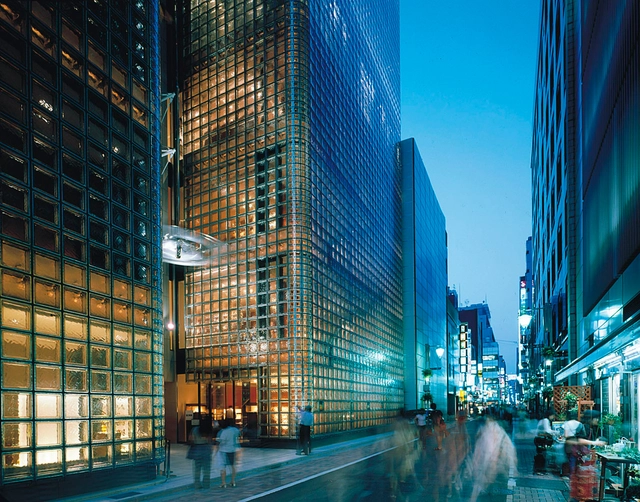
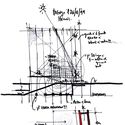
In Tokyo's bustling Ginza district, where tradition and modernity converge, the Maison Hermès emerges as a luminous architectural icon. Designed by Renzo Piano Building Workshop and completed in 2001, the 15-story structure serves as the Japanese headquarters of Hermès, the renowned French luxury brand celebrated for its craftsmanship and timeless elegance. Beyond its function as a commercial hub, the building encapsulates Hermès' ethos, transforming its urban site into a dialogue between light, materiality, and context.
In Beirut, a city marked by transformation, the Interdesign Building echoes the vision of an architect steadfast in his conviction. Designed by Lebanese architect Khalil Khouri in 1973 during a period of economic growth, the building took 23 years to build, a process halted by the onset of the Lebanese Civil War. By the time it was completed in 1996, the urban landscape that surrounded it had changed. The structure has stood largely unused since, as a relic of hopeful modernity. While its design is singular in its narrative and expression, this structure illustrates the tension between aspiration and struggle throughout its complex history.
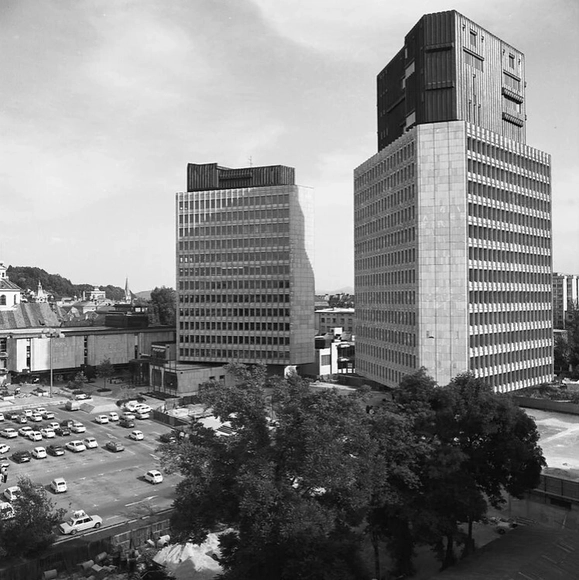
Republic Square in Ljubljana holds immense historical and symbolic significance for Slovenia. It is located in the historic center of the city and features a blend of buildings with different designs, scales, and dimensions, together with interconnected open spaces, passages, and underpasses. These elements form a multifunctional complex whose construction lasted more than 20 years and underwent several volumetric and programmatic reconfigurations. Visible from a distance and standing out above the Ursuline Church’s bell tower, two prominent office towers rise as part of this work designed by Edvard Ravnikar, the most prominent Slovenian architect of the second half of the 20th century.
Imagen retocada. Image Cortesía de Dra. Arq. Graciela C Gayetzky de Kuna
If you find yourself in the city of Leandro N. Alem, Misiones, and you want to visit a landmark work of Argentine architecture, anyone will be able to point you to the location of the renowned school designed by architects Mario Soto and Raúl Rivarola.
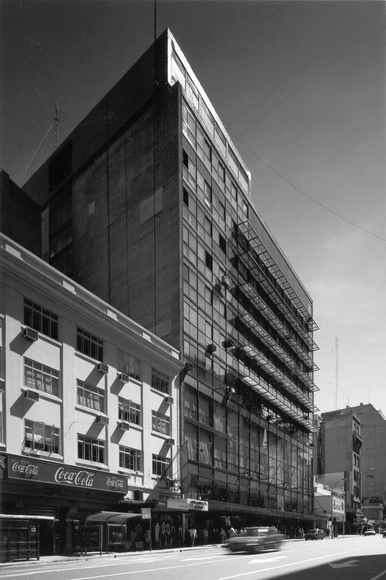
The Forner-Bigatti house workshop, designed by the architect Alejo Martinez in 1937, combines the residence and workspaces of the painter Raquel Forner and the sculptor Alfredo Bigatti, two renowned Argentine artists. It is located in the San Telmo neighborhood of Buenos Aires, on a small plot facing what is now called Plaza Coronel Dorrego, at 443 Bethlem Street.
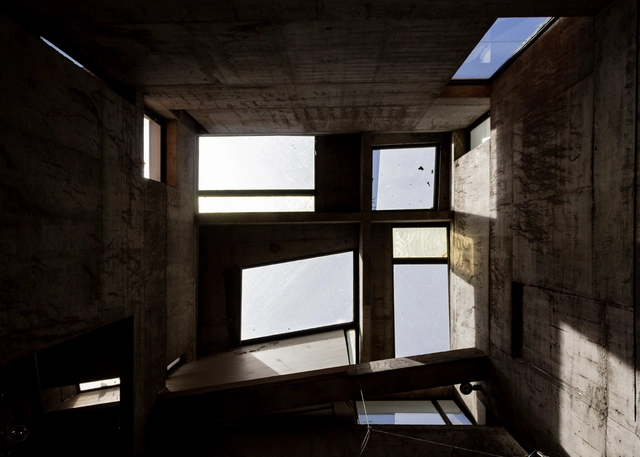
From 1987 to 1993, architect Pablo Tomás Beitía set out to transform the former housing complex and rental houses of Argentine artist Alejandro Xul Solar into a museum. The goal was to create a new space that would adapt to exhibition requirements and engage in avant-garde dialogue with the pre-existing structure. Situated in the Palermo neighborhood within the Autonomous City of Buenos Aires, the Xul Solar Museum was designed to serve as a space for cultural encounters. The remodeling and expansion project was conceived by interpreting the artist's pictorial worldview, maintaining the facade intact, and embracing the painter's house with a new interior architecture.
On Avenida Corrientes, the Teatro Municipal General San Martín (TGSM) rises between party walls in the heart of downtown Buenos Aires. Designed by Mario Roberto Álvarez and Macedonio Oscar Ruiz in 1954, this building comes to address an artistic and cultural issue common to the large cities of America. It stands as one of Argentina's most important theaters, providing spaces for theatrical and cinematic performances as well as art exhibitions. Spanning 30,000 square meters, it constitutes a theater complex alongside the General San Martín Cultural Center, operating independently.
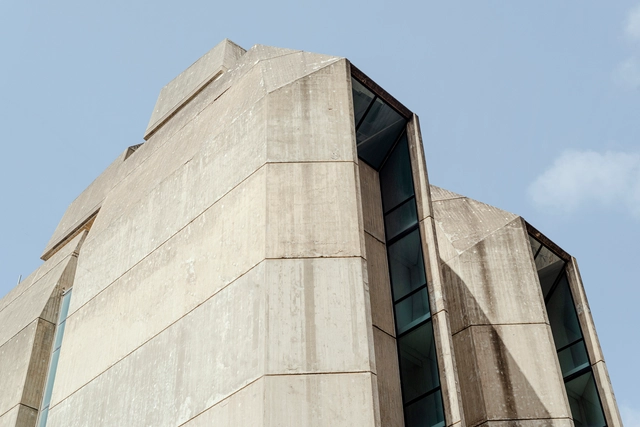
Where does the process of mythification of a work in architecture reside? What are the conditions inherently linked to the resource of memory? Firstly, the appearance of an intrinsic value within the architecture, such as highlighting the taste for the projected building. This would be accompanied by the historical factor—the echoes of the era in which it was built. If we add to all this a demolition loaded with theatricality and social drama, the building becomes something more, becoming part of the vast mythical territory of memory. Miguel Fisac's 'Pagoda,' which began construction in 1965, was demolished in just a few days in July 1999, being just over thirty years old at the time of its demolition.
Affectionately known as the 'Pagoda' by the people of Madrid, evidencing its similarity to Asian constructions, it was not held in the same esteem by the architects of the time. In the rise and fall of the JORBA Laboratories, the original name of the project, purely tragic elements converge: denunciations moved by religious conspiracies, neglect by the administrations, speculative businesses, professional jealousy, and rulers incapable of appreciating the quality of architecture that, today, becomes myth or martyr; the object of unjust destruction.
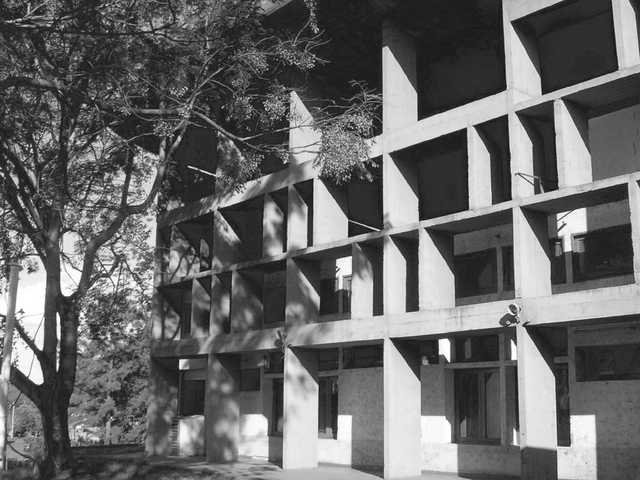
Until recently, the Sixth Pantheon of Chacarita was an icon of Argentine modern architecture that went unnoticed. Located in the heart of the city of Buenos Aires, this pantheon represents one of the first and one of the largest experiments in modern funerary architecture of such magnitude in the world.
Cortesía de Archivo Descotte. Facultad de Arquitectura Urbanismo y Diseño. Universidad de Mendoza
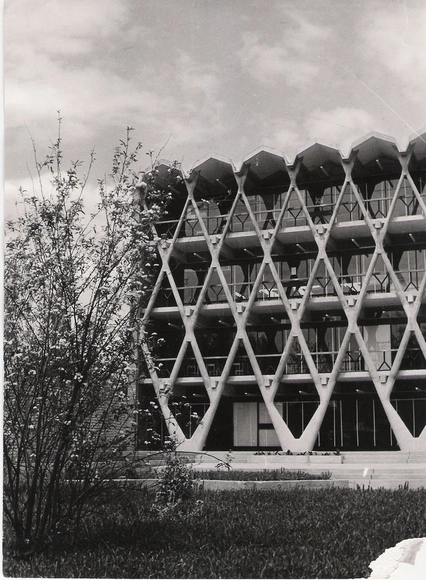
Some recognize in its facade the organic shape of a tree, while others, on the contrary, see human figures. Observing the Faculty of Architecture of the University of Mendoza, we can attest that we are in the presence of a building that constitutes a paradigmatic case in the context of the 1960s in Argentina.
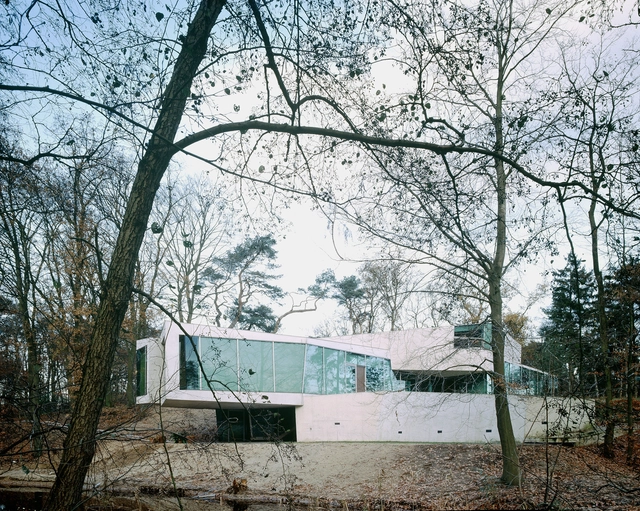
In 1993 a young professional couple from Amsterdam set out to build a private house unlike any other. They wanted to create something that “would be recognized as a reference in terms of renewal of the architectural language.” They reached out to several architects, including Rem Koolhaas, but finally decided to entrust the commission to Dutch architect Ben van Berkel after he studied the site and came up with a vision for the project, relating it to the couple’s lifestyle.
Located in Het Gooi, its design took over 5 years, going through several iterations, but always coming back to its core inspiration: the Möbius loop. The shape, defined as a single-sided surface with no boundaries, was the key to a new architectural language that aimed to weave together all the individual activities of each family member, allowing the functional program to be integrated within the dynamic structure. By 1998, when the house was completed, it became widely published and internationally recognized. It also became a sort of manifesto for its architect, as it uses an organizational principle to inform the final image.
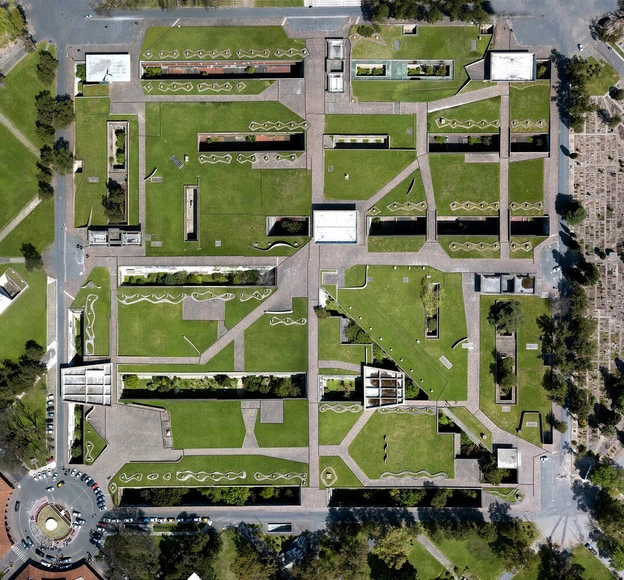
In the western part of Bogotá, between Calle 80 and the Juan Amarillo Wetland, lies one of the most interesting urban and architectural projects in the history of Colombia: the Ciudadela Colsubsidio. Created in 1983 as a response to Law 21 of 1982, which required social security organizations to provide housing for their members. Colsubsidio, the project manager, hired Germán Samper to tackle a 130-hectare plot located between two well-established neighborhoods (Santa Bárbara and Bolivia). The challenge was to connect these neighborhoods while creating a citadel that would consolidate various essential services for a population that, due to its geographical location, was distant from the center of Bogotá.
The challenge Samper faced was to develop a clear urban structure that would articulate the existing neighborhoods along the east-west axis and, along the north-south axis, connect the Juan Amarillo Wetland with Calle 80, the main road that would serve the entire neighborhood. From the initial design, it was evident that the architect was concerned with creating and developing a spatial experience for the residents, where the neighborhood itself would be the manager of spaces that directly integrate daily life with architecture, responsible for defining the spatial boundaries they aimed to create.
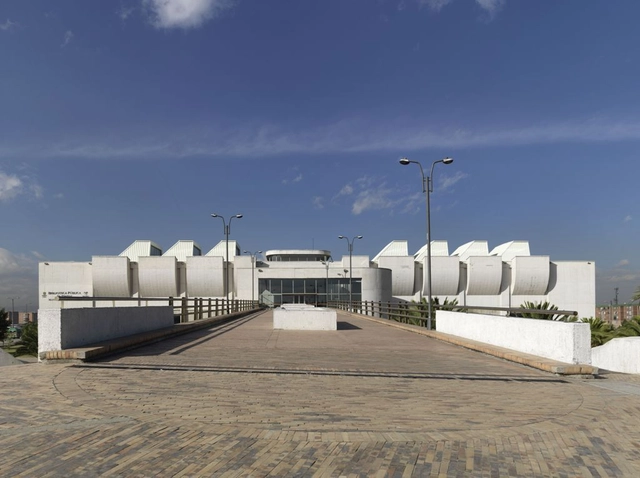
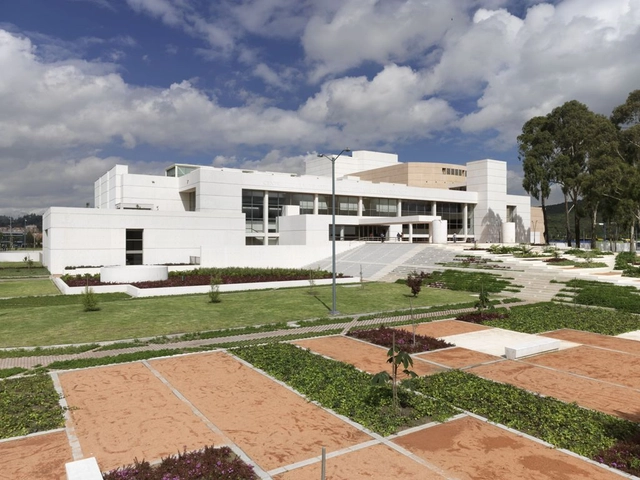
The intervention project includes the design of the Julio Mario Santo Domingo Cultural Center and Public Library, as well as the 6-hectare San José de Bavaria recreational park. With its completion, a new recreational and cultural hub was established for the Suba area and the city.
https://www.archdaily.com/1006043/architecture-classics-julio-mario-santo-domingo-cultural-center-bermudez-arquitectosArchDaily Team
In the mid-20th century, in the heart of Bogotá, Colombia, one of the greatest architectural landmarks in the history of this city was taking shape. At that time, Luis Ángel Arango, the manager of the Banco de la República, began to work on establishing a library to house the collection of books that the bank had been acquiring over 30 years and which continued to grow. It was then that the firm Esguerra Sáenz and Samper appeared on the scene, to whom the design of this space was attributed, created in several stages over a span of twenty years.
Germán Samper is one of the freshest minds in the country, despite his advanced age. Even after all these years, it is possible to see with great skill how his genius remains as relevant today as it was half a century ago, and the Biblioteca Luis Ángel Arango is a perfect example of the aesthetics, urban integration, and respect for scale that characterize this architect so much.
El Tintal Library is the result of reusing a former disused waste transfer plant and transforming the 5-hectare site into a park along Avenida Ciudad de Cali with 6th Street. The rescued building from ruin was a 25-meter-wide by 72-meter-long industrial warehouse with a total area of 3,600 m², distributed over two floors of considerable height. Built with a sturdy concrete structure and large spans, it was adaptable to new use, enhancing its robust and industrial appearance.
https://www.archdaily.com/1004774/architecture-classics-biblioteca-el-tintal-bermudez-arquitectosArchDaily Team













.jpg?1572637926&format=webp&width=640&height=580)






.jpg?1374505208&format=webp&width=640&height=580)