-
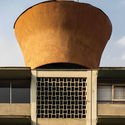
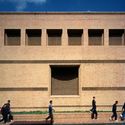
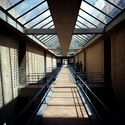
Architects: Emilio Duhart
- Area: 11500 m²
- Year: 1966
-
Manufacturers: CHC


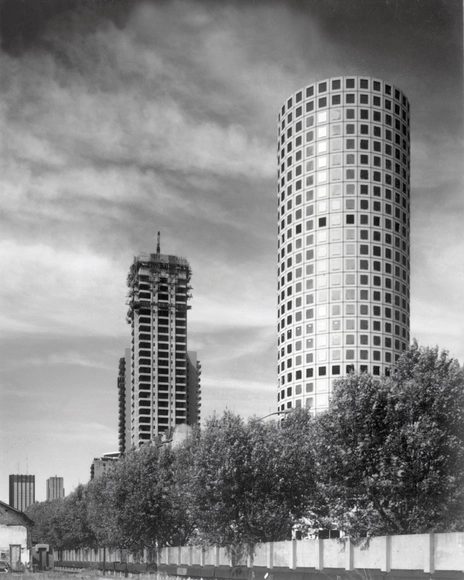
Towards the end of the 1970s, the architectural office of Flora Manteola, Javier Sánchez Gómez, Josefina Santos, Justo Solsona and Rafael Viñoly (MSGSSV) together with Carlos Sallaberry began to devise the project for the Prourban Building, which would become one of the most emblematic buildings in the city of Buenos Aires and would be popularly nicknamed "El Rulero".
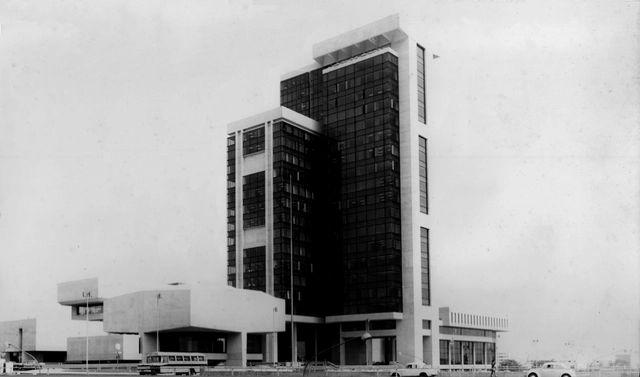
The Petroperú building, jointly designed by architects Walter Weberhofer and Daniel Arana Ríos, was the result of a state competition held by the military government of Velasco Alvarado in the early 1970s. The building, strategically located in the capital of Peru, within the prosperous district of San Isidro, was designed to house the recently created state company in charge of the whole petroleum process of the country (Petroperú S.A.). The monumental building, built and inaugurated in 1973, became the symbol of the newly installed regime.
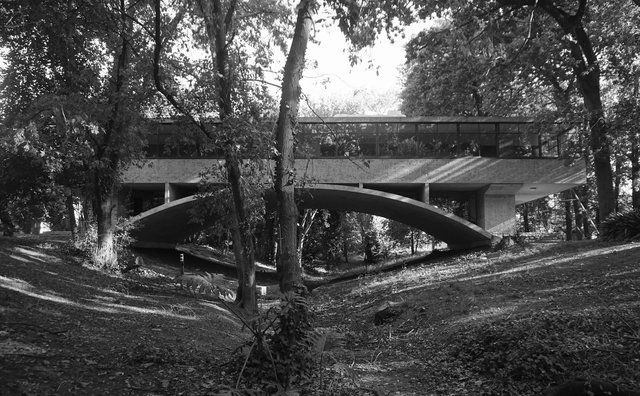
Located in a particularly natural setting in the city of Mar del Plata, the "Casa sobre el Arroyo" (House on the River) - known as the "Casa del Puente" (The Bridge House) - is considered a paradigmatic component of 20th-century architecture and an obligatory reference of the Modern Movement in Argentina and Latin America.
The house designed by the Argentinean architect Amancio Williams, commissioned by his father, the musician Alberto Williams, is constructed evidence of the capacity to establish a link between the modern rationality of human beings with nature and its topography.
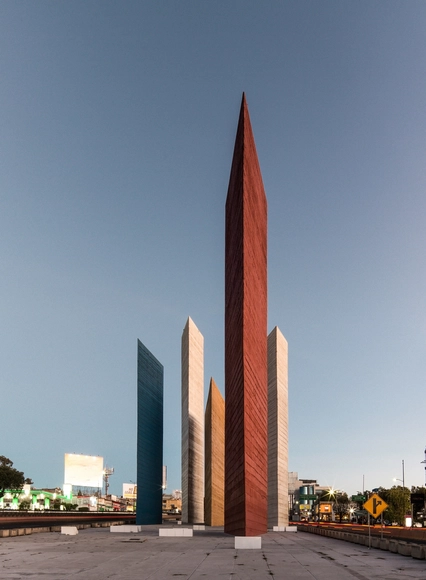
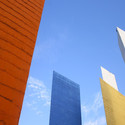
In the context of the ambitious project Satellite City in the outskirts of Mexico City, led by architect Mario Pani in the mid-20th century, Luis Barragán received from Pani the commission to make a fountain in 1958 that would serve as a distinctive motif of the entrance through the main road access to the master plan.
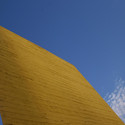
The renowned Mexican architect, together with the sculptor Mathias Goeritz, projected five concrete towers, with a triangular plan and different colors and heights, reaching up to 52 meters (170 feet). The towers are totally sculptural and the authors expected they could stand out viewed even from afar and in motion.

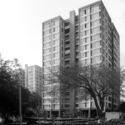
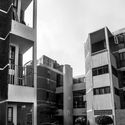
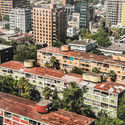
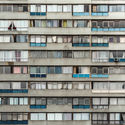
The Unidad Vecinal Providencia (Providencia Neighborhood Unit) is one of the many residential complexes generated in Chile as a result of a housing and urban development public policy promoted through the CORVI (Housing Corporation) between 1953 and 1973.
Commissioned by the Caja de Empleados Particulares (Private Employees Fund) to be built on a site where previously the National Children's House was based, the Unidad Vecinal Providencia was designed as a complex capable of becoming an urban piece, promoting spatial integration and social cohesion in Santiago.
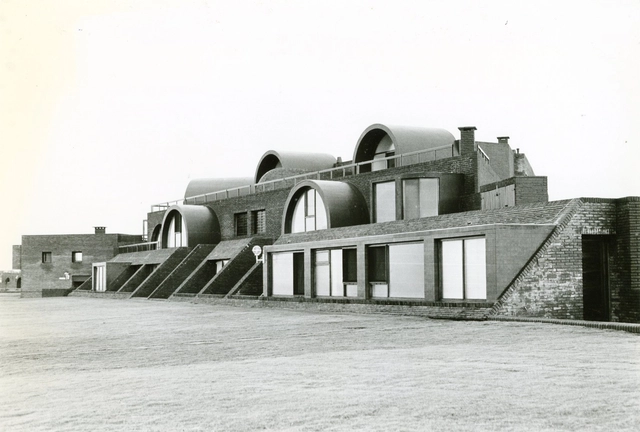
Designed in the late 70s by MSGSSV, the Terraces of Manantiales (Terrazas de Manantiales) is a summer house complex by the Atlantic Ocean built in Punta del Este, Uruguay.
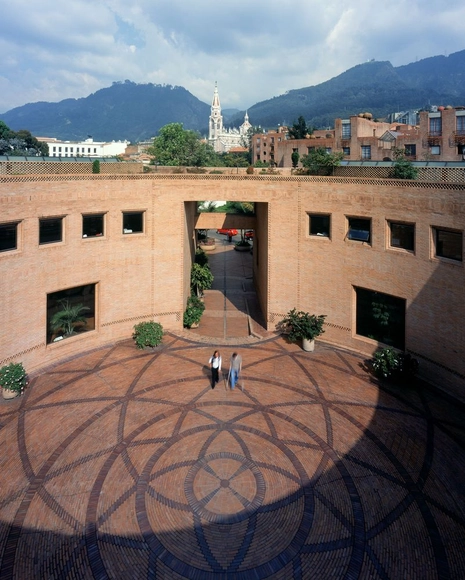

The building of the General Archive of the Nation, designated as a national cultural interest asset by a court ruling in October 2007, reflects the modern archival philosophy and, combined with its collection of historical documents, performs a "miracle" of communicating memory through architecture.
It is hard to achieve a poetic aesthetic when designing archives because they are essentially warehouses, enclosed storage structures, with no sunlight, water, wind, or even dust. In this sense, an archive building is anti-architecture! Even caves need light for us to fully grasp their spatiality. These major limitations could only be overcome through the imagination of a great architect, and above all, through the essential and intrinsic qualities of architecture.
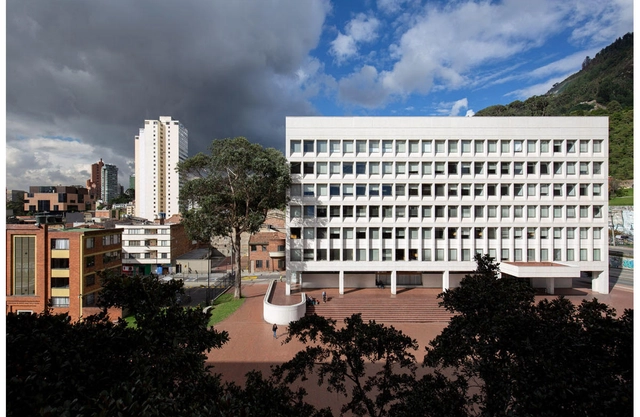
Located on the north-eastern edge of downtown Bogota, Colombia, the Postgraduate Building of Jorge Tadeo Lozano University has become the hallmark of the campus, serving as the university's main gateway.
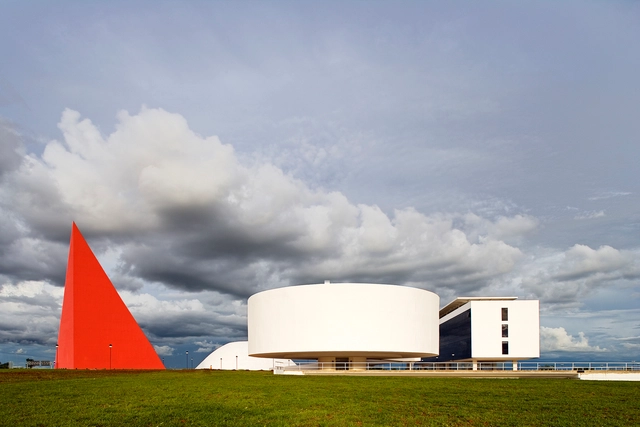
The Cultural Center was designed by architect Oscar Niemeyer and named after him. It is located in the city of Goiânia in the state of Goiás, Brazil, and was built on a 26 thousand square meter flat land called Esplanada da Cultura, a square dedicated to concerts and events, paying homage to former President Juscelino Kubitschek. The complex consists of four geometrically pure buildings: a rectangle that holds a public library, a cylinder where the Museum of Contemporary Art (MAC) is located, a dome that shelters the Music Palace, and a 36-meter-high pyramid that houses the Human Rights Monument.
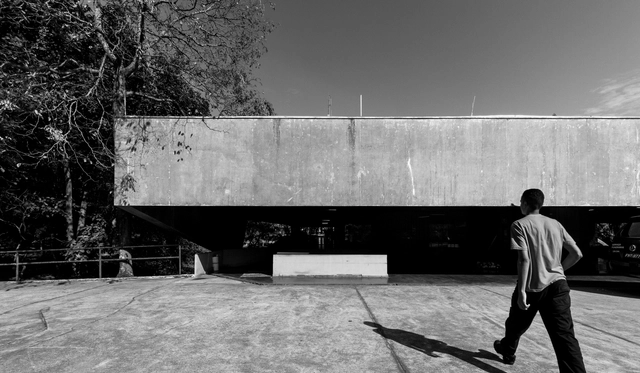
The Jayme Augusto Lopes Crematorium, popularly known as Crematorium of Vila Alpina, is located in Jardim Avelino, on the east side of the city of São Paulo. It was designed by architect Ivone Macedo Arantes - at the time an employee of the Cemetery Department of the City of São Paulo - and was inaugurated in 1974. It is considered to be the first crematorium in Brazil and Latin America and one of the largest in the world.
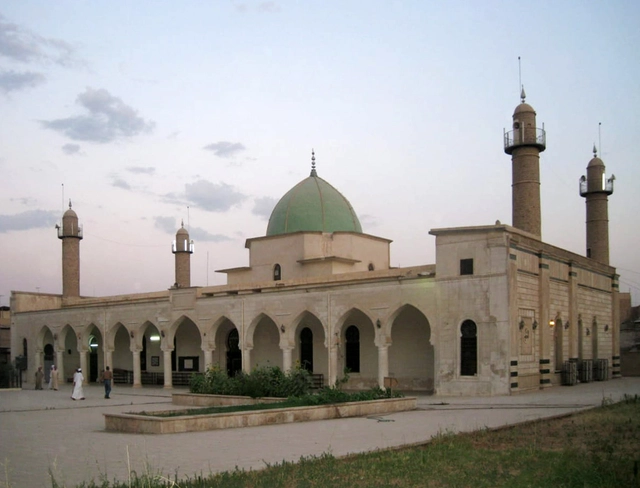
Islamic architecture has been perhaps one of the most culturally significant typologies throughout history. Not only do the buildings themselves serve as centers for community and social services, but their designs reflect Muslim beliefs and morals, and reveal the rich history of nations in the Middle East.
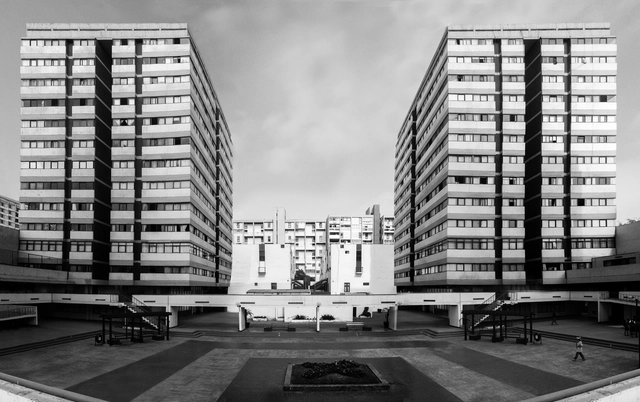
The San Felipe residential complex (Residencial San Felipe), designed and built by a team of architects from the National Housing Board between 1962-1969, is nestled on a 27 hectare lot in the Jesús María District in Lima, Peru. Dubbed as one of the most important infrastructure projects under President Fernando Belaúnde Terry, the housing complex is representative of the modernist ideology of the time that looked to traditional urban concepts to address the country's contemporary housing needs.
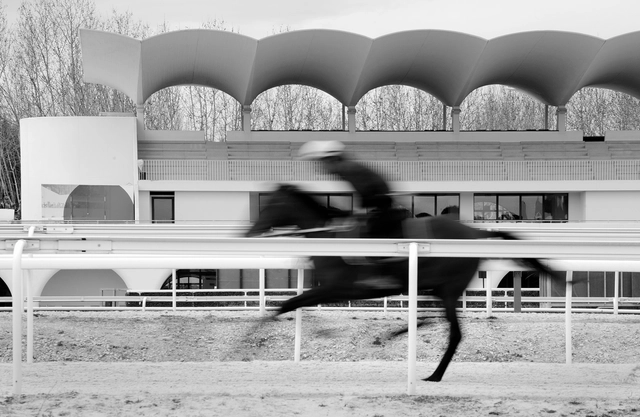
Conceived during the tumultuous years preceding the Spanish Civil War, the Zarzuela Hippodrome came about through a public contest sponsored by Madrid's Office of Suburban Access, who hoped that the winning design would replace the dilapidated Hippodrome located in Paseo de la Castellana.
In order to expand the Castellana-Recoletos, one of Madrid's main thoroughfares and the cornerstone of its growth in the 1930s, it became imperative to demolish the old hippodrome in order to make space for the Nuevos Ministerios government complex. For the new hippodrome, the planners sought out a more remote and suitable location, eventually deciding on a 115 hectare plot of land close to Monte El Pardo, on the northern outskirts of Madrid, where it would have the necessary space but also be connected to the city center via public transportation.
Nine projects were entered in the contest, with the winning team consisting of architects Carlos Arniches and Martín Domínguez along with engineer Eduardo Torroja.
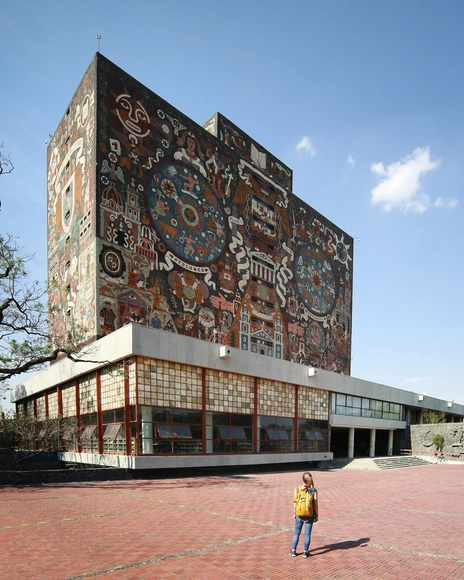
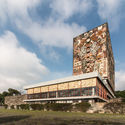
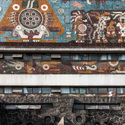
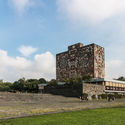
The northern side of the Rectoría tower in the Ciudad Universitaria, the main campus of the National Autonomous University of Mexico, emanates a particular Mexican character. It is a classic example of modern architecture that integrates architecture with sculptural and pictorial elements that denote the university's mission to carry and preserve knowledge, history, and Mexican cultural identity through the ages.
The creation of the UNAM tower's emblem was assigned to Juan O’Gorman, Gustavo Saavedra, and Juan Martínez de Velasco, who later brought in Juan Íñiguez, Rafael Carrasco Puente, and José María Luján as advisors for the project.

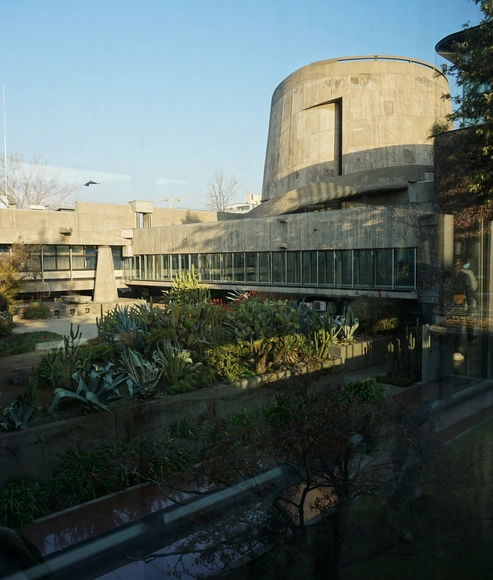
Located on Montjuic hill in Barcelona and designed by the rationalist style architect Josep Lluis Sert, the Fundació Joan Miró (Joan Miró Foundation) is a unique space imagined by Miró with a dream of bringing art to the entire world.
The construction of this museum in 1975 was a major event in Barcelona because at the time there was a lack of cultural infrastructure in the city. Now 40 years have passed and the Foundation’s spaces host the work of Joan Miró as well as temporary exhibitions of emerging artists of the 20th and 21st centuries.
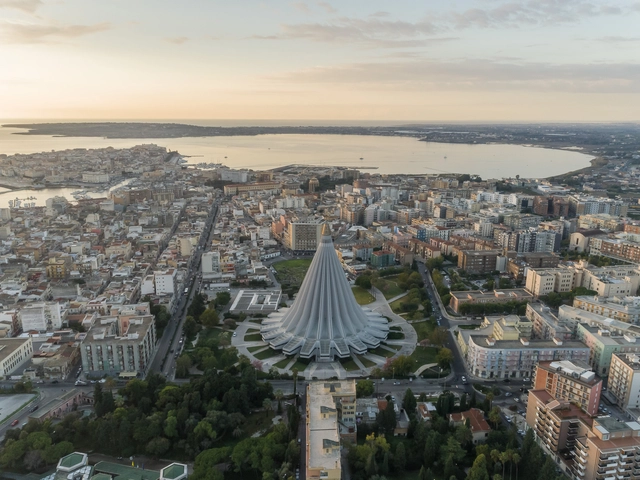
The largest pilgrimage church in Sicily, The Sanctuary Basilica of Our Lady of Tears in Syracuse was built to commemorate the 1953 miraculous tearing of a plaster effigy representing the Virgin Mary. The ever-growing number of religious devotees prompted the construction of a dedicated church of an appropriate scale. In 1957, an architecture competition was organized for the design of the new church, where 100 architects from 17 countries participated. The winners were Michel Andrault and Piere Parat, and their sculptural design became not only a landmark for the region but a trailblazer for religious architecture at the time.
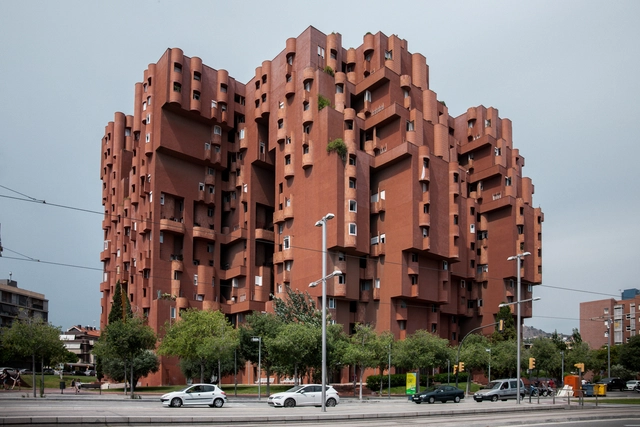
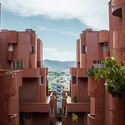
Walden 7 is a project implementing some of Ricardo Bofill's earliest ambitions and addressing most of the problems of modern city life. It is located on the same lot as Taller de Arquitectura, based in the refurbished ruins of an old cement factory. The housing structure benefits from Bofill's earlier research and the idea of providing public spaces and gardens for residents to enjoy an enhanced quality of living.










_as_Seen_From_East_World_Monuments_Fund_Collection.jpg?1599137151 "Minaret. East View in 1930s. Image © World Monuments Fund Collection")