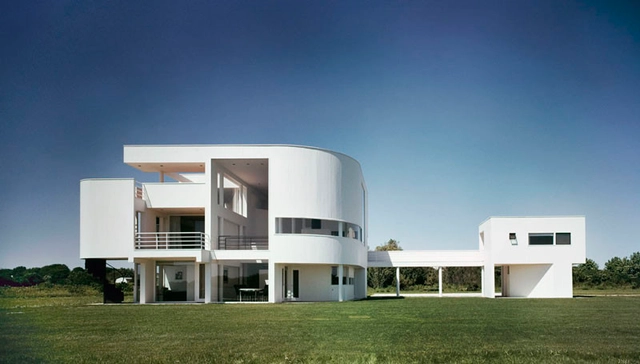
One of the earliest built works of Richard Meier, The Saltzman House, completed in 1969, is one of several Meier-designed residences that exhibits his signature style: absolute whiteness, geometric composition, and the prominence of light. With a heavy early-Modernist influence, the Saltzman House captures the purity of form and space seen in the projects of Le Corbusier.
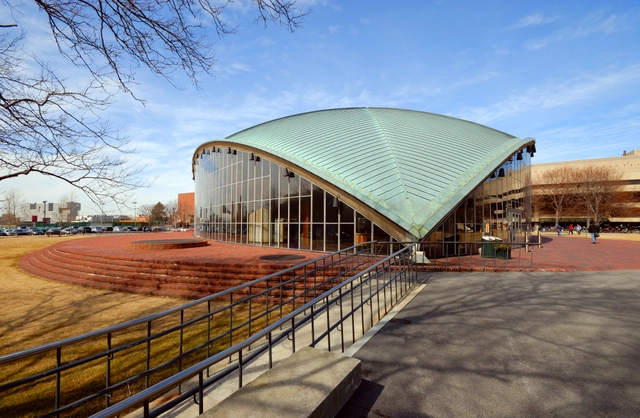
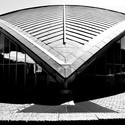
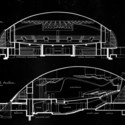
Kresge Auditorium, designed by Finnish American architect Eero Saarinen, was an experiment in architectural form and construction befitting the Massachusetts Institute of Technology’s focus on technology and innovation. This feat of sculptural engineering serves as a meeting house and is part of the cultural, social, and spiritual core of MIT’s campus. Kresge Auditorium is one of Saarinen’s numerous daring, egalitarian designs that captured the optimistic zeitgeist of Post-war America.
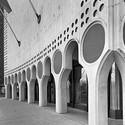
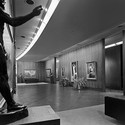
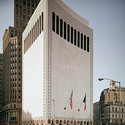
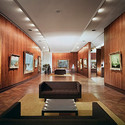
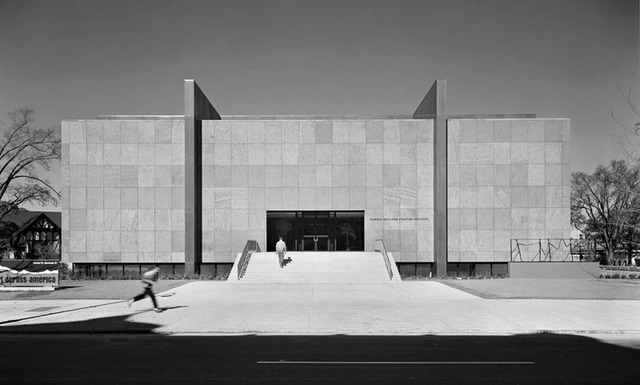
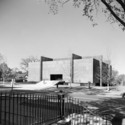
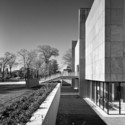
The Munson-Williams-Proctor Arts Institute is a Modern masterpiece and revolutionary precedent of American museum design. Located in Utica, New York, it was the first of many influential cultural facilities designed by Philip Johnson. Also known as the Museum of Art, the structure represents a stylistic turning point in Johnson’s career, marking the end of his loyalty to the International Style and the beginning of his experimentation with Neo-Classicism.
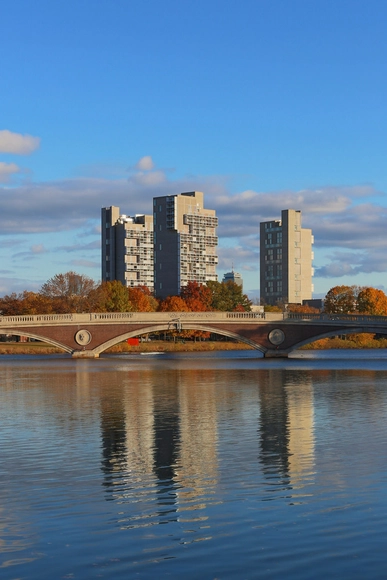
Built in 1964 during his tenure as Dean at the Graduate School of Design, Josep Lluís Sert’s Peabody Terrace provides housing for almost 1500 Harvard graduate students and their families. One of several projects Sert designed for Harvard’s campus, it is a manifestation of his vision for the ideal neighborhood. Many elements such as the negotiation of scale, mixed use program, shared open space and design aesthetic were influenced by but represent a departure from earlier modern housing projects.
Peabody Terrace is a prototypical example of a twentieth-century project heralded by the architectural community as an exemplar of progressive modern ideals, but lambasted by neighbors and members of the general public for being unattractive, cold and imposing. This project and others like it highlight the disconnect that can occur between the architectural intelligentsia and the communities in which they build.
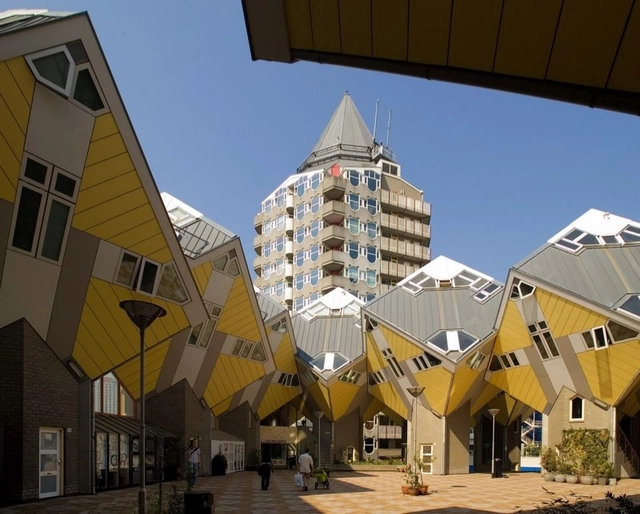
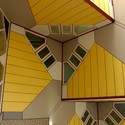
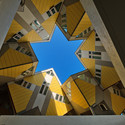
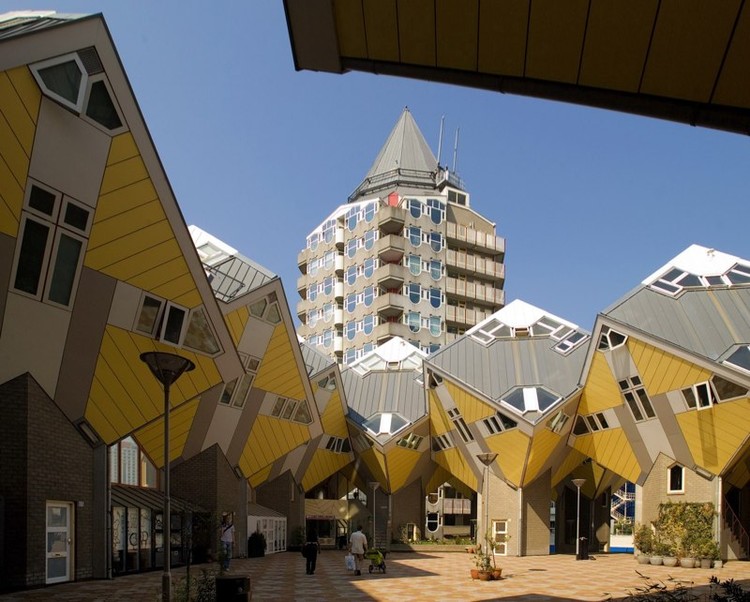
A popular tourist attraction and bizarre architectural experiment, the Kubuswoningen is located in the Oude Haven, the most historic section of Rotterdam’s port. Following the destruction of the Oude Haven during the Second World War, architect Piet Blom was asked to redevelop the area with architecture of character, presenting him the opportunity to apply his earlier cube housing exploration in Helmond to a more urban context. Known for his desire to challenge conventions, Blom did not want the Kubuswoningen to resemble typical housing; he strived to dissolve the attitude that “a building has to be recognizable as a house for it to qualify as housing.” During a time when the rebuilding of Rotterdam was pivotal, the Kubuswoningen served as an influential precedent for progressive and innovative architectural development.
The design of PPG Place, by Philip Johnson and John Burgee, melds the notion of the modern corporate tower with a neo-gothic monument. Clad in almost a million square feet of glass manufactured by the anchor tenant PPG industries, the architects ingeniously rethought accepted practices in curtain wall design to create "the crown jewel in Pittsburgh's skyline." (1) The 1.57 million square foot complex was one in a series of high profile corporate projects completed during Johnson's controversial foray into postmodernism.
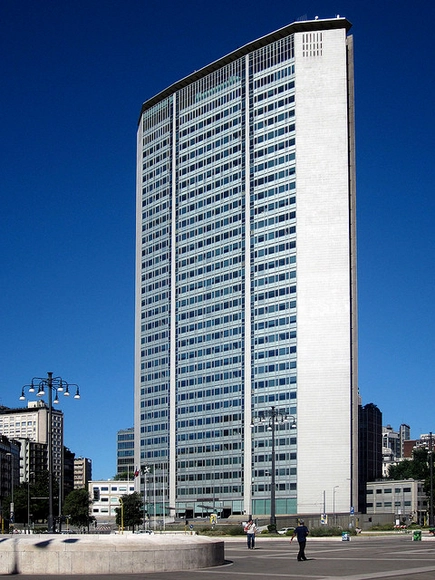
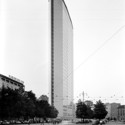
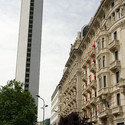
In contrast with its traditional Milanese surroundings, the Pirelli Tower is one of the earliest examples of Modernskyscrapers in Italy. Affectionately called "Il Pirellone” (The Big Pirelli), the 127 meter tower stood as Italy’s tallest building from 1958 to 1995. The design of the structure, led by architect/designer Gio Ponti and engineer Pier Luigi Nervi, featured a tapered plan—as opposed to the conventional rectilinear volume which was prevalent in America—encouraging greater creative freedom during a time when skyscrapers typically lacked experimentation.
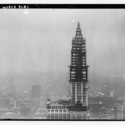
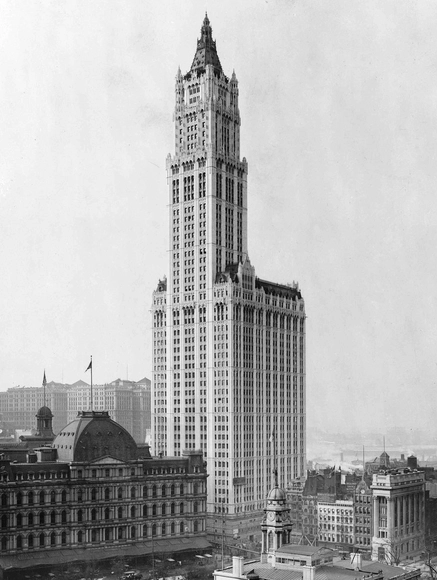
View of Woolworth Building and surrounding buildings (ca. 1913), via Wikimedia Commons
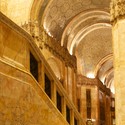
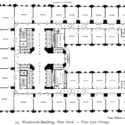
The Woolworth Building, an innovative and elegant early skyscraper completed in 1913, endures today as an iconic form on the New York City skyline. A historicist exterior sheaths a modern steel tower, embodying both the era’s modern spirit of progress and its hesitation to fully break from the past. Cass Gilbert, selected as the architect, believed the designer should “weave into the pattern of our own civilization the beauty that is our inheritance.”[1] An ornate monument to the growing economic dominance of New York City, the building was dubbed the “Cathedral of Commerce.”
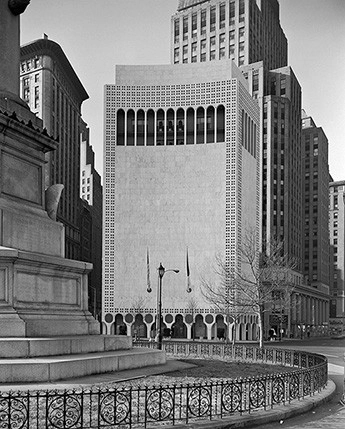
Located on a small and irregular shaped island at Columbus Circle, one of the busiest intersections in Manhattan, lies 2 Columbus Circle, formerly known as the Gallery of Modern Art. Famously described as a “die-cut Venetian palazzo on lollipops” by Ada Louise Huxtable, the New York Times architecture critic at the time, the 10-story poured concrete structure has been a source of consistent controversy and public response since the 1960s. Designed by Edward Durell Stone, an early proponent of American modern architecture, 2 Columbus Circle represents a turning point in his career. Uncharacteristic of Stone’s prior work, his use of ornament on an otherwise modern structure can be seen as an important precedent of the development of the soon-to-emerge Postmodern movement.
Le Corbusier was commissioned by the president of the Mill Owners’ Association to design the organization’s headquarters in Ahmedabad, a city historically active in India’s textile trade. The building is a physical manifesto representing Le Corbusier’s proposal for a modern Indian architecture. Constructed in 1954, the Mill Owners’ Association Building is considered the first of four completed commissions in Ahmedabad.
https://www.archdaily.com/464142/ad-classics-mill-owners-association-building-le-corbusierRennie Jones
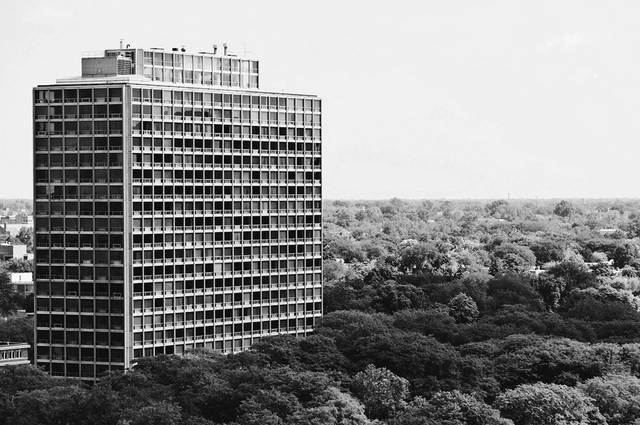
Situated at the eastern edge of Downtown Detroit, Lafayette Park constitutes the world's largest collection of buildings designed by Mies van der Rohe. The 78-acre complex was completed in 1959, just after Crown Hall and the Seagram Building. It is not as well known as several Mies projects of that decade, however, and many critics argue the project deserves greater recognition. One of the first examples of urban renewal, it is a testament to the development's design that it remains a vibrant neighborhood more than fifty years after its construction.
https://www.archdaily.com/455524/ad-classics-lafayette-park-mies-van-der-roheRennie Jones
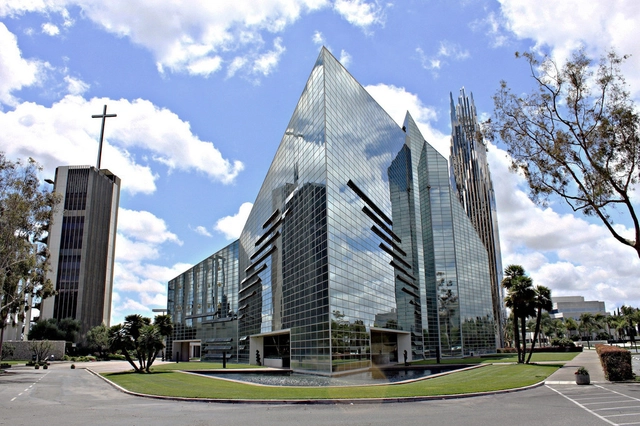
The Crystal Cathedral was designed as a religious theater of sorts, acting as both television studio and stage to a congregation of 3,000. It was commissioned by renowned televangelist Robert Schuller and completed in 1980 near Los Angeles, California. Philip Johnson and John Burgee devised the glass enclosure in response to Schuller’s request that the church be open to the "sky and the surrounding world."
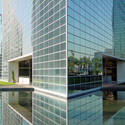
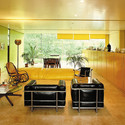
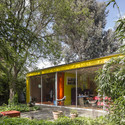
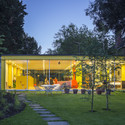
The Rogers House, designed by Richard and Su Rogers in 1968, is one of the lesser known architectural works from the master who went on to design the Centre Pompidou in Paris with Renzo Piano. The house, which represented British Architecture at the 1967 Paris Biennale, was commissioned by Rogers' parents and was granted Grade II* Listing in February 2013 - a rare accolade for a building so recent - cementing its importance in the architectural heritage of the United Kingdom.
Described by Rogers as "the most successful small project I've been involved in", the house carefully balances the openness of shear glass facades with the need to provide his parents with privacy and seclusion - a task made harder by the building's location, just a short walk from Wimbledon Village in central London. Incorporated within the design is a separate flat and pottery studio which were positioned to provide a sound barrier between the house of the adjacent road. It is, essentially, "a transparent tube with solid boundary walls".
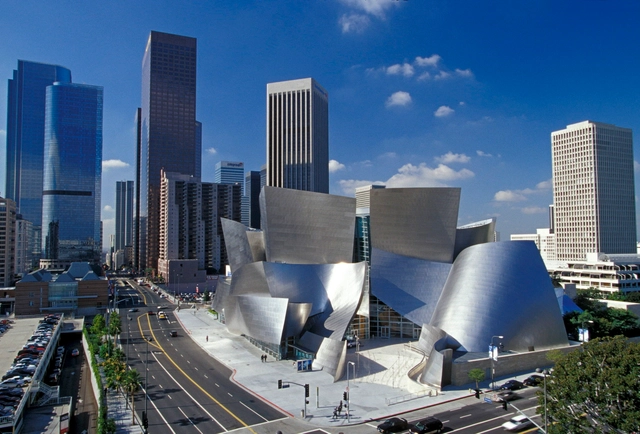
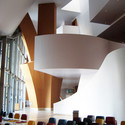
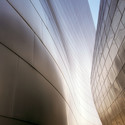
Completed October 23, 2003, The Walt Disney Concert Hall celebrates its tenth anniversary today. Home to the LA Philharmonic, it has received wide acclaim for its excellent acoustics and distinctive architecture. In the decade since its opening, the hall's sweeping, metallic surfaces have become associated with Frank Gehry’s signature style.
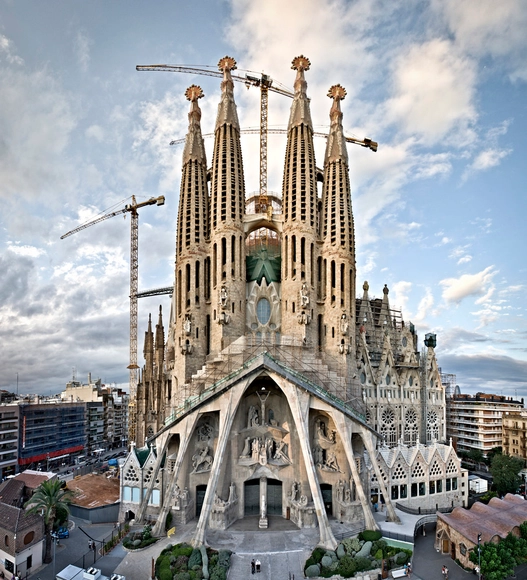
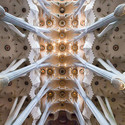
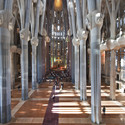
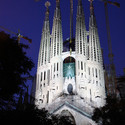
Construction of the Temple Expiatori de la Sagrada Família began in 1882, more than a century ago. The temple is still under construction, with completion expected in 2026. It is perhaps the best known structure of Catalan Modernisme, drawing over three million visitors annually. Architect Antoni Gaudi worked on the project until his death in 1926, in full anticipation he would not live to see it finished.
In response to a growing company's request for office space, Kevin Roche John Dinkeloo and Associates developed a master plan that would allow the incremental addition of floor space over time. The initial design included nine identical buildings arranged in a parallelogram, totaling 1.2 million square feet. Only three of the buildings were constructed in the initial phase, and the expansion plan was never fulfilled. The trio is known as "The Pyramids" for their simple geometry and slanting glass facades.
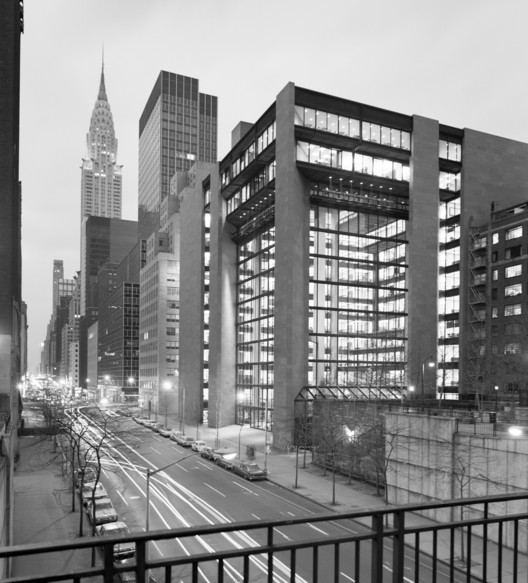
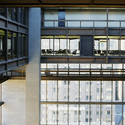
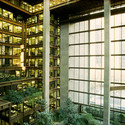
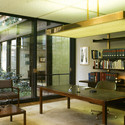
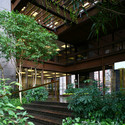
Kevin Roche and John Dinkeloo established their own practice in 1966, after heading the firm of Eero Saarinen for several years. The Ford Foundation Headquarters is regarded as the pair's first major success, a combination of Roche's unique ideals and Dinkeloo's innovative structural solutions. They introduced an office typology in which employee interaction extended beyond departments and levels, reaching even to the public.
Located in the La Serena neighborhood of Mar del Plata, Argentina, the well-known yet now abandoned Ariston Hotel was designed and constructed in 1948 by the Hungarian architect Marcel Breuer, a great diffuser of the modern movement in architecture. Originally meant for housing social reunions, dances and cocktail parties, this project is notable for its elevated volume with a curving, clover-inspired form that permits maximum glazing.




















.jpg?1392090268 "Blue and yellow accents. Image © Aaron Sylvan")