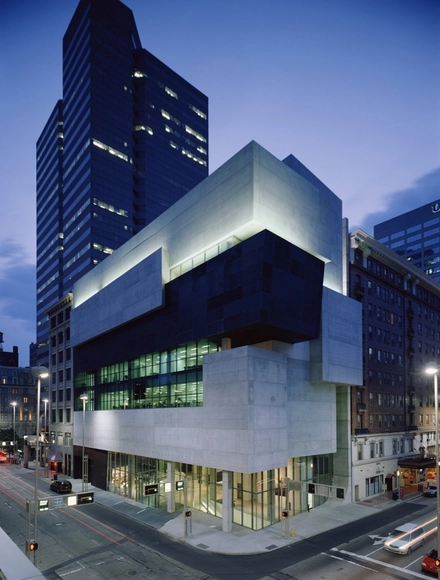
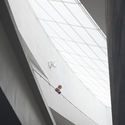
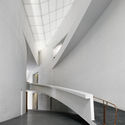
The belief that a building can both blend in and stand out at the same time is embodied by the Lois and Richard Rosenthal Center for Contemporary Art (CAC), located in Cincinnati. Though it's heavy volumetric massing makes it appear as an independent and impenetrable sculptural element, the Rosenthal Center is in fact designed to pull the city in – past its walls and up, toward the sky. This inherent dynamism is well-suited to a gallery which does not hold a permanent collection, and is situated at the heart of a thriving Midwestern city.
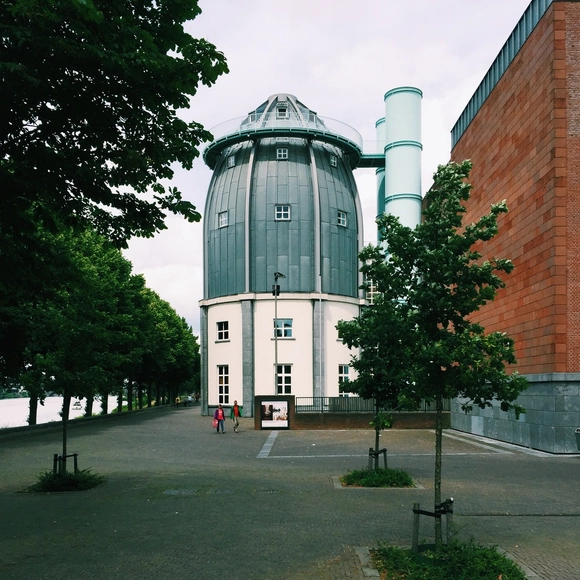
Situated in a former industrial district in the southern Dutch city of Maastricht, it’s perhaps fitting that the Bonnefantenmuseum has often been called a “viewing factory.” The museum, with its ‘E’-shaped plan and distinctive domed tower, is one of the most prominent landmarks along the River Meuse that flows around the city center. Europe’s rich cultural history was a key impetus for architect Aldo Rossi’s design, which employed a number of historical architectural gestures to place the Bonnefantenmuseum within a collapsed European canon.
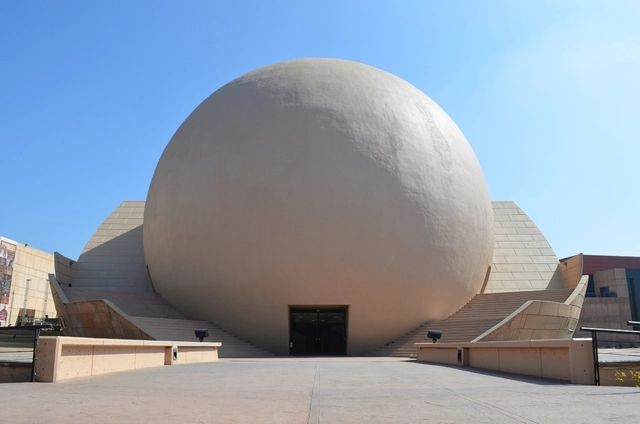
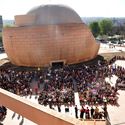
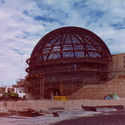
Designed by architect Pedro Ramírez Vázquez and Manuel Rosen Morrison, the buildings that make up the Tijuana Cultural Center constructed at the end of the 20th century, are now an urban landmark with a singularity so evident that it could only be understood in a city as peculiar as the one that houses it. We present to you on this occasion an approach to architecture with modern, nationalist, and iconic touches that at some point were part of the national emblem within the horizons of a Mexico like that of 1982.
In October 1982 in the city of Tijuana, Baja California, the facilities of what we now know as the Tijuana Cultural Center (Cecut) were inaugurated. That moment could probably evoke scenes inspired by movies like 'The Belly of an Architect', where examples of 18th-century Parisian architecture by Étienne-Louis Boullée are revisited in modern times. The shapes, scale, and arrangement of the volumes of the complex recall in the construction of the Cecut, how modern anti-historicism opened the possibility for a construction like this one, almost reaching the 21st century.
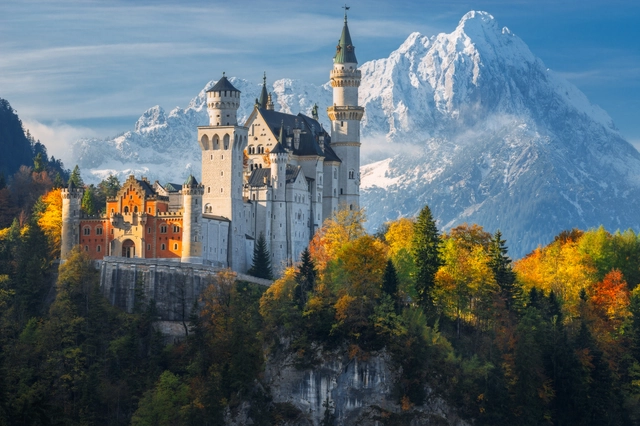
Looming over the small Bavarian town of Hohenschwangau are the turrets and towers of one of the world’s most famous “fairytale” castles. Schloß Neuschwanstein, or “New Swan Stone Castle,” was the fantastical creation of King Ludwig II – a monarch who dreamed of creating for himself an ideal medieval palace, nestled in the Alps. Though designed to represent a 13th-century Romanesque castle[1], Neuschwanstein was a thoroughly 19th-century project, constructed using industrial methods and filled with modern comforts and conveniences; indeed, without the technological advancements of the time, Ludwig could never have escaped into his medieval fantasy.[2]
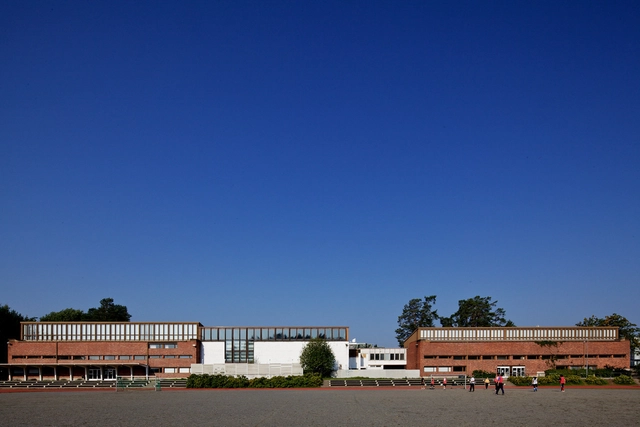
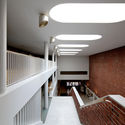
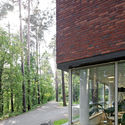
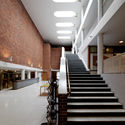
Jyväskylä, a city whose status as the center of Finnish culture and academia during the nineteenth century earned it the nickname “the Athens of Finland,” awarded Alvar Aalto the contract to design a university campus worthy of the city’s cultural heritage in 1951. Built around the pre-existing facilities of Finland’s Athenaeum, the new university would be designed with great care to respect both its natural and institutional surroundings.
The city of Jyväskylä was by no means unfamiliar to Aalto; he had moved there as a young boy with his family in 1903 and returned to form his practice in the city after qualifying as an architect in Helsinki in 1923. He was well acquainted with Jyväskylä’s Teacher Seminary, which had been a bastion of the study of the Finnish language since 1863. Such an institution was eminently important in a country that had spent most of its history as part of either Sweden or Russia. As such, the teaching of Finnish was considered an integral part of the awakening of the fledgling country’s national identity.[1]
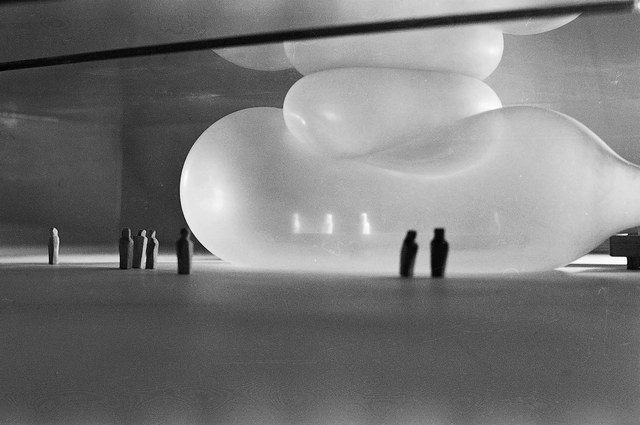
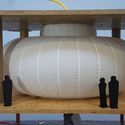
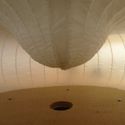
Though architectural history is replete with bricks, stones, and steel, there is no rule that states that architecture must be ‘solid’. Sverre Fehn, one of the most prominent architects of postwar Norway, regularly made use of heavy materials like concrete and stone masonry in his projects [1]. In this way, his proposal for the Nordic Pavilion at the Osaka World Expo in 1970 could be seen as an atypical exploration of a more delicate structure. Representing a very different aspect of ‘Modernity’ than his usual work, Fehn’s “breathing balloon” pavilion stands not only in contradiction to Fehn’s design canon, but to that of traditional architecture as a whole.
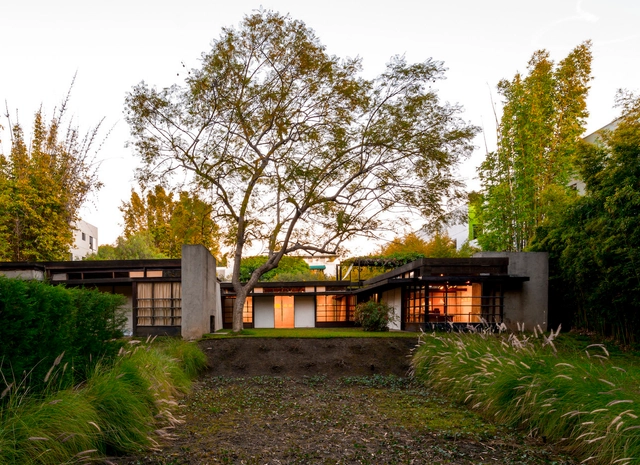
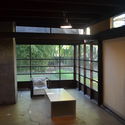
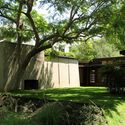
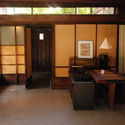
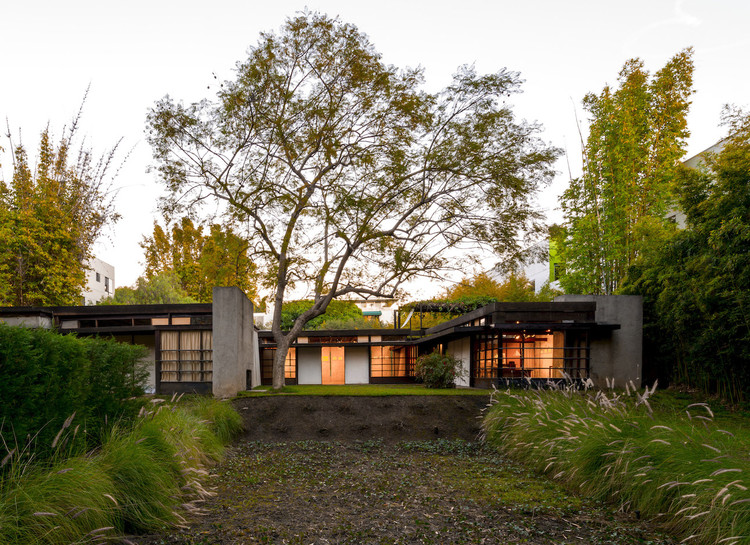
Secluded behind a screen of tall bamboo shoots in West Hollywood, Los Angeles, the Kings Road House may be considered the first home ever built in the Modernist style.[1] Designed by Rudolf Schindler in 1921, the architect’s use of tilt-slab concrete construction (highly innovative at the time) and an informal studio layout, set it apart from its contemporaries; indeed, the design would set the tone for other Modernist residential design for decades.
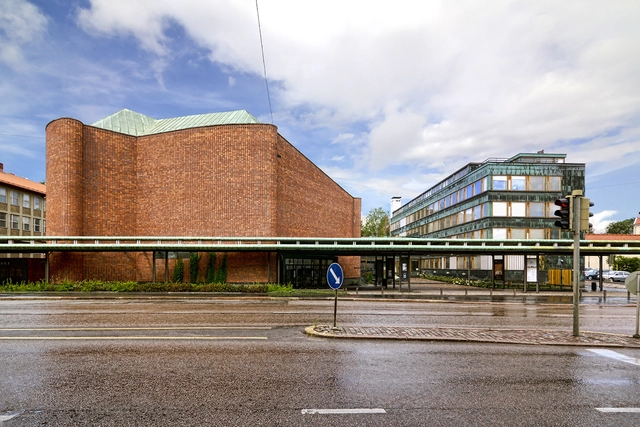
Originally built as the headquarters for the Finnish Communist Party, the House of Culture (Kultuuritalo in Finnish) has since established itself as one of Helsinki’s most popular concert venues.[1] Comprising a rectilinear copper office block, a curved brick auditorium, and a long canopy that binds them together, the House of Culture represents the pinnacle of Alvar Aalto’s work with red brick architecture in the 1950s.
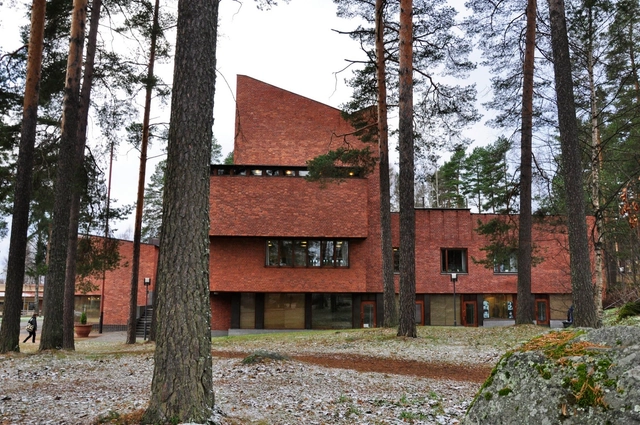
Occupying the center of a small farming town in Finland, Säynätsalo’s Town Hall might appear almost too monumental for its context. Designed by Alvar Aalto in 1949, the town hall is a study in opposition: elements of classicism and the monumental blended with modernity and intimacy to form a cohesive new center-point for the community. These and other aspects of the design initially proved somewhat divisive, and the Town Hall has not been without controversy since its inception.
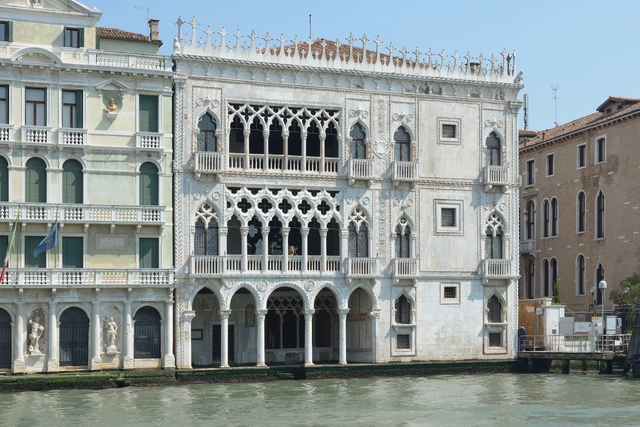
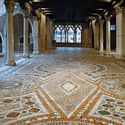
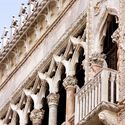
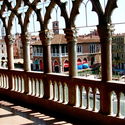
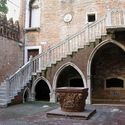
Sitting on the northern bank of Venice's Grand Canal is a great house whose ornately carved marble facade only hints at its original splendor. The Palazzo Santa Sofia—or the Ca D’Oro (House of Gold), as it is also known—is one of the most notable examples of late VenetianGothic architecture, which combined the existing threads of Gothic, Moorish, and Byzantine architecture into a unique aesthetic that symbolized the Venetian Republic’s cosmopolitan mercantile empire. Built to serve as the grand residence of wealthy Venetian businessman and politician Marin Contarini, the palazzo has seen a number of owners and renovations over its lifetime before ultimately coming to serve as a museum for medieval painting and sculpture.[1]
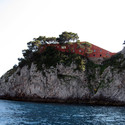
Villa Malaparte, built in 1938 by the Rationalist architect Adalberto Libera in Punta Massullo on the Isle of Capri, is considered to be one of the best examples of Modern Italian architecture. The house, a red structure with inverted pyramid stairs, sits 32 meters over a cliff on the Gulf of Salerno. It is completely isolated from civilization, only accessible by foot or by boat.
The house was commissioned by the Italian writer, Curzio Malaparte whose eccentric character eventually led him to dominate the design process, causing serious conflict with Libera. Malaparte wanted the house to reflect his own personal character and become a place for solitary contemplation and writing. He once said: "Now I live on an island, in an austere and melancholy house, which I built myself on a lonely cliff above the sea. [It is] the image of my desire."
Shigeru Ban, the 2014 Pritzker Prize winner, is an architect often celebrated for his humanitarian and disaster relief structures, constructed out of recycled or recyclable materials. On the other end of spectrum, he is well-known for his meticulously constructed residential and museum projects, more often than not for high-end wealthy clients. The Nomadic Museum, however, combines both of these facets of his practice, using shipping containers and paper tubes to craft a bespoke mobile gallery for Gregory Colbert’s traveling exhibition of photography entitled Ashes and Snow.
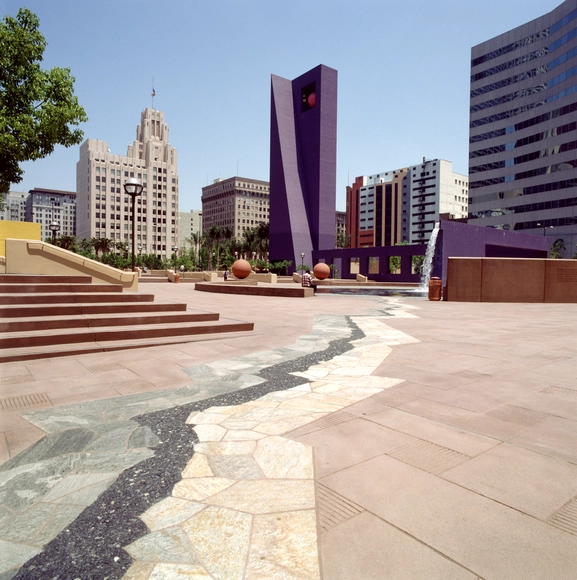
The recently announcedcompetition to redesign Pershing Square, Los Angeles’ oldest park, will be at least the sixth iteration of the space in the heart of the city’s rapidly changing downtown. Occupying a full city block, what is now Pershing Square (named for the World War I general) was part of the 1781 Spanish land grant to the City of Los Angeles, and was officially dedicated as a park, originally called La Plaza Abaja, in 1866.[1] The current iteration, designed by Mexican architect Ricardo Legorreta and landscape architect Laurie Olin, with art installations by Barbara McCarren, opened in 1994. Just over twenty years later, the brightly-colored, geometric stucco structures, and the hardscape-heavy layout have faced extensive criticism–one local website is fond of calling it the city’s “most hated park”–but Legorreta and Olin’s design makes a bold statement for urban public space in Los Angeles, unmatched by any other park in the city.
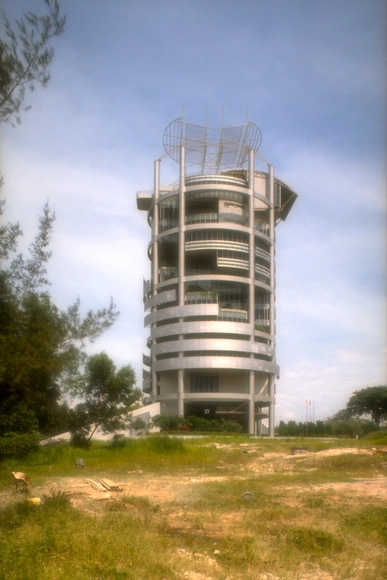
Marking both an ending, and a beginning, the Menara Mesiniaga (Mesiniaga Tower) in Petaling Jaya, Malaysia (just outside of Kuala Lumpur), is the culmination of Ken Yeang’s years of research into passive strategies for tall buildings, and it marks the first in a line of buildings (what he calls his ‘Series 2’ towers) that fully realize Yeang’s bioclimatic design principles. The embodiment of his tenacious goal to bring passive design to the hot humid climate of Southeast Asia, the principles on display at Menara Mesiniaga have influenced subsequent skyscraper designs across the globe.
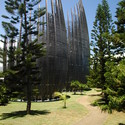
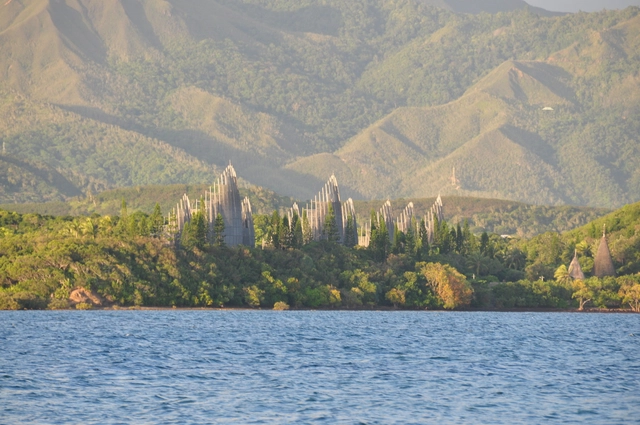
Sydney. Bilbao. Nouméa? They are cities recognized, popularized, and revitalized by a single foreign intervention of modern architecture. The phenomenon by which this occurs, often dubbed the “Bilbao Effect” in reference to Frank Gehry’s iconic museum, is one of the most fascinating and sought-after contributions of modern architecture to economic development.
The latter of these locations—the capital of the Pacific island cluster of New Caledonia—may seem a misfit on this list to those who have still not heard of it, now sixteen years after the completion of Renzo Piano’s Tjibaou Cultural Center, but it most certainly is not: the transformative economic effect of this project on the city of Nouméa has been no less dramatic than that of any opera house or museum of greater renown. Since the Center's completion, New Caledonia has found itself in the international architectural spotlight, as the graceful, ephemeral design of the building's iconic shells has brought fame and business in equal parts to its island and to Piano’s firm.


.jpg?1462559836 "© Paul Warchol")
.jpg?1462560115 "© Helene Binet")
































.jpg?1410204566 "© Flickr user Eustaquio")