1. ArchDaily
  2. Architecture Classics

Architecture Classics

AD Classics: Neviges Mariendom / Gottfried Böhm

Standing like a concrete mountain amid a wood, the jagged concrete volume of the Neviges Mariendom [“Cathedral of Saint Mary of Neviges”] towers over its surroundings. Built on a popular pilgrimage site in western Germany, the Mariendom is only the latest iteration of a monastery that has drawn countless visitors and pilgrims from across the world for centuries. Unlike its medieval and Baroque predecessors, however, the unabashedly Modernist Mariendom reflects a significant shift in the outlook of its creators: a new way of thinking for both the people of post-war Germany and the wider Catholic Church.

AD Classics: Neviges Mariendom / Gottfried Böhm -         Memorial Center, FacadeAD Classics: Neviges Mariendom / Gottfried Böhm -         Memorial Center, FacadeAD Classics: Neviges Mariendom / Gottfried Böhm -         Memorial Center, FacadeAD Classics: Neviges Mariendom / Gottfried Böhm -         Memorial Center, Facade, HandrailAD Classics: Neviges Mariendom / Gottfried Böhm - More Images+ 17

AD Classics: The Entenza House (Case Study #9) / Charles & Ray Eames, Eero Saarinen & Associates
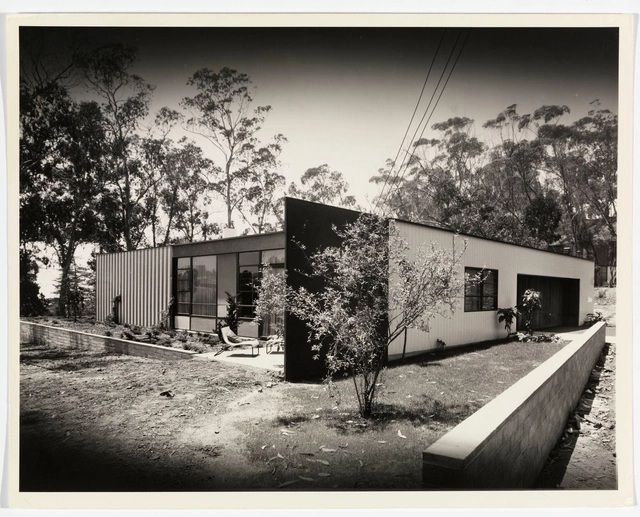
Nestled in the verdant seaside hills of the Pacific Palisades in southern California, the Entenza House is the ninth of the famous Case Study Houses built between 1945 and 1962. With a vast, open-plan living room that connects to the backyard through floor-to-ceiling glass sliding doors, the house brings its natural surroundings into a metal Modernist box, allowing the two to coexist as one harmonious space.

Like its peers in the Case Study Program, the house was designed not only to serve as a comfortable and functional residence, but to showcase how modular steel construction could be used to create low-cost housing for a society still recovering from the the Second World War. The man responsible for initiating the program was John Entenza, Editor of the magazine Arts and Architecture. The result was a series of minimalist homes that employed steel frames and open plans to reflect the more casual and independent way of life that had arisen in the automotive age.[1]

AD Classics: The Entenza House (Case Study #9) / Charles & Ray Eames, Eero Saarinen & Associates - Houses Interiors, Door, Table, ChairAD Classics: The Entenza House (Case Study #9) / Charles & Ray Eames, Eero Saarinen & Associates - Houses InteriorsAD Classics: The Entenza House (Case Study #9) / Charles & Ray Eames, Eero Saarinen & Associates - Houses Interiors, Table, LightingAD Classics: The Entenza House (Case Study #9) / Charles & Ray Eames, Eero Saarinen & Associates - Houses Interiors, Door, Facade, StairsAD Classics: The Entenza House (Case Study #9) / Charles & Ray Eames, Eero Saarinen & Associates - More Images+ 23

AD Classics: Al Shaheed Monument / Saman Kamal

It is difficult to imagine how the serene curves of the Al Shaheed Monument, reflected in a glimmering lake in the ancient city of Baghdad, could have been built in a time of conflict and genocide. Commissioned by Saddam Hussein’s regime as a memorial for the fallen soldiers in the Iraq-Iran War of the 1980s, this graceful structure exudes a quiet beauty that belies the turmoil of its birth.

AD Classics: Paris Métro Entrance / Hector Guimard

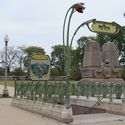
AD Classics: Paris Métro Entrance / Hector Guimard - Public Architecture, Facade, Fence, Arch
A typical station entrance in the Paris Métro. ImageVia Pixabay licensed under CC0 1.0 (Public Domain)

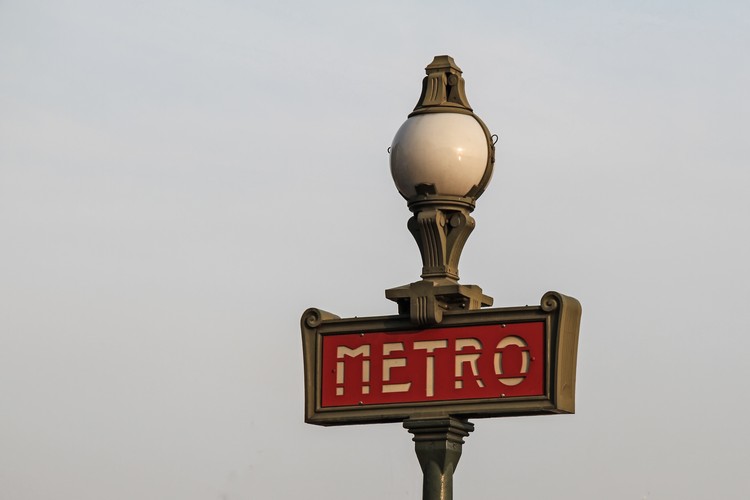
Scattered throughout the streets of Paris, the elegant Art Nouveau entrances to the Métropolitain (Métro) subway system stand as a collective monument to the city’s Belle Époque of the late 19th and early 20th Centuries. With their sinuous ironwork patterned after stylized plants, the Métro entrances now count among the most celebrated architectural emblems of the city; however, due to the city’s wariness in the face of industrialization and architect Hector Guimard’s decision to utilize a then-novel architectural aesthetic, it would take decades before the entrances would earn the illustrious reputation that they now enjoy.

AD Classics: Paris Métro Entrance / Hector Guimard - Public Architecture, ArchAD Classics: Paris Métro Entrance / Hector Guimard - Public Architecture, Fence, Facade, ArchAD Classics: Paris Métro Entrance / Hector Guimard - Public Architecture, Facade, Arch, ArcadeAD Classics: Paris Métro Entrance / Hector Guimard - Public Architecture, FacadeAD Classics: Paris Métro Entrance / Hector Guimard - More Images+ 5

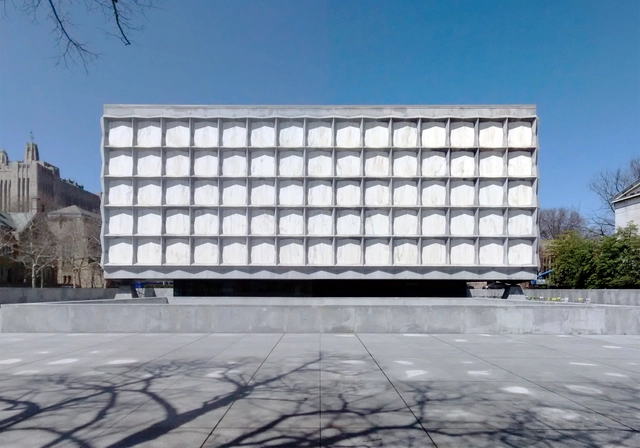
AD Classics: Beinecke Rare Book & Manuscript Library / SOM

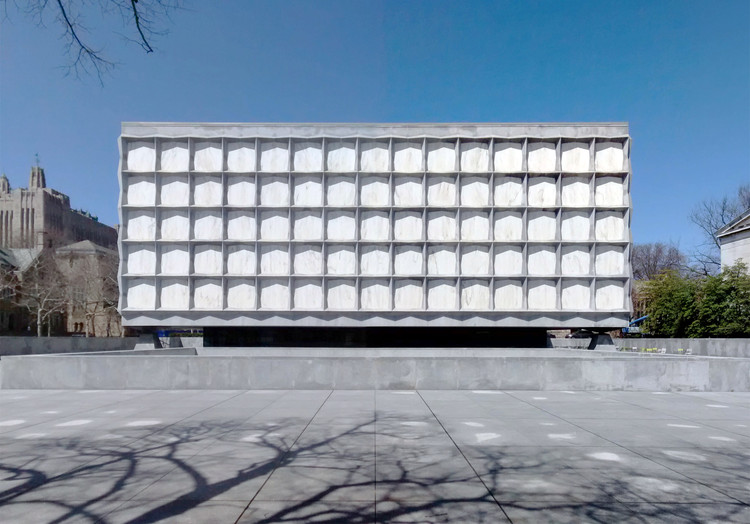
Cloistered by a protective shell of stone, the Beinecke Rare Book and Manuscript Library is one of the world’s foremost collections of rare manuscripts. Opened in 1963, the library is renowned for its translucent marble façade and the world-renowned glass book tower sheltered within – a dramatic arrangement resulting from the particular requirements of a repository for literary artifacts. This unique design, very much in the Modernist lineage but in contrast to the revivalist styles of the rest of Yale’s campus, has only become appreciated thanks to the passage of time; the same bold choices which are now celebrated were once seen as a cause for contempt and outrage.

AD Classics: Beinecke Rare Book & Manuscript Library / SOM - University, FacadeAD Classics: Beinecke Rare Book & Manuscript Library / SOM - University, FacadeAD Classics: Beinecke Rare Book & Manuscript Library / SOM - University, FacadeAD Classics: Beinecke Rare Book & Manuscript Library / SOM - UniversityAD Classics: Beinecke Rare Book & Manuscript Library / SOM - More Images+ 10

AD Classics: Red House / William Morris and Philip Webb

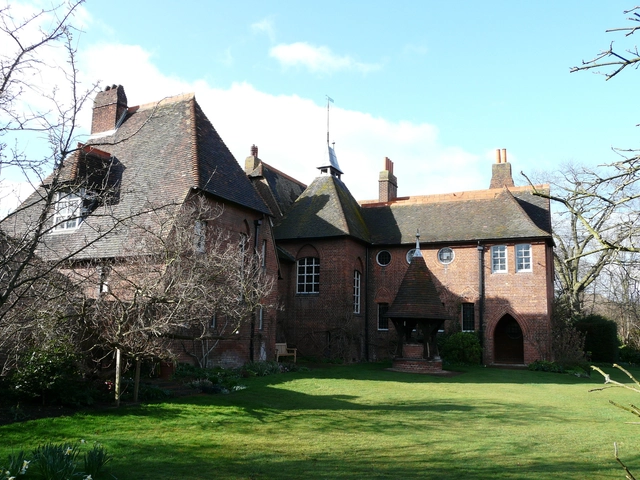
In the heart of a suburb just east of London stands an incongruous red brick villa. With its pointed arched window frames and towering chimneys, the house was designed to appear  like a relic of the Middle Ages. In reality, its vintage dates to the 1860’s. This is Red House, the Arts and Crafts home of artist William Morris and his family. Built as a rebuttal to an increasingly industrialized age, Red House’s message has been both diminished by the passage of time and, over the course of the centuries, been cast in greater relief against its context.

AD Classics: Red House / William Morris and Philip Webb - ResidentialAD Classics: Red House / William Morris and Philip Webb - Residential, Door, Facade, ArchAD Classics: Red House / William Morris and Philip Webb - ResidentialAD Classics: Red House / William Morris and Philip Webb - Residential, Garden, FacadeAD Classics: Red House / William Morris and Philip Webb - More Images+ 9

AD Classics: Haus am Horn / Georg Muche

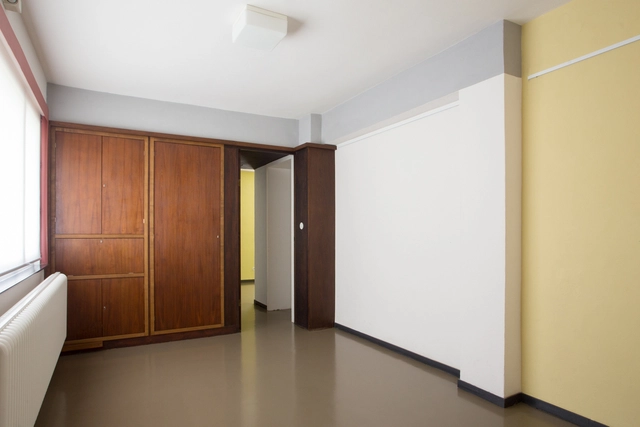
In 1919, at a time in which Germany was still in upheaval over its defeat in the First World War (and compounded by the loss of its monarchy), the Academy of Fine Arts and School of Applied Arts in Weimar, Germany, were combined to form the first Bauhaus. Its stated goal was to erase the separation that had developed between artists and craftsmen, combining the talents of both occupations in order to achieve a unified architectonic feeling which they believed had been lost in the divide. Students of the Bauhaus were to abandon the framework of design standards that had been developed by traditional European schools and experiment with natural materials, abstract forms, and their own intuitions. Although the school’s output was initially Expressionist in nature, by 1922 it had evolved into something more in line with the rising International Style.[1]

AD Classics: Haus am Horn / Georg Muche - Houses, Bench, ChairAD Classics: Haus am Horn / Georg Muche - Houses, Door, FacadeAD Classics: Haus am Horn / Georg Muche - Houses, Door, FacadeAD Classics: Haus am Horn / Georg Muche - Houses, LightingAD Classics: Haus am Horn / Georg Muche - More Images+ 9

AD Classics: Himeji Castle / Ikeda Terumasa

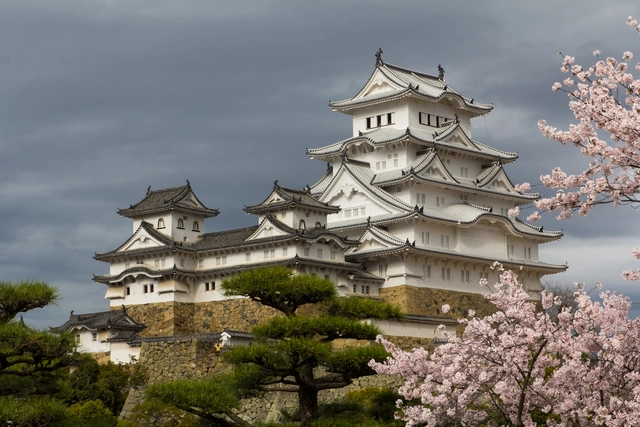
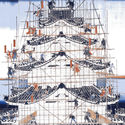
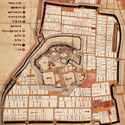
With its gleaming white walls and elegantly terraced roofs, it is easy to forget that Himeji Castle was built as a fortress . Standing on two hilltops in the city of Himeji, the old fortress, also known as Himeji-jo, is the greatest surviving example of Japanese castle architecture from the early years of the Shogunate, which governed the island nation from the late 1500s to the 19th Century. Although never tested in battle, the castle’s elaborate defensive measures represent the best strategic design the period produced. While these measures have since been rendered obsolete, the same cannot be said for the castle’s soaring, pristine aesthetic, which earned it the nickname Shirasagi-jo – “Castle of the White Heron.”

AD Classics: Himeji Castle / Ikeda Terumasa - Landmarks & Monuments, Facade, StairsAD Classics: Himeji Castle / Ikeda Terumasa - Landmarks & Monuments, Beam, DoorAD Classics: Himeji Castle / Ikeda Terumasa - Landmarks & MonumentsAD Classics: Himeji Castle / Ikeda Terumasa - Landmarks & MonumentsAD Classics: Himeji Castle / Ikeda Terumasa - More Images+ 9

AD Classics: Pruitt-Igoe Housing Project / Minoru Yamasaki

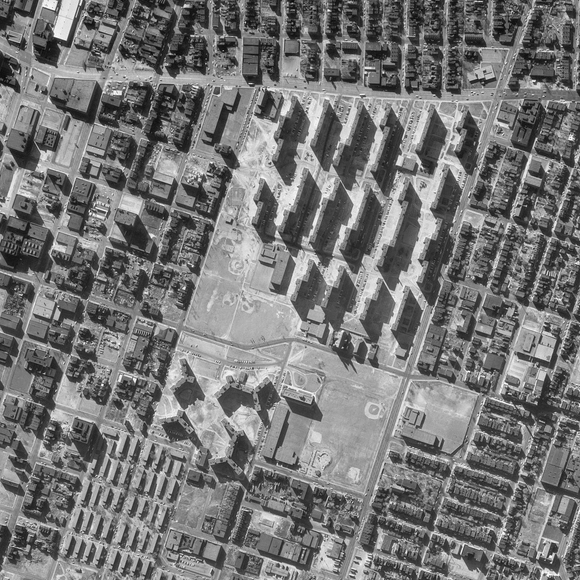
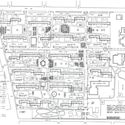
Few buildings in history can claim as infamous a legacy as that of the Pruitt-Igoe Housing Project of St. Louis, Missouri. Built during the height of Modernism this nominally innovative collection of residential towers was meant to stand as a triumph of rational architectural design over the ills of poverty and urban blight; instead, two decades of turmoil preceded the final, unceremonious destruction of the entire complex in 1973. The fall of Pruitt-Igoe ultimately came to signify not only the failure of one public housing project, but arguably the death knell of the entire Modernist era of design.

AD Classics: Pruitt-Igoe Housing Project / Minoru Yamasaki - Social Housing, FacadeAD Classics: Pruitt-Igoe Housing Project / Minoru Yamasaki - Social Housing, Facade, CityscapeAD Classics: Pruitt-Igoe Housing Project / Minoru Yamasaki - Social Housing, Facade, CityscapeAD Classics: Pruitt-Igoe Housing Project / Minoru Yamasaki - Social HousingAD Classics: Pruitt-Igoe Housing Project / Minoru Yamasaki - More Images+ 3

AD Classics: Kafka's Castle / Bofill Taller de Arquitectura

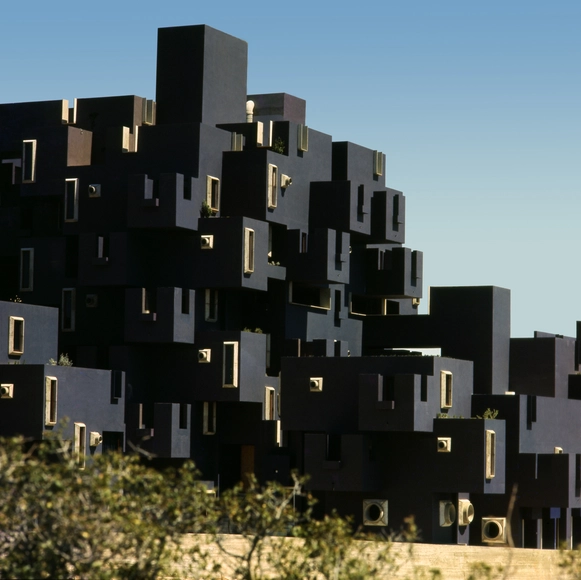
AD Classics: Kafka's Castle / Bofill Taller de Arquitectura - ApartmentsAD Classics: Kafka's Castle / Bofill Taller de Arquitectura - ApartmentsAD Classics: Kafka's Castle / Bofill Taller de Arquitectura - ApartmentsAD Classics: Kafka's Castle / Bofill Taller de Arquitectura - ApartmentsAD Classics: Kafka's Castle / Bofill Taller de Arquitectura - More Images+ 14

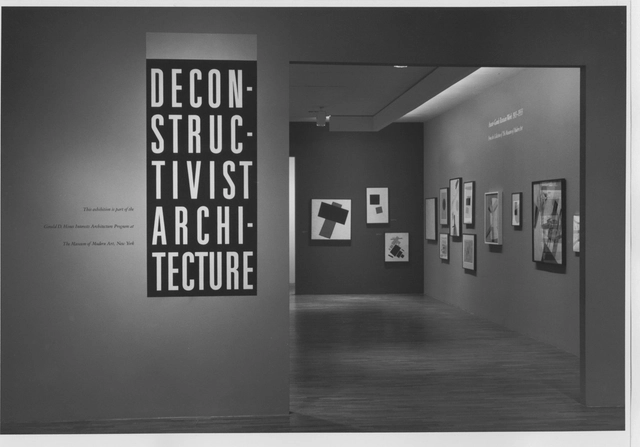
AD Classics: 1988 Deconstructivist Exhibition at New York's Museum of Modern Art (MoMA)

When Philip Johnson curated the Museum of Modern Arts’ (MoMA) 1932 “International Exhibition of Modern Architecture,” he did so with the explicit intention of defining the International Style. As a guest curator at the same institution in 1988 alongside Mark Wigley (now Dean Emeritus of the Columbia GSAPP), Johnson took the opposite approach: rather than present architecture derived from a rigidly uniform set of design principles, he gathered a collection of work by architects whose similar (but not identical) approaches had yielded similar results. The designers he selected—Peter Eisenman, Frank Gehry, Zaha Hadid, Rem Koolhaas, Daniel Libeskind, Bernard Tschumi, and the firm Coop Himmelblau (led by Wolf Prix)—would prove to be some of the most influential architects of the late 20th Century to the present day.[1,2]

AD Classics: 1988 Deconstructivist Exhibition at New York's Museum of Modern Art (MoMA) - Installation, TableAD Classics: 1988 Deconstructivist Exhibition at New York's Museum of Modern Art (MoMA) - Installation, Table, ChairAD Classics: 1988 Deconstructivist Exhibition at New York's Museum of Modern Art (MoMA) - InstallationAD Classics: 1988 Deconstructivist Exhibition at New York's Museum of Modern Art (MoMA) - InstallationAD Classics: 1988 Deconstructivist Exhibition at New York's Museum of Modern Art (MoMA) - More Images+ 1

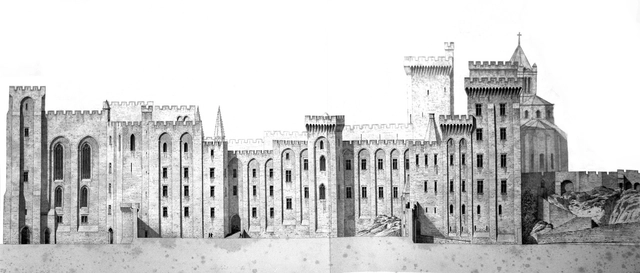
AD Classics: Palais des Papes / Pierre Poisson & Jean de Louvres

While the Roman Catholic Church is synonymous with the Eternal City (and Italian capital), the greatest monument from its medieval heyday actually stands in southern France. The relic of the Papacy’s brief departure from Rome, the Palais des Papes (“Palace of the Popes”) in Avignon is the largest Gothic palace ever built. Constructed in two main phases by two of its residents, the Palais des Papes is a grandiose architectural expression of the wealth and power of the eleven popes who called Avignon their home and base of power.

AD Classics: Palais des Papes / Pierre Poisson & Jean de Louvres - Religious Buildings, Facade, Arcade, ArchAD Classics: Palais des Papes / Pierre Poisson & Jean de Louvres - Religious Buildings, Courtyard, Facade, Arch, ArcadeAD Classics: Palais des Papes / Pierre Poisson & Jean de Louvres - Religious Buildings, Facade, CityscapeAD Classics: Palais des Papes / Pierre Poisson & Jean de Louvres - Religious BuildingsAD Classics: Palais des Papes / Pierre Poisson & Jean de Louvres - More Images+ 14

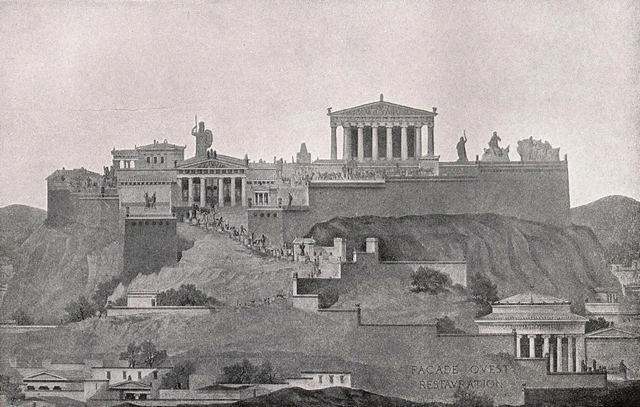
AD Classics: Acropolis of Athens / Ictinus, Callicrates, Mnesikles and Phidias

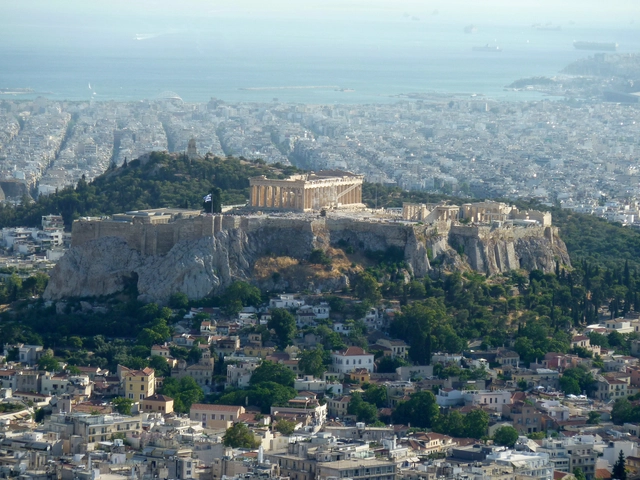
The Parthenon, perhaps the most celebrated example of Classical Greek architecture, was only the first of a series of remarkable buildings to be constructed atop the Athenian Acropolis in the wake of the Persian Wars. Led by the renowned statesman Pericles, the city-state embarked on an ambitious rebuilding program which replaced all that had been razed by the Persians. The new complex, while dedicated to the gods and the legends that surrounded the Acropolis, were as much a declaration of Athens’ glory as they were places of worship – monuments to a people who had risen from the ashes of a war to become the most powerful and prosperous state in the ancient world.

AD Classics: Acropolis of Athens / Ictinus, Callicrates, Mnesikles and Phidias - Religious Buildings, FacadeAD Classics: Acropolis of Athens / Ictinus, Callicrates, Mnesikles and Phidias - Religious Buildings, Facade, Column, ArchAD Classics: Acropolis of Athens / Ictinus, Callicrates, Mnesikles and Phidias - Religious Buildings, Facade, ArchAD Classics: Acropolis of Athens / Ictinus, Callicrates, Mnesikles and Phidias - Religious Buildings, FacadeAD Classics: Acropolis of Athens / Ictinus, Callicrates, Mnesikles and Phidias - More Images+ 9

AD Classics: Hôtel van Eetvelde / Victor Horta

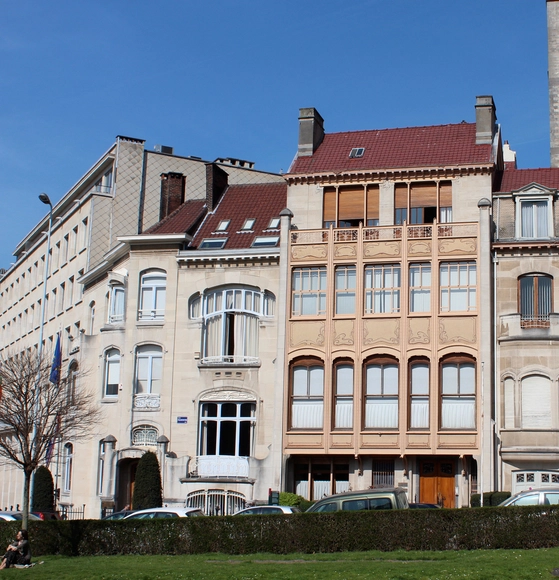
To the contemporary observer, the flowing lines and naturalistic ornamentation of Art Nouveau do not appear particularly radical. To some, Art Nouveau may even seem to be the dying gasp of 19th Century Classicism just before the unmistakably modern Art Deco and International Styles supplanted it as the design modes of choice. The Hôtel van Eetvelde, designed in 1897 by Victor Horta—the architect considered to be the father of Art Nouveau—suggests a different story. With its innovative spatial strategy and expressive use of new industrial materials, the Hôtel van Eetvelde is a testament to the novelty of the “New Art.”

AD Classics: Hôtel van Eetvelde / Victor Horta - Office Buildings, FacadeAD Classics: Hôtel van Eetvelde / Victor Horta - Office Buildings, FacadeAD Classics: Hôtel van Eetvelde / Victor Horta - Office Buildings, FacadeAD Classics: Hôtel van Eetvelde / Victor Horta - Office Buildings, FacadeAD Classics: Hôtel van Eetvelde / Victor Horta - More Images+ 1

AD Classics: Park Hill Estate / Jack Lynn and Ivor Smith

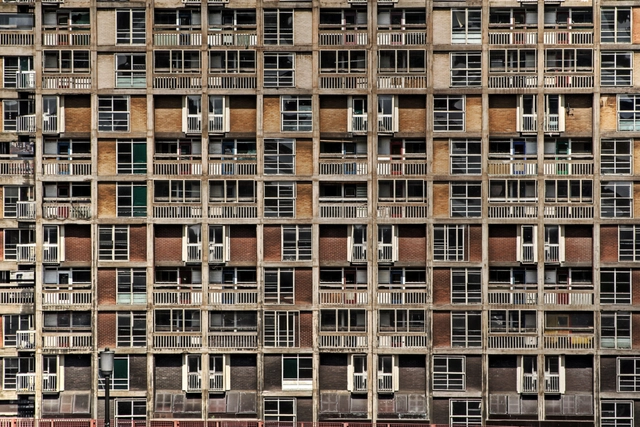
From its hilltop vantage point in the east end of Sheffield, UK, the Park Hill Estate surveys the post-industrial city which sprawls westwards. Its prominent location makes the estate highly visible and it has, over time, become engrained in the popular consciousness – a part of the fabric of the city. Although today it divides opinion, following its completion in 1961 it was hailed as an exemplary model for social housing. Designed by architects Jack Lynn and Ivor Smith under the supervision of Sheffield’s visionary City Architect John Lewis Womersley, the estate now stands as testament to an era when young British architects were revolutionizing the field of residential architecture with radical housing programs.

The Park Hill Estate was part of Womersley’s strategy to introduce more high-density housing to Sheffield, which he believed would foster a stronger sense of community than the ubiquitous back-to-back terraces.[1] This policy went hand in hand with an urgent need for slum clearance; The Park, a slum so notorious for its high crime rate that it was known locally as ‘Little Chicago,’ was demolished to make way for the estate.

AD Classics: Park Hill Estate / Jack Lynn and Ivor Smith - Social Housing, FacadeAD Classics: Park Hill Estate / Jack Lynn and Ivor Smith - Social Housing, Facade, BalconyAD Classics: Park Hill Estate / Jack Lynn and Ivor Smith - Social Housing, FacadeAD Classics: Park Hill Estate / Jack Lynn and Ivor Smith - Social Housing, Facade, Fence, CityscapeAD Classics: Park Hill Estate / Jack Lynn and Ivor Smith - More Images+ 12

AD Classics: The Parthenon / Ictinus and Callicrates

It is unsurprising that Athens, the city widely considered to be the cradle of Western civilization, would have made as celebrated a contribution to architecture as it has to countless other human pursuits. Built on a hilltop above the contemporary city, the weathered marble complex known as the Acropolis stands as a faded remnant from the former city-state’s ancient glory years, surrounded by the products of the centuries that followed. The greatest of these landmarks, the Parthenon, captures an age long past when Athens was the wealthiest and most powerful city-state in Greece and beyond.

AD Classics: The Parthenon / Ictinus and Callicrates - Religious Buildings, Column, Arch, FacadeAD Classics: The Parthenon / Ictinus and Callicrates - Religious Buildings, Facade, Column, ArchAD Classics: The Parthenon / Ictinus and Callicrates - Religious Buildings, Facade, Column, ArchAD Classics: The Parthenon / Ictinus and Callicrates - Religious Buildings, Facade, Column, Arch, ArcadeAD Classics: The Parthenon / Ictinus and Callicrates - More Images+ 6

Architecture Classics: Millennium Dome / Rogers Stirk Harbour + Partners

In 1994, with the third millennium fast approaching, the British announced a national festival to mark the year 2000. Amid a new sense of optimism, the year-long festival, which became known as the Millennium Experience, would take the form of an exhibition celebrating “who we are, what we do, and where we live.” Under the project direction of Mike Davies, a partner of Richard Rogers’ practice (known today as RSHP) designed the Millennium Dome to house this exhibition.

In an extraordinary feat of architecture and engineering, the vast dome, whose canopy encompasses a volume of 2.2million cubic meters, sped from initial concept design to topping out in only two years. Although the Millennium Experience closed its doors as the year 2000, the building which housed it has since been put to a variety of uses, its durability largely due to Richard Rogers’ characteristically flexible design.

Architecture Classics: Millennium Dome / Rogers Stirk Harbour + Partners - Pavilion, BeamArchitecture Classics: Millennium Dome / Rogers Stirk Harbour + Partners - PavilionArchitecture Classics: Millennium Dome / Rogers Stirk Harbour + Partners - Pavilion, FacadeArchitecture Classics: Millennium Dome / Rogers Stirk Harbour + Partners - PavilionArchitecture Classics: Millennium Dome / Rogers Stirk Harbour + Partners - More Images+ 3

AD Classics: Roman Pantheon / Emperor Hadrian

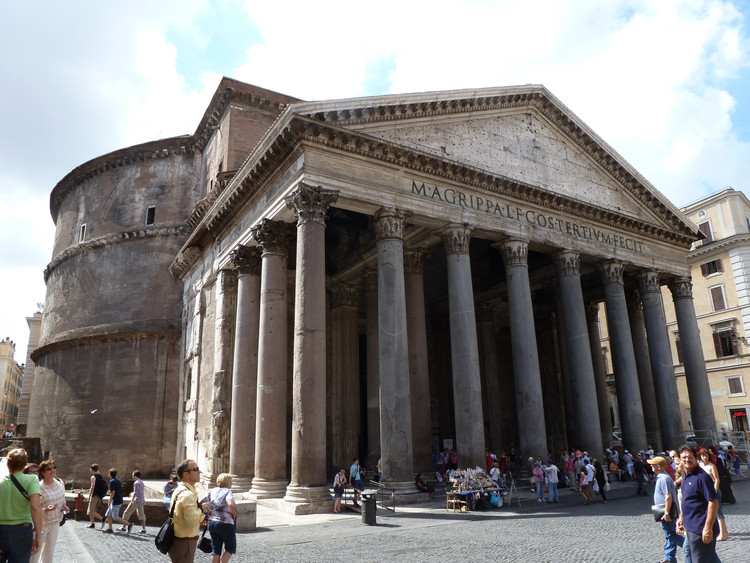
Locked within Rome’s labyrinthine maze of narrow streets stands one of the most renowned buildings in the history of architecture. Built at the height of the Roman Empire’s power and wealth, the Roman Pantheon has been both lauded and studied for both the immensity of its dome and its celestial geometry for over two millennia. During this time it has been the subject of countless imitations and references as the enduring architectural legacy of one of the world’s most influential epochs.

AD Classics: Roman Pantheon / Emperor Hadrian - Interior Photography, Landmarks & Monuments, Arch, Facade, Lighting, ChairAD Classics: Roman Pantheon / Emperor Hadrian - Landmarks & MonumentsAD Classics: Roman Pantheon / Emperor Hadrian - Drawings, Landmarks & Monuments, Facade, Arch, ArcadeAD Classics: Roman Pantheon / Emperor Hadrian - Exterior Photography, Landmarks & Monuments, Facade, ColumnAD Classics: Roman Pantheon / Emperor Hadrian - More Images+ 11