1. ArchDaily
  2. Architecture Classics

Architecture Classics

AD Classics: Grundtvig's Church / Peder Vilhelm Jensen-Klint

This article was originally published on July 28, 2016. To read the stories behind other celebrated architecture projects, visit our AD Classics section.

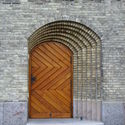
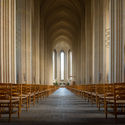
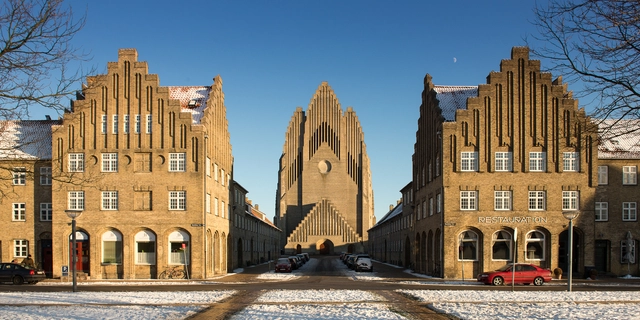
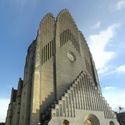
Six million yellow bricks on a hilltop just outside Copenhagen form one of the world’s foremost, if not perhaps comparatively unknown, Expressionist monuments. Grundtvigs Kirke (“Grundtvig’s Church”), designed by architect Peder Vilhelm Jensen Klint, was built between 1921 and 1940 as a memorial to N.F.S. Grundtvig – a famed Danish pastor, philosopher, historian, hymnist, and politician of the 19th century.[1] Jensen Klint, inspired by Grundtvig’s humanist interpretation of Christianity, merged the scale and stylings of a Gothic cathedral with the aesthetics of a Danish country church to create a landmark worthy of its namesake.[2]

It was decided in 1912 that Grundtvig, who had passed away in 1873, had been so significant to Danish history and culture that he merited a national monument. Two competitions were held in 1912 and 1913, bringing in numerous design submissions for statues, decorative columns, and architectural memorials.[3]

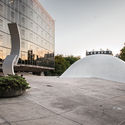
AD Classics: Grundtvig's Church / Peder Vilhelm Jensen-Klint - Landmarks & Monuments, Column, Arcade, Arch, Door, Chair, BenchAD Classics: Grundtvig's Church / Peder Vilhelm Jensen-Klint - Landmarks & Monuments, Facade, ArchAD Classics: Grundtvig's Church / Peder Vilhelm Jensen-Klint - Landmarks & Monuments, Door, Facade, Arch, ArcadeAD Classics: Grundtvig's Church / Peder Vilhelm Jensen-Klint - Landmarks & Monuments, Column, Arcade, Arch, FacadeAD Classics: Grundtvig's Church / Peder Vilhelm Jensen-Klint - More Images+ 13

AD Classics: World's Columbian Exposition / Daniel Burnham and Frederick Law Olmsted

The United States had made an admirable showing for itself at the very first World’s Fair, the Crystal Palace Exhibition, held in the United Kingdom in 1851. British newspapers were unreserved in their praise, declaring America’s displayed inventions to be more ingenious and useful than any others at the Fair; the Liverpool Times asserted “no longer to be ridiculed, much less despised.” Unlike various European governments, which spent lavishly on their national displays in the exhibitions that followed, the US Congress was hesitant to contribute funds, forcing exhibitors to rely on individuals for support. Interest in international exhibitions fell during the nation’s bloody Civil War; things recovered quickly enough in the wake of the conflict, however, that the country could host the Philadelphia Centennial Exhibition in 1876. Celebrating both American patriotism and technological progress, the Centennial Exhibition was a resounding success which set the stage for another great American fair: the World’s Columbian Exposition of 1893.[1]

AD Classics: World's Columbian Exposition / Daniel Burnham and Frederick Law Olmsted - Temporary Installations, ArchAD Classics: World's Columbian Exposition / Daniel Burnham and Frederick Law Olmsted - Temporary Installations, FacadeAD Classics: World's Columbian Exposition / Daniel Burnham and Frederick Law Olmsted - Temporary InstallationsAD Classics: World's Columbian Exposition / Daniel Burnham and Frederick Law Olmsted - Temporary InstallationsAD Classics: World's Columbian Exposition / Daniel Burnham and Frederick Law Olmsted - More Images+ 11

AD Classics: Montreal Biosphere / Buckminster Fuller

This article was originally published on November 25, 2014. To read the stories behind other celebrated architecture projects, visit our AD Classics section.

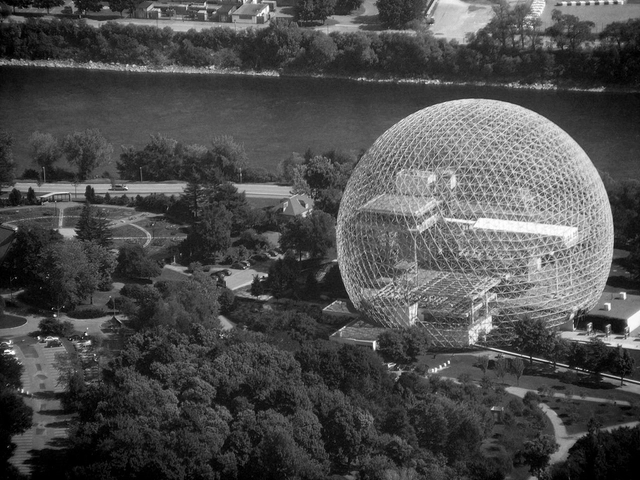
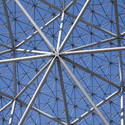
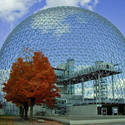
Architects have never enjoyed a position of such supreme prominence as they did in the worldview of Buckminster “Bucky” Fuller. To him, architects alone were capable of understanding and navigating the complex interrelationships of society, technology, and environment as viewed through the comprehensive paradigm of systems theory. Architecture, in this model, was intended to exist in close contact with both mankind and nature, playing civilization’s most critical role in elevating the state of humanity and promoting its responsible stewardship of the environment. Emerging from the ethical positivity of postwar modernism, this melioristic perspective marks perhaps the zenith of optimism’s ascent in mid-twentieth century thought, and gave Fuller a uniquely moral blueprint for his revolutionary designs.

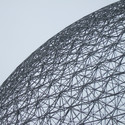
AD Classics: Montreal Biosphere / Buckminster Fuller - Learning, FenceAD Classics: Montreal Biosphere / Buckminster Fuller - LearningAD Classics: Montreal Biosphere / Buckminster Fuller - LearningAD Classics: Montreal Biosphere / Buckminster Fuller - Learning, FacadeAD Classics: Montreal Biosphere / Buckminster Fuller - More Images+ 7

AD Classics: Prentice Women's Hospital / Bertrand Goldberg

This article was originally published on September 28, 2013. To read the stories behind other celebrated architecture projects, visit our AD Classics section.

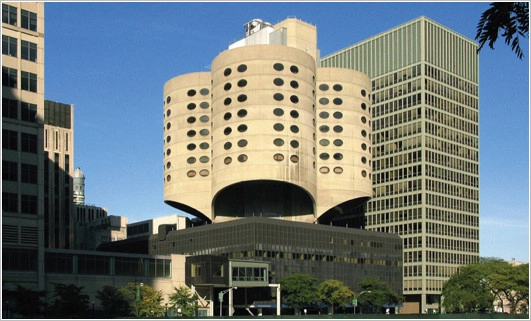
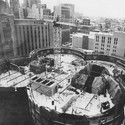
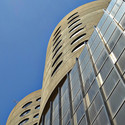
Hospital buildings, with their high standards of hygiene and efficiency, are a restrictive brief for architects, who all too often end up designing uninspiring corridors of patient rooms constructed from a limited palette of materials. However, this was not the case in Bertrand Goldberg's 1975 Prentice Women's Hospital. The hospital is the best example of a series of Goldberg-designed medical facilities, which all adhere to a similar form: a tower containing rooms for patient care, placed atop a rectilinear plinth containing the hospital's other functions.

AD Classics: Prentice Women's Hospital / Bertrand Goldberg - Hospital , Facade, Arch, CityscapeAD Classics: Prentice Women's Hospital / Bertrand Goldberg - Hospital , Beam, Arch, FacadeAD Classics: Prentice Women's Hospital / Bertrand Goldberg - Hospital , Facade, CityscapeAD Classics: Prentice Women's Hospital / Bertrand Goldberg - Hospital , FacadeAD Classics: Prentice Women's Hospital / Bertrand Goldberg - More Images+ 2

Read on for more about this masterwork of humanist brutalism...

AD Classics: Master Plan for Chandigarh / Le Corbusier

On August 15, 1947, on the eve of India’s independence from the United Kingdom, came a directive which would transform the subcontinent for the next six decades. In order to safeguard the country’s Muslim population from the Hindu majority, the departing colonial leaders set aside the northwestern and eastern portions of the territory for their use. Many of the approximately 100 million Muslims living scattered throughout India were given little more than 73 days to relocate to these territories, the modern-day nations of Pakistan and Bangladesh. As the borders for the new countries were drawn by Sir Cyril Radcliffe (an Englishman whose ignorance of Indian history and culture was perceived, by the colonial government, as an assurance of his impartiality), the state of Punjab was bisected between India and Pakistan, the latter of which retained ownership of the state capital of Lahore.[1] It was in the wake of this loss that Punjab would found a new state capital: one which would not only serve the logistical requirements of the state, but make an unequivocal statement to the entire world that a new India—modernized, prosperous, and independent—had arrived.

AD Classics: Master Plan for Chandigarh / Le Corbusier - Square, FacadeAD Classics: Master Plan for Chandigarh / Le Corbusier - Square, FacadeAD Classics: Master Plan for Chandigarh / Le Corbusier - Square, FacadeAD Classics: Master Plan for Chandigarh / Le Corbusier - Square, Facade, ArchAD Classics: Master Plan for Chandigarh / Le Corbusier - More Images+ 54

AD Classics: Pennsylvania Station / McKim, Mead & White

This article was originally published on February 11, 2014. To read the stories behind other celebrated architecture projects, visit our AD Classics section.

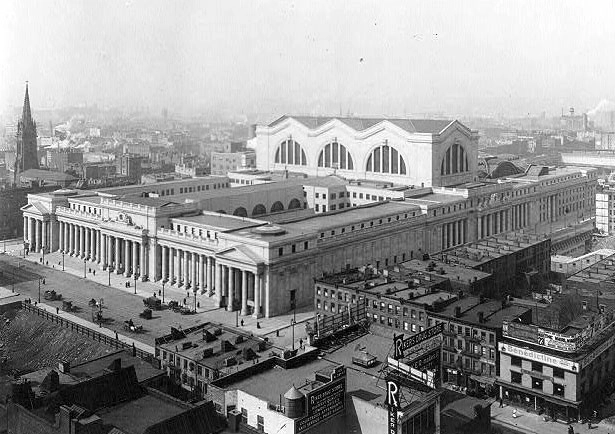
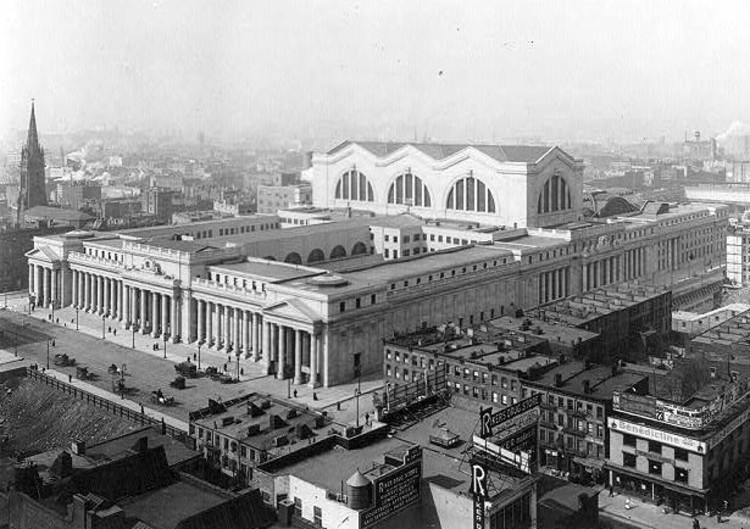
New York City’s original Pennsylvania Station was a monument to movement and an expression of American economic power. In 1902, the noted firm McKim, Mead and White was selected by the President of the Pennsylvania Railroad to design its Manhattan terminal. Completed in 1910, the gigantic steel and stone building covered four city blocks until its demolition in 1963, when it ceded to economic strains hardly fifty years after opening.

AD Classics: Pennsylvania Station / McKim, Mead & White - Train StationAD Classics: Pennsylvania Station / McKim, Mead & White - Train StationAD Classics: Pennsylvania Station / McKim, Mead & White - Train StationAD Classics: Pennsylvania Station / McKim, Mead & White - Train StationAD Classics: Pennsylvania Station / McKim, Mead & White - More Images+ 35

AD Classics: Weissenhof-Siedlung Houses 14 and 15 / Le Corbusier + Pierre Jeanneret

This article was originally published on March 26, 2014. To read the stories behind other celebrated architecture projects, visit our AD Classics section.

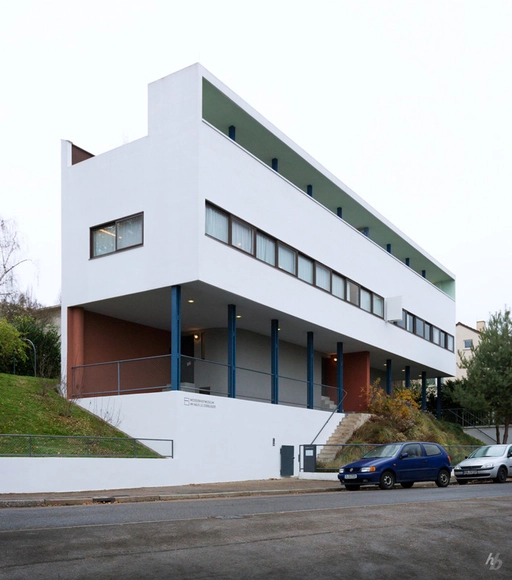
The two-family structure known as Houses 14 and 15, designed by International Style, Le Corbusier's work in Stuttgart serves as a critical prototype in the development and realization of the Swiss architect’s architectural identity, which would revolutionize 20th century architecture.

AD Classics: Weissenhof-Siedlung Houses 14 and 15 / Le Corbusier + Pierre Jeanneret - Housing, Bedroom, Door, BedAD Classics: Weissenhof-Siedlung Houses 14 and 15 / Le Corbusier + Pierre Jeanneret - Housing, Facade, Door, Handrail, StairsAD Classics: Weissenhof-Siedlung Houses 14 and 15 / Le Corbusier + Pierre Jeanneret - Housing, Column, Handrail, FacadeAD Classics: Weissenhof-Siedlung Houses 14 and 15 / Le Corbusier + Pierre Jeanneret - Housing, Facade, Stairs, FenceAD Classics: Weissenhof-Siedlung Houses 14 and 15 / Le Corbusier + Pierre Jeanneret - More Images+ 13

AD Classics: Villa dall'Ava / OMA

This article was originally published on November 13, 2013. To read the stories behind other celebrated architecture projects, visit our AD Classics section.

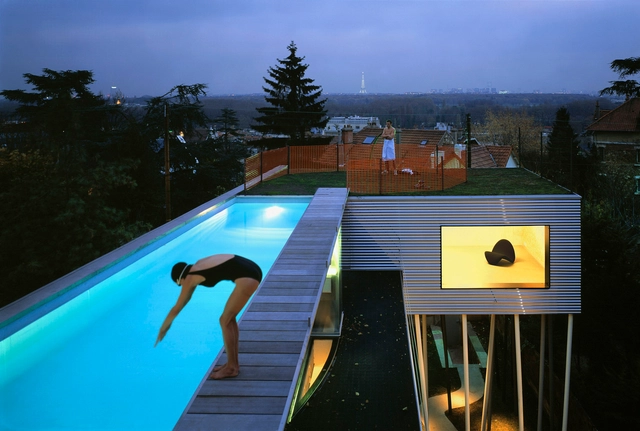
Much of the spatial composition of the Villa dall'Ava was influenced by its site, in a garden on a hill. It was completed in 1991 in the residential area of Saint-Cloud, overlooking Paris. The clients selected OMA to design a house with two distinct apartments—one for themselves and another for their daughter—and requested a swimming pool on the roof with a view of the Eiffel Tower.

AD Classics: Villa dall'Ava / OMA - Houses, Beam, Handrail, Stairs, FacadeAD Classics: Villa dall'Ava / OMA - Houses, Facade, HandrailAD Classics: Villa dall'Ava / OMA - Houses, FacadeAD Classics: Villa dall'Ava / OMA - HousesAD Classics: Villa dall'Ava / OMA - More Images+ 16

AD Classics: National Museum of Roman Art / Rafael Moneo

This article was originally published on May 4, 2015. To read the stories behind other celebrated architecture projects, visit our AD Classics section.

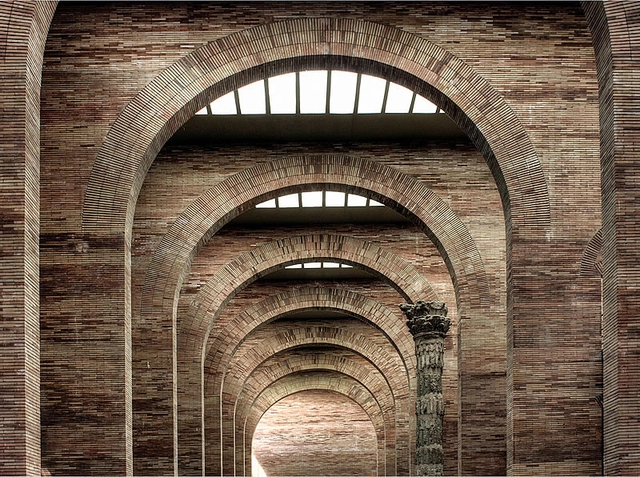
Arches have long been used to mark the greatest achievements of Roman civilization. Constantine, Titus, and Septimus Severus built them to commemorate their military victories. Engineers at Segovia and Nîmes incorporated them into their revolutionary aqueducts. And fifteen hundred years after the Fall of Rome, Rafael Moneo gave a modern touch to the ancient structure in Mérida's breathtaking National Museum of Roman Art, located on the site of the former Iberian outpost of Emerita Augusta. Soaring arcades of simple, semi-circular arches merge historicity and contemporary design, creating a striking yet sensitive point of entry to the remains of one of the Roman Empire's greatest cities.

AD Classics: National Museum of Roman Art / Rafael Moneo - Preservation SiteAD Classics: National Museum of Roman Art / Rafael Moneo - Preservation SiteAD Classics: National Museum of Roman Art / Rafael Moneo - Preservation SiteAD Classics: National Museum of Roman Art / Rafael Moneo - Preservation SiteAD Classics: National Museum of Roman Art / Rafael Moneo - More Images+ 11

AD Classics: Azadi Tower / Hossein Amanat

This article was originally published on 26 October, 2015. To read the stories behind other celebrated architecture projects, visit our AD Classics section.

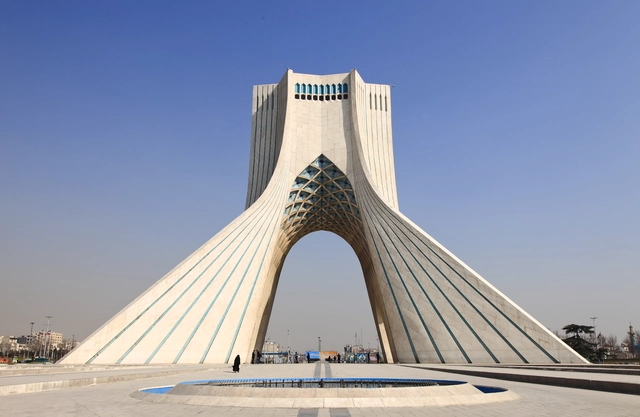
Commissioned to celebrate the 2500th anniversary of the Persian Empire, the Azadi Tower has been a site of celebration, unrest, and revolution. Despite its association with the deposed Shah, the tower has been embraced as a national symbol of Iran, playing host to both pro- and anti-government demonstrations, following the controversial 2009 Presidential elections.

AD Classics: World Trade Center / Minoru Yamasaki Associates + Emery Roth & Sons

AD Classics: World Trade Center / Minoru Yamasaki Associates + Emery Roth & Sons - Office Buildings, Facade, Cityscape
© Robert Paul Van Beets/Shutterstock

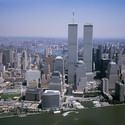
A New York City icon that once rivaled structures such as the Statue of Liberty and the Empire State Building, the World Trade Center, colloquially known as the Twin Towers, was one of the most recognized structures in history. Designed by Japanese-American architect Minoru Yamasaki, it held the title of Tallest Building in the World from 1972–1974. Up until its unfortunate demise, the WTC site was a major destination, accommodating 500,000 working people and 80,000 visitors on a typical weekday.

AD Classics: World Trade Center / Minoru Yamasaki Associates + Emery Roth & Sons - Office Buildings, Facade, Stairs, Handrail, ArchAD Classics: World Trade Center / Minoru Yamasaki Associates + Emery Roth & Sons - Office Buildings, Facade, ColumnAD Classics: World Trade Center / Minoru Yamasaki Associates + Emery Roth & Sons - Office Buildings, Facade, Arch, ArcadeAD Classics: World Trade Center / Minoru Yamasaki Associates + Emery Roth & Sons - Office Buildings, Facade, CityscapeAD Classics: World Trade Center / Minoru Yamasaki Associates + Emery Roth & Sons - More Images+ 23

AD Classics: Yale University Art Gallery / Louis Kahn

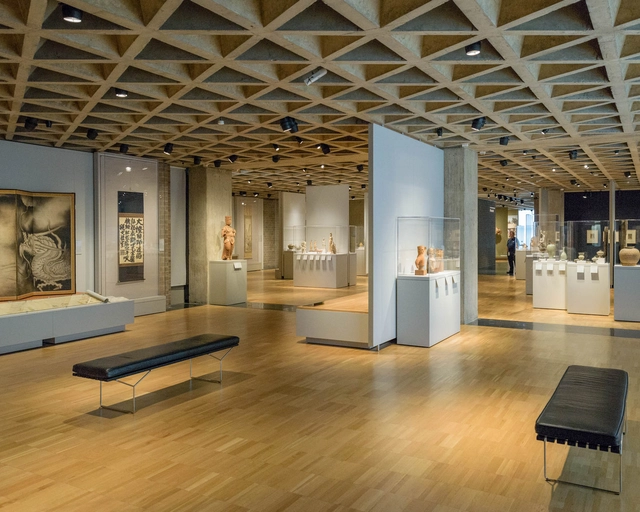
Yale University’s School of Architecture was in the midst of pedagogical upheaval when Louis Kahn joined the faculty in 1947. With skyscraper architect George Howe as dean and modernists like Kahn, Philip Johnson, and Josef Albers as lecturers, the post-war years at Yale trended away from the school’s Beaux-Arts lineage towards the avant-garde. And so, when the consolidation of the university’s art, architecture, and art history departments in 1950 demanded a new building, a modernist structure was the natural choice to concretize an instructional and stylistic departure from historicism.[1] Completed in 1953, Louis Kahn’s Yale University Art Gallery building would provide flexible gallery, classroom, and office space for the changing school; at the same time, Kahn’s first significant commission signaled a breakthrough in his own architectural career—a career now among the most celebrated of the second half of the twentieth century.

AD Classics: Yale University Art Gallery / Louis Kahn - Facade, Arch, ArcadeAD Classics: Yale University Art Gallery / Louis Kahn - FacadeAD Classics: Yale University Art Gallery / Louis Kahn - Beam, FacadeAD Classics: Yale University Art Gallery / Louis Kahn - FacadeAD Classics: Yale University Art Gallery / Louis Kahn - More Images+ 11

AD Classics: Suzhou Museum / I.M. Pei + Pei Partnership Architects

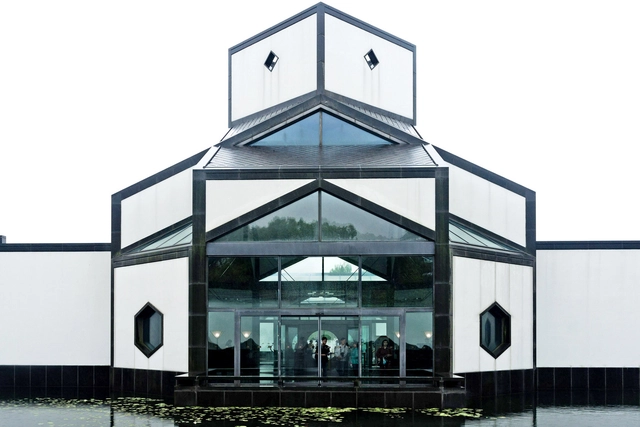
As one of the latest built works of acclaimed Pritzker architect I.M. Pei, Suzhou Museum was built in the heart of his hometown, Suzhou, China. As one of the last surviving modernists, the architect strove to bring together both his modernist sensibilities as well as the Suzhou vernacular. Sited on the northeast section of the historic quarter of Suzhou, the museum is adjacent to the landmarked Zhong Wang Fu, a complex of 19th-century historical residences, and the Garden of the Humble Administrator, a 16th-century garden listed as a UNESCO World Heritage site. [1]

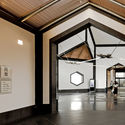
Images in this article were captured in 2016 by Rome-based photographer, Chenxing Mi. Read the full article after the break.

AD Classics: Suzhou Museum / I.M. Pei + Pei Partnership Architects - Heritage, FacadeAD Classics: Suzhou Museum / I.M. Pei + Pei Partnership Architects - Heritage, Beam, Facade, Door, Arch, ColumnAD Classics: Suzhou Museum / I.M. Pei + Pei Partnership Architects - Heritage, FacadeAD Classics: Suzhou Museum / I.M. Pei + Pei Partnership Architects - Heritage, Courtyard, Stairs, Facade, HandrailAD Classics: Suzhou Museum / I.M. Pei + Pei Partnership Architects - More Images+ 21

AD Classics: French Communist Party Headquarters / Oscar Niemeyer

AD Classics: French Communist Party Headquarters / Oscar Niemeyer - Facade, Fence
© Denis Esakov

In March 1972, an article in The Architectural Review proclaimed that this structure was “probably the best building in Paris since Le Corbusier’s Cité de Refuge for the Salvation Army.”[1] The article was, of course, referring to Brazilian architect Oscar Niemeyer’s first project in Europe: the French Communist Party Headquarters in Paris, France, built between 1967 and 1980. Having worked with Le Corbusier on the 1952 United Nations Building in New York and recently finished the National Congress as well as additional iconic government buildings in Brasilia, Niemeyer was no stranger to the intimate relationship between architecture and political power.[2]

AD Classics: French Communist Party Headquarters / Oscar Niemeyer - FacadeAD Classics: French Communist Party Headquarters / Oscar Niemeyer - FacadeAD Classics: French Communist Party Headquarters / Oscar Niemeyer - Table, BenchAD Classics: French Communist Party Headquarters / Oscar Niemeyer - Image 2 of 5AD Classics: French Communist Party Headquarters / Oscar Niemeyer - More Images+ 32

AD Classics: Arts United Center / Louis Kahn

AD Classics: Arts United Center / Louis Kahn - Facade, Arch
© Jeffery Johnson

In 1961, the architect Louis I. Kahn was commissioned by the Fine Arts Foundation to design and develop a large arts complex in central Fort Wayne, Indiana. The ambitious Fine Art Center, now known as the Arts United Center, would cater to the community of 180,000 by providing space for an orchestra, theatre, school, gallery, and much more. As a Lincoln Center in miniature, the developers had hoped to update and upgrade the city through new civic architecture. However, due to budget constraints, only a fraction of the overall scheme was completed. It is one of Kahn’s lesser-known projects that spanned over a decade, and his only building in the Midwest.

AD Classics: Smith House / Richard Meier & Partners

AD Classics: Smith House / Richard Meier & Partners - Exterior Photography, Residential, Garden, Facade
© Mike Schwartz

Five decades ago, Carole Smith called Richard Meier and told him about a site in Darien, Connecticut that she had bought with her husband. This was a rocky piece of land with dense evergreens and coastal outcrops. A dramatic slope at the back of the plot gave way to the Long Island Sound and a small, sandy cove. Carole wanted to place her weekend home on this particular site and she wanted Richard Meier to do it. At that time, he was just 31.

The Smith House was built between 1965-1967 by Richard Meier & Partners Architects. Richard Meier recalls of the project that would later propel his career as an architect: “I was working out of one room of a two-room apartment shortly after leaving the office of Marcel Breuer. One day I had a call from Carole Smith asking if I would be interested in designing a weekend house for her...She was looking for a young architect who would give full attention to her house.”

In never-before-seen photos and an exclusive interview with the architect himself, we trace the building's history from the first phases of construction to now. 

AD Classics: Smith House / Richard Meier & Partners - Exterior Photography, Residential, FacadeAD Classics: Smith House / Richard Meier & Partners - Interior Photography, Residential, Facade, Table, ChairAD Classics: Smith House / Richard Meier & Partners - Interior Photography, Residential, FacadeAD Classics: Smith House / Richard Meier & Partners - ResidentialAD Classics: Smith House / Richard Meier & Partners - More Images+ 21

Pure House Boutique Hotel / Yueji Architectural Design Office

Pure House Boutique Hotel / Yueji Architectural Design Office - Hotels, Beam, FacadePure House Boutique Hotel / Yueji Architectural Design Office - Hotels, Deck, CoastPure House Boutique Hotel / Yueji Architectural Design Office - Hotels, Courtyard, Facade, BeamPure House Boutique Hotel / Yueji Architectural Design Office - Hotels, Facade, Stairs, Handrail, BalconyPure House Boutique Hotel / Yueji Architectural Design Office - More Images+ 71

Dali, China

Architecture Classics: Teatro Oficina / Lina Bo Bardi & Edson Elito

Architecture Classics: Teatro Oficina / Lina Bo Bardi & Edson Elito - Theaters & Performance Architecture Classics: Teatro Oficina / Lina Bo Bardi & Edson Elito - Theaters & Performance Architecture Classics: Teatro Oficina / Lina Bo Bardi & Edson Elito - Theaters & Performance Architecture Classics: Teatro Oficina / Lina Bo Bardi & Edson Elito - Theaters & Performance Architecture Classics: Teatro Oficina / Lina Bo Bardi & Edson Elito - More Images+ 35

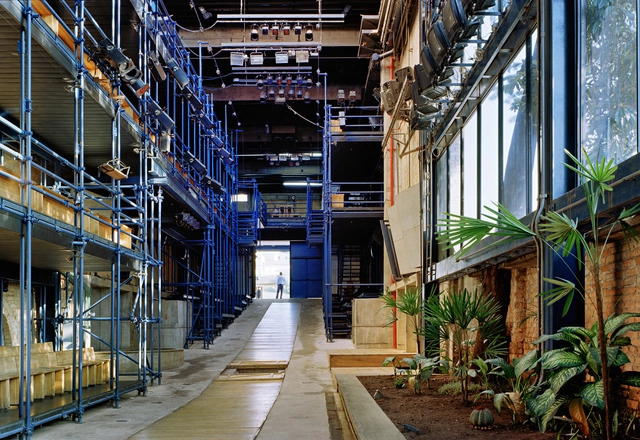
The Teatro Oficina Uzyna Uzona, popularly known as Teatro Oficina, located on Jaceguai Street, in the Bela Vista neighborhood, in São Paulo, was founded in 1958 by José Celso Martinez Correa. The Teatro Oficina acts as a manifesto/theater, marked by great spectacles between theatrical expressions, musical presentations, dance, and performances.

Over time, the theater sought to revolutionize the performances that they put on. To this end, the architecture was designed to "collaborate" with the events, allowing the drama of the spectacle to engage more profoundly with audiences. Edson Elito, who would later instigate this reform, said [trans.]: