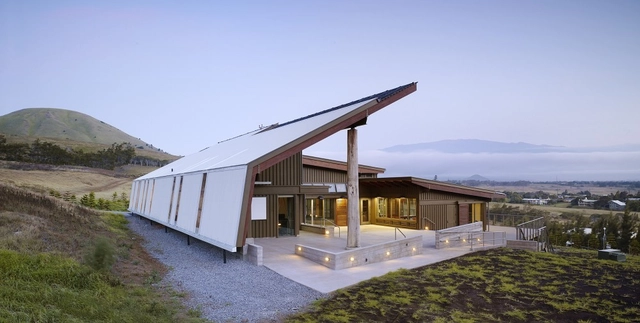
The Living Building Challenge will now fulfill the energy and water requirements for LEED. As the U.S. Green Building Council announced, this marks an important step in the USGBC's mission to make LEED an accessible platform that complements other construction rating systems.
The USGBC's decision essentially equates the two systems in the fields of water and energy efficiency, recognizing projects that meet the Living Building Challenge's standards within these areas as equivalent to LEED standards. By doing so, it encourages a spirit of collaboration toward sustainable goals across competing rating systems.
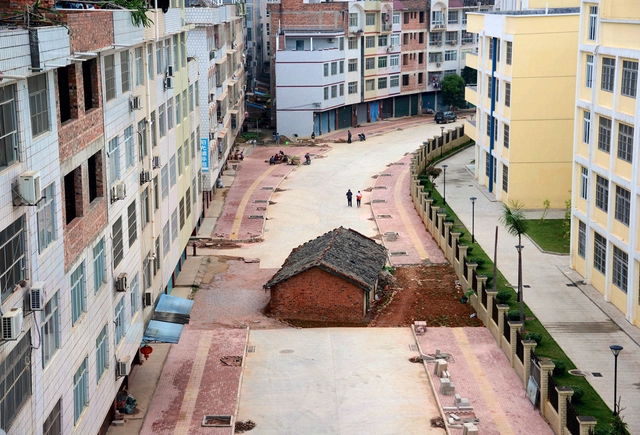
China's rapid growth has led to some unusual situations; shocking images of so-called "nail houses" continue to circle the internet, depicting defiant homeowners refusing to give up their homes for low compensation in the name of "progress." Standalone homes, and even some graves, are being surrounded by high-rise development and roadways, as land disputes play out in court. The Atlantic has just published a fascinating round-up of these peculiar situations. You can view them all, here.
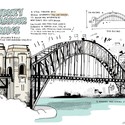
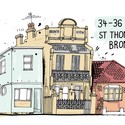
Packed full of idiosyncratically meticulous and colorful illustrations, the book provides a whimsical account of Sydney's architecture and history. From icons such as Utzon'sSydney Opera House to lesser known gems like Mark Foy's building opposite Hyde Park, to the terrace houses of inner city suburbs, All the Buildings in Sydney presents each building with care, detail, and an abundance of charm.
See more images from All the Buildings in Sydney, after the break…
Courtesy of Strelka Institute for Media, Architecture, and Design, via Flickr
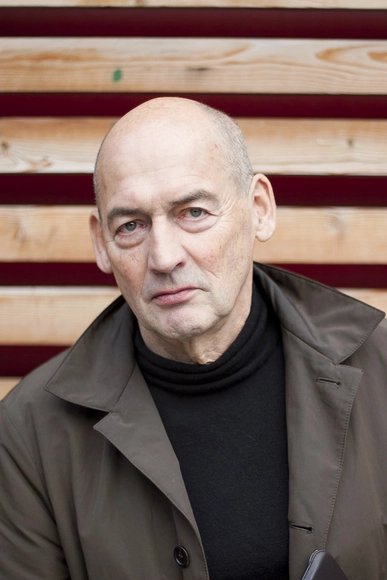
In the latest of a series ofpolemicalarguments against smart cities, Rem Koolhaas has penned perhaps his most complete analysis yet of the role that emerging technologies and the way they are implemented will affect our everyday lives, in an article over at Artforum. Taking on a wide range of issues, Koolhaas goes from criticizing developments in building technology as a "stealthy infiltration of architecture via its constituent elements" to questioning the commercial motivations of the (non-architects) who are creating these smart cities - even at one point implicating his other erstwhile recent interest, the countryside, where he says "a hyper-Cartesian order is being imposed." Find out more about Koolhaas' smart city thoughts at Artforum.
A total of sixteen projects have been shortlisted for RIBA East 2015 Awards, featuring buildings by Hawkins\Brown, Proctor & Matthews, Allies & Morrison, and AHMM. All shortlisted buildings will now be assessed by a regional jury. Regional winners will then be considered for a RIBA National Award in recognition of their architectural excellence, the results of which will place some projects in the running for the 2015 RIBA Stirling Prize.
See the complete list of shortlisted projects after the break.
The Japanese Institute of Landscape Architecture (JILA) will be celebrating its 90th anniversary in May 2015, and is pleased to host an international competition for design proposals envisioning future Tokyo with/without parks in 2105, 90 years from today.
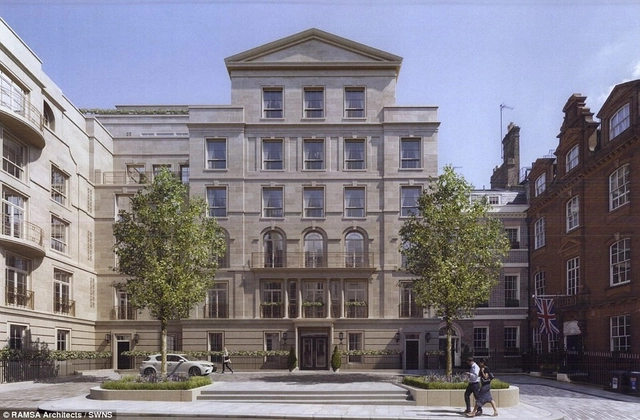
If approved, Robert A.M. Stern will build London's most expensive flats. Aiming to replace a 1960s car park and a number of other buildings in city's Mayfair district, the £2 billion "Audley Square House" apartment block is being commissioned by Phones4U billionaire John Caudwell.
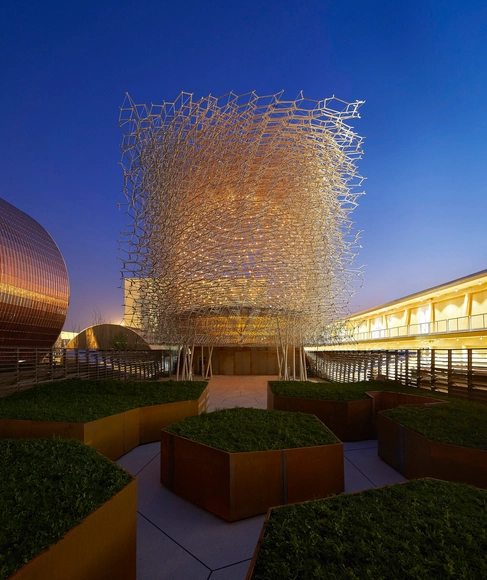
Wolfgang Buttress' “pulsating” beehive is one of the first pavilions to complete for the 2015 Milan Expo. Serving as the UK's contribution, “BE,” the “virtual hive” is designed to highlight the plight of the honeybee and offer an “immersive sensory experience” that leaves visitors with a “lasting flavor of the British landscape.”
Comprised of a 14-meter lattice structure, made from 169,300 pieces of aluminum and steel, the domed structure sits at the end of a meandering wildflower meadow that leads visitors to the "hive." Once inside, a sensory composition of audio and visual effects will mimic the activity of an existing beehive in Nottingham.
C.F. Møller has unveiled designs for Denmark's largest sewage pumping station. Planned to be built on Copenhagen's Kløvermarken, the new building will serve as an independent counterpart to the site's historic 1901 pumping station, originally designed by city architect Ludvig Fenger.
According to the architects, the brick station aims to "set new standards for large-scale sustainable utilities in Danish cities," while "closely integrating itself into the dense urban context." It will be built as a circular structure - the optimal shape of an underground pumping well - and feature two rainwater harvesting green roofs, a distinctive set of 24 meter-tall pressure towers, and two recreational "gardens" for employees.
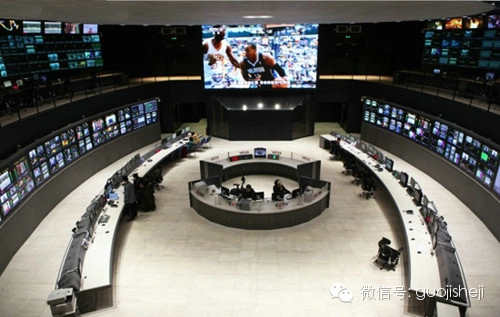
Since the building's construction concluded in 2012, images of OMA's CCTV Headquarters have permeated the media. But inside views of this mutant skyscraper -- characterized by a soaring 72 meter cantilever -- have remained rare. Until now, that is. Images originally published by International Design and shared on WeChat by 广电独家 reveal the interior of OMA's CCTV Headquarters, including Emmy-winning set designer Jim Fenhagen's news studios.
The great schools of architecture have been around since time immemorial, or at least that's how it can often feel. In London, a city particularly dense with institutions of this calibre, this is perhaps felt more acutely. How, then, do you develop an entirely new school in this tightly packed environment which has the potency and capacity to compete? Will Hunter, former executive editor of the London-based Architectural Review, began a process to do just this with an article in 2012. Following this, he set up the ARFA—Alternative Routes For Architecture—in order to explore different models for architectural education, calling upon professionals and academics to contribute to a series of informal discussions.
“When the tuition fees in the UK escalated to around £9000 per year in 2013, it got me thinking about different models for architectural education,” Hunter recalls. The casual meetings held around this time gradually become more serious until, “at a certain point, we decided to test them: to make a school.” The project gathered momentum from that point on and now, two years later, the London School of Architecture(LSA) are preparing to take in their first ‘trailblazing cohort’ of postgraduate students.
"The vision for the area will result in a welcoming gateway to the Toronto Islands – one of the City's most unique and cherished parks – with amenities and infrastructure to support the approximately 1.3 million visitors who use the ferry each year," said competition organizers, Waterfront Toronto and the City of Toronto in a press release.
The Washington DC International Spy Museum is seeking permission to relocate to a new $100 million building designed by Richard Rogers at L’Enfant Plaza. Contingent on approval from the Commission of Fine Arts, as the Washington Business Journal reports, the new 100,000-square-foot, six-story proposed museum would be sited on an open area adjacent to the L'Enfant Plaza hotel.
“I think everyone in the city knows that’s somewhat of a dead area right now,” said Spy Museum Chief Operating Officer Tamara Christian to WBJ. “When we came to Penn Quarter, it was somewhat of a dead area. Now it’s completely energized, and we’re really hoping that we’ll be able to be a catalyst to energize L’Enfant.”
Zaha Hadid, Fernando Romero, and Ben Van Berkel are making headlines alongside two renowned artists for their 3D printed reinventions of the high heel. A collaborative vision spearheaded by United Nude and 3D Systems, the highly anticipated project was unveiled yesterday at the "Re-Inventing Shoes" exhibition at Milan Design Week.
Each sculptural heel was 3D printed using SelectiveLaser Sintering in a hard Nylon and all-new soft Rubber material, making a "fully functioning" shoe. Only up to 50 pairs of each will be sold. See them all, after the break.
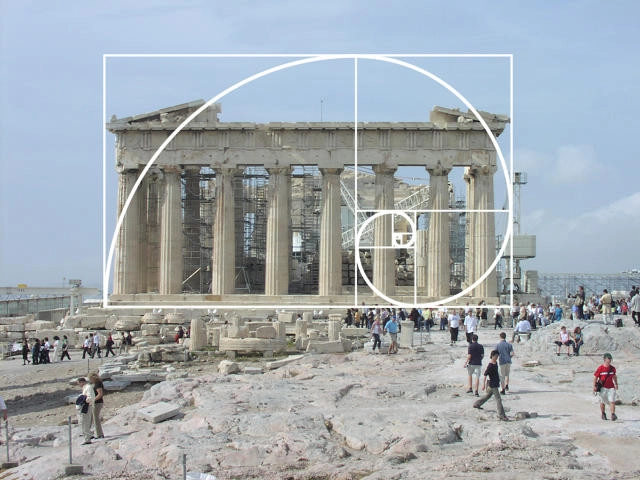
For more than 150 years, the Golden Ratio has been one of the main tenets of design, informing generations of architects, designers, and artists. From Le Corbusier to Apple, Vitruvius to Da Vinci, the ratio purportedly dictates which forms will be found aesthetically pleasing. Yet mathematicians and designers have grown skeptical of the practical applications of the Golden Ratio, with Edmund Harriss of the University of Arkansas' mathematics department putting it at its most simple: "It is certainly not the universal formula behind aesthetic beauty." Writing for Fast Co. Design, John Brownlee collates sources as diverse as the mathematics department at Stanford University to Richard Meier, laying out the case against what may just be design's greatest hoax. Read the full article here.
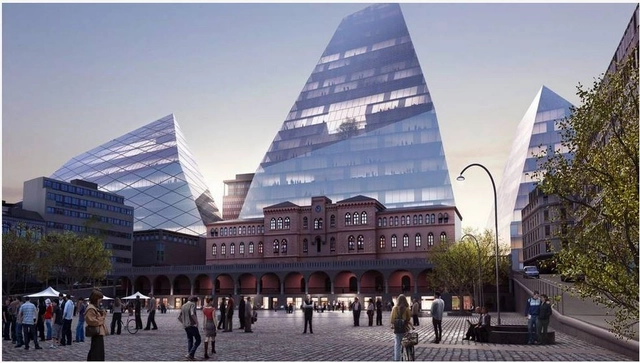
Nearly 100 architects, designers, and consultants have been developing designs for a competition for the new government quarter in Oslo. Drawing an initial 24 entries, the intent of the competition was to generate viable solutions for the future relocation of all government ministries (excluding the defense ministry), emphasizing an urban atmosphere and public elements. In the six shortlisted proposals from both local and international firms, including BIG, Snøhetta, and MVRDV, the themes of building tall and introducing green space emerged.
Now a ten-member committee of industry professionals will assist Statsbygg, the public construction advisers collaborating on the government's behalf, with the evaluation of each design. Take a look at the six proposals after the break.
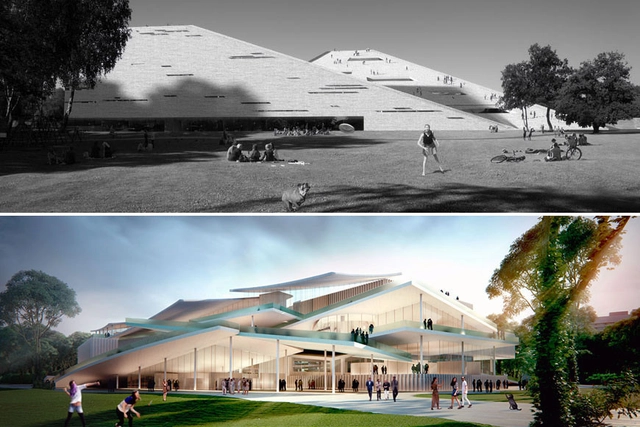
SANAA and Snøhetta have been jointly awarded first prize in a restricted competition to build a "New National Gallery - Ludwig Museum" in Budapest's 200-year-old Városliget (City Park). Lauded for their "equally outstanding" proposals, the winning teams will now meet with the jury to be judged "on professional and financial considerations."
Nieto Sobejano Arquitectos and the joint proposal of Balázs Mihály's Architect Studio and the Faculty of Architecture of Budapest University of Technology and Economics were awarded second prize.
The competition is part of a larger cultural project that aims to renew the city's Városliget by 2018 with five new museum buildings built inside the expanded park area.
A closer look at the winning schemes, after the break.
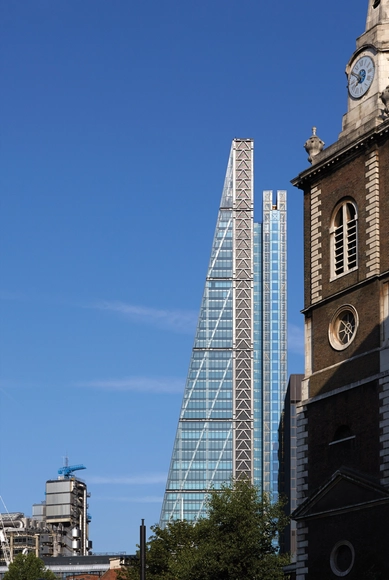
The Architects' Journal have reported that London based practice Rogers Stirk Harbour + Partners (RSHP), headed by Richard Rogers, has refined its in-house structure "as the practice continues to implement its long-term succession plan." The practice, who will move into their new home on level fourteen of the Leadenhall Building following its completion last year, will operate one studio led by Richard Rogers alongside partner Simon Smithson; another by Graham Stirk with partner Richard Paul; and a third headed by Ivan Harbour.
After deliberating over eight shortlisted proposals to reimagine the St. Petersburg Pier, the Pier Selection Committee has narrowed the competition down to three designs. Though the proposals vary widely in aesthetics, the finalists all approached the project as an opportunity to express the past while embracing modern forms and incorporating strong public programs.
Next on the agenda, the Pier Selection Committee will conduct an initial public meeting on April 23 in which finalists will present clarifications on their designs, followed later that day with a second meeting to announce the teams' rankings. Based on these proceedings, one design will be chosen for further development, in collaboration with the city. Check out the three finalists, after the break.
Yong ho Shin and John Randle of shindesignworks have been announced as the winners of "The Lake Isle of Innisfree," a design competition held earlier this year as part of the Yeats2015 festival. Based in London and Daegu, South Korea, the pair of architects proposed "Square Moon," a light-based installation for the Irish Island about which Yeats wrote his eponymous1892 poem, and from which the competition took its name.
The Royal Institute of British Architects (RIBA)’s Future Trends Survey for February 2015 has revealed continued optimism, although the public sector workload forecast has dipped with uncertainty about spending commitments ahead of the UK General Election in May. The workload index fell back slightly to +26 (from +29 in January) and workload forecast balance figures have remained high, the highest numbers being reported from practices in the Midlands and East Anglia (+43) and in Wales and the West (+39). In addition, practices have reported that they are now employing 16% more Part 1 (undergraduate) and Part 2 (postgraduate) students than they were twelve months ago.
Released in time for the opening of the Milan Furniture Show at EXPO 2015, ParkMapp is the ultimate guide to Milan's modern and contemporary architecture. An ongoing project by local architecture and design firm Park Associati, ParkMapp is a mobile app that identifies and geo-locates significant landmarks across the city. The app's sleek and legible interface is divided into modern and contemporary architecture, and features pictures and short descriptions of Milanese landmarks. A "lifestyle" section recommending cultural, retail, and dining attractions rounds out what Park Associati envisions as an "active map" for new and returning visitors alike. ParkMapp is available for download via the Apple App Store, or on Google play for Android devices.
The City of Gothenburg has commissioned Erik Andersson Architects to design a new pedestrian bridge in the city's historic Haga district. The circular bridge, connecting streets Haga Kyrkogata and Arkitektgatan, will be made of carbon fiber, allowing for a narrow profile that seemingly floats over the water. It is envisioned that the landscape the crosses inside the circular form can be used as an amphitheater for riverside performances.





Tim_Crocker.jpg?1429192296&format=webp&width=640&height=580)