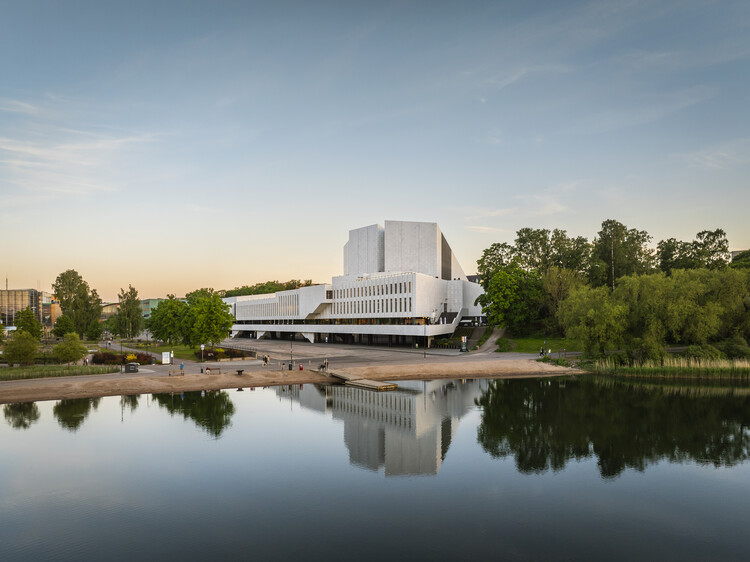
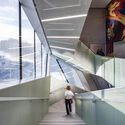
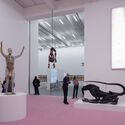
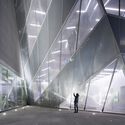
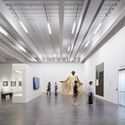
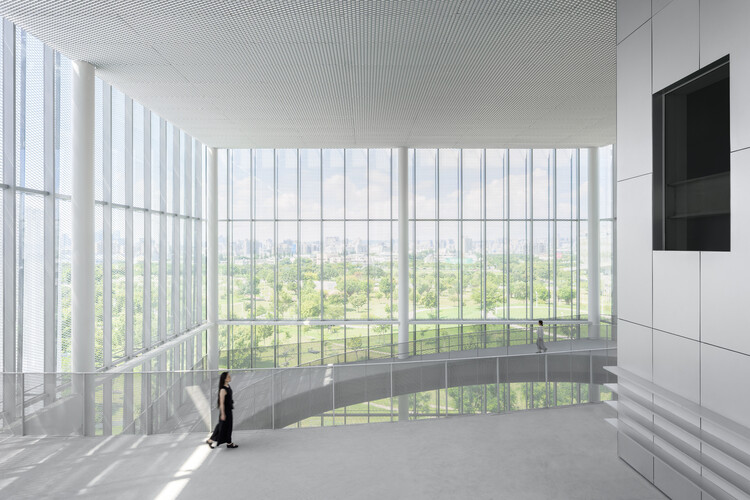
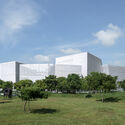
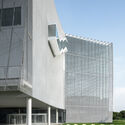
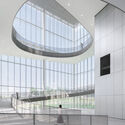
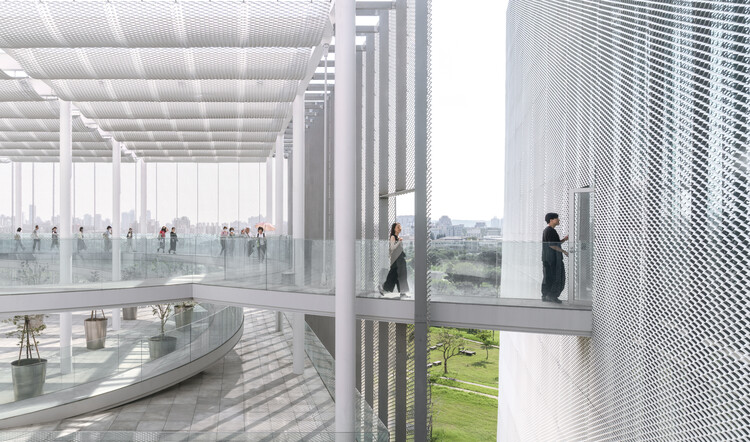
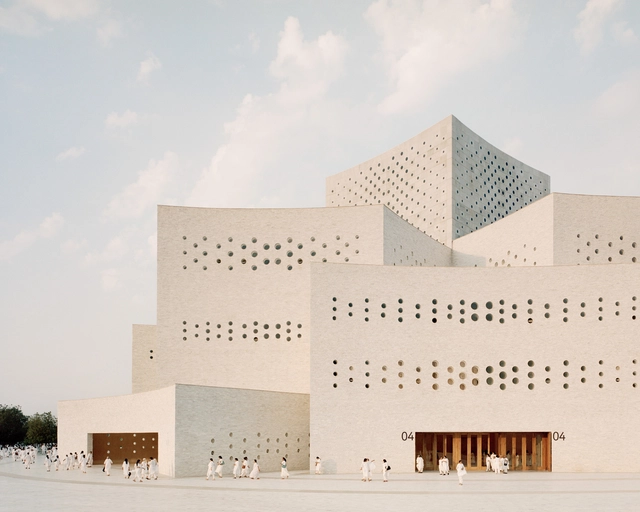
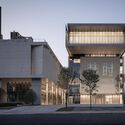
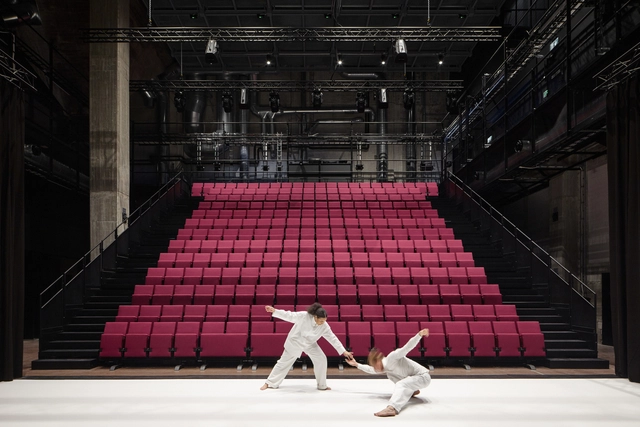
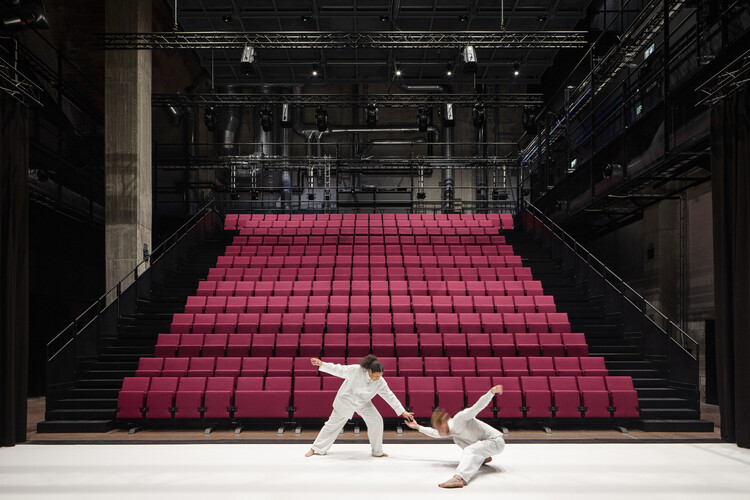
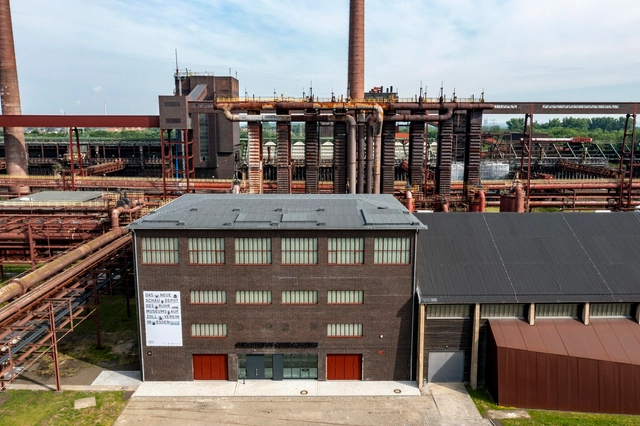
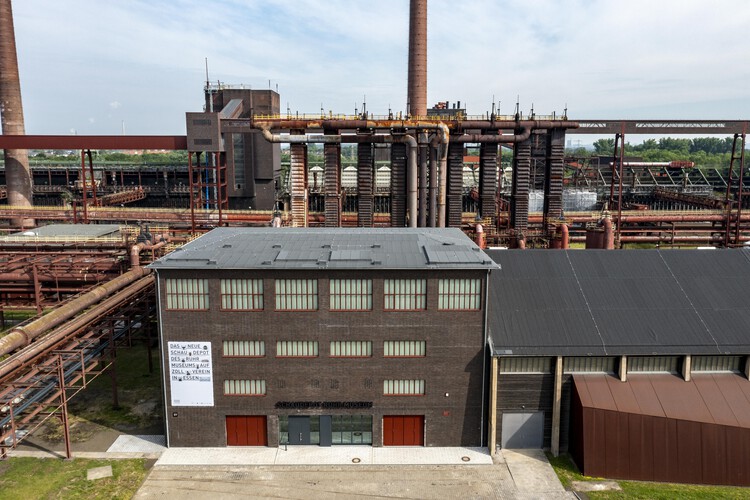
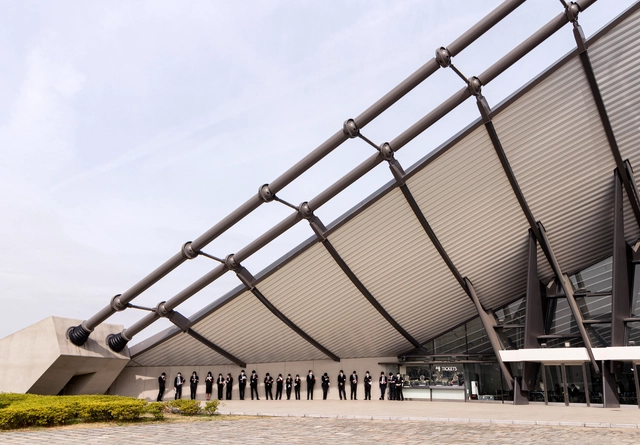
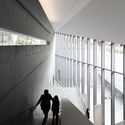
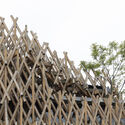
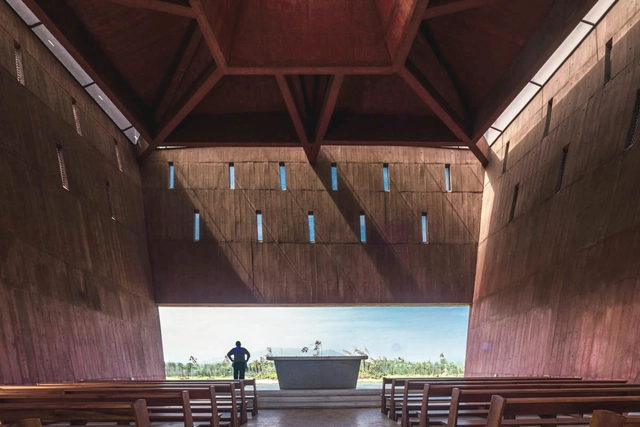
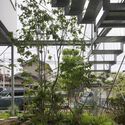
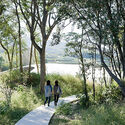
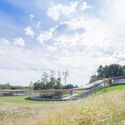
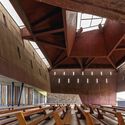
Factory Building on the Vitra Campus / SANAA

Photo by Christian Richters © Vitra

Architects: SANAA
Location: Vitra Campus, , Germany
Architectural Planning: Kazuyo Sejima & Ryue Nishizawa
Architectural Execution: Mayer Bährle Freie Architekten BDA, Lörrach, Germany; in partnership with nkbak, Frankfurt, Germany
Project Team: team: Takayuki Hasegawa, Marieke Kums (ex-staff); nkbak team: Nicole Kerstin Berganski, Andreas Krawczyk; Mayer Bährle Freie Architekten BDA
Area: 20,455 sqm
Year: 2012
Photographs: Christian Richters, Julien Lanoo, Human Wu, Nicole Berganski, SANAA

Architects Selected for Competition to Design Nobel Prize’s New Home

Blasieholmen at Nybroviken in Stockholm. Image © Jeppe Wikström

Out of 140 architects considered, 12 architects have been selected by the Nobel Foundation to compete to design their new home, a Nobel Center in Blasieholmen, Stockholm. The conspicuously European selection, chosen for their “design and artistic abilities and experience working in intricate urban environments,” includes some very big names – including BIG, David Chipperfield Architects, Herzog & de Meuron, and OMA. The only non-Europeans to compete will be ’s Kazuyo Sejima and Ryue Nishizawa.

See the full list of competitors, and more information on the , after the break…

Louvre Lens / SANAA

© Julien Lanoo

French photographer Julien Lanoo has shared with us a first look at the Musée du Louvre’s new sister gallery: Louvre Lens. The design, first conceived as part of an international competition in 2006, was created by the Pritzker Prize laureates of , in collaboration with studio Imrey Culbert, landscape designer Catherine Mosbach and museographer Studio Adrien Gardère.

The 360 meter long, steel and glass structure is integrated within a 20 hectare wasteland that was originally used as a coal mine before the 1960s. It is expected to attract 500,000 visitors every year and envisioned to help revitalize the post-industrial town.

Continue reading for the architects’ description.

SANAA Unveils Their Plans for Bocconi University Campus

The new Bocconi University campus by . Photo via Domus.

SANAA has just unveiled their plans for the Bocconi University Campus in , Italy. The design features various undulating structures, forming connective inner courtyards, that wind their way across a 17,500 square meter green space open to both students and neighborhood residents.
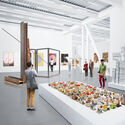
According to Paola Nicolin, a professor at Bocconi and writer for Domus, the University is a “playground” for the imagination, using “non-hierarchic compositional elements” to establish a relationship between the campus’ organic forms and the human lives which inhabit it. In Nicolin’s words, the project “speaks of transparency, empathy for nature, and far-sightedness.”

More images and info on the project, after the break…

Grace Farms unveils SANAA-designed ‘River’ Building

©

Grace Farms Foundation, a not-for‐profit charitable organization in , Connecticut, has submitted a proposal to the town’s Planning and Zoning Commission for a SANAA-designed, meandering structure dubbed the “River”. The project prioritizes the needs of the community by preserving the 75-acre Grace Farms property as a permanent offering of open space and providing an array of public amenities, such as a library, gymnasium and church.

“We are thrilled to be sharing SANAA’s wonderfully sensitive design with the members of the Planning and Zoning Commission and with the community we serve,” stated Sharon Prince, President of the Grace Farms Foundation. “Grace Farms is a place where people can walk their dog, read a book by the lake or simply relax in a beautiful natural setting. By blending so seamlessly into the landscape, the River enhances this experience, almost erasing the barrier between the spaces sheltered within and the natural world outside.”

If approved, the River will be SANAA’s first United States commission since receiving the Pritzker Architecture Prize in 2010. Continue reading for the architects’ description.

Kazuyo Sejima appointed as Rolex’s first architecture mentor

, Mentor © Takashi Okamoto

News from the 2012 Venice Biennale: Japanese architect Kazuyo Sejima has been appointed as the first architecture mentor for the Rolex Mentor and Protégé Initiative – a unique program that pairs major artists with young talents. Recognized as “one of the most important creative disciplines”, architecture has added as the seventh category in the Rolex’s global philanthropy program, which already includes literature, music, visual arts, dance, film and theatre.

Kazuyo Sejima is expected to announce her protégé in the Fall. She and the young architect will collaborate for a year on the international project Home For All, which she established with other leading Japanese architects – , Riken Yamamoto, Hiroshi Naito and Kengo Kuma – in response to the 2011 housing crisis caused by Japan’s devastating tsunami.

The idea will be to design community meeting spaces for people who are living in emergency accommodation. Continue after the break to learn more.

Finalists announced for the Menil Collection Expansion

© D Jules Gianakos

Prior to becoming a Pritzker laureate, Italian architect Renzo Piano was commissioned to design the Menil Collection in a quiet inner-city neighborhood of , . Since celebrating its opening in 1987, the museum has expanded, adding Renzo’s second commission, the Cy Twombly Gallery (1995), along with the permanent, site-specific installation at Richmond Hall by minimalist sculptor Dan Flavin and the Byzantine Fresco Chapel (1997-2012) by owner Dominique de Menil. Surrounded by ample amounts of open space, the long-term master plan of the museum’s campus has been under the review of architect David Chipperfield.

Now, after an extensive international search to select the architect for the campuses new major addition that will house the Menil Drawing Institute (MDI), the architecture selection committee has announced the four architects under consideration. Once completed, MDI will be the first freestanding facility in America dedicated to modern and contemporary drawing, and one of the most advanced in the world.

Continue after the break to find out the finalists.

The RAINS Project / Sabrina Faber

Sana'a, © eesti via flickr

Sana’a, Yemen is at risk of being the first capital city in the World to run out of renewable, reliable and clean water supplies. With seasonal rain, expensive bottled water and polluted reservoirs, the residents of Sana’a are constantly faced with waterborne diseases and severe drought hazards.

In celebration of World Water Day, we would like to catch you up with the progress Sabrina Faber who was selected as winner of the 2010/2011 Philips Livable Cities Award – a global initiative designed to generate innovative, meaningful and achievable ideas to improve the health and well-being of city-dwellers across the world. Although the project went on hold due to political unrest, The Rainwater Aggregations (RAINS) Project was still able to complete three sites just in time for World Water Day. Continue reading for more.

Video: New Museum / SANAA / Great Spaces


Ever likened SANAA’s to Lady Gaga?  We didn’t think so!  So, check out this video by Great Spaces and prepare to see the museum in a new light.   Toward the end of the video, it was mentioned that only after won the Pritzker, did some people truly take notice of the museum.  Have you visited the New Museum on the Bowery prior to the Pritzker, or have you been influenced to see if after ’s won?   And, for more info on the museum, be sure to reference our previous articles.

Seeing the Building for the Trees by Sarah Williams Goldhagen

Metropol Parasol © Javier Orive

This article, recently seen on The New York Times, was kindly shared with us by the author Sarah Williams Goldhagen.

A REVOLUTION in cognitive neuroscience is changing the kinds of experiments that scientists conduct, the kinds of questions economists ask and, increasingly, the ways that architects, landscape architects and urban designers shape our built environment.

This revolution reveals that thought is less transparent to the thinker than it appears and that the mind is less rational than we believe and more associative than we know. Many of the associations we make emerge from the fact that we live inside bodies, in a concrete world, and we tend to think in metaphors grounded in that embodiment.

Rolex Learning Center Photographic Project / Johann Watzke, Anne-Fanny Cotting & Aurélie Mindel of EPFL

Courtesy of Johann Watzke, Anne-Fanny Cotting & Aurélie Mindel of EPFL

Johann Watzke, Anne-Fanny Cotting & Aurélie Mindel of EPFL (École Polytechnique Fédérale de Lausanne) in shared with us their photographic project on the Rolex Learning Center from SANAA which is the campus hub and state-of-the-art library. More images and a brief description after the break.

Work Environments / DETAIL

We recently got to preview the newest addition to ’s typological series, Work Environments: Spatial concepts, Usage strategies, Communications. It will be available next month (August 2011), and it is great for anyone who is interested in improving a user’s working conditions beyond the basic ergonomic and safety requirements. The first third of this volume deals with spatial organization, acoustics, lighting, and user satisfaction. The rest of the volume features projects from which the various concepts developed in the first third can be used to analyze them. I, personally, enjoyed the section on user satisfaction and how to measure it. After reading this section I speculated how researchers would control for the various confounding factors that exist in the uniqueness of each building presented in the rest of the book. This would not be an easy task by any means, but the necessity of such research is made clear throughout this volume.

Read more after the break.

Kazuyo Sejima and Ryue Nishizawa of SANAA lecture at The Art Institute of Chicago

Kazuyo Sejima and Ryue Nishizawa founded their Tokyo-based architecture firm SANAA in 1995. The firm is known for an innovative collaborative design process that results in such groundbreaking buildings as the Toledo Museum of Art’s Glass Pavilion in Toldeo, Ohio; the New Museum of Contemporary Art in New York; the Serpentine Pavilion in London; and the Rolex Learning Center in Switzerland. In 2010, was awarded the prestigious Pritzker Architecture Prize for work that the jury described as “simultaneously delicate and powerful, precise and fluid, ingenious but not overly or overtly clever.”

The lecture will take place at the Art Institute of Chicago on Wednesday, June 29 at 6:30 p.m. Their talk, organized by the museum’s Architecture & Design Society, will be given in the museum’s Rubloff Auditorium. The cost is $15 for the general public, $10 for society members, and $5 for students with a valid ID. For more information, please click here.

SANAA Announces Plans for Paris’ La Samaritaine Restoration

©

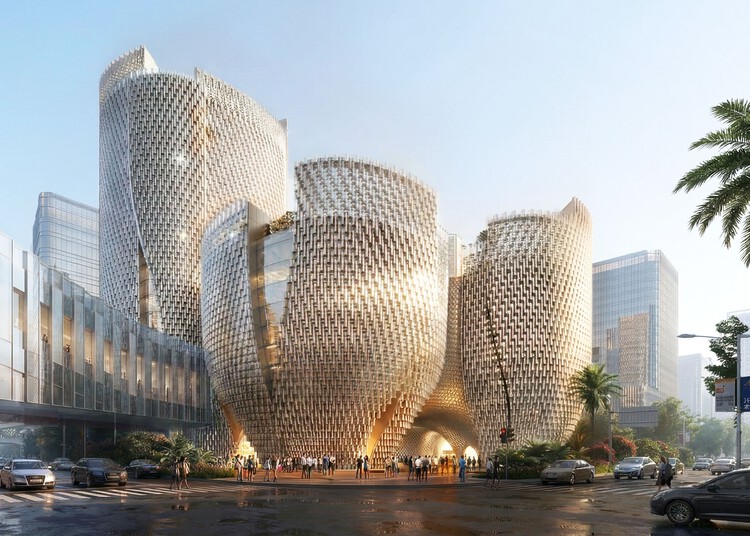
2010 Pritzker Prize winning SANAA has released renderings to convert La Samaritaine department store in into a mixed-use development. Commissioned by LVMH (client/developer) the architectural concept for the project expresses above all the ambition to restore the La Samaritaine, recognizing the significance of the building and the role the restoration will play in the revitalization of the neighborhood as a whole.  The project is schedule to begin July of next year.

Video: Rolex Learning Center / SANAA

This short video by architectural photographer Pedro Kok, features the Rolex Learning Center at Ecole Polytechnique Fédérale de Lausanne in Switzerland. Designed by SANAA, the building features impressive concrete lines that create a fluidity between the interior spaces.

Peter Zumthor’s Design Revealed for the 2011 Serpentine Gallery Pavilion

Courtesy of

Pritzker Prize winning architect ’s design for the 11th Serpentine Gallery Pavilion was revealed today. A design that ‘aims to help its audience take the time to relax, to observe and then, perhaps, start to talk again – maybe not’, the materials are significant in aiding the design which emphasizes the role the senses and emotions play in our experience of architecture. The Pavilion will be Zumthor’s first completed building in the UK

Zumthor shared that ‘the concept for this year’s Pavilion is the hortus conclusus, a contemplative room, a garden within a garden. The building acts as a stage, a backdrop for the interior garden of flowers and light. Through blackness and shadow one enters the building from the lawn and begins the transition into the central garden, a place abstracted from the world of noise and traffic and the smells of London – an interior space within which to sit, to walk, to observe the flowers. This experience will be intense and memorable, as will the materials themselves – full of memory and time.’

Stay tuned to ArchDaily for more images and news on Zumthor’s design for the Pavilion.  Our previous coverage of the Serpentine Gallery Pavilion can be found here, including  Jean Nouvel’s Serpentine Gallery of 2010, and SANAA’s 2009 Serpentine Gallery.

Courtesy of Serpentine Gallery Pavilion

Architecture City Guide: New York City

© flickr: nickmilleruk

The Architecture City Guide series is back, this week featuring City.  Grab a scarf and hat and hit the streets to check out some of the great architecture that NYC has to offer.  Think we left something out?  Add your can’t miss NYC buildings to our comments below.

Follow the break for our list and a corresponding map!

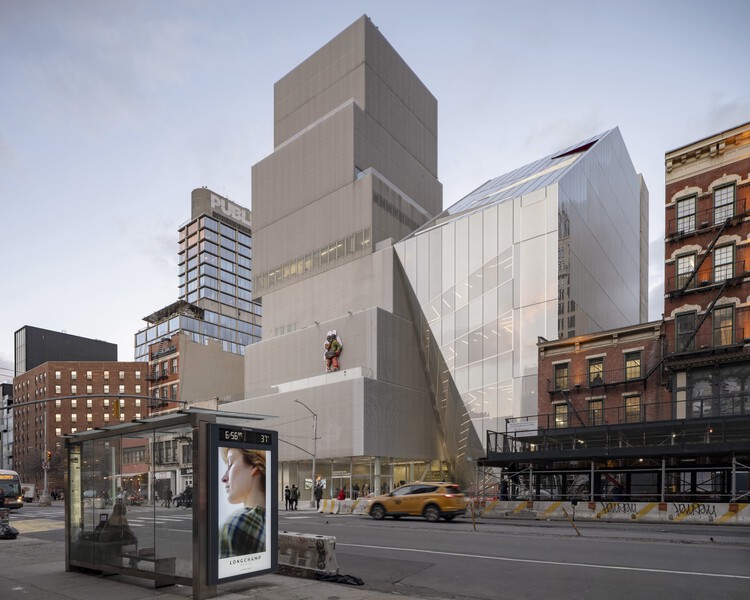
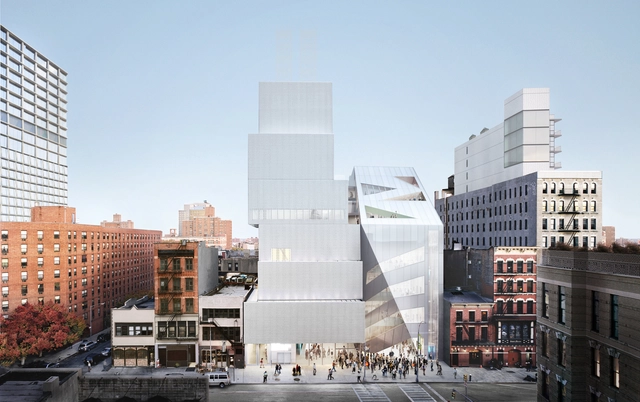
New Art Museum / SANAA

© Iwan Baan

Architect: SANAA
Location: 235 Bowery, , NY 10002
Client: of Contemporary Art, New York City; Zubatkin Owner Representation
Project Leadership: Saul Dennison, Chairman, Board of Trustees, New Museum; Lisa Phillips, Toby Devan Lewis Director, New Museum; Lisa Roumell, Deputy Director, New Museum
Architect of record: Gensler Architects
Project Management: Plaza Construction Corporation, New York City

Structural engineers: Guy Nordenson Associates, Simpson Gumperts & Heger Inc., New York City
Lights and illumination: Arup
Constructed area: 58,700 sq ft
Year of enchargement: 2002
Year of completion: 2007
Photographs: Iwan Baan, Dean Kaufman, Benoit Pailley

Rolex Learning Center / SANAA / EPFL Press

When we received a copy of EPFL’s Rolex Learning Center, we could not wait to flip through the sleek white book. Similar to SANAA’s building, the book’s crisp design and elegant composition is a beautiful compilation outlining the entire process of creating the Center, from the competition through construction.

Leaving behind their Pritzker Mentors

Photo from the Times. From left, Markus Dochantschi, Kulapat Yantrasast, and Florian Idenburg.

There’s something to be said about learning from our elders.  At least that’s the case for a select  group of younger architects who have been working behind the scenes with some of the biggest names in the profession: Zaha Hadid, Tadao Ando and .  Markus Dochantschi, Kulapat Yantrasast, and Florian Idenburg, have taken what they have learned in the almost decade working for their Pritzker Prize winning mentors and have branched to form their own practices in the United States.

More about the protégés after the break.

Pritzker Ceremony / SANAA

ArchDaily had the privilege of attending the ceremony last night on historic Ellis Island as Kazuyo Sejima and Ryue Nishizawa were honored.  Regarded as the highest honor bestowed upon an architect, the Pritzker Prize’s newest laureates were continually praised throughout the evening for their keen ability to teach us that what is not present can be as important as what is present.

As past laureates, such as Renzo Piano, Frank Gehry, Thom Mayne, Richard Meier, Jean Nouvel, and Rafael Moneo looked on, Lord Palumbo, chairman of the jury, discussed Sejima’s and Nishizawa’s work style; an intensively collaborative design process which is so balanced between the two minds that it is impossible to say which one of the pair is responsible for which architectural decision within a given project.

Although the two share similar philosophies when it comes to light, form and space, their differences create “all the possibilities”.  Sejima explained that within , there are actually three firms:  each has his/her own individual practice, yet come together to discuss and critique their work under the international firm .  While some criticize this process as inefficient and confusing, Sejima replied, with a laugh, that the organization is simply how they like to work.