The theme for the Australian Pavilion at the 2018 Venice Biennale is Repair. Created by Baracco+Wright Architects in collaboration with Linda Tegg, it consists of a living installation, Grasslands Repair, that presents more than 60 species of Western Plains Grasslands plants from South East Australia. By covering the ground of the pavilion with these plants, it explores the relationship between architecture and the natural environment, especially in regards to the ecologically sensitive landscape of Australia and the cultural importance of the land for the Indigenous people.
There has been a lot of focus recently on community engagement in architecture. Some building by some architect is designed to be the next 'community hub,' but what does it take to deliver on the design intent?
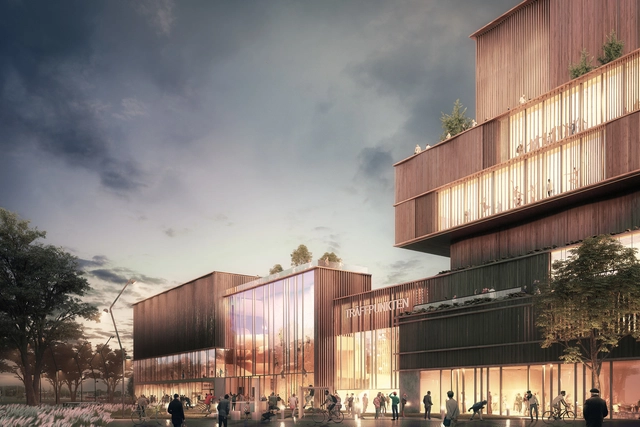
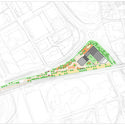
In order to promote a community atmosphere, a design must engage a large and variable audience, while also offering something unique. This new design from AIX Arkitekter intends to create a new multicultural center called "The "Meeting Point" in Täby, Sweden. The center combines unique sports and cultural activities, at the heart of an existing ecological infrastructure, to promote community opportunities and engagement.
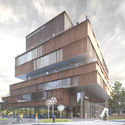
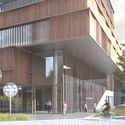
"The Meeting Point" center utilizes both indoor and outdoor activities. This dynamic also translates throughout the design language of the building through transparency and landscape elements. The intersecting masses cause various activity spaces to overlap, promoting happenstance interactions between both people and program.
The beginning of the fall semester is quickly approaching, and prospective architecture students are gearing up for the beginning of their future careers. While the next step may seem daunting, the first year of your architecture education helps set the pace for the remaining four to five years. So it's important to get started on the right foot.
Architecture studios are notorious for long nights, intensive model-making and desks overflowing with trace paper and parti diagrams. But there is one important aspect of studio life that is too often neglected: the student-professor relationship.
Read on for the four steps to start investing in this unique relationship to set yourself up for success.
The ever-growing list studies cities both around and beyond the USA, using an innovative metric called the “Green View Index,” which uses Google Street View panoramas to evaluate and compare green canopy coverage in major cities. Through monitoring the urban tree coverage, citizens and planners can see which areas in their city are green and not green, compare their green canopy with other cities, and play a more active role in enhancing their local environment.
https://www.archdaily.com/899519/tree-coverage-in-10-major-cities-around-the-worldNiall Patrick Walsh
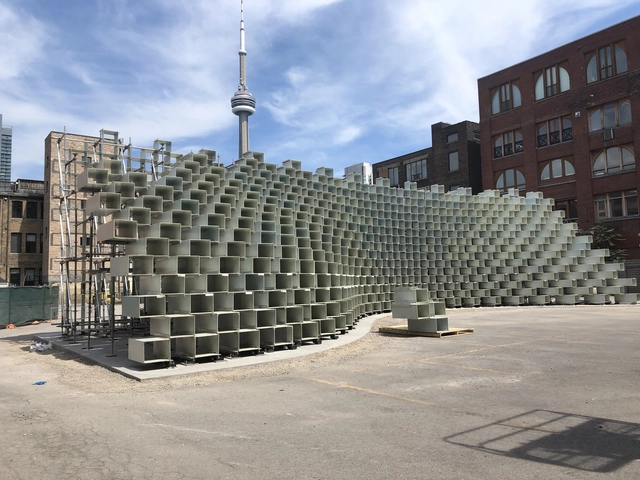
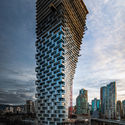
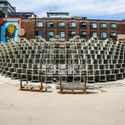
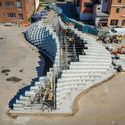
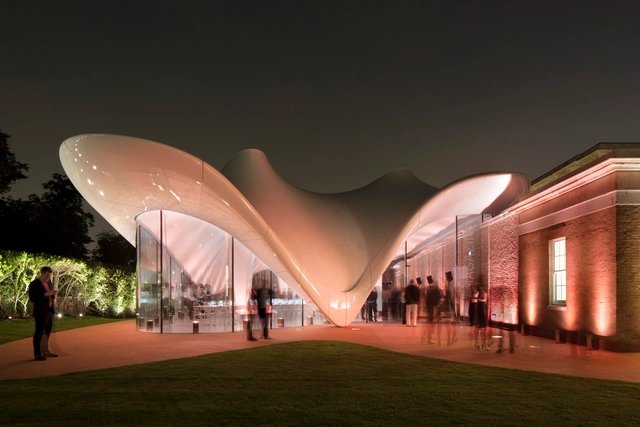
The two BIG-designed structures, located on opposite coasts, have both been recognized for their architectural innovation. The LEED-Platinum Vancouver House was awarded the World Architecture Festival’s Future Building of the Year in 2015, while the “unzipped wall” is the first Serpentine Pavilionto embark on a multi-city tour of this kind, before ultimately landing in a permanent home on the Vancouver waterfront.
https://www.archdaily.com/899563/bigs-relocated-serpentine-pavilion-nears-completion-in-toronto-as-landmark-tower-tops-out-in-vancouverNiall Patrick Walsh
When you think of your favorite spot to grab a beer, what architectural features come to mind? Is it the swanky furniture, themed artwork, or the heavily designed cocktail menu? Today, the aesthetics of bars are now as much a draw as the drinks themselves. From movie set inspired spaces to rooftops that offer spectacular city views, we’ve compiled a list of nine bars and beer gardens that every architect needs to cross off their list.
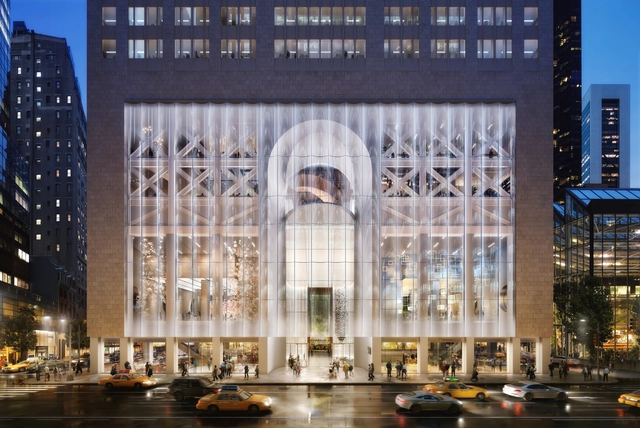
https://www.archdaily.com/899511/controversial-snohetta-renovation-of-philip-johnsons-at-and-t-headquarters-halted-by-individual-landmark-designationNiall Patrick Walsh
Airbnb is giving four lucky winners the honor of being among “the first people in thousands of years to spend the night on the Great Wall of China.” The competition, open until August 11th, offers the prize of staying in a custom-designed home situated on one of the seven wonders of the modern world.
The competition, run in collaboration with the Beijing Tourism Development Committee, is intended to “promote sustainable tourism to China by spotlighting wide-ranging efforts to preserve the Wall’s deep heritage and bring Chinese culture to life.” The four winners will have to adhere to strict House Rules, such as respecting their 1.38 billion neighbors, refraining from waking ancient guards with loud music, and promising not to disturb dragons.
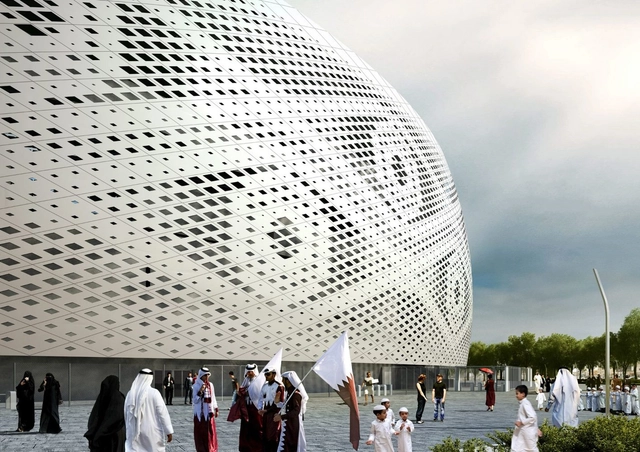
Al Thumama / Ibrahim Jaidah. Image Cortesía de Comité Supremo de Entrega y Legado
France took home the gold in this year's World Cup, however, in four years time, the world will turn its eyes to Qatar for another round of soccer mania. Preparations for the 2022 World Cup are already in full swing, with the construction and restoration of 8 stadiums that will host teams and fans from across the globe.
Get to know the 8 Qatar 2022 World Cup stadiums below.
UK-based artist Alex Chinneck has unveiled his latest architectural installation, transforming the walls of a soon-to-be-demolished 1960s office building on the former Kent Wool Growers site in Ashford, England. “Open to the Public” features an eight-meter-high double zip running down the side of the building, revealing the forlorn interior.
The double zip descending the short elevation is joined by a long single zip running the full length of the building, peeling back the walls and windows in a move inspired by the area’s history of textiles and fabric.
https://www.archdaily.com/899434/artist-alex-chinneck-unzips-derelict-1960s-office-building-to-create-mind-bending-illusionNiall Patrick Walsh
Following the October 2017 unveiling of NEOM, Saudi Arabia’s $500-billion futuristic city billed as a “startup the size of a country,” details of the project's progression have been scarce. Situated close to the border with Jordan and the Red Sea, the remote area has been sealed off to visitors, leaving onlookers to speculate with minimal details, such as the announcement by Japan’s Softbank that they were investing in the megacity.
However, news carried by Reuters suggests that the project may be far more advanced than originally expected, reporting that Saudi Arabia’s King Salman has arrived in NEOM for a holiday. The news marks a break in tradition from the King’s holiday choices, typically a villa in Morocco or the South of France. Reuters also detail a design document revealed to them offering the first descriptions of what the architecture of NEOM may contain.
https://www.archdaily.com/899430/insight-into-secretive-unbuilt-neom-megacity-ahead-of-saudi-royal-visitNiall Patrick Walsh
More than a commentary on West’s interactions with architecture, the series presents an intriguing example of the connection between music and architecture, transitioning from a lyrical, melodic art form to one based on space and materiality.
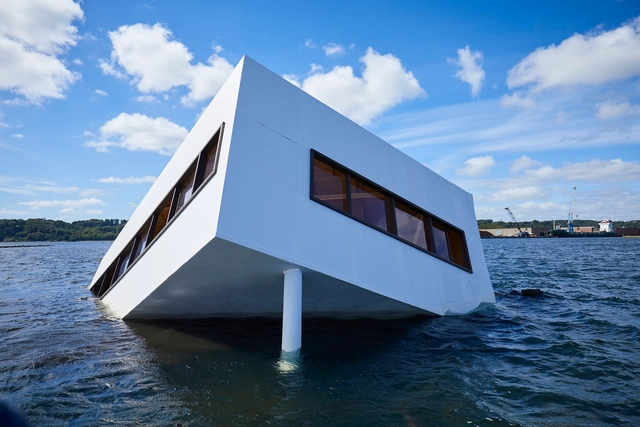
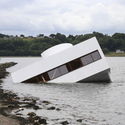
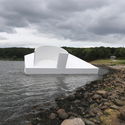
A giant replica of Le Corbusier’s iconic Villa Savoye has been half-sunk off a Danish fjord as part of the country’s Floating Art 2018 festival. The installation titled “Flooding Modernity” has been designed by artist Asmund Havsteen-Mikkelsen as a “comment on the sinking of the public sphere after the disclosure of the Cambridge Analytica scandal and the manipulation of democratic elections through social media.”
As part of the summer art festival hosted by the city of Vejle and the Veijle Art Museum, the five-tonne model was towed into the fjord and sunk to sit as a half-submerged testament to a once visionary future.
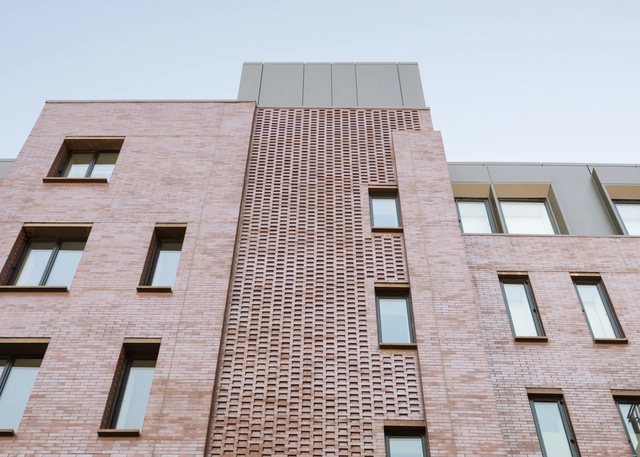
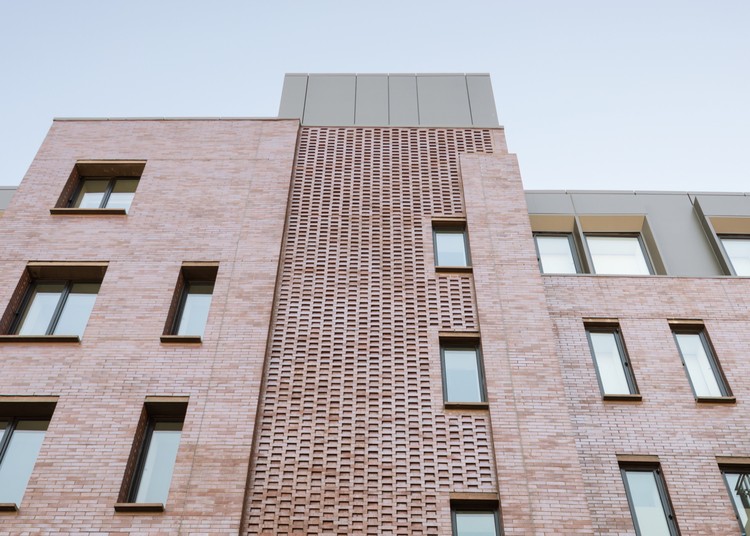
The Brick Industry Association (BIA) has announced the winners of the 2018 Brick in Architecture Awards, given to “the country’s most visionary projects incorporating fired-clay brick.” This year, 19 projects were selected from 88 total entries, spanning commercial, educational, landscaping, and residential categories.
“Fired-clay brick offers unlimited aesthetic flexibility, and is an integral part of any sustainable, low maintenance building strategy,” said Ray Leonhard, BIA’s president and CEO.
Full details on the awards and winners are available on the official website here. Below, we have organized the winning schemes by category.
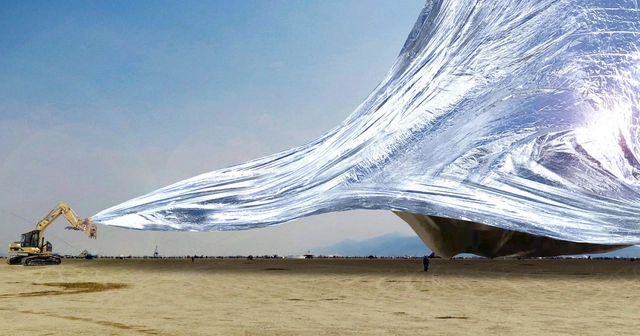
Moscow-based designer Alex Shtanuk has launched an Indiegogo campaign for his 107,000-square-foot (10,000-square-meter) blanket woven from over 3000 NASA Space blankets, to feature at this year’s Burning Man festival at Black Rock City, Nevada.
“The Blanket” seeks to “bring the waves of the ancient Lake Lahontan back to Playa,” influenced by wind conditions to mirror surreal forms such as waves, mountains, or giant sculptures. With an exterior metallic coating, the blanket will reflect 97% of radiated heat, creating a cool, refreshing environment underneath for those seeking shelter from the hot Playa sun.
The Architects' Journal’s 2018 student survey has revealed troublesome, though perhaps not surprising, trends within the profession. The results of the survey, drawn from nearly 500 students in the UK, suggest that the economically fortunate are more likely to succeed within a culture that promotes unsociable and unhealthy working hours.
The numbers paint a bleak picture of the architecture student lifestyle in the UK, where, including tuition fees, students are now forking out an average of £24,000 per year. 44% of respondents identified this as the largest problem for them and their peers.
So as the traditional route into the profession becomes “increasingly out of reach for many,” is it time for schools and offices to reevaluate their methods in order to maintain a diverse, accessible architecture?
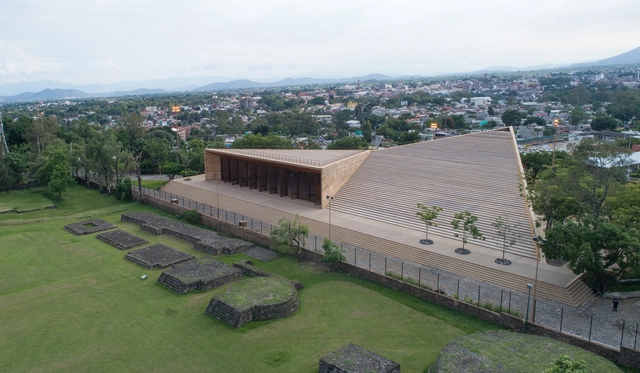
Minutes ago in Detroit, Director Dirk Denison and 2018 MCHAP Jury Chair Ricky Burdett announced the six finalists of the 2018 edition of the Mies Crown Hall America Prize. Selected from a longer list of 31 projects announced earlier this summer in Venice, these outstanding works of architecture will compete for the top honor, the MCHAP Award, which will be announced in October. The authors of the winning award will take home $50,000 to fund research and a publication and will be recognized as the MCHAP Chair in IIT’s College of Architecture.
The six finalist buildings were completed between January 2016 and December 2017. The descriptive texts, provided by the MCHAP jury, celebrate the merits of each individual project.
https://www.archdaily.com/899111/6-projects-in-brazil-mexico-peru-and-usa-selected-as-finalists-for-the-2018-mies-crown-hall-americas-prizeAD Editorial Team
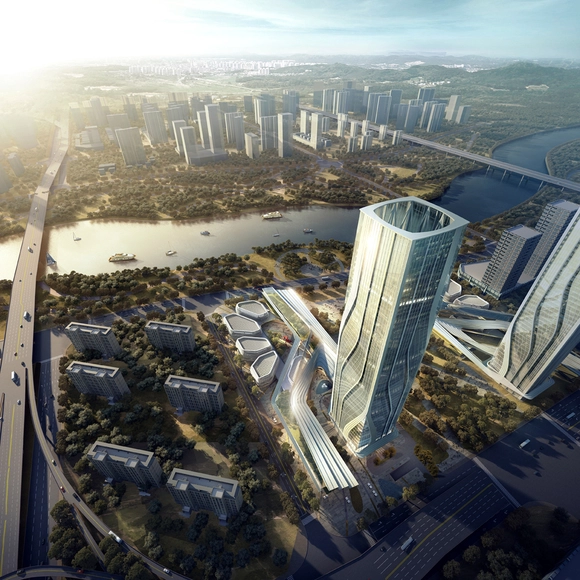
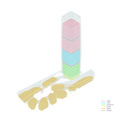
Chinese cities have been on a stride for decades, and are expected to become the world’s leading economy within the next few years. With all the ongoing architectural developments, nature remained key in most architects’ design developments, honoring the Chinese landscape and integrating it within their projects. The Zhangjiang New District is one of China’s new ongoing developments, housing numerous structures and architectural installations. Architecture firm UM has been selected to design the “City Gate,” a new iconic landmark in the New District, which will act as a transition between the extensive urbanism of Gan Zhou and its surrounding nature.
One of the main purposes of the project was to create an environment that caters to both the residential and commercial needs of the region, making the best of the project’s prominent location. The project, which was inspired by Ximeng Wang’s “Thousand Miles of Mountains and Rivers,” a timeless piece of Chinese art, reconnects the occupants with nature and allows them to experience its offerings with all their senses.
Vatican City participated in the Venice Architecture Biennale for the first time this year, inviting the public to explore a sequence of unique chapels designed by renowned architects including Norman Foster and Eduardo Souto de Moura. Located in the woods that cover the island of San Giorgio Maggiore, the chapels offer interpretations of Gunnar Asplund’s 1920 chapel at Woodland Cemetery in Stockholm, a seminal example of modernist memorial architecture set in a similarly natural wooded context.
A new video produced by Spirit of Space offers a brief virtual tour of the structures that make up the Holy See’s pavilion, lingering on each just long enough to show different views and angles. As members of the public circulate through the chapels in each shot, the scenes give an impression of how each chapel guides circulation.
The Hungarian artist László Moholy-Nagy was one of the most influential thinkers, designers and art educators of the first half of the twentieth century. His experimentation with light, space and form generated international attention. Among those impressed by Moholy-Nagy's work was Walter Gropius, German architect and founder of the Bauhaus School, who made Moholy-Nagy one of the youngest instructors in the history of the Bauhaus. In his time at the Bauhaus, Moholy-Nagy utilized multi-disciplinary art practices to revolutionize abstract artistic media.
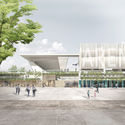
Los Angeles-based studio EC3 has revealed its design entry for a new 14.5-acre, cultural & sports center in Shenzhen’s growing Dalang neighborhood, hosted by the Shenzhen Longhua District Government and the Vanke Real Estate Co.
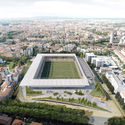
Iotti + Pavarani Architetti have designed a 'New Pisa Stadium' for A.C. Pisa on an existing stadium just 200 meters away from Piazza dei Miracoli (home to the Leaning Tower of Pisa). After winning the first prize in a restricted competition in 2017, the project is currently under feasibility study, awaiting construction development.
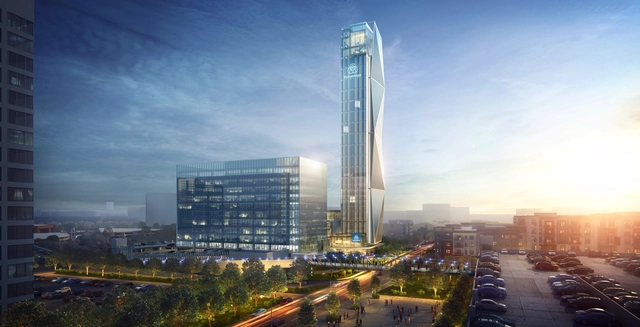
Thyssenkrupp Elevator, one of the world’s largest elevator companies, has revealed images of their proposed headquarters near The Battery Atlanta in Cobb County, Georgia. The headquarters will take the form of a “state-of-the-art 420-foot (128-meter)-tall elevator qualification and test tower, the tallest of its kind in the U.S. and one of the tallest in the world."
https://www.archdaily.com/899077/thyssenkrupps-high-rise-elevator-test-tower-in-atlanta-to-experiment-with-cable-free-sideways-moving-systemsNiall Patrick Walsh
The Lanescraper. Image Courtesy of BIG – Bjarke Ingels Group / Fender Katsalidis Architects
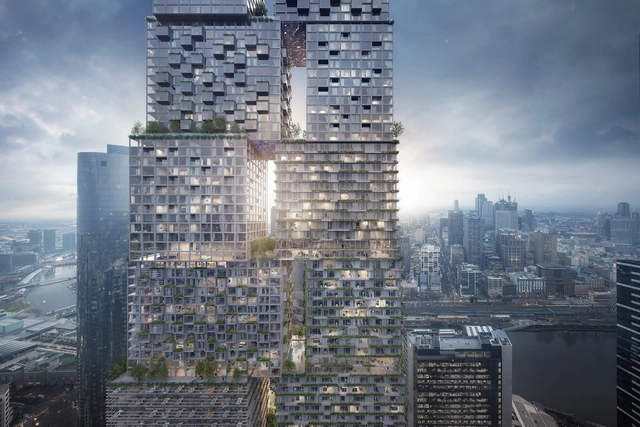
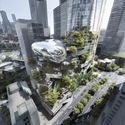
A prominent shortlist including BIG, OMA, and UNStudio have revealed their visions for Melbourne’s landmark Southbank Precinct overhaul. The $2 billion project will be the largest single-phase project in the history of Victoria, Australia, intended as “a state-of-the-art, mixed-use environment” to be “centered around innovation in architecture and design.”
The six shortlisted schemes include twisting towers, interlocking blocks, and stacked neighborhoods, all focusing on the 6,000-square-meter BMW Southbank site. The designs were revealed at a public symposium on July 27th featuring speakers from the shortlisted firms.


_preview.jpeg.jpg?1527942180&format=webp&width=640&height=580)
_preview.jpeg.jpg?1527942158)
_preview.jpeg.jpg?1527942168)
_preview.jpeg.jpg?1527942212)
_preview.jpeg.jpg?1527942202)
_preview.jpeg.jpg?1527942180)