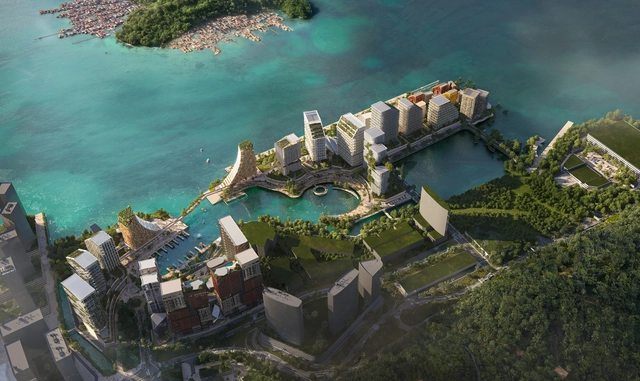
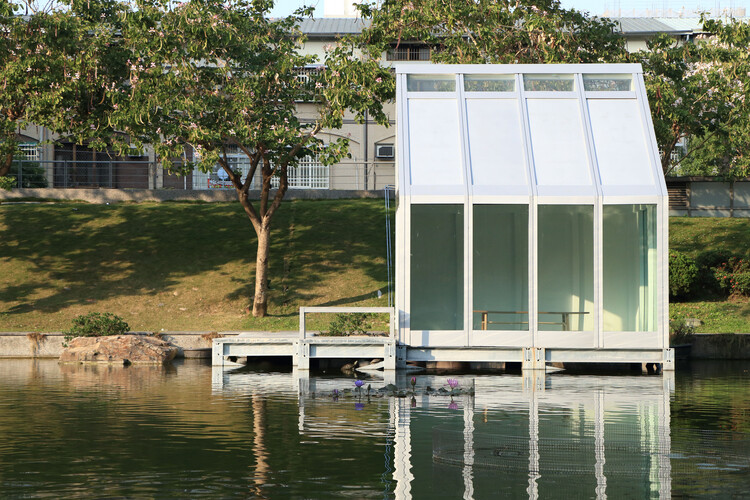
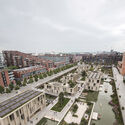
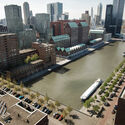
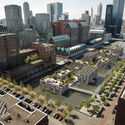
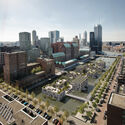
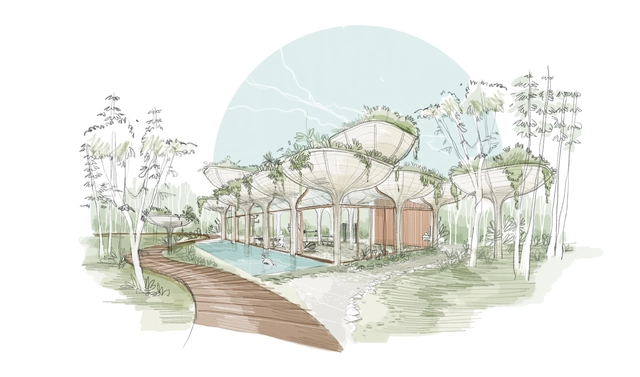
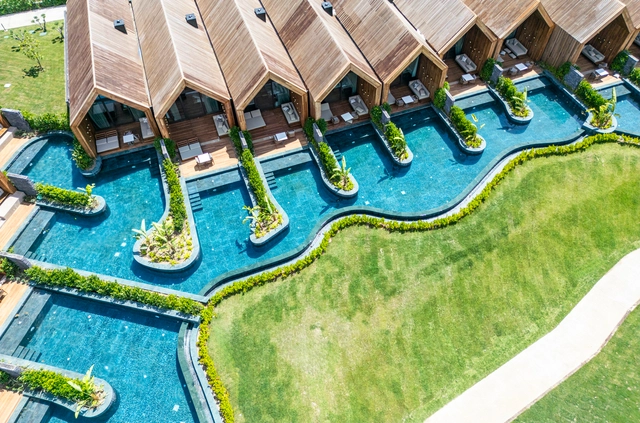
Snøhetta has unveiled plans for Jesselton Docklands, a tropical waterfrontmaster plan in Kota Kinabalu, Malaysia, on the island of Borneo. The development reimagines the city's former port as a civic and cultural hub, strengthening its connection to the waterfront and positioning it as a new gateway to Sabah and the wider Southeast Asian region. Situated near Kota Kinabalu International Airport, the development includes a new ferry and cruise terminal, integrating infrastructure with the island's ecological and cultural context to position the city as a key point of connection within the region.
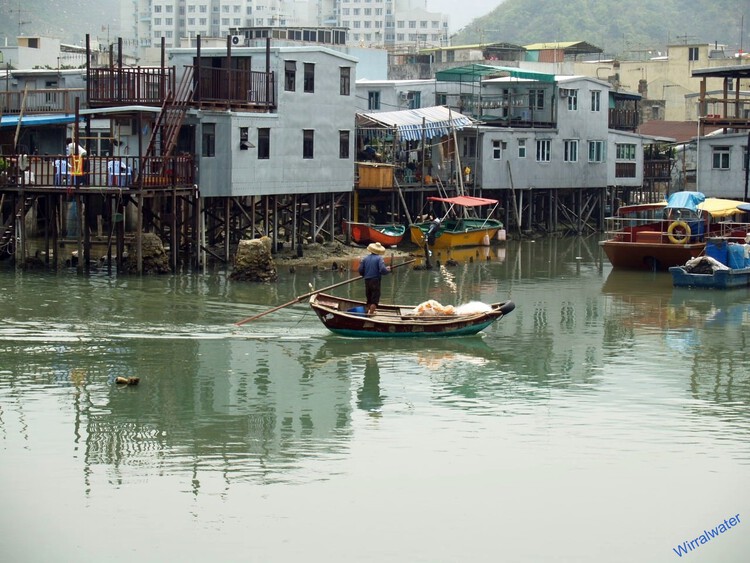
While Hong Kong is widely celebrated for its iconic harbor view, glittering skyline, and fast-paced urban lifestyle, its origins tell a different story—one deeply rooted in its relationship with water. Before transforming into a dense, vertical metropolis, Hong Kong's architectural identity was closely tied to its maritime context. Today, the city is often associated with slender, glass-clad towers that symbolize modernity. While visually striking in their pursuit of height and form, many of these buildings appear disconnected from their immediate environment, often overlooking natural site conditions, ecological responsiveness, and contextual sensitivity.
Historically, however, this was not the case. Hong Kong's earliest built environments—rural fishing villages in areas like Tai O, Aberdeen, and Shau Kei Wan—emerged through organic, community-driven spatial practices that engaged closely with their surroundings. These coastal and riverside settlements developed architectural systems tailored to the marine environment and to the rhythms of fishing life. Villages were sited around water, and construction strategies were adapted to fluctuating tides, terrain, and social use.
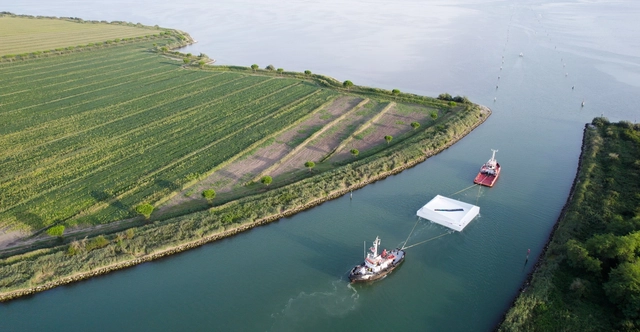
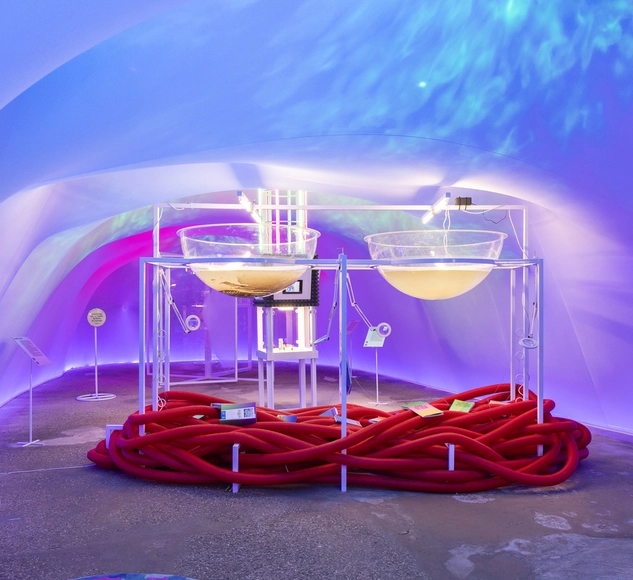
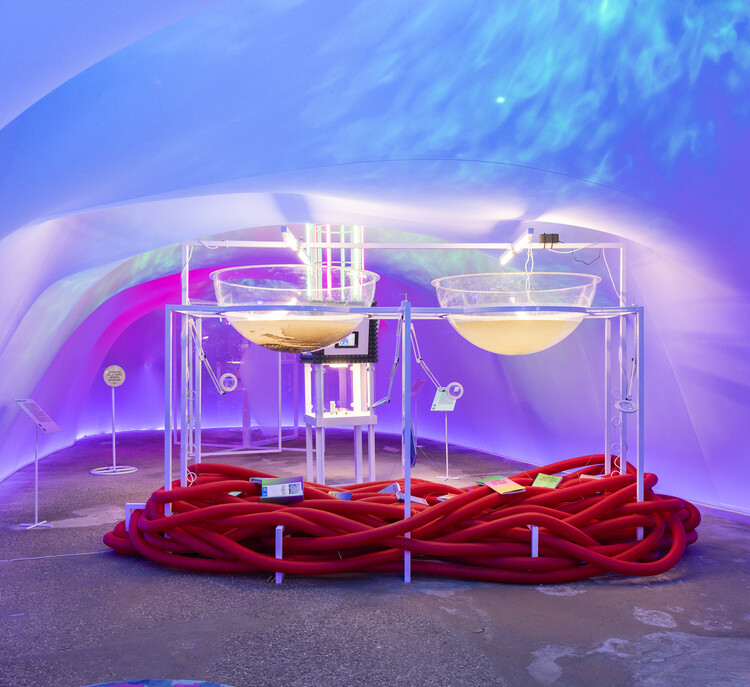
As part of the collateral events of the 2025 Venice Architecture Biennale, the Institut Ramon Llull presents the project "Water Parliaments: Projective Ecosocial Architectures", bringing together the waters of Lleida, Girona, Tarragona, Barcelona, Valencia, the Balearic Islands, and beyond to address the water crisis as an interconnected ecosocial, cultural, and political issue. Framing architecture as a tool for critical speculation and collective action, the project advocates for the imagining of future scenarios grounded in coexistence—interweaving the human and non-human, the natural and artificial, the technological and vernacular, the global and the local.
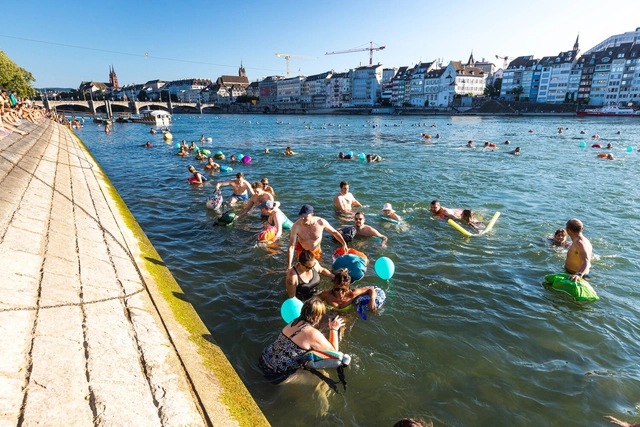
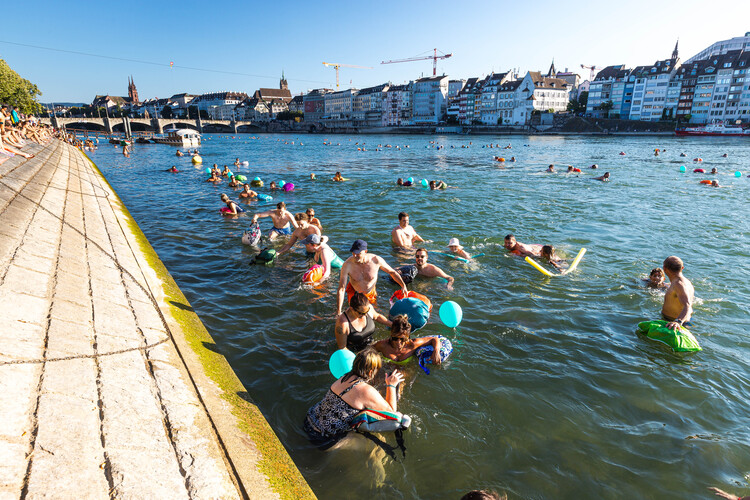
Swimmable Cities is an alliance of 153 signatory organizations across 59 cities in 22 countries, supporting the global movement for swimmable urban waterways. In the context of increasing urbanization, climate change, and biodiversity loss, the initiative aims to reclaim rivers and harbors as public spaces for communities to enjoy and benefit from bathing. It advocates for urban waterways to be made safe, healthy, and accessible for both swimmers and wildlife, calling for cross-border collaboration to develop improvement strategies and collect data to evaluate "swimmability." This call becomes especially relevant amid rising global temperatures and growing inequalities in access to public infrastructure in major cities. The movement's 10-point charter begins with the affirmation of "the right to swim," celebrating urban swimming culture and recognizing the historical significance of water.
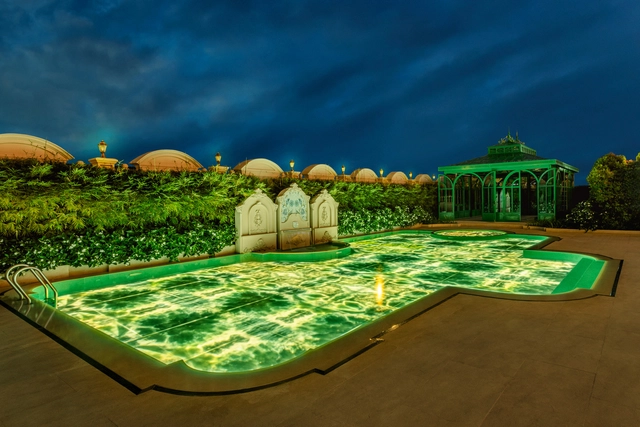
The trajectory of glass in architecture reflects the technological evolution of humankind. For centuries, it was a fragile, opaque material, restricted to small openings in churches or aristocratic residences, limited in size, with uneven transparency and a largely secondary role. With the Industrial Revolution and advances in manufacturing processes, this condition changed dramatically. From artisanal and imperfect stained glass, we now have a wide range of architectural applications, from fully glazed skyscraper facades to translucent pedestrian bridges, lightweight roofs, smart partitions, and movable elements. One of the most surprising uses, once thought to be impractical, is the direct interaction of glass with large volumes of water. Today, we see pools with transparent walls or floors that project out from buildings, float above streets, or visually merge with their surroundings, creating striking sensory experiences. A remarkable feat, especially considering that for a long time, glass was considered too fragile for submerged environments.
Every June, the Spanish city of Logroño transforms into a space of architectural dialogue, opening its streets, plazas, riverbanks, and traffic islands to temporary structures that redefine how cities are inhabited. For ten editions, Concéntrico has worked not as a specialized fair or an architecture biennale, but as a portable museum — a curatorial gesture that brings a dispersed collection of contemporary architecture into public space. Set in a city suspended between arid plains and distant mountains, far from the circuits of capital cities and cultural institutions, Concéntrico presents itself as a temporary promise. It's a reminder that even cities that are often overlooked can host architecture that is current, diverse, and speculative. In this sense, the festival is less about celebration and more about activation.
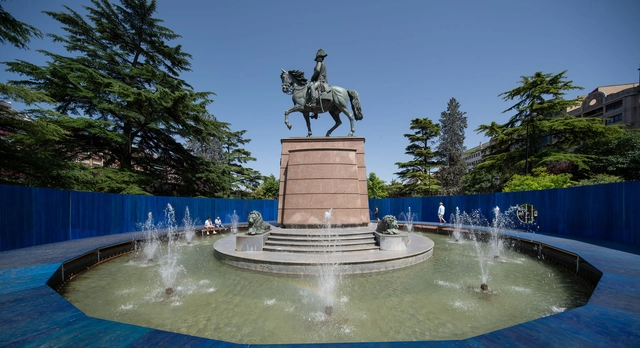
But beyond its curatorial logic, Concéntrico operates as a political structure. In the ancient sense of polis, it invites citizens, architects, and institutions to reassess what public space can be. The interventions offer speculative proposals for urban life that reveal what is missing, what is possible, and what should be questioned. A temporary pool over a fountain, a bathhouse in a roundabout, or a shared meal on a major avenue are not just spatial gestures — they are political statements, asking how urban infrastructure might be redirected from control to care, from efficiency to encounter. In that way, the festival becomes not just a reflection of the city, but an instrument for its transformation.
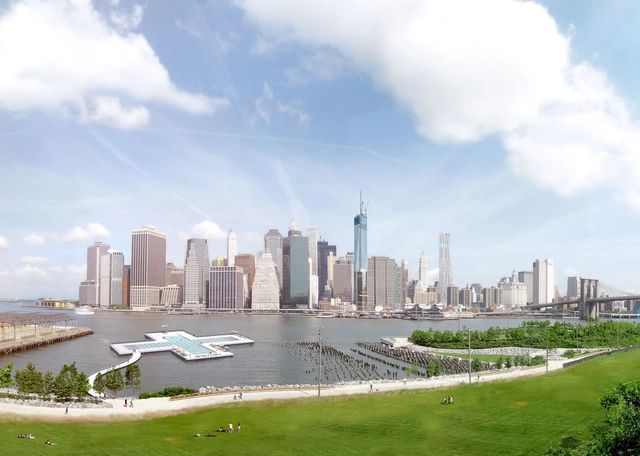
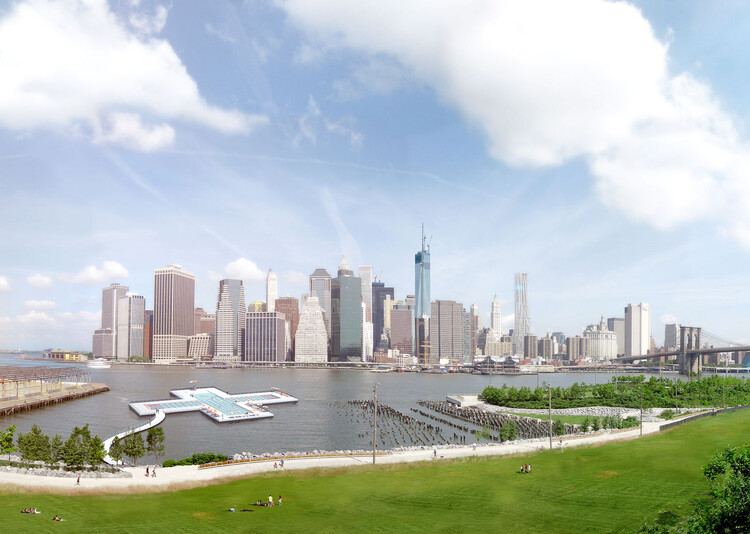
Friends of + POOL has announced the next steps in the realization of New York City's first water-filtering floating swimming pool, to be installed at Pier 35, north of the Manhattan and Brooklyn Bridges. The project seeks to provide safe public access to swimming in the city's rivers by integrating a custom-designed filtration system into a floating pool structure. Installation at Pier 35 is scheduled for May 2026, when the pool will enter its final phase of evaluation. Public access will be contingent on the successful completion of large-scale filtration testing and the full build-out of the facility for safe public use.
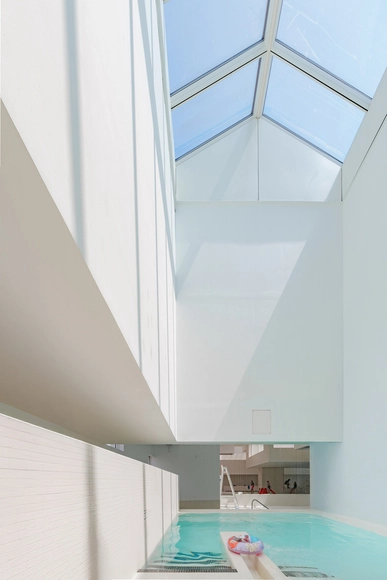
Les Bains des Docks Aquatic Centre. Image Courtesy of VELUX Commercial
Condensation, maintenance, and humidity are three familiar challenges that continue to test the buildings we design and construct. Whether stemming from climate conditions, limited airflow, or the specifics of construction detailing, these factors affect not only the durability of materials but also the everyday comfort and performance of inhabited spaces. When the setting is an aquatic center or an indoor swimming pool, the demands are even greater. The constant presence of steam, moisture accumulation, and the risk of mold can compromise both energy efficiency and the user experience. In such environments, ventilation and access to daylight, beyond their aesthetic value, become essential tools for maintaining equilibrium, enhancing indoor comfort, and ultimately improving how the space is perceived and utilized.
https://www.archdaily.com/1030573/letting-the-sky-in-4-case-studies-of-daylight-solutions-in-aquatic-architectureEnrique Tovar
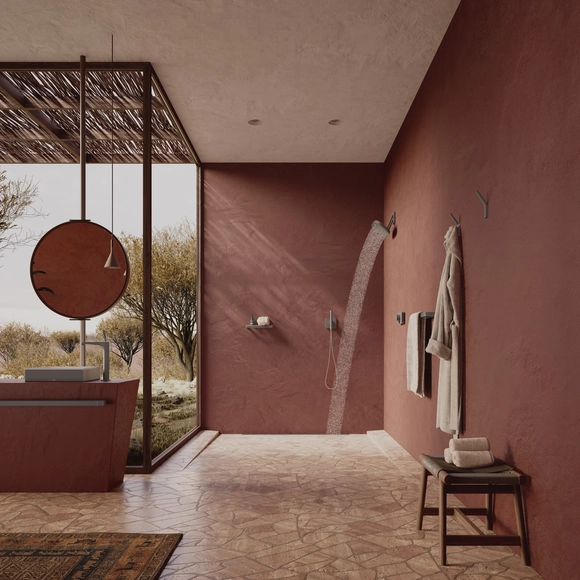
Water is a catalyst for sensory experiences: it manifests through direct contact when touched, through its presence when heard or seen reflected, and through its transformations—whether by temperature, from cold to heat, or by state, from liquid to vapor. It is a key element in designing for the senses, capable of evoking physically and emotionally perceived atmospheres. As Juhani Pallasmaa suggests, architecture does not address the eye alone but involves the whole body and sensory memory. The bathroom, in particular, concentrates much of the physical and emotional experience associated with water, opening up possibilities for creating environments that intensify that sensory connection. Consequently, the question arises: what elements or concepts should shape this space so that the shower experience escapes the ordinary?
https://www.archdaily.com/1030230/the-bathroom-reawakened-contemporary-design-concepts-for-a-sensory-experienceEnrique Tovar
At a time when architectural practice is increasingly tied to climate and context, the boundary between the built and the natural has become a critical site of experimentation. This month's unbuilt selection gathers eight conceptual projects that work with the edges of landscape. In Ramia by João Teles Atelier, the architecture draws directly from the metaphor of a seed breaking through soil, using wood, concrete, and water to create a sensorial route through Tulum's ecology. Meanwhile, Mobius Pier by X Atelier loops gently over the river edge, becoming both infrastructure and observation point. Similarly, Il mare degli Umbri approaches the threshold differently, restoring the historic shoreline of Lake Trasimeno and reintroducing local wetland ecologies. Each project in this collection reflects a unique position: some treat the edge as a spatial experience, others as a regulatory line, and others still as a point of cultural or ecological return.
New settlement and production in Øm. Render. Image Courtesy of THIRD NATURE
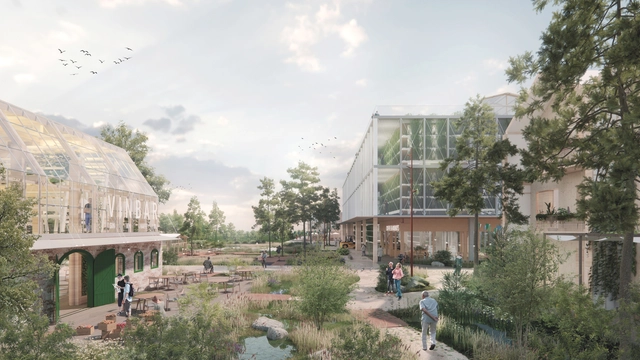
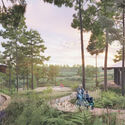
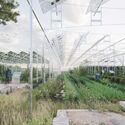
Danish architecture firm Third Nature, together with Sophie Sahlqvist Landskab, Arkaia, ILC, and Artelia, recently shared images of Øhjem, their proposed strategic vision for the re-naturalization of Denmark's Greater Copenhagen region toward 2050. The regenerative plan is part of the Water's Ways program under the Agenda Earth initiative, an interdisciplinary project run by the Danish Association of Architects in collaboration with the Dreyers Foundation and the Danish Bar Association. Led by urbanist Boris Brorman Jensen, the program calls for long-term solutions to restore 15% of Danish agricultural land while also protecting 600,000 homes from water-related threats. Third Nature's Øhjem masterplan reimagines the 25 km Ramsø Dale as a step toward implementing the land management objectives outlined in the Danish Green Tripartite Agreement (Grøn Trepart), signed in June 2024.
Pools have always symbolized luxury, leisure, and social interaction. Beyond their aesthetic appeal—where water dances across textures, movements, and reflections—they also serve functional purposes, providing relaxation, exercise, and entertainment. Their history dates back over 5,000 years to the Great Bath of Mohenjo-Daro in the Indus Valley (modern-day Pakistan), possibly used for rituals and communal practices. Later, the Greeks and Romans refined the concept, creating elaborate pools for bathing, sports, and social gatherings. The famous Roman baths, often heated and adorned with intricate mosaics, laid the foundation for modern spa and wellness culture, reinforcing the relationship between architecture, water, and quality of life.
During the Renaissance, pools were primarily associated with elite properties, but by the late 19th and early 20th centuries, public pools became more common, driven by urbanization and the promotion of hygiene. The rise of Olympic swimming competitions in the early 1900s further popularized the concept, leading to increased construction of both private and competitive pools worldwide. Today, pools continue to evolve, incorporating advanced materials and designs that enhance safety and sustainability. Whether for recreation, aesthetics, or well-being, pools remain a central element of modern architecture and lifestyle.
Integrating natural elements into architectural design has long been a fundamental pursuit in creating comfortable, sustainable environments that enhance both individual well-being and the relationship between buildings and their surrounding context. In areas with vast landscapes, incorporating natural elements is essential for seamlessly connecting architecture with its site. Conversely, in dense urban environments dominated by built structures, introducing greenery becomes also increasingly vital, reintroducing nature into the so-called "concrete jungle."
However, beyond conventional landscape features—such as water fountains, green walls, gardens, or courtyards—architects are redefining what it means to build with nature. The focus has shifted toward deeply integrating architecture with its natural surroundings, creating immersive spatial experiences that blur the boundaries between the built and the organic - in a way, "taming" nature. When successfully executed, these designs go beyond fostering well-being or promoting a healthy lifestyle; they evoke a profound sense of tranquility, power, and harmony, transforming the way we perceive and inhabit space.
Videos
Courtesy of Katia Sei Fong, Ken Sei Fong, Luis Sei Fong
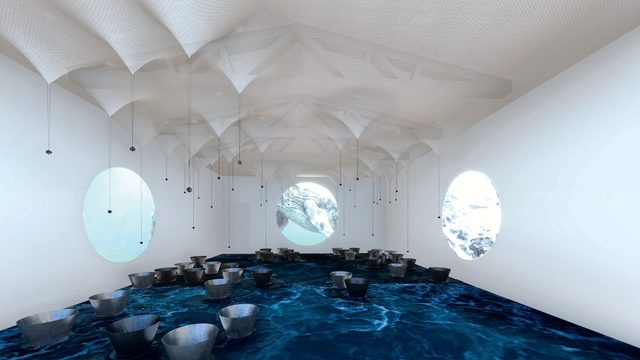
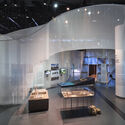
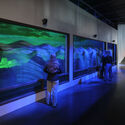
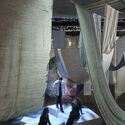
The national exhibition of Uruguay at the 2025 Venice Architecture Biennale, titled "53.86% Uruguay, Land of Water," explores the intrinsic relationship between architecture, territory, and water. Curated by architects Katia Sei Fong and Ken Sei Fong, along with visual artist Luis Sei Fong, the exhibition proposes that we may be entering the age of water, the "Hydrocene", and that the way humanity manages and conserves this resource will shape its future. In this context, the project highlights that Uruguay's maritime territory (53.86%) is larger than its land territory. Water, therefore, is not only a natural resource but a fundamental element of the country's history and culture, essential to its development.
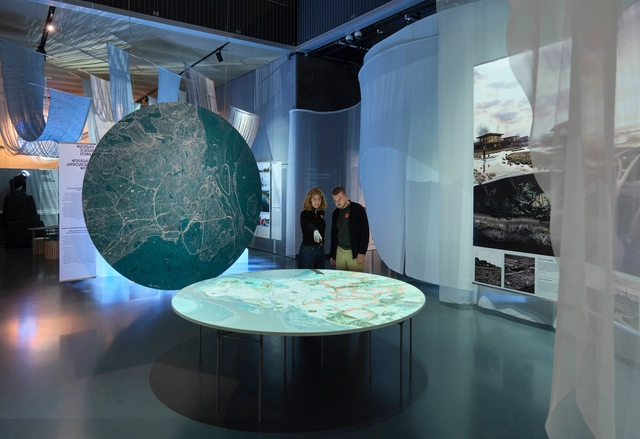
The Danish Architecture Center (DAC) will open its new exhibition, "Water is Coming" in October 2024, remaining open until March 12, 2025. The exhibition addresses the escalating global water crisis, prompted by melting polar ice, rising groundwater levels, and increasingly frequent and intense flooding. It acknowledges the reality of rising sea levels and extreme weather events, shifting the focus from mitigation to adaptation. The exhibition aims to foster a deeper understanding of our complex relationship with water, exploring its vital role as both a life-giving resource and a potential threat to human settlements.