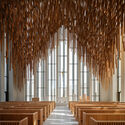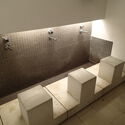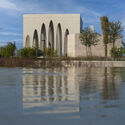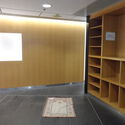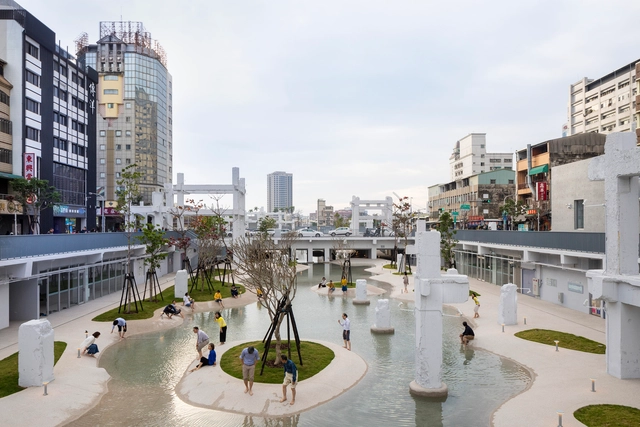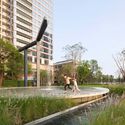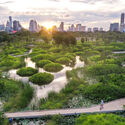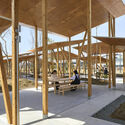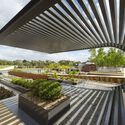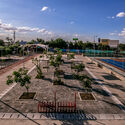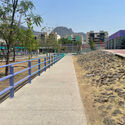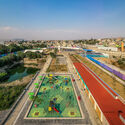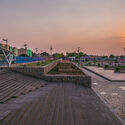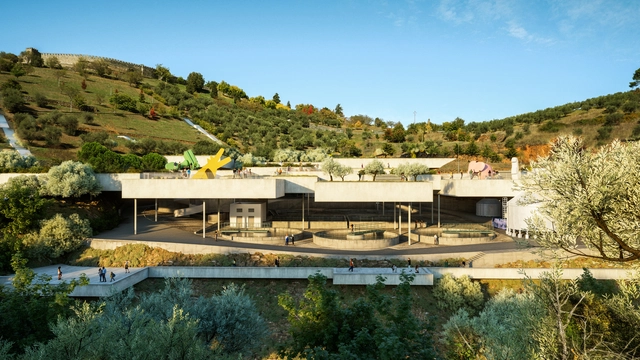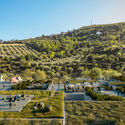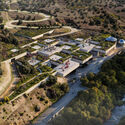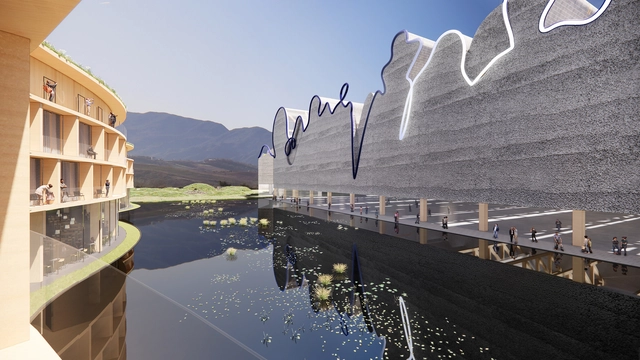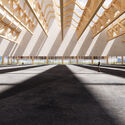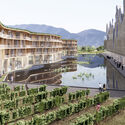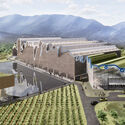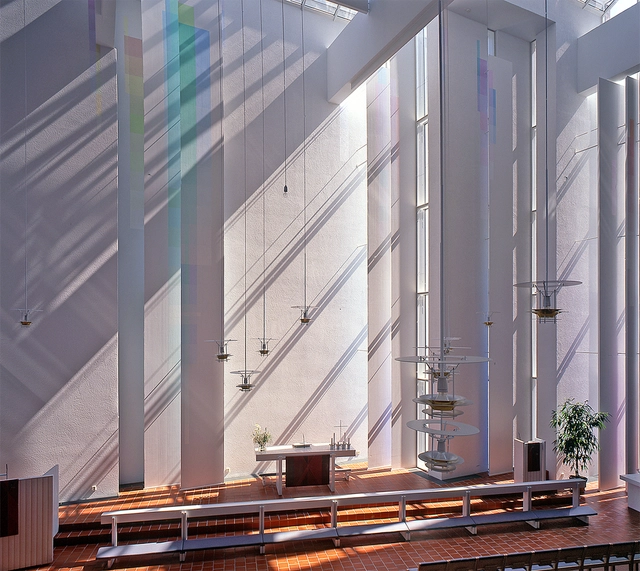
MASSLAB has just won the competition for the new roof of Bragança's Water Treatment Plant in Portugal. Integrating public use of this infrastructure, which until now only serves a functional purpose, the project showcases adding value to existing infrastructure by rethinking them. Blending architecture, landscaping, and urban design to transform this structure into a vibrant public space, MASSLAB seeks to change the perception of water treatment facilities in urban settings. By reimagining the roof as a livable infrastructure, the project transforms the purely functional roof into an engaging and integral part of the urban fabric.
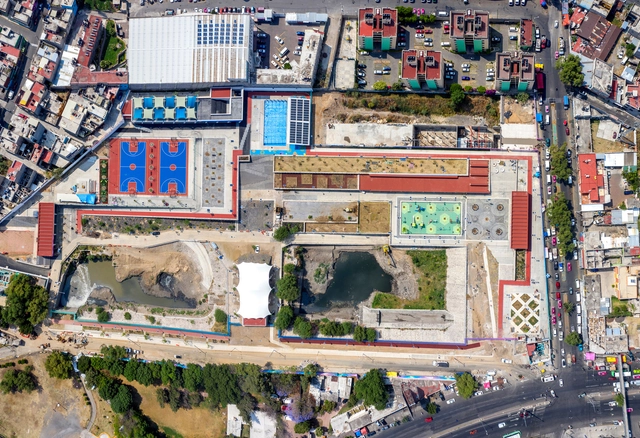
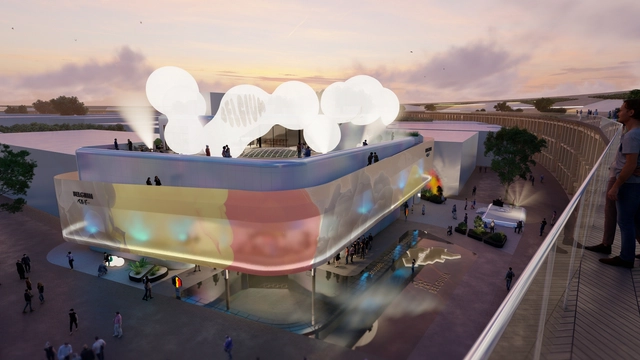
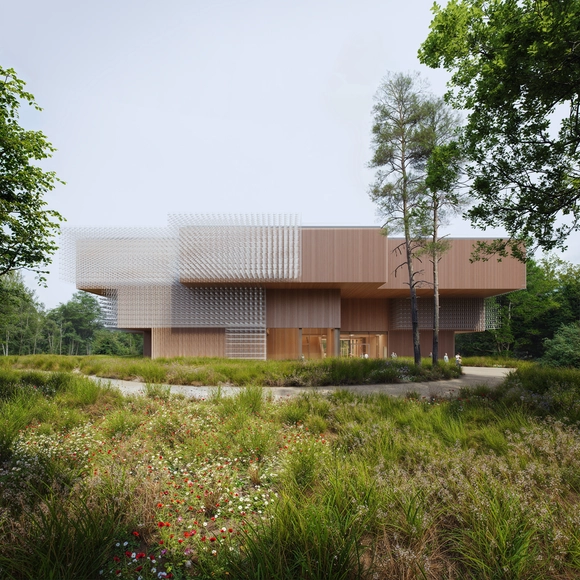
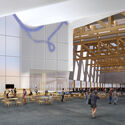
Following an international competition, Steven Holl Architects has been selected as the winner of the commission for the Expo Albania convention center and hotel in Tirana, Albania. The winning team, comprised of Steven Holl Architects, artist Agnieszka Kurant, Atelier 4, Atelier Markgraph, Stoss, and Arup, proposes an iterative process, collecting signatures from local Tirana communities and fusing them into a single wandering line, a continuation of artist Agnieszka Kurant’s project “End of Signature”.
Every year, Earth Day, celebrated on April 22, presents us with an opportunity to contemplate the conditions of our planet and our impact upon it. Generating around 37% of global carbon emissions, the construction industry has an important, often detrimental, role to play, thus placing an increasingly urgent responsibility on architects and builders to devise strategies for reducing this number. Still, the built environment represents the habitat for most of humanity, and so it has the potential to protect and shelter people from the risks posed by the changing climate. Read on to discover a collection of articles delving into the strategies available at urban and architectural scales for mitigating the effects of climate change and minimizing the industry’s impact upon it.
While hybrid working and flexible hours represent the most obvious ways to improve work/life balance for many, because of the missed social interactions and the lack of space or functionality at unproductive home workspaces, the majority of 16-24-year-olds are the only age group who prefer to work from the office.
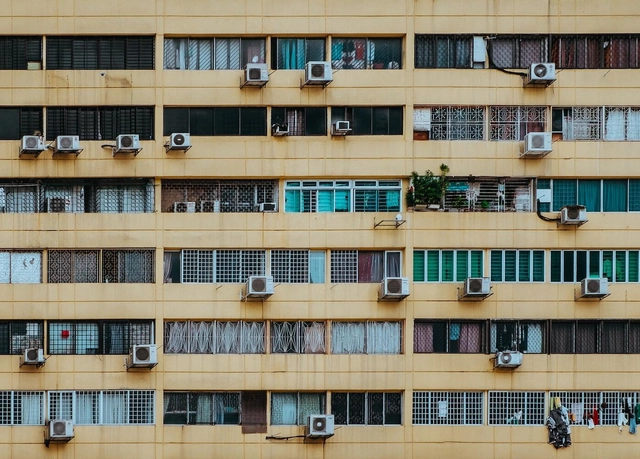
Between now and 2050, worldwide installation of cooling appliances, like air conditioning, is projected to triple, resulting in a twofold increase in energy consumption. This reliance on such devices, often seen as exacerbating global warming, poses a paradox: how can we fightrising temperatures in cities while simultaneously contributing to them through our dependence on these solutions?
As commonly understood, gutters are elements installed along the edges of roofs and balconies to channel rainwater. Their primary function is to collect water flowing over the roof's surface and direct it to the appropriate downspouts. Proper sizing is crucial regardless of the material—whether aluminum, PVC, concrete, galvanized steel, or others. Depending on the climate in which the project is situated, the damages caused by incorrect application can be considerable.
Water is indispensable for all forms of life on Earth, as it plays a vital role in maintaining biological processes, supporting ecosystems, and contributing to human well-being. Additionally, water holds cultural significance in many societies, being associated with rituals and ceremonies and carrying diverse symbolic meanings.
New York Governor Hochul has announced a partnership with the nonprofit Friends of + POOL to open the first urban river-sourced swimming facility in the United States. Utilizing + POOL’s design and technology, the 2,000-square-foot plus-shaped swimming pool is set to open in New York City’s East River in the summer of 2024. In 2010, four young designers, Archie Lee Coates IV, Dong-Ping Wong, Jeffrey Franklin, and Oana Stanescu, established + POOL with the goal of providing New Yorkers with access to free and safe river swimming. Now the state promised to invest $16 million to pilot and scale the system, hoping to expand it across the state of New York.
Pono Colony - August 2022. Image Courtesy of Heritage Foundation of Pakistan
Following the extreme floods that affected Pakistan in 2022, architect Yasmeen Lari the Heritage Foundation of Pakistan pledged to help build one million resilient houses in the country. In 2022, 33 million people have been displaced, and an estimated 500,000 houses have been destroyed or severely damaged. In September 2022, Lari’s NGO launched a target program to start rebuilding and to help communities protect themselves against future disasters. The program is built on Lari’s expertise in working with the communities and employing vernacular and local building materials to achieve resilient and sustainable structures. According to the Heritage Foundation of Pakistan, one-third of the goal has already been reached.
Within architecture, water evokes sentiments of calmness and wellbeing. The element has influenced design through its dynamic and fluid nature. With recent technological advances, architects have created some of the most strategic, innovative, and unexpected intersections of design and H2O.
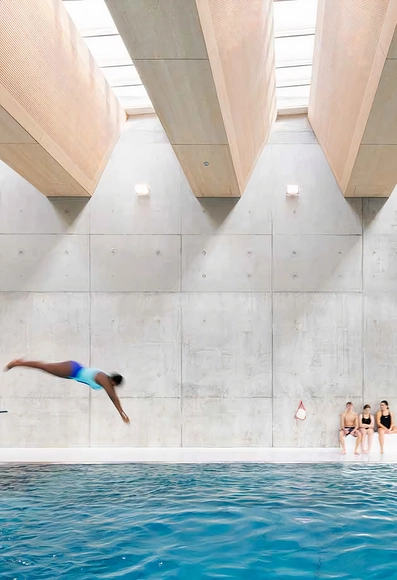
Below, we have provided a roundup of indoor pools that highlight the application of water in different spaces, showing its relationship to materiality and use.
At first glance, building a pool right beside another body of water seems a little redundant. After all, why would someone choose to swim in a pool when they have a river or ocean to enjoy? However, for people with limited mobility and younger more inexperienced swimmers, natural bodies of water can prove both daunting and dangerous. Pools not only provide a controlled, secure space for them to enjoy aquatic activities, they also provide a connection with the surrounding landscape.
Water and architecture are closely related in habitat design, encompassing both functional and aesthetic aspects. The best option is to take this into account from the beginning of the design process, as implementing appropriate technologies and systems will determine water consumption. Currently, it is our responsibility as professionals to think about how we can reduce and recycle water consumption within our own homes. There are various ways to address these needs, such as installing low-flow devices in faucets and showers, dual-flush toilets, and efficient irrigation systems for landscaping. In addition, rainwater collection and reuse systems can be implemented for irrigation or house cleaning, which contributes to its conservation.
Water scarcity is one of the most stressful situations that one could ever endure. And yet, in India, a country that holds 18% of the total world population with only 4% of its water resources, this is a recurring struggle with notable numbers of Indian households having to manage water scarcity on a daily basis.
The yearly water cycle is a tough one, ranging from one extreme to another. Harsh monsoons and flood seasons turn into insufferable droughts, making it increasingly difficult to control and retain water resources. While most large-scale actions focus on consequences to agricultural and production sectors, the result is also recognizable at an individual household level. Therefore cumulative small-scale actions are relevant gateways for citizens (? people, designers) to mitigate the issue.
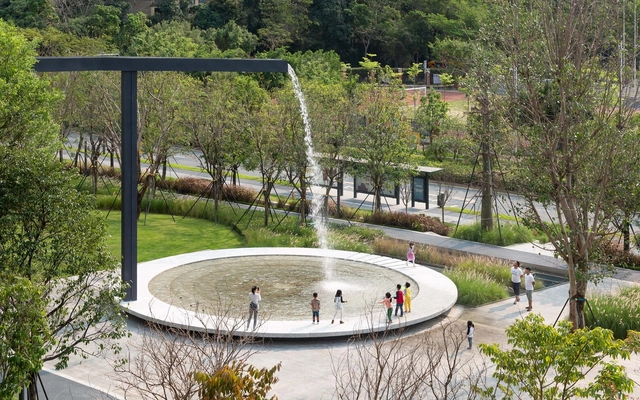
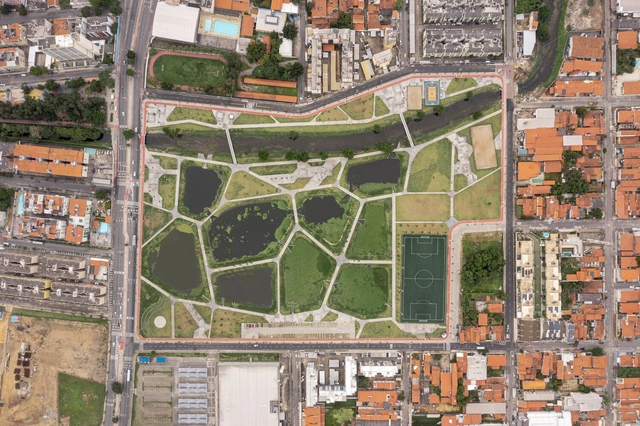
Integrating water into landscaping in unique and sustainable ways has become an increasingly relevant approach to recent projects. Proper use of this natural resource adds aesthetic value to green spaces and can also promote ecologically positive responses to the work. Looking for different perspectives and innovative solutions, we look for projects with different approaches that integrate water and landscape.
Architecture has always had a complementary - occasionally codependent - relationship with water. The Roman Domus, the Baths of Diocletian and Caracalla in Rome, and Villa Adriana in Tivoli are some prominent historical examples of how water influenced the design of compositional architecture. In a more modern context, Frank Llyod Wright designed a residential retreat in which water is its protagonist, redefining the relationship between man, architecture, and nature. Nowadays, as architects shifts their focus towards a more contextual, sustainable, and user-oriented practice, the use of water in architecture has become indisputable; cooling interior spaces, providing natural air conditioning when combined with plants, exuding a sense of tranquility, and serving as an organic decorative element.
June 8th was World Oceans Day 2023, which brought the theme 'Ocean Planet: Tides are Changing'. The purpose of the United Nations was to generate a "new wave of enthusiasm for caring and protecting the ocean and the entirety of our blue planet."
A new opportunity to reflect on the importance of preserving these vast aquatic ecosystems that cover more than 70% of the Earth's surface - and an opportunity to reflect on how architecture can contribute to their protection and conservation through the design of resilient coastal infrastructure, the development of marine energy technologies, sustainable design of coastal buildings, and regeneration of marine ecosystems.
An arid environment refers to specific regions characterized by a severe lack of available water and extremely dry weather conditions. More specifically, arid regions by definition, receive less than 25 centimeters of rain per year. In the immense vastness of arid environments, where extreme climates present significant challenges, the role of water in architecture takes on a new dimension.
For centuries, architects and designers dealing with harsh desert landscapes and the vital necessity of water have invented techniques, technologies, and new structures. Moreover, many creative approaches have been created to harness, collect, and cool water in arid environments.