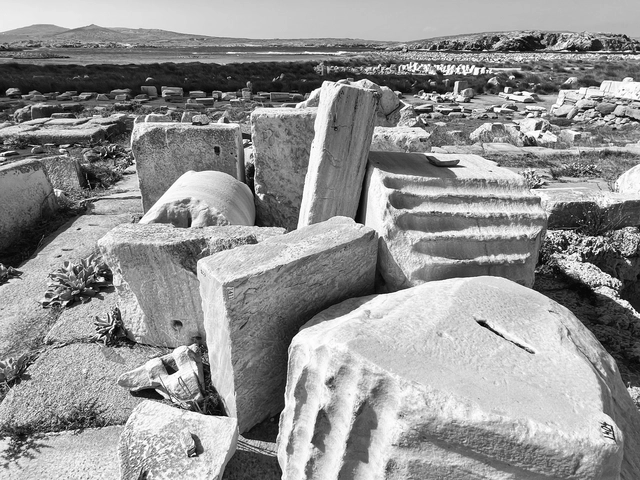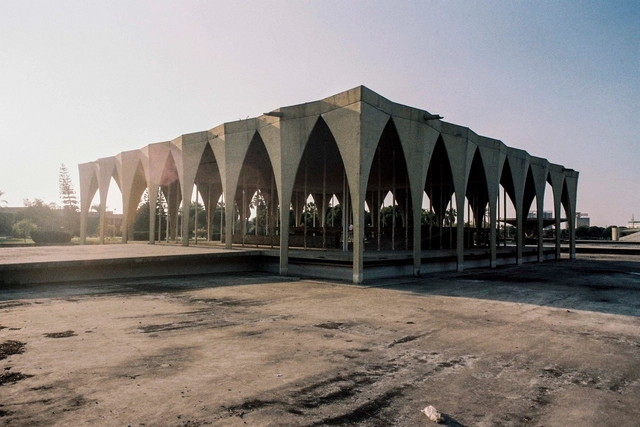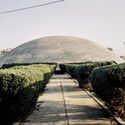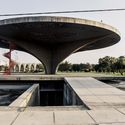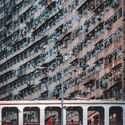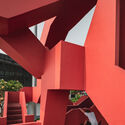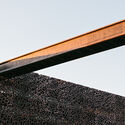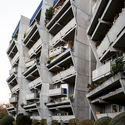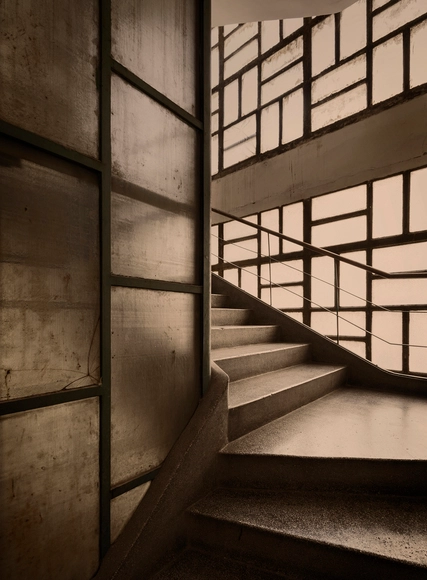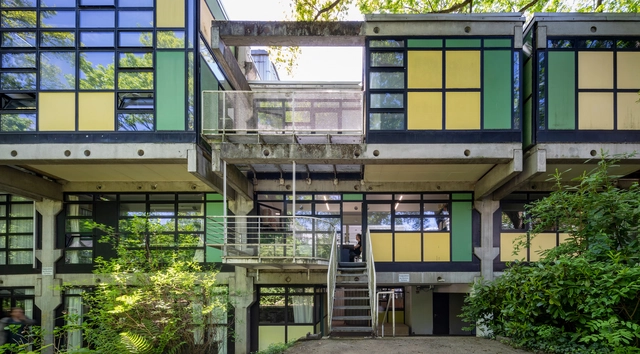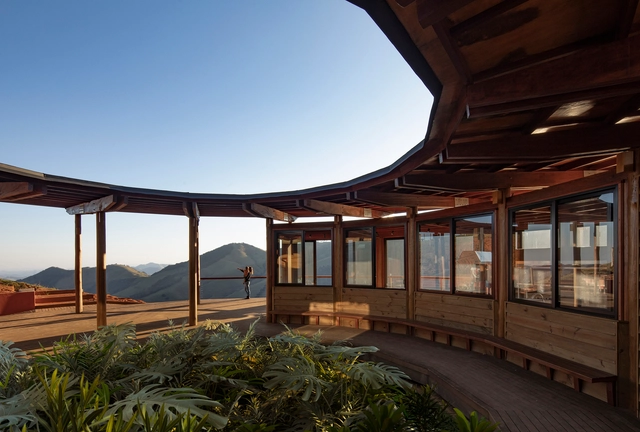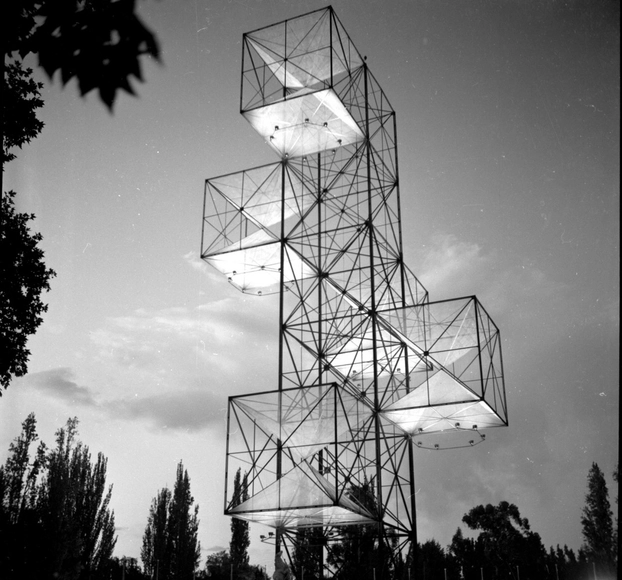
The link between architectural photography and archaeology in my work is rather personal. It has more to do with the experiences that can shape one's aesthetic vision, and less with a conscious underlying theoretical framework. A framework still exists of course, as does a particular mode of looking at structures and surface materiality that stems directly from the skill-set acquired through archaeological research.
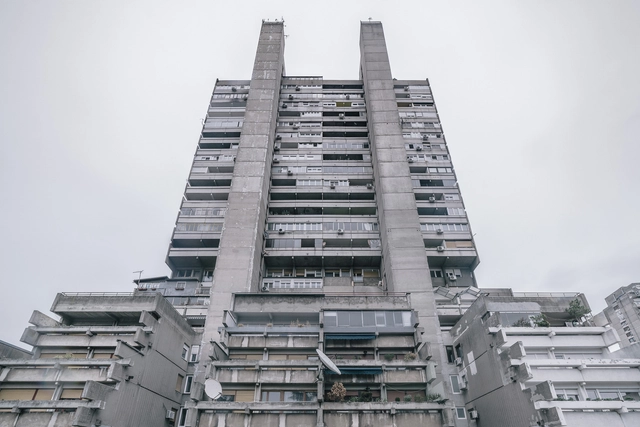
Brutalism is a deeply dividing architectural style - a subcategory of the Modernist movement that featured bare concrete finishes, unusual shapes, and an undoubtedly unique aesthetic. Whilst emerging into prominence in 1950s Great Britain, the most iconic examples of this architectural style are arguably found in Eastern Europe - particularly in the territory formerly known as Yugoslavia.
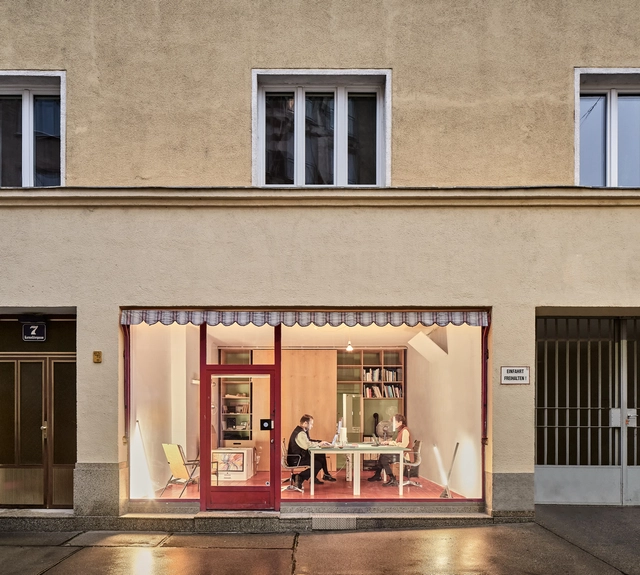
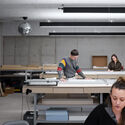
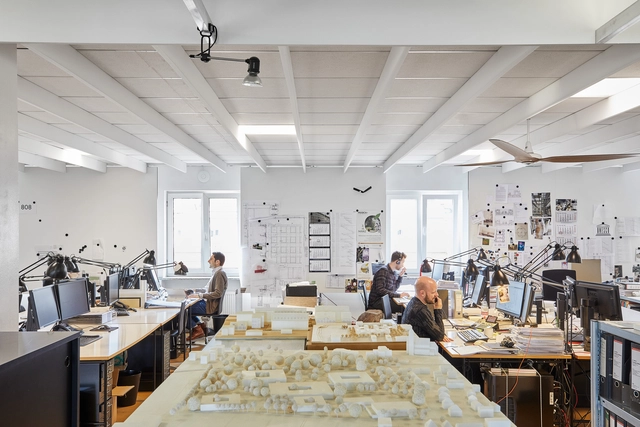
Architectural photographer Marc Goodwin adds one more photo series to his Atlas of Architectural Atmospheres, this time capturing 12 architecture offices in the Austrian capital of Vienna. The series includes the intimate workspaces of AllesWirdGut, Feld72 Architekten, querkraft architekten amongst others.
Goodwin has been working on this project for several years, and the collection holds photographs of work environments of architecture offices in Madrid, Frankfurt, Berlin, Istanbul, Seoul, and many more.
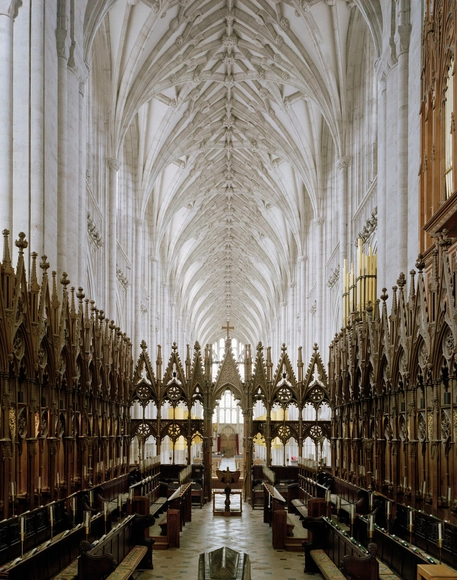
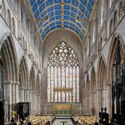
Using only natural light to document English cathedrals can turn into a logistical and technical challenge. However, Peter Marlow's photography has resulted in a remarkable series of iconic spiritual sites whose contemplative atmosphere is rarely accessible to others. Looking east with the camera towards the nave as the dawn light streamed through the main window opens a purist and mystical perspective to the time when these sacred structures were erected.
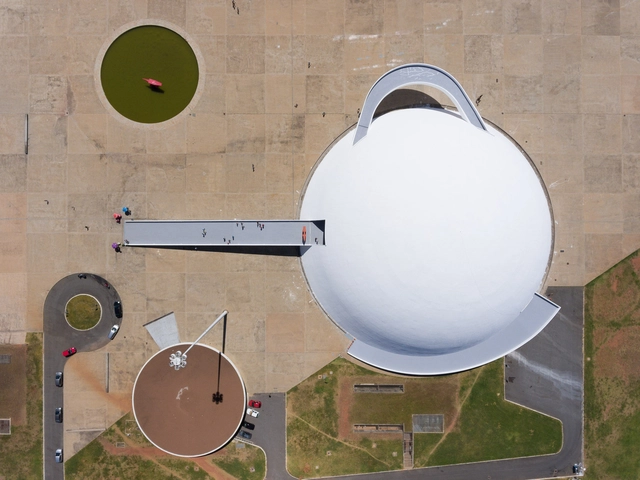
"What characterizes and gives meaning to Brasilia is a game of three scales... the residential or everyday scale... the so-called monumental scale, in which man acquires a collective dimension; the urbanistic expression of a new concept of nobility... Finally the gregarious scale, in which dimensions and space are deliberately reduced and concentrated in order to create a climate conducive to grouping... We can also add another fourth scale, the bucolic scale of open areas intended for lakeside retreats or weekends in the countryside." - Lucio Costa in an interview with Jornal do Brasil, November 8, 1961.
Photographer Joana França shared with us an impressive series of aerial photographs of the national capital of Brazil, Brasilia. The photoset is divided into four sub-series each presenting a scale: residential, monumental, gregarious and bucolic.
The tenth edition of the Architectural PhotographyAwards has announced its shortlist, selected from entries from 64 different countries. The photographs are divided into six categories: Exterior, Interior, Sense of Place, Buildings in Use, Mobile, with Bridges being this year’s theme, and Portfolio, focusing on the theme of Transport Hubs. The photographs will be displayed at the World Architecture Festival (WAF) Lisbon in Portugal from 30th November - 2nd December. The winners, two per category, will be announced by the end of the festival.
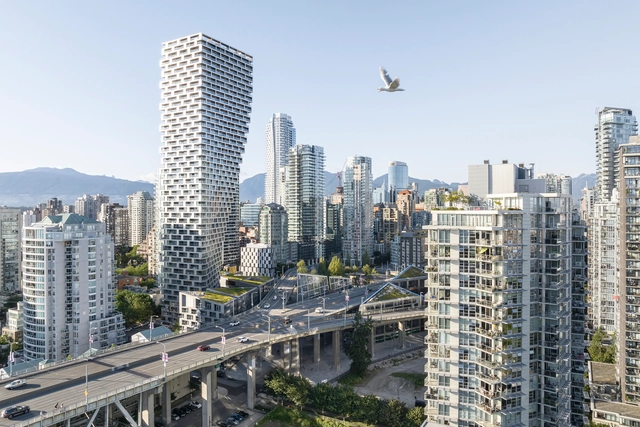
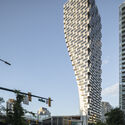
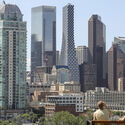
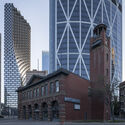
BIG – Bjarke Ingels Group has released a photo series of the Vancouver House and the Telus Sky towers, captured for the first time since their opening in 2020 during the pandemic. In a sort of "yin and yang," both skyscrapers are shaped by a curvilinear silhouette that involves the surrounding like a giant curtain revealing the building to the skyline.
The 220-meter-tall Telus Sky tower, and the 149 meters high Vancouver House, accommodate mixed-use offices and residential spaces, with connections to cycling and pedestrian pathways in their platforms. Moreover, both hold the highest level of Energy and Environmental Design. Vancouver House is the city's first LEED Platinum building, and TELUS in Calgary now occupies the largest LEED Platinum footprint in North America, with 70,725 square meters.
Although there is much conflict surrounding the term Brutalist, there are certain constants and patterns within the movement that offer a concrete idea of the movement and its place in contemporary architecture.
The buildings that adhere to Brutalism—an off-shoot of the Modern Movement that erupted between 1950 and 1970— stand out in part to their constructional sincerity- that is, keeping no secrets about the materials that went into their creation, their bold geometry, and the asperity of their textures and surfaces. Reinforced concrete is the predominant material in Brutalist works thanks to its prominent and dramatic texture, which is put on full display.
A city of electric architectural diversity – Belgrade’s Modernist structures give the Serbian capital a unique character. The grey of Belgrade’s Brutalist concrete is one of the city’s architectural signatures, existing in both complex volumetric facades and monolithic rectilinear forms. But while a plethora of architectural appraisals has been conducted on the external qualities of brutalist structures in Belgrade and beyond, photographic documentation of Belgrade’s brutalist interiors is relatively rare – something that photographer Inês d’Orey has sought to change in her most recent exhibition.
Architectural photography has historically been a male-dominated genre, as has architecture itself and the construction industry in general. But this scene is changing fast. Some of the most relevant names in architectural photography in the world are now women, and Brazil is no different. When facing gender barriers – one of the main difficulties being exposure to public space at unusual times, carrying valuable equipment, as photographer Ana Mello has already stated in an interview – these professionals are breaking paradigms and immortalizing the works with their sharp and sensitive eyes.
Image: achassignon via VisualHunt / CC BY-SA. Assembly with image of John Cunniff via Visual Hunt / CC BY
Jean-Luc Godard, through his films, talks about architecture almost as easily as he talks about cinema itself. In honor of the nouvelle vague icon, who passed away today at the age of 91, we revisit How Architecture Speaks Through Cinema.
There are several ways of making films. Like Jean Renoir and Robert Bresson, who make music. Like Sergei Eisenstein, who paints. Like Stroheim, who wrote sound novels in silent days. Like Alain Resnais, who sculpts. And like Socrates, Rossellini I mean, who creates philosophy. The cinema, in other words, can be everything at once, both judge and litigant. — Jean-Luc Godard [1]
Jean Nouvel'srecently completed towers, Tours Duo, redefined the Parisian skyline. Captured by Paul Clemence in his latest photo series, the project by Ateliers Jean Nouvel creates a singularity in relation to the rails that lead into the city's heart and define the Avenue de France. Established as a landmark on the East side of Paris and considered to be the city's future, Tours Duo is a mixed-use project that completes and modifies the unfinished context of this part of the city.
Over the years, ArchDaily has brought us the most innovative architecture projects through the eyes of creative specialized photographers. Their captures bring us closer to the works, reflect the vision of the architects and, above all, transmit and generate the most varied emotions.
From conversations with these talented photographers, we can understand, at least a little, what they feel when facing an architectural project with a camera in hand.
The Second Studio (formerly The Midnight Charette) is an explicit podcast about design, architecture, and the everyday. Hosted by Architects David Lee and Marina Bourderonnet, it features different creative professionals in unscripted conversations that allow for thoughtful takes and personal discussions.
A variety of subjects are covered with honesty and humor: some episodes are interviews, while others are tips for fellow designers, reviews of buildings and other projects, or casual explorations of everyday life and design. The Second Studio is also available on iTunes, Spotify, and YouTube.
This week David and Marina are joined by Joe Fletcher, Architectural Photographer to discuss his transition from painting to photography; his experience with a formalized education in photography; how an architectural photographer can influence architects and architecture; his process; the distillation of architecture through photography; why photogenic buildings are not always comfortable to be in; and more.
The Second Studio (formerly The Midnight Charette) is an explicit podcast about design, architecture, and the everyday. Hosted by Architects David Lee and Marina Bourderonnet, it features different creative professionals in unscripted conversations that allow for thoughtful takes and personal discussions.
A variety of subjects are covered with honesty and humor: some episodes are interviews, while others are tips for fellow designers, reviews of buildings and other projects, or casual explorations of everyday life and design. The Second Studio is also available on iTunes, Spotify, and YouTube.
This week David and Marina are joined by Photographer Iwan Baan to discuss his career, how he became a most sought-after architectural photographer, working with Rem Koolhaas, his process, his style of architectural photography, documenting structures during construction and after completion, vernacular architecture, and more.