-
Architects: STUDIO KP2
- Area: 3200 ft²
- Year: 2026
-
Manufacturers: STUDIO KP2

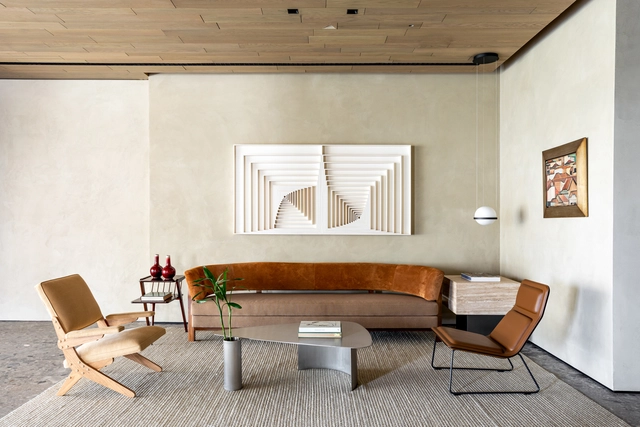
When defining the aesthetic of a space, whether interior or exterior, architects and interior designers should first ask themselves what the needs of its future inhabitants are or will be. Dialogue with users is essential to establishing the style of these spaces, which shapes their physical environment through composition, color, form, and furniture.
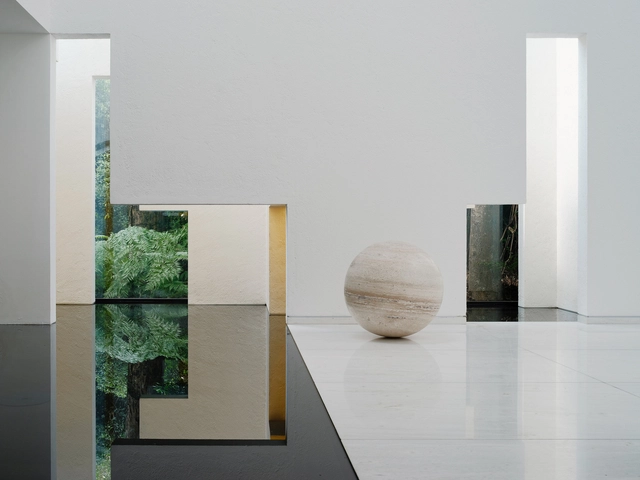
From fire in caves to street lighting in cities, lighting has evolved steadily alongside technological advancements—and in recent years, it has begun to change even more significantly due to a growing awareness of its impact on the environment and human health. Today, automated LEDs are commonplace in workspaces and homes, improving both energy efficiency and well-being and comfort. Meanwhile, public squares and streets are increasingly integrating sensors and software configurations to enhance safety and mobility. With the global urban population projected to reach 68% by 2050, urban lighting will undoubtedly become an even more critical factor to consider.
However, to make the most of these opportunities, we must view lighting as part of a holistic vision and work together to create better solutions. What does the future of lighting look like? We posed this question to our readers. After reviewing a vast number of comments and opinions from construction professionals, students, and architecture enthusiasts alike, it was surprising to find so much common ground and shared visions. There is a clear consensus on the importance of going a step beyond the status quo without increasing light pollution—while being more mindful of all living things. Discover the main perspectives below.
.jpg?1597294332&format=webp&width=640&height=580)
The state of Baja California Sur is located in northwestern Mexico. It is bordered by the state of Baja California to the north, the Pacific Ocean to the west, and the Sea of Cortez to the east, harboring some of the most stunning landscapes and coastlines in the country. Thanks to its prime location, Baja California Sur is one of the most visited states in the nation.


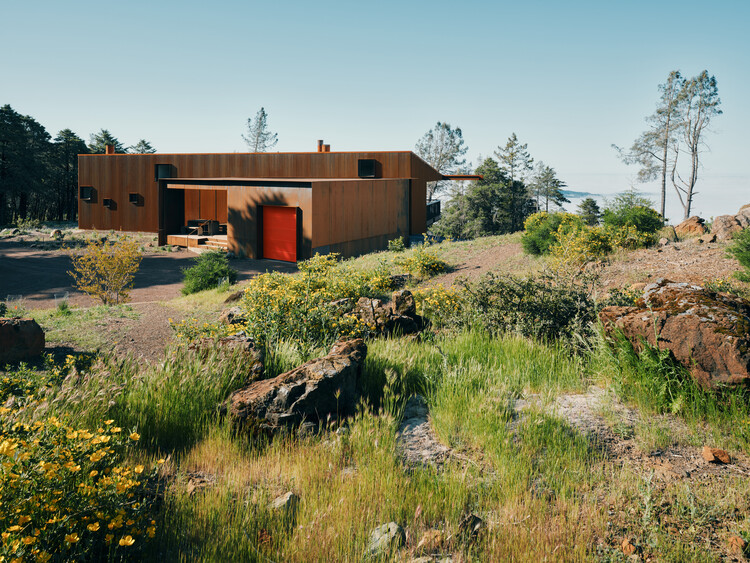
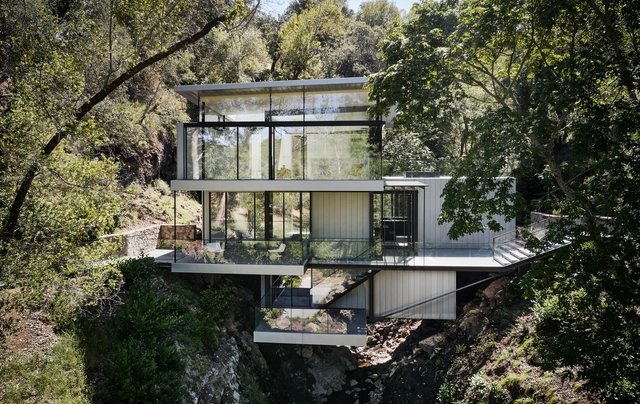
The relationship between constraint and design excellence is well established in architectural theory, yet often remains underexplored in discussions of site-specific practices. When architects encounter extreme topography, they face a fundamental choice: transform the landscape to accommodate the building, or modify the building to fit the landscape. The first approach is straightforward and requires the builder to cut, fill, terrace, and build on level ground. This choice, however, carries cascading consequences as any amount of earth moved may destabilize slopes, disrupt drainage, and fracture ecosystems. A growing body of innovative architectural work demonstrates an alternative to earth-moving and retaining walls.


Pantone Color Institute has introduced PANTONE 11-4201 Cloud Dancer as the Color of the Year 2026, a soft white selected for its understated presence and sense of visual calm. The hue, described as balanced and airy, appears against a broader cultural context in which designers and creatives are reassessing the role of clarity, simplicity, and spatial quietude. Framed as a color that resembles a blank canvas, Cloud Dancer signals a renewed interest in environments that support reflection and measured creativity rather than constant acceleration.
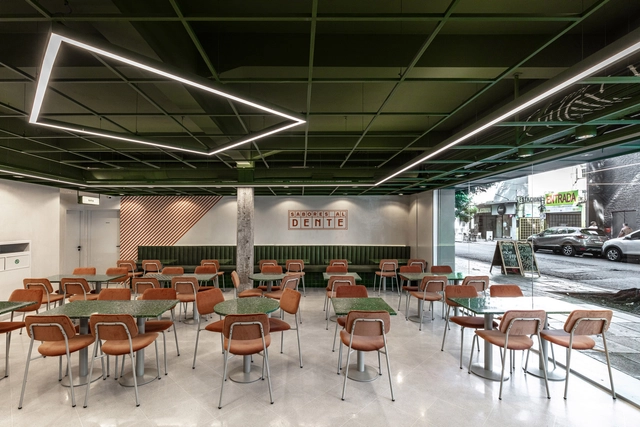
In contemporary interior architecture, service provisions—mechanical, electrical, HVAC, plumbing—are almost always treated as elements to be concealed. Thickened wall cavities, extensive dropped ceilings, and, in regions where solid construction such as brick or concrete prevails, furred-out walls are routinely employed to hide these systems. This approach has become so normalized that it often forms the starting assumption for spatial planning, inherently constraining imagination and reducing the range of spatial possibilities. The priority shifts towards covering-up, rather than exploring how these systems might coexist visibly within a design language.
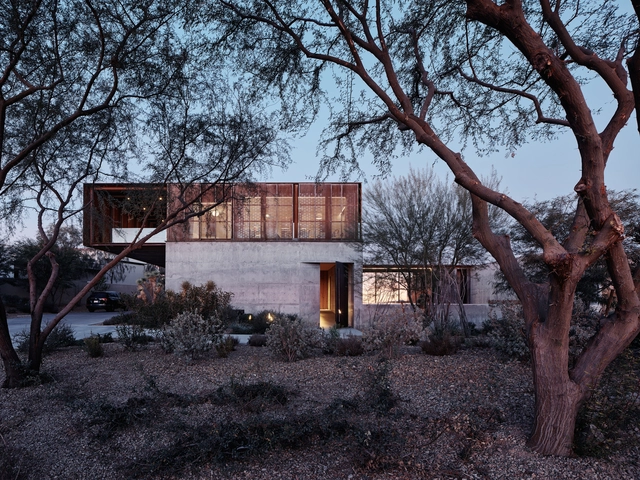
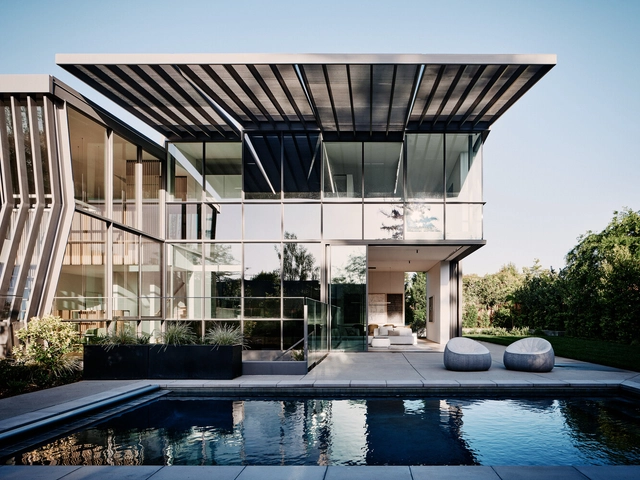
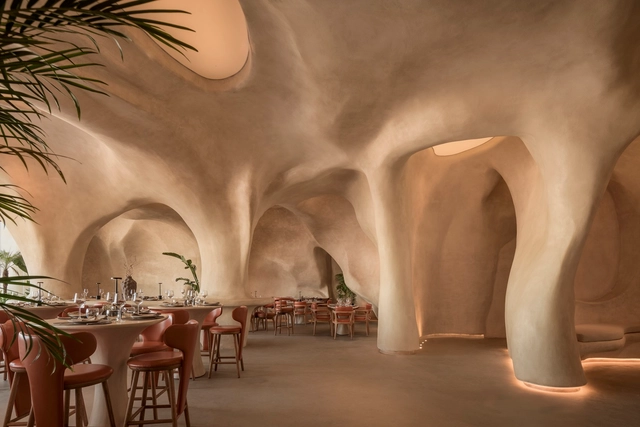
In recent years, continuous material finishes enveloping interior spaces have become increasingly prominent, particularly in branding-focused retail environments. A continuous interior refers to using what are typically liquid-applied materials that are cured to create seamless, uninterrupted surfaces, eliminating the appearance of joints and seams—at least during the initial application. A growing range of products now offer various color options, textures, and practical properties, making these finishes more versatile. Interestingly, the aesthetic effect of such interiors is uncanny to the rise of 3D rendering software, where the seamless, fluid look mirrors the smooth, idealized spaces typical of digital renderings. This effect also contributes to a sense of scalelessness, as the absence of visible seams or joints makes it harder to discern the actual size of a space, often giving the illusion that the interior is larger than it is.




.jpg?1597294332)