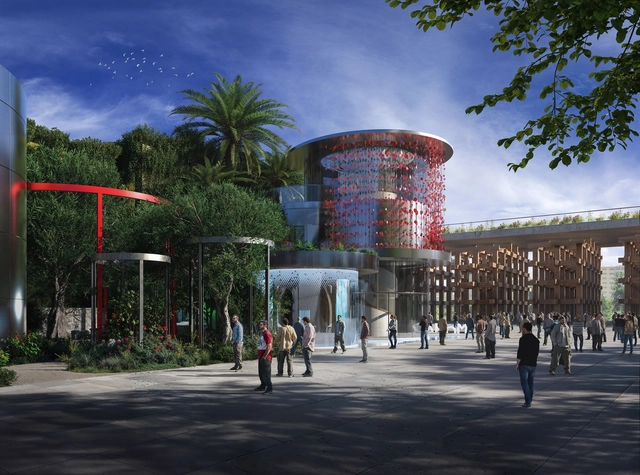
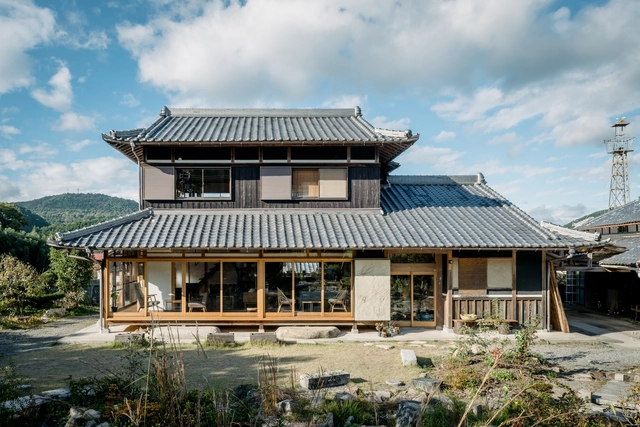
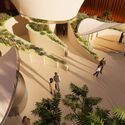
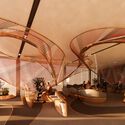
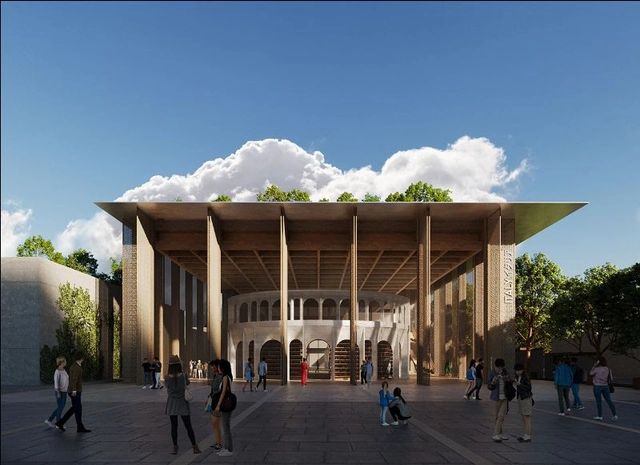
The MonacoPavilion at Expo 2025 Osaka explores the fusion of Mediterranean and Japanese landscapes, creating a unique cultural dialogue through architecture and landscape design. The pavilion's design, centered around a harmonious blend of Mediterranean and Japanese garden elements, embodies Monaco's global initiatives and its commitment to environmental stewardship. Reflecting the Expo's theme, "Take Care of Wonder," the pavilion invites visitors to experience a captivating and serene environment that celebrates both nature and culture.
The relationship between architecture and naval design has been a fascinating interplay of form and function that has evolved significantly. Both disciplines have a shared history of innovation, aesthetics, and functionality that have informed and inspired each other. This "love affair" has seen architects drawing inspiration from boats, particularly in the modernist era when ships' streamlined, efficient designs influenced the aesthetic of buildings. Conversely, architectural principles have also been adapted to enhance the functionality and form of boats, demonstrating a reciprocal exchange that continues to shape both disciplines.
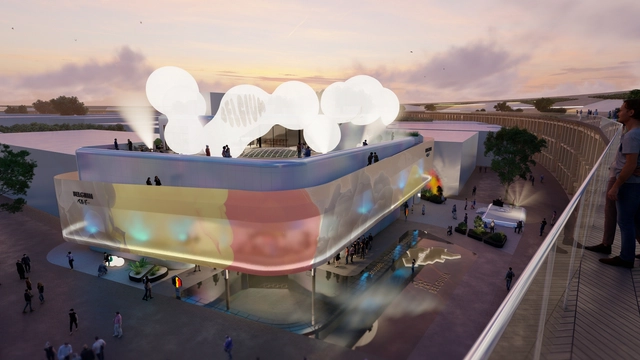
The Belgian Pavilion for Expo 2025 Osaka, designed by the winning consortium of Carré 7, Beyond Limits, One Designs, Pirnay, and Poly-Tech, embraces the Expo's overarching theme, "Designing the Society of the Future, Imagining Our Life of Tomorrow." With a focus on "Saving Lives," the pavilion' explores the universal significance of water and its vital role in creating and sustaining life. By highlighting water's interconnectedness with all living beings through the metaphor of cells, the pavilion aims to reflect humanity's relationship with the environment and the importance of preserving it for future generations.
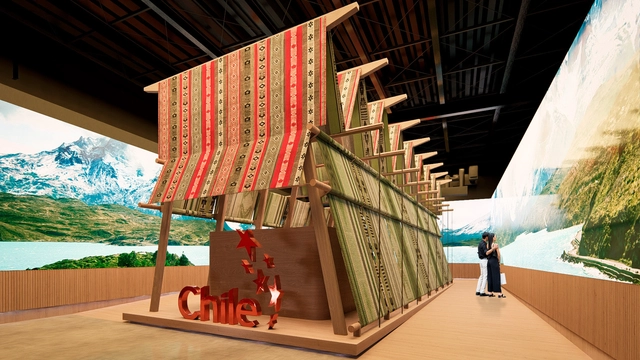
The Chile Pavilion, recently revealed by Constructo Architects for Expo Osaka 2025, blends contemporary industrial design and traditional Mapuche textile artistry. Constructed using industrialized wood (CLT) and featuring handwoven textiles, the pavilion emphasizes both innovation and cultural heritage. The structure is designed to be a "nomadic pavilion," easily assembled and disassembled, allowing it to travel from Chile to Japan and back.
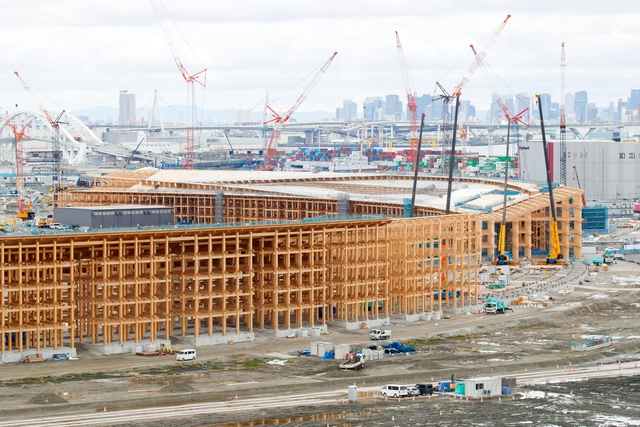
In preparation for Expo 2025 Osaka, Kansai, Japan, The "Grand Ring," designed by renowned architect Sou Fujimoto, has reached a significant milestone. As of August 2024, the wooden construction of this structure is now complete, fully connecting the 2-kilometer ring into a continuous loop. This achievement is a crucial step in the development of the Expo site on Yumeshima, an artificial island on Osaka's waterfront, where the Expo will take place from April 13 to October 13, 2025.
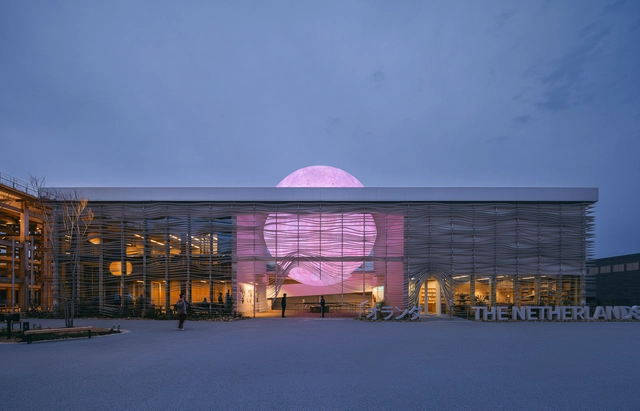
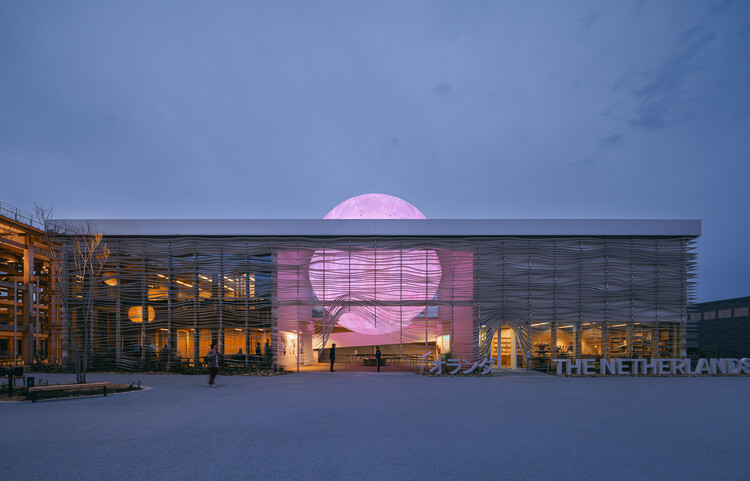
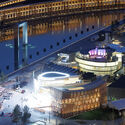
The Kingdom of the Netherlands's pavilion, presented at the Expo 2025 Osaka, Kansai, Japan, features the theme, "Common Ground: Creating a New Dawn Together," emphasizing the Netherlands' dedication to fostering mutual understanding to address global challenges. Designed by RAU Architects, the pavilion's circular design features a prominent illuminated sphere at its center, symbolizing a new era of unlimited clean energy, akin to a "man-made sun" signaling a future powered by sustainable resources.
More than half of the world's population resides in urban areas, with over 4 billion people depending on cities as their main environment. According to the United Nations’ latest report on populations in cities, this number is expected to continue to increase over the next 50 years, prompting cities worldwide to strive to find better ways to accommodate their growing population while transitioning to more sustainable urban practices. To highlight this responsibility, the United Nations has declared July 11th the World Population Day.
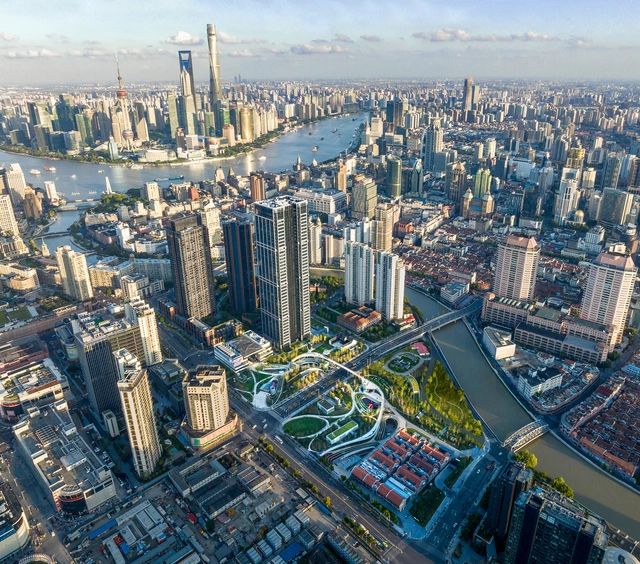
Under this year’s theme, “To Leave No One Behind, Count Everyone,” the UN aims to also draw attention to the importance of data collection for reflecting societal diversity. The growth of world cities is part of this equation as an important measure for understanding global population trends. The following list presents the top 20 cities worldwide in 2024, ranked by the population size of their metropolitan areas. Comparing the results to the previous editions, the only cities to reduce their size are the two cities from Japan, Tokyo and Osaka. The highest growth rates can be observed in African mega-cities, Kinshasa and Lagos, while China continues to be the most present country in the list, with 5 metropolises present in the top 20: Shanghai, Beijing, Chongqing, Tianjin, and Guangzhou.
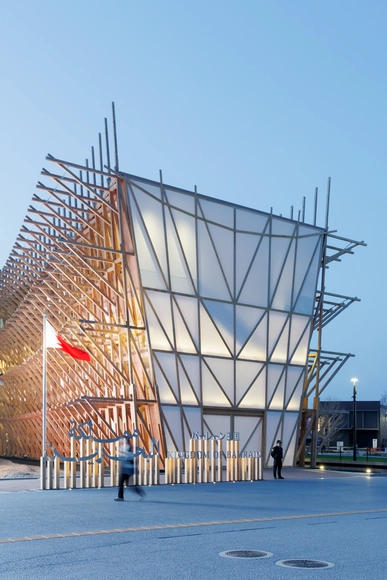
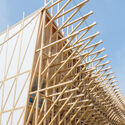
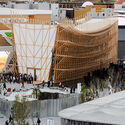
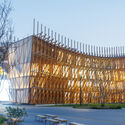
Lebanese French architect Lina Ghotmeh, leading the Paris-based studio Lina Ghotmeh – Architecture, has revealed the first photographs of the National Pavilion of the Kingdom of Bahrain for the Expo Osaka 2025. The design draws inspiration from the traditional Bahraini dhow boats, employing the country's historical boat-building technologies to showcase Bahrain's craftsmanship and manufacturing heritage. The pavilion is also a nod to the hosts of the World Expo, drawing parallels with Japanese wood artistry. Commissioned and organized by the Bahrain Authority for Culture and Antiquities, this marks the country's fourth contribution to the World Expo. The pavilion is located in the "Empowering Lives" zone, spanning 995 square meters and inviting visitors to engage through a sensory exhibition experience.
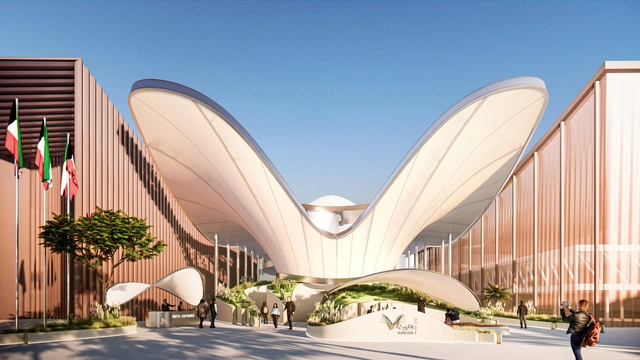
The State of Kuwait has revealed the design of the upcoming Kuwait Pavilion to take shape at World Expo 2025 in Osaka. Designed by architectural firm LAVA (Laboratory for Visionary Architecture), the temporary structure is envisioned as a “Visionary Lighthouse” representing Kuwait’s embrace of Arab cultures, arts, and social works. The pavilion, developed with main partner and contractor NUSSLI, also offers a response to the exhibition’s overarching theme, "Designing Future Society for our Lives", striving to strengthen the relationship between Kuwait and Japan and foster conversations about visions of a sustainable future.
Mario Cucinella Architects has just revealed the design of the Italian Pavilion for Expo Osaka 2025. Envisioned as a dynamic entity, the pavilion aims to foster knowledge and innovation through the interplay of different generations and cultures. It will serve as a collaborative repository of Italian expertise, encompassing artistic, scientific, entrepreneurial, and social experiments. The display is designed around Italy's cultural treasures and aims to highlight, deconstruct, and then reinterpret them in a contemporary manner.