1. ArchDaily
  2. Houses

Houses: The Latest Architecture and News

Buildner and Dubai Celebrate Global Visionaries in €250K House of the Future Contest

 | Sponsored Content

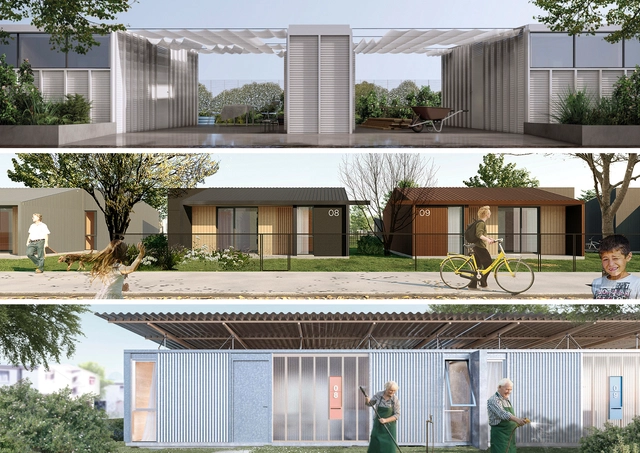
Buildner, in partnership with the Government of Dubai, has announced the results of the 2024/25 House of the Future competition. Following the success of its inaugural edition in 2023, this second edition invited architects and designers worldwide to develop an affordable, expandable, and forward-thinking prototype home tailored to the evolving needs of Emirati families.

Organized in collaboration with the Mohammed bin Rashid Centre for Government Innovation and the Sheikh Zayed Housing Programme, the competition offered a total prize fund of €250,000 (1 million AED). Winning entries are now being reviewed for potential inclusion in the UAE's national catalogue of housing designs, which provides citizens with a selection of pre-approved, innovative home models.

Foster + Partners Gains Approval for Timber Residential Project in Switzerland

Foster + Partners has received planning permission for a new timber residential building in Gstaad, Switzerland. Designed as a house in the Alpine resort town, the project combines residential use with exhibition, storage, and social spaces. According to the architects, it will be the first purpose-built facility in Gstaad to accommodate the specialised requirements of fine art, cars, fashion, and antique collections.

Foster + Partners Gains Approval for Timber Residential Project in Switzerland - Imagen 1 de 4Foster + Partners Gains Approval for Timber Residential Project in Switzerland - Imagen 2 de 4Foster + Partners Gains Approval for Timber Residential Project in Switzerland - Imagen 3 de 4Foster + Partners Gains Approval for Timber Residential Project in Switzerland - Imagen 4 de 4Foster + Partners Gains Approval for Timber Residential Project in Switzerland - More Images+ 1

‘T’ Space Presents New Hudson Valley Houses by Steven Holl, Toshiko Mori, and Others at the Archive Gallery

'T' Space will open New Hudson Valley Houses on September 7 at the Archive Gallery in Rhinebeck, New York. The exhibition gathers ten recently designed homes by architects Stan Allen, Garrick Ambrose, Steven Holl, Toshiko Mori Architect, and MOS, all located within three hours of New York City. Rather than showcasing completed works through photography, the presentation relies exclusively on models and drawings, inviting visitors into the architectural process and the conceptual foundations behind each project.

‘T’ Space Presents New Hudson Valley Houses by Steven Holl, Toshiko Mori, and Others at the Archive Gallery - Image 1 of 4‘T’ Space Presents New Hudson Valley Houses by Steven Holl, Toshiko Mori, and Others at the Archive Gallery - Image 2 of 4‘T’ Space Presents New Hudson Valley Houses by Steven Holl, Toshiko Mori, and Others at the Archive Gallery - Image 3 of 4‘T’ Space Presents New Hudson Valley Houses by Steven Holl, Toshiko Mori, and Others at the Archive Gallery - Image 4 of 4‘T’ Space Presents New Hudson Valley Houses by Steven Holl, Toshiko Mori, and Others at the Archive Gallery - More Images+ 4

Shaping Spaces: The History and Impact of Fireplaces in Architecture

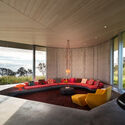
Fireplaces have profoundly shaped architectural design, influencing how spaces are organized, experienced, and perceived. More than merely functional elements, they represent symbols of power, community, comfort, and culture, tracing humanity's evolving relationship with the built environment. From the primitive hearths that characterized early human settlements to the sophisticated ecological designs of contemporary architecture, fireplaces have reflected broader cultural, social, and technological changes, serving as enduring focal points in the spatial narrative of architecture. Scholars have frequently explored the intimate relationship between architecture and fire. Luis Fernández-Galiano, in his seminal work "Fire and Memory: On Architecture and Energy" argues that architecture fundamentally mediates the relationship between humanity and energy. By understanding how these structures have shaped spaces, symbolized cultural values, and driven technological innovation, we gain deeper insight into architecture's complex interplay between form, function, and meaning.

Shaping Spaces: The History and Impact of Fireplaces in Architecture - Imagen 1 de 4Shaping Spaces: The History and Impact of Fireplaces in Architecture - Imagen 2 de 4Shaping Spaces: The History and Impact of Fireplaces in Architecture - Imagen 3 de 4Shaping Spaces: The History and Impact of Fireplaces in Architecture - Imagen 4 de 4Shaping Spaces: The History and Impact of Fireplaces in Architecture - More Images+ 21

Raw, Refined, and Resilient: 14 Projects Showcasing Concrete Block as a Design Language

Subscriber Access | 

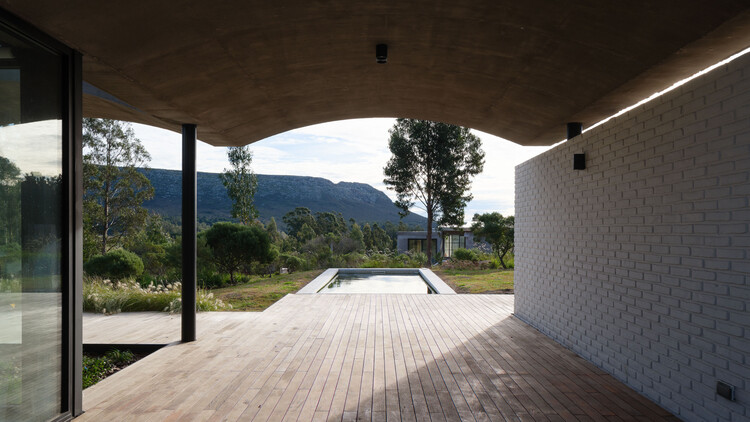
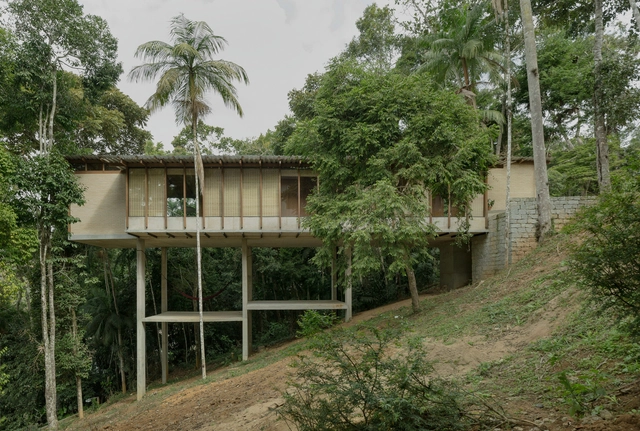
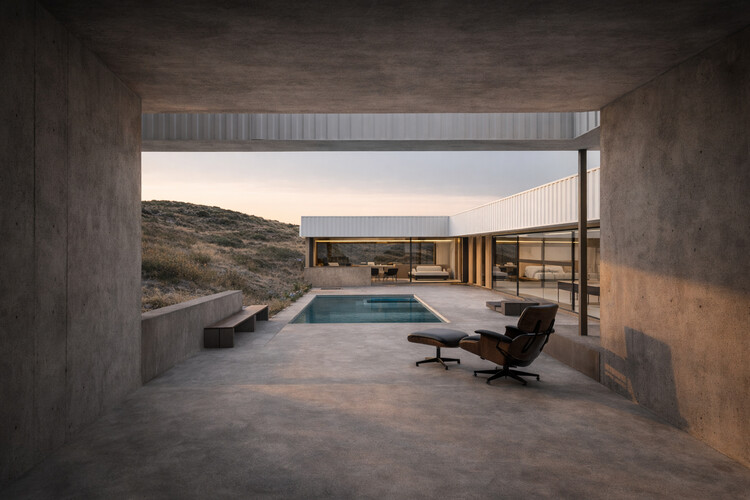
Once seen as purely utilitarian, bare concrete blocks have increasingly become part of an architectural transformation. In regions where warm climates make insulation unnecessary, this material can be left exposed, free of cladding, finishes, or embellishment. In doing so, texture, bond, and form can define the building's character and simplify construction while creating new opportunities for expression and identity. This also creates a platform to explore the concept of material honesty. Beyond its aesthetic value, using a material "as is" can significantly reduce construction costs and minimize maintenance during the building's lifespan.

 Raw, Refined, and Resilient: 14 Projects Showcasing Concrete Block as a Design Language - 1 的图像 4 Raw, Refined, and Resilient: 14 Projects Showcasing Concrete Block as a Design Language - 2 的图像 4 Raw, Refined, and Resilient: 14 Projects Showcasing Concrete Block as a Design Language - 3 的图像 4 Raw, Refined, and Resilient: 14 Projects Showcasing Concrete Block as a Design Language - 4 的图像 4 Raw, Refined, and Resilient: 14 Projects Showcasing Concrete Block as a Design Language - More Images+ 11

Next-Gen Living: Customizable, High-Quality Bathroom Design Within Reach

 | Sponsored Content

Every detail in the construction of an environment has a significant impact. The layout, composition, furniture, color range, and materials work together to create a cohesive and immersive experience in the perception of space. In bathroom design, this integration extends beyond aesthetics, aiming to ensure that every choice— from materiality to the form of furniture— contributes to economically viable, functional spaces with an aesthetic that doesn't rely on exclusivity. Architects and designers can shape diverse settings without sacrificing quality or visual coherence by focusing on cost-effectiveness and well-resolved solutions. In this sense, a democratic approach to design becomes a tool for creating environments where quality, functionality, and affordability are core principles.