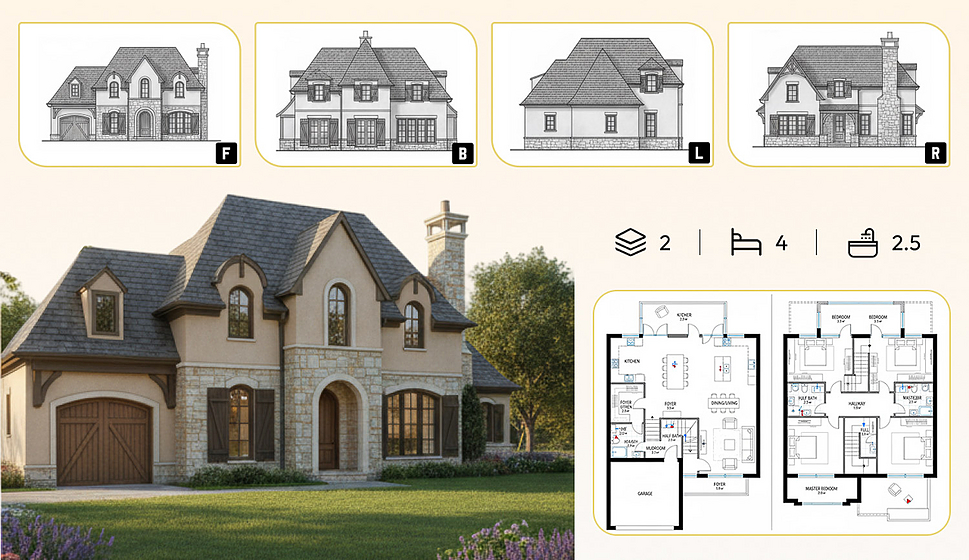
This guide covers a workflow that moves from project parameters to generated floor plans, 3D perspective views, exterior design exploration, and site context visualization, using AI tools in place of preliminary CAD and rendering work.
This guide covers a workflow that moves from project parameters to generated floor plans, 3D perspective views, exterior design exploration, and site context visualization, using AI tools in place of preliminary CAD and rendering work.
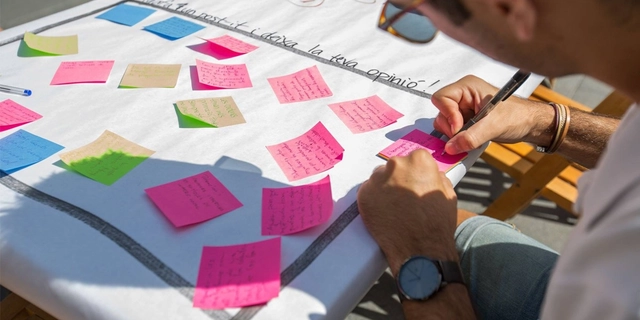

In recent years, we have witnessed the rise of the concept of “citizen participation,” particularly in the political sphere. As is often the case, this surge is not without controversy and carries inherent risks. Much like what occurred with the term “sustainability,” participation can be relegated to a smoke screen used to conceal specific types of political despotism. A clear example of this can be found in the Netherlands; in September 2013, King Willem-Alexander announced “the transition to a participatory society” to justify dismantling the welfare state through neoliberal policies and some of the harshest budget cuts the country has ever faced.
Clearly, urbanism and urban planning have not been immune to this trend. While the development of statutory urban planning instruments (General Plans, Partial Plans, Special Plans, etc.) is legally required to incorporate public participation mechanisms, the reality is that these are often reduced to public comment and exhibition periods. Consequently, actual participation is replaced by mechanisms that belong strictly to the realm of communication and information sharing.

A few weeks ago, Sweden inaugurated a road that recharges commercial and passenger vehicle batteries while driving. Named the eRoadArlanda project, the two-kilometer route was built outside Arlanda Airport in Stockholm, the country's capital.

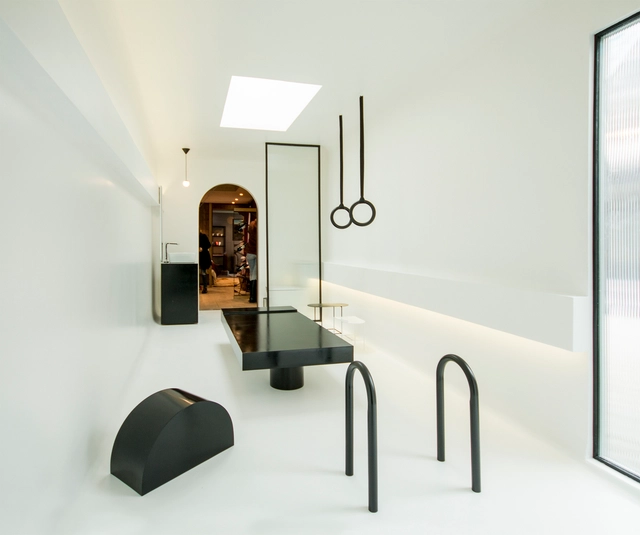
Modern and surreal, yet without compromising on functionality and comfort, the bathrooms designed by emerging architects and designers at the current Casa FOA interior design exhibition in Santiago, Chile, seek to rethink a traditional space within an innovative context, aiming to trigger a different experience for both users and spectators.
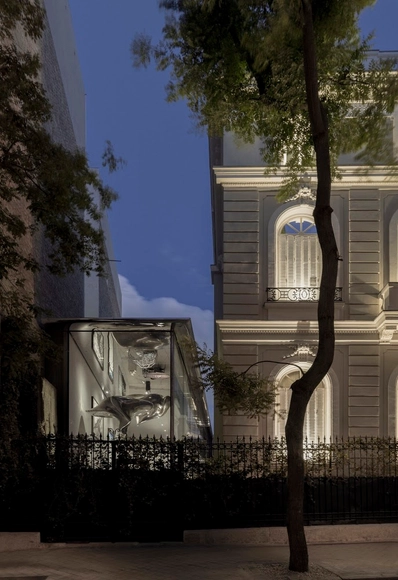
The Norman Foster Foundation is one of 21 institutions and individuals awarded Spain's 2018 Gold Medal for Merit in Fine Arts. Granted by the Spanish government through the Ministry of Culture and Sport, the distinction recognizes those globally who "have stood out in the field of artistic and cultural creation, or have rendered outstanding services in the promotion, development, or dissemination of art and culture, or in the conservation of artistic heritage."
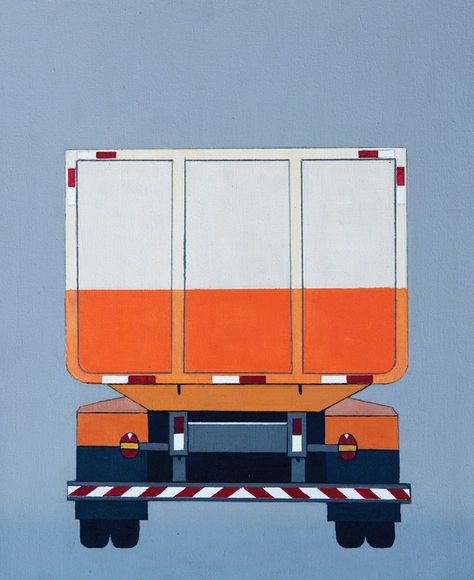

The construction industry consumes more resources than any other sector, and the weight of the Technosphere—the urban and planetary stratum of everything we produce—reaches 30 trillion tons. Engineers, architects, and designers are at the heart of the Anthropocene.
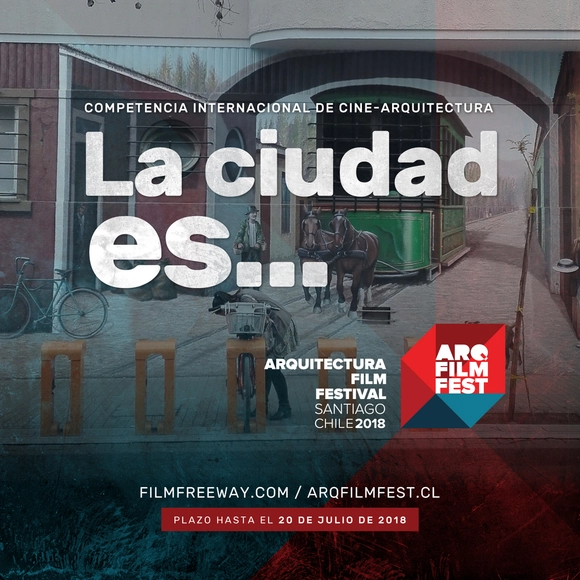
The call for entries for the international film competition on architecture, the city, and urban life—"The city is..."—organized by the Santiago Architecture Film Festival (ArqFilmFest), closed successfully with the submission of 1,518 audiovisual productions from around the world.
According to the organizers, they received more than 100 films from the United States (183), Iran (166), and India (160), and over 50 from Turkey (79), the United Kingdom (74), Italy (60), Brazil (58), and France (50), among many other countries across all continents.
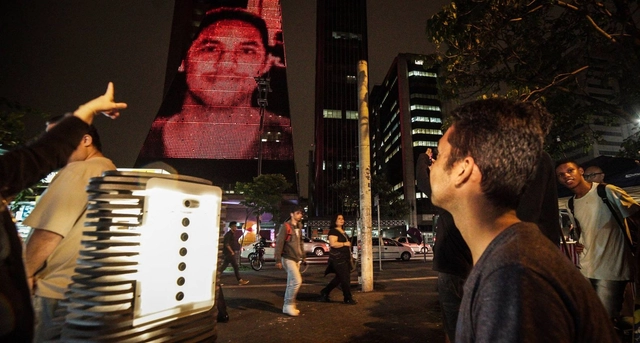
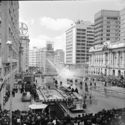
Among the images of protests along São Paulo’s Paulista Avenue that have circulated in recent years, the most recurring certainly featured as their backdrop the iconic 1979 Fiesp-Ciesp-Sesi building by architect Rino Levi, which fittingly displayed the Brazilian flag.
Since December 2012, this building has housed Brazil’s first "media facade", the Sesi-SP Digital Art Gallery, which showcases new forms of digital art expression across its immense urban screen.

The National Academy of Architecture of Monterrey, the Nuevo León Association of Architects, and the Monterrey Region Urbanism Society AC presented a list of proposals for election winners to champion, promote, or implement—depending on the office to which they are elected—in order to collectively build cities where the inhabitants' quality of life is the priority. Read on for the full list.
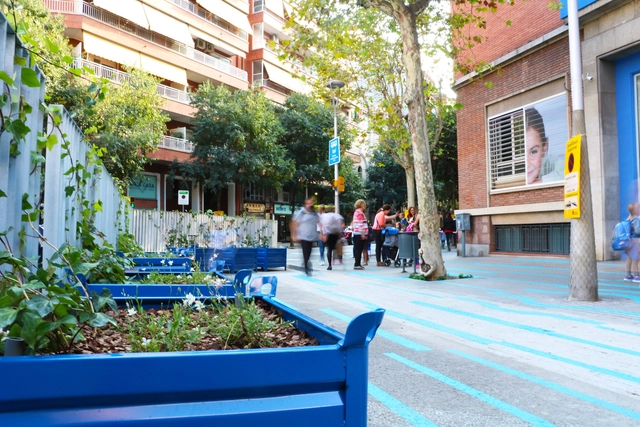
Although an internationally recognized urban planning benchmark, Barcelona's Eixample faces multiple challenges typical of a city in constant change—an urban landscape vastly different from the one envisioned by Ildefons Cerdà.
Against this backdrop, the Barcelona-based firm Leku Studio has developed a project to "humanize" several school environments in the Eixample. Through reversible urbanism, the firm is testing new uses and configurations that foster more humane, welcoming spaces, bringing the urban scale closer to children. "They must be community spaces, acting as extensions of the school; spaces for play, greenery, history, and the local life of the neighborhoods," explain Jokin Santiago Elorriaga and Marta Sola Páramo, co-founders of Leku Studio.


In this piece, architect Luis Bretón, from the ARKRIT Collective, presents an in-depth article on the life and work of the recently deceased architect Will Alsop.
On May 12, British architect Will Alsop passed away after a brief illness. He was the most polemical, controversial, and irreverent architect in the service of Her Majesty.
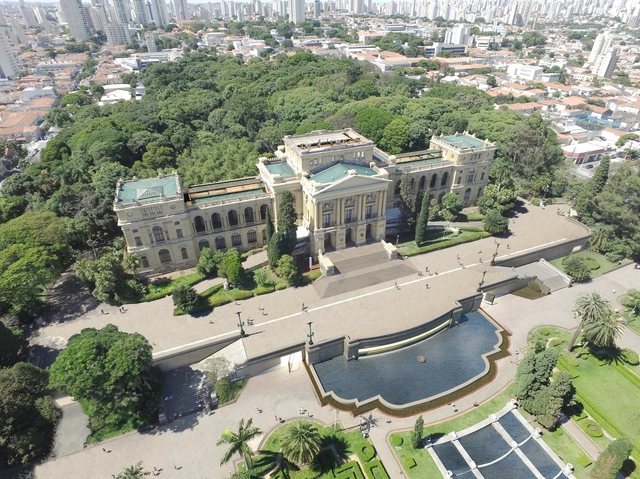
On December 18, the winning projects of the national architecture competition for the restoration and modernization of the monument building of the Museu Paulista (MP), located in the Ipiranga neighborhood of São Paulo, were announced. The competition was launched on September 7, as part of the "Museu do Ipiranga em Festa" celebrations. Out of a total of 13 entries, nine qualified to participate. The evaluation criteria included aspects such as rationality, functionality, and technical feasibility; respect for the building's material, structural, compositional, and documentary characteristics; creativity, aesthetic solution, and design innovation; compliance with specific uses and circulation and accessibility solutions; and the adoption of environmental sustainability criteria and solutions.
The winning project was selected by a judging committee comprising 11 members appointed by the competition promoter, including representatives from federal, state, and municipal heritage preservation agencies, the Brazilian Institute of Museums (Ibram), and institutional partners such as the Institute of Architects of Brazil (IAB) and the Council of Architecture and Urbanism of São Paulo.

Balkrishna Doshi designed numerous projects throughout his career, yet his name remains relatively unfamiliar in the Western world. Directed by Premjit Ramachandran, the documentary “Doshi” offers viewers insight into the design philosophy of the renowned Indian architect through his own reflections, while also showcasing several of his works. Filmed as a series of candid conversations, the documentary reveals Doshi as a highly original and creative architect who, even in his later years, remained deeply passionate about architecture, life, and learning.
The film serves as a roundtable discussion between Doshi, his former students, his peers, and even his family members, all set against the backdrop of the buildings he designed. The camera follows Doshi through these spaces as he shares his narratives, memories, and explanations of his creative process, revealing how he integrated his philosophy into his daily life.
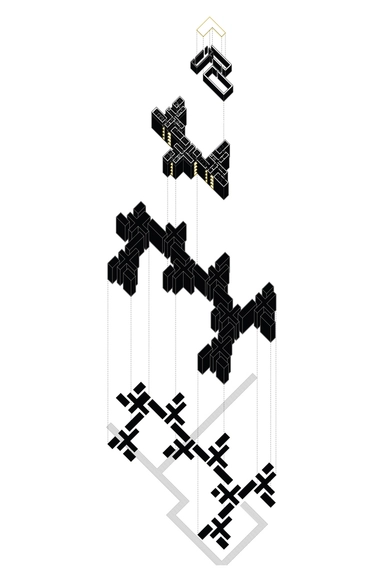
The international workshop and symposium “From the Villa to the Cell,” held at the School of Architecture of the Pontificia Universidad Católica de Chile between April 2 and 20, focused on social and collective housing, understood not only as vital to the city, but as an eminently architectural problem. The workshop featured local tutors Alejandra Celedón, Álvaro Arancibia, Tatiana Carbonell, and José Manuel Monge, alongside international guests Sam Jacoby (AA/RCA, London), Francesco Marullo (UIC, Chicago), and Max Kahlen (AA, London).
As the organizing team explains, "we questioned the definition of the word 'villa,' which has been used to designate very different kinds of architecture: from the 'Palladian villa' to the villa as a housing development, and the villa as a collective project; the workshop will build its own definition. Through the idea of the “cell,” the project sought to challenge the concept of “minimum housing,” viewing it no longer individually or as an isolated architectural object, but through the ideas of Karel Teige, who as early as 1932 proposed understanding this problem not as a scaled-down version of the dominant minimum-housing typology, but as a spatial transition toward a collective mode of habitation."
.jpg?1538415823)
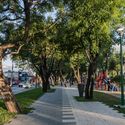
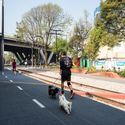
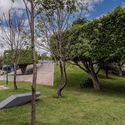
Plazoleta Amo Torres is a project by Echauri Morales in collaboration with Corporación Planen. Located in downtown Guadalajara, Jalisco, Mexico, the intervention comprises a series of urban design gestures aimed at revitalizing the area along Hidalgo Avenue at its intersection with Santa Mónica Street, directly in front of the Corona Market.


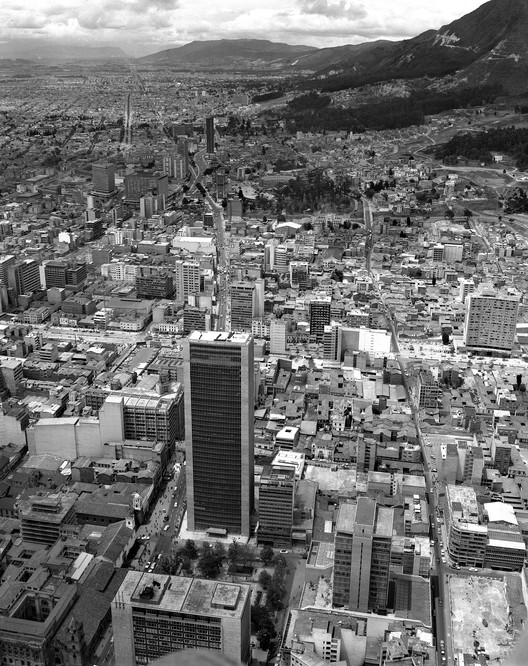
Driven by a shared interest in cities, architecture, and photography, the FORM+ research group at the Universitat Politècnica de Catalunya (UPC) and ArchDaily en Español established an editorial partnership in 2018 to showcase the research of FORM+, following the recent publication and exhibition Bogotá en la mirada de 10 fotógrafos held in the Colombian capital.
Through this collaboration, our Spanish-speaking readers discovered the work of pioneers of urban and architectural photography, drawing on research by curators María Pía Fontana (UdG), Miguel Mayorga (UPC), and Margarita Roa (USB, Cali), all members of the FORM+ group. "Photography is a form of intellectual and sensory mediation with the world, expanding our perceptual experience and renewing our visual sensitivity: an instrument to learn how to look, a resource for the creative imagination, and a means to recognize space and the built environment," the curators explained.
Below, we present the profiles of the 10 photographers featured in this editorial collaboration:
.jpg?1533646991&format=webp&width=640&height=580)
The deck is finished, the beams and columns have already been painted, and construction is moving forward at a good pace at the Guarda Housing Complex in Perafita, Matosinhos, Portugal, which will very soon see the completion of Uma Casa de Brincar e Não Só… / Not Only a Playhouse, built as part of the second edition of “O Lugar de Partilha.” At the end of the first week on-site, there is still much work to be done for this Self-Construction Laboratory organized by Casa da Arquitectura (CA) – Portuguese Center for Architecture and curated by Roberto Cremascoli, but spirits are high, and by August 10th, everything will be ready for the local community to enjoy.
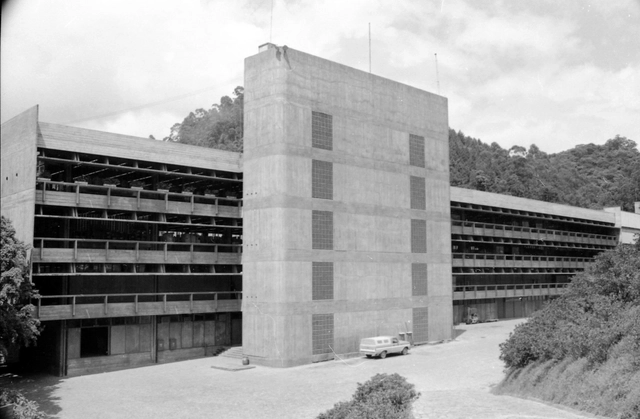
Born in Slovakia in 1921, architect Hans Broos began his career in Brazil in 1953, after graduating in Germany in 1949. His brief European career was marked by the reconstruction of Germany, during which he worked alongside architect Egon Eiermann as his assistant at the Technical University of Karlsruhe. During this period, Broos came into contact with Le Corbusier and his principles of modern architecture. Aligned from the beginning with the architects of the Modern Movement, Broos developed his first works in Blumenau and Florianópolis, in the state of Santa Catarina, far from major Brazilian urban centers. Throughout his professional life, the architect addressed a wide range of programs—from residential and industrial to religious, commercial, and social projects—over a career spanning more than 50 years and nearly 400 projects. Of these, approximately 100 were built in various states, including Santa Catarina, São Paulo, Pernambuco, and Goiás. The architect passed away in 2011.
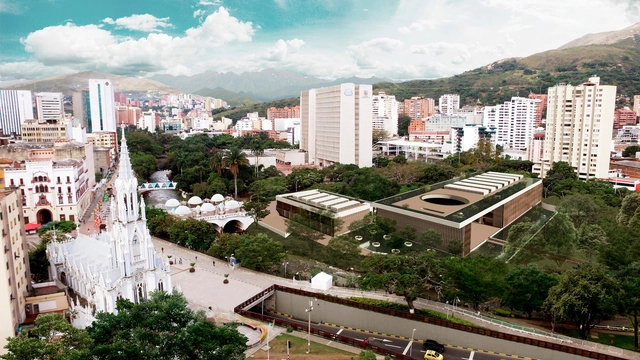

At the end of last November, we published the winners of the second call for graduation thesis projects in Colombia, which received 70 proposals from 14 cities and 29 universities. Ultimately, nine projects cleared all three evaluation stages, standing out for addressing pressing issues, presenting rigorous research, and proposing challenges for both urban and rural contexts, much like in 2016.
Here, we take an in-depth look at the Paseo Bolívar Cultural Integration Center, a proposal developed by Ángela Puerta Gaviria and Carolina Delgado Quintero, both graduates of the Universidad del Valle in Cali.
.jpg?1529271805&format=webp&width=640&height=580)
Brasília needs no defense. Its reality asserts itself above any discourse. As Paulo Leminski wrote in his Catatau: Brasília – the joy of maps.
In these dark times for our country, criticism has resurfaced regarding the untimeliness, or mistake, of transferring the capital from Rio de Janeiro to the cerrado of the central plateau. It is a conformist argument with avant-garde pretensions, attempting to draw a parallel between the dismantling of Rio de Janeiro and the relocation of the capital.
The dust of memory makes us forget the conflicts and revolts surrounding the relocation of the capital from Bahia to Rio, which was also considered a mistake at the time. Along with the move to the new and beautiful setting of Guanabara Bay came the slave-based system and the naturalization of violence implicit in its organization. A parallel can indeed be drawn between Rio-Brasília and Bahia-Rio. Neither architecture nor a new geographical setting inherently changes the way a society organizes or governs itself.
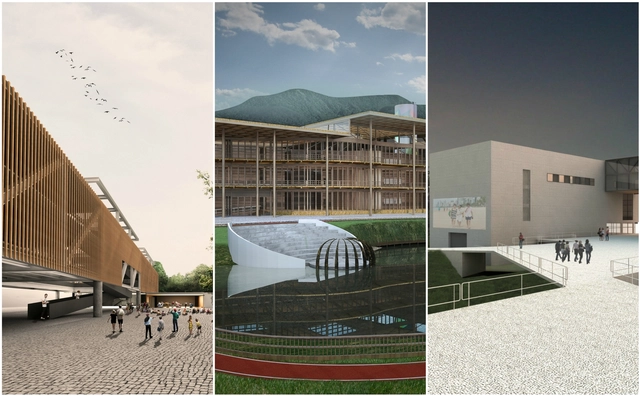
Seu Acervo, a platform for architecture final graduation projects, has released the results of the "Most Popular Project of 2017" open call, launched last November. The goal of the call is to expand the reach of the material available on the platform and encourage recent graduates to engage with digital publishing media.
The winners of this first edition of the award are Rogério Oliveira da Costa, from the Centro Universitário Belas Artes de São Paulo; Nayara de Paula, from the Universidade Anhembi Morumbi; and Hugo Rossini, from the Universidade Presbiteriana Mackenzie. See the winning projects below.

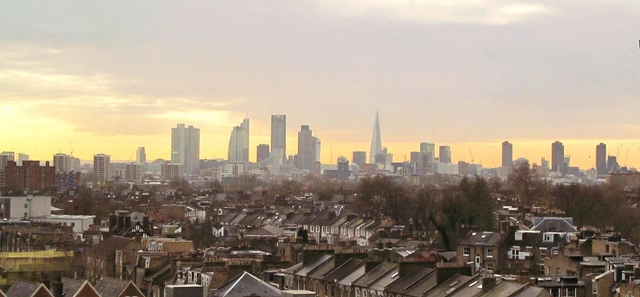
Much like in Brazil, British local authorities are also required to periodically publish and revise their master plans. Accordingly, London, under the leadership of Labour Mayor Sadiq Khan, recently released the draft of the new version of the London Plan for public consultation.
The plan's foundation is sustainable development (encompassing social, environmental, and economic advancement), followed by: principles of equal opportunity for Londoners; the reduction of income inequality; assessing climate change impacts; encouraging the use of the River Thames for passenger and freight transport; and identifying the resources available to implement the plan.

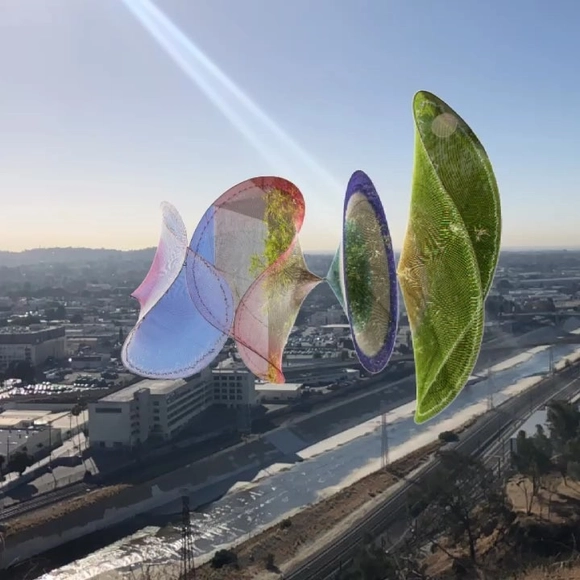
Colombian artists Carolina Caycedo and Gala Porras-Kim arrive in the United States with two augmented reality art installations. These projects seek to convey social, economic, and environmental issues through augmented reality.
These installations are part of the project “Defining line,” which leverages the reach of technology through a free mobile application, democratizing access and virtually bringing people closer to works of art.
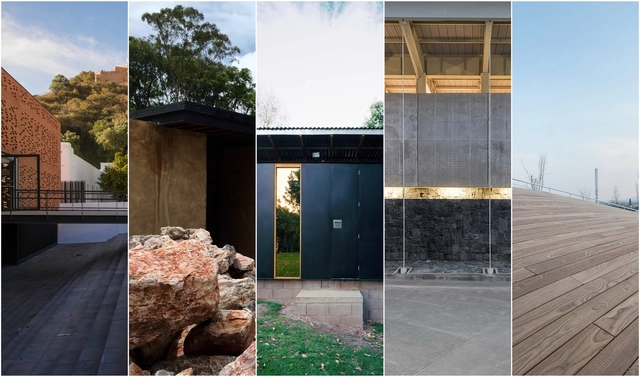
The 21 projects that make up the Official Selection of the Mexican Pavilion at the 16th International Architecture Exhibition of the Venice Biennale converge in latitudes, geographical regions, and echoes of the territory, drawing from the curatorial theme "Freespace." In four installments, we will share the works and insights of each of the participants representing Mexico in Venice. Read on to discover the third part of these projects.
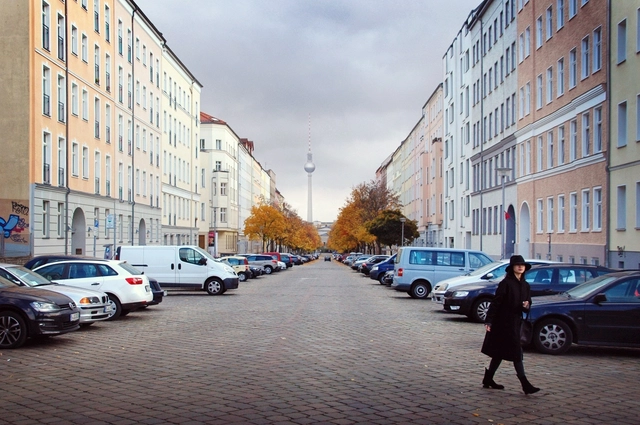

Fundación Arquia, along with architect Ana Asensio, invites us to reflect on how cities have been designed until recently—spaces of friction conceived without equal participation in decision-making, which consequently leads us to discuss feminism.





.jpg?1538415966 "© Carlos Díaz")