Monasticism emerged from a deep impulse to withdraw—a radical pursuit of spirituality and transcendence. The word itself comes from the Greek μόνος (mónos), meaning “alone,” reflecting the ideal of the holy hermit who retreats from the world to dedicate life entirely to the divine. By the late 3rd century, in Egypt and Palestine, the first Christian monks began to follow this path, creating ways of life that would later give rise to a distinct architecture centered on seclusion.
Centuries later, however, this legacy faces an uncertain fate. With the decline of religious vocations from the 1960s onward, countless convents and monasteries were sold, destroyed, or repurposed as hotels, cultural centers, or residences. Even the few that maintain their original function often lack structural updates to meet contemporary needs. In this context, architecture assumes a crucial role: how can these spaces be renovated and reused without becoming mere sets, stripped of the spirituality and memory that once defined them?


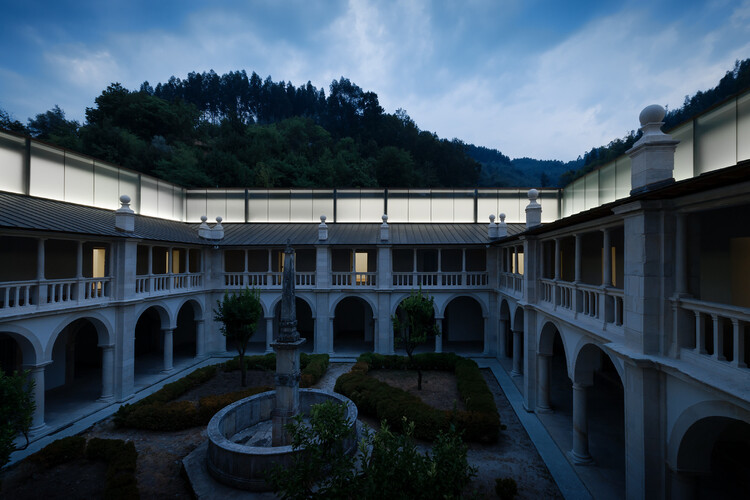
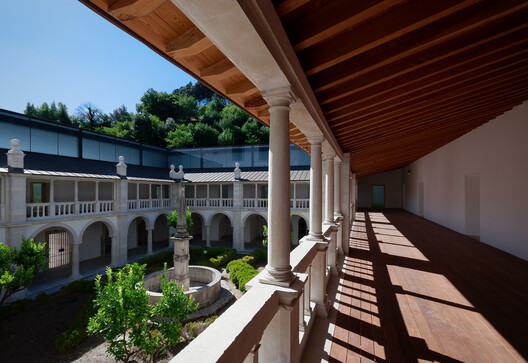
In the earliest monastic settlements, architecture was designed to reflect a life of prayer, work, and contemplation. Monasteries were self-sufficient, functioning as small enclosed cities where everything needed for the community’s sustenance was produced on-site. The layout followed a clear hierarchy, with the church and cloister at the center. The cloister—a courtyard surrounded by covered walkways—served as the spiritual and social heart of the monastery, often featuring a central fountain or garden for meditation.
Related Article
Adapting The Sacred To Be ProfaneAround this core were the essential spaces: dormitories, refectories, meeting rooms, guesthouses for pilgrims, and, in many cases, stables, mills, and workshops. Gardens and agricultural fields surrounded the complex, reinforcing its independence. Some complexes were small and isolated, while others expanded into urban areas or vast rural estates, sometimes including dependent parishes and communities. This configuration established a lasting architectural model that shaped monastery construction across Europe for centuries.
This unique integration of physical structure and monastic life inspired renowned architects to create projects that became landmarks of religious architecture. Among them is Neviges Mariendom by Gottfried Böhm, a complex built in the 1960s around a monastery at a popular pilgrimage site in western Germany. Marked by the architect’s expressionist style, the work reflects his belief that sacred architecture—whether traditional or contemporary—should evoke emotion, connecting the sacred to human experience.
Another emblematic example is the Convent of La Tourette, designed by Le Corbusier in France in 1953. Unlike traditional monasteries, it houses religious residents who maintain some contact with the outside world, in line with the word “convent,” derived from the Latin conventus, meaning “to gather” or “assemble.” This modernist icon combines purist forms, brutalist textures, and innovative communal solutions, reinterpreting the classic concept of the cloister for a new era.
My role is to give a roof over men's heads. The men in question here were monks, and I was trying to give them what people today need most: the silence of peace. It is in this silence that the friars place God. This monastery of raw concrete is a labor of love. It cannot be expressed in words; it must be experienced from within. The essential lies in what happens inside." – Le Corbusier
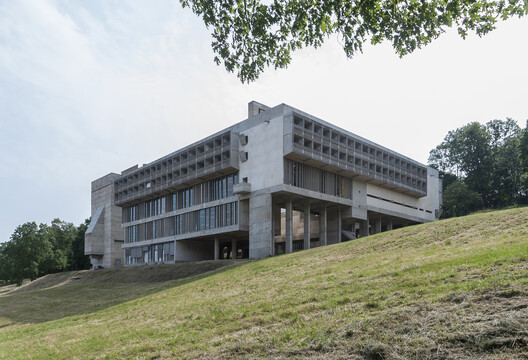
Fortunately, these two iconic projects continue to serve their original purposes, even after preservation-focused renovations. Yet most religious buildings—especially medieval monasteries—did not survive the social, political, and cultural transformations of the centuries. Many were abandoned and fell into ruin, while others remain forgotten, hidden in old urban areas. In response, efforts have emerged to rediscover and reimagine these places, giving them new life even when used differently from their original intent.
New Life, New Uses: Monasteries in the Contemporary City
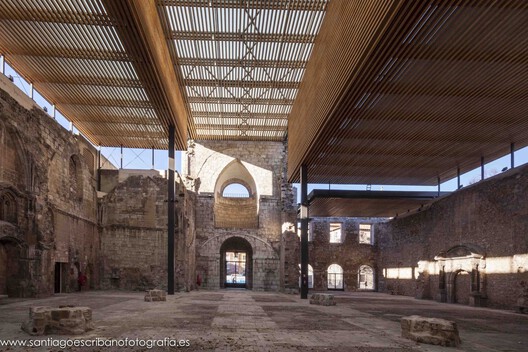
Adaptive reuse has become a key strategy to preserve monastic architectural heritage while keeping it relevant today. This approach balances conservation with innovation, respecting a building’s historical identity while adapting its spaces for new functions. One example is the rehabilitation of the lateral building of the Monastery of San Clodio in Spain, led by OLAestudio, which transformed part of the complex into a spa, incorporating contemporary elements without erasing the site’s architectural memory. Another is the Ptuj Performance Center in Slovenia, designed by Enota, which converted a former monastery into a dynamic cultural hub hosting events, performances, and community activities. These projects illustrate how architecture can give new meaning to historic structures, preserving their essence while meeting contemporary needs.
Monastery of San Juan Cover / BSA
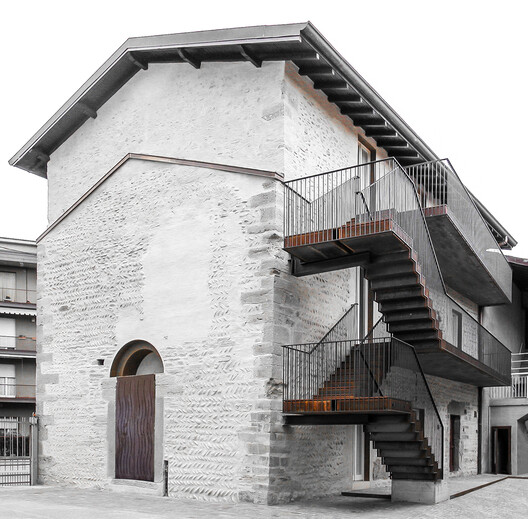
Monastery of San Giuliano Restoration / CN10 architetti
Refurbishment of the Lateral Building of the Monastery of San Clodio / OLAestudio
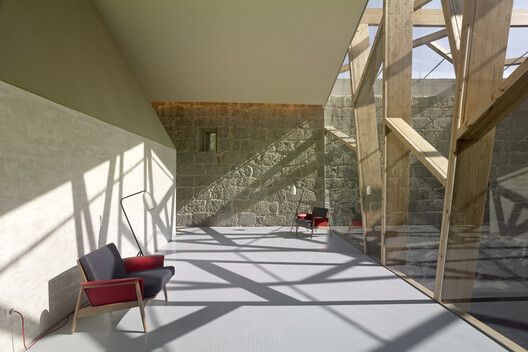
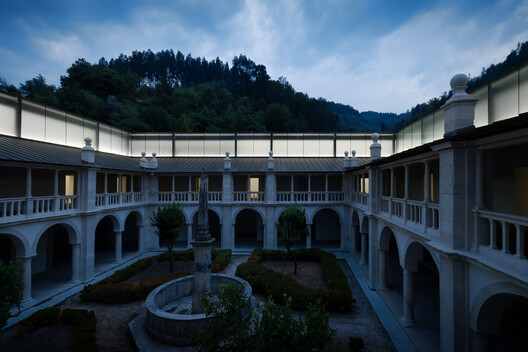
Silence Cloister in the Lorvão Monaster / João Mendes Ribeiro
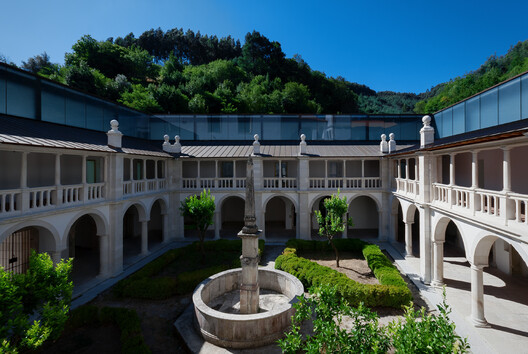
Ptuj Performance Center / Enota
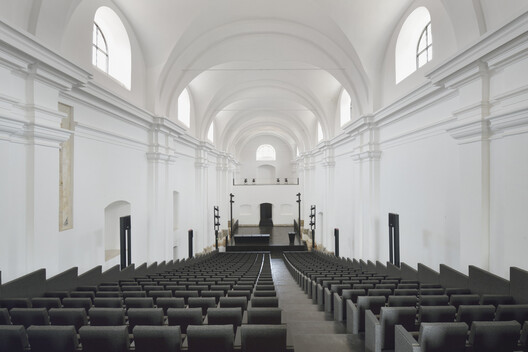
Preserve to Endure: Enhancing the Original Function
Not all monasteries, however, are adapted for new uses. In many cases, the approach is to preserve and optimize their original function, ensuring these spaces continue to serve their religious and communal roles while accommodating modern needs. Such interventions modernize infrastructure, improve accessibility, and expand services without compromising historical and spiritual value.
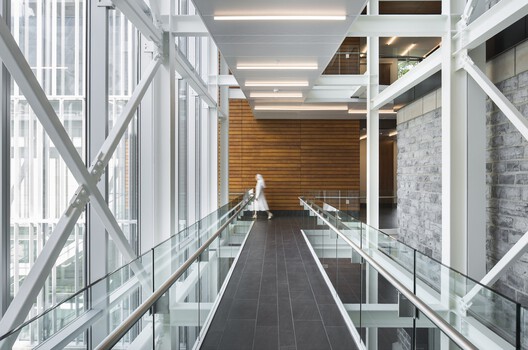
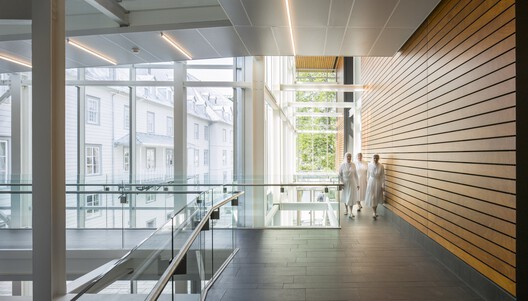
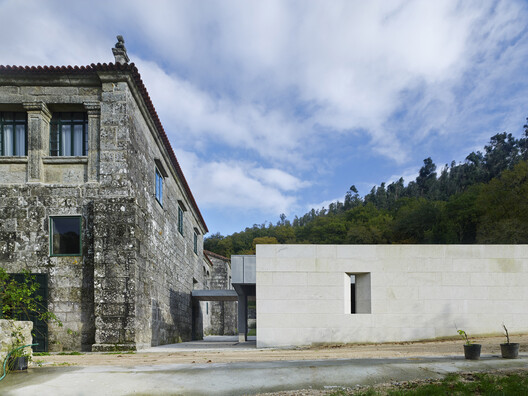
Examples include the renovation of the Cistercian Monastery of Santa Maria de Armenteira in Galicia by Rodríguez + Pintos Arquitectos. The intervention modernized interior areas and reorganized circulation while respecting the austerity and simplicity characteristic of Cistercian architecture. In Canada, Le Monastère des Augustines, restored by ABCP Architecture, maintained its spiritual vocation while incorporating new wellness and health-related functions, such as accommodations and therapeutic programs. Both projects show how contemporary architecture can engage with tradition, ensuring that monasteries remain alive—not merely as relics of the past, but as active, meaningful spaces within their communities.
Wit Huis Monastery / Lava architecten
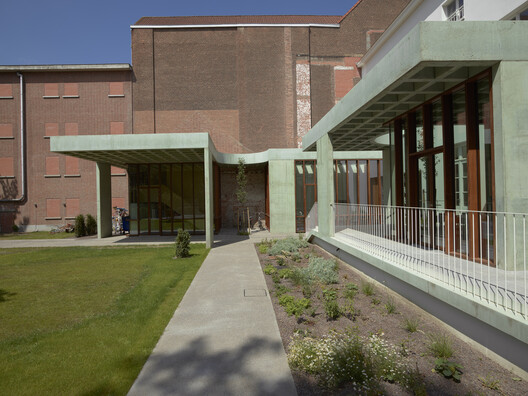
Cistercian Monastery of St. María de Armenteira / rodríguez + pintos arquitectos
Le Monastère des Augustines / ABCP Architecture