Architect, urbanist, and Content Editor at ArchDaily, covering news and developments in architecture and the built environment. Editorial work focuses on the Gulf region and the Middle East, exploring contemporary regional architectural languages and their relationship to local contexts.
Education has long been a driving force in the Middle East, shaping knowledge, encouraging innovation, and strengthening cultural identity. In recent years, educational architecture in the region has expanded beyond its academic function, evolving into public gathering spaces and cultural hubs. These institutions are designed not only for learning but also for dialogue, research, and collaboration, often integrating open courtyards, multi-use public areas, and architectural elements that reflect local heritage. Whether through their physical openness, adaptability, or connection to the urban environment, these spaces reinforce the idea that universities and research centers are essential to civic life.
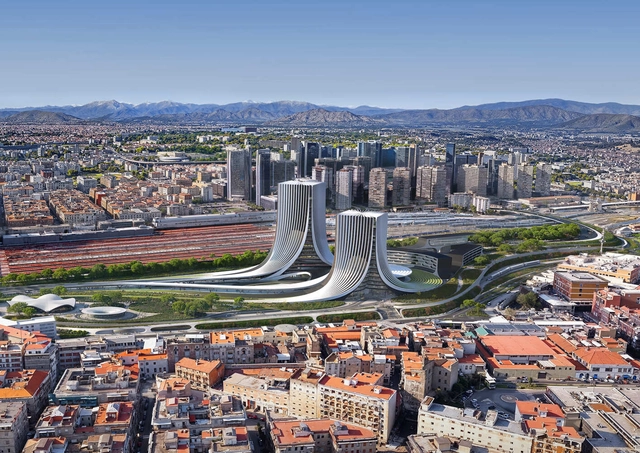
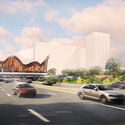
Zaha Hadid Architects (ZHA) has been announced as the winner of the international design competition for the Napoli Porta Est masterplan, a large-scale urban regeneration project in Naples, Italy. The project, which includes the new Campania Region headquarters, aims to reconnect fragmented urban areas and revitalize a district that has long been considered isolated and unsafe due to inadequate public spaces and physical barriers.
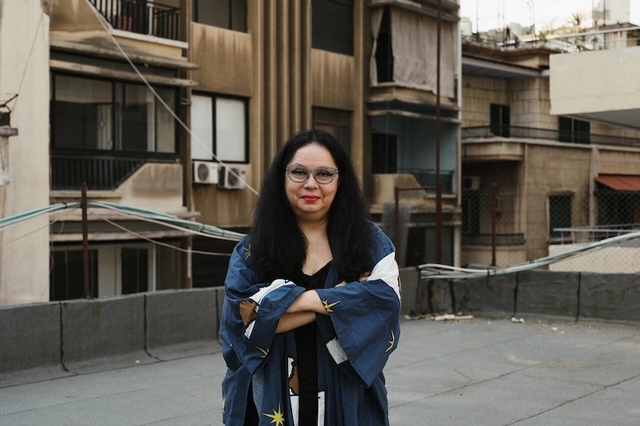
The Istanbul Foundation for Culture and Arts (İKSV) has appointed Christine Tohmé as the curator for the 18th Istanbul Biennial, which will take place in three phases over three years from 2025 to 2027. According to the Biennial Foundation, this edition was postponed from 2024 by the Istanbul Foundation for Culture and Arts (İKSV). This Biennial remains Türkiye's largest international exhibition dedicated to contemporary art, offering a significant platform for artists globally. Titled The Three-Legged Cat and will unfold in three distinct phases, exploring themes of self-preservation and futurity, reflecting Tohmé's curatorial approach of engaging deeply with artistic production and local communities.
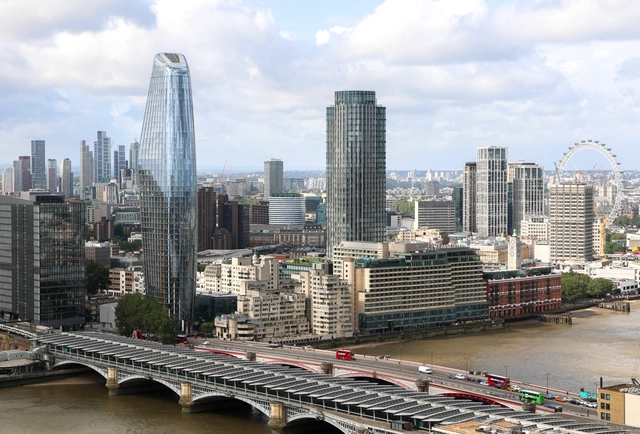
The United Kingdom Government has announced the shortlisted design teams for the national memorial dedicated to Queen Elizabeth II, following the first stage of a two-stage open competition that attracted creative talent from the UK and beyond. The five teams moving forward in the competition are Foster + Partners with Yinka Shonibare and Michel Desvigne Paysagiste; Heatherwick Studio with Halima Cassell, MRG Studio,Webb Yates, and Arup; J&L Gibbons with Michael Levine RDI, William Matthews Associates, Structure Workshop, and Arup; Tom Stuart-Smith with Jamie Fobert Architects, Adam Lowe (Factum Arte), and Structure Workshop; and WilkinsonEyre with Lisa Vandy, Fiona Clark, Andy Sturgeon Design, Atelier One, and Hilson Moran.
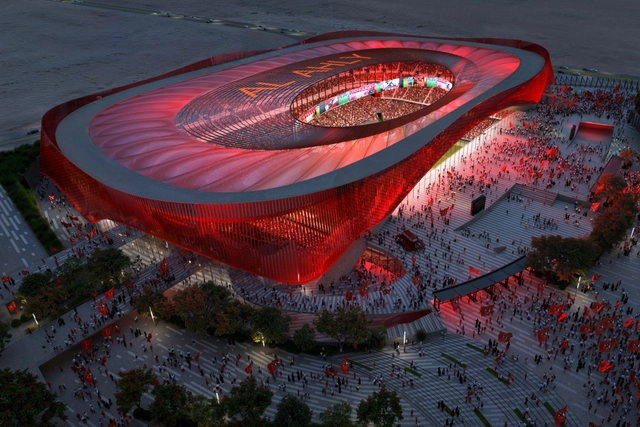
Gensler, in collaboration with El Qalaa El Hamraa and Buro Happold, has revealed plans for a new stadium dedicated to Al-Ahly Football Club, a team widely recognized for its prominence in African and Middle Eastern football. The project, more than three decades in the making, envisions a state-of-the-art venue designed not only for football matches but also as a national landmark capable of hosting large-scale events, setting a new standard for sports architecture in the region.
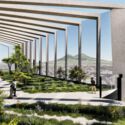
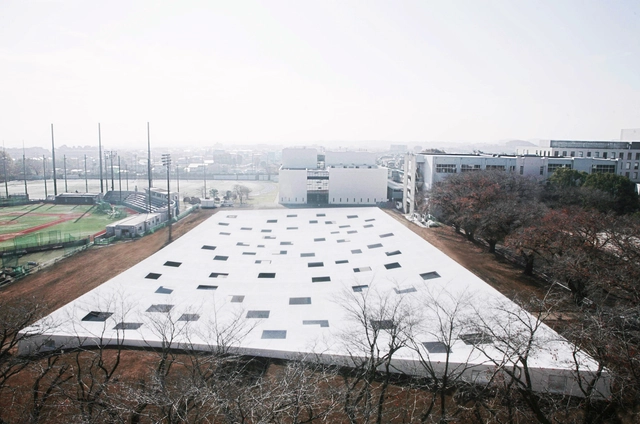
Plaza of Kanagawa Institute of Technology / junya ishigami + associates. Image Courtesy of Junya Ishigami + Associates
The American Institute of Architects (AIA), a professional organization dedicated to supporting architects and advancing the field of architecture, has announced the elevation of 93 architects to its College of Fellows. This recognition is awarded to individuals who have made significant contributions to the profession and society. This year's class includes 83 AIA member-architects and 10 international architects granted Honorary Fellowship. The newly elevated Fellows will be recognized at the AIA Conference on Architecture & Design 2025 (AIA25) in Boston.
As cities grow and available land becomes more limited, high-rise architecture plays an important role in addressing urban density while shaping new ways of living and working. Tall buildings are evolving beyond their traditional functions to integrate environmental strategies, enhance public engagement, and contribute to the urban fabric. Architects are exploring new materials, energy-efficient technologies, and spatial configurations that make towers more adaptable to their surroundings. Some projects incorporate green spaces and shared amenities to create a stronger connection between the built environment and its users, while others introduce innovative construction techniques to improve sustainability and efficiency.
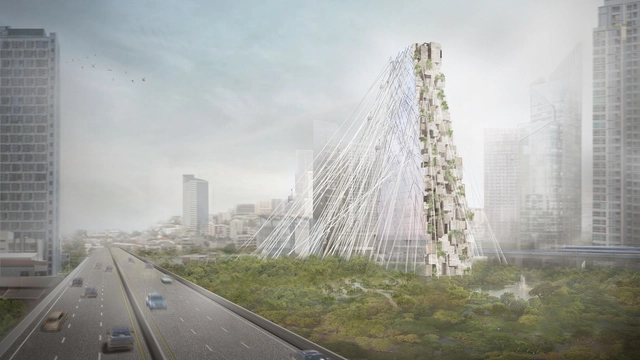
Among this selection of projects submitted by the ArchDaily community, The Residences at 1428 Brickell by Arquitectonica in Miami, United States introduces a solar-powered facade that contributes to the building's energy needs. In Dubai, UAE, AVA by SOMA creates a transition from the city into a more enclosed, water-defined environment with a focus on luxury living. In Bangkok, Thailand, HAS Design and Research proposes the Bangkok Civic Center Tower as a new type of public space, combining green landscapes with mirrored surfaces to connect the city with nature. These projects reflect different approaches to vertical architecture and highlight how designers are responding to the challenges and opportunities of dense urban environments.
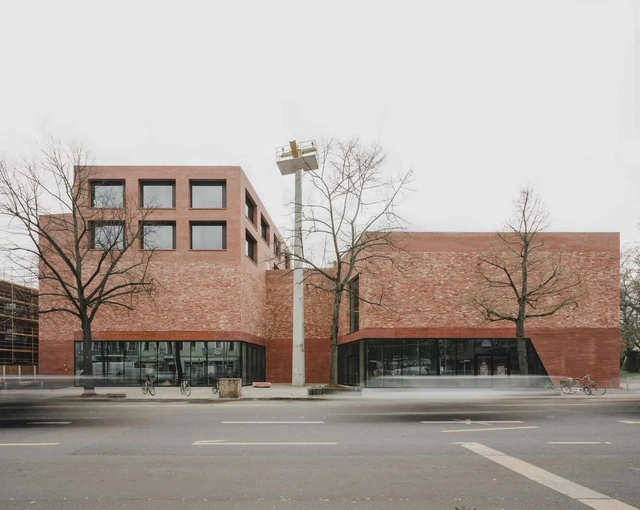
Spore Haus / AFF Architekten. Image Courtesy of DAM Preis 2025
The DAM Preis 2025, presented by the Deutsches Architekturmuseum (DAM), has been awarded to AFF Architekten for their project, Spore Haus, in Berlin. As one of Germany's most recognized architecture awards, the DAM Preis highlights significant contributions to contemporary architectural practice. This year's winner, Spore Haus, was selected for its "thoughtful design and careful integration" into the urban context, as well as its contribution to public life.
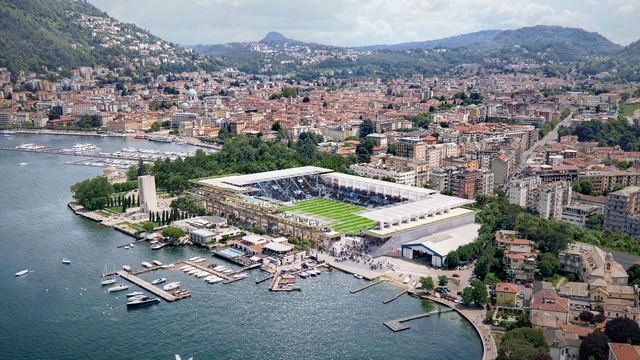
International architectural firm Populous has announced the initial phase of the redevelopment of Stadio Giuseppe Sinigaglia, in collaboration with Como 1907 and the Municipality of Como in Italy. The project aims to modernize the historic stadium while maintaining its role as a central hub for the community. The process begins with the submission of the Document of Feasibility of Project Alternatives (DOCFAP), a key step in evaluating potential design approaches. The approval process is expected to conclude by May 2026, marking the completion of the project's first stage.
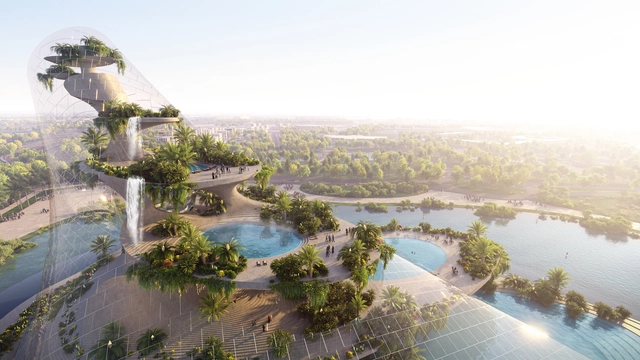
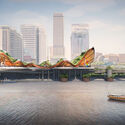
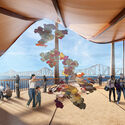
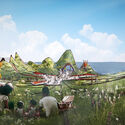
Diller Scofidio + Renfro has unveiled the design for Therme Dubai – Islands in the Sky, a new urban wellbeing destination set to be developed in Zabeel Park, United Arab Emirates. The project, created in collaboration with Therme Group and Dubai Municipality, has been approved as part of Dubai's Quality of Life Strategy 2033, which aims to enhance the city's landscape through innovative and sustainable infrastructure.
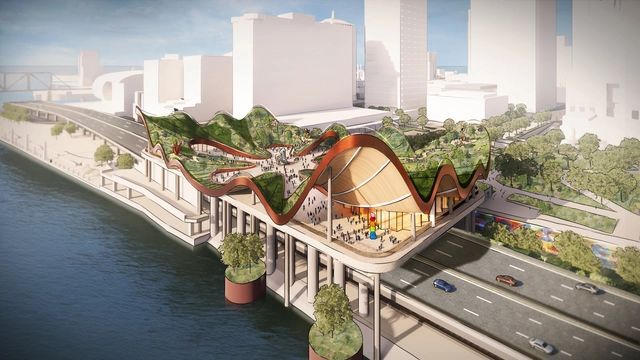
Heatherwick Studio has unveiled an ambitious vision to transform the Belvedere, a historic elevated riverfront space in downtown Louisville, Kentucky, into a reimagined public park in the United States. The project aims to breathe new life into the site, enhancing its connection to the Ohio River and creating a welcoming environment for both residents and visitors.
In recent years, the Gulf region has emerged as a global center for cultural and architectural development, commissioning internationally acclaimed architects to design its most high-profile museums and institutions. These projects, ranging from Louvre Abu Dhabi by Jean Nouvel to Museum of Islamic Art in Doha by I. M. Pei, are often designed by foreign architects, yet they aim to embed themselves within their context through strategies that reference the region's landscape, climate, and architectural traditions. This raises a fundamental question: What defines local architecture in the 21st century?
Sankt Lukas Hospice & Lukashuset. Image Courtesy of BIG
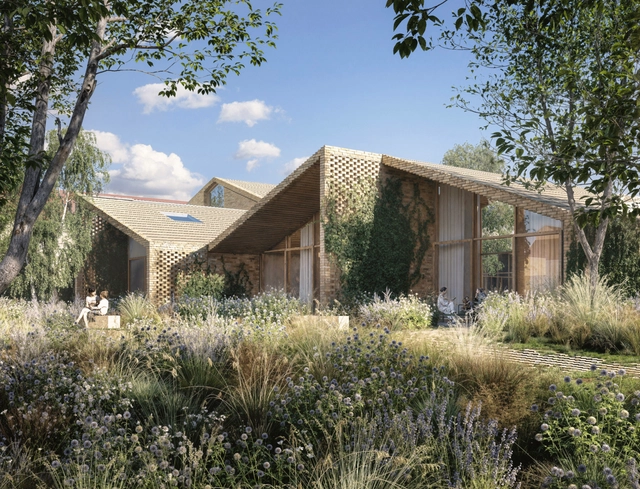
Bjarke Ingels Group has just won the competition to design the new Sankt Lukas Hospice and Lukashuset, an 8,500 m² palliative care center envisioned as a village surrounded by nature. Rooted in the history of the Sankt Lukas Foundation, which dates back to the 1930s, the project will expand Denmark's palliative care facilities, tripling current capacity to accommodate around 2,100 patients annually.
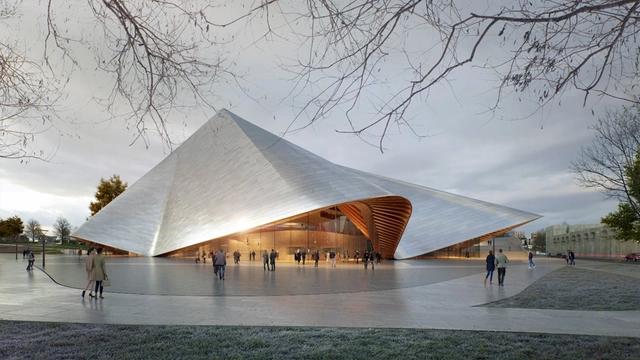
Bjarke Ingels Group (BIG), in collaboration with ALB-Architect, has unveiled the design for the Opera & Ballet Theatre of Kosovo, a new cultural venue set to reshape Prishtina's performing arts landscape. As the first operahouse in the Republic of Kosovo, the theatre will serve as a home for the country's Philharmonic, Ballet, and Opera, marking a significant step in the development of Kosovo's artistic institutions. The project includes multiple performance halls and a public plaza, reinforcing its role as a cultural hub within the capital.
Architecture competitions have long been a means for nations to shape their identity, cultural landscapes, and built environment. They provide a platform for international architects to contribute to national projects, often reflecting broader ambitions of modernization and global recognition. In 1976, Bahrain launched potentially the first major architectural competition—a call for designs for a National Cultural Centre, bringing some of the world's leading architects into the Gulf's emerging architectural discourse. Though the winning design by Timo Penttilä was never built, the competition remains a key moment in Bahrain's history, illustrating the challenges of translating external visions into local realities.