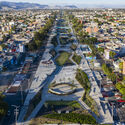
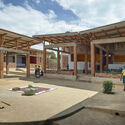
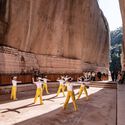
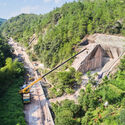
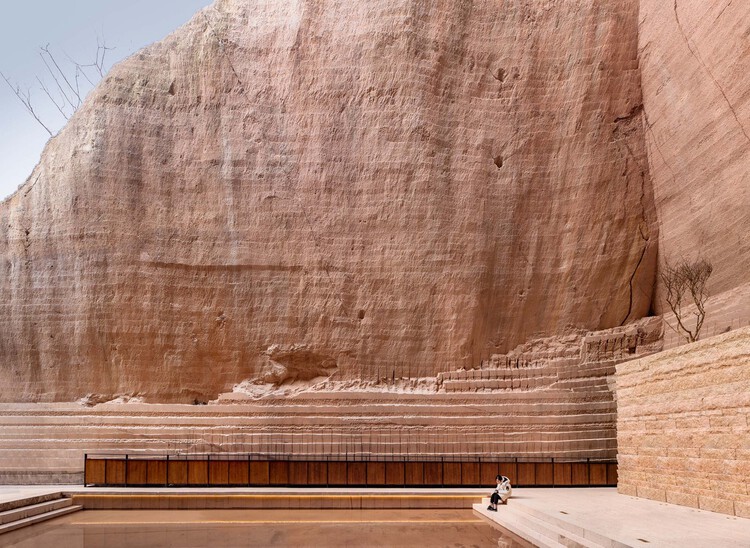
Sede da Symantec. Certificado por WELL. Imagem Cortesia de Little
Na teoria, a sensação de bem-estar pode ser definida como um estado de satisfação plena das exigências do corpo e do espírito, evocando sentimentos de segurança, conforto e tranquilidade. Na prática, a sensação de bem-estar pode ser fomentada por diferentes estratégias, desde hábitos individuais até a forma como o ambiente é construído.
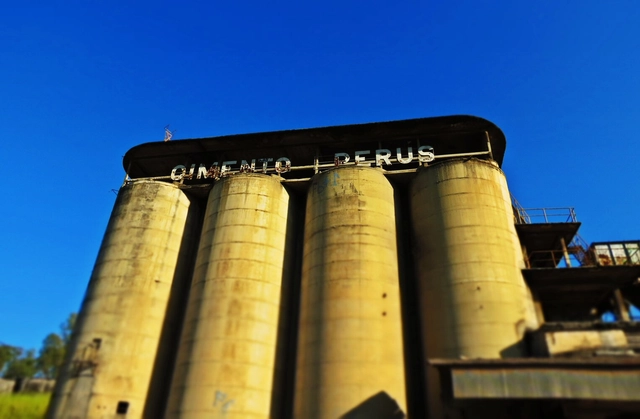
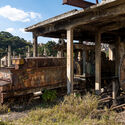
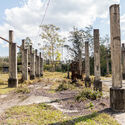
Perus Portland Cement Factory. Image by Humberto do Lago Müller, CC BY-SA 3.0, via Wikimedia Commons
Nearly one hundred thousand square meters make up the site of one of Brazil's most important industrial heritage landmarks. Opened in 1926 by a Canadian group, the Perus Portland Cement Factory in São Paulo was crucial to the region's growth, leaving a legacy that goes far beyond its architectural remains.
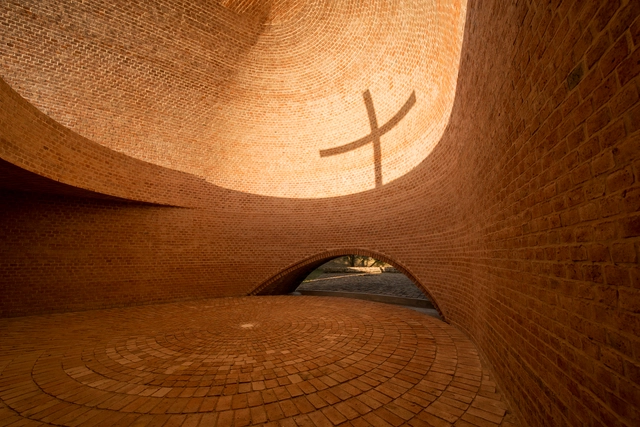
San Bernardo Chapel / Nicolás Campodonico. Image courtesy of Nicolás Campodónico
On two specific days of the year, June 21 and December 21, if you look up at the sky, you will notice that the sun seems to stand still at its northernmost or southernmost limit before completing its daily path and reversing direction. This impression of a stationary sun led to the event being named the "solstice," derived from the Latin words 'sol' and 'sistere', meaning to stand still. It occurs when the sun reaches its northernmost or southernmost diurnal arc relative to the Equator; thus, two solstices occur annually, marking the beginning of winter and summer in the respective hemispheres.
Historically, this moment has held immense significance for various cultures, marking holidays, rituals, festivals, and ceremonies that, in turn, are tied to religion, agriculture, and fertility. Recognizing the importance of these rituals for cultural heritage and ancient traditions, the UN established June 21 as the International Day of the Celebration of the Solstice to foster mutual respect between different cultures.
According to recent research, the global fashion industry generates around $2.4 trillion annually. This staggering figure, unfortunately, is matched by its waste statistics. It is estimated that every second, the equivalent of a garbage truck full of textile scraps is burned or sent to landfills. Considering that fabrics like polyester, which is widely used in garment manufacturing, take an average of 200 years to decompose, the catastrophic future of this model is easily foreseeable. Alarming news consistently highlights this issue, such as the images of the immense secondhand clothing graveyard in the Atacama Desert released a few years ago, or reports that famous British luxury brand Burberry incinerated £28.6 million worth of unsold clothing, accessories, and perfume last year to protect its brand, claiming the carbon emissions were offset, making the action "environmentally sustainable."
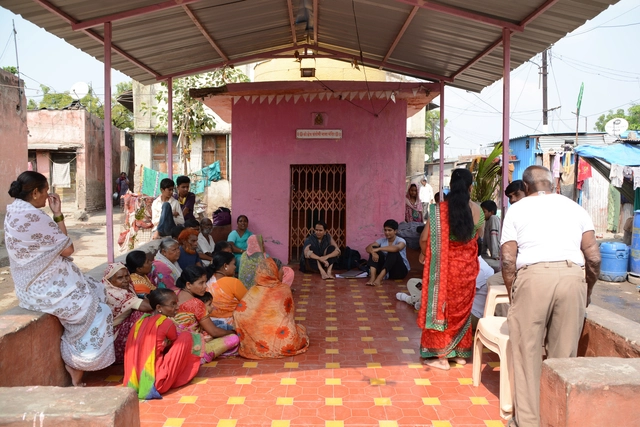
Sanjaynagar Slum Redevelopment Project - Technical team meeting with members of the Slum Committee. Image Courtesy of Community Design Agency
The era when Le Corbusier's Modulor—the perfect man—was the only one “allowed” to occupy our cities and architecture is long gone. Decades ago, it became clear that environments were being designed as ideological representations that failed to reflect actual demand and its rich diversity of social class, gender, race, age group, and sexual orientation, among other factors. Planning and design were often disguised as “neutral” concepts, while in reality they reproduced the perspective of a middle-class white man. Ultimately, the time has come for the city to move past this flawed assumption of universal appropriation and instead materialize in its spaces the specific needs of every citizen.
The year was 1969. Lina Bo Bardi wandered through the São Paulo neighborhood of Bixiga, which at the time resembled a war zone. The clearings and piles of rubble were the result of a violent urbanization cutting through the region in the shape of São Paulo's East-West expressway complex.
Against this backdrop, Lina collected personal objects found in the debris, picking up "the most sordid items," as Zé Celso, director and creator of Teatro Oficina, stated in an interview. There was a clear reason for this undertaking: to compose the set for the play In the Jungle of Cities (Na selva das cidades), designed by the architect herself. In it, a stage shaped like a boxing ring was fashioned from the rubble of the demolitions taking place around the theater. The play was divided into 11 rounds, in each of which an institution is destroyed until the ring itself is demolished. At the end, the actors remove even the theater floor to reach the bare earth.
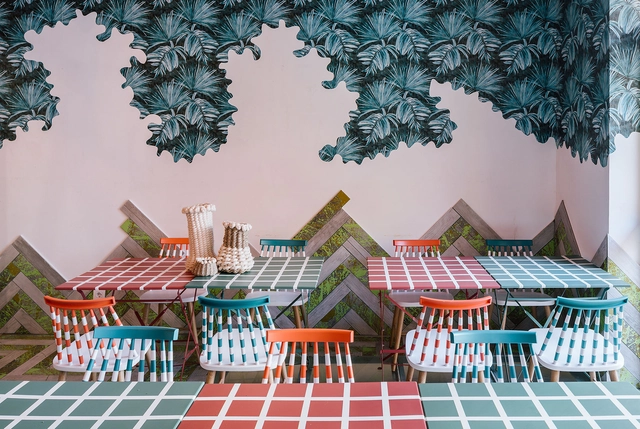
Before stamps and digital printing, wallpaper was a luxury item and a status symbol, as every design had to be hand-painted by artisans. As a symbol of wealth, it emerged to replace tapestries and paintings in 16th-century European homes. In Brazil, for instance, wallpaper only became economically viable in the 1930s, and its widespread popularization was only realized in the 1960s.
Saudi Arabia reveals plans to build a 100-mile-long linear city. Courtesy of NEOM.
“From the problem of locomotion derive all other problems of urbanization.” It was in 1882 that the Spanish urbanist Arturo Soria y Mata made this assertion, and in response to it, created and implemented the concept of the linear city. Based on a functionalist doctrine, this city model abandons traditional structures such as squares and blocks, subordinating the design to circulation paths in its most rational spatial configuration: the straight line.
Forecasts for the future are alarming—at least, that is what the recently published 2021 IPCC report from the Intergovernmental Panel on Climate Change (a UN body) shows. According to the document, human-induced climate change is irrefutable and will worsen in the coming decades without concerted efforts to reverse the trend, warning that warming of 1.5°C to 2°C will be surpassed in the very near future.
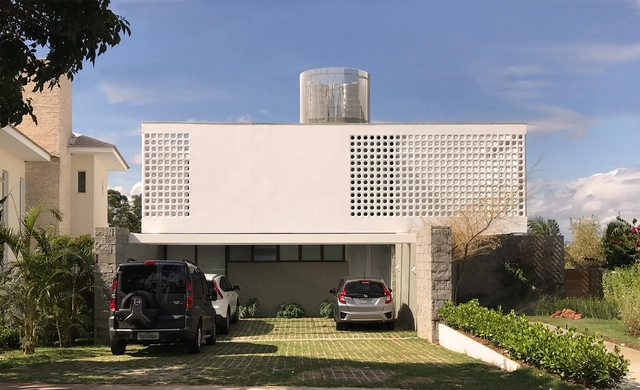
Water tanks are vital components of any building due to their role in the health, safety, and comfort of occupants. Their primary function is to guarantee supply regardless of temporary municipal water cuts, making them increasingly essential during times of water crises.
Aare River, Bern, Switzerland. Created by @dailyoverview Source imagery: @maxartechnologies
The Thames, the Danube, the Seine, the Nile, the Hudson—all of these names immediately evoke specific cities. This is because discussing the history of urban planning inherently means exploring the relationship between the city and the river, as waterways are fundamental natural elements around which many cities were founded. This is primarily due to the utilitarian nature of water bodies, which, in addition to defining—and consequently protecting—cities, provided water supply and served to transport raw materials and goods. The river, therefore, functioned as an urban backbone, fostering activity along its banks and driving economic and social development.
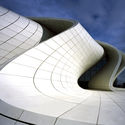
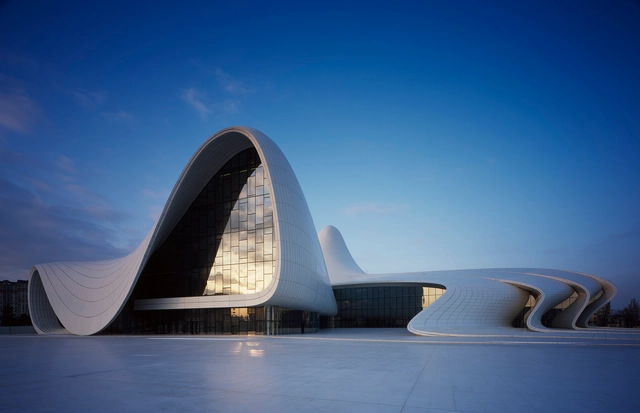
Sinuous models, sharp curves, geometrically complex shapes. When discussing parametric architecture, these are likely the first images that come to mind. And with good reason. As a design approach, using parameters in the creative process has enabled the creation of striking forms at the intersection of digital technology and construction.
Through immense Greek columns, the door centered under the pediment invites one to enter either a temple or a home. The sense of smallness is undeniable. From north to south, this is a recurring scene: no upper-middle-class neighborhood escapes a neoclassical building.
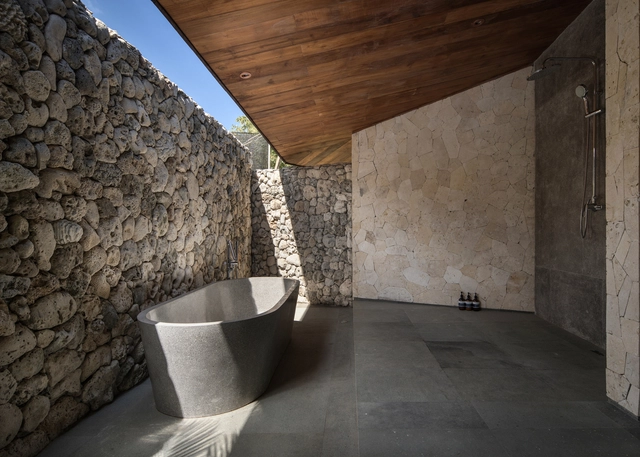
To reach the designs we know today, bathtubs have taken on countless forms. From Greek public baths and Zen Japanese ofuros to 18th-century cast-iron tubs and sophisticated modern whirlpool systems, these fixtures have been shaped and reinvented over the centuries, securing their place in history. Yet, regardless of culture or era, they have always been associated with spaces of physical and mental purification, allowing for moments of relaxation and introspection.
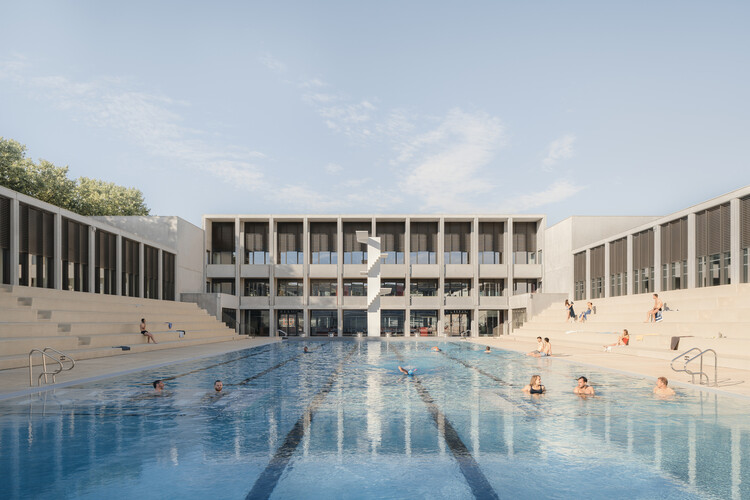
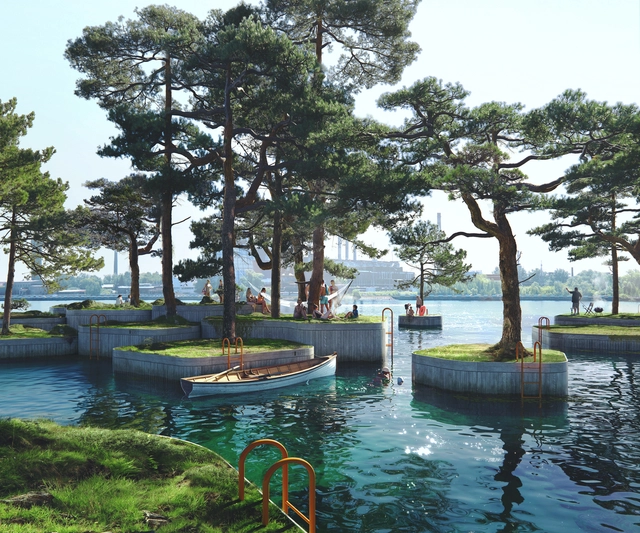
Almost certainly, everyone has their own ritual when entering a pool. There are those who dive in without hesitation, those who start with their toes, those who swim for sport, and those who submerge themselves for pure pleasure. Private or shared, intense or contemplative, every experience with water takes place within an environment carefully constructed to receive it.
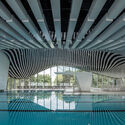
Architecture and water are of opposing natures. While one delimits and contains, the other insists on spreading, and it is from this tension between solid and liquid that aquatic centers emerge. In these buildings, the presence of water transforms everything around it. Light fragments into shimmering reflections, sound acquires a distinct reverberation, and temperature and humidity define the atmosphere of the spaces, while materials and structural systems are constantly put to the test. Yet their uniqueness is not merely technical.
You are likely familiar with the story of a man who received a divine command to build an ark to shelter his family and animals of every species, saving them from a great deluge. This flood narrative, known as the story of "Noah's Ark," is found not only in the Bible but also in the Quran and many other cultures—with the Sumerian "Epic of Ziusudra" being the oldest known flood myth, dating back to 2000 BCE. These examples show that the forces of nature, by taking center stage in religious teachings, were already recurring concerns that inspired both fear and respect in early civilizations.
Designated by the United Nations (UN), June 17 was established as the World Day to Combat Desertification and Drought, a date that serves to raise awareness about these phenomena while promoting initiatives to address them. Broadly speaking, desertification refers to the process of land degradation in arid regions, caused primarily by human activities and climatic variations. This phenomenon leads to the loss of vegetation cover, soil erosion, and reduced agricultural productivity, among other negative consequences. Drought, on the other hand, is a prolonged period of abnormally low rainfall resulting in water scarcity, which can have severe impacts on ecosystems, agriculture, and human livelihoods.
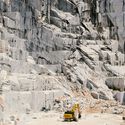
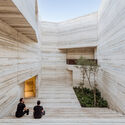
In the field of architecture, however, this question remains relatively marginal. We often know who designed a building, its finishes, the manufacturer of its frames, the brand of its wall coverings, and even its energy performance, but we almost never ask where the tons of material that made its existence possible actually came from.














































.jpg?1635426678 "Serpentine Pavilion / BIG. © Iwan Baan")