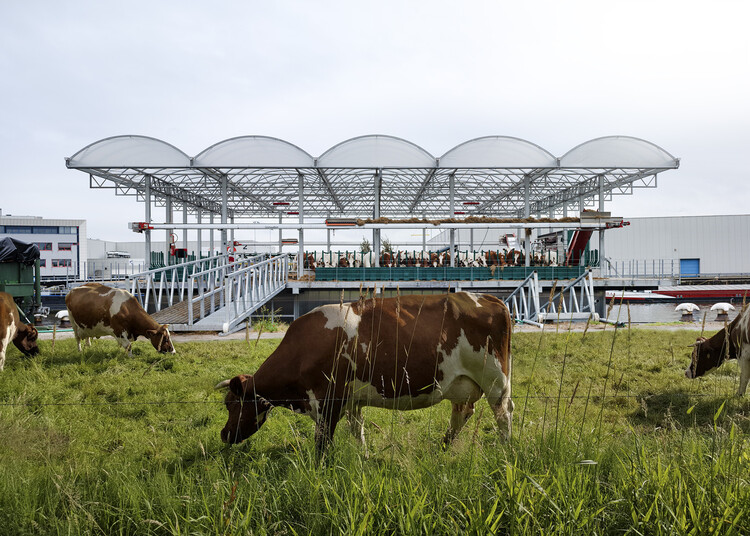
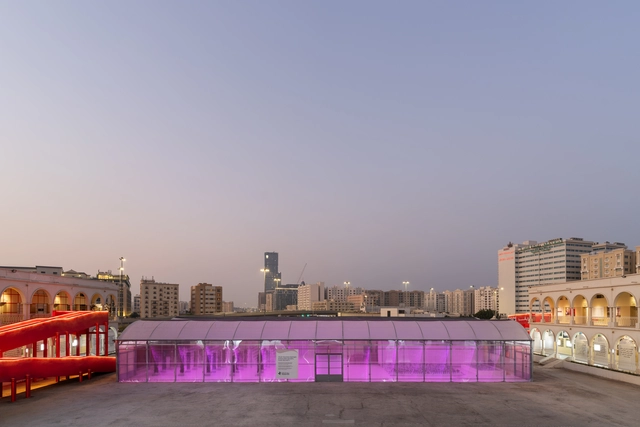
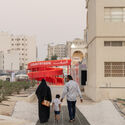
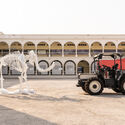
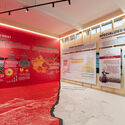
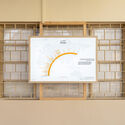
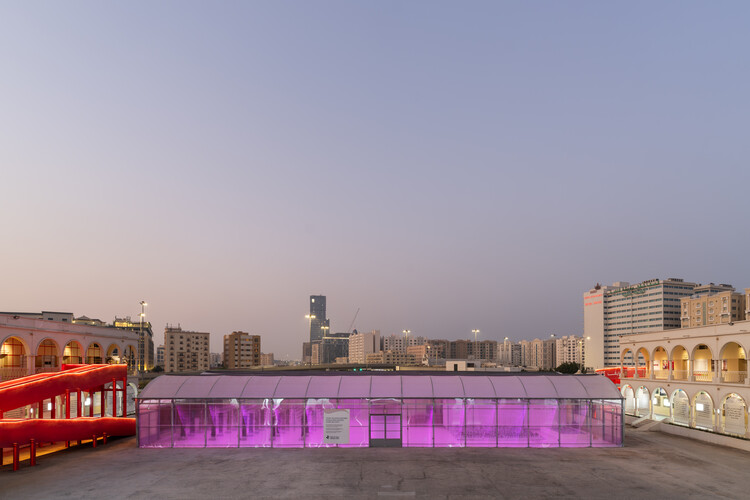
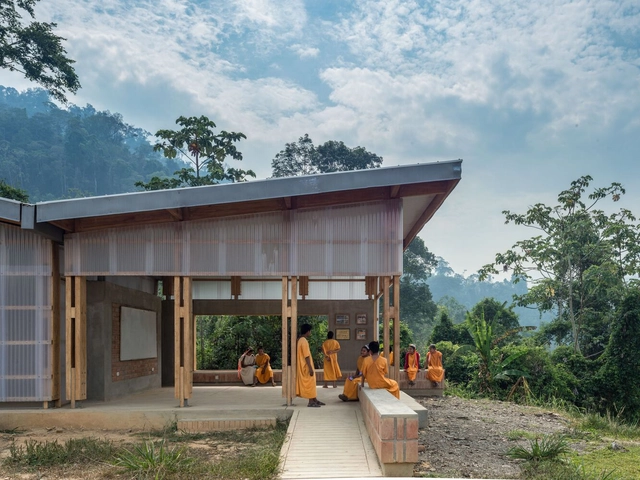
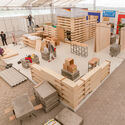
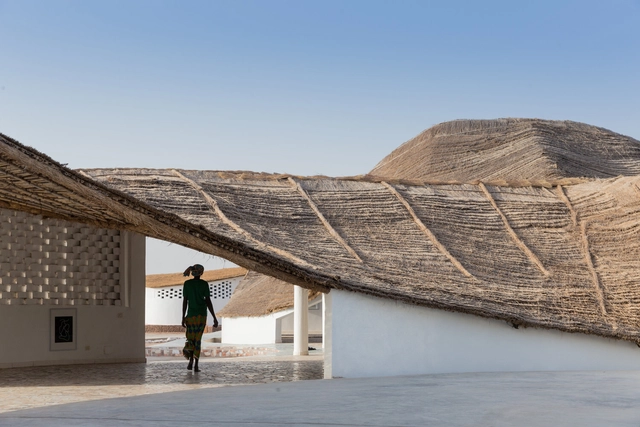
Countryside: A Place to Live, Not to Leave by AMO / OMA presents an exploration of contemporary life beyond the city, examining how rural territories adapt to global transformation. Conceived under the direction of Rem Koolhaas and Samir Bantal, with Yotam Ben Hur as project architect, the exhibition is presented by Qatar Museums in collaboration with the Qatar Fund for Development (QFFD), the Ministry of Environment and Climate Change (MoECC), Hassad Food, and Kahramaa. It is hosted across two venues in Doha, the Qatar Preparatory School and the National Museum of Qatar, and remains accessible to the public until June 30, 2026.
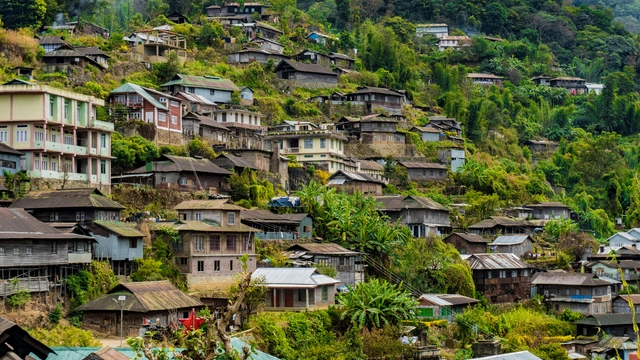
The island of Taiwan presents a varied natural and topographical context, characterized by a land area of 36,197 square kilometers and a high population density of 644 people per square kilometer. Its geological location, situated on the edges of the Eurasian and Philippine Sea plates, has resulted in a predominantly mountainous and rugged topography. While this forces the majority of the 23 million residents to inhabit large urban centers on the western coastal plains, the island maintains an active agricultural sector, with approximately 22% of its land allocated to farming.
The countryside—long underestimated—is now emerging as fertile ground for possibility. More than a “marginalized space,” rural Latin America today asserts itself as a true laboratory for architectural, social, and ecological experimentation. From agroecological communities to low-impact technologies, from relationships between humans, machines, and other living beings to locally grounded solutions for global challenges—such as the climate crisis, food security, and migration—the rural world is actively and inventively reshaping its own future.
At a time of ecological collapse and rising food insecurity, architecture is increasingly called upon to engage not only with landscapes but with the systems that sustain and regenerate them. Among these systems, agriculture occupies a paradoxical role, as both a leading contributor to environmental degradation and a potential agent of ecological recovery. Industrial farming has depleted soils, fragmented habitats, and driven climate change through monocultures, fossil-fuel dependency, and territorial standardization. In response, agroecology has emerged as a counter-practice rooted in biodiversity, local knowledge, and the cyclical rhythms of nature. It reframes farming not as extraction, but as regeneration of ecosystems, communities, and the soil itself.
This reframing opens space for architecture to contribute meaningfully. To align with agroecology is not only to support food production, but to engage with the broader cultural, spatial, and ecological conditions that sustain it. It implies designing with seasonal variation, supporting shared use, and building in ways that respect both the land and those who work it. Architecture becomes more than enclosure — it becomes a mediator of cultivation, reciprocity, and coexistence.
India recently overtook its sub-continental neighbor, China, to become the most populous country in the world with a demography of over 1.4286 billion people. As data from the United Nations also estimates an annual population growth rate of 0.7%, the country’s built environment is set to interact with a new discourse of demography and present its own perspective on how to build for billions. It is set to engage with new challenges of infrastructure, transportation, and adequate housing, which on the surface will force cities to constantly expand as a response to these dynamic needs. However, a critical look at the population distribution within the country reveals that the majority of Indians still live in rural areas as it caters to 65% of the population despite increasing rural-urban migration. This suggests a nudge in a different direction. One where the design and development of the rural areas take precedence over the cities. One that explores architecture in rural areas, its relationship with the cities, and its future as a primary framework to house the exploding population.
As farmers water crops by moonlight, undocumented children head to school and villagers scan the sky for surveillance airplanes—these are glimpses of a complex culture that emerges in south Lebanon after dark. In collecting some of these nightly practices, Mohamad Nahleh—lecturer in architecture and urbanism at MIT—journeyed across the landscapes of Jabal ‘Amil hoping to build a new alliance between architecture and the night. His "Path of Nightrise" research has turned into a construction to revive a forgotten river path and was published by Places Journal. The interview with Nahleh argues for a new nocturnal imagination in design and reveals, not only how the night has changed in Lebanon over time, but also how he has changed alongside it.
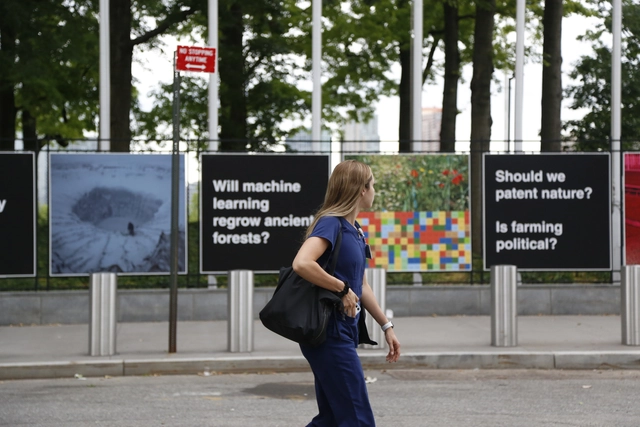
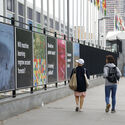
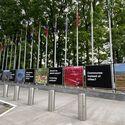
OMA's research and publication branch AMO has taken over the fences of the United Nations Headquarters in New York for a public exhibition showcasing a follow-up of the 2020 Countryside, The Future project. Curated by Rem Koolhaas and Samir Bantal, director of AMO, Countryside at the United Nations, invites reflection and public discussion on the topics of agricultural innovation, ecological change and food production in anticipation of the UN Food Systems Summit taking place in September 2021.
Following the Industrial Revolution, many European cities faced an unprecedented rise in the rate of population growth, intensified by the migration of people from rural areas to urban areas seeking better opportunities.
Although cities became more inviting, problems such as pollution and the growth of informal settlements also intensified. Meanwhile, the countryside provided proximity to nature and an abundance of natural resources, but it also suffered from isolation and a decrease in employment opportunities.
Titled "Trouble in Paradise", the Polish pavilion at the 17th International Architecture Exhibition – La Biennale di Venezia, will explore the countryside and observe how rural areas are an important element of building sustainable human environments, given the crises the world is surrounded with today. Curated by PROLOG +1 along with an international group of architects and artists, the national pavilion will be on physical display at the Giardini di Venezia, and online from May 22nd to November 21st, 2021.
Sonnenklang / Christoph Hesse Architects. Image Courtesy of Christoph Hesse Architects
Vladimir Belogolovsky speaks with Christoph Hesse over Skype between New York and his office in Korbach, Germany to discuss his pioneering projects and why working in the countryside is relevant.
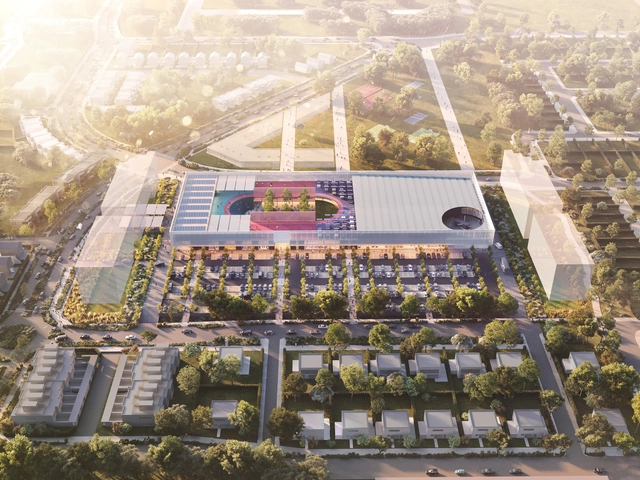
OMA is designing a 10,000-square-metre shopping center integrated with community spaces in Melbourne, Australia. Entitled the Wollert Neighborhood Centre, the project is located in Wollert, Whittlesea, one of Victoria’s fastest-growing regions, in the suburbs of Melbourne.
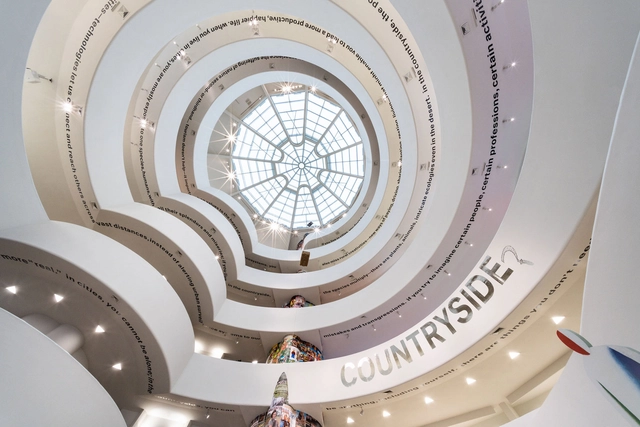
Entering the Guggenheim Museum, visitors find themselves surrounded by a feast of vivid colors and mismatched fonts. Passing the gigantic green tractor at the entrance, they move across the ground floor, littered with stickers, like a lunchbox, or a lid of a laptop. A thick pillar that pierces the internal atrium has become a garish advertising column. A bale of hay, a drone, and some other object (impossible to identify) levitate high overhead. A cardboard cutout of Joseph Stalin on robot wheels moves down the ramp, scaring off visitors. Big reflective letters say: “Countryside, The Future”.
Architect Rem Koolhaas, the founder of the Office of Metropolitan Architecture (OMA) and Samir Bantal, director of OMA’s internal think-tank AMO, created this utterly confusing environment to exhibit years of research on the space beyond the boundaries of the 21st-century city.
Videos
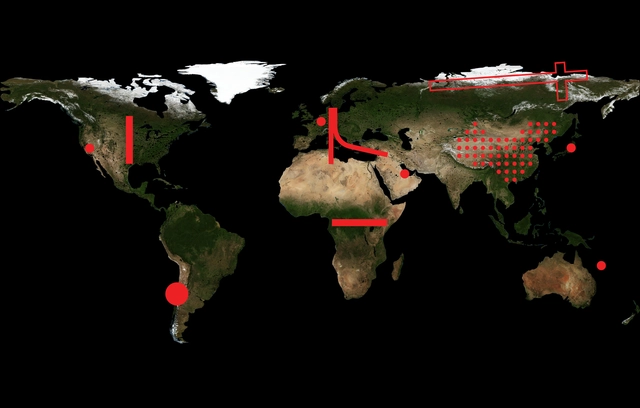
AMO’s selection of unique and highly specific conditions distributed over the globe serves as a framework for their research and represents where the world is headed.. Image Courtesy of OMA
Opening in February 2020, the Solomon R. Guggenheim Museum is showcasing an exhibition by Rem Koolhaas and AMO, the think tank of the Office for Metropolitan Architecture (OMA). Entitled Countryside, The Future the exhibition seeks to investigate urgent environmental, political, and socioeconomic transformations in the nonurban areas.
As a generation that has the most flexibility in day-to-day life, live-work dwellings are becoming more and more popular; a topic that is expected to be seen everywhere in 2018. We can now work anywhere as long as we have a decent internet connection and something to type on. Penda’s latest design, Yin & Yang house, calls upon millennials to take advantage of this ability and move back to the countryside for a better quality of life.
Courtesy of Strelka Institute for Media, Architecture, and Design, via Flickr
In the latest of a series ofpolemicalarguments against smart cities, Rem Koolhaas has penned perhaps his most complete analysis yet of the role that emerging technologies and the way they are implemented will affect our everyday lives, in an article over at Artforum. Taking on a wide range of issues, Koolhaas goes from criticizing developments in building technology as a "stealthy infiltration of architecture via its constituent elements" to questioning the commercial motivations of the (non-architects) who are creating these smart cities - even at one point implicating his other erstwhile recent interest, the countryside, where he says "a hyper-Cartesian order is being imposed." Find out more about Koolhaas' smart city thoughts at Artforum.