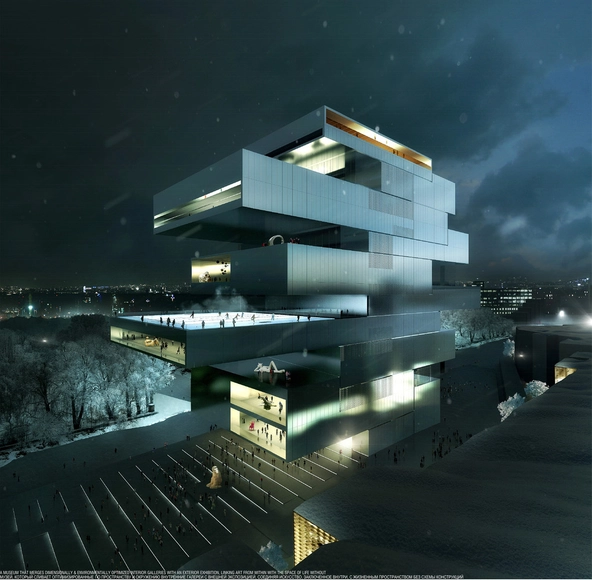
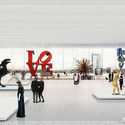
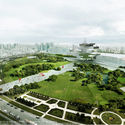
Speaking to the Art Newspaper Russia, the head of the NCCA Sergey Perov confirmed that the project has been officially scrapped due to lack of funding.
https://www.archdaily.com/902678/heneghan-pengs-moscow-contemporary-arts-center-scrapped-due-to-funding-shortageNiall Patrick Walsh
Videos
A still from PLANE-SITE's video of Jorge Hernandez' installation at the Palazzo Bembo in Venice. Image Courtesy of PLANE-SITE
The European Culture Center’s Time Space Exhibition during the Venice Biennale 2018 features a new short film depicting the spatial qualities of light in architectural design, both as a material and metaphor.
This collaboration between architect and professor Jorge L. Hernández and photographer Carlos Domenech explores their endeavors in providing a lighting-based design solution for the Williamsburg, Virginia courthouse. Battling the issues of security and privacy of the court with the need for natural daylight, Hernández recreated the cupola, a vernacular roof turret intended for ventilation for illumination instead. Light, entering the courtroom from above, transforms the previously dull space and becomes, “an allegory for justice”.
The European Culture Center’s Time Space Exhibition during the Venice Biennale 2018 features a new short film depicting the spatial qualities of light in architectural design, both as a material and metaphor.
This collaboration between architect and professor Jorge L. Hernández and photographer Carlos Domenech explores their endeavors in providing a lighting-based design solution for the Williamsburg, Virginia courthouse. Battling the issues of security and privacy of the court with the need for natural daylight, Hernández recreated the cupola, a vernacular roof turret intended for ventilation for illumination instead. Light, entering the courtroom from above, transforms the previously dull space and becomes, “an allegory for justice.”
Material manufacturer Re-Structure Group has begun using a new 3D cementitious sandwich panel in the United States to help protect homes during natural disasters. As CNBC reports, the material has been widely used around the world, but is now being tested in the United States. Designed for mass production, the panels are fireproof, seismic resistant beyond any earthquake recorded in human history, and are hurricane resistant. The material is made as a sustainable and resilient building system that aims to reshape the U.S. housing market.
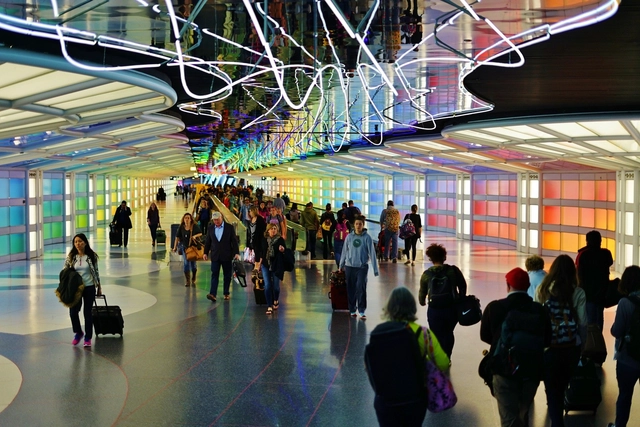
Studio Gang, BIG, Calatrava and SOM are among twelve leading architecture teams vying to work on the Chicago O'Hare International Airport expansion. The city’s request for qualifications calls for demolishing O'Hare's Terminal 2 to replace it with a global concourse and terminal for both domestic and international flights from United and American Airlines. The city’s Department of Procurement Services estimates the total costs of the expansion process (from design through construction) will cost an approximate $8.7 billion. Known as O’Hare 21, the project represents O’Hare’s first major overhaul in 25 years.
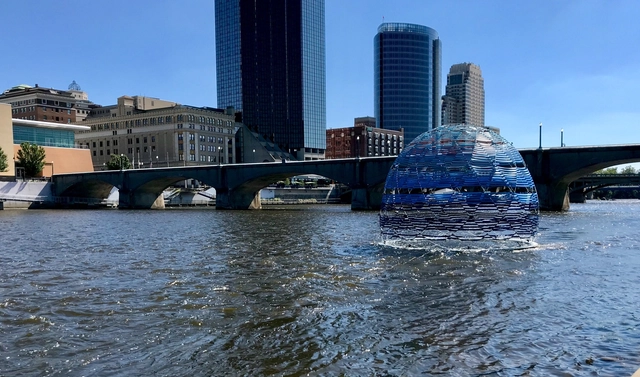
SLO Architecture has built Harvest Dome 3.0, a floating dome project made to celebrate the riparian heritage of Grand Rapids. Made with local materials harvested from the Grand River industry, the 20-foot-diameter orb would be constructed from brightly colored surplus seat-belts and studded with rearview mirrors, set atop a ring of 128 repurposed two-liter soda bottles. The project explores the city’s legacy of manufacturing and a history of production.
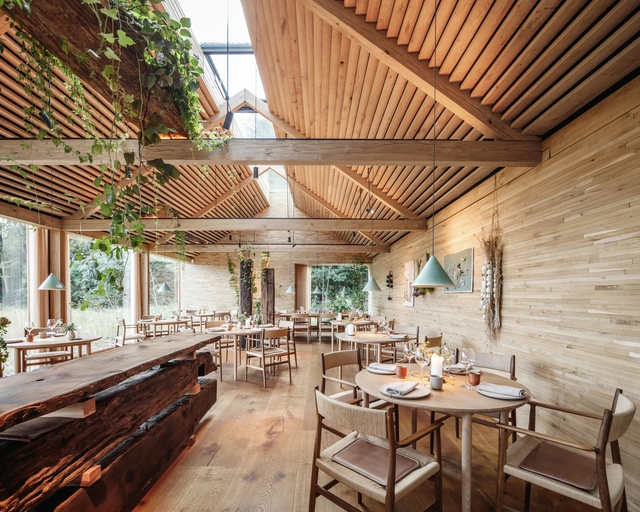
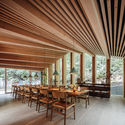
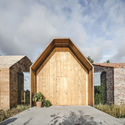
Bjarke Ingels Group has designed a cluster of buildings as the new home for Noma, one of the world’s most acclaimed restaurants. Situated between two lakes within the community of Christiania in Copenhagen. Built on the site of an ex-military warehouse once used to store mines for the Royal Danish Navy, the project is imagined as an intimate culinary garden village. With interiors completed in collaboration with Studio David Thulstrup, the project dissolves the restaurant’s individual functions into a collection of separate yet connected buildings.
When it comes to sustainability, the Netherlands has always been at the forefront. In recent news, Zwolle, one of the country's "greenest cities," implemented the world's first bicycle lane composed of post-consumer waste that would normally be discarded or incinerated.
To create the material, Zwolle used old, plastic bottles, festival beer cups, cosmetic packaging, and plastic furniture. Still, in the pilot phase, the bike path contains 70% recycled plastic in its 30-meter pathway. Although, the city hopes to create a bike path made entirely of recycled plastic in the future.
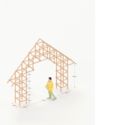
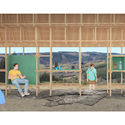
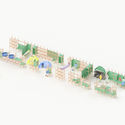
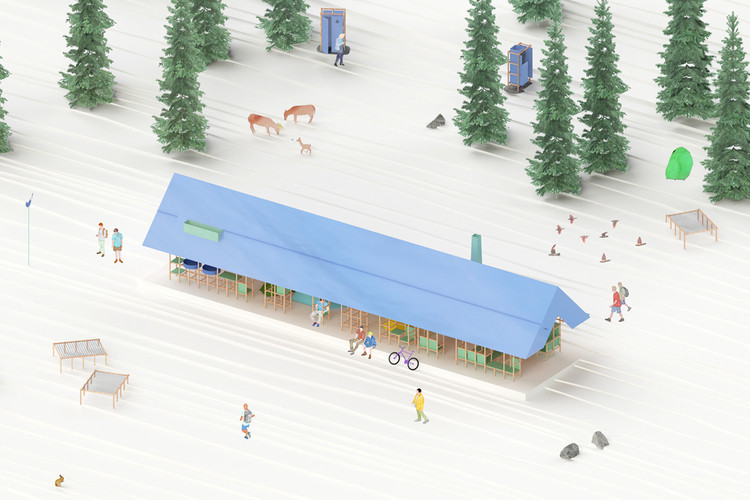
French architects USUS Architectes reinvent the typical campground by designing a modular multipurpose structure as an ecologicalbivouac along the trekking routes in Massif Central, France. Together, the Association of Natural Parks of the Massif Central (IPAMAC), PNR Livradois-Forez, PNR Millevaches in Limousin, and the International Center for Art and Landscape (CIAP) wanted to tackle the lack of suitable accommodation along the trails. After deliberating from over 64 proposals, the agencies ultimately selected Peaks + Simon BOUDVIN and USUS + Zebra3 as project co-laureates of the competition.
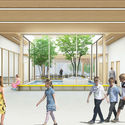
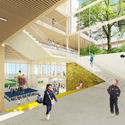
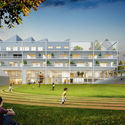
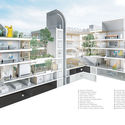
Office Ou, a Toronto-based landscape design firm, in collaboration with INOSTUDIO Architects, has designed a new public school for the historic Smíchov district of Prague. The initial competition, organized by the Centre for Central European Architecture, chose the Office Ou & INOSTUDIO design out of 66 anonymous submissions. This school would be the first new public school built in Prague's urban center in close to 100 years.
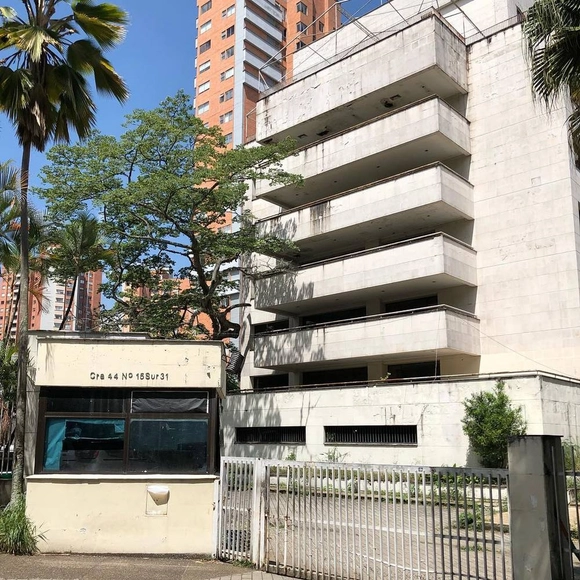
After a series of failed attempts, the Monaco building in Medellín will finally be demolished at the beginning of 2019, according to the Colombian newspaper El Tiempo.
The Monaco building, which was converted into a municipal asset this year, was the residence of the late drug trafficker Pablo Escobar in the El Poblado neighborhood of Medellín. In January of 1988, a car bomb with 80 kilograms of dynamite exploded in front of the building giving rise to a series of attacks between the drug cartels in Medellín.
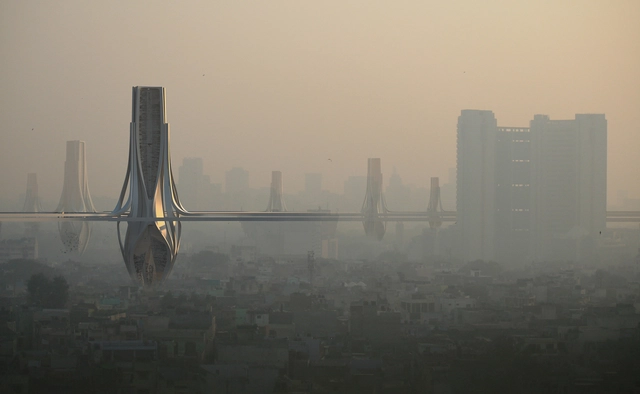
Dubai-based architecture firm Znera Space have released "The Smog Project," a design to clean the air in Delhi, one of the world's most polluted cities. Shortlisted in the World Architecture Festival's Experimental Project Category, the Smog Project hopes to address Delhi’s noxious air quality by adding a network of smog filtering towers throughout the entire city. India's capital has become known for toxic smog levels from overcrowding and industrial waste. Znera's proposal hopes to cleanse the smog chamber and generate smog free air.
In our last two articles we’ve given you a set of tips for presenting your products and materials to architects through content that they value so that you can develop interest in your brand. This strategy is called Content Marketing and its purpose is to give such useful information that potential clients become loyal to your products. Content Marketing can take the form of online articles, videos and tutorials that target a specific audience.
In this edition, we’ll be focusing on important tips for generating engaging titles and attractive images that help to successfully deliver your message.
https://www.archdaily.com/902469/how-to-generate-content-thats-interesting-for-architects-part-3Pola Mora
Greek architect Viktoria Lytra has created a set of images exploring the relationship and interaction between architecture and fashion. FormFollowsFashion investigates the common purpose of architecture fashion, to create shelter for the human body, placing aesthetic as a common factor in novel approaches to the design of clothes and buildings.
Lytra’s series features various movements and styles, such as minimalism, deconstructivism, and postmodernism, playing on common geometric characteristics such as folks, pleats, curves, prints, and twists.
https://www.archdaily.com/902370/does-form-follow-fashion-viktoria-lytras-montages-keep-iconic-architecture-in-vogueNiall Patrick Walsh
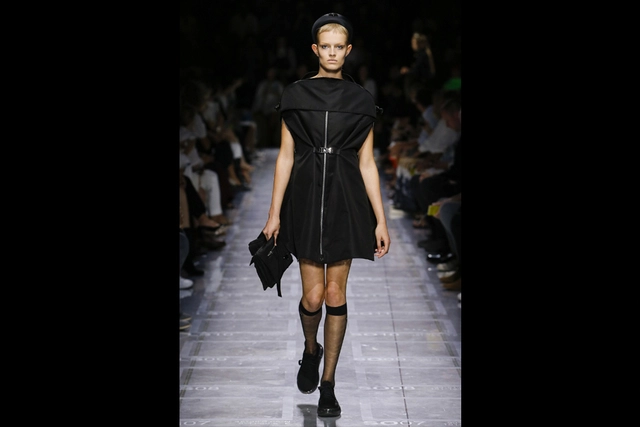
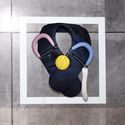
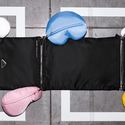
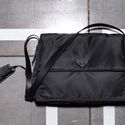
DS+R partner Elizabeth Diller has designed two new pieces for Prada's 2019 spring/summer womenswear collection. Created from Prada nylon as part of the Prada Invites project, the two pieces include a garment bag with utilitarian zippers and buckles and a raincoat that transforms from the same yoke style bag. The yoke style bag was also imagined as a lighter item for women to carry sketchpads, sandwiches and lipstick. The Prada invitation was made to expand the company's fascination with multifaceted representations of contemporary femininity.
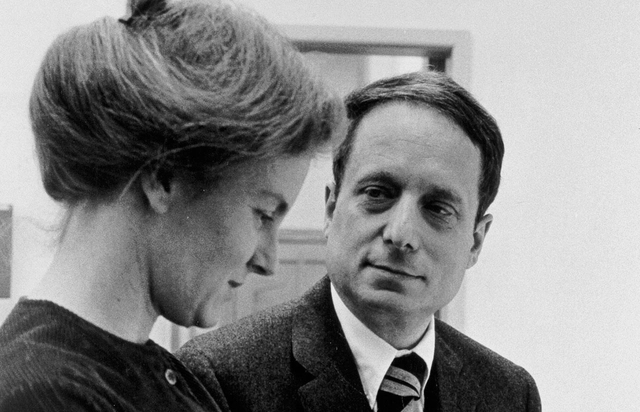
Robert Venturi - and the postmodernist movement he helped to form - was occasionally a divisive figure. For hardcore modernists, the referencing of prior styles was an affront to the future-facing architecture they had tried to promote. For traditionalists, the ebullient and kitschy take on classicism was an insult to the elegance of the past.
https://www.archdaily.com/902446/this-week-in-architecture-complexity-and-contradictionKatherine Allen
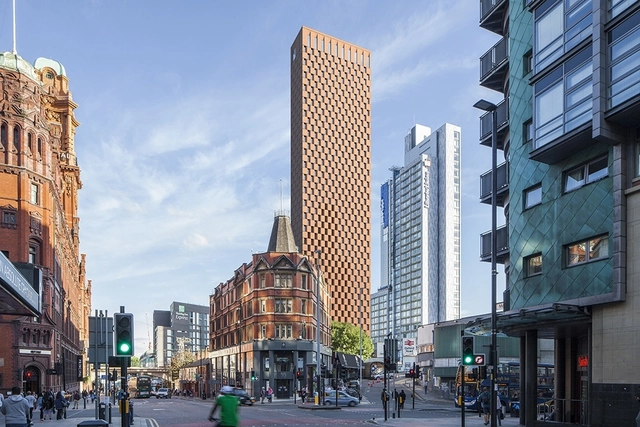
Housing developer Student Castle has partnered with Glenn Howells Architects to create a 55-story red brick tower in Manchester city center. Built to include 850 rooms and co-working space for students and start-up businesses, the new skyscraper would overlook Oxford Road station next to Great Marlborough Street tower. Glenn Howells says the scheme pays homage to the red brick chimneys that once dominated the city’s skyline.
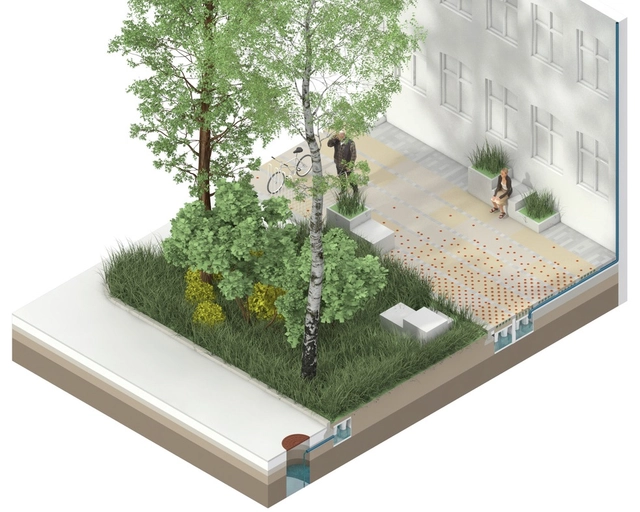
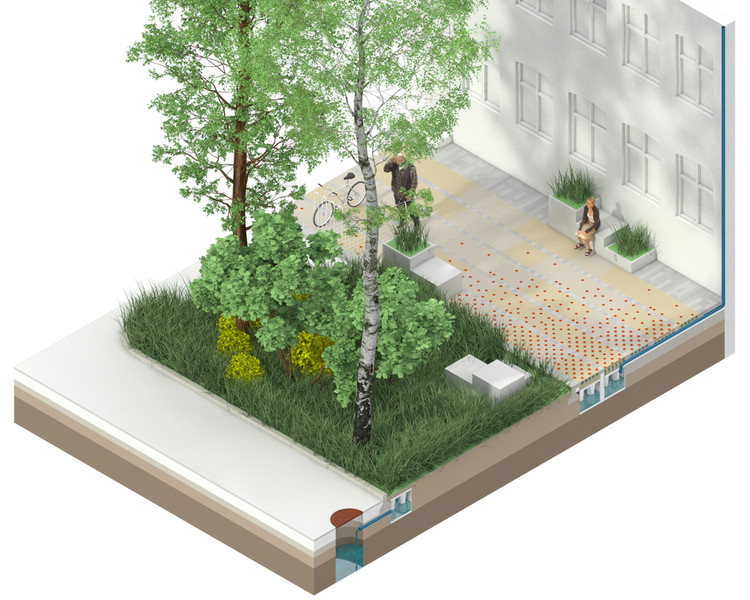
The Climate Tile is a pilot project designed to catch and redirect 30% of the projected extra rainwater coming due to climate change. Created by THIRD NATURE with IBF and ACO Nordic, the project will be inaugurated on a 50m pavement stretch at Nørrebro in Copenhagen. The first sidewalk was created as an innovative climate project that utilizes the Climate Tile to create a beautiful and adaptable cityscape. Aimed at densely populated cities, the tile handles water through a technical system that treats water as a valuable resource.
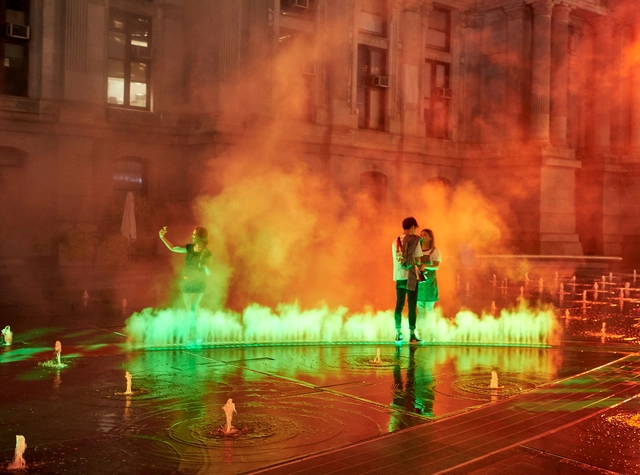
Artist Janet Echelman has unveiled her latest site-specific work of public art, with the activation of the first phase of “Pulse” in Philadelphia’s Dilworth Park. Pulse seeks to reshape urban space “with a monumental, fluidly moving sculpture that responds to environmental forces including wind, water, and sunlight.
Inspired by the square’s history as a water and transportation hub, Echelman’s work traces the paths and trolley lines of the subway beneath, with four-foot-tall curtains of colorful atomized mist traveling across the park’s fountain surface in response to passing trains underneath.
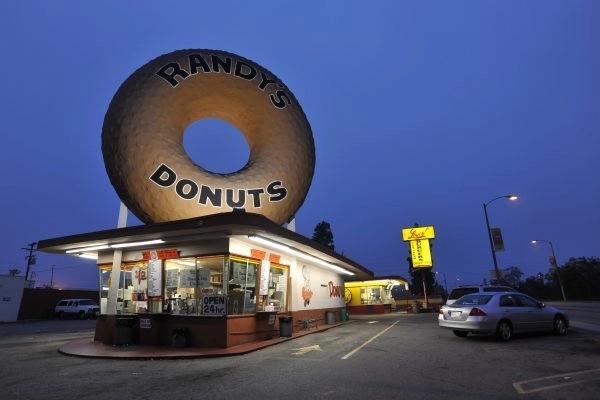
Randy’s Donuts shop and sign (a “decorated shed”) by Extra Medium (CC BY 2.0). Image via 99 Percent Invisible
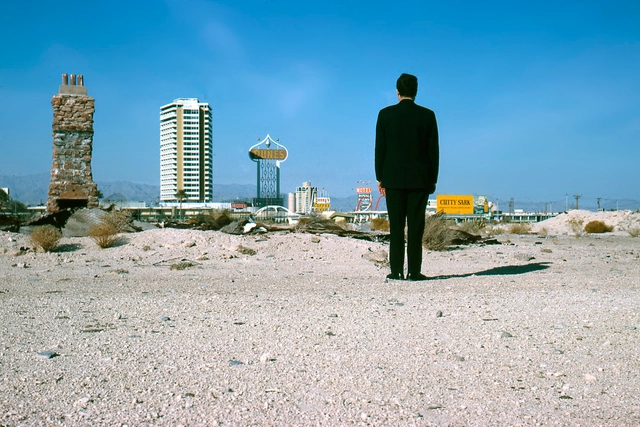
Though the Las Vegas Strip may be garish to some, with its borderline intrusive décor and “pseudo-historical” architecture, some professional architects, most notably Robert Venturi and Denise Scott-Brown, have become captivated by the “ornamental-symbolic elements” the buildings present. The two architects developed the curious design distinction between a “duck” and a “decorated shed”, depending on the building’s decorative form. In his essay for 99% Invisible, Lessons from Sin City: The Architecture of “Ducks” versus “Decorated Sheds”, Kurt Kohlstedt explores how the architects implemented their knowledge of ornamentation in their own works and began an architectural debate still ongoing today.
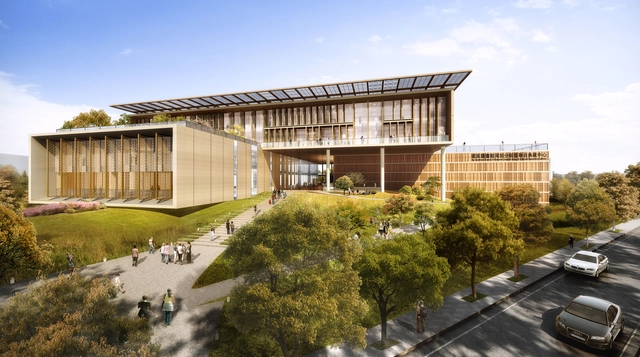
Taiwan National Library. Image Courtesy of BAF and Carlo Ratti
Bio-Architecture Formosana (BAF) together with Carlo Ratti Associatti have won the international competition for the Southern branch of the Taiwan National Library and Repository in Tainan, Taiwan. With the concept of "Library as a Town", the team created a proposal for a new public building that will accommodate a library, book museum and a joint archives center. Selected among nine competitors, the winning design will be placed in the southern part of Taiwan in the XinYing District. The proposal is made to investigate the role of the library in the future.
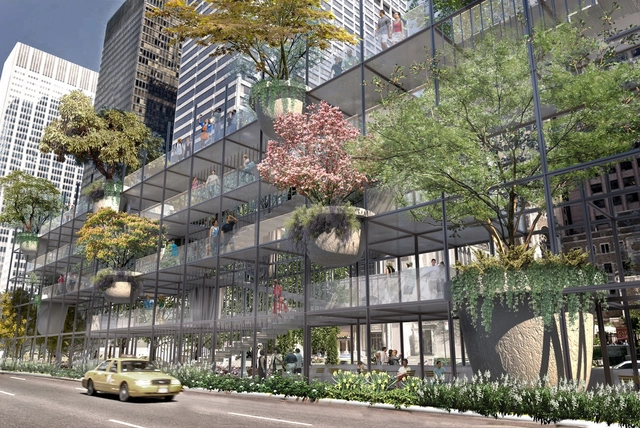
Studio JCW have created a proposal to revitalize the medians of Park Avenue in New York City. Founded by Chanon Wangkachonkait and Jaehong Chung, Studio JCW argues that Park Avenue’s medians have been a fixture on the boulevard for more than a century. Their Big Shelf proposal would create elevated public spaces within a grid structure for expanded programming. The design was made to echo the structural facades of surrounding skyscrapers and building grids.











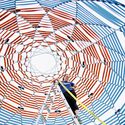



_Prudence_Upton.jpg?1537804562 "© Prudence Upton")


_Hamilton_Lund_2017251.jpg?1537804531 "© Hamilton Lund")




.jpg?1537110386&format=webp&width=640&height=580)