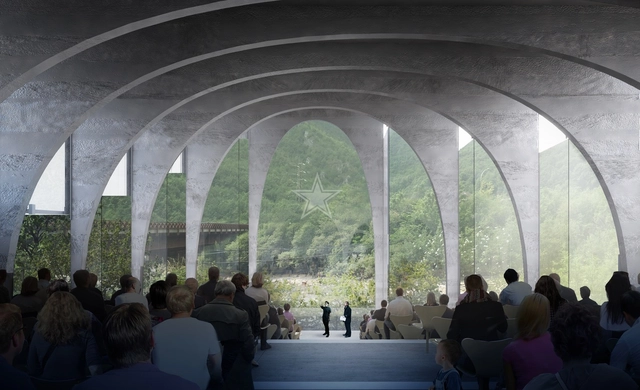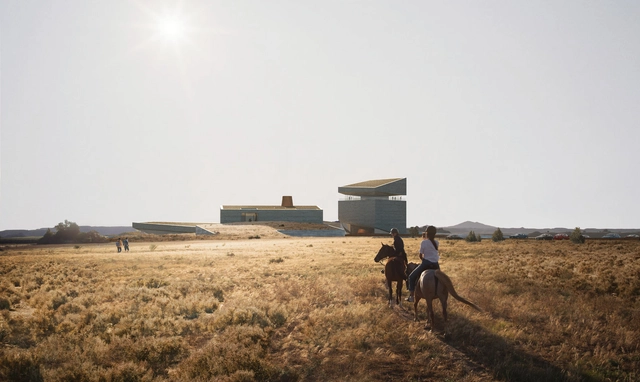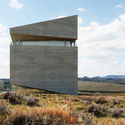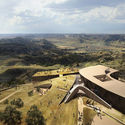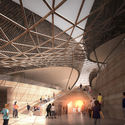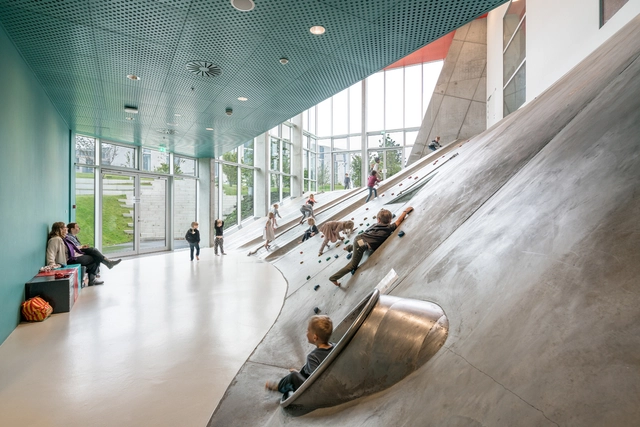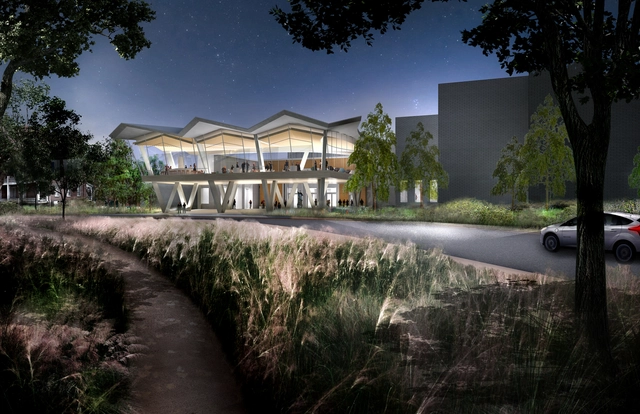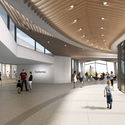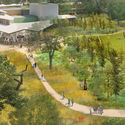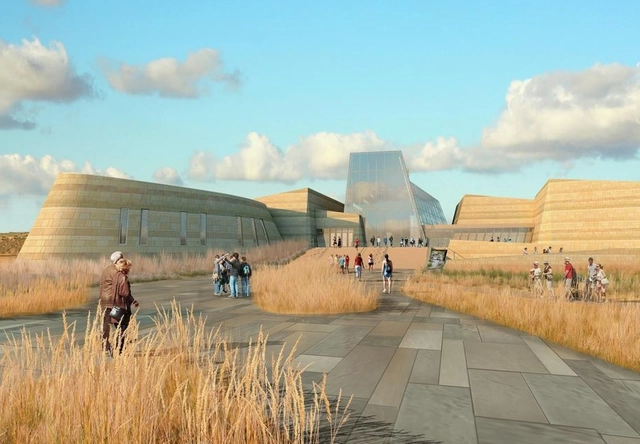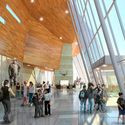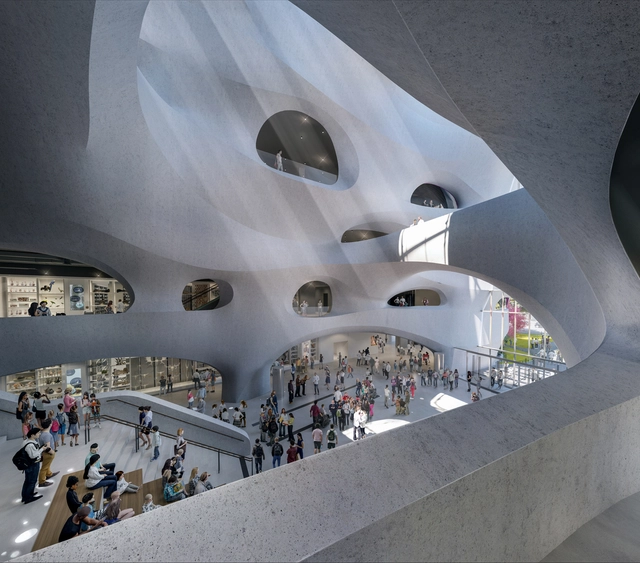
Snøhetta, Studio Gang and Henning Larsen have unveiled their designs for the new Theodore Roosevelt Presidential Library in North Dakota. The teams were selected from 12 firms, and the final design will be made to respond to the ecology of the Badlands. The three proposals showcase integrated architecture and landscape approaches designed to celebrate Theodore Roosevelt’s life.
Denise Scott Brown once said: “Architecture can’t force people to connect; it can only plan the crossing points, remove barriers, and make the meeting places useful and attractive.” Although it cannot control the outcome, architecture holds the potential to set the stage for chance encounters and social interactions, thus nurturing community building and influencing the fabric of our social culture. The following explores how architecture can improve the social capital of its surroundings through design strategies and thoughtful programming, creating the fertile ground for social interaction among different groups of people.
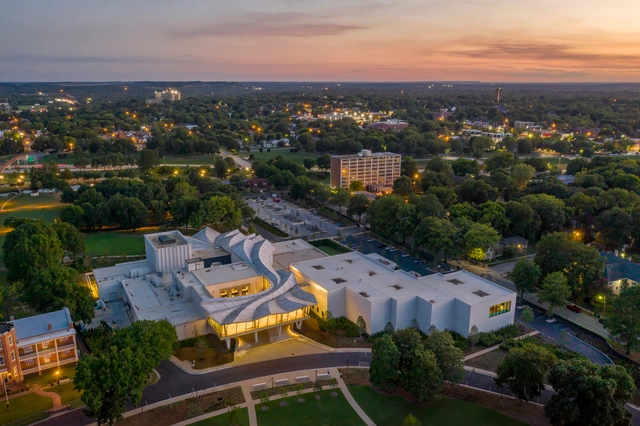
Arkansas Art Center. Image Courtesy of Studio Gang and SCAPE
Studio Gang and SCAPE are working in collaboration with Polk Stanley Wilcox Architects on the Arkansas Arts Center currently under construction in MacArthur Park, Little Rock. The work is being realized through a public-private partnership, with a $31 million commitment from the City of Little Rock, funded through a hotel-tax revenue bond. The project will house the Arkansas Arts Center Foundation Collection, which includes 14,000 works of art from around the world.
Henning Larsen, Snøhetta, and Studio Gang were selected as finalists to design the new Theodore Roosevelt Presidential Library in North Dakota. The teams were selected from 12 firms, and the final design will need to respond to the ecology of the Badlands and embrace the complexities of Theodore Roosevelt’s life.
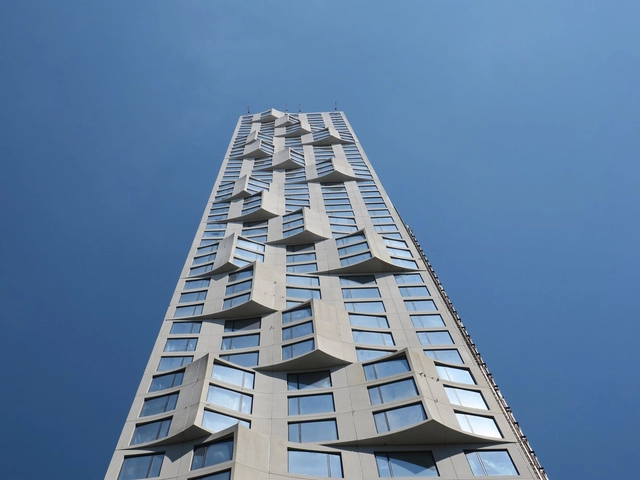
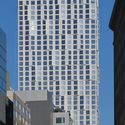
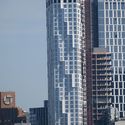
Paul Clemence has just released his latest photographs of the Studio Gang-designed 11 Hoyt tower in Downtown Brooklyn, New York. Almost completed, the residential development is characterized by an eye-catching crafted precast concrete and glass façade.
Open More Doors is a section by ArchDaily and the MINI Clubman that takes you behind the scenes of the world’s most innovative offices through exciting video interviews and an exclusive photo gallery featuring each studio’s workspace.
This month, we talked with American architecture and urban design firm Studio Gang and how their Chicago office focuses on ecological biodiversity, collaborative multidisciplinary projects, and finding potential in historic structures.
Studio Gang and SCAPE have broken ground on the new Arkansas Arts Center (AAC) in Little Rock. The current facility will be transformed, and the project includes a landscape design that will connect the AAC with the surrounding MacArthur Park. The project was made to embrace the Arkansas Arts Center’s history and create a contemporary space for the future.
Located in the meatpacking district, adjacent to the High Line, in New York City, 40 Tenth Avenue, a 10-story office tower designed by Studio Gang is now ready to welcome its first tenants. With a distinctive structural system, the building twists in order not to cast his shadow on the surrounding, responding to the solar angles.
Design:ED Podcast is an inside look into the field of architecture told from the perspective of individuals that are leading the industry. This motivational series grants unique insight into the making of a successful design career, from humble beginnings to worldwide recognition. Every week, featured guests share their personal highs and lows on their journey to success, that is sure to inspire audiences at all levels of the industry. Listening to their stories will provide a rare blueprint for anyone seeking to advance their career, and elevate their work to the next level.
In this episode, Juliane Wolf discusses how Studio Gang continues to successfully contribute to the iconic Chicago Skyline, how they are actively working to advance the issues of equality in architecture, and the firm continues to elevate design at all scales.
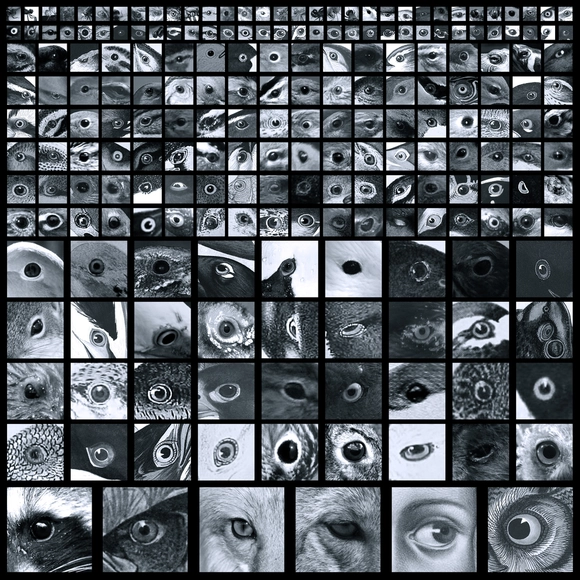
The eyes of the more than 250 animal species who have been observed at Studio Gang’s Nature Boardwalk at Lincoln Park Zoo in Chicago. Image by Studio Gang
What happens when the sensor-imbued city acquires the ability to see – almost as if it had eyes? Ahead of the 2019 Shenzhen Biennale of Urbanism\Architecture (UABB), titled "Urban Interactions," ArchDaily is working with the curators of the "Eyes of the City" section at the Biennial to stimulate a discussion on how new technologies – and Artificial Intelligence in particular – might impact architecture and urban life. Hereyou can read the “Eyes of the City” curatorial statement by Carlo Ratti, the Politecnico di Torino and SCUT.
“We all live in an ecosystem; we just don’t know it. When it comes to urban areas, people have an ecological blind spot.” — Seth Magle, Director, Lincoln Park Zoo Urban Wildlife Institute, Chicago.
The advance of AI technologies can make it feel as if we know everything about our cities—as if all city dwellers are counted and accounted for, our urban existence fully monitored, mapped, and predicted.
https://www.archdaily.com/918968/eyes-of-the-city-seeing-and-designing-beyond-the-human-jeanne-gang-for-the-shenzhen-biennale-uabb-2019Studio Gang
Studio Gang is celebrating a significant milestone with the topping out of their twisting high-rise MIRA tower in San Francisco. Construction of the 400-foot-tall tower began in mid-2017, with steady progression leading to projected occupancy in late 2019. The scheme's design is centered on the evolution of the bay window element, a feature common to San Francisco’s early houses. The bay window is reimagined in a high-rise context, twisting across the full height of the tower to offer views across the city.
O'Hare Global Terminal and Concourse. Image Courtesy of Studio ORD
Studio Gang has been selected to lead the $8.5 billon O'Hare 21 International Airport expansion in Chicago. Chosen from a list of firms including BIG, Calatrava and SOM, the Studio Gang team is part of the Studio ORD partnership. They won the project for the Global Terminal and Concourse with three volumes converging in a central hub. Designed to celebrate Chicago’s history as a city shaped by lines of movement, the project represents O’Hare’s first major overhaul in 25 years.
Studio Gang has released images of their proposed high-rise MIRA residential scheme in the heart of San Francisco. Currently under construction, the 400-foot-tall tower will contain almost 400 residential units when completed, 40% of which will be below market rate.
The scheme's design is centered on the evolution of the bay window element, a feature common to San Francisco’s early houses. The bay window is reimagined in a high-rise context, twisting across the full height of the tower to offer views across the city.
Studio Gang has released details of their first project in Los Angeles, a 26-story mixed-usetower designed in collaboration with local development partner Creative Space and European lifestyle brand MOB. The scheme places an emphasis on community spaces, with a curved form creating dynamic public plazas at street level, forming a link between Chinatown, the recently-opened LA State Historic Park, Union Station, and El Pueblo.
Located on 643 North Spring Street, the scheme will provide 300 apartments ranging from studios to three-bedroom units, and a 149-room hotel operated by MOB. Emphasizing the importance of community space and interaction, the residents and hotel guests will share a rooftop amenity deck with landscaped terraces on the second and third floor, as well as a gym, coworking spaces, rentable offices, pop-up stores, a rooftop swimming pool and bar, and space for outdoor cooking.
https://www.archdaily.com/893019/studio-gangs-curved-mixed-use-tower-to-be-their-first-project-in-los-angelesNiall Patrick Walsh
Studio Gang’s 10-story commercial “Solar Carve Tower” has topped out in New York’s Meatpacking District. Officially named “40 Tenth Avenue,” the scheme responds to a perceived lack of site-specific design in New York, with Studio Gang prioritizing “intentionality and contextuality” as their guiding principles. The scheme is therefore defined by a dramatic curtain wall, chiseled shape, and a dynamic relationship with its surrounding environment.
Jeanne Gang, the founder of Studio Gang Architects, has made a name for herself as a designer who can design both show-stopping skyscrapers and sensitive small-scale buildings. From her breakout 2009 Aqua Tower project, to the hypothetical “Polis Station” proposal presented at last year's Chicago Architecture Biennial, Gang has established herself as perhaps Chicago's leading architect.
Gang is also included as part of Vladimir Belogolovsky's ongoing City of Ideas exhibition tour, representing Chicago among 9 other significant architects, each from a different global city. With the exhibition currently in Gang's home city at the Chicago Design Museum until February 25th, here as part of his City of Ideas column on ArchDaily Belogolovsky presents a shortened version of the interview featured in the exhibition.
At this year’s Chicago Architecture Biennial the directors Joseph Grima and Sarah Herda asked participating architects to demonstrate the “State of the Art of Architecture" by submitting projects that they felt told a story about architecture’s importance in society. As explained in this video by Politico Magazine, native Chicagoan Jeanne Gang of Studio Gang Architects responded to this call by looking at an issue that has plagued American cities in startling ways in recent years: the troubled relationships between communities and their police forces. Often hidden behind fortress-like buildings, police stations in their current form tend to project an image closer to hostile than welcoming. But Gang believes it doesn’t have to be that way.