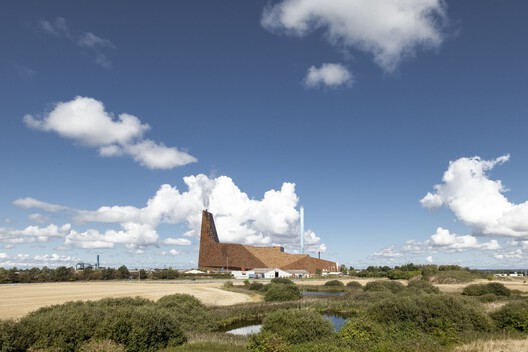
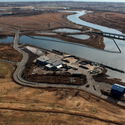
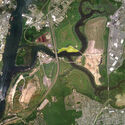
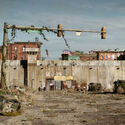
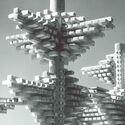
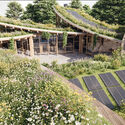
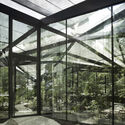
In 1948, Robert Moses established the Fresh Kills Landfill on the western shore of Staten Island. The site, chosen for its remote marshland and cheap land value, was meant to be temporary, but by 1955 it was the largest landfill in the world, receiving up to 29,000 tons of refuse per day at its 1991 peak. By 2001, after more than fifty years of continuous operation, Fresh Kills covered 2,200 acres, roughly three times the area of Central Park, and was, unspectacularly, visible from space. When it started, Moses didn't expect to design a dump but, without calling it that, a new landform with four artificial hills rising up to sixty meters above sea level built entirely from the accumulated residue of eight million daily lives.
That landform is now, slowly, becoming a park. James Corner Field Operations won the international design competition launched by the city in 2001, producing a master plan calledLifescape that will take thirty years to complete. The landfill's four mounds are being capped, planted, and gradually opened to the public. Methane from decomposing waste is captured and fed into an energy system as the wetlands are being restored around the engineered hills. Evidence of New York's consumption transformed into a feat of ecological engineering and an act of institutional memory management (a way of making a city's most embarrassing landscape slowly look like something it was always meant to be).
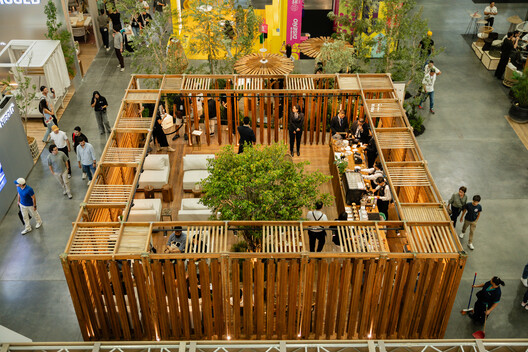
Cortesía de La Feria De Diseño Medellín powered by idd cologne
The 13th edition of La Feria De Diseño Medellín, powered by idd cologne, highlighted an evolution extending far beyond scale: over three days, Plaza Mayor brought together design, architecture, interior design, business, and knowledge on an increasingly international platform. Welcoming over 18,500 visitors and more than 22,000 participants across the city's broader ecosystem, the fair connected professionals, brands, and buyers around new ways of designing, specifying, and inhabiting spaces.
"Let us take a hard look at the facts." With this direct and hardly reassuring sentence, the director of the Office of Civil and Defense Mobilization opened The Family Fallout Shelter, a 32-page manual published by the U.S. government in 1959 amid Cold War tensions. The document taught families how to build shelters capable of protecting them from radioactive fallout after a possible nuclear attack and, through technical drawings and sketches, outlined solutions using concrete blocks, walls filled with earth or sand, underground structures, and ventilation systems. It was a survival manual that, in many ways, also functioned as a construction manual.
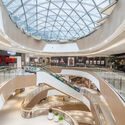
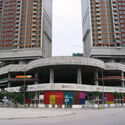
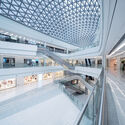
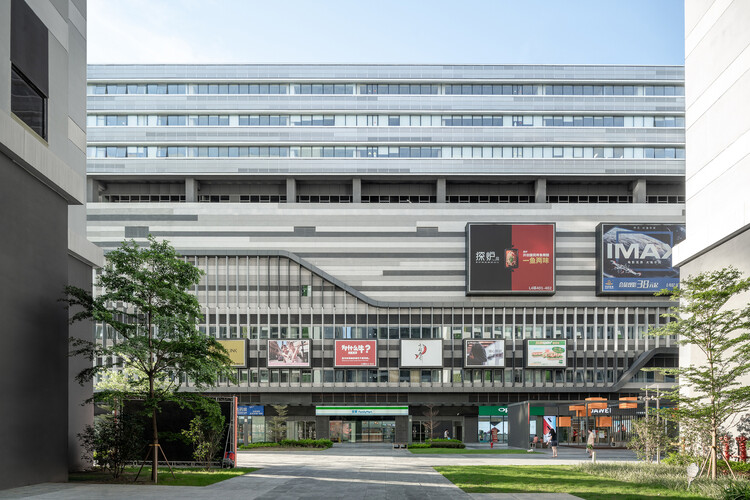
In many Asian cities, the summer climate can increasingly be experienced from a distance. In Hong Kong, it is possible to move from an apartment tower through a podium mall, enter the Mass-Transit-Railway system (MTR), arrive beneath another commercial complex, and continue through enclosed footbridges or underground passages while encountering remarkably little of the atmosphere outside. Heat, humidity, rain, and seasonal variation remain present, but they can be largely bypassed through a continuous network of conditioned interiors.
Over several decades, air-conditioning has expanded from a technology for cooling individual rooms into an infrastructure capable of producing an alternative urban environment. This has been particularly visible in parts of East Asia and South East Asia, where transit-oriented development frequently combines railway stations, shopping centres, housing, offices, and other everyday services within interconnected complexes. The Railway plus Property model has helped institutionalize this relationship between transport and development, creating districts where movement through the city is often inseparable from movement through privately managed interiors.
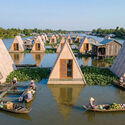
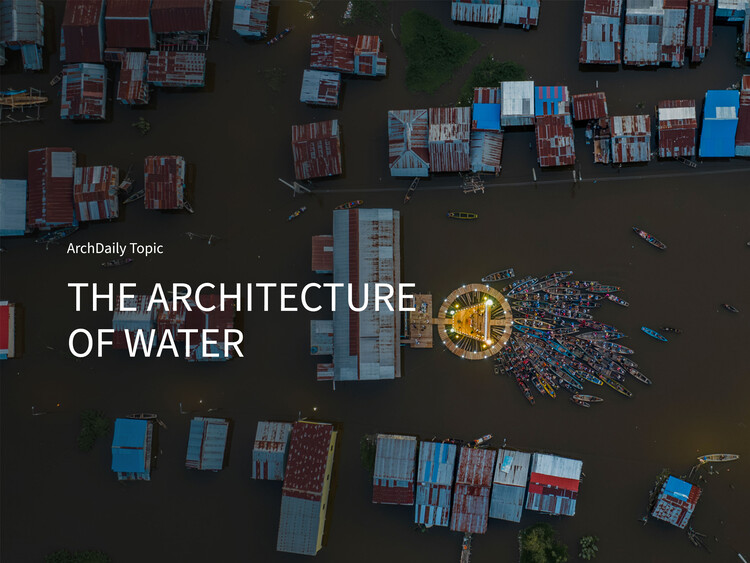
Water is life. Animals, plants, fungi, and bacteria all depend on it: water structures their cells, carries their nutrients, and hosts the chemistry that keeps them alive. Even the rare exceptions confirm the rule. Some seeds and spores can lose nearly all their water and enter a dormancy so deep that their metabolism almost stops, yet it is water that brings them back. In the most literal sense, water connects us.
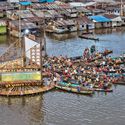
But it also divides us. Every year, thousands of people leave North Africa in overcrowded boats bound for Lampedusa, seeking better living conditions in Europe; more than 30,000 have died or gone missing in the Mediterranean since 2014. Water draws borders and controls flows. Before the war on Iran began in February 2026, the Strait of Hormuz carried around 25% of the world's seaborne crude oil, with effects felt in fuel prices far from the Gulf. Water also sits at the center of the environmental debate, where its excess can be as lethal as its absence. Severe floods increasingly strike countries that have contributed least to global emissions, while the largest polluters remain better equipped to resist. If water is life, it can also mean death. Ultimately, water is political.
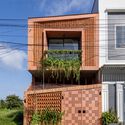
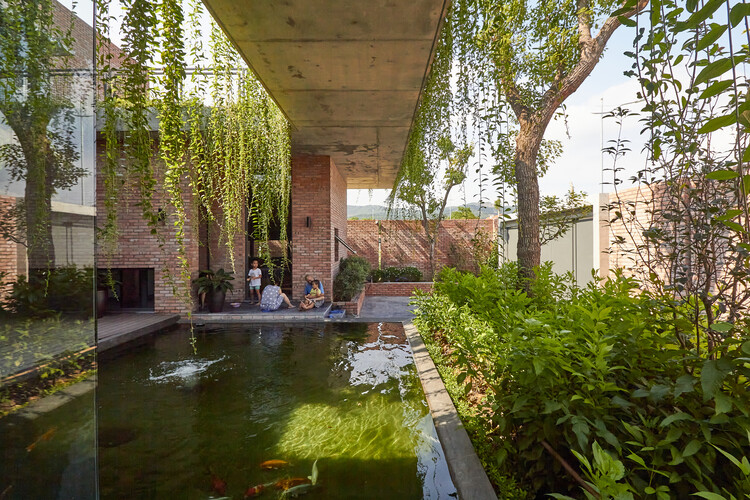
Contemporary Vietnamese residential architecture stands out for its deep sensitivity to local microclimates and context. Detailed studies of weather patterns consistently drive strategic design decisions, resulting in buildings that act as adaptive shelters. Facing conditions that range from scorching summers to dry, cold winters, along with frequent exposure to heavy rains, storms, and floods, architects adopt protective facade elements and multi-layered spatial configurations to shield interior spaces from harsh environmental factors.
The most innovative and impactful design projects arise from the intersection of different fields. The architecture community has always borrowed from, or been inspired by, other forms of cultural production such as film, photography, literature, and theatre. In the theatricality of Baroque churches and the cinematic sequences of contemporary museums, architects have looked beyond the building itself to understand how space can shape a story and construct an experience.
Worldbuilding takes this one step further. Instead of designing only the architecture of a place, it asks architects to establish the social rules, narratives, technologies, economies, atmospheres, behaviors, and relationships that make that place believable. Rather than beginning with, "What should this building look like?", worldbuilding suggests beginning with, "In what kind of world would this building make sense?"
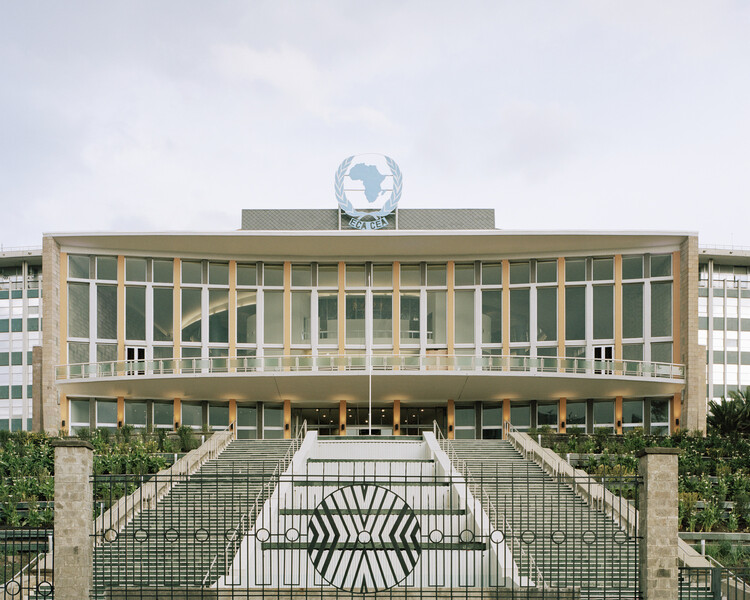
What makes a building worth preserving? Age is the most common answer, but not always the best one. A building from the 1950s or 70s may carry as much historical significance as a medieval cathedral; it simply demands a different framework, one that weighs political context, cultural meaning, and architectural innovation over the mere passage of time. This is especially true for modernist architecture across the so-called Global South, where the movement took on unique forms of expression.
It is precisely this conversation that ArchDaily and World Monuments Fund are now opening together. WMF brings on-the-ground conservation expertise across the world, and ArchDaily brings the editorial capacity to contextualize that work and connect it to a global audience. The goal is to do both at once: preserve places and tell their stories, shaping how modernist heritage is understood far beyond the field of preservation itself.
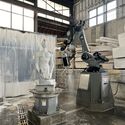
Architectural ornamentation has been a recurrent subject of debate across the industry for decades. A practice that was largely abandoned during the Modernist movement could now be standing on a platform that might, again, allow its resurgence, due to the current convergence of robotics, artificial intelligence (AI), and digital fabrication. Technology has seemingly removed the primary obstacle to decorative detail: the high cost of skilled manual labor. However, this new technical capacity demands a critical examination: What does ornamentation truly represent, and what do we gain or lose by resurrecting it through algorithmic design?
Videos
Smart Ergonomic Chair HBADA X7. Image Courtesy of HBADA
The office chair has evolved alongside changing workplaces over time. In each office era, the chair has reflected the way people work. Early office seating was built for clerical work: fixed wooden chairs arranged in rows across large administrative offices, where paperwork followed standardized routines. By the 1980s, computers began changing how people occupied a desk, and office furniture followed. Designers approached seating through ergonomics and biomechanics, refining adjustable height, lumbar support, synchronized recline, and the relationship between the body and the workstation. Later designers combined ergonomic research with new materials such as breathable suspension mesh instead of conventional foam upholstery.
First Prize Winner + Buildner Student Award: Linear Ritual. Image Courtesy of Buildner
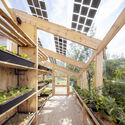
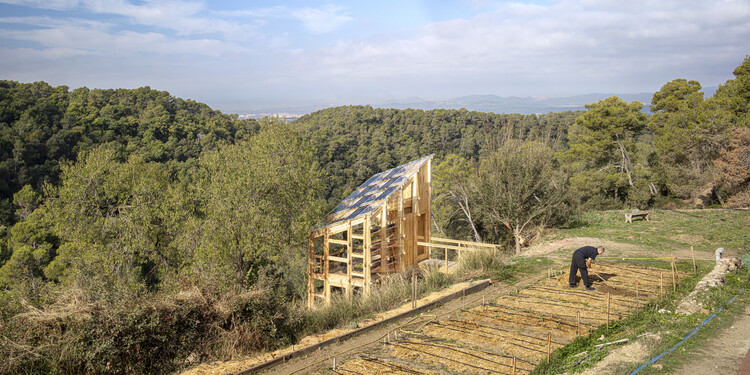
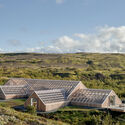
Buildner has announced the results of the Iceland Slow Sauna architecture competition, developed in partnership with Slow Travel Mývatn. Set beside Þúfa – Private Homestay in the volcanic landscape of Lake Mývatn in northern Iceland, the competition invited architects and designers to create a compact retreat combining a sauna and greenhouse within a single architectural experience. Rooted in the Icelandic tradition of bathing as a ritual of stillness and renewal, the brief asked participants to explore how heat, light, vegetation, and landscape could shape an intimate place of recovery and connection to nature.
Volcanic landscapes make geological change unusually visible. Lava hardens into new ground, and plants slowly take hold across it. Ash can remain in the landscape for years. Around active volcanoes, these processes are still underway, affecting where and how people build.
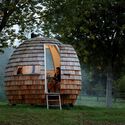
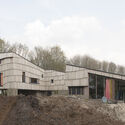
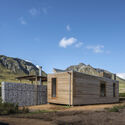
Yet these landscapes continue to attract houses and places of retreat. Their isolation and unusual terrain are often part of the appeal. Building there means bringing everyday life into a landscape that can still change.
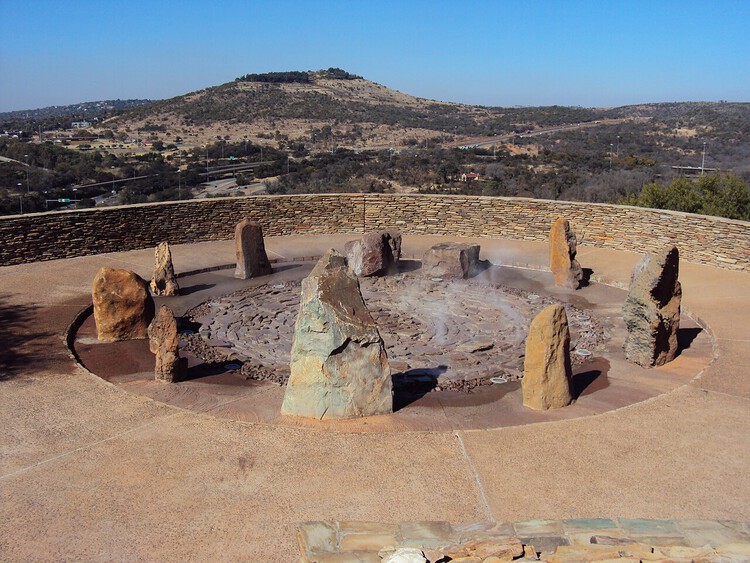
Isivivane - Freedom Park, Pretoria, South Africa. Image by Shosholoza
Liberation does not always begin with a monument. It may begin in a garden, a yard, a clearing, a field; in the occupation of land and the possibility of gathering there. Across histories shaped by colonialism and dispossession, space has been more than the setting in which liberation takes place. It has been one of its practices: cultivated, occupied, hidden within, moved through and collectively remade.
Wolff Architects' researchLiberation Gardensoffers the garden as one way of reading these spatial practices, not simply as planted ground, but as a space through which survival, nourishment and emancipatory imagination can be sustained. The garden in this sense is not defined by landscape design so much as by relationships between people and land, cultivation and knowledge, occupation and autonomy. It can hold cultural production alongside subsistence, and forms of collective life that emerge under conditions of violence and dispossession. Liberation, understood spatially, becomes as much about the possibility of inhabiting differently as it is about arriving at a final condition of freedom.
This article is part of "Thresholds", a special edition printed newspaper by Cobe Notes x ArchDaily.
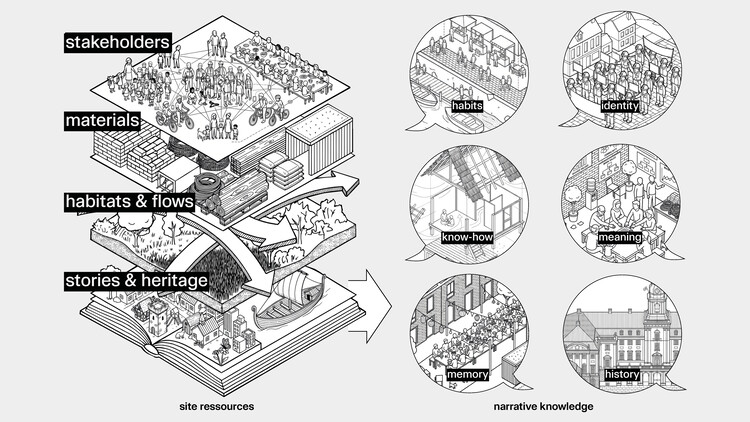
There are two unique things about being human that made us survive the early years and spread over the whole planet: sweating and storytelling. Sweating helps cool down the body when running long distances. Stories help us collaborate in big numbers and share knowledge across groups and generations. As architects, we still rely on the same tools to make visions become reality.
As professor of stories Angus Fletcher points out in his book Primal Intelligence, there is a common misconception about the role of stories: when our "rational" brain has developed an idea that we fail to explain to a wider group, we pack it into a story, and suddenly everybody understands. Fletcher argues that it actually works the other way around: ideas come from stories, our brain works in stories, and stories form reality. Architects have a derogatory term for turning that process the wrong side up: "post-rationalisation", for example when diagrams are made to explain a design that is already decided.
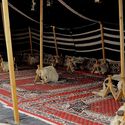
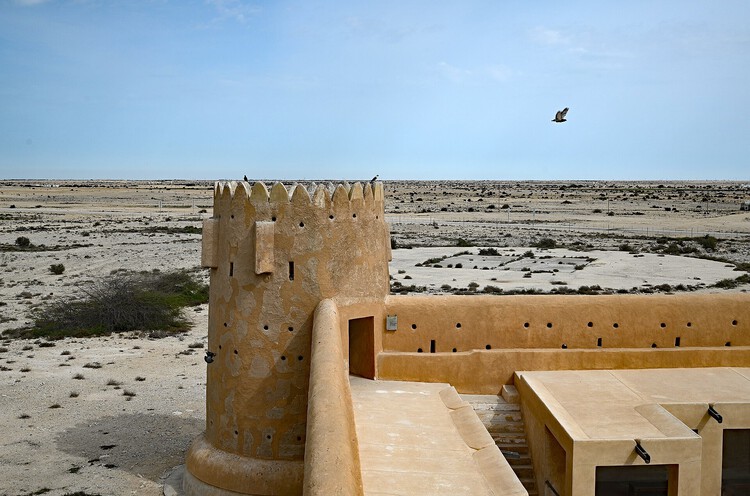
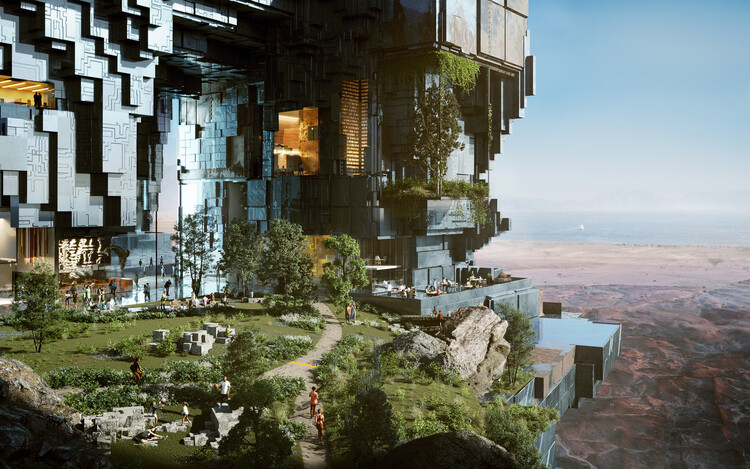
Home could extend between several places occupied at different points in the year. It extended across a larger geography of places that were left and returned to through the year. Many contemporary Gulf developments now attempt to bring contrasting climatic and spatial conditions into the same permanent urban system.
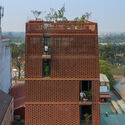
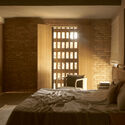
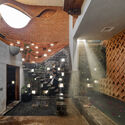
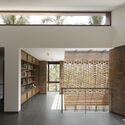
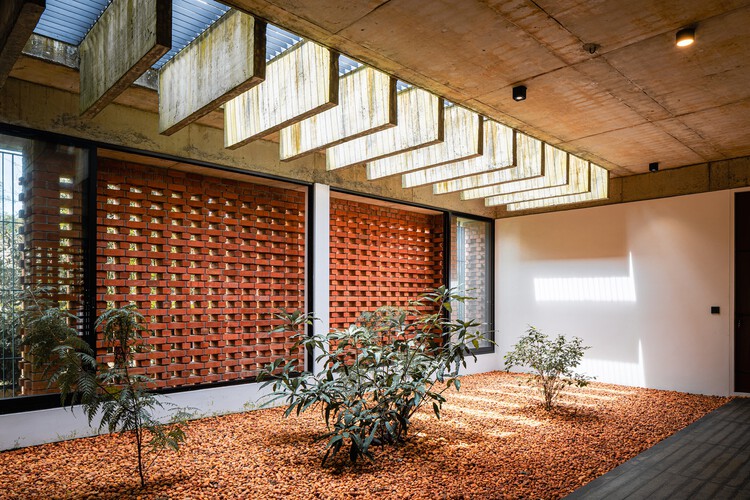
A brick façade does more than define the façade of a house. When designed as a porous screen, it becomes an intermediary between inside and outside, shaping the atmosphere and environmental conditions of the spaces behind it. Across contemporary Indian residential architecture, brick jali — a perforated or lattice brick screen — has been reinterpreted with a contemporary sensibility, drawing on vernacular architectural elements.
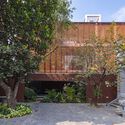
Wood and coastal architecture have always gone together. It's one of the defining materials of coastal structures. But creating that aesthetic in an environment where weather is a constant part of life demands more from the wood you choose.
Rain isn't unique to coastal areas. What makes the coast different is the combination and frequency of exposure. Humidity, ocean winds, salt-laden air, direct sun, and frequent storms repeatedly take wood from wet to dry and back again. In many coastal regions, these aren't occasional weather events. They are simply part of the climate. That makes two characteristics especially important when selecting wood for coastal construction: durability and dimensional stability.
Some urban experiences are etched into our memory through a shift in pace. The postmodern city has often been described as an experience lived at the rhythm of motorized mobility, in contrast to the stroll, the promenade, or even the processions that preceded it. In a fast-paced urban culture, walkability is championed in urban planning not only as a factor of safety and social cohesion, but also as a path to a more sensory way of life. This selection of unbuilt projects submitted by ArchDaily readers showcases design examples that prioritize the experience of the environment through a pedestrian pace. Beyond respecting walking as a mobility choice, these conceptual proposals link the act of walking with contemplation of one's surroundings, respect for what already exists, and connection with other people.
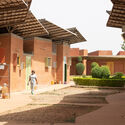
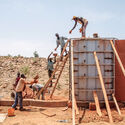
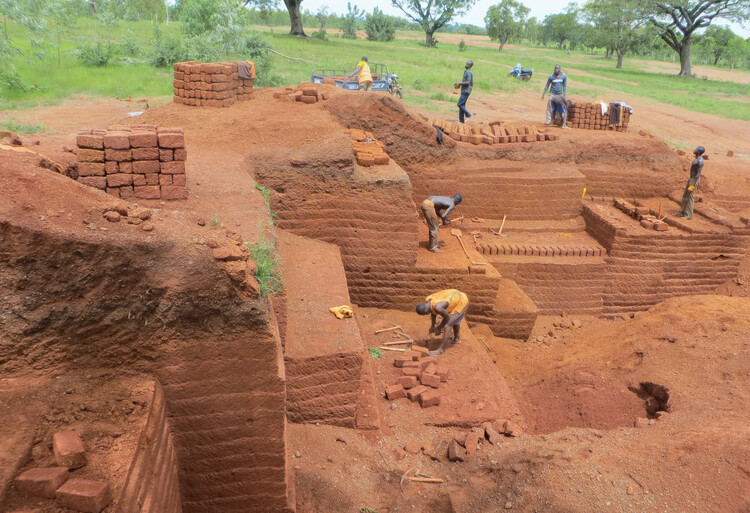
"After all, time is a key ingredient of my profession," states Francis Kéré in his book Francis Kéré: Building Stories. Architecture is constantly evolving and transforming over time. Bricks, doors, windows, walls, stairs, and other elements become the protagonists of a process that begins with a sketch and eventually takes shape as a built work.
Considering that architecture begins when its inhabitants start to make a space their own, Francis Kéré develops his projects progressively, continuing to work on the design even during the construction phase. As his architecture grows over time, integrates with its surroundings, adapts to the needs of its users, and responds to change in flexible and experimental ways, it seeks to become part of the lives of those who inhabit it.
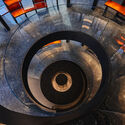
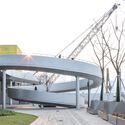
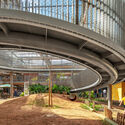
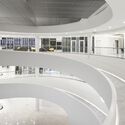
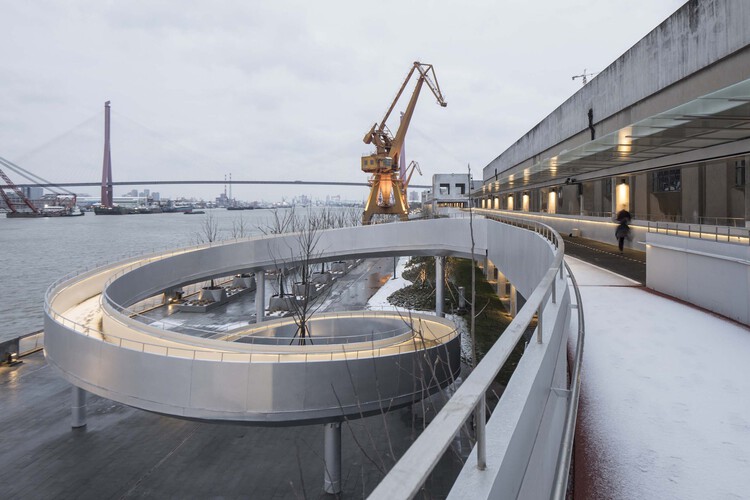
In most architectural projects, vertical circulation is expressed as a purely functional element, tucked away behind fire-rated doors or an elevator core. However, sometimes architects also use spirals when trying to resolve site elevation changes. Given the right scale, these elements allow for a more artistic formal expression that serves both utilitarian and aesthetic purposes without relying on mechanical lifts or stairwells. Structural systems like cantilevered steel trusses and reinforced concrete decks allow these spiral elements to extend outward as sheltered entry canopies or wind around open central atriums. Functionally, these circulation paths may be expressed in several ways: as stairs like the Itamaraty Palace in Brasilia, or as ramps, which can offer the possibility to reduce mobility barriers for visitors. In both cases, the spiral can provide smooth transitions across varied floor levels while maintaining an unobstructed line-of-sight throughout the program.
Seamless surfaces and minimal joints have become a defining signature of contemporary architecture, prized for the clean lines, and uniformity they bring to a building's envelope. Yet in façade engineering, this pursuit is rarely just about appearance. Regardless of the material used, increasing panel dimensions can influence durability, material recyclability, performance against external factors, and other considerations such as impact resistance and long-term maintenance. By combining ease of installation and transportation efficiency with design flexibility, monomaterial façade systems use large-format panels while addressing practical challenges related to flatness, thermal movement, and structural support. Yet, what other material-related considerations behind large-format panels can make a difference in building envelope construction today?