The growth and expansion of metropolitan areas has been evident over the past decade. Buildings are getting taller, and urban areas are getting larger. What if there was a way to predict this growth and expansion?
A new study by Spanish researchers from the University of A Coruna has discovered that the increase of skyscrapers in a city reflects the pattern “of certain self-organized biological systems,” as reported by ScienceDaily. The study uses "genetic evolutionary algorithms" to predict urban growth, looking specifically at Tokyo's Minato Ward. Architect Ivan Pazos, the lead author of the new study, explained the science behind the algorithm: "We operate within evolutionary computation, a branch of artificial intelligence and machine learning that uses the basic rules of genetics and Darwin’s natural selection logic to make predictions."
Read on for more about the study and what it could mean for the possibility of estimating vertical urban development.
WOHA has released an update of their first office skyscraper for China, as their Vanke Yun City scheme tops out in Shenzhen. Manifesting as three tower blocks attached to a central T-shaped core, the scheme seeks to present “an alternative office tower typology that responds to the sub-tropical climate in Shenzhen.”
Set against the backdrop of ubiquitous post-modernist skyscrapers, the 1.6 million-square-foot (150,000 square-meter) scheme aims to “radically transform the soulless skyscraper into a highly liveable, humane, and sustainable micro-vertical city.”
Today, a new exhibition opened in Venice featuring the work of the global architecture and engineering practice Skidmore, Owings & Merrill (SOM). Presented at the European Cultural Centre, "Time Space Existence" is a collateral exhibition of the 2018 Venice Biennale of Architecture. The show includes work from leading architects, photographers, sculptors, and universities from around the world.
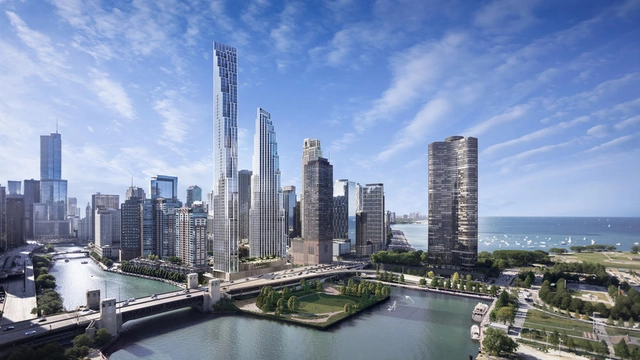
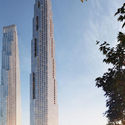
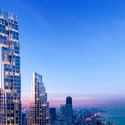
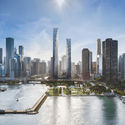
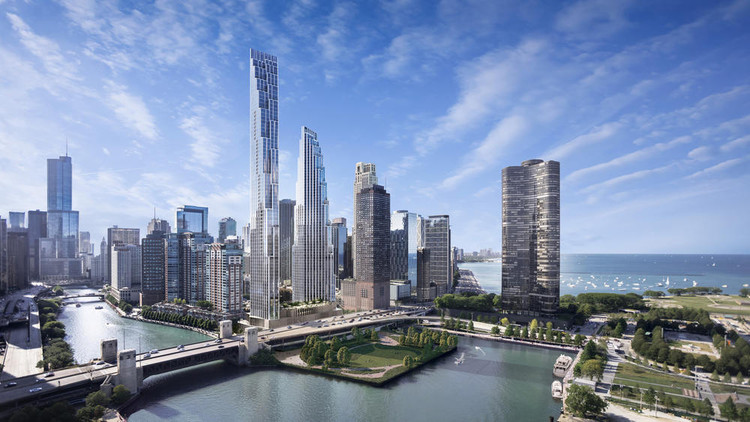
The Chicago Tribune has released images of an SOM-designed skyscraper scheme for the former Chicago Spire site. The two towers, measuring 1,000 and 850 feet tall (305 and 259 meters), are expected to contain 1.3 million square feet of floor space, including 850 residential units.
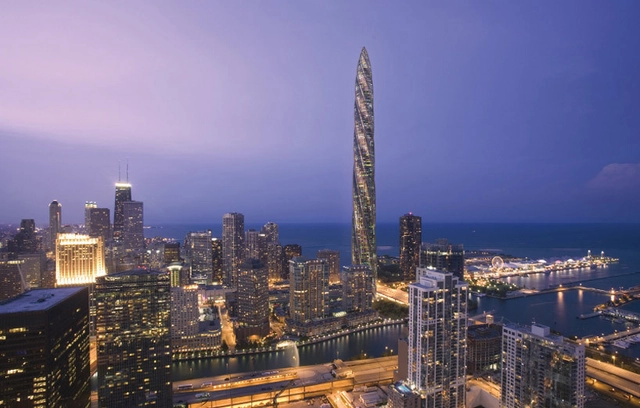
The proposal signals a new lease of life for 400 N Lake Shore Drive, where a 75-foot-deep, much-ridiculed foundation hole serves as the only reminder of the once-planned Chicago Spire, a 2000-foot-tall Santiago Calatrava-designed skyscraper.
Foster + Partners has unveiled their vision for the headquarters of DJI, the world’s leading robotics company, to be located in the Chinese technological powerhouse of Shenzhen. Symbolizing the “heart of innovation” for the robotics giant, the scheme seeks to alter the traditional concept of office architecture, generating a “creative community in the sky.”
Comprised of two towers, the scheme strikes a balance between research, development, office space and public amenities. The floors comprise floating volumes cantilevered from central cores by steel mega-trusses, ensuring maximum flexibility in large, column-free workspaces.
https://www.archdaily.com/894239/foster-plus-partners-unveil-images-for-towering-dji-robotics-headquarters-in-shenzhenNiall Patrick Walsh
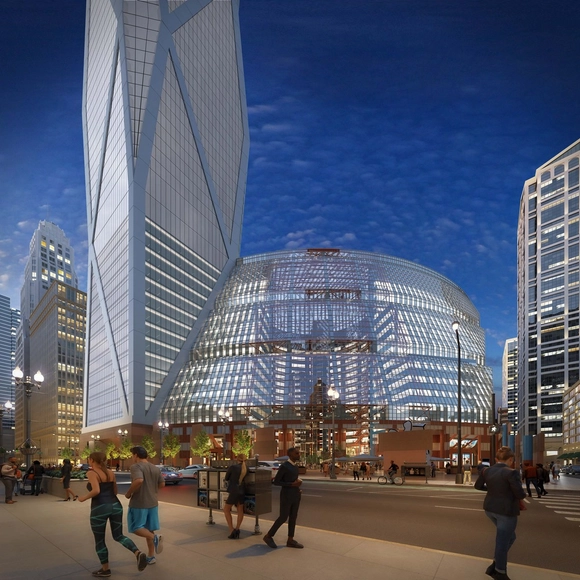
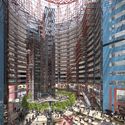
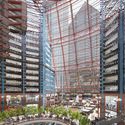
Landmarks Illinois has released new images of a proposed radical extension to the James R, Thompson Center in Chicago. The images seek to portray the building’s versatility to be privately redeveloped as a mixed-use hub, featuring an eye-catching “super tower” at the southwest corner of the site, as proposed by the scheme’s original architect Helmut Jahn.
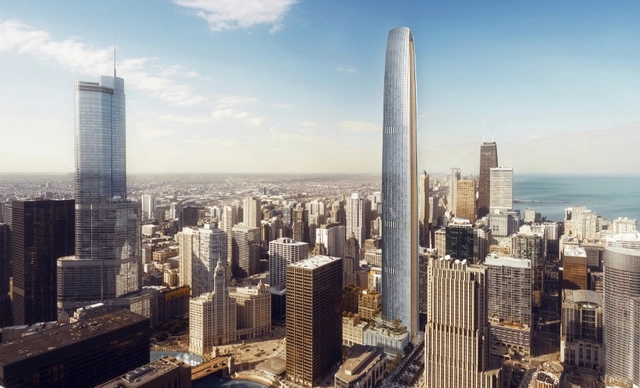
The Chicago Tribune Tower is at the center of a $1 billion development seeking to bring over 700 residential units to the city center. Developers CIM and Golub have unveiled a proposal which would see the redevelopment of the neo-Gothic tower into 163 condominiums, and the construction of a tapering skyscraper only 30 feet shorter than the Willis Tower, Chicago’s tallest building.
eVolo Magazine has announced the winners of its 2018 Skyscraper Competition. Now in its 13th year, the annual award was established to recognize “visionary ideas for building [high-rise] projects that through [the] novel use of technology, materials, programs, aesthetics, and spatial organizations, challenge the way we understand vertical architecture and its relationship with the natural and built environments.”
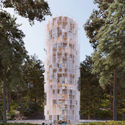
This year, 3 winners and 27 honorable mentions were selected from a pool of 526 entries. Among this year’s winners are a foldable skyscraper inspired by origami, an urban building for rice farming, and a prototype for vertical housing in areas damaged by wildfires.
New York YIMBY has revealed initial renderings of BIG’s proposed office skyscraper at West 29th Street, New York, on the site of the old Bancroft Bank Building. Officially named “29th and 5th,” the scheme will offer a LEED-certified design focused on wellness and sustainability, featuring outdoor terraces stacked alongside a glass curtain façade.
A speculative project, the “New York Super Slender” created by RB Systems, is a futuristic skyscraper that presents a potential new tower typology. With ever-diminishing land space in major cities and a vastly growing population, the project rises to the challenge of optimizing occupancy in a constrained and dense city center.
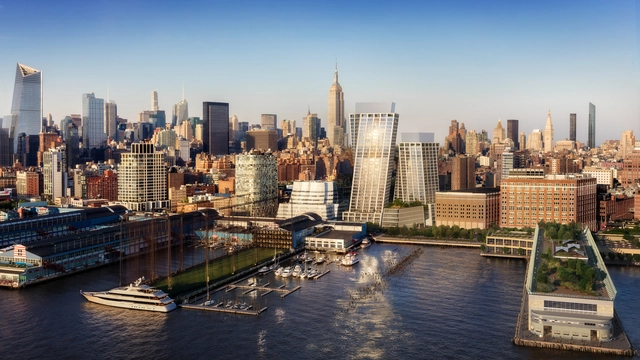
Construction is moving along quickly on The Eleventh, BIG’s twisting residential towers located near Chelsea Piers on New York City’s High Line park.
A new rendering released of the project shows the design in its final form (developed through a series of iterations), standing out even amongst notable neighbors including Frank Gehry’s IAC Building, Jean Nouvel’s 100 11th Avenue and Foster + Partners’ 551 West 21st Street.
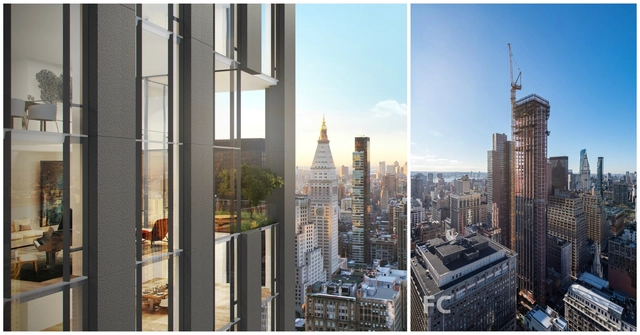
Left image courtesy of Rafael Viñoly Architects. Left image via Field Condition
Rafael Viñoly Architects’ 277 Fifth has topped out at its full height of 663 feet, making it one of the tallest towers in the relatively low-lying NoMad area of Manhattan.
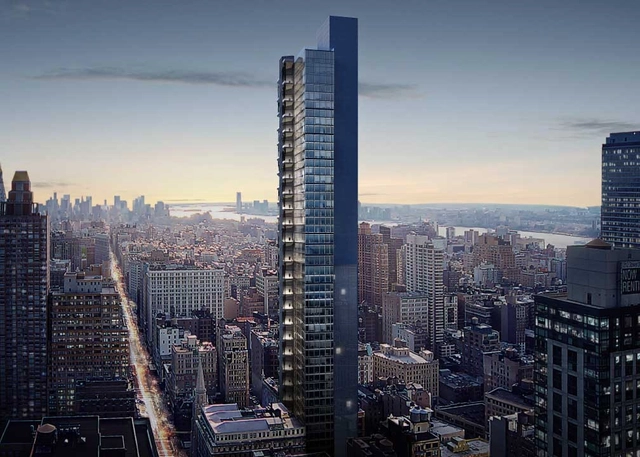
The 55-story condominium tower, located at the corner of Fifth Avenue and 30th Street, features a restrained facade design composed of lightweight, reinforced, Indigo-colored cast concrete panels that were custom fabricated in Finland. As the building rises, its elevations are punctured by four unique ‘loggias’ that give residents of those units a space for outdoor dining and leisure.
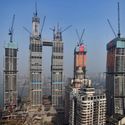
Currently under construction in Chongqing, China, Moshe Safdie's Raffles City Chongqing features an extraordinary engineering feat of erecting a 300 meter long “horizontal skyscraper” above four 250 meter high towers. An extensive urban district set at the meeting point between the Yangtze and Jialing rivers once constructed Raffles City Chongqing will hold the world record of the highest sky bridge linking the towers.
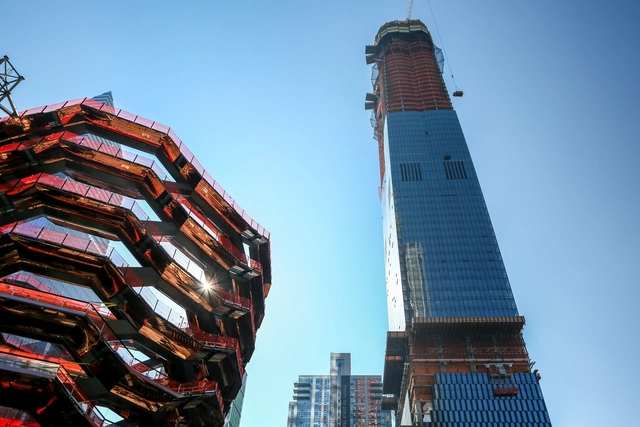
Hudson Yards’ first condominium tower, 15 Hudson Yards, has topped out at its full architectural height of 914 feet, with exterior cladding also more than halfway complete. Designed by Diller Scofidio + Renfro (the firm’s first true skyscraper) in collaboration with Rockwell Group and executive architects Ismael Leyva Architects, the tower will contain a total of 285 residences, half of which have already been sold.
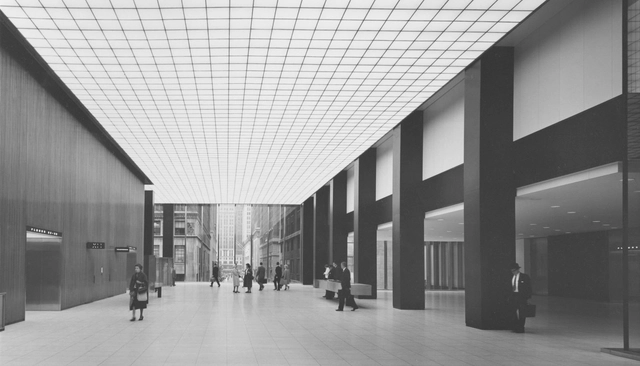
In the letter, Docomomo US President Theodore H.M. Prudon and Docomomo US NY/Tri-State President John Arbuckle highlight the structure’s critical acclaim and essential place within Modernist architectural history, urging the Commission to calendar the building for designation as quickly as possible.
We all know a little about the world's tallest buildings—those engineering feats which define their cities and become symbols of human achievement—but what of the buildings that never took their planned place in their respective skylines? In 2014, The Council on Tall Buildings and Urban Habitat (CTBUH) released a report listing the 20 tallest buildings that were never completed (an up-to-date list is also maintained on their website here). In order to be considered "never completed," all of the buildings in the report had begun site work, but construction was completely halted with no reports indicating it will continue. Read on to find out the top 10 tallest uncompleted buildings in 2018 after the break.
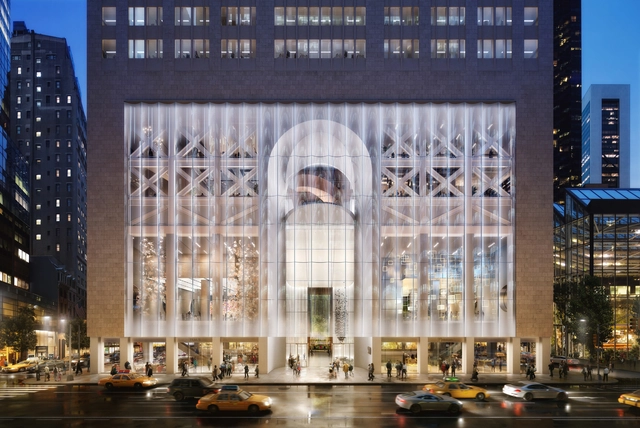
The designs by Snøhetta for the renovation of the building at 550 Madison Avenue have launched the building to the forefront of the debate about the preservation of Postmodern heritage. The plans include replacing the stone facade with undulating glass in order to transform the building's street presence. Should plans progress, the once prominent arched entry will sit behind fritted glass and stone covered columns will be unwrapped to create a hovering datum.


.jpg?1528902145)
.jpg?1528902160 "Courtesy of WOHA")
.jpg?1528902003 "Courtesy of WOHA")
.jpg?1528902220 "Courtesy of WOHA")
.jpg?1528903768)
_Tom_Harris_(4).jpg?1527346283&format=webp&width=640&height=580)

.jpg?1525838303 "Courtesy of Nusmetro Group")