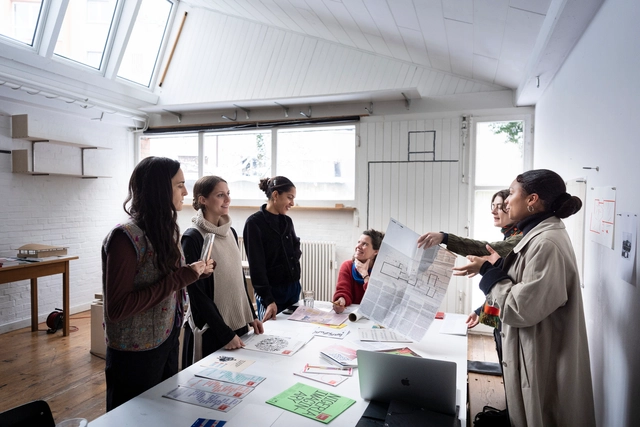
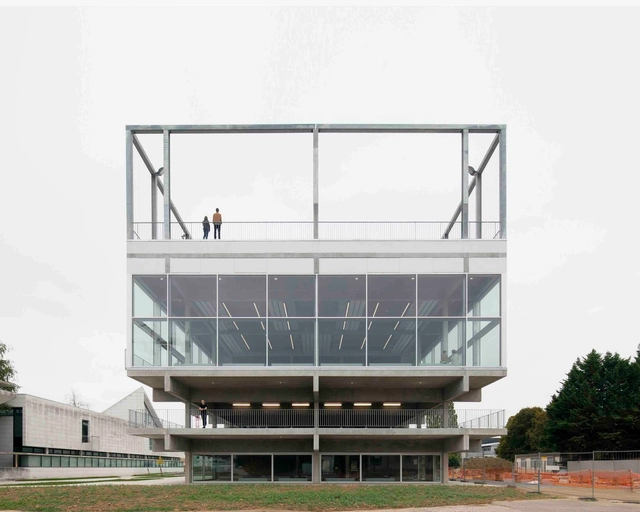
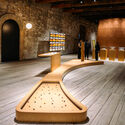
The Swiss Arts Council Pro Helvetia, represented by Sandi Paucic and Rachele Giudici Legittimo, has announced that the Swiss Pavilion at the Venice Architecture Biennale 2025 will host the exhibition "The final form is determined by the architect on site," curated by Elena Chiavi, Kathrin Füglister, Amy Perkins, Axelle Stiefel, and Myriam Uzor. This all-female team poses the question: What if Lisbeth Sachs, rather than Bruno Giacometti, had designed the Swiss Pavilion? The exhibition will explore this question by reviving one of the iconic works of Lisbeth Sachs, one of the first registered female architects in Switzerland and a contemporary of Giacometti.
2025 promises to be a landmark in architecture, heralding a vibrant renaissance of creativity and exploration. As societies confront challenges such as climate change, rapid urbanization, and technological evolution, architecture is both a mirror to these dynamics and a compass pointing toward a sustainable and inclusive future. This year's architectural calendar offers abundant opportunities to celebrate the discipline's transformative power — from boundary-pushing festivals to thought-provoking exhibitions that explore pressing cultural and environmental narratives.
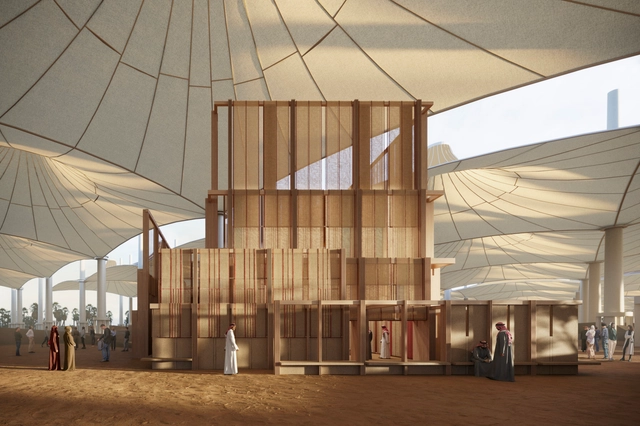
From well-established biennials to inaugural gatherings, including the World Architecture Festival 2025, Desert X Al Ula, and the COP Climate Conference, the 2025 calendar highlights themes such as sustainability, heritage, and community. These events underscore architecture's unique ability to shape a better future, addressing global challenges while honoring cultural diversity and design ingenuity.
Mario Cucinella Architects (MCA) has reimagined the architectural design of Palazzo Citterio in Milan, Italy, integrating historical and contemporary elements to create a dynamic cultural space. As part of the Grande Brera initiative, which seeks to unify key cultural institutions such as the Pinacoteca di Brera and the Braidense National Library, the palazzo now stands as a hub for modern and contemporary art. Ultimately, the project aims to reestablish Palazzo Citterio as a significant cultural and social landmark, fostering community engagement and interaction.
The architecture of Studio Muoto is one that encompasses endless definitions of what architecture should be, but most importantly, of what architecture can become. The scope of work of the Paris-based practice founded in 2003 by Gilles Delalex and Yves Moreau includes projects in the fields of architecture, exhibition design, urban planning, teaching, and research. All of this has led to an architecture of minimal structures that age gracefully, an architecture that evolves and adapts with time, and that is sustainable economically and environmentally.
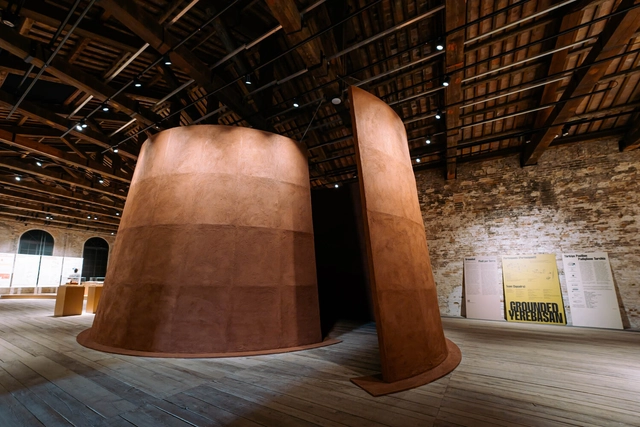
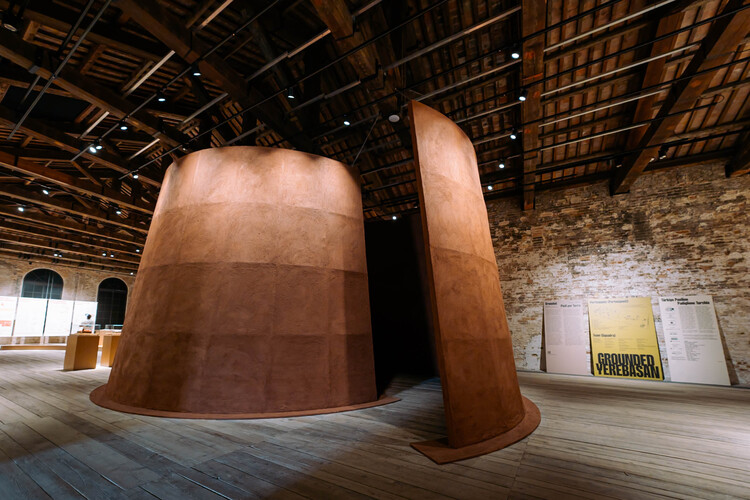
Commissioned by the Istanbul Foundation for Culture and Arts (İKSV), the Türkiye Pavilion presents the exhibition titled "Grounded" at the 19th International Architecture Exhibition of La Biennale di Venezia in 2025. Curated by Ceren Erdem and Bilge Kalfa, the project explores soil as a medium that carries both ecological and cultural memory, presenting it as an active ecosystem with the capacity to store and transmit information. Based on research, the project uncovers new possibilities that integrate diverse artistic and interdisciplinary perspectives. Curators invite visitors to reconsider their relationship with nature and to engage with the complexity and significance of the ground beneath their feet. The exhibition features contributions from 10 individual participants and 10 collaborative teams, alongside a selection of works chosen through an open call.
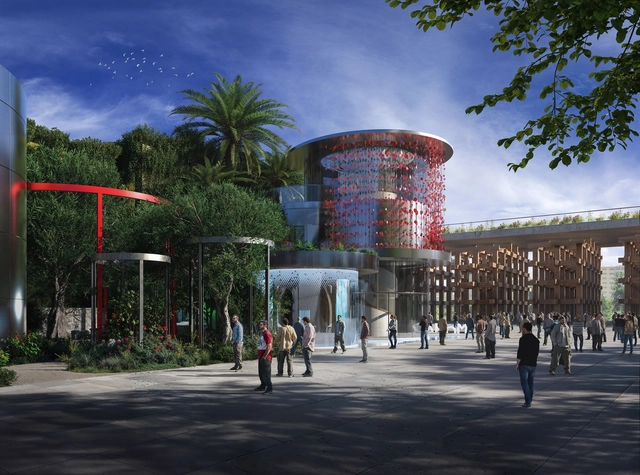
The MonacoPavilion at Expo 2025 Osaka explores the fusion of Mediterranean and Japanese landscapes, creating a unique cultural dialogue through architecture and landscape design. The pavilion's design, centered around a harmonious blend of Mediterranean and Japanese garden elements, embodies Monaco's global initiatives and its commitment to environmental stewardship. Reflecting the Expo's theme, "Take Care of Wonder," the pavilion invites visitors to experience a captivating and serene environment that celebrates both nature and culture.
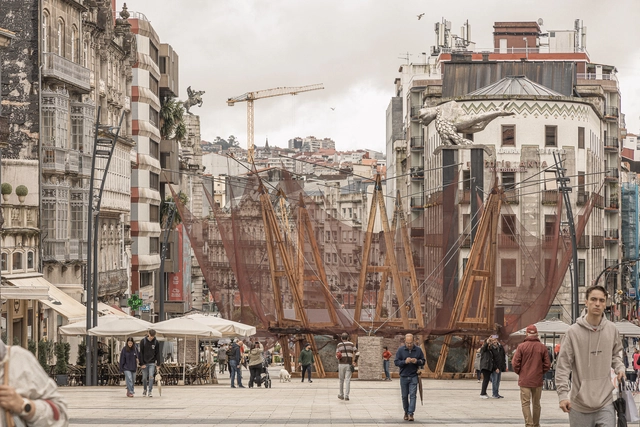
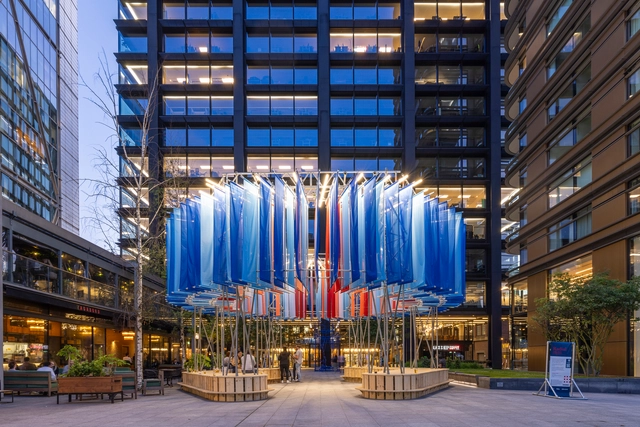
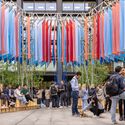
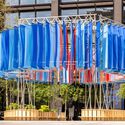
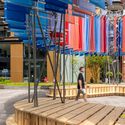
Until July 14, 2024, the pavilion ¡Qué faena(r)! ('What a Task!') by Óscar Cruz García and Pablo Paradinas Sastre will be installed at Puerta del Sol in Vigo, one of the two winning temporary pavilions of the third edition of TAC! Urban Architecture Festival. Reflecting on public spaces and the regeneration of urban centers as the main theme of this new edition, the proposal combines tradition and innovation, involving local producers and artisans during the process and simultaneously reusing materials considered waste, such as fishing nets, rusty 'bombos,' recovered wood from bateas, and granite blocks that gain a second life after fulfilling their mission in the sea.
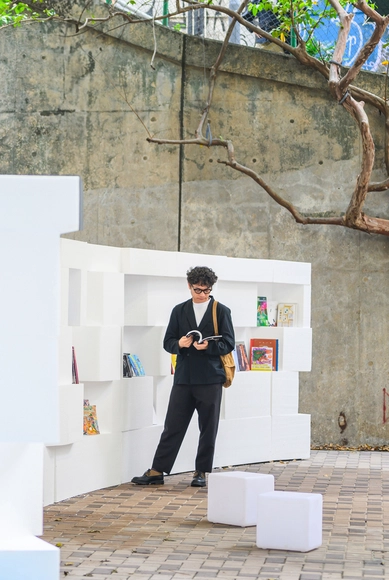
Ladder Street Cultural Space. Image Courtesy of Francesco Rossini
As we near its 100th anniversary, expanded polystyrene (EPS) has become widely used in various industries and applications, especially in construction. Since 1970, EPS has been used in building construction due to its thermal insulation properties, lightweight closed-cell structure, durable strength, and long-term integrity. However, while these qualities make it highly useful and easy to recycle, they have also sparked debate due to recurring discussions about its degradation processes and environmental impact from various perspectives.
While the debate rages on, many improvements and alternative approaches have emerged around this material, highlighting that achieving sustainable construction involves using the right material for the right job from the outset. Thus, over time, innovations have brought new options for the recycling and use of EPS beyond traditional building applications such as infill blocks or partition panels. This demonstrates that rather than stigmatizing it as a problematic or “simple” material, it is essential to consider its qualities through design, technology, and developing methods for responsible and sustainable management.
https://www.archdaily.com/1018325/how-are-innovations-changing-expanded-polystyrene-epsEnrique Tovar
Although the sensory approach in the built environment is often based primarily on visual aspects, such as color and light, as we delve deeper into the relationship of architecture with the senses other essential elements emerge, such as aromas, textures, sounds, and even flavors. These components are fundamental to creating a profound experience between the user and the environment in which it takes place, demonstrating that design and sensory experience are intrinsically connected.
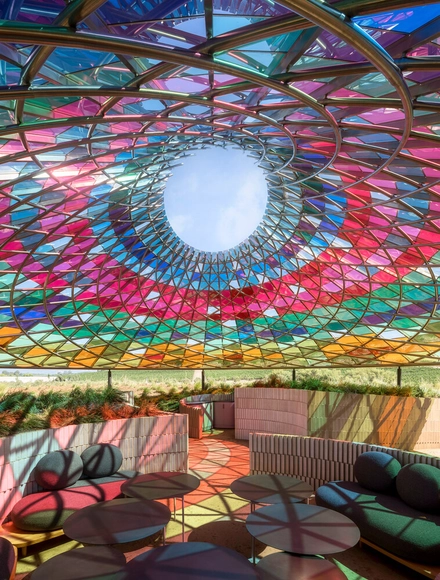
Thus, sensory design offers an immersive atmosphere for a full spectrum of senses where its perception extends beyond physical boundaries. An example of this is the Vertical Panorama Pavilion, located in a region of California (USA) with a strong identity linked to the wine tradition. This structure, with a glass canopy of Color PVB interlayers, serves as a shelter for hospitality. Inspired by nature, the pavilion’s canopy engages all the senses: from the texture of the gravel on the walking path to the wind currents in the area and the characteristic aromas of the region.
https://www.archdaily.com/1017382/a-multicolored-glass-canopy-for-senses-shelter-and-hospitality-the-vertical-panorama-pavilionEnrique Tovar
British-Nigerian multi-disciplinary artist and designer Yinka Ilori MBE has designed a pavilion as part of Haus der Kulturen der Welt’s (HKW) festival in Berlin. The festival, titled Ballet of the Masses - On Football and Catharsis, initiated an annual pavilion in 2023, and this year’s pavilion dresses intricate questions of coexistence through its materiality and form. Part of the Shaped to the Measure of the People’s Songs architectural series, Yinka Illori’s pavilion crafts a spatial proposition that explores complex themes of racism in sports and personal accountability.
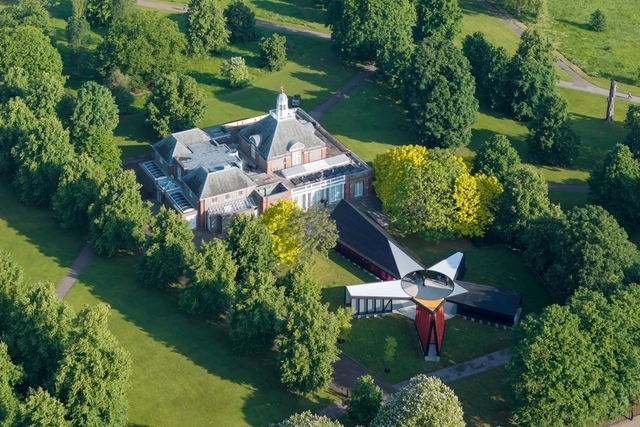
Since its launch in 2000, the Serpentine Pavilion has been providing renowned and emerging architects with a platform for design experimentation, becoming an important display of contemporary architecture. Each year, the commissioned architects and designers envision a temporary structure that speaks not only to their roots as creators, but also brings into focus what they consider to be important themes in the architectural world, from the need to redefine spaces for contemplation or conviviality, to explorations into the potential of natural materials or vernacular building techniques. On the day of the public opening of the 2024 Serpentine Pavilion, the "Archipelagic Void" designed by Korean architect Minsuk Cho and his firm Mass Studies, we look back at the last eight editions of the famous annual structure.
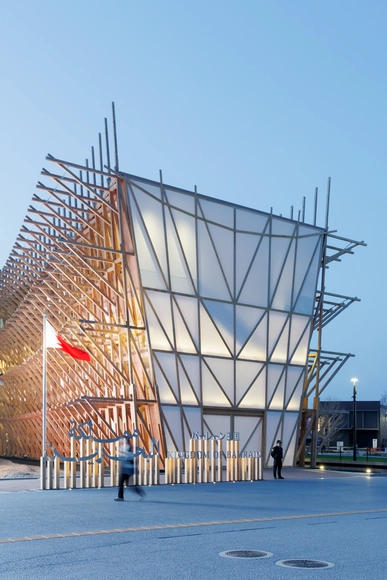
Lebanese French architect Lina Ghotmeh, leading the Paris-based studio Lina Ghotmeh – Architecture, has revealed the first photographs of the National Pavilion of the Kingdom of Bahrain for the Expo Osaka 2025. The design draws inspiration from the traditional Bahraini dhow boats, employing the country's historical boat-building technologies to showcase Bahrain's craftsmanship and manufacturing heritage. The pavilion is also a nod to the hosts of the World Expo, drawing parallels with Japanese wood artistry. Commissioned and organized by the Bahrain Authority for Culture and Antiquities, this marks the country's fourth contribution to the World Expo. The pavilion is located in the "Empowering Lives" zone, spanning 995 square meters and inviting visitors to engage through a sensory exhibition experience.
As dwellers of big cities, we tend to be dragged into a very fast-paced lifestyle. Surrounded by monumental buildings and infrastructure, we can easily lose sight of key spaces that connect us with our neighborhood and provide us with rare moments of peace and enjoyment. Appropriation of the environment we inhabit becomes an uncommon circumstance.
When he was invited to design the 21st Serpentine Pavilion in London’s Kensington Gardens public park, Chicago-based artist Theaster Gates envisioned a calm space to offer respite and a subtle exploration into the power of sound and music in architecture. Created out of lightweight stained wood, the “Black Chapel” demonstrates more than just artistic and architectural sensibilities. In addition to the use of sustainable materials, the project also pays close attention to how the building materials are sourced, bringing visibility to the problem of modern slavery in the construction materials supply chain.
23rd Serpentine Pavilion by Mass Studies. Image Courtesy of Serpentine Gallery
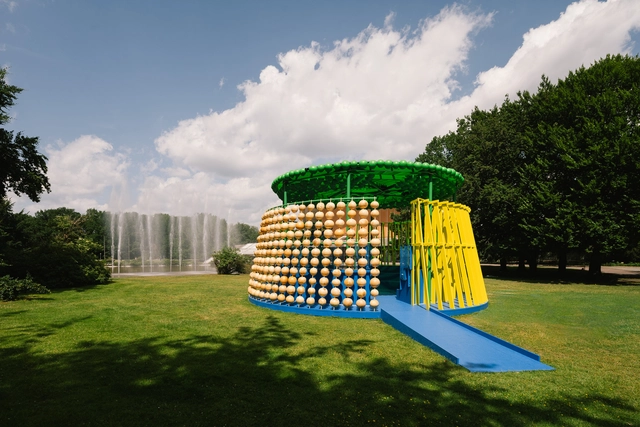
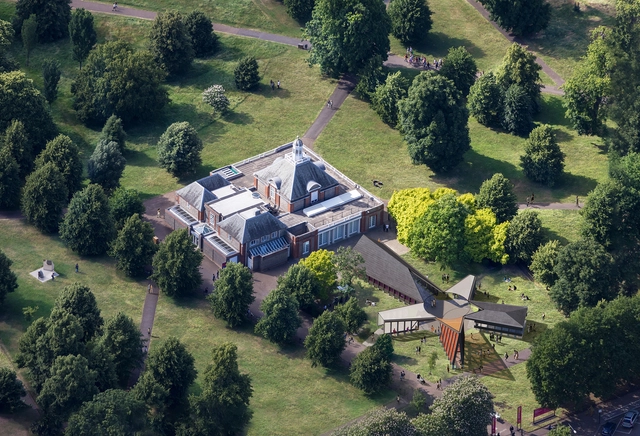
Seoul-based Korean architect Minsuk Cho and his firm Mass Studies have been selected to design the 23rdSerpentine Pavilion, to open on June 5, 2024, in London’s Kensington Gardens. Titled “Archipelagic Void,” this iteration of the iconic commission will consist of five ‘islands’ displayed around an open space, breaking down the structure into a series of smaller elements intertwined with the park’s natural ecology. The pavilion will be open to the public from June 7, until October 27, 2024, with a press preview two days before the opening.
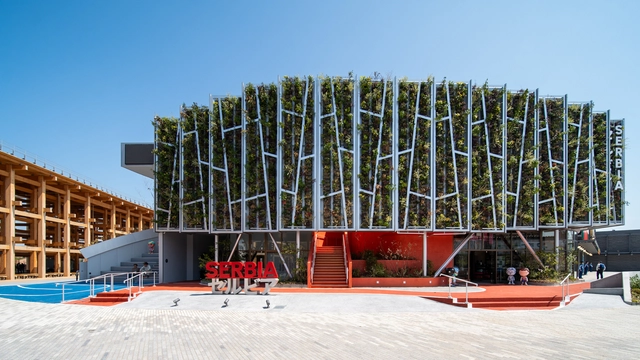
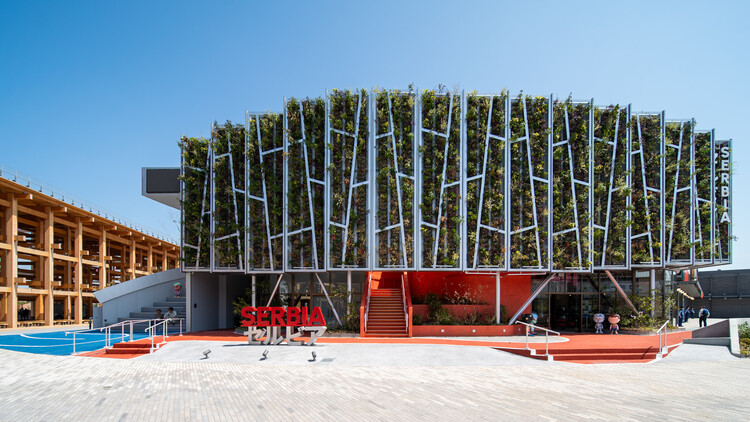
The Serbian Pavilion at Expo Osaka 2025 emerges as a compelling example of sustainable architecture infused with cultural storytelling, seamlessly integrating cutting-edge technology and emotional resonance. Designed by Aleatek Studio, the pavilion takes inspiration from Belgrade's protected Ratno Ostrvo (Great War Island) to realize the concept of a "Floating Forest." It stands out as the only Expo pavilion featuring a living façade, with over 95% of its materials recyclable and 80% intended for reuse in future construction. The design strategy also aligns with the theme "Play for humanity" of the upcoming Specialised Expo 2027 to be held in Belgrade.
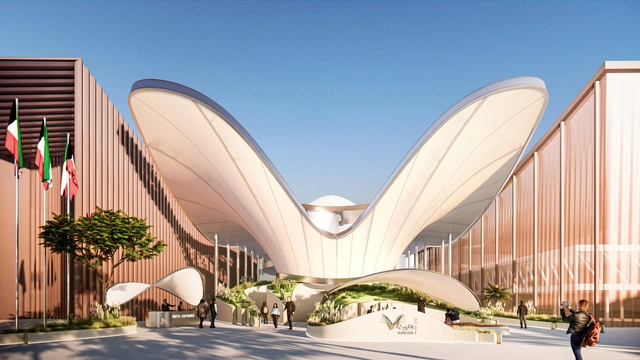
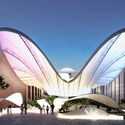
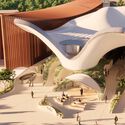
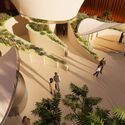
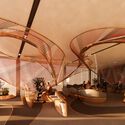
The State of Kuwait has revealed the design of the upcoming Kuwait Pavilion to take shape at World Expo 2025 in Osaka. Designed by architectural firm LAVA (Laboratory for Visionary Architecture), the temporary structure is envisioned as a “Visionary Lighthouse” representing Kuwait’s embrace of Arab cultures, arts, and social works. The pavilion, developed with main partner and contractor NUSSLI, also offers a response to the exhibition’s overarching theme, "Designing Future Society for our Lives", striving to strengthen the relationship between Kuwait and Japan and foster conversations about visions of a sustainable future.