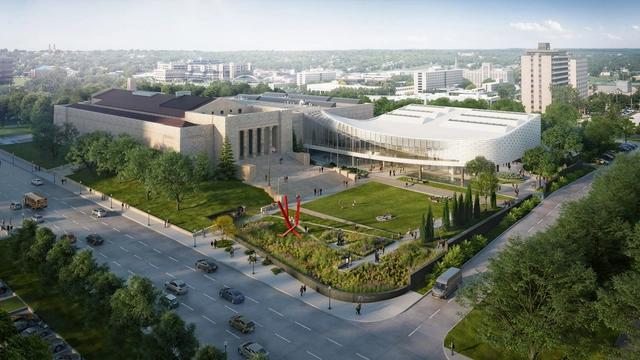
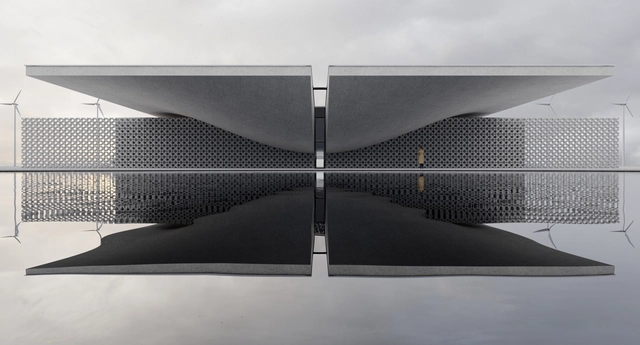
The Joslyn Art Museum in Nebraska announced that the restoration and expiation works led by Snøhetta and Alley Poyner Macchietto Architecture (APMA) are nearing completion, as the transformed institution is scheduled to reopen on September 10, 2024. The new 42,000-square-foot Rhonda & Howard Hawks Pavilion, designed by Snøhetta and APMA will add new gallery spaces to Nebraska’s largest art museum, becoming the centerpiece of the large-scale project for reimagining the visitor experience.
As this bloody year draws to a close, at a moment when the message “Peace on Earth” seems altogether mute, one might well ask: What power does architecture have? How can it address violence against innocent people, whose lives have been turned upside down? How does architecture respond to staggering cruelty? What can it say? Can it raise consciousness?
https://www.archdaily.com/1011673/in-warsaw-a-student-designed-architectural-response-to-dark-timesMichael J. Crosbie
Vitryak Visitor center / MAKHNO Studio. Image Courtesy of MAKHNO Studio
Whether temporary or permanent, pavilions and urban installations represent an opportunity for architects to experiment with different shapes, materials, and textures. The results are often theatrical, welcoming visitors to new types of spaces, and blending the exterior and the interior. Pavilions are often commissioned for events, exhibitions, or cultural programs, offering opportunities to explore innovative materials, construction techniques, and spatial concepts on a smaller scale. Some events, like the Serpentine in UK or the MPavilion in Australia, propose a yearly reimagining of their structures, offering opportunities for established and emerging architects to express themselves. Others, like the Venice Biennale, reuse the permanent garden pavilions, but invite curators to prepare exhibitions to reimagine them for every edition.
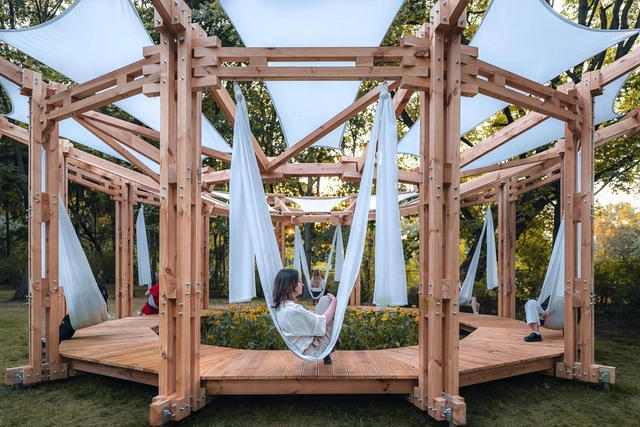
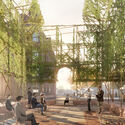
This week's curated selection of Best Unbuilt Architecture highlights projects submitted by the ArchDaily community showcasing pavilions and urban installations proposed in various environments, from urban plazas to agricultural fields or even airports. In Frankfurt, a translucent foliage-covered structure aims to honor the memory of a lost synagogue. in Ukraine, a visitor center reimagines an industrial landscape into an attractive meeting place, while a decentralized installation in the Netherlands hopes to bring communities together by collecting and sharing stories on scents. Whether temporary or permanent, these projects aim to provoke reflection and contemplation, while addressing larger themes of sustainability, resource availability, or the role of social spaces.
Courtesy of Architectural Dialogue | Elan - Meenakshi
Architecture competitions are platforms where innovation meets imagination, where the boundaries of what we know about design and architecture are relentlessly pushed. Serving as spaces for architects and designers to realize groundbreaking ideas, competitions challenge our conventions and shape our future environments. While countless creative concepts are proposed, only a handful are realized. In fact, these winning designs stand as a showcase for the creativity of architects, redefining our future built environments.
These winning projects demonstrate the global initiative to rethink the way we interact with spaces. HOKA fosters community interaction, while RITSO Resort merges tradition with modernity. Science Forest transforms museums into hubs for dialogue, and Elan-Meenakshi apartments in Hyderabad integrate urban living with green spaces. Ranging from Vietnam, Greece, Rome, to India, these examples showcase the transformative potential of architecture competition winners, reshaping our perception and interaction with the spaces we inhabit.
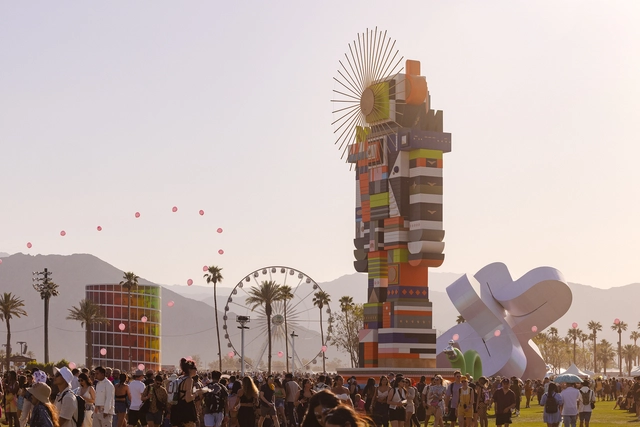
Music Festivals can provide artists, designers, and architects a platform to present their work to large crowds. The sheer scale of these installations, the space for artistic exploration, and the vast audience they reach can give designers the opportunity of a lifetime to showcase their ideas. Through scale, color, imagery, and lighting, these installations create lasting impressions on the people who attend these events and those who see them through news coverage or social media. Some themes explored this year included reframing familiar things in unfamiliar ways, large-scale abstract geometries at the intersection of technology and art, and the use of innovative new materials.
Sameer Makarius was born in Cairo in 1924. In 1933, he immigrated with his family to Berlin. At the age of ten, his father gifted him a camera, marking the beginning of his journey with photography. Following the outbreak of the Second World War, in 1940, they moved to Budapest, where he completed his secondary education, began his artistic training, and connected with the protagonists of the local avant-garde. In 1946, he embarked on his return to Egypt with a prior stop in Zurich. There, he organized an exhibition of Hungarian modern art with the support of Max Bill. Back in Cairo, he worked as a decorative artist for advertising and also for an architecture and construction studio.
His artistic work arrived in the Río de La Plata a few years before he did, through his partner Eva Reiner, who was already living in Argentina with her family. In 1948, she lent one of his works for the MADI art exhibition organized in the workshop of the German sculptor Martin Blaszko. After marrying Eva in Egypt in 1952, they traveled together to Paris, where they worked as pattern designers. They finally arrived in Buenos Aires in April 1953, a city that would become their permanent residence. His migratory journey was marked by the drama of war. At the same time, during these displacements, Makarius built a network of relationships around photography, visual arts, and architecture that allowed him to unfold his work in various territories and formats.
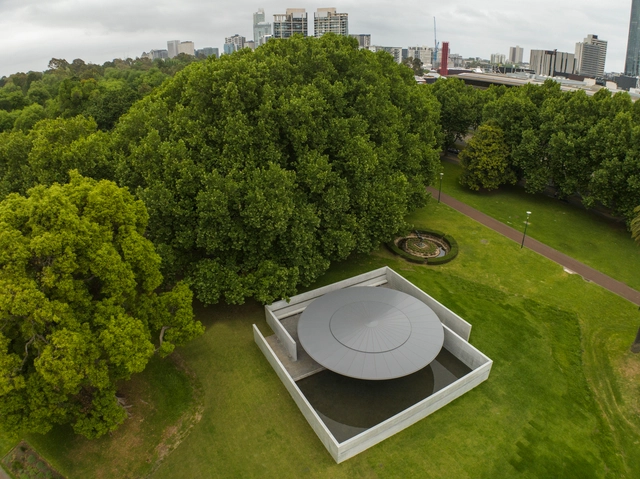
The tenth edition of the MPavilion opens in Queen Victoria Gardens in Melbourne, Australia. The structure was designed by Pritzker Prize-winner Tadao Ando, marking the architect’s first built project in Australia. The pavilion follows his signature use of geometric shapes in harmony with the natural landscape and the precise use of exposed concrete. On November 16, 2023, the official opening inaugurates the space with a public celebration and a wide array of art commissions selected by the Naomi Milgrom Foundation. The MPavilion will remain free and open to the public from 16 November to 28 March 2024, inviting visitors to engage with its diverse cultural program and find opportunities for contemplation and tranquility in its spaces.
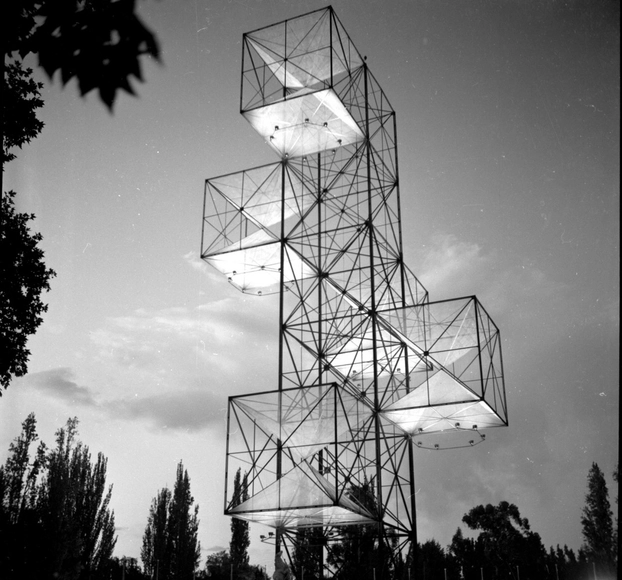
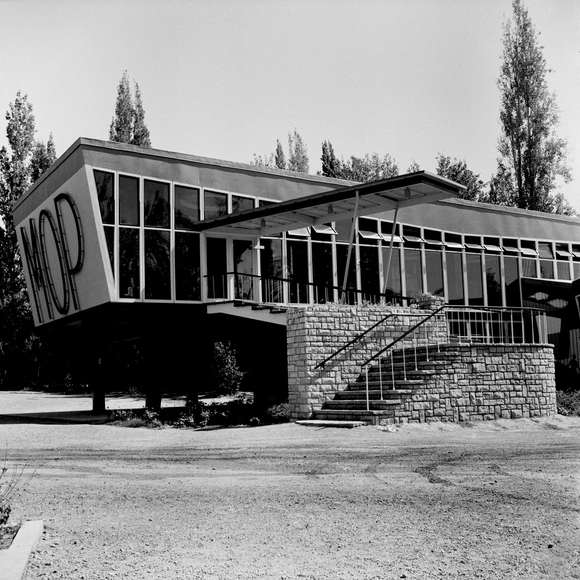
The city of Mendoza, Argentina, hosted the international event known as the "Feria de América," an industrial and continental exhibition that took place from January to April 1954. To provide a suitable setting for the exhibition, 30 hectares of land were allocated around the perimeter of Lake Parque General San Martín. Here, 93 pavilions and nearly 20 facilities were set up, including the Allegorical Tower, an open-air theater, and bars. The American countries represented with their own pavilions were Brazil, Chile, Ecuador, and Paraguay. There was also a large pavilion that housed various Latin American countries such as Colombia, Cuba, Bolivia, El Salvador, Honduras, and Mexico, along with stands for Chilean and local Mendoza-based companies and provincial pavilions for Mendoza, San Juan, Misiones, La Rioja, Eva Perón (now La Pampa), Juan Domingo Perón (now Chaco), Córdoba, Corrientes, Santa Fe, Tucumán, and Buenos Aires. Additionally, there were stands and premises for various trade chambers (Quiroga, 2012). The fair embodied the government's aspiration to showcase a thriving, prosperous Argentina that was connected to regional countries and at the forefront of industrial development.
https://www.archdaily.com/1008478/modernity-in-mendoza-pavilion-24-at-the-feria-de-america-international-exhibitionPablo F. Bianchi
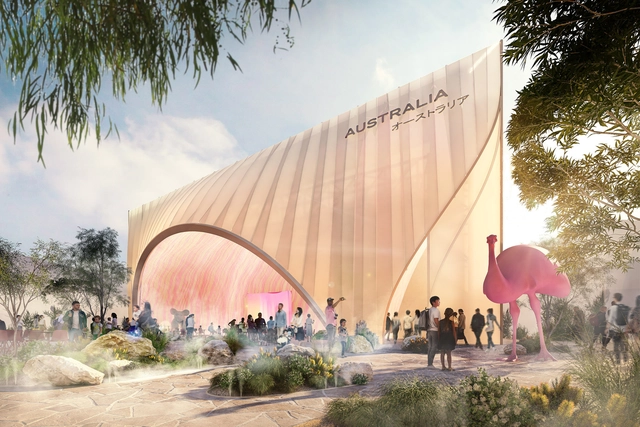
The designs for the Australian Pavilion at Expo 2025 in Osaka, Japan, have been unveiled by Australia’s Minister for Trade and Tourism. Designed by global firm Buchan, the scheme celebrates Australia’s natural beauty. Under the theme “Chasing the Sun,” the pavilion is aligned with Expo's larger theme: developing and adopting the best practices to drive sustainable co-creation. In essence, the theme is meant to capture the confident optimism the nation possesses, inspiring creative solutions and international cooperation.
Following an international competition, AMDL CIRCLE has been selected to create the pavilion which will represent the spirit and vision of the Nordic Countries at the Expo Osaka in 2025. Their proposal takes a sustainable and circular approach, as the structure is purposely designed for disassembly and reuse. Technically developed and engineered by Rimond and conceived by AMDL CIRCLE, the pavilion aims to showcase the Nordic people’s respect and connection with the environment while offering ample space for the display of technological innovations.
For the 18th year, the International Architecture Awards has returned to celebrate outstanding architectural achievements globally. Based in Chicago, these awards feature exceptional new buildings, urban planning projects, and landscape architecture of 2023. Additionally, this month, the Chicago Architecture Biennial (CAB 5) is currently taking place in the city. Both the awards and the Biennial attempt to shed light on each country’s architectural, design, cultural, and social trends.
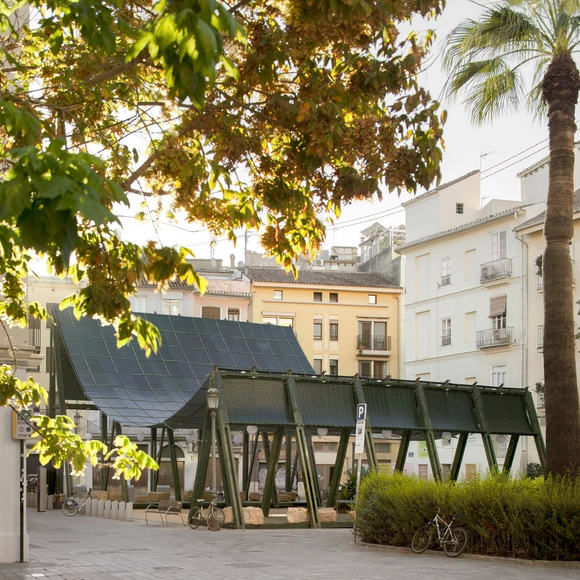
Until October 16, 2023, the second edition of TAC! Urban Architecture Festival will take place in the city of Valencia under the temporary Mediterranean pavilion designed by Manuel Bouzas. Located in the Plaza Músico López Chavarri in the Carmen neighborhood, the pavilion pays homage to vernacular architecture in response to the Mediterranean climate and the role of the Mediterranean shutter, a mechanism that for centuries provided an effective, simple, and lightweight solution for sun protection, allowing habitable spaces to adapt to climatic conditions.
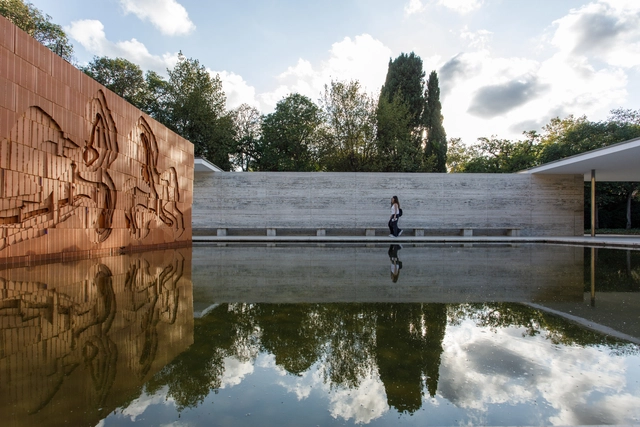
From September 14th to October 8th, 2023, "Psicoarquitectura" will be showcased at the German Pavilion, designed by Mies Van der Rohe and Lilly Reich, located in the city of Barcelona. The Mies van der Rohe Foundation, in collaboration with LAB 36 and Senda Gallery, is hosting this temporary artistic intervention by the artist and architect Oscar Abraham Pabón. This intervention explores the materiality of this iconic work of the Modern Movement, delving into its interpretative and psychological dimensions.
Most biennales and architecture events, especially the recent ones, have influenced and shaped the dialogue of the ones that followed. In fact, during a conversation earlier this year with Lesley Lokko, the curator of the 2023 Venice Architecture Biennale, she explained and affirmed that “all exhibitions […] take sustenance from those that came before”, further noting that “if I look back at the dozen or so Architecture Exhibitions over the past twenty years, each one has contributed in some way to the discourse of the next.”
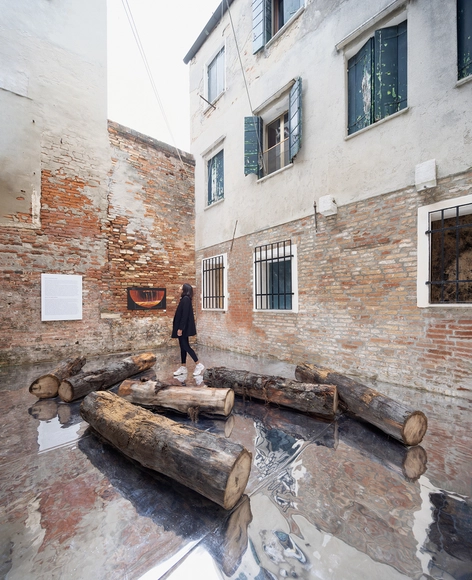
Panama presented its pavilion on "Stories Beneath the Water" at the 18th International Architecture Exhibition – La Biennale di Venezia. Curated by Aimée Lam Tunon, the exhibition explored themes of division and integration, with a focus on three different areas within the former Panama Canal Zone. It is an analysis that addresses issues of division and integration: Divisive architectural structures and systems; erased identities of submerged communities; and Barro Colorado Island, critically examining and questioning the overlaps between notions of protection and control.
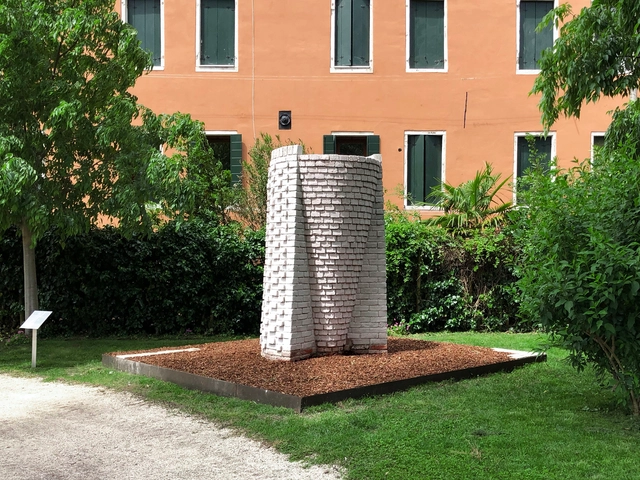
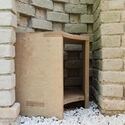
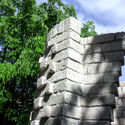
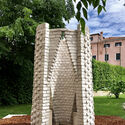
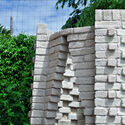
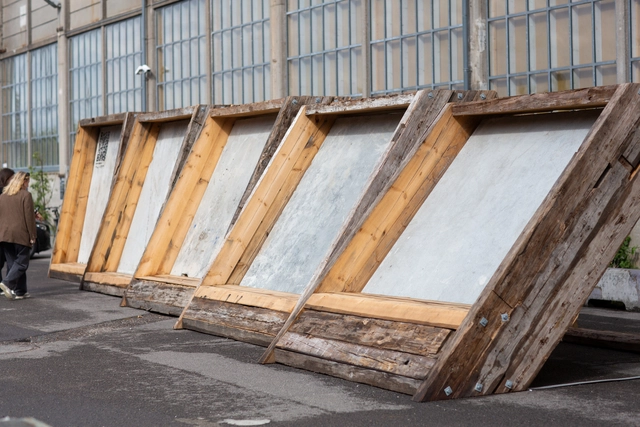
Urban Radicals presented a temporary pavilion “A Brick for Venice” as part of the European Cultural Center’s “Time Space Existence program during the same time as the 2023 Venice Architecture Biennale. The entirety of the brick pavilion was made with mud from the city’s canals. Furthermore, “A Brick for Venice” is the first proof of concept for the team’s novel waste-based construction product.
Developed by GXN for the 2023 UIA World Congress of Architects in Copenhagen, The (P)RECAST Pavilion explores the possibility of reusing precast concrete elements from existing buildings to promote circularity and reduced carbon emissions in the construction industry. The pavilion showcases salvaged concrete elements alongside 200-year-old timber beams, highlighting their aesthetic and structural value. Following the same motivation but through a different approach, MEE Studio has developed The Regenerative Cabin. Located in Copenhagen, the structure explores the applied use of regenerative biogenic materials to reduce the carbon emissions associated with the building materials.
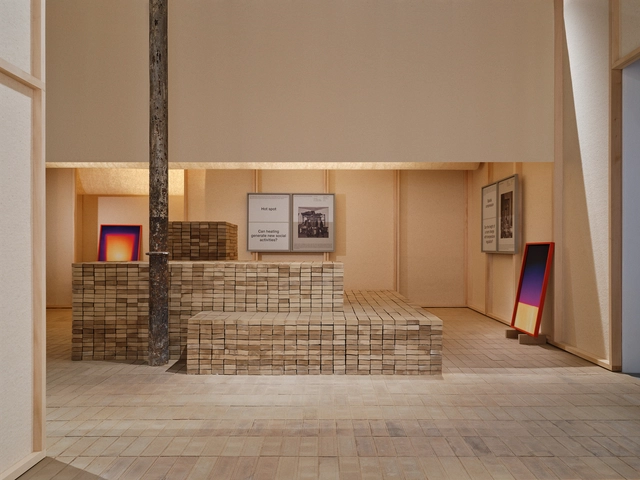
At the 18th International Architecture Exhibition of La Biennale di Venezia, the Pavilion of Slovenia set out to explore the theme of ecology and the paradoxical ways in which architecture relates to it. Instead of understanding it strictly through energy-efficient adaptations like heat pumps or recovery ventilation, the exhibition titled +/- 1 °C: In Search of a Well-Tempered Architecture aims to address the theme holistically. The Pavilion curators Jure Grohar, Eva Gusel, Maša Mertelj, Anja Vidic, Matic Vrabič, together with fifty European architects and creatives, researched and analyzed vernacular buildings from Europe to gain insight into the living example of intuitive adaptations.