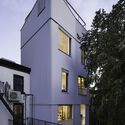
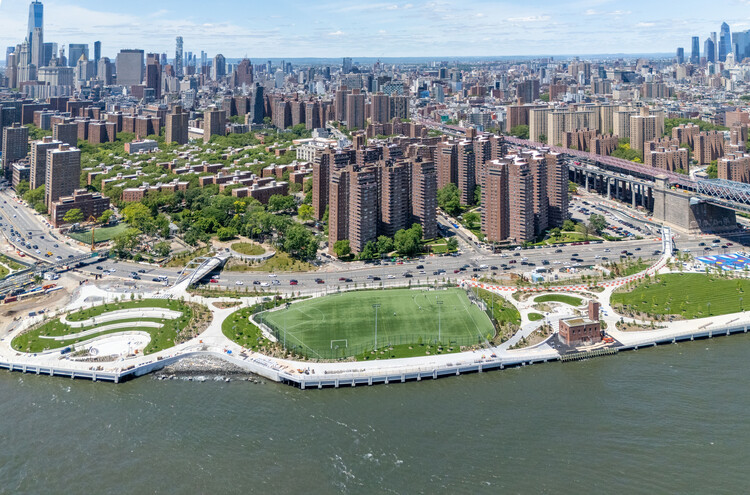
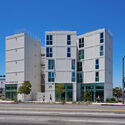
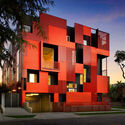
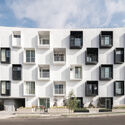
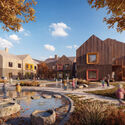
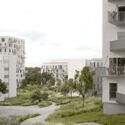
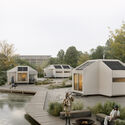
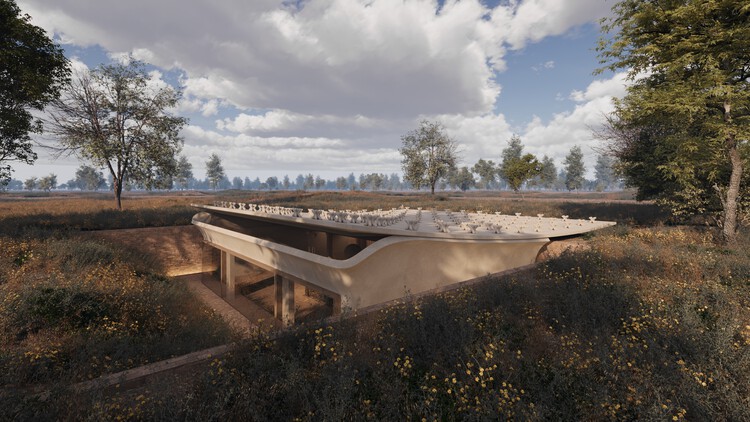
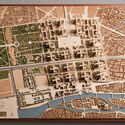
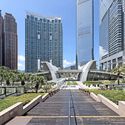
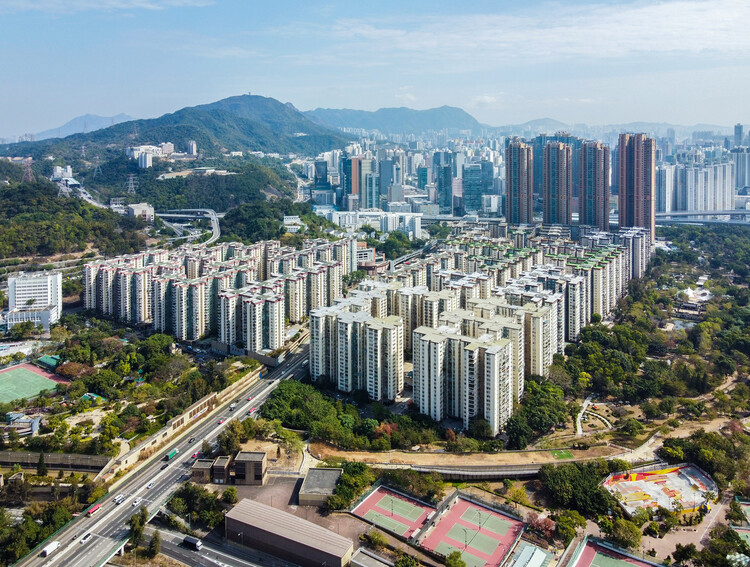
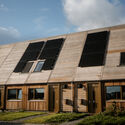
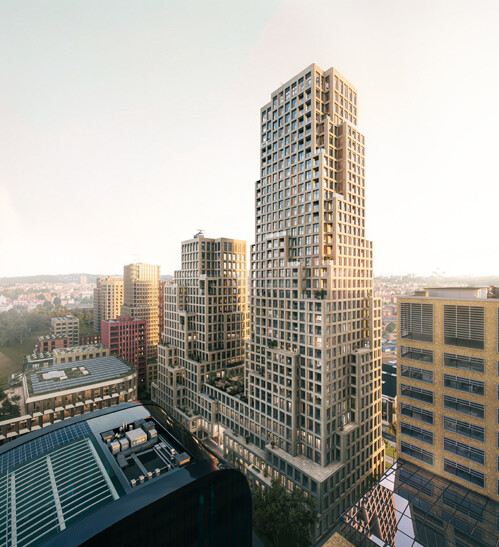
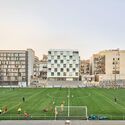
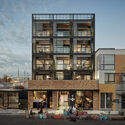
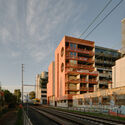
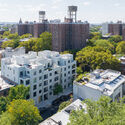
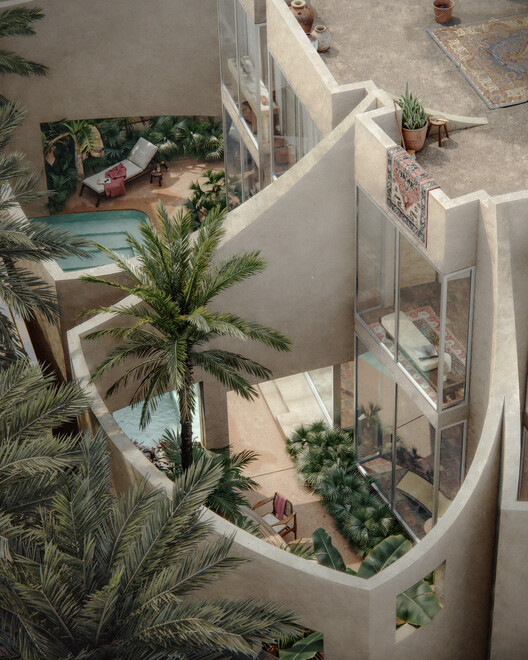
Buildner has released the results of its Denver Single Stair Housing Challenge, an international design challenge inviting architects, designers, and urban planners to explore innovative solutions for high-density residential living. Participants were tasked with reimagining a common point access block typology—often characterized by vertical circulation concentrated in a compact core—and transforming it into a more sustainable, community-oriented, and adaptable living environment. The competition was focused on sites in Denver, Colorado, though its issues are relevant to urban situations throughout the United States and around the globe.
Amidst the traditional streets of Antwerp, where centuries-old townhouses stand as remnants of a historic European city, a stark white volume quietly asserts its presence. Maison Guiette, designed by Le Corbusier in 1926, is an anomaly in its surroundings — a bold statement of modernity in a context that had not yet embraced it.
While today it is overshadowed by the architect's more famous works, this house holds a unique place in history: it was Le Corbusier's first built project outside France, a precursor to his later architectural experiments, and a manifestation of his emerging Modernist principles. Despite its modest scale, it was a manifesto in built form — a house that encapsulated the essence of an architectural revolution.
The next generation of Sub-Saharan Africa’s green and inclusive cities is just around the corner, but only if designers embrace the opportunity. Can small-scale entrepreneurship drive new sustainable housing, or will the overburdened sector fail to meet the challenge of climate change?
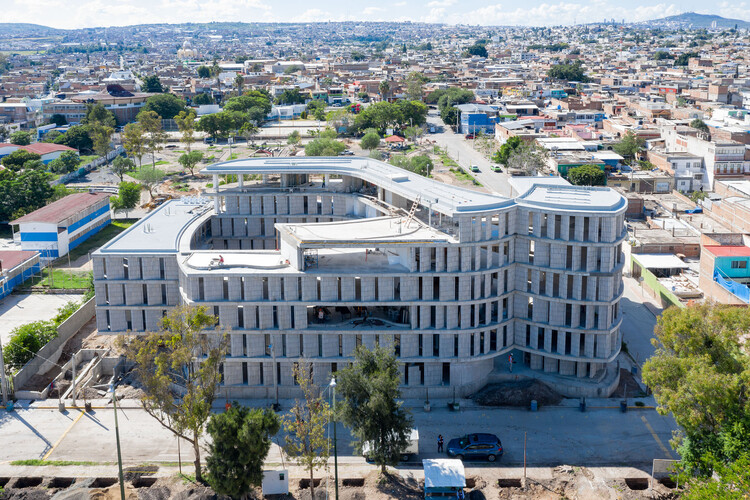
Architecture evolves, particularly in how it reflects the relationships between people, their behavior, and the environment. Even subtle variations in these dynamics can influence how we think and live in our communities. According to the World Bank, 56% of the population currently lives in urban environments, and it is estimated that by 2050 this number will reach 70%. This projection echoes the speed and magnitude of urban growth, posing challenges for architects and design firms, from the viability of buildings to the sustainability of the built environment, encompassing residential architecture and other typologies that influence daily life.
https://www.archdaily.com/1027788/case-studies-in-community-centered-living-innovative-residential-designEnrique Tovar
A year after the Viña del Mar mega-fire in Chile and with reconstruction efforts progressing at just 26%, the architecture firm ELEMENTAL and local authorities have begun construction on a prefabricated housing project in one of the residential neighborhoods most affected by the disaster. The project consists of a mid-density residential building with a modular steel structure, intended as a starting point for similar initiatives in response to what is now considered one of the most catastrophic events in Chile's recent history. As stated by Alejandro Aravena and the city's mayor, Macarena Ripamonti, the goal is for the technology and management model behind this project to set a precedent for delivering rapid and permanent housing solutions in emergency situations.
After two weeks of open voting in the16th edition of the Building of the Year Awards, our readers have meticulously narrowed down a pool of almost 4,000 projects to a select group of 75 finalists spanning 15 categories. This year's awards honor the pinnacle of design, innovation, and sustainability on a global scale, showcasing an exceptional range of projects within the shortlist. As a crowdsourced award, we take pride in affirming that your selections authentically mirror the current state of architecture, and the caliber of this year's finalists further underscores the excellence and diversity prevalent in the field.
When discussing modernist living, several iconic private residential projects may first come to mind—Le Corbusier's Villa Savoye, the Case Study Houses, most notably by Richard Neutra, Pierre Koenig, and Charles and Ray Eames, as well as the glass houses by Mies van der Rohe and Philip Johnson. Most of these projects exemplified an idealized vision of modern living, set in picturesque landscapes and characterized by experimentation with new construction methods, materials, and spatial concepts. Their designs embraced openness, blurring the boundaries between private and public spaces, largely unburdened by constraints such as density, efficiency, accessibility, public transit integration, or communal considerations.
While these modern homes remain influential in contemporary residential design, they also—perhaps unexpectedly—laid the groundwork for high-density housing principles. Concepts such as the interplay between public and private space, modular construction, and prefabrication, initially explored in these private residences, have been adapted to the vastly different constraints of social housing.
The design incorporates a specific type of low-carbon concrete, which aims to emit 30% less CO₂ than standard concrete. The prototype will be featured in the Time Space Existence exhibition, organized by the European Cultural Centre.The goal of the project is to test the sustainability of a housing prototype in response to the ongoing climate and humanitarian crises.
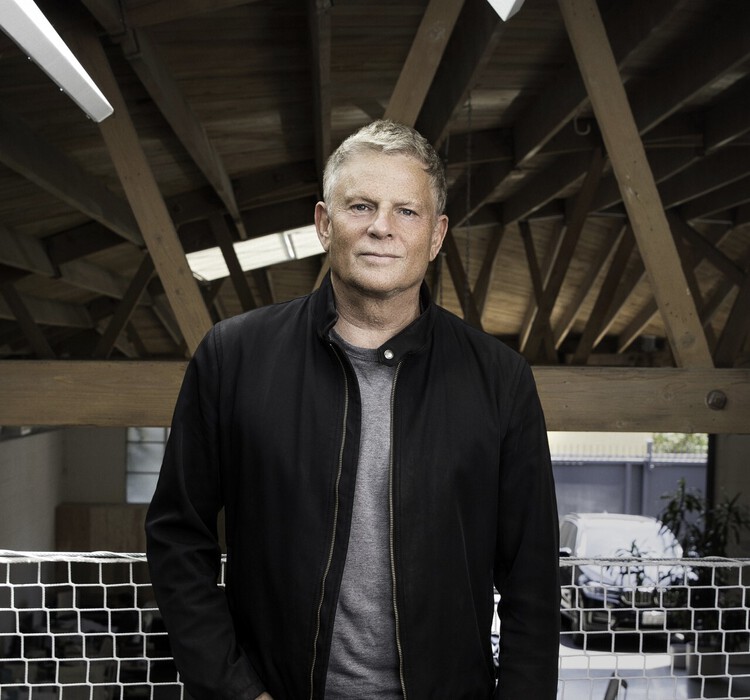
SO-IL (Solid Objectives – Idenburg Liu) is an architectural design firm based in Brooklyn, New York, founded in 2008 by Florian Idenburg and Jing Liu. Known for an architecture deeply engaged with social, cultural, and environmental contexts, the studio focuses on exploring innovative materials, creating fluid spatial experiences, and prioritizing ecological sustainability. SO-IL's work spans various scales and program types, reflecting their versatile approach to design. In 2024, their housing project 450 Warren in Brooklyn was selected as ArchDaily's Building of the Year by the audience in the housing category.
In their latest book, In Depth: Urban Domesticities Today, SO-IL explores the evolving concept of home in contemporary urban contexts, transforming it "from a source of vulnerability into a tool for empowerment." The book redefines domesticity as an active and shared experience and examines how architects can address pressing urban challenges such as affordability, density, and sustainability. SO-IL's work advocates for flexible, resilient housing that fosters community while integrating ecological and social dimensions. ArchDaily spoke with the architects about the innovative solutions and ideas presented in the book, delving into how their projects challenge conventional systems and envision a future where architecture is a tool for empowerment.
Why demolish when you can embellish? A collaboration between ArchDaily and ICEX highlights the most outstanding remodeling, reuse, extension and renovation works recently built in Spain. This competition focuses on how Spanish architecture values the revitalization of historic buildings and centers, and recovers existing structures promoting a more balanced urban development. In Spain, old casonas become boutique gems, and factories like Madrid's Matadero morph into cultural havens—a clever mix of tradition and modern flair. After all, good design isn't built—it's built upon.
Student housing has undergone a remarkable transformation over the last century. Once seen as a utilitarian necessity, providing shelter and basic amenities for students, this architectural typology has evolved to address increasingly complex societal, cultural, and urban demands. Starting with Le Corbusier's modernist approach at the Cité Universitaire in Paris, student housing has reflected broader trends in architecture, urbanism, and social change.
Today, these buildings must cater to a highly diverse and transient population, navigating the pressures of affordability, density, and the evolving living standards of young adults. With rapid urbanization and increasing student mobility, universities now face the challenge of designing housing that is not only functional but also adaptable to different cultural and social contexts. This has led to more flexible, innovative solutions that promote both privacy and community living.
Amid a significant global housing shortage and an increase in urban growth, the residential phenomenon of co-living is expanding, fostering a community-based lifestyle where socialization becomes a fundamental principle. Resources, values, interests, and experiences are shared, creating new ways of living. While co-living buildings also incorporate spaces for individuality, this new form of communal domesticity emerges as a viable alternative suitable for diverse users, not only students or young adults but also older residents, promoting efficient space utilization and intergenerational interaction.
Much of the production of modern architecture on the American continent was based on the model of European architects who, with their works, projected the fundamental premises and ideas for modern living. These pillars of architecture were transferred and consequently adapted to the American territory, introducing, at the same time, their own characteristics according to the territorial, socio-cultural and economic context.
We understand that good architecture is that which serves as a model for solving problems inherent to the discipline of architecture in general. This is why certain references that we consider today as "classics" are examples of good architectural practices that have been appropriated by other architects, taking the pertinent and necessary elements to achieve a result in accordance with the particular context.
The Second Studio (formerly The Midnight Charette) is an explicit podcast about design, architecture, and the everyday. Hosted by Architects David Lee and Marina Bourderonnet, it features different creative professionals in unscripted conversations that allow for thoughtful takes and personal discussions.
A variety of subjects are covered with honesty and humor: some episodes are interviews, while others are tips for fellow designers, reviews of buildings and other projects, or casual explorations of everyday life and design. The Second Studio is also available on iTunes, Spotify, and YouTube.
This week David and Marina of FAME Architecture & Design discuss the Design-Build model of home construction. They cover the definition of the Design-Build model; lack of licensed architects in Design-Build companies; efficiency and economy; quality of construction; how costs are lowered; lack of transparency; who should / shouldn't engage with Design-Build companies; and more.
https://www.archdaily.com/1022287/the-second-studio-podcast-the-problem-s-with-design-buildThe Second Studio Podcast
MVRDV, in collaboration with JGE Architects, landscape architects Copley Wolff, and Langan Engineering, has developed a masterplan for the redevelopment of Faneuil Gardens, a public housing site in the Brighton neighborhood of Boston. This project, commissioned by The Community Builders in partnership with the BostonHousing Authority, aims to replace the outdated 1940s apartment complex with five contemporary buildings that incorporate mixed-income affordable housing, artist live-work spaces, and significant green spaces. At the center of the redevelopment is a new community center, located along a public boulevard that runs through the heart of the site.
Buildner has announced the results of its second annual Home of Shadows international architecture ideas competition. This competition series is designed to focus on the vital interplay between light and shadow in creating functional and inviting living spaces, highlighting the importance of natural light in home design, which is essential for creating comfortable, welcoming, and practical environments.
Urban expansion and increasing population density have fuelled a growing demand for outdoor areas in multi-story apartments, as residents seek to stay connected with nature without leaving home. This trend reflects the challenges of modern urban life, where access to nature is often limited, and public green spaces are increasingly scarce. In this context, features like balconies, loggias, and winter gardens stand out as attractive solutions, offering private spaces for relaxation and enjoyment amidst the hustle of city life. In addition to enriching the urban experience, these spaces enhance the quality of life, providing a personal refuge amidst the urban landscape.