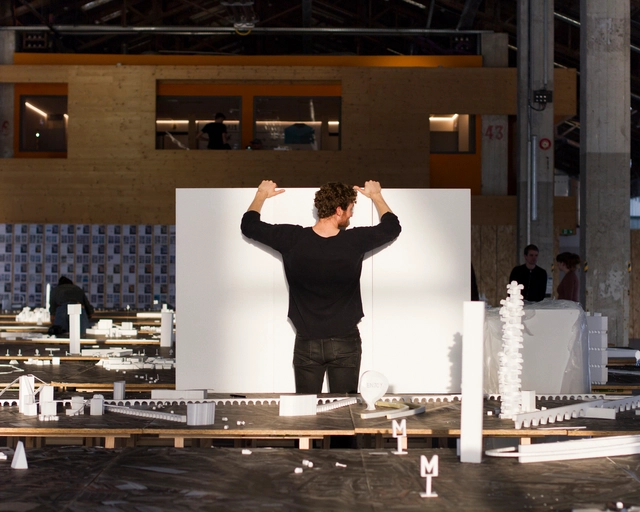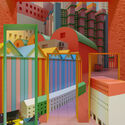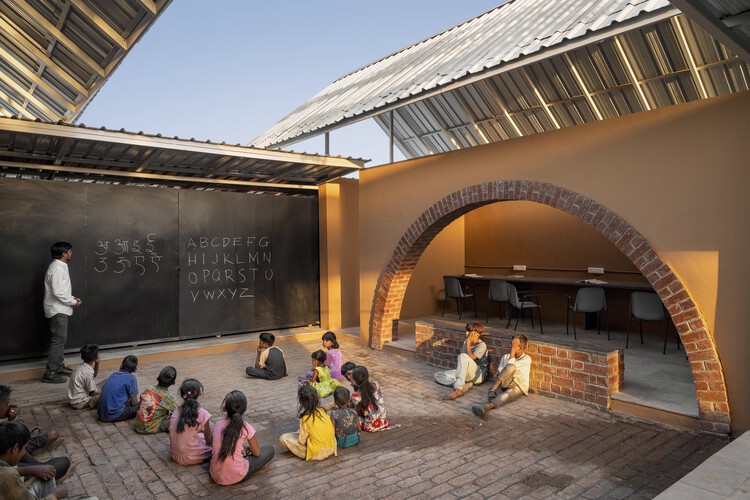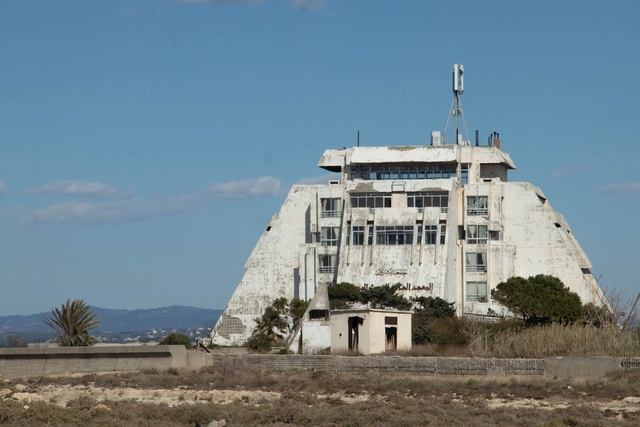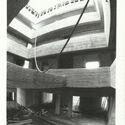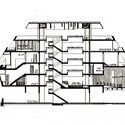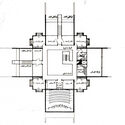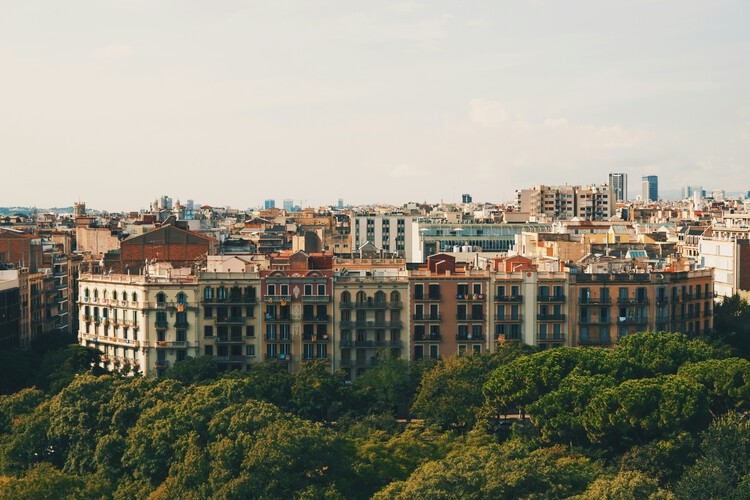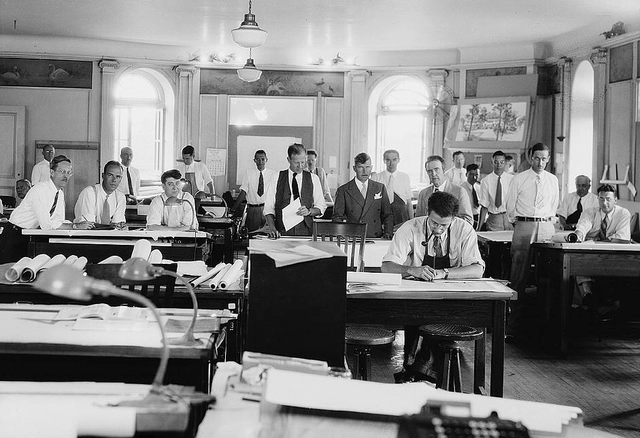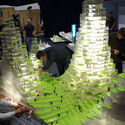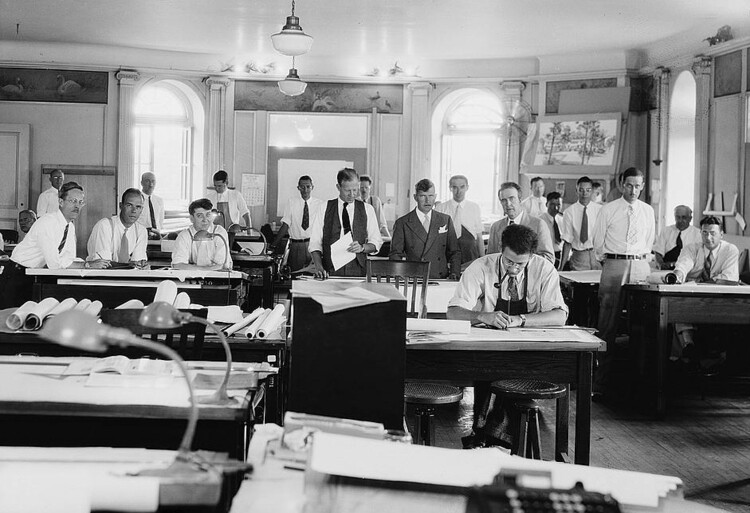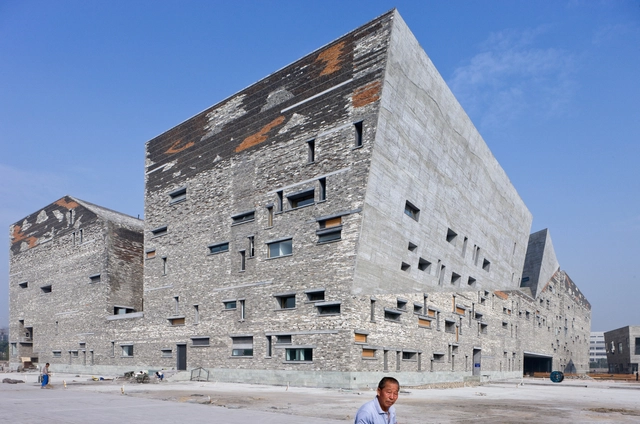
Léon Krier's Sketches. Image Courtesy of MIT Press
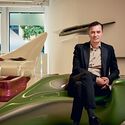
Léon Krier, the Luxembourg-born architect and urban theorist renowned for his critical stance against modernist planning and his influential role in the New Urbanism movement, passed away on June 17, 2025, at the age of 79. Known for his uncompromising critique of modernist planning and his vision for human-scaled, walkable communities, Krier leaves behind a substantial body of built work, theoretical writing, and educational influence.
Over a career spanning several decades, Krier advocated for a return to classical architecture and human-scaled urbanism, positioning himself as a leading critic of sprawling suburban development and high-rise modernism. His advocacy for walkable, mixed-use neighborhoods and his insistence on the cultural and social value of architecture challenged the prevailing norms of late 20th-century urban planning.
A Pan-African Biennale of Architecture is planned for 2026 in Nairobi, Kenya. According to the curator, it "represents an unprecedented opportunity to reclaim Africa's architectural narrative, reasserting the continent's role as a global leader in urban resilience, sustainability, and cultural expression."
Omar Degan, the curator in partnership with the Architectural Association of Kenya, is a practicing architect, professor, and teacher. He leads an architecture office known as DO Architecture Group, which was established between Italy and Somalia—two places deeply connected to his identity. His work focuses on what he describes as "fragile contexts" around the world, including areas affected by natural disasters, refugee camps, slum upgrades, and underserved neighborhoods.
View of Howl's Moving Castle Replica inside the Valley of Witches area . Image via ghibli-park.jp, under policy of fair use
Studio Ghibli and its co-founder Hayao Miyazaki have become household names in the West, thanks to their impressive body of work, which includes over 10 feature films, 2 Oscars, and more than 100 awards worldwide. Films such as "Spirited Away" and "Howl's Moving Castle" showcase their mastery of world-building, story telling and compelling visuals which have earned them global acclaim. This has created a devoted fan base that previously only had the Studio Ghibli Museum in Tokyo to experience the films in real life. As the studio's popularity and movie portfolio grew, it became inevitable for them to expand into a larger space. That is why November 2022 marked the beginning of a new phase as the Ghibli Park opened its gates in Nagoya, Japan.
The Economist Intelligence Unit (EIU) has released its Global Liveability Index for 2025, assessing 173 cities worldwide across five categories: stability, healthcare, culture and environment, education, and infrastructure. This year, Copenhagen has taken the top position, ending Vienna's three-year run as the world's most liveable city. The Danish capital earned high scores in stability, education, and infrastructure, narrowly surpassing Vienna, which saw a decline in its stability rating following recent security incidents. The average global liveability score for 2025 remains steady at 76.1 out of 100, unchanged from 2024. While year-on-year improvements were recorded in healthcare, education, and infrastructure, these were offset by a continued decline in stability, driven by rising geopolitical tensions, civil unrest, and increased security threats in several regions.
For the third year in a row, Melbourne has been selected as one of the top five most liveable cities in the world. The city is widely viewed as the leading architectural hub in Australia for its unique street culture and diverse design expression, with its layers and bold mix of architectural styles. From the very well-restored Victorian era edifices with their intricate ornamentation and detailing to the adjoining Contemporary landmarks, the city seems to achieve a nice balance of all typologies and design movements, while still being very inviting and engaging to its citizens.
Collective living continues to be a central theme in contemporary housing discourse, one that extends beyond questions of density or typology to engage broader concerns of land use, social cohesion, and spatial identity. This selection of conceptual unbuilt projects, submitted by the ArchDaily community, explores the potentials of shared living environments, not only as functional housing solutions but as frameworks for interaction, environmental integration, and cultural continuity. Whether in urban or remote settings, they reflect a growing interest in rethinking how domestic space can support both individual privacy and communal life.
Public space has long been central to architectural thought, often framed in terms of planning, infrastructure, and regulation. From Haussmann's Paris to contemporary masterplans, architects have worked to define and formalise collective life through spatial tools. Yet, outside of these frameworks, artists have continuously offered alternative ways of understanding and inhabiting public space—ways that rely not on construction or permanence, but on presence, perception, and participation. Through actions, objects, or atmospheres, artists engage the city as a site of friction and imagination. These gestures challenge architectural conventions and invite artists to reconsider public space not as a solved form, but as a contingent and open process.
Located in the south of the "Land Down Under", Melbourne is a city that resists simplistic definitions. While refined Victorian façades confront graffiti-covered laneways, meticulously maintained public gardens coexist with former industrial warehouses transformed into cafés, studios, and cultural spaces. It is precisely in this contrast between deliberate planning and spontaneous appropriation that the architectural essence of the metropolis resides.
Its history begins with the Aboriginal Kulin people, who for millennia inhabited the banks of the Yarra River, developing complex systems of land management, spirituality, and social organization. With the arrival of British colonizers in 1835, the chapter of the modern city began, a process marked not only by urban growth and development but also by violence, forced displacement, and cultural erasure. The effects of this legacy are still felt today, even in the face of contemporary efforts toward recognition and reconciliation.
Located in southern Spain, Seville unfolds as a layered city shaped by centuries of cultural intersections. As the former capital of Al-Andalus and a central port during the Spanish Empire's expansion, its built environment reflects a deep historical complexity. From Roman foundations to Islamic geometries, from Renaissance palaces to contemporary interventions, Seville presents a unique spatial narrative in which architecture directly reflects its political, religious, and social transformations.
The city's architectural heritage is inseparable from its climate and geography. Narrow shaded streets, inner courtyards, and water as spatial elements reveal a deep knowledge of environmental adaptation that still informs how public and private spaces are articulated today. While monumental landmarks such as the Alcázar, the Giralda, or the Cathedral preserve and reinterpret historic legacies, modern projects have begun introducing new materials, programs, and spatial typologies, challenging conventional forms and proposing alternative ways to inhabit the city.
In the productivity-driven dynamics of contemporary cities, playful interventions in public spaces offer an innovative way to reclaim urban environments. These interventions encourage new ways of thinking and acting, temporarily breaking the monotony of everyday life and redefining the concept of play. Once confined to childhood and separate from daily activities, play has begun to intertwine with routine paths, becoming an integral part of urban life even outside traditional leisure times. In this way, reintroducing the swing—the most iconic children's toy—becomes particularly significant. As a symbol of childhood, pleasure, and joy, the swing contrasts sharply with the rigid appropriations of most public spaces, inviting a more relaxed and playful engagement with the urban environment. On June 11th, the UN International Day of Play reminds us of the benefits of incorporating diverse activities into urban spaces, for both children and adults, fostering community, creativity, and well-being.
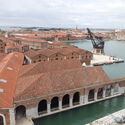
The ancient city of Venice, Italy, home to both the art and architecture editions of the Venice Biennale, is known for its unique geography as an island city of canals. Its naval and mercantile prominence now diminished, the city has found a new purpose as a center of learning, exhibiting, and tourism. However, its urban morphology and, indeed, most of its buildings are historic and have remained largely unchanged for hundreds of years. Their appearance exhibits a specific Venetian vernacular that has stood the test of time and stands as a backdrop for the city's contemporary activities. How do the facades of these buildings, particularly their windows, reflect this history? And how do the few modern buildings in the city, such as the Palazzo Nervi-Scattolin, respond to this weight of history?
Gyumri, the capital of Armenia's Shirak region and the country's second-largest city, was historically known for its culture and architectural heritage. While it was part of the Soviet Union, the city hosted many factories that turned it into a primary industrial center in the region, reaching a population of approximately 225,000 people. However, during the past decades, Gyumri has seen a considerable population decline as a consequence of a devastating earthquake that destroyed the city in 1988 and killed thousands of people. More than 30 years later, Gyumri's regeneration process is still unfolding. The city's ongoing efforts to restore its built environment and boost economic development offer valuable insights into how urban regeneration can be navigated in the aftermath of disaster.
Living in densely populated cities is a reality for many. While the benefits of urban living—such as proximity to amenities, infrastructure, job opportunities, and lifestyle—remain highly valued, homes have seen a significant reduction in square footage. The trend toward smaller apartments has become increasingly common, with interior design playing a fundamental role. Reducing square meters demands efficient use of space and smart floor plan layouts. However, far from generating dull spaces, creativity in design has led to interesting architectural solutions that condense high-quality living into what is often called a micro apartment or studio, studios of 40m2 or under.
In recent years, architecture has increasingly embraced adaptability, flexibility, and responsiveness as core design principles. This evolution reflects a shift from traditional notions of static, permanent structures to dynamic environments that can adjust to changing needs and conditions. Central to this transformation is the concept of "soft architecture", which leverages pliable materials and innovative systems to create spaces that are functional, sustainable, and user-centric. Soft architecture takes shape through membranes that breathe, façades that move, structures that inflate or fold, and surfaces that bend rather than break. It involves designing for transformation — not only in how a building performs environmentally, but also in how it can accommodate shifting functions, user interactions, or temporary occupations. This approach to building challenges traditional notions of durability and control, proposing instead a more responsive and open-ended architecture. It reflects a growing awareness that buildings, like the societies they serve, must be able to evolve.
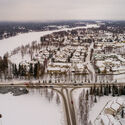
Boise, United States. Image via Wikipedia user: Fæ. License under CC0 1.0. Image Author: Alden Skeie
From greenhouse gas emissions and air pollution to deforestation, one of the leading contributors to global warming today is emissions from the transportation sector. Exploring its origins and evolution, as well as the major challenges it faces, the development of electric mobility in urban environments represents a global transition that requires a coordinated mix of policies and actions to achieve cleaner and more sustainable transportation systems. Designing safe and comfortable infrastructure for walking and cycling, promoting public transit and shared mobility, and designing more efficient streets that include electric vehicles, among other actions, are part of a growing worldwide effort to reduce carbon emissions.
In the United States, nearly 1 in 10 children are affected with asthma, a condition with rates significantly higher in urban areas of the country. However, in a community just outside Atlanta with a population of more than 300 children, not a single case of the condition has been reported. This is by design. Most cities and neighborhoods across the country are not designed with human biology in mind, an oversight that contributes to the growing prevalence of cardiovascular disease and mental health challenges. Are we treating chronic conditions as purely medical, when they may actually be symptoms of poor design?
What structures and infrastructures sustain the ties and relationships between the countryside and the city? How will architecture and emerging technologies maintain -or not- the coexistence of both worlds in the future? The reduction of ecological footprints, the impact of climate change, the decentralization of major cities, food security, and other contemporary issues challenge professionals in architecture and urbanism globally under the main shared goal of improving citizens’ quality of life and achieving physical, mental, and emotional well-being in both built and natural environments.
Little has been written about the work of Abdelmoneim Mustafa, one of the most respected architects in his homeland of Sudan and a pioneer in his profession in the mid-twentieth century. Esra Akcan, who made extensive research of his work with a team in Sudan during a small window of opportunity between 2019 and 2021, laments this lack of recognition thus, "How could someone as gifted as Moneim Mustafa… designer of some of the most exciting mid-century modernist buildings anywhere, be so neglected, so ignored out of Sudan, that to this day there is no internationally accessible publication in his name." Akcan's writings, coupled with the personal blog of Hashim Khalifa, who trained under Mustafa, shed light on his extensive legacy.