Across different geographies and scales, this week's architecture news reflects a sustained focus on how cities and buildings are being recalibrated in response to evolving patterns of movement, work, and collective life. Across multiple contexts, public space and mobility remain central concerns, with streets, downtowns, and large-scale developments serving as testing grounds for new approaches to accessibility, resilience, and everyday use. Pedestrianisation initiatives and community-led visions point to evolving governance models and long-term urban strategies, while cultural and research-driven platforms continue to frame these changes within broader public discourse. In parallel, progress on major mixed-use and corporate projects underscores the growing integration of digital infrastructure, environmental performance, and flexible spatial frameworks within contemporary architecture.


Reclaiming Streets, Downtowns, and Public Life

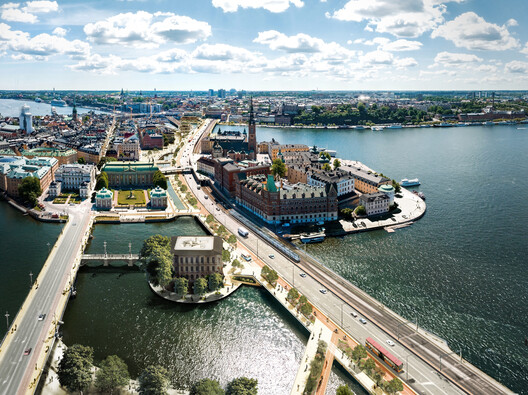
Across this week's coverage, streets and downtown districts emerge as key arenas for contemporary urban transformation, shaped by changing mobility patterns, post-pandemic realities, and evolving models of governance. Ongoing pedestrianisation initiatives in London, New York, Houston, and Stockholm illustrate how cities are reassessing the role of streets as civic spaces rather than traffic corridors. From Oxford Street's transition into a statutory, consultation-led regeneration process to New York's Paseo Park evolving from a temporary open street into permanent infrastructure, these projects demonstrate varied pathways toward pedestrian-first environments. Houston's Main Street Promenade advances through active construction tied to a fixed international deadline, while Stockholm's Superline frames pedestrianisation as a research-based, citizen-informed vision. In parallel, the "Coming Together: Reimagining America's Downtowns" exhibition at the National Building Museum situates these spatial shifts within a broader national conversation, documenting how U.S. cities are adapting downtowns through community-led strategies, adaptive reuse, and public-space interventions that respond to lasting changes in work, mobility, and social life.
Related Article
From London to Houston: Four Ongoing Pedestrianisation Initiatives Shaping More Walkable CitiesLarge-Scale Development, Technology, and the Contemporary Workplace
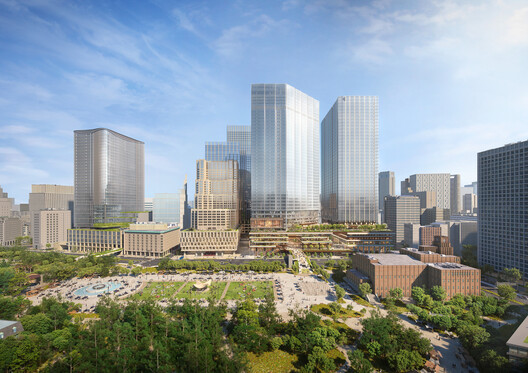
At the building scale, progress on major mixed-use and corporate projects highlights how digital infrastructure, environmental performance, and spatial flexibility are shaping contemporary architecture. In Tokyo, the groundbreaking of the NTT Hibiya Tower marks the first realised phase of PLP Architecture's Tokyo Cross Park master plan, integrating next-generation communications technology with a mixed-use program and public-facing spaces. The project positions the corporate headquarters within a wider urban framework, emphasising adaptability and connectivity. Similarly, construction advances at Zaha Hadid Architects' OPPO Headquarters in Shenzhen, where facade installation signals continued progress on a vertically integrated campus designed to combine flexible office environments with publicly accessible routes and amenities. Together, these developments reflect how large-scale projects are aligning technological systems and sustainability targets with broader urban and civic considerations.
On the Radar
UNStudio Designs Hong Kong's First Private Multi-Functional Theatre at Central Yards

UNStudio has completed the design for Hong Kong's first private, large-scale multi-functional theatre as part of the Central Yards development on the New Central Harbourfront. Commissioned by Henderson Land, the venue forms part of a 4.8-hectare, 400-metre-long mixed-use project that combines commercial, cultural, and public programs within a groundscraper configuration. With a capacity of over 1,100 seats, the theatre is designed to accommodate a diverse range of performances, including international touring productions, concerts, and cross-disciplinary events. The auditorium integrates the stage, seating, and acoustic systems within a sculpted lattice shell, supported by advanced lighting and sound technologies. Beyond the performance space, the design connects interior foyers with surrounding landscape areas, office lobbies, and VIP facilities, extending cultural activity into both indoor and outdoor public realms along the harbourfront.
Proposal Aims to Restore a Filled-In Section of the Historic Bydgoszcz Canal in Poland

Discussions are underway in Bydgoszcz, Poland, to restore an approximately 500-metre section of the Old Bydgoszcz Canal that was filled in during the 1970s to accommodate road traffic in the city centre. Developed by the Bydgoszcz Urban Movement in collaboration with architect Paweł Mrozek, the concept proposes reopening the canal along a route close to its historic alignment and reconfiguring Marszałka Focha Street into a greener, pedestrian- and cyclist-friendly urban corridor. The proposal combines blue and green infrastructure with reduced road capacity, new public spaces, a green tramway, and a dedicated cycle route, aiming to reconnect fragmented parts of the city. Presented publicly in November 2025, the initiative positions canal restoration as part of a longer-term strategy for climate adaptation, mobility transformation, and urban regeneration.
Tang Wing for American Democracy by Robert A.M. Stern Architects to Open at The New York Historical in 2026
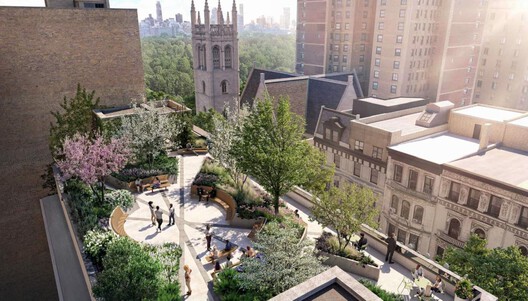
The New York Historical has announced that its 71,000-square-foot Tang Wing for American Democracy is scheduled to open on June 18, 2026, expanding the institution's facilities and public programs as the United States marks its 250th anniversary. Designed by Robert A.M. Stern Architects, the new wing adds exhibition galleries, classrooms, collection storage, and conservation spaces to the museum's Upper West Side campus, while enabling the expansion of its educational initiatives, including the Academy for American Democracy. Architecturally, the project introduces a contemporary addition that draws material continuity from the existing landmark building through the use of granite sourced from the same Maine quarry.
This article is part of our new This Week in Architecture series, bringing together featured articles this week and emerging stories shaping the conversation right now. Explore more architecture news, projects, and insights on ArchDaily.