1. ArchDaily
  2. Circular Design

Circular Design: The Latest Architecture and News

A Look at the 45 Award-Winning Pavilions of Expo 2025 Osaka

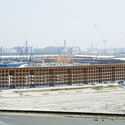
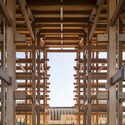
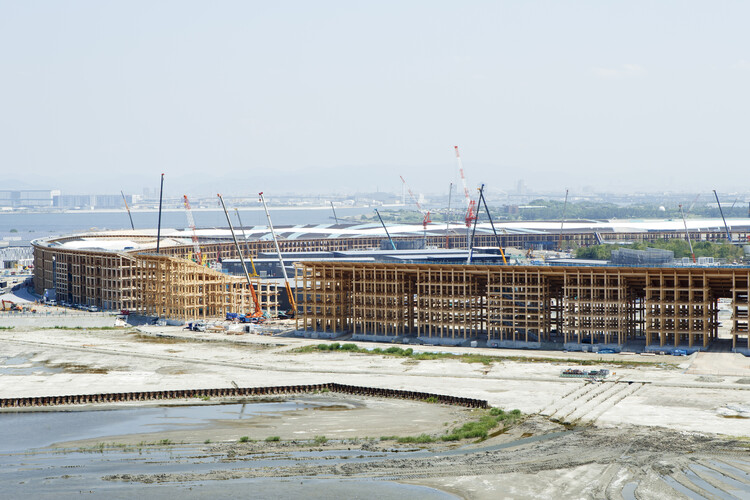
About a month after the closing of Expo 2025 Osaka, the designs and constructions presented at the world's fair remain as a legacy. While the Bahrain Pavilion, designed by Lina Ghotmeh Architecture, drew particular attention this year for receiving double recognition, it was one among many awarded projects. During the awards ceremony held on the penultimate night of the event, a total of 45 awards were presented among 165 participating countries. The Official Participant Awards are granted according to pavilion size and type, recognizing excellence in Architecture and Landscape (for self-built pavilions only), External Design (for module pavilions only), Exhibition Design, Theme Development, and Sustainability. The recipients were selected by an international jury of nine experts who visited all national and thematic pavilions during two evaluation sessions in May and October 2025. The following overview presents all 45 pavilions distinguished in the five categories of the Official Participant Awards.

A Look at the 45 Award-Winning Pavilions of Expo 2025 Osaka - Image 1 of 4A Look at the 45 Award-Winning Pavilions of Expo 2025 Osaka - Image 2 of 4A Look at the 45 Award-Winning Pavilions of Expo 2025 Osaka - Image 3 of 4A Look at the 45 Award-Winning Pavilions of Expo 2025 Osaka - Image 4 of 4A Look at the 45 Award-Winning Pavilions of Expo 2025 Osaka - More Images+ 15

Small-Scale Solutions to Climate Challenges: 13 Highlighted Projects from the 19th Venice Architecture Biennale

With just a few days left before the six-and-a-half-month 19th Venice Architecture Biennale comes to an end, it is possible to look back on some of the most notable contributions within its thematic framework. Marked by the largest call for participants to date, the Biennale's diversity of topics and the range of installations on display go beyond easy recapitulation. As part of that reflection, several initiatives can be highlighted as illustrative of the principles reflected in the curatorial theme, "Intelligens. Natural. Artificial. Collective." The concepts interwoven in Carlo Ratti's title form a call to address the urgent need for substantial solutions amid the accelerating climate crisis, positioning the Biennale as a platform for diverse design proposals and experiments organized around three forms of intelligence: natural, artificial, and collective. Beyond the national pavilions and numerous collateral events held throughout Venice over the past six months, among the more than 700 participants are projects that, through practice, embody four shared intentions: opening conversations about the future, proposing systemic responses to local realities, placing technology at the center of design innovation, and pursuing material research rooted in local sensitivity.

Small-Scale Solutions to Climate Challenges: 13 Highlighted Projects from the 19th Venice Architecture Biennale - Image 1 of 4Small-Scale Solutions to Climate Challenges: 13 Highlighted Projects from the 19th Venice Architecture Biennale - Image 2 of 4Small-Scale Solutions to Climate Challenges: 13 Highlighted Projects from the 19th Venice Architecture Biennale - Image 3 of 4Small-Scale Solutions to Climate Challenges: 13 Highlighted Projects from the 19th Venice Architecture Biennale - Image 4 of 4Small-Scale Solutions to Climate Challenges: 13 Highlighted Projects from the 19th Venice Architecture Biennale - More Images+ 52

12 Pavilions at EXPO 2025 Osaka Highlight Immersive Spatial Experiences

 | Sponsored Content

Since its inauguration this spring, Expo 2025 Osaka has captured global attention from multiple perspectives, demonstrating how architecture can function as a laboratory for exploring solutions to pressing challenges. After 55 years, Osaka is once again hosting the World Expo, with each installation organized around the sub-themes Saving Lives, Empowering Lives, and Connecting Lives. These pavilions take forms that express the identity and values of their region through distinctive architectural languages, forming the central axis of their design. Building on this foundation, some installations serve as laboratories for the future society, utilizing technology to enhance experiences both inside and outside the spaces, transforming the visit through light, sound, visuals, and movement as part of the technological innovation showcased at the event.

12 Pavilions at EXPO 2025 Osaka Highlight Immersive Spatial Experiences - 1 的图像 412 Pavilions at EXPO 2025 Osaka Highlight Immersive Spatial Experiences - 2 的图像 412 Pavilions at EXPO 2025 Osaka Highlight Immersive Spatial Experiences - 3 的图像 412 Pavilions at EXPO 2025 Osaka Highlight Immersive Spatial Experiences - 4 的图像 412 Pavilions at EXPO 2025 Osaka Highlight Immersive Spatial Experiences - More Images+ 27

Slow Pavilions, Chapel Retold, and More: 6 Key Highlights From the First Copenhagen Architecture Biennial

The first edition of the Copenhagen Architecture Biennial opened on September 18 and will run until October 19, under the theme "Slow Down." Organized by CAFx (Copenhagen Architecture Forum), the new platform evolves from the city's previous annual festival into a broader international biennial for architectural dialogue and exchange. Led by Josephine Michau, the event seeks to create space for reflection on architecture's role in shaping societies and the environment. The chosen theme, Slow Down, invites participants to reconsider the pace of transformation in the built environment in response to global pressures such as rapid urbanization, resource consumption, and climate change.

During the opening days, ArchDaily announced the 2025 Next Practices Awards, and throughout the month, the Biennial presents more than 250 events, ranging from exhibitions and talks to performances and guided tours. Highlights include contributions from Danish practices such as Adept with Fast City/Slow Architecture and Lendager with Living Lab, alongside international participants like Atelier Bow-Wow and Rem Koolhaas.

Slow Pavilions, Chapel Retold, and More: 6 Key Highlights From the First Copenhagen Architecture Biennial - 1 的图像 4Slow Pavilions, Chapel Retold, and More: 6 Key Highlights From the First Copenhagen Architecture Biennial - 2 的图像 4Slow Pavilions, Chapel Retold, and More: 6 Key Highlights From the First Copenhagen Architecture Biennial - 3 的图像 4Slow Pavilions, Chapel Retold, and More: 6 Key Highlights From the First Copenhagen Architecture Biennial - 4 的图像 4Slow Pavilions, Chapel Retold, and More: 6 Key Highlights From the First Copenhagen Architecture Biennial - More Images+ 55

Copenhagen Architecture Biennial 2025 Reveals 'Slow Pavilion' Designs Built from Reused Materials

The first edition of the Copenhagen Architecture Biennial will take place from 18 September to 19 October 2025. Organized by CAFx (Copenhagen Architecture Forum), the event marks a transition from the previous annual Copenhagen Architecture Festival to a more expansive platform for architectural exploration. The theme of the inaugural edition, "Slow Down," invites participants to reflect on how the rapid pace of modern life affects the built environment. According to the organizers, this thematic shift encourages the envisioning of spaces that promote sustainability, longevity, and mindful engagement with our surroundings. In line with this vision, the organization launched an open call earlier this year for pavilion proposals that embody principles of circular design while serving as hubs for public programming during the event. Two winning proposals, modular structures by Slaatto Morsbøl and Tom Svilans x THISS Studio, were selected, each offering an approach to architectural deceleration.

Copenhagen Architecture Biennial 2025 Reveals 'Slow Pavilion' Designs Built from Reused Materials - Image 1 of 4Copenhagen Architecture Biennial 2025 Reveals 'Slow Pavilion' Designs Built from Reused Materials - Image 2 of 4Copenhagen Architecture Biennial 2025 Reveals 'Slow Pavilion' Designs Built from Reused Materials - Image 3 of 4Copenhagen Architecture Biennial 2025 Reveals 'Slow Pavilion' Designs Built from Reused Materials - Image 4 of 4Copenhagen Architecture Biennial 2025 Reveals 'Slow Pavilion' Designs Built from Reused Materials - More Images+ 5

Serbia’s Wool Installation Explores Circular Design at Venice Architecture Biennale 2025

The Serbian Pavilion at the 19th Venice Architecture Biennale consists of an immersive installation made of wool. The exhibition, titled Unraveling: New Spaces, was curated by architect Slobodan Jović and designed by an interdisciplinary team composed of Davor Ereš, Jelena Mitrović, Igor Pantić, Sonja Krstić, Ivana Najdanović, and Petar Laušević. The interior space of the Pavilion, located in the Biennale's Giardini, is occupied by an ephemeral installation that follows the principles of circular design, effectively producing no waste. The installation consists of a broad woven wool fabric that gradually unknits according to a guided choreography of algorithmic precision, completely disassembling by the end of the Biennale's exhibition.

Serbia’s Wool Installation Explores Circular Design at Venice Architecture Biennale 2025 - Imagen 1 de 4Serbia’s Wool Installation Explores Circular Design at Venice Architecture Biennale 2025 - Imagen 2 de 4Serbia’s Wool Installation Explores Circular Design at Venice Architecture Biennale 2025 - Imagen 3 de 4Serbia’s Wool Installation Explores Circular Design at Venice Architecture Biennale 2025 - Imagen 4 de 4Serbia’s Wool Installation Explores Circular Design at Venice Architecture Biennale 2025 - More Images+ 64