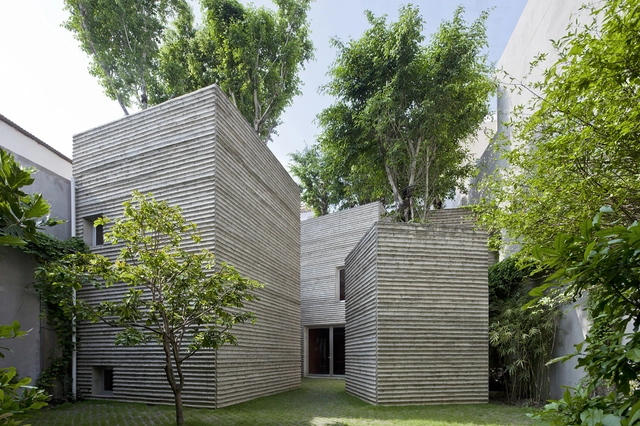
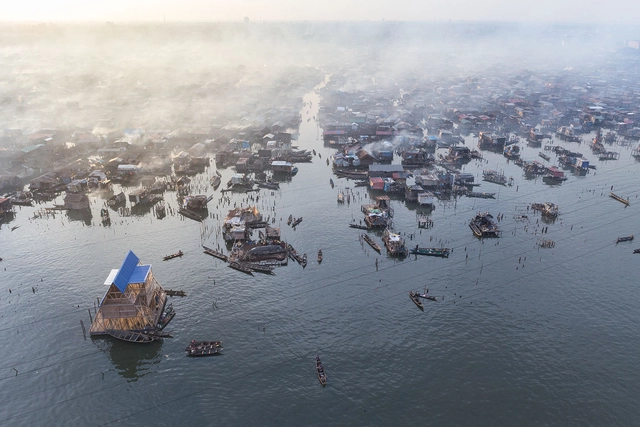
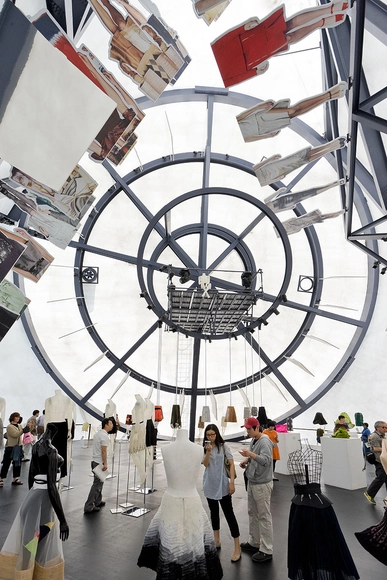
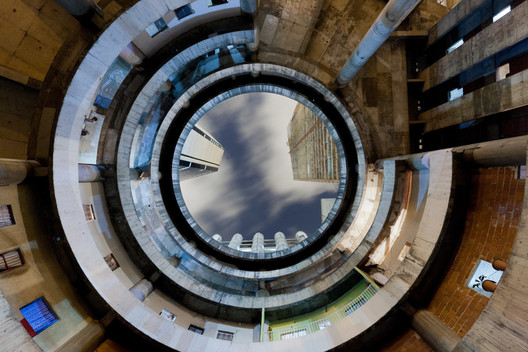
Surface Magazine's reintroducing its famed Avant Guardian photography contest, a competition that has helped launch the careers of many photographers. Surface editors and a star jury - featuring international photographer Iwan Baan, along with Johan Lindeberg, Klitos Teklos (Air Paris), Benoit Lagarde (Splashlight), and Keren Sachs (Offset) - will select 10 finalists. Finalists' work will be showcased in Surface's October 2014 issue and in a traveling photography exhibition.
The 2014 Serpentine Gallery Pavilion, designed by Chilean architect Smiljan Radic, opened this morning in London's Hyde Park. The pavilion, a glass-fibre reinforced plastic shell resting on large quarry stones, was inspired by a papier mâché model which Radic created four years ago as a response to the Oscar Wilde story 'The Selfish Giant'.
When one wants to consider the future of any form of activity, one is tempted to extrapolate trends from current conditions. One translates signs from the present onto the shape of things to come. The conditions of a given moment, however, may be too circumstantial, and one should be particularly aware of their transient nature. This is the dilemma one obviously faces when considering ‘the future of European architecture’.
At the time the European Union Prize for Contemporary Architecture - Mies van der Rohe Award commemorates its 25th anniversary, the European project from which this Prize emanates – and to which it owes its symbolic meaning and promoting purpose – is itself at a crossroads.
In between austerity measures, the South and North divide, growing unemployment, a feeling of impoverishment and insecurity, and the apparent unsustainability of the Welfare State model, which had given the region prosperity after World War II, Europe itself seems to be facing a pivotal, if transient moment.
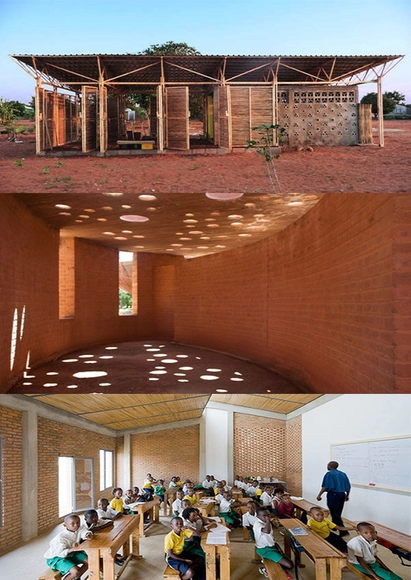
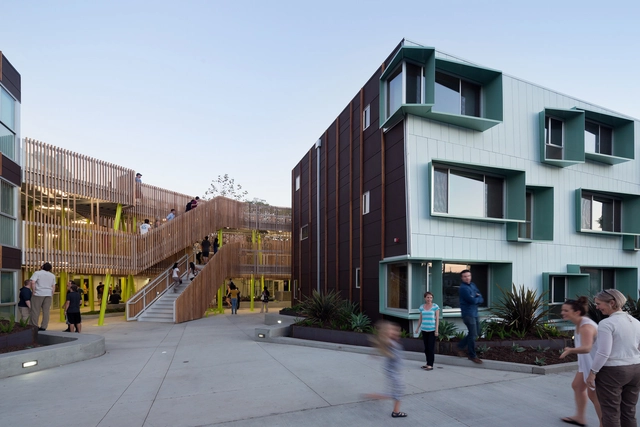
Top: Educational Building In Mozambique / Bergen School of Architecture Students. Middle: School Library Gando / Kere Architecture. Bottom: Umubano Primary School / MASS Design Group
The following article is presented by Materials, ArchDaily's new US product catalog.
How many times in the last year have you heard 3d printing mentioned? What about double-skinned curtain walls or “smart” buildings? High-tech materials almost always seem to dominate the conversation - at least in architectural circles. But using the latest invention in material technology usually does not make a building “innovative.” More often than not, it just makes it expensive and flashy.
Low-tech materials like lumber, stone and brick, on the other hand, are often overlooked, even though the use of local and locally produced materials offers the lowest possible carbon footprint. And while these common materials may seem boring, with a bit of imagination and technical skill, an architect can transform these materials into something fresh. With that in mind, check out three truly innovative projects which use low-tech materials in different and exciting ways.
The Parrish Art Museum is pleased to present Soft Footprints: Works by SO – IL as the fourth installment of Architectural Sessions—an ongoing series co-presented with AIA Peconic that explores the connection between art and architecture, and how both disciplines elicit conversation about space, form, materials and aesthetics. On June 6, host architect Maziar Behrooz, AIA, will moderate a discussion with SO – IL co-founders Florian Idenburg and Jing Liu about their design philosophy, inspiration, and interdisciplinary approach to architecture and designing spaces for art.
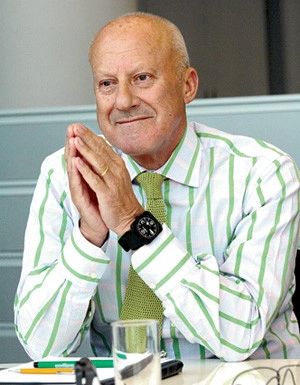
Foster + Partners has been named the UK's biggest architecture practice for the third year running in the annual AJ100 run by the Architects' Journal. The list of the top 100 architecture practices in the UK, based on the number of fully qualified architects employed, was announced at an awards ceremony last night in London.
In the past year Foster + Partners has almost doubled its lead at the top of the list, with its 290 architects putting it 87 ahead of second-place rival BDP, showing how the practice dominates the architecture world not just culturally, but also in terms of business size.
See the top 10 UK practices, as well as the results of the accompanying AJ100 Awards, after the break
Taschen’s latest volume draws together the architectural underdogs that, despite their minute, whimsical forms, are setting bold new trends for design.
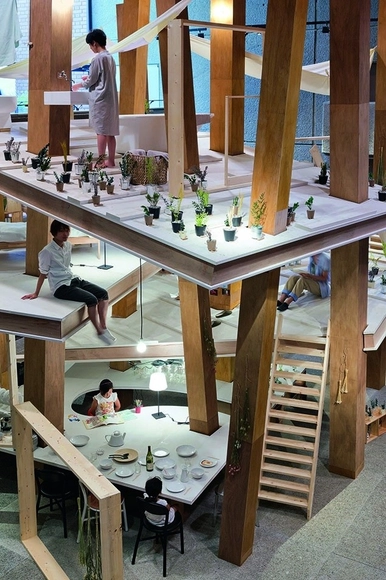
When economies falter and construction halts, what happens to architecture? Rather than indulgent, personal projects, the need for small and perfectly formed spaces is becoming an economic necessity, pushing designers to go further with less. In their new volume Small: Architecture Now!, Taschen have drawn together the teahouses, cabins, saunas and dollhouses that set the trends for the small, sensitive and sustainable, with designers ranging from Pritzker Laureate Shigeru Ban to emerging young practices.
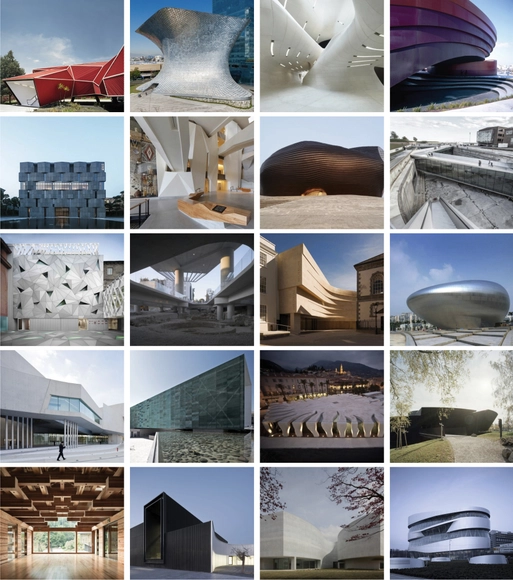
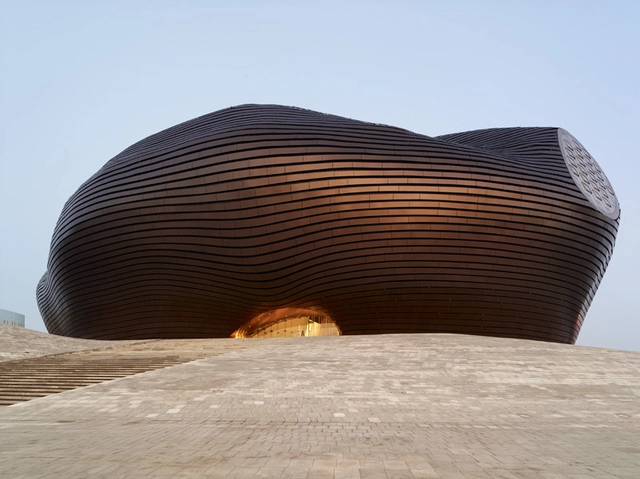
"I have to believe that one day, the only people doing architecture in China will be Chinese architects. That’s one trend I watch, because I’m not a Chinese architect!" This is the declaration Ben Woods, an American architect living and working in China, made during a recent interview with Forbes. In honour of his prediction, work, and personal commitment to never design a skyscraper, we've rounded up a list of fitting cultural projects in China by Chinese architects. See Pritzker Prize winner Wang Shu's Ningbo Historic Museum, MAD Architect's Ordos Art & City Museum, the Jinchang Cultural Centre, the Oct Design Museum, and the Spiral Gallery II. For more information on this post's inspiration, check out the full interview and article here.
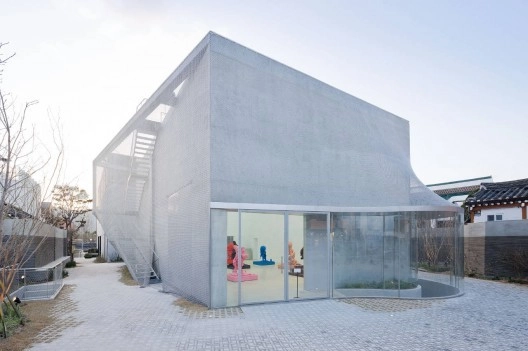
Today marks the fifth anniversary of the opening of OMA’s Prada Transformer. This fantastical temporary structure, erected in 2009 adjacent to Gyeonghui Palace in Seoul, Korea, is one of Rem Koolhaas’ most popular projects to date. Composed of a stark white membrane stretched across four steel frame shapes, The Transformer was often referred to as an "anti-blob" --a hexagon, a rectangle, a cross, and a circle leaning against each other to create a tetrahedron-like object reminiscent of a circus tent. The name Transformer came from the idea that any one of the pavilion's sides could serve as the building's floor, allowing for four unique spaces in one building devoted to exhibitions of modern art, fashion and design.
The Prada Transformer played host to four such events, being lifted up and repositioned onto a different face each time via crane. The first was a garment exhibition, displayed using the hexagonal floor plan. The second, a film festival that took place on the rectangular floor plan. A fashion show was staged using the Transformer's circular floor plan, and an art installation was shown using the cruciform floor plan. As patron Miuccia Prada stated in an interview with The New York Times, “In my mind they [the arts] may be mixed but I want to keep them separate… So the Transformer concept was not for a generic space, but to be very specific, with all things separate in one building.”
We asked OMA's Vincent McIlduff to tell us more about this project. See his answers, a photo gallery and a time-lapse video of the transformation after the break!
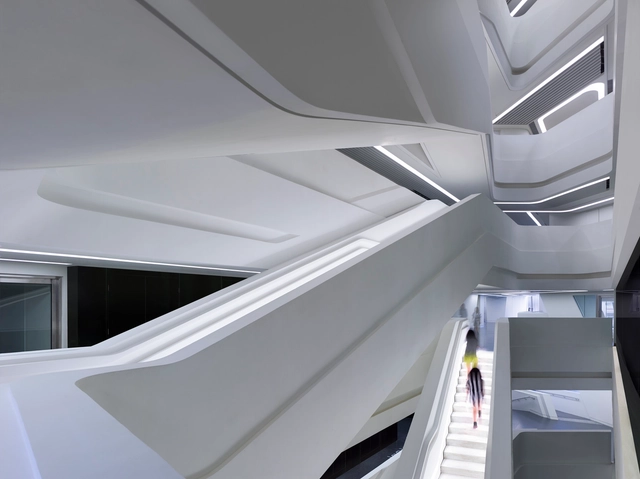
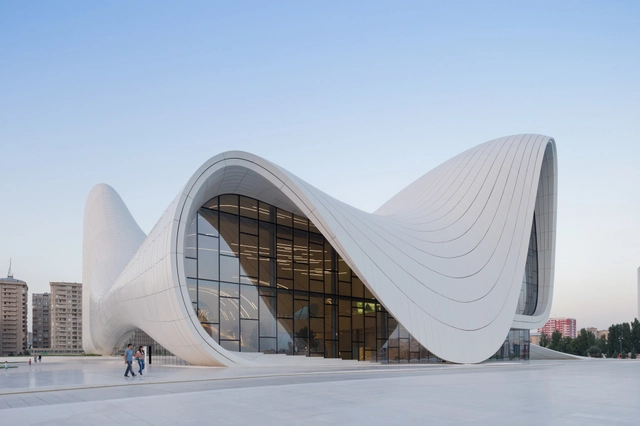
Zaha Hadid’s Heydar Aliyev Center is among seven shortlisted designs being considered for this year’s Design of the Year award. As announced by London’s Design Museum, the undulating cultural center was pulled from 76 innovative nominations and placed first in the architecture category. The shortlisted proposals, ranging from a portable eye examination kit to Volkswagen’s XL1 CAR, will remain on view at the museum through August 25. A winner is expected to be announced June 30.
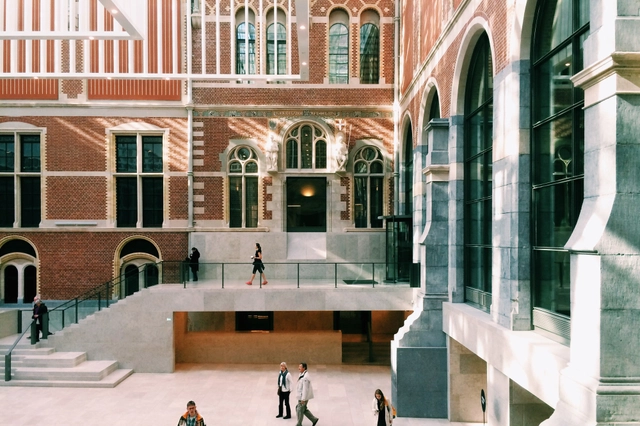
The Rijksmuseum, which reopened last year after a decade of restoration and remodelling, is a museum dedicated to “the Dutchness of Dutchness.” Pierre Cuypers, the building's original architect, began designing this neogothic cathedral to Dutch art in 1876; it opened in 1885 and has stood guard over Amsterdam'sMuseumplein ever since.
Over the centuries, the building suffered a series of poorly executed 'improvements': intricately frescoed walls and ceilings were whitewashed; precious mosaics broken; decorative surfaces plastered over; and false, parasitic ceilings hung from the walls. Speaking in his office overlooking the Rijksmuseum’s monumental south west façade, Director of Collections Taco Dibbits noted how the most appalling damage was incurred during the mid-20th century: “everything had been done to hide the original building […but] Cruz y Ortiz [who won the competition to redesign the Rijks in 2003] embraced the existing architecture by going back to the original volumes of the spaces as much as possible.”
For Seville-based Cruz y Ortiz, choosing what to retain and what to restore, what to remodel and what to ignore were, at times, difficult to balance. Cruz y Ortiz found their answer in the mantra: 'Continue with Cuypers'. They threw the original elements of the building into relief but did not act as aesthetes for the 'ruin'. In contrast to David Chipperfield and Julian Harrap's restoration of Berlin'sNeues Museum, for instance, Cruz y Ortiz rigorously implemented a clean visual approach that favoured clarity over confusion. What is original, what is restored, and what is new mingle together in a melting pot of solid, understated architectural elements. Sometimes this approach contradicted Cuyper's original intentions; however, more often than not it complements them in a contemporary way.