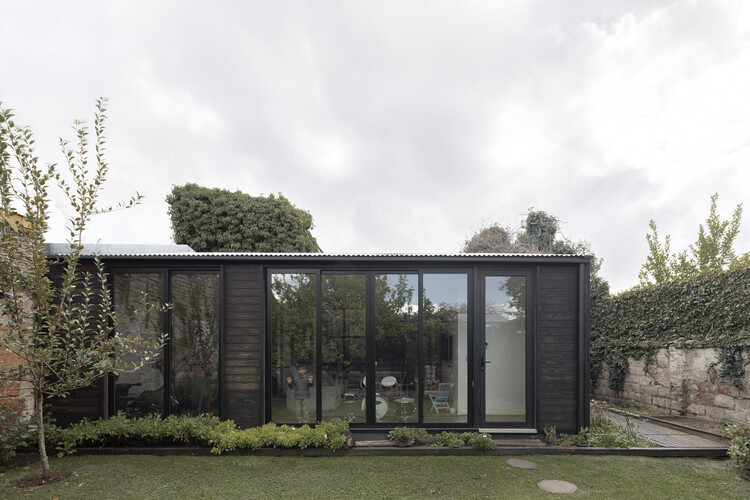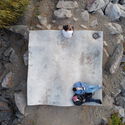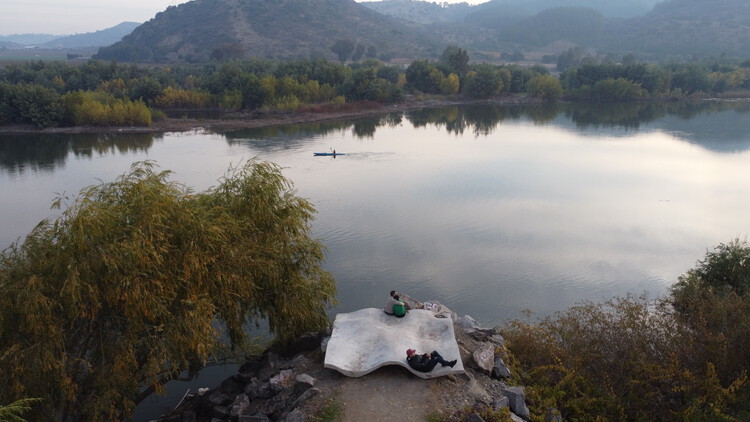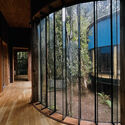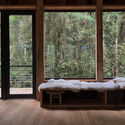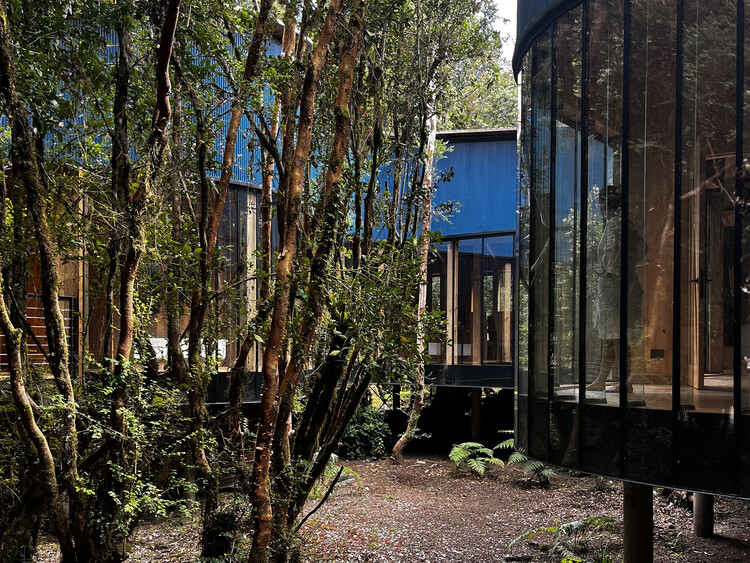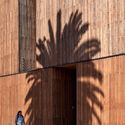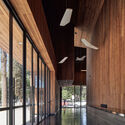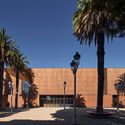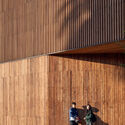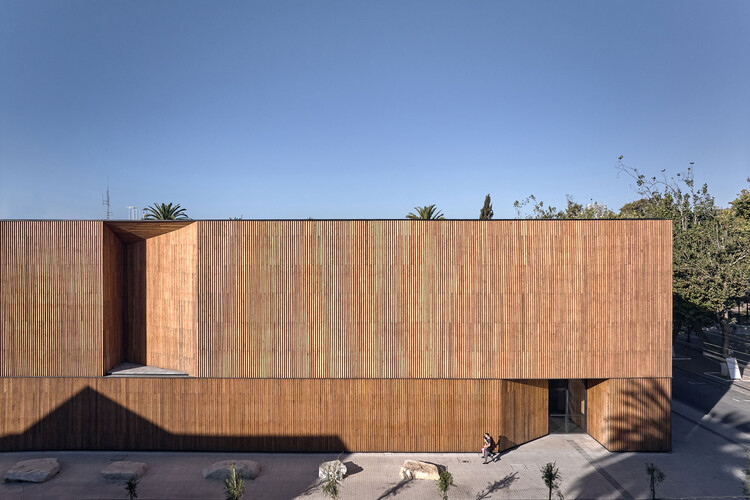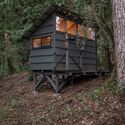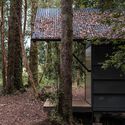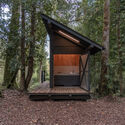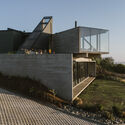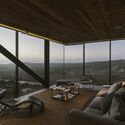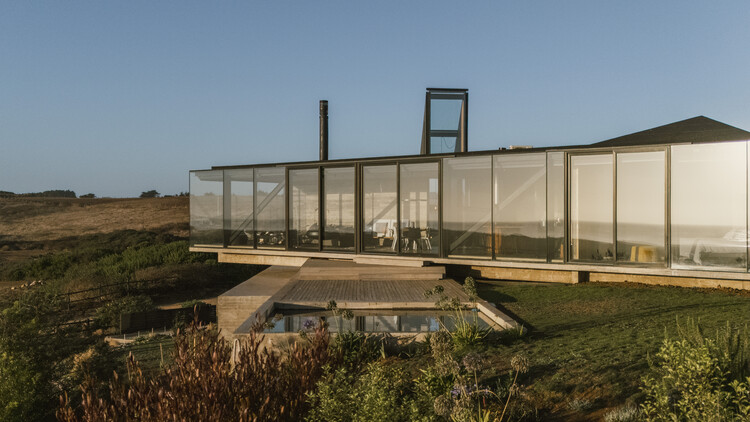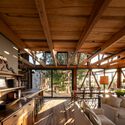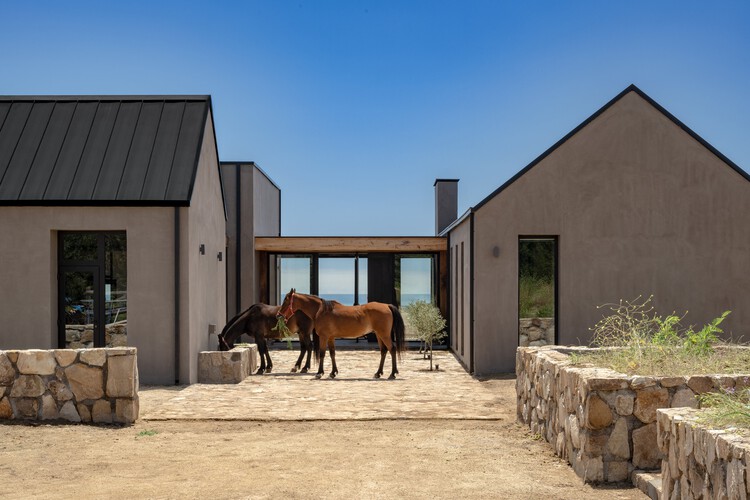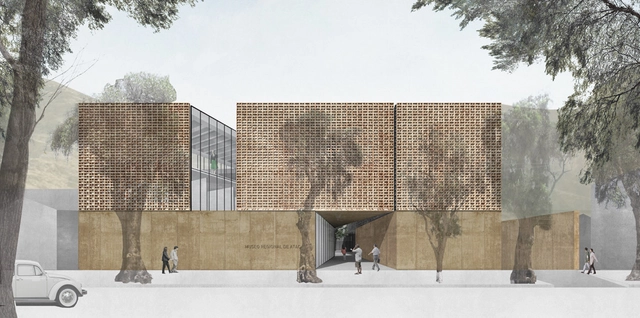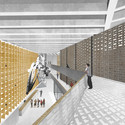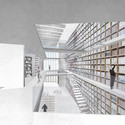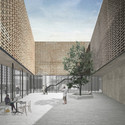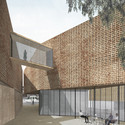
A selection of the Prague Quadrennial 2011 exhibtion: Intersection, Intimacy and Spectacle by MESS architects was presented in Chile in the international theater festival Santiago 2012. In this ocassion, the Festival promoted the displacement of the conventional concept of theater to other forms of art linked to performance, visual arts and architecture. More images and architects’ description after the break. read more »
Chile
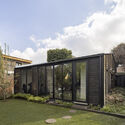
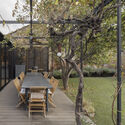
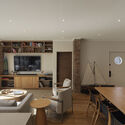
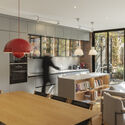
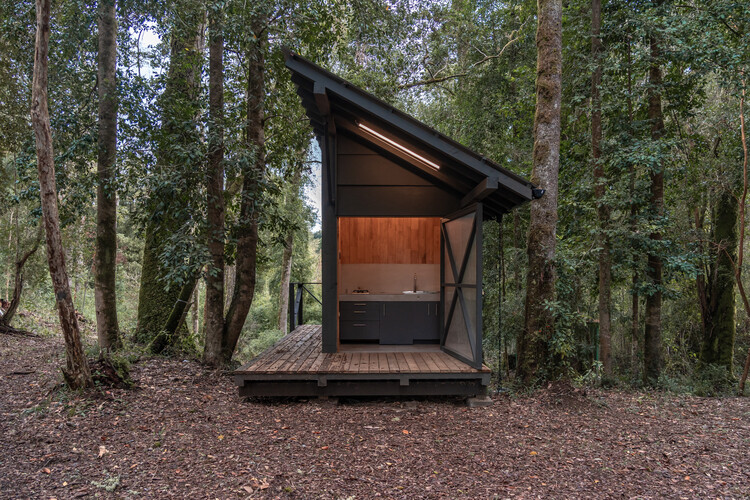
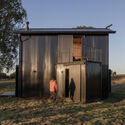
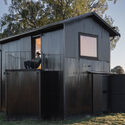
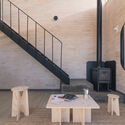
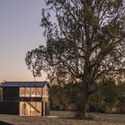
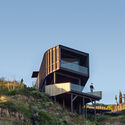
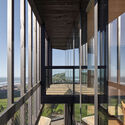
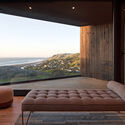
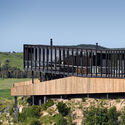
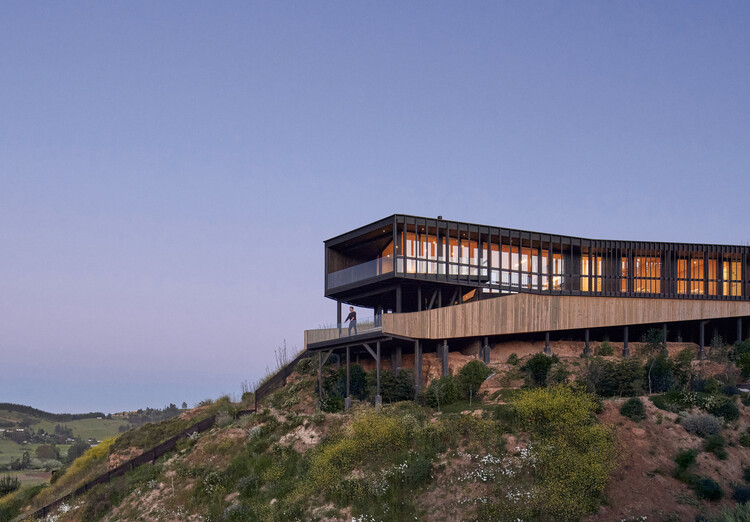
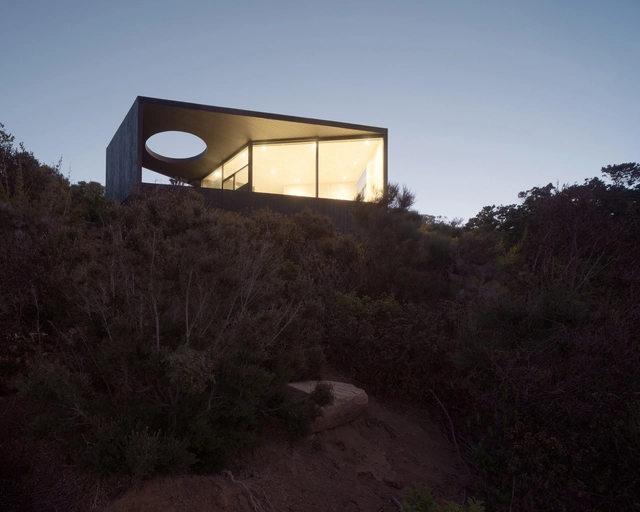
Architects: MAPA / Cristián Larraín, Matías Madsen, Bernardo Valdés
Location: Curacavi, Chile
Collaborators: Karina Pardo, Eduardo Colares
Structural Design: Alex Popp
Contractor: Daniel Matte
Project Area: 130 sqm
Project Year: 2010-2011
Photographs: Cristobal Palma
With only a few days away from the announcement of the this year MoMA PS1 YaP winner, architectural photographer Cristobal Palma has shared with us a timelapse video of the 2011 YaP installation in Santiago, Chile, designed by GUN Architects.
The Water Cathedral is a large, horizontal urban nave for public use. The structure is made up of numerous slender, vertical components, which hang or rise like stalactites and stalagmites in a cave, varying in height and concentration. The project incorporates water dripping at different pulses and speeds from these hanging elements, fed by a hydraulic irrigation network. When filled with small amounts of water, the stalactite components act as interfaces out of which water droplets gradually flow and cool visitors below. The stalagmites topography provides elements of shade, along with plants and water that collect under the Water Cathedral’s canopy.
More videos by Cristobal Palma at ArchDaily:

Courtesy of LAN Architecture
The hotel project by LAN Architecture rapidly became a small city project, a human settlement in which habitat, commerce, education, politics, and culture are combined. To achieve their objective, they set a strategy where each component of the project plays an essential role in the definition of the whole: rooms become a roof, roof is a plaza, the plaza a window, the window a façade, the façade a landscape, etc. More images and architects’ description after the break. read more »

Courtesy of Coz Polidura Volante Arquitectos
This is the second finalist of the international competition for the Alma Hotel Residence for ESO. The competition was won by Kouvo & Partanen.
The main idea of the proposal for the Alma Hotel Residence by Coz Polidura Volante Architects takes us back to archaic structural typologies inherent to the Atacama culture, easily distinguishable in areas like Turi ruins, Lasana or Pucara de Quitor in San Pedro de Atacama. The layout of the building takes advantage of the program modules of rooms, repeating this form of modular design of fullness and emptiness, which means an operation sensible to light and shadow, as occurs at the site between streams and mountains. More images and architects’ description after the break.
Kouvo & Partanen was recently announced as the winners of design competition for the Alma Hotel Residence in the Atacama Observatory and Research Center in the desert of northern Chile. The aim of the competition was to find the best solution on a fixed design fee and construction price for the building that offers the astronomers, engineers, and other staff working at the observatory accommodation, restaurant and office services and recreational spaces. More images and architects’ description after the break. read more »
Architects: Murúa-Valenzuela / Benjamín Murúa, Rodrigo Valenzuela
Location: Taltal, Chile
Project Year: 2010
Photographs: Macarena Alvarez
The wicker weaving technique is associated with the traditional manufacturing of small utilitarian objects. This technique installed in Chile since colonial times, stands out for its potential to build complex and resistant shapes given by the flexibility of the fiber and rigidity provided by the weaving. Based on these properties, this project by Andrea von Chrismar explores the manufacturing of the weave, this time in relation to the field of architecture. This research explores the potential of a natural raw material and an ancient technique of patrimonial nature, regarding new usage options. More images and architects’ description after the break. read more »
Photographer Cristobal Palma shared with us a dynamic view of the Memory Museum in Santiago, Chile, by Brazilian firm Estudio America.
More about the museum here.
More videos by Cristobal Palma at ArchDaily:
Architects: Eugenio Simonetti + Renato Stewart
Location: Santiago, Chile
Design Team: Juan Santa Maria, Danilo Magni, Alvaro Romero
LEED certification (Silver): Energy ARQ
Lightning: Oriana Ponzini
Structure: Eduardo Spoerer
Client: Inmobiliaria Almahue S.A.
Year: Costanera Lyon 1, 2009-2011 (Completed), Costanera Lyon 2, 2011-2013 (Under construction)
Area: 42,000 sqm
Photographs: Nico Saieh, Guy Wenborne, Ana Maria Pincheira
Architects: HLPS – Carolina Portugueis, Martín Labbé
Location: Machalí, Chile
Project area: 300 sqm
Project year: 2008 – 2011
Photographs: Marcos Mendizabal, Carolina Portugueis, Martín Labbé
Architects: Vicente Justiniano Arquitectos Ltda
Location: Camino Miraflores S/N, Pudahuel, Santiago, Chile
Collaborators: Gerardo Valle, Rodrigo Vicuña, Javier Carrasco
Construction: Salfa Construcción
Building Area: 156,000 sqm
Completion: 2010
Photographs: Juan Sepulveda Grazioli
Architect: Gonzalo Mardones Viviani
Location: Huechuraba, Santiago, Chile
Client: MIELE
Furnishings: Orlando Gatica
Lightning: Douglas Leonard
Construction: Pablo Qualitz
Structural engineer: Sebastián Marshall
Audio: Bang & Olufsen
Date: October – November 2011
Surface: 120 sqm
Photographs: Nico Saieh
Architects: Amunátegui Valdés architects
Location: Santiago, Chile
Client: Bistró & Restaurant Köök
Project Year: 2011
Photographs: Maria Luisa Murillo, Juan Pablo Molina, Alejandro Valdés
Architectural photographer Cristobal Palma has shared with us this video of the Chilean Pavilion at the 2011 Shenzhen & Hong Kong Bi-City Biennale of Urbanism\Architecture.
“Gimme Shelter!”, designed and curated by Sebastián Irarrázaval and Hugo Mondragón, features projects and architectural innovations developed by local architects during emergencies and natural catastrophes in the last years.
The poetic expression of these emergency landscapes has also oriented the construction of the Chilean pavilion. To achieve this, we chose to overturn the conventional relationships of the elements that comprise it: mattresses positioned vertically become screens for projecting images; security cones and water bottles, cut up and then reassembled, become lamps; emergency tape and water bottles become tensors and counterweights. Once this mechanism was set in motion, we provocatively introduced certain conventionally used forms: a massive bed with mattresses placed in the center of the pavilion, and a window display with large water drums and dispensers at the far end of the pavilion, promising visitors a bit of rest and relief.
For the exhibition, we selected architectural works, visual pieces and technological innovations that experimented with the concept of the essential and the ingenious in precarious contexts. On the other hand, and in keeping with the project mechanism put into action through the formalization of the pavilion, we also decided to select projects that exhibited a certain degree of disruption to some element of the cultural or material patrimony of Chile.
More videos by Cristobal Palma at ArchDaily:
Architects: Francisco Abarca and Camilo Palma
Location: Lo Cañas, La Florida, Santiago, Chile
Team: Roberto Torres, Omar Rivera, Carlos Lepe
Project Year: 2009
Year Built: 2009-10
Land Area: 2500 sqm
Built area: 120 sqm and 80 sqm terrace inside
Materials: Wood and Steel
Photographs: Camilo Palma, Eugenio Celedón
Chilean architect Sebastian Irarrazaval recently completed the new building for the Universidad Catolica School of Design in Santiago, Chile.
The new 4-stories tall building is organized around two patios with different spatial qualities, that create new intimate spaces in the campus. The building is cladded in corten steel, a material chosen to age with the building, contrasting with the combination of concrete and light wood to give a more intimate character to the interior spaces, patios and circulations.
Thanks to this video by architectural photographer Cristobal Palma we are able to see dynamic aspects of the building in use, such as the the windows, which play a key role bringing indirect light to the classrooms and allowing for cross ventilation through the patios.
More videos by Cristobal Palma at ArchDaily:
Take a tour through the newly built Taltal Public Library, designed by Santiago based firm Murua-Valenzuela. The small town project is located opposite of the main square and close to the Alhambra Theater, which was also recently refurbished by the architects. Responding to a narrow site of 7 by 40 meters while being situated between mediators, the architects conducted a series of indoor spaces in order to “avoid the domestic condition.” The spaces of varying heights house the library activities and end with a reading room that is connected to an interior courtyard. Construction has been completed and the Taltal Public Library is already in use.
The author of the project stated, “We are delighted to see the library being used by the community. We hope that in future the building will become a meeting place.”
The video was completed by Nicolas Rupcich.
Architects: Benjamín Murúa, Rodrigo Valenzuela
Location: Taltal, Chile – Region of Antofagasta
Development: Ximena Vallejos, Miguel Mallea
Project Year: 2008
Construction: 2009-2010

Courtesy of MUTAR Arquitectos - Molina, De La Vega & Villalobos
Architects: MUTAR Arquitectos / Claudio Molina Camacho, Daniel De La Vega Pamparana, Eduardo Villalobos Fornet
Location: Santiago, Chile
Client: Saint George’s College
Project Year: 2009
Project Area: 400 sqm
Photographs: MUTAR Arquitectos – Molina, De La Vega & Villalobos
For the last 12 years, the MoMA and the P.S.1 have invited a group of emerging architects to compete for the opportunity to design and construct a summer installation within MoMA PS1’s courtyard as part of their Young Architects Program (you can check the 2012 short list here).
As of last year, the program started an international version in two countries: Chile (Color Shadows, at the Matucana 100 Cultural Center – YAP_CONSTRUCTO) and Italy (wHATAMI, at the MAXXI museum in Rome, YAP_MAXXI).
The winning project of the Chilean version, designed by Eduardo Castillo, was open during the 2010 summer (Jan-Feb, southern hemisphere), hosting a series of cultural events and music sessions, just like the P.S.1 in Queens.
The project, Color Shadows, consists of a series of roofs structured from wooden posts that, together with fabric, created a topographic relief, more than covering the patio, spatially contained it. This dynamic structure filters the light and is constantly changing during the day. This dynamic condition can be seen thanks to this video by architectural photographer Cristobal Palma.
More videos by Cristobal Palma at ArchDaily:
- Nicanor Parra Library (Mathias Klotz)
- El Porvenir Kindergarten (Giancarlo Mazzanti)
- Flor del Campo School (Giancarlo Mazzanti + Felipe Mesa)
- Sports Facilities (Giancarlo Mazzanti + Plan B)
Cristobal Palma (1974, Oxford, UK): Based in Santiago, Chile, Cristobal’s work spans architecture, urban and documentary photography. He studied at London’s Architectural Association School of Architecture (AA), and his work has been published in numerous titles internationally, with recent commissions by: The New York Times, Monocle, Wallpaper, Domus, Dwell and Architectural Digest. He lives in Santiago, Chile, and works both with architects in Chile and abroad.