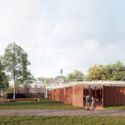
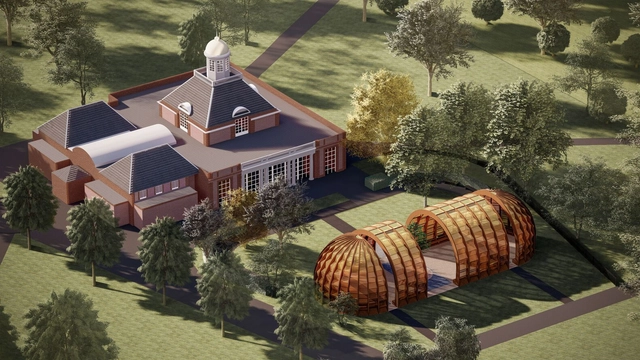
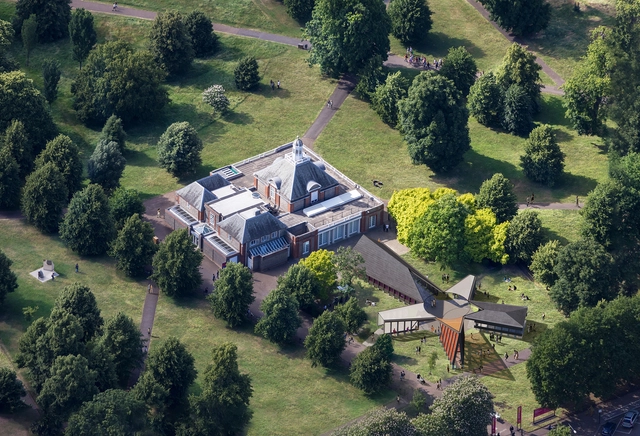
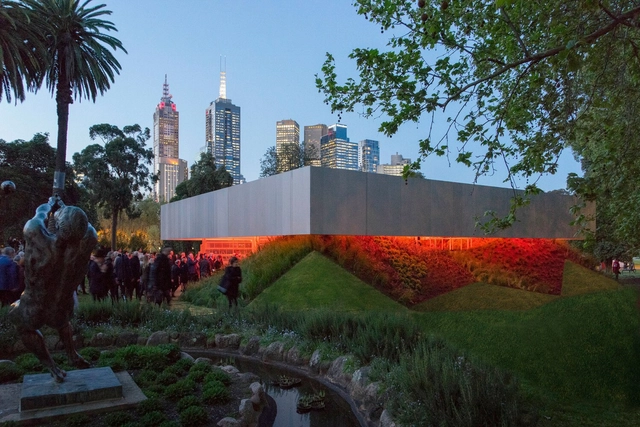
Sou Fujimoto’s Serpentine Pavilion Through the Lens of James Aiken

YouTube Preview Image

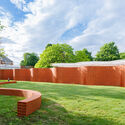
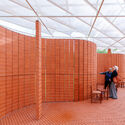
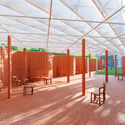
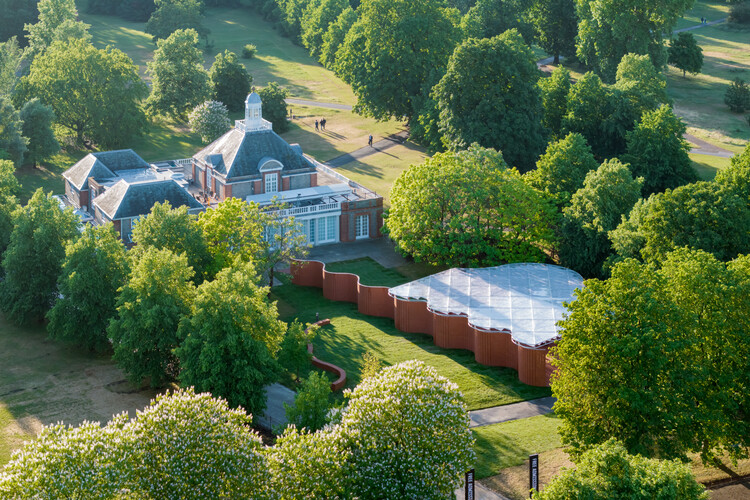
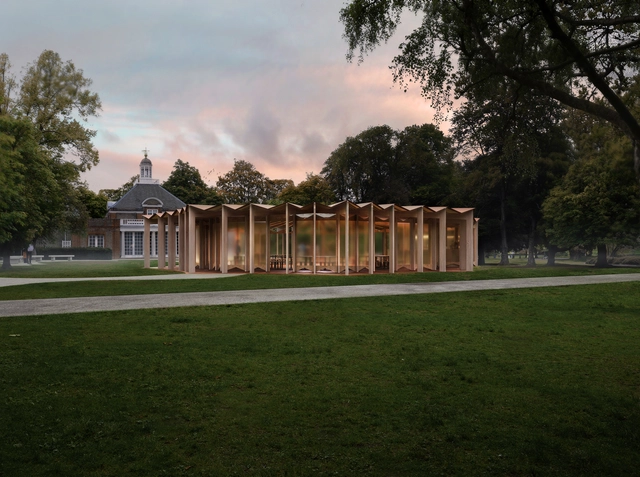
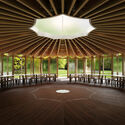
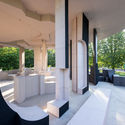
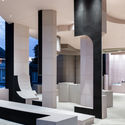
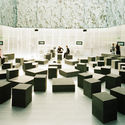
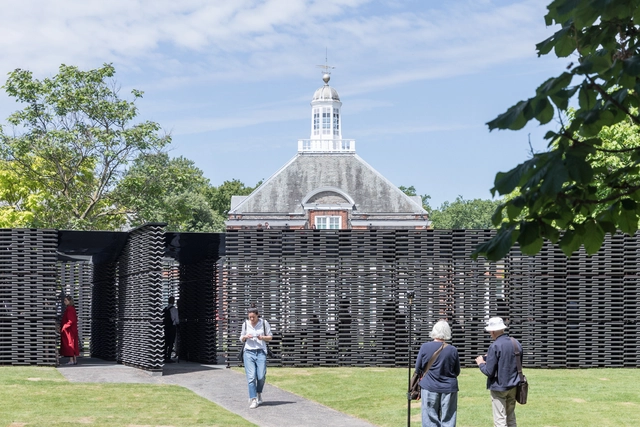
Dazzling viewers with its “tron-like landscape of infinite white,” as described by Guardian critic Oliver Wainwright, Sou Fujimoto’s Serpentine Pavilion in is arguably “one of the most radical pavilions to date.” The 350 square-meter latticed structure melts into its surrounding by fusing together the man-made and natural world, creating a lush, semi-transparent terrain in which transforms into a variety of seating, steps and side tables that complement its interior coffee bar (view more images here).

This video was provided by film maker James Aiken, in collaboration with The , and commissioned by COS.

Fujimoto’s Serpentine Pavilion Receives High Praise from Critics

© Daniel Portilla

With the opening of his cloud-like gridded structure in Hyde Park last week, Sou Fujimoto became the youngest architect in the pantheon of Serpentine Gallery Pavilion designers. The pavilion is an annual commission for a temporary structure, always given to a well known architect who is yet to build in the . In previous years the commission has been awarded to Herzog & de Meuron with Ai Weiwei (2012), Peter Zumthor (2011), Jean Nouvel (2010), SANAA (2009), stretching back to the original pavilion designed by Zaha Hadid in 2000.

With such a prolific history of star designers over the past 13 years, Fujimoto’s ethereal design has a lot to live up to. But despite these high expectations, architecture critics have been gushing over the new design. See a full round-up of opinions after the break…

Serpentine Pavilion / Sou Fujimoto

© Daniel Portilla

This Thursday, the official opening of the Serpentine Pavilion, by , took place in Hyde Park, . It was the first time the public could interact with the structure.

The pavilion, which has already gotten the “cloud” nickname because of its shape and lightness, is generated through a three-dimensional steel grid of about 40 centimetre modules which morphs on each side. The structure is broken to allow people access as well as to generate different uses around, below and upon it.

More pictures and the architect’s statement after the break.

2013 Serpentine Gallery Pavilion / Sou Fujimoto

© Iwan Baan

Sou Fujimoto’s 2013 Serpentine Pavilion, now complete and standing on the front lawn of London’s Serpentine Gallery, has opened to the press and we are now able to see Iwan Baan’s photographs of the temporary pavilion. Fujimoto will be lecturing to a sold out crowd this coming Saturday (June 8th) when the pavilion opens to the general public. The semi-transparent, multi-purpose social space will be on view until October 20th.

Fujimoto (age 41) is the youngest architect to accept the Serpentine Gallery’s invitation, joining the ranks of Herzog & de Meuron and Ai Weiwei (2012)Peter Zumthor (2011)Jean Nouvel (2010)SANAA (2009)and more. He described his Serpentine project as “…an architectural landscape: a transparent terrain that encourages people to interact with and explore the site in diverse ways. Within the pastoral context of Kensington Gardens, I envisage the vivid greenery of the surrounding plant life woven together with a constructed geometry. A new form of environment will be created, where the natural and the man-made merge; not solely architectural nor solely natural, but a unique meeting of the two.”
The Guardian has posted both print and video reviews by Oliver Wainwright.
More images by Iwan Baan after the break. See also In Progress: Serpentine Gallery Pavilion / Sou Fujimoto.

In Progress: Serpentine Gallery Pavilion / Sou Fujimoto

© Laurence Mackman

’s contribution for the 13th edition of the Serpentine Gallery Pavilion is beginning to take shape, as the “geometric, cloud-like form” has slowly made its way towards the height of the trees in the rustic landscape of London’s Kensington Gardens. Upon its completion in June, the 350 square-meter latticed structure will fuse together the man-made and natural world, creating a lush, semi-transparent terrain that will host a series of flexible social spaces and a vibrant collection of plant life.

More images by London photographer Laurence Mackman after the break.

Sou Fujimoto to design the 2013 Serpentine Gallery Pavilion

Serpentine Gallery Pavilion 2013 Designed by Sou Fujimoto, Interior Indicative CGI © Studio Cyrille Thomas for Sou Fujimoto Architects

Today, the Serpentine Gallery announced the architect that will design the 13th edition of the . Every year the gallery invites a renowned international architects who have not built yet in the , to design a temporary pavilion that hosts public activities in at the Gallery’s lawn, in London’s Hyde Park between June and October. The list of architects for the past editions includes several Pritzker laureates. More info of this program at our Serpentine Gallery Pavilion infographic.

The Japanese architect based in Tokyo established his firm Sou Fujimoto Architects  back in 2000. He graduated from the Department of Architecture at the University of Tokyo in 1994, and has been a lecturer at Kyoto University since 2007. With a solid trajectory in residential and cultural projects, the firm has consistently shown a unique and innovative approach to the spatial qualities within his buildings, exploring new ways of housing design, space and materials. Sou was also part of the team that won the Golden Lion at the 13th Venice Biennale, with “Architecture, possible here? Home-for-All”, the pavilion. 

Serpentine Gallery Pavilion 2013 Designed by Sou Fujimoto, Exterior Indicative CGI  © Studio Cyrille Thomas for Sou Fujimoto Architects

About the design of the pavilion Sou stated: “For the 2013 Pavilion I propose an architectural landscape: a transparent terrain that encourages people to interact with and explore the site in diverse ways. Within the pastoral context of KensingtonGardens, I envisage the vivid greenery of the surrounding plant life woven together with a constructed geometry. A new form of environment will be created, where the natural and the man-made merge; not solely architectural nor solely natural, but a unique meeting of the two.

The Pavilion will be a delicate, three-dimensional structure, each unit of which will be composed of fine steel bars. It will form a semi-transparent, irregular ring, simultaneously protecting visitors from the elements while allowing them to remain part of the landscape. The overall footprint will be 350 square-metres and the Pavilion will have two entrances. A series of stepped terraces will provide seating areas that will allow the Pavilion to be used as a flexible, multi-purpose social space.

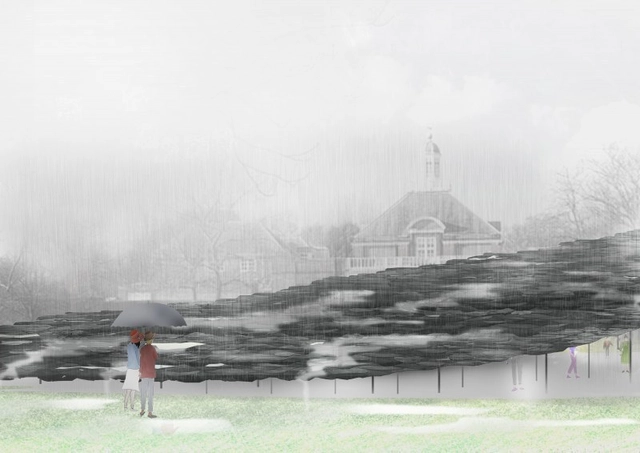
The delicate quality of the structure, enhanced by its semi-transparency, will create a geometric, cloud-like form, as if it were mist rising from the undulations of the park. From certain vantage points, the Pavilion will appear to merge with the classical structure of the Serpentine Gallery, with visitors suspended in space.”

We are big fans of Sou’s work, and we are very excited to see this project being built at Hyde Park. As usual, expect a complete coverage of this project. You can watch our interview with Sou after the break:

One Week Left of the Serpentine Pavilion!

© Julien Lanoo

The summer months have come and gone, which means one thing: the Serpentine Gallery Pavilion is winding to an end (on October 14th, to be exact)!

This year’s underground pavilion was designed by Herzog & de Meuron and Ai Weiwei as a kind of archaeological discovery of pavilions past. As they explain: “Like a team of archaeologists, we identify [the] physical fragments as remains of the eleven Pavilions built between 2000 and 2011. […] These remains testify to the existence of the former Pavilions and their greater or lesser intervention in the natural environment of the park.”

Although most of the public events that made up the Park Nights programme have already occurred (including a showing of the incredible documentary on Ai Weiwei and a talk by Herzog & de Meuron), you can still catch the culminating event of the Pavilion, the Memory Marathon (October 12-14), which kicks off with Lebanese sound artist Tarek Atoui performing La Suite. The three-day, multi-disciplinary festival will feature over 60 participants, including former REM vocalist Michael Stipe, filmmaker David Lynch (who will present a new film), and the Pavilion architects, Herzog and de Meuron themselves.

For more info, check out our past coverage on the Serpentine Gallery Pavilion.

Serpentine Gallery Pavilion 2012 / Photos by Julien Lanoo

© Julien Lanoo

Last week we presented the first images of the recently open Serpentine Gallery Pavilion designed by Ai Weiwei & Herzog & de Meuron in London, showing the half sunk and water-covered structure and its beautiful blending into the landscape. Today, Julien Lanoo shared with us these great images giving a better understanding of the spaces and its surroundings.

You can check some more images after the break.

First images of Herzog & de Meuron and Ai Weiwei’s Serpentine Gallery Pavilion 2012

© Daniel Portilla

Starting tomorrow, the 12th version of the Serpentine Gallery Pavilion will be open at the Hyde Park in . As we announced some months ago, the design was commissioned to Herzog & de Meuron and Ai Weiwei. The final proposal was published just at the beginning of this month, showing an interesting ground work. This year’s pavilion is half sunk into the landscape, as if it were carved in the terrain and covered with a liquid layer, reflecting the the surrounding light and landscape.

More info and images after the break

Video: Serpentine Gallery / Peter Zumthor


In light of the announcement that Herzog & de Meuron and Ai WeiWei will be designing this year’s Pavilion at the Serpentine Gallery, we take a look back at last year’s Pavilion and the architect behind it, .

Last summer ’s Serpentine Gallery unveiled a new architectural feat in the form of the celebrated Pavilion, built to stand for just three months. In the past few years esteemed designers Jean Nouvel, Frank Gehry and Olafur Eliasson have exercised their creative muscles, and last year Swiss architecht Peter Zumthor steps up to the plate to create a relaxing space to encourage conversation. Here, Crane.tv finds out what inspired Zumthor.

Infographic: The Serpentine Pavilion 2012 Update

With the recent release of the design for the 2012 Serpentine Pavilion by Herzog & de Meuron and collaborator Ai Weiwei, we’re bringing you the 2012 updated , a cheat sheet for the 12 years of the Serpentine Pavilion. Read more about the new design here

Herzog & de Meuron and Ai Weiwei’s Serpentine Gallery Pavilion design revealed

2012 Designed by Herzog & de Meuron & Ai Weiwei © 2012, by Herzog & de Meuron and Ai Weiwei

As we announced back in February, Swiss architects Herzog & de Meuron and their Chinese collaborator Ai Weiwei will design this year’s Serpentine Gallery Pavilion at Hyde Park in , a special edition that will be part of the   2012 Festival, the culmination of the Cultural Olympiad. This will be the trio’s first collaborative built structure in the UK.

Back then, it was announced that their design will explore the  hidden history of the previous installations (see all the previous pavilions in our infographic), with eleven columns under the lawn of the Serpentine, representing the past pavilions and a twelfth column supporting a floating platform roof 1.4 metres above ground, which looks like a reflecting water-like surface in the renderings. The plan of the pavilion is based on a mix of the 11 previous pavilions’ layouts, pavilions that are represented as excavated foundations from which a new cork cladded landscape appears, as an archeological operation.

Diagram © 2012, by Herzog & de Meuron and Ai Weiwei

AD Round Up: Serpentine Gallery Pavilion

Pavilion 2011, designed by Peter Zumthor. Photo by John Offenbach

We now know Herzog & de Meuron and Ai Weiwei’s design for the Serpentine Gallery Pavilion 2012. While we waited for it, we decided to prepare a small Round Up with our previous coverage on the famous London’s pavilion. This includes the designs of Peter Zumthor, Jean Nouvel, and SANAA. To complete the Round Up, we have our post announcing the upcoming pavilion, and the special infographic we prepared earlier this year.

Herzog & de Meuron and Ai Weiwei to design Serpentine Gallery Pavilion 2012

Jacques Herzog, Ai Weiwei and Pierre de Meuron © Courtesy of Serpentine Gallery

Today, the Serpentine Gallery announced the team that will design the twelfth edition of the Serpentine Gallery Pavilion, a special edition that will be part of the  London 2012 Festival, the culmination of the Cultural Olympiad.

Every year the gallery invites a renowned international architects who has not built yet in the , to design a temporary pavilion that hosts public activities in at the Gallery’s lawn, in London’s between June and October 2012. The list of architects for the past editions includes several Pritzker laureates. More info of this program at our Serpentine Gallery Pavilion infographic.

This years teams includes Pritzker laureate architects Swiss architects Herzog & de Meuron, and Chinese artist Ai Weiwei (runner up of TIME’s 2011 Person of the Year). The trio has worked together in projects such as ORDOS 100 in the Mongolian desert and the Beijing National Stadium for the 2008 Olympic Games. As a trio they don’t have any built projects in the UK, but Herzog & de Meuron have been involved in several, including the Tate Modern renovation and its current expansion.

Their design will explore the  hidden history of the previous installations (more info), with eleven columns under the lawn of the Serpentine, representing the past pavilions and a twelfth column supporting a floating platform roof 1.5 metres above ground. Taking an archaeological approach, the architects have created a design that will inspire visitors to look beneath the surface of the park as well as back in time across the ghosts of the earlier structures.

Infographic: 11 Years of the Serpentine Gallery Pavilion

Serpentine Gallery Pavilion 2011 / Peter Zumthor

Pavilion 2011, designed by Peter Zumthor. Photo by John Offenbach

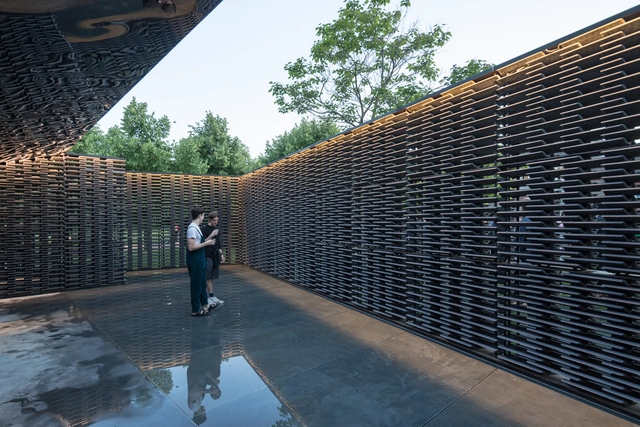
The 2011 Serpentine Gallery Pavilion by Pritzker laureate Peter Zumthor was unveiled today. A design that ‘aims to help its audience take the time to relax, to observe and then, perhaps, start to talk again – maybe not’, the materials are significant in aiding the design which emphasizes the role the senses and emotions play in our experience of architecture.

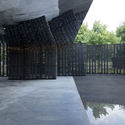
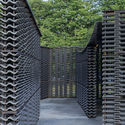
Zumthor added that ‘the concept for this year’s Pavilion is the hortus conclusus, a contemplative room, a garden within a garden. The planted garden enclosed by this dark structure was conceived by the influential Dutch designer Piet Oudolf.

The building acts as a stage, a backdrop for the interior garden of flowers and light. Through blackness and shadow one enters the building from the lawn and begins the transition into the central garden, a place abstracted from the world of noise and traffic and the smells of London – an interior space within which to sit, to walk, to observe the flowers. This experience will be intense and memorable, as will the materials themselves – full of memory and time.’

More info after the break:

Peter Zumthor’s Design Revealed for the 2011 Serpentine Gallery Pavilion

Courtesy of

winning architect Peter Zumthor’s design for the 11th Serpentine Gallery Pavilion was revealed today. A design that ‘aims to help its audience take the time to relax, to observe and then, perhaps, start to talk again – maybe not’, the materials are significant in aiding the design which emphasizes the role the senses and emotions play in our experience of architecture. The Pavilion will be Zumthor’s first completed building in the UK

Zumthor shared that ‘the concept for this year’s Pavilion is the hortus conclusus, a contemplative room, a garden within a garden. The building acts as a stage, a backdrop for the interior garden of flowers and light. Through blackness and shadow one enters the building from the lawn and begins the transition into the central garden, a place abstracted from the world of noise and traffic and the smells of London – an interior space within which to sit, to walk, to observe the flowers. This experience will be intense and memorable, as will the materials themselves – full of memory and time.’

Stay tuned to ArchDaily for more images and news on Zumthor’s design for the Pavilion.  Our previous coverage of the Serpentine Gallery Pavilion can be found here, including  Jean Nouvel’s Serpentine Gallery of 2010, and SANAA’s 2009 Serpentine Gallery.

Courtesy of Serpentine Gallery Pavilion

Peter Zumthor for the Serpentine Gallery Pavilion 2011

A few days before Jean Nouvel’s Serpentine Pavilion is closed and dismantled, AJ has leaked the name of the architect selected to design the 2011 Pavilion: Priztker-laureate Peter Zumthor.

AJ reports that “It is understood Zumthor has been in the frame for the pavilion for some time and initial proposals resemble ‘a big concrete block with a garden in it’ – though the design is expected to evolve over the coming months.”

Currently Zumthor is still working on his first project in the UK, A Secular Retreat, part of the Living Architecture initiative.

We are very curious about what will Zumthor do for the . As usual, we’ll keep you updated as more details are revealed.

Update: Serpentine Gallery Pavilion / Jean Nouvel

We shared the news of Jean Nouvel’s Serpentine Gallery with you as soon as it was completed at the beginning of July.  Today, we’re featuring Jonathan Glancey’s talk with Nouvel about his red ‘sun machine’, the 10th design to grace the Serpentine’s grounds. Nouvel describes the pavilion as a “simple place” that can accommodate the needs of its users, from providing a place to sit down to the amenities for a friendly game of ping-pong.

More about the pavilion after the break.

Serpentine Gallery Pavilion 2010 / Jean Nouvel

© Ateliers Jean Nouvel. Photograph by Philippe Ruault

This just in from the Serpentine GalleryJean Nouvel’s pavilion is complete!  In honor of the Serpentine’s 40th Anniversary, Nouvel’s pavilion is a bold and strong expression comprised of lightweight materials with dramatic cantilevers.  Designing the pavilion allows international architects to experiment with different architectural ideas, and over the years, the commissions’ varied aesthetics have added to the thrill of the exposition.  Nouvel’s bright red pavilion  is drastically different from SANAA’S subdued silvery curvillinear form of 2009, and its vivid color contrasts the park’s greenery, immediately drawing the eye.

More images and more about the new pavilion after the break.

Serpentine Gallery Pavilion 2010: Jean Nouvel

© Ateliers Jean Nouvel

French architect Jean Nouvel has been selected to design this years Serpentine Gallery Pavilion.

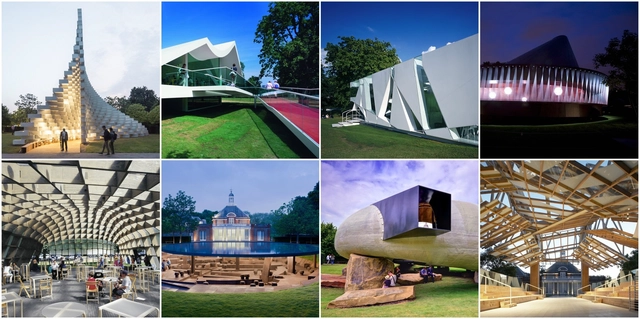
Since 2010, the has commissioned world’s most renowned architects to design a temporary structure to host summer events. The list includes Zaha Hadid, Frank Ghery, Rem Koolhaas, Toyo Ito, Daniel Libeskind, Oscar Niemeyer, Alvaro Siza + Souto de Moura, (previously featured at AD), danish artist Olafur Eliasson, and several collaborations with Cecil Balmond and ARUP.

Nouvel proposes a vivid red metal structure, which trough the reflection of its materials (steel, glass, fabric, polycarbonate) remind of classic british icons, such as the phone box or the London buses, while contrasting with the green of the park. A free standing 12m tall wall marks the presence of the pavilion.

More images after the break.