Videos
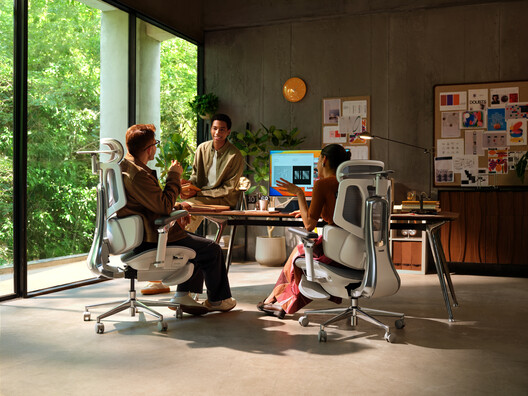
Smart Ergonomic Chair HBADA X7. Image Courtesy of HBADA
The office chair has evolved alongside changing workplaces over time. In each office era, the chair has reflected the way people work. Early office seating was built for clerical work: fixed wooden chairs arranged in rows across large administrative offices, where paperwork followed standardized routines. By the 1980s, computers began changing how people occupied a desk, and office furniture followed. Designers approached seating through ergonomics and biomechanics, refining adjustable height, lumbar support, synchronized recline, and the relationship between the body and the workstation. Later designers combined ergonomic research with new materials such as breathable suspension mesh instead of conventional foam upholstery.
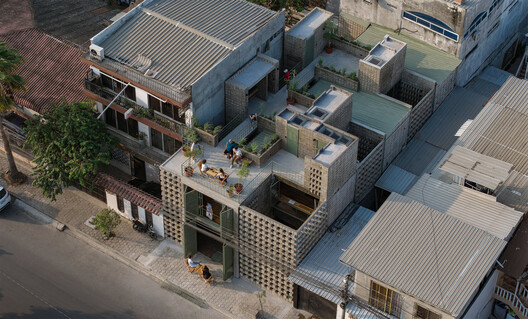
Architecture across Latin America this month reflects an ongoing conversation around inhabitation, cultural heritage, and the ways architecture can connect contemporary life with existing places and knowledge. From the Buenos Aires International Architecture Biennial and initiatives addressing traditional building practices and archaeological heritage to new cultural infrastructure and housing projects in Argentina, Ecuador, and Peru, recent developments highlight different approaches to working with local contexts. Across the region, questions of memory, community, landscape, and material practice continue to shape both architectural projects and broader discussions around how cities and territories are inhabited.
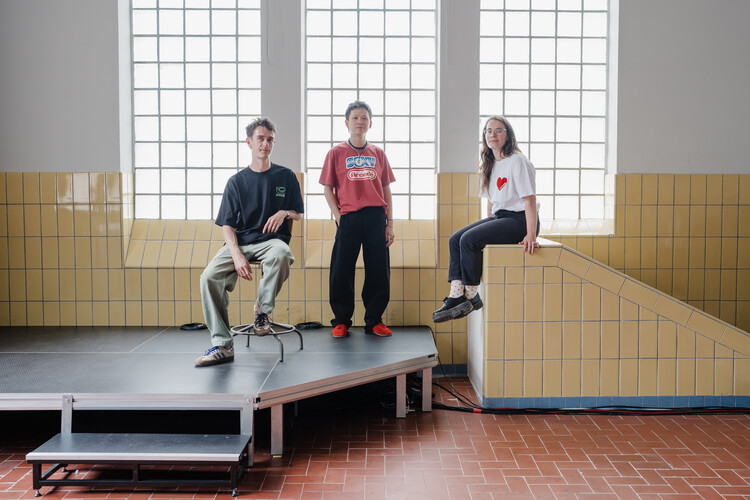
A jury of arts and architecture professionals recently announced the selected curatorial proposal for the Luxembourg Pavilion at the Biennale Architettura 2027. The exhibition will be curated by housing expert Céline Zimmer and architects Bùi Quý Sơn and Paul-Antoine Lucas, co-founders of the critical spatial practice Exutoire, one of the winning practices of the ArchDaily 2026 Next Practices Awards. The proposal is titled "Excess! On the Overconsumption of Living Space" and addresses the inequitable distribution of living space as a reflection of "broader habits of excess that contribute to the current housing and ecological crises." The issue will be illustrated through a dialogue between the realities of Luxembourg and Vietnam to reflect on spatial consumption. The Luxembourg Pavilion is located on the first floor of the Sale d'Armi in the Arsenale, which will open to the public for the Biennale on May 8, 2027.
First Prize Winner + Buildner Student Award: Linear Ritual. Image Courtesy of Buildner
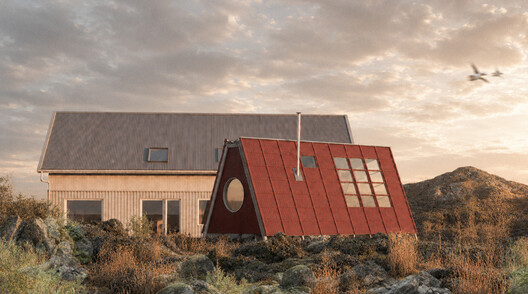
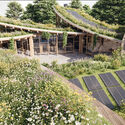
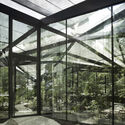
Buildner has announced the results of the Iceland Slow Sauna architecture competition, developed in partnership with Slow Travel Mývatn. Set beside Þúfa – Private Homestay in the volcanic landscape of Lake Mývatn in northern Iceland, the competition invited architects and designers to create a compact retreat combining a sauna and greenhouse within a single architectural experience. Rooted in the Icelandic tradition of bathing as a ritual of stillness and renewal, the brief asked participants to explore how heat, light, vegetation, and landscape could shape an intimate place of recovery and connection to nature.
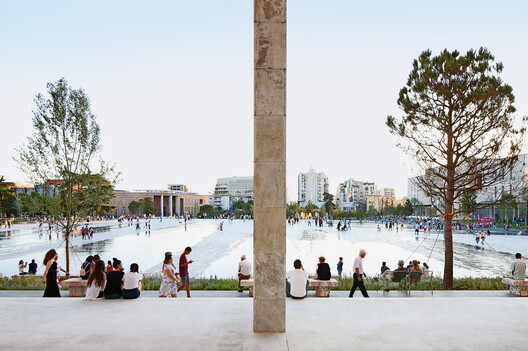
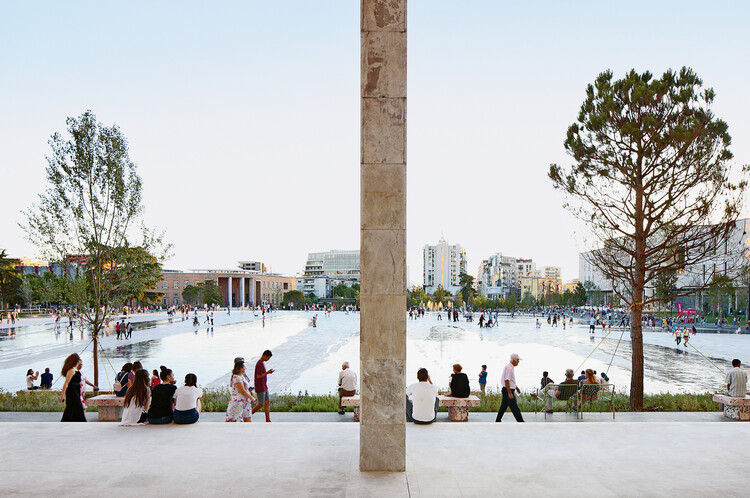
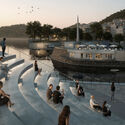
Skanderbeg-square / 51N4E. Image Courtesy of 51N4E
For the past twenty years, Albania has been one of the most active construction territories in Europe. Dozens of international architects have been working there on projects that promise to alter the drawing, the structure, and the cities of a country still recovering from the regimes of the last century. To acknowledge that growth, and those changes in the landscape, is also to acknowledge that behind every form there is a story, and that there are files that tell us more than architecture itself.
Edited by Anneke Abhelakh and published by Lars Müller Publishers, with a foreword by Prime Minister Edi Rama, The Albanian Fileshas compiled two decades of work of sixty international architecture offices working in Albania into a dense publication whose format, color, and sheer presence amount to a statement in the reading of the country's recent history. The publication works as an extended document, a cartography of what these processes left behind. Much of what takes shape across its pages describes structures of power, patterns of commissioning, and positions whose consequences have proved controversial. Revealing is a sign of transparency, but it is also a sign that some things should never have been hidden in the first place. Albania, more than ever, with its aspirations to open a territory and its growing wish to engage with the world (through tourism and the prospect of EU membership), needs this clarity.
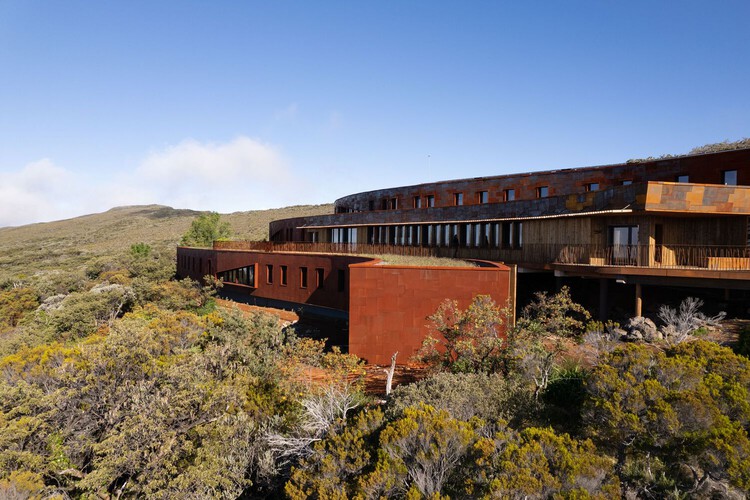
Volcanic landscapes make geological change unusually visible. Lava hardens into new ground, and plants slowly take hold across it. Ash can remain in the landscape for years. Around active volcanoes, these processes are still underway, affecting where and how people build.
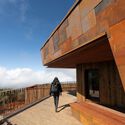
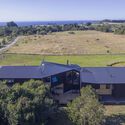
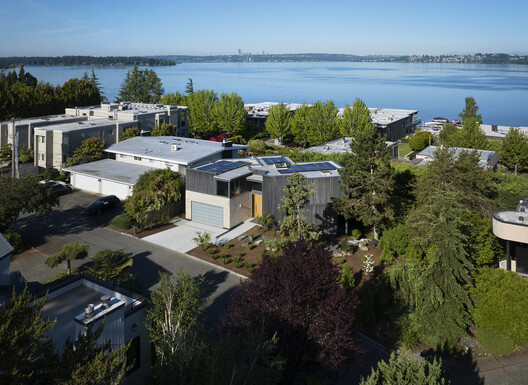
Yet these landscapes continue to attract houses and places of retreat. Their isolation and unusual terrain are often part of the appeal. Building there means bringing everyday life into a landscape that can still change.
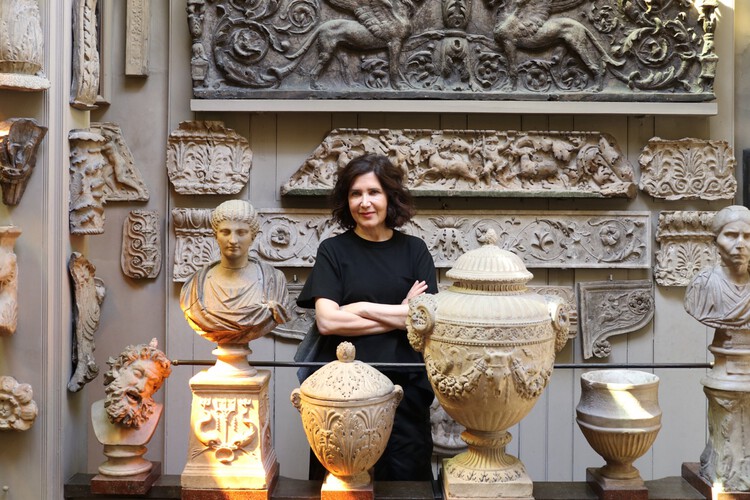
Farshid Moussavi has been awarded the 2026 Soane Medal for her contributions to architectural practice, history, and theory. The Iranian-born architect and educator, who founded Farshid Moussavi Architecture (FMA) in 2011, will receive the medal at the Royal Academy in London on November 24, 2026, where she will also deliver a public lecture. The annual award, established by Sir John Soane's Museum in 2017, recognizes individuals whose work has contributed to a broader understanding of architecture and its role in society.
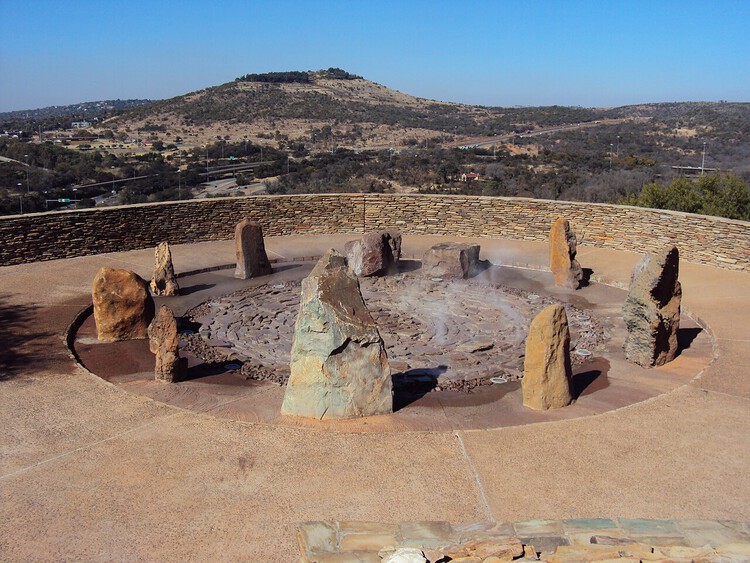
Isivivane - Freedom Park, Pretoria, South Africa. Image by Shosholoza
Liberation does not always begin with a monument. It may begin in a garden, a yard, a clearing, a field; in the occupation of land and the possibility of gathering there. Across histories shaped by colonialism and dispossession, space has been more than the setting in which liberation takes place. It has been one of its practices: cultivated, occupied, hidden within, moved through and collectively remade.
Wolff Architects' researchLiberation Gardensoffers the garden as one way of reading these spatial practices, not simply as planted ground, but as a space through which survival, nourishment and emancipatory imagination can be sustained. The garden in this sense is not defined by landscape design so much as by relationships between people and land, cultivation and knowledge, occupation and autonomy. It can hold cultural production alongside subsistence, and forms of collective life that emerge under conditions of violence and dispossession. Liberation, understood spatially, becomes as much about the possibility of inhabiting differently as it is about arriving at a final condition of freedom.
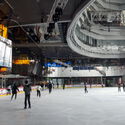
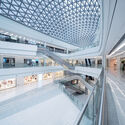
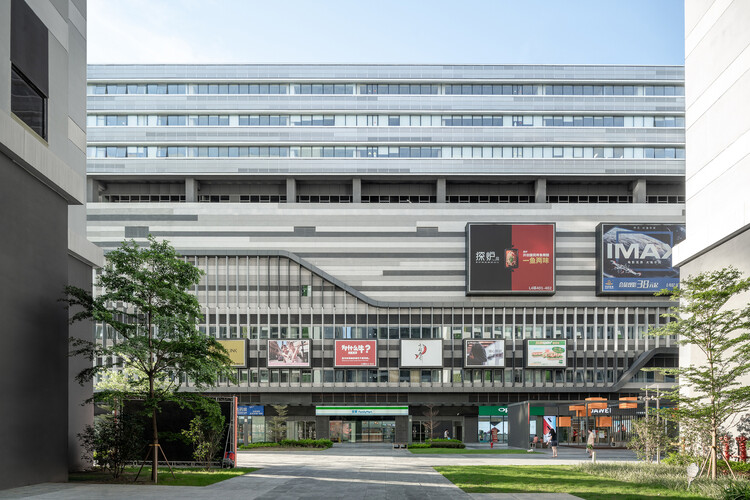
In many Asian cities, the summer climate can increasingly be experienced from a distance. In Hong Kong, it is possible to move from an apartment tower through a podium mall, enter the Mass-Transit-Railway system (MTR), arrive beneath another commercial complex, and continue through enclosed footbridges or underground passages while encountering remarkably little of the atmosphere outside. Heat, humidity, rain, and seasonal variation remain present, but they can be largely bypassed through a continuous network of conditioned interiors.
Over several decades, air-conditioning has expanded from a technology for cooling individual rooms into an infrastructure capable of producing an alternative urban environment. This has been particularly visible in parts of East Asia and South East Asia, where transit-oriented development frequently combines railway stations, shopping centres, housing, offices, and other everyday services within interconnected complexes. The Railway plus Property model has helped institutionalize this relationship between transport and development, creating districts where movement through the city is often inseparable from movement through privately managed interiors.
The Sharjah Architecture Triennial (SAT) has released the full documentary films from A Journey into Architecture Archives: Baghdad, Damascus, Tunis online. Curated by George Arbid, the project is part of SAT's long-term research program focused on documenting and safeguarding architectural archives across the Arab world. The three films, filmed on location in Baghdad, Damascus, and Tunis, combine archival research with fieldwork and oral histories, examining how architectural histories are constructed, preserved, and revisited over time.
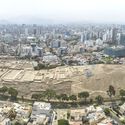
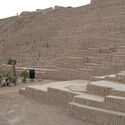
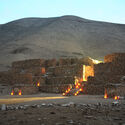
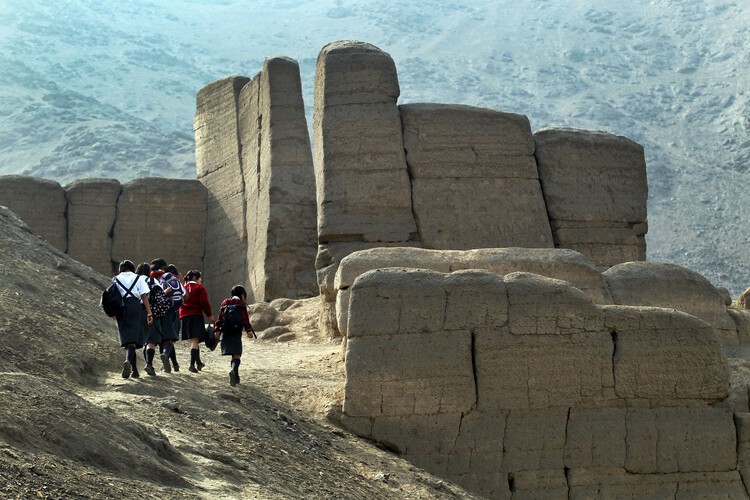
A campaign led by Red Lima Milenaria is seeking UNESCO recognition for pre-colonial sites in the Peruvian capital. Today, more than 600 archaeological sites remain in Lima, a metropolis of 11 million people. The citizens' campaign seeks to improve conservation conditions and public awareness of the sites that resisted European colonization by promoting the nomination of a selection of structures for inscription on UNESCO's World Heritage List. The public campaign was recently launched to gather citizen support and establish partnerships with organizations working in heritage and related fields, in order to prepare the framework for a formal nomination to be submitted by the Peruvian state. The initiative coincides with reconstruction movements in the continent responding to socioeconomic inequality and structural historical injustices, raising questions about the very definition of heritage.
This article is part of "Thresholds", a special edition printed newspaper by Cobe Notes x ArchDaily.
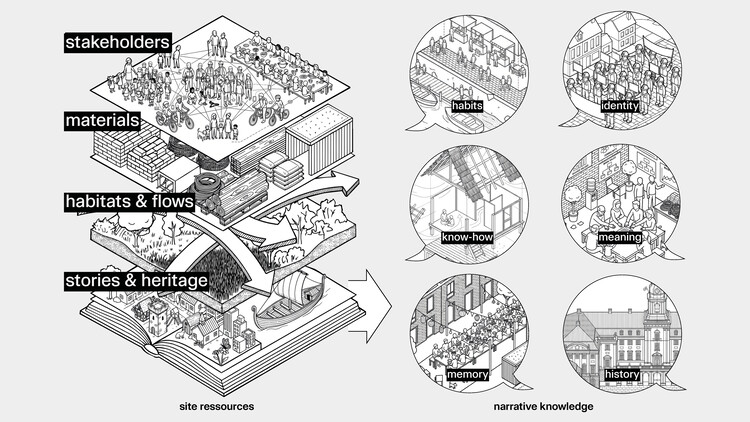
There are two unique things about being human that made us survive the early years and spread over the whole planet: sweating and storytelling. Sweating helps cool down the body when running long distances. Stories help us collaborate in big numbers and share knowledge across groups and generations. As architects, we still rely on the same tools to make visions become reality.
As professor of stories Angus Fletcher points out in his book Primal Intelligence, there is a common misconception about the role of stories: when our "rational" brain has developed an idea that we fail to explain to a wider group, we pack it into a story, and suddenly everybody understands. Fletcher argues that it actually works the other way around: ideas come from stories, our brain works in stories, and stories form reality. Architects have a derogatory term for turning that process the wrong side up: "post-rationalisation", for example when diagrams are made to explain a design that is already decided.
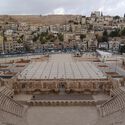
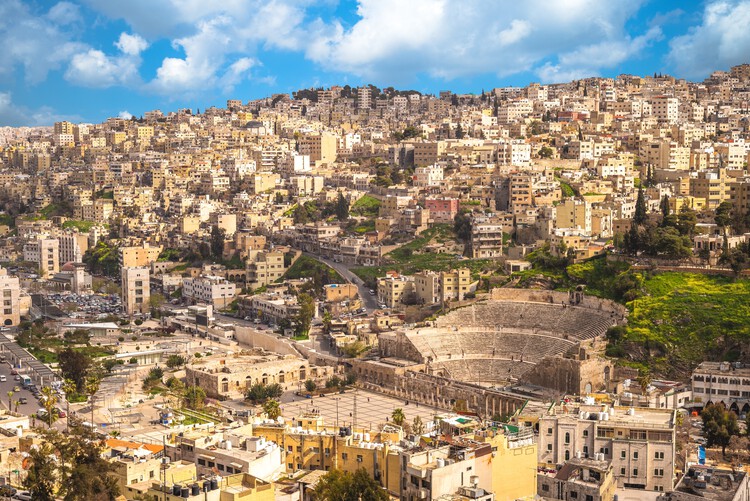
Built across several hills, Amman has grown at a pace few Middle Eastern capitals have matched. The city has received successive waves of migration — Circassians in the late 19th century, Palestinian refugees in 1948 and 1967, the Iraqi population after 1990, and Syrians since 2011 — each reshaping its density and social profile. Locally quarried limestone, extracted from quarries across Jordan and required by law for façades since the 1970s, has become the city's only common visual denominator. Behind this material uniformity, however, lies a continuous dialogue between vernacular tradition and international ambition.
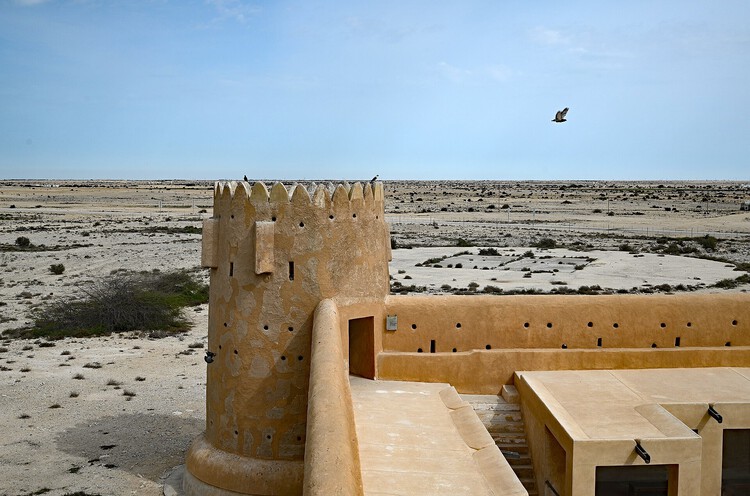
Home could extend between several places occupied at different points in the year. It extended across a larger geography of places that were left and returned to through the year. Many contemporary Gulf developments now attempt to bring contrasting climatic and spatial conditions into the same permanent urban system.
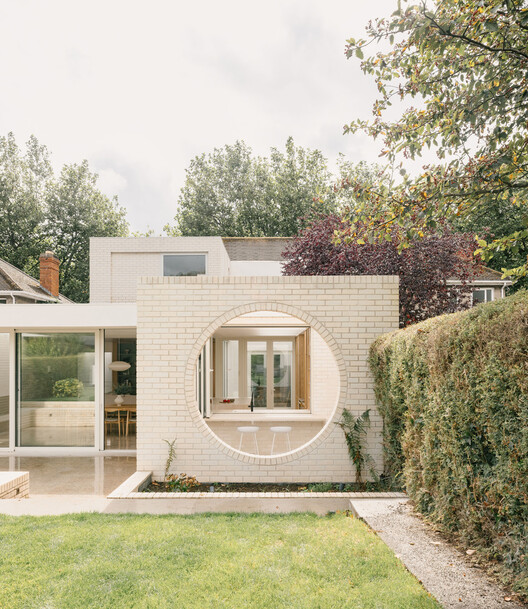
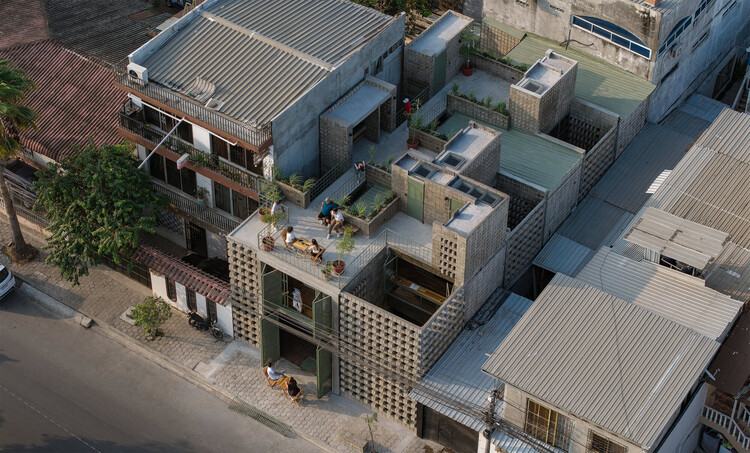
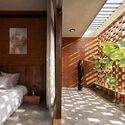
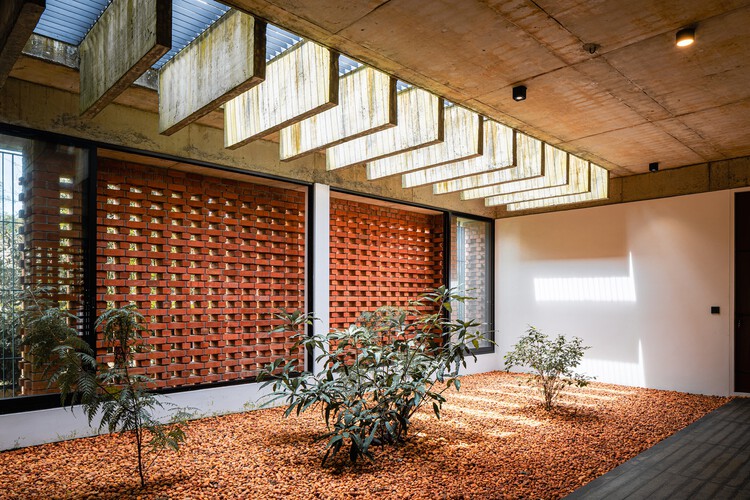
A brick façade does more than define the façade of a house. When designed as a porous screen, it becomes an intermediary between inside and outside, shaping the atmosphere and environmental conditions of the spaces behind it. Across contemporary Indian residential architecture, brick jali — a perforated or lattice brick screen — has been reinterpreted with a contemporary sensibility, drawing on vernacular architectural elements.
Wood and coastal architecture have always gone together. It's one of the defining materials of coastal structures. But creating that aesthetic in an environment where weather is a constant part of life demands more from the wood you choose.
Rain isn't unique to coastal areas. What makes the coast different is the combination and frequency of exposure. Humidity, ocean winds, salt-laden air, direct sun, and frequent storms repeatedly take wood from wet to dry and back again. In many coastal regions, these aren't occasional weather events. They are simply part of the climate. That makes two characteristics especially important when selecting wood for coastal construction: durability and dimensional stability.
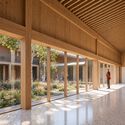
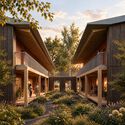
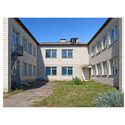
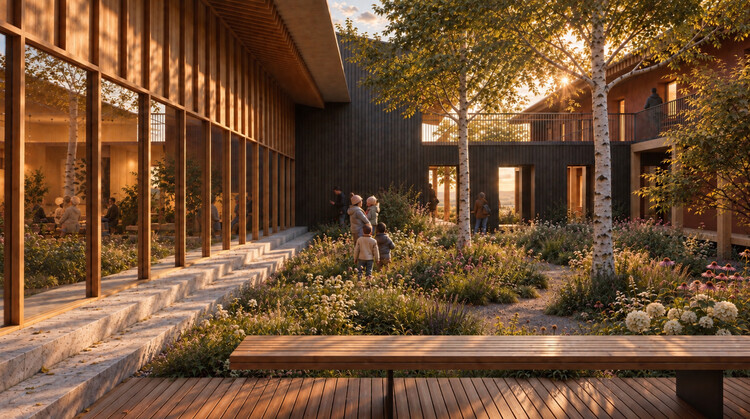
Office for Future is converting a former school in Stavyshche, Ukraine, into housing for 42 families displaced by the war. Developed for the Charity Foundation Housing for IDP, the project, titled "Dvir – The Shared Courtyard," reuses the approximately 1,900-square-meter building to create 42 apartments and 200 square meters of shared indoor spaces. The intervention combines the existing structure with new timber elements, an energy retrofit, and the transformation of the former asphalt courtyard into a permeable green space.
Some urban experiences are etched into our memory through a shift in pace. The postmodern city has often been described as an experience lived at the rhythm of motorized mobility, in contrast to the stroll, the promenade, or even the processions that preceded it. In a fast-paced urban culture, walkability is championed in urban planning not only as a factor of safety and social cohesion, but also as a path to a more sensory way of life. This selection of unbuilt projects submitted by ArchDaily readers showcases design examples that prioritize the experience of the environment through a pedestrian pace. Beyond respecting walking as a mobility choice, these conceptual proposals link the act of walking with contemplation of one's surroundings, respect for what already exists, and connection with other people.
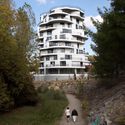
A fire has severely damaged La Querola d'Ordino, a residential development in Ordino, Andorra, designed by Jean Nouvel in collaboration with Ribas & Ribas Arquitectes and Jordi Sala. The fire began during the early hours of September 22 and spread across the seven-building complex before being brought under control on September 23. Firefighters from Andorra and neighboring France were involved in the response, with authorities reporting no injuries. The cause of the fire has not yet been established.
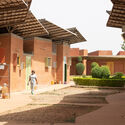
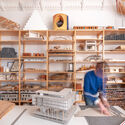
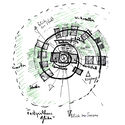
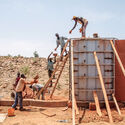
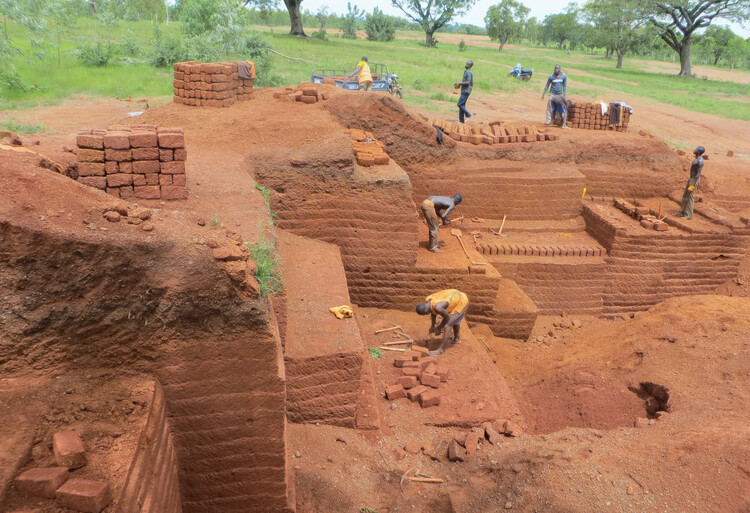
"After all, time is a key ingredient of my profession," states Francis Kéré in his book Francis Kéré: Building Stories. Architecture is constantly evolving and transforming over time. Bricks, doors, windows, walls, stairs, and other elements become the protagonists of a process that begins with a sketch and eventually takes shape as a built work.
Considering that architecture begins when its inhabitants start to make a space their own, Francis Kéré develops his projects progressively, continuing to work on the design even during the construction phase. As his architecture grows over time, integrates with its surroundings, adapts to the needs of its users, and responds to change in flexible and experimental ways, it seeks to become part of the lives of those who inhabit it.