1. ArchDaily
  2. Sports Complex

Sports Complex: The Latest Architecture and News

14 Global Stadium Projects and Surrounding Urban Masterplans Currently in Progress

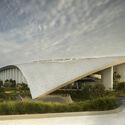
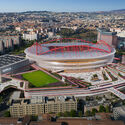
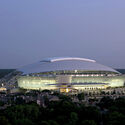
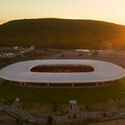
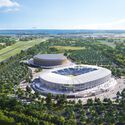
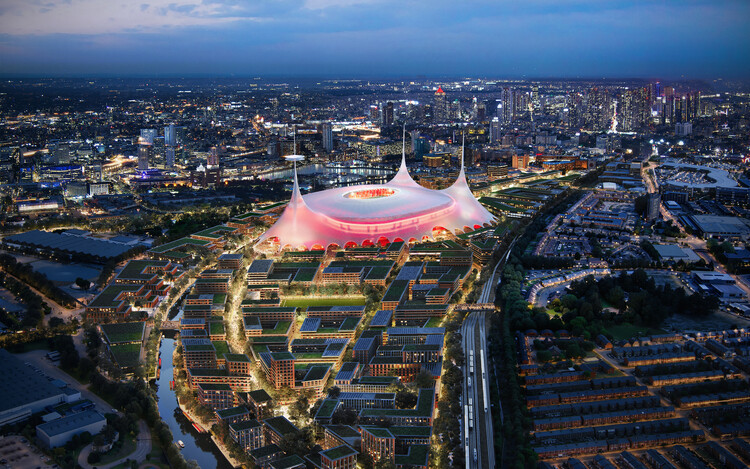
During 2025, several sports infrastructure projects were announced that remain on our radar, most of which are scheduled for completion between 2028 and 2030. Located across Asia, Europe, Africa, the Middle East, and North America, these projects reflect contemporary masterplan strategies for the transformation of large sports venues within their urban contexts. Many of the stadiums are planned as part of broader redevelopment frameworks that include new public spaces, mixed-use programs, event facilities, and mobility upgrades, rather than as isolated structures. Designs led by international offices such as Populous, Foster + Partners, Heatherwick Studio, OMA, Gensler, AFL Architects, and VUILD illustrate a range of architectural, urban, and infrastructural responses to the evolving role of large sports facilities.

14 Global Stadium Projects and Surrounding Urban Masterplans Currently in Progress - Image 1 of 414 Global Stadium Projects and Surrounding Urban Masterplans Currently in Progress - Image 2 of 414 Global Stadium Projects and Surrounding Urban Masterplans Currently in Progress - Image 3 of 414 Global Stadium Projects and Surrounding Urban Masterplans Currently in Progress - Image 4 of 414 Global Stadium Projects and Surrounding Urban Masterplans Currently in Progress - More Images+ 10

OODA Unveils House of Nassr Sports Complex, Its First Realized Project in Saudi Arabia

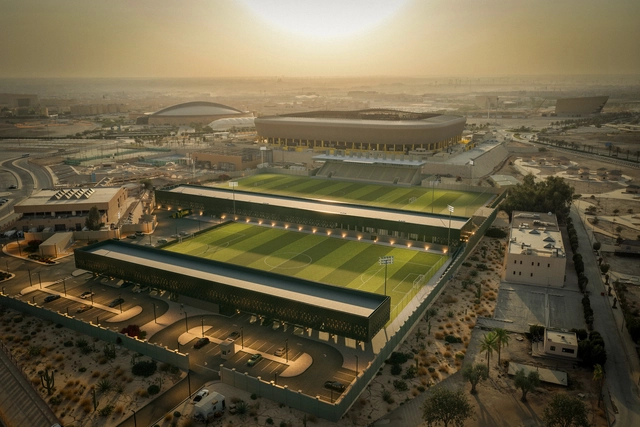
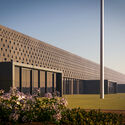
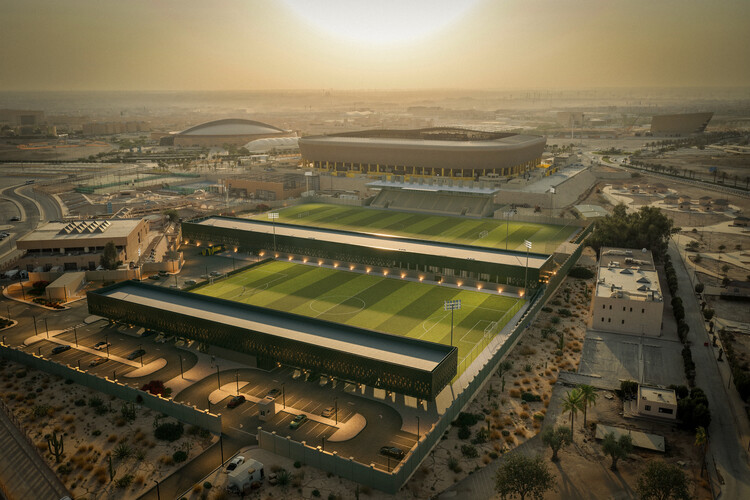
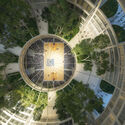
OODA announces the House of Nassr, a new integrated sports complex designed for Al Nassr FC in Riyadh, Saudi Arabia. Planned as a comprehensive facility supporting both athletic performance and club operations, the project brings together a high-performance training centre, administrative and media spaces, athlete support facilities, and social areas, with a hotel scheduled for a second phase of development. The complex occupies an area of approximately 4,000 square meters. While the overall project remains ongoing, the first phase has been completed in 2025, marking OODA's first realized project in Saudi Arabia.

OODA Unveils House of Nassr Sports Complex, Its First Realized Project in Saudi Arabia - Image 1 of 4OODA Unveils House of Nassr Sports Complex, Its First Realized Project in Saudi Arabia - Image 2 of 4OODA Unveils House of Nassr Sports Complex, Its First Realized Project in Saudi Arabia - Image 3 of 4OODA Unveils House of Nassr Sports Complex, Its First Realized Project in Saudi Arabia - Image 4 of 4OODA Unveils House of Nassr Sports Complex, Its First Realized Project in Saudi Arabia - More Images+ 11

MVRDV Designs Spherical Landmark for Tirana’s New Asllan Rusi Sports Palace

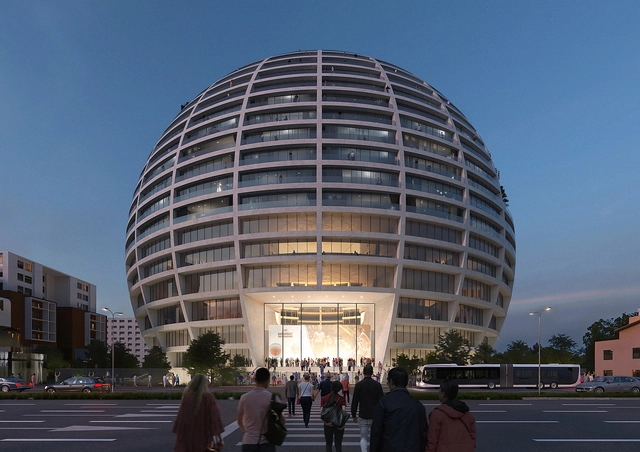
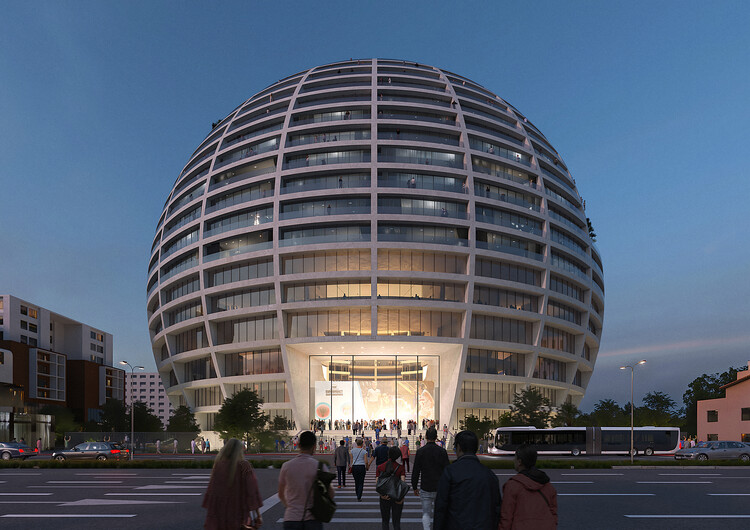
Tirana, the capital of Albania, is experiencing a rapid transformation driven by the long-term urban strategy outlined in the Tirana 2030 (TR030) Master Plan. Developed in 2017 by Stefano Boeri Architetti, UNLAB, and IND [Inter.National.Design] through a competition organized by the Ministry of Urban Development, the plan's objectives include increasing urban density, improving public infrastructure, and integrating green spaces and open areas into the urban fabric. It is in this dynamic setting that MVRDV has won the international competition for Tirana's new Asllan Rusi Sports Palace. Conceived as a mixed-use development, the project, named The Grand Ballroom, combines a 6,000-seat arena for basketball and volleyball with residential apartments, a hotel, and ground-level retail. With its spherical form exceeding 100 metres in diameter, the design adds a distinctive landmark to Tirana's growing collection of ambitious architectural projects.

MVRDV Designs Spherical Landmark for Tirana’s New Asllan Rusi Sports Palace - Image 1 of 4MVRDV Designs Spherical Landmark for Tirana’s New Asllan Rusi Sports Palace - Image 2 of 4MVRDV Designs Spherical Landmark for Tirana’s New Asllan Rusi Sports Palace - Image 3 of 4MVRDV Designs Spherical Landmark for Tirana’s New Asllan Rusi Sports Palace - Image 4 of 4MVRDV Designs Spherical Landmark for Tirana’s New Asllan Rusi Sports Palace - More Images+ 5

From Play to Shelter: The Many Roles of Small-Scale Community Sports Halls

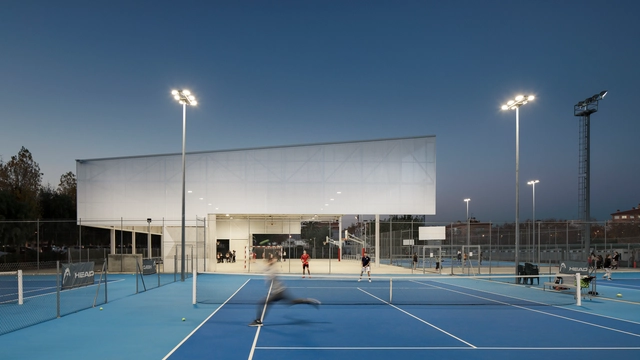
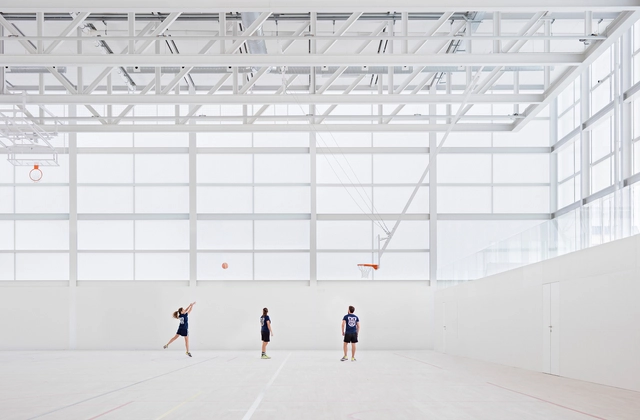
Community benefit is among the first terms mentioned when announcing a new public project. This is especially true in the case of sports halls, promising improvements in well-being and social cohesion. At a closer look, two typologies of sports halls emerge, with varying degrees of involvement with community life: on the one hand, there are large-scale venues dedicated to hosting international competitions, often boosting the capacities of thousands of people, taking on the role of modern landmarks alongside stadiums. On the other hand, there are small-scale multi-purpose sports halls, commonly annexed to schools, dispersed throughout neighborhoods, or present in rural areas with limited access to other public amenities. Despite the often-understated presence, these venues embrace and expand their multi-purpose role by offering opportunities to play, connect, organize events, and support diverse community activities.

From Play to Shelter: The Many Roles of Small-Scale Community Sports Halls - Image 1 of 4From Play to Shelter: The Many Roles of Small-Scale Community Sports Halls - Image 2 of 4From Play to Shelter: The Many Roles of Small-Scale Community Sports Halls - Image 3 of 4From Play to Shelter: The Many Roles of Small-Scale Community Sports Halls - Image 4 of 4From Play to Shelter: The Many Roles of Small-Scale Community Sports Halls - More Images+ 13

An Urban Living Machine for the Common Good: Municipal Services Buildings in Hong Kong

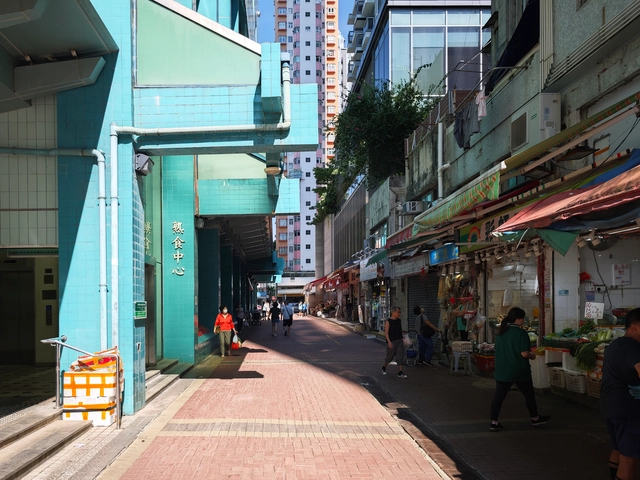
In Delirious New York, Rem Koolhaas vividly discusses the Downtown Athletic Club, a striking example of how an unassuming building exterior can conceal a vibrant mix of distinct, self-contained programs. Inside the uniform facade of this skyscraper, a private athletic club hosts an eclectic range of facilities—boxing gyms next to oyster bars and interior golf ranges below swimming pools—all segregated yet highly accessible. The Downtown Athletic Club epitomized the dynamism of New York's skyscrapers at the time, showcasing the thrill of capitalism through a selective, inward-focused world of leisure and privilege for the selected. This "machine of programs" operated independently of the external city as an isolated ecosystem within its walls. Yet, one might ask: could a similar model, designed for public use, create a more inclusive, lively community and neighborhood experience? This will activate the building within, instead of only serving the selected elites, and influence and transform the urban fabric and shapes around the building. In Hong Kong, a distant parallel can be drawn with the Municipal Services Buildings (MSBs)—publicly-funded structures that serve the community by integrating diverse functions within a singular vast building mass, much like the Downtown Athletic Club.

An Urban Living Machine for the Common Good: Municipal Services Buildings in Hong Kong - Image 1 of 4An Urban Living Machine for the Common Good: Municipal Services Buildings in Hong Kong - Image 2 of 4An Urban Living Machine for the Common Good: Municipal Services Buildings in Hong Kong - Image 3 of 4An Urban Living Machine for the Common Good: Municipal Services Buildings in Hong Kong - Image 4 of 4An Urban Living Machine for the Common Good: Municipal Services Buildings in Hong Kong - More Images+ 15

Populous Unveils the King Salman Stadium in Riyadh, the Largest Venue to Host FIFA 2034 World Cup

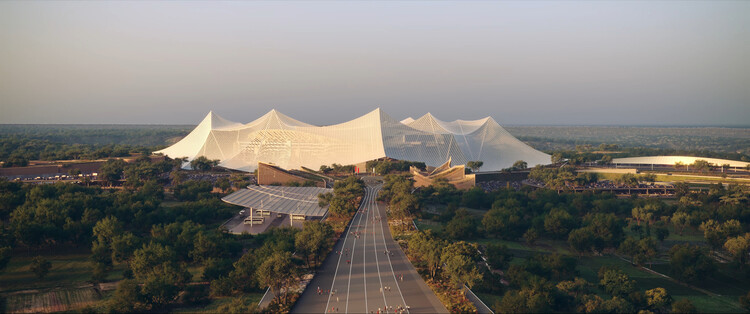
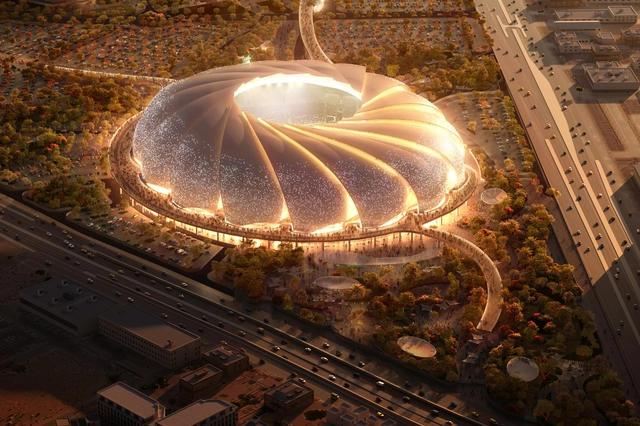
Populous has unveiled the design for the King Salman Stadium and Masterplan, set to become the largest-capacity stadium in Saudi Arabia and the primary headquarters for the Saudi Arabia national football team. Developed with the Royal Commission for Riyadh City and the Ministry of Sports, the stadium is located in northern Riyadh, adjacent to King Abdulaziz Park. Scheduled for completion in late 2029, the venue is also announced as one of the primary locations for the 2034 FIFA World Cup, set to be hosted by Saudi Arabia, whose bid includes the construction of 11 new stadiums and the refurbishment of 4 existing ones.

Populous Unveils the King Salman Stadium in Riyadh, the Largest Venue to Host FIFA 2034 World Cup - Image 1 of 4Populous Unveils the King Salman Stadium in Riyadh, the Largest Venue to Host FIFA 2034 World Cup - Image 2 of 4Populous Unveils the King Salman Stadium in Riyadh, the Largest Venue to Host FIFA 2034 World Cup - Image 3 of 4Populous Unveils the King Salman Stadium in Riyadh, the Largest Venue to Host FIFA 2034 World Cup - Image 4 of 4Populous Unveils the King Salman Stadium in Riyadh, the Largest Venue to Host FIFA 2034 World Cup - More Images+ 1

MVRDV Wins Competition for Badminton Training Center in China

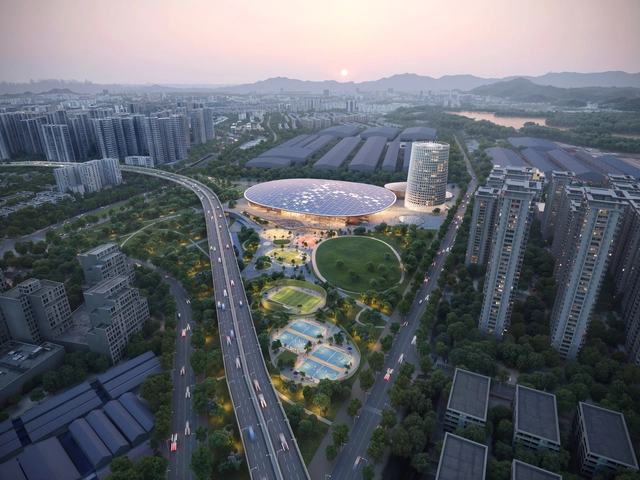
MVRDV, in collaboration with Huayi Design, has been awarded the design contract for the Shenzhen Pingshan Sports Park in eastern Shenzhen, China. The sports park will feature a wide range of facilities, including an arena for badminton and other competitive sports, the new Chinese National Badminton Training Centre, and a National Fitness Centre, alongside various amenities for public use. Central to the project is the inclusion of 100 badminton courts, which also inspired the architectural design, particularly exemplified by the 240-meter-long roof shaped like a badminton racket head.

MVRDV Wins Competition for Badminton Training Center in China - Image 1 of 4MVRDV Wins Competition for Badminton Training Center in China - Image 2 of 4MVRDV Wins Competition for Badminton Training Center in China - Image 3 of 4MVRDV Wins Competition for Badminton Training Center in China - Image 4 of 4MVRDV Wins Competition for Badminton Training Center in China - More Images+ 7

From Wooden Shells to Polycarbonate Panels: The Materials Shaping Flexible Sports Spaces

The Roman Colosseum is arguably the most iconic versatile venue in the world. Although this structure was not intended for sporting activities, it hosted various events, from the well-known gladiatorial combats to theatrical performances and the dramatic naumachia (naval battles). This demonstrates that flexible use of space has been relevant since ancient times. Centuries later, in the context of the ever-changing built environment and urban development, sports venues have similarly evolved, becoming outstanding examples of multi-purpose spaces.

These athletic complexes have transformed from highly specialized venues into dynamic, multifunctional structures. Whether hosting major international events such as the Olympic and Paralympic Games or serving as gathering spots for local communities, these spaces strike a delicate balance between addressing the needs of specific sports and maintaining the flexibility to accommodate a range of activities. How do these diverse functions coexist and interconnect? This analysis will explore how sports facilities are configured as flexible hubs for other disciplines and everyday activities.

Populous Reveals New Details for the Aramco Stadium and Masterplan in Saudi Arabia

Sports-focused architecture office Populous has been confirmed as the lead designer of the Aramco Stadium, one of the main locations scheduled to host the upcoming 2027 AFC Asian Cup and the 2034 FIFA World Cup. The office has also been commissioned with the design of the surrounding master plan in Al Khobar, Saudi Arabia. The new 47,000-seat venue will be compliant with international standards for premier football competitions, aiming to establish Al Khobar as an international sporting destination.

Populous Reveals New Details for the Aramco Stadium and Masterplan in Saudi Arabia - Image 1 of 4Populous Reveals New Details for the Aramco Stadium and Masterplan in Saudi Arabia - Image 2 of 4Populous Reveals New Details for the Aramco Stadium and Masterplan in Saudi Arabia - Image 3 of 4Populous Reveals New Details for the Aramco Stadium and Masterplan in Saudi Arabia - Image 4 of 4Populous Reveals New Details for the Aramco Stadium and Masterplan in Saudi Arabia - More Images+ 2

Over 100 Years of Olympic Heritage: What Became of the 1924 Paris Olympic Venues?

The recent history of the city of Paris is entangled with that of the Olympic Games. In 1900, Paris hosted the second edition of the Games, starting a journey of urban adaptations and architectural developments that prepared the city for the event. Among the most important changes was the introduction of Line 1 of the metro, inaugurated in 1900 to link the locations of the Universal Exhibition with those of the Olympic Games in Vincennes. Just 24 years later, the city hosted one of the most influential editions of the Olympic Games. The event, the first to be broadcasted on the airwaves, contributed to a substantial rise in the popularity of the Games. It was also during this edition that the concept of the Olympic Village was born. Several of the infrastructures and venues built over a century ago are still in use in Paris, with some of them returning now as hosts of Olympic events.

Over 100 Years of Olympic Heritage: What Became of the 1924 Paris Olympic Venues? - Image 1 of 4Over 100 Years of Olympic Heritage: What Became of the 1924 Paris Olympic Venues? - Image 2 of 4Over 100 Years of Olympic Heritage: What Became of the 1924 Paris Olympic Venues? - Image 3 of 4Over 100 Years of Olympic Heritage: What Became of the 1924 Paris Olympic Venues? - Image 4 of 4Over 100 Years of Olympic Heritage: What Became of the 1924 Paris Olympic Venues? - More Images+ 5

At the Eiffel Tower and Versailles Garden: Explore the Temporary Venues of the Paris 2024 Olympics

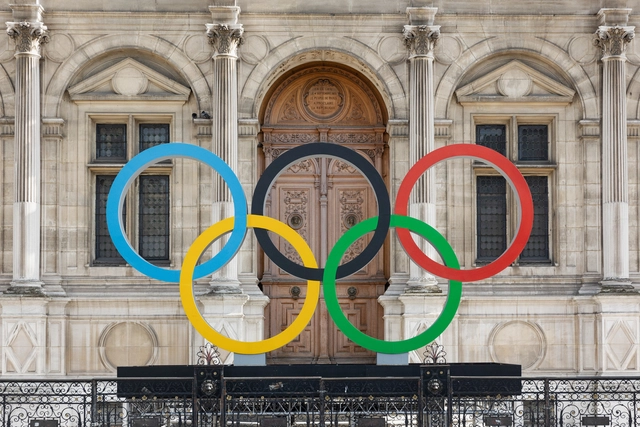
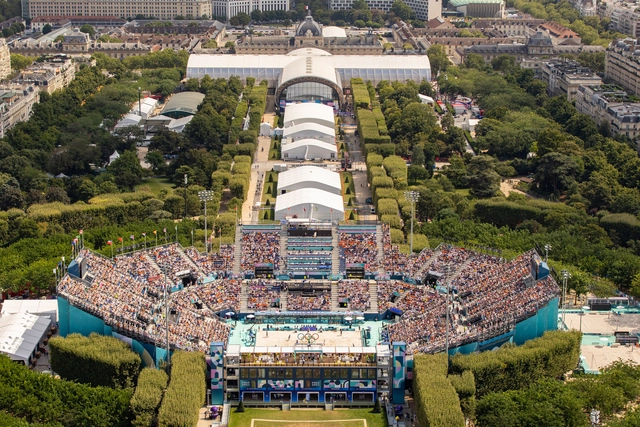
To take advantage of the historic heritage of the city of Paris while also minimizing the impact of the Olympics, the Paris 2024 Games are organizing a set of temporary arenas and installations to host several key competitions, only to be disassembled after the games' closing. Only one sports venue has been built specifically for the 2024 Olympic Games, the Aquatics Centre Paris, as the city aims to use its existing sporting infrastructure to the maximum, ensuring a smaller footprint compared to previous editions. In addition to the established venues, key temporary sites include the Trocadéro, Eiffel Tower, Champ-de-Mars, Esplanade des Invalides, Pont Alexandre III, Place de la Concorde, and Place de l’Hôtel de Ville, with additional stands along the Seine for the Opening Ceremony.

The assembly and disassembly of these temporary sites will follow a step-by-step approach to minimize disruption. Geographical phasing will preserve traffic lanes and access to public spaces, while time phasing will gradually activate and deactivate competition perimeters to limit construction impact and quickly restore spaces post-Games. These measures align with Paris 2024's commitment to organizing responsible and respectful Games and preserving the city's urban and natural heritage.

At the Eiffel Tower and Versailles Garden: Explore the Temporary Venues of the Paris 2024 Olympics - Image 1 of 4At the Eiffel Tower and Versailles Garden: Explore the Temporary Venues of the Paris 2024 Olympics - Image 2 of 4At the Eiffel Tower and Versailles Garden: Explore the Temporary Venues of the Paris 2024 Olympics - Image 3 of 4At the Eiffel Tower and Versailles Garden: Explore the Temporary Venues of the Paris 2024 Olympics - Image 4 of 4At the Eiffel Tower and Versailles Garden: Explore the Temporary Venues of the Paris 2024 Olympics - More Images+ 15

From White Elephants to Sustainable Venues: The Evolving Story of Olympic Architecture

Subscriber Access | 

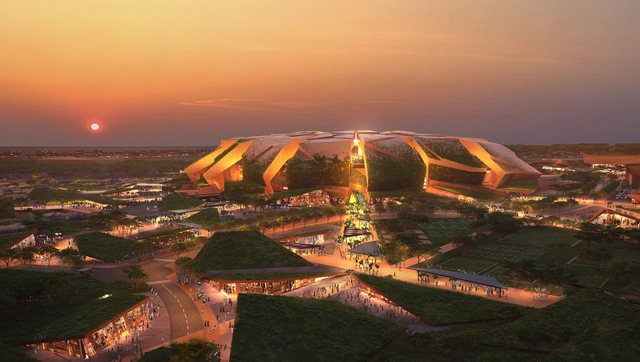
For cities, hosting an Olympic event represents both an honor, an important opportunity for growth, and a significant challenge. With over 200 nations taking part in the Games, the Olympics are the largest sporting competition in the world. Adapting the public and sporting infrastructure to accommodate this sudden influx of people and the scale of these events runs the risk of misunderstanding the cities’ needs after the closing ceremony, often producing “white elephants” that struggle to adapt to the rhythm and necessities of everyday urban life. Urban transformations are often cited as an advantage of hosting the Olympic Games, as cities are incentivized to invest in their traffic infrastructure, housing, and public spaces. One such example is the city of Paris, which introduced its first metro line on the occasion of hosting the second edition of the Olympic Games in 1900.

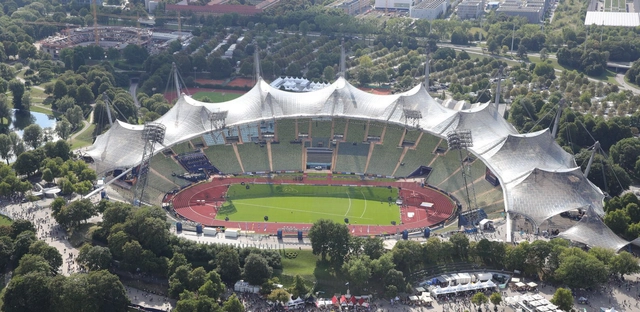
When it comes to the venues, however, the issue of adaptive reuse becomes a pressing one, as the architecture is challenged to find solutions to transform, accommodating thousands of people during the Olympics, then scaling down to become a financially sustainable part of a city’s sporting offering. Across the world, several Olympic venues have managed to extend their usability after the closing of the games, opening themselves to the local communities and welcoming a more diverse programming of sports and leisure events. While the high construction costs are often difficult to justify, these venues have become markers of local identity and attractive tourist attractions, extending their use decades after welcoming the Olympic crowds.
From White Elephants to Sustainable Venues: The Evolving Story of Olympic Architecture - Image 1 of 4From White Elephants to Sustainable Venues: The Evolving Story of Olympic Architecture - Image 2 of 4From White Elephants to Sustainable Venues: The Evolving Story of Olympic Architecture - Image 3 of 4From White Elephants to Sustainable Venues: The Evolving Story of Olympic Architecture - Image 4 of 4From White Elephants to Sustainable Venues: The Evolving Story of Olympic Architecture - More Images+ 16

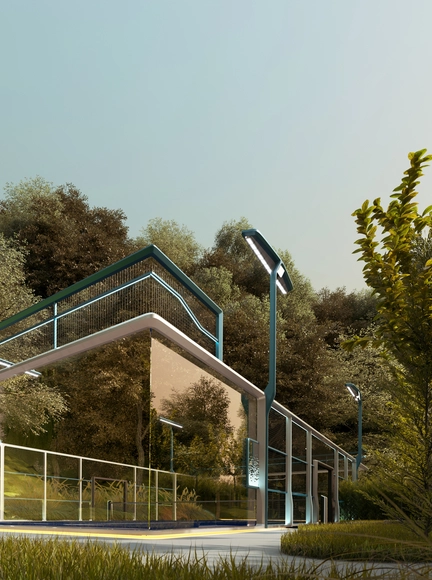
A High-Tech Padel Tennis Court in Italy and Timber-Clad Multi-Sports Arena in Austria: 9 Unbuilt Sports Facilities Submitted by the ArchDaily Community

Sporting facilities can play a vital role in the lives of cities by providing multifunctional public spaces where the people can join in large-scale events providing entertainment and spectacle while also promoting well-being and enhancing community engagement. Additionally, well-designed sporting arenas can become icons for a city, creating a sense of pride and identity and attracting visitors and residents. One such example is the Grand Slam tennis tournaments, which take over cities like Paris, London or New York, attracting fans from all around the world. The Philippe Chatrier and greenhouse transformed into the Simonne-Mathieu Tennis Court in Paris have become architectural landmarks, serving as catalysts for urban development and cultural exchange.
Other small-scale venues also play a role in the lives of communities, acting as gathering places for people with shared interests, fostering a sense of belonging and contributing to the overall health of the neighborhoods. This week's curated selection of Best Unbuilt Architecture highlights projects submitted by the ArchDaily community that showcase both large and small scale sporting venues. From a ‘box in a box’ basketball pavilion in Greece, to a translucent multi-sports arena in El Salvador or a dune-line arena in Morocco, this selection features projects that encourage and celebrate movement, athleticism and fair play competition.

A High-Tech Padel Tennis Court in Italy and Timber-Clad Multi-Sports Arena in Austria: 9 Unbuilt Sports Facilities Submitted by the ArchDaily Community - Image 5 of 4A High-Tech Padel Tennis Court in Italy and Timber-Clad Multi-Sports Arena in Austria: 9 Unbuilt Sports Facilities Submitted by the ArchDaily Community - Image 24 of 4A High-Tech Padel Tennis Court in Italy and Timber-Clad Multi-Sports Arena in Austria: 9 Unbuilt Sports Facilities Submitted by the ArchDaily Community - Image 44 of 4A High-Tech Padel Tennis Court in Italy and Timber-Clad Multi-Sports Arena in Austria: 9 Unbuilt Sports Facilities Submitted by the ArchDaily Community - Image 52 of 4A High-Tech Padel Tennis Court in Italy and Timber-Clad Multi-Sports Arena in Austria: 9 Unbuilt Sports Facilities Submitted by the ArchDaily Community - More Images+ 53

CEBRA Unveils the Design of a New Football Stadium Complex in Albania

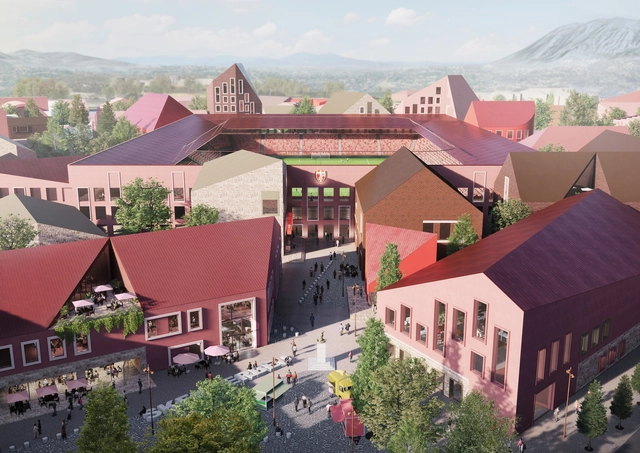
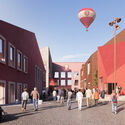
Danish architecture office CEBRA has won an international competition for the design of the new Skenderbeu Stadium in Korça, Albania. The winning proposal sets the 10,000-seat stadium in a lively neighborhood to create an engaging environment for fans, active citizens, businesses, and visitors of the Albanian city. The masterplan proposes buildings and alleys inspired by the Korça typologies to create a familiar cultural experience both in and around the stadium.

CEBRA Unveils the Design of a New Football Stadium Complex in Albania - Image 1 of 4CEBRA Unveils the Design of a New Football Stadium Complex in Albania - Image 2 of 4CEBRA Unveils the Design of a New Football Stadium Complex in Albania - Image 3 of 4CEBRA Unveils the Design of a New Football Stadium Complex in Albania - Image 4 of 4CEBRA Unveils the Design of a New Football Stadium Complex in Albania - More Images+ 5

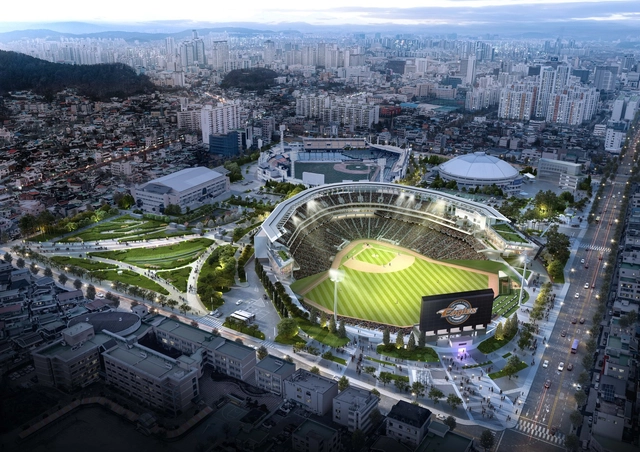
A Baseball Stadium in South Korea and an Aquatic Center in Canada: 8 Unbuilt Sports Facilities Submitted to ArchDaily

Subscriber Access | 

Sport plays an important role in the life of every city, yet the buildings housing these activities pose a particular set of challenges to the architects. Scale and dimensions need to be adapted to allow for unrestricted movement, heights are adjusted to the force of an athlete’s throw, and lighting, surface, and finishes require careful consideration. The matter becomes even more complex if these activities become the center of large-scale events. The flow of people becomes an integral part of the design, as different types of users require separate circulation paths.

This week’s curated selection of Best Unbuilt Architecture highlights the design of sports centers submitted by the ArchDaily community. From a tennis stadium in Italy, to a yoga pavilion on the cliffs of Portugal, this selection features projects centered around movement, practicing, following, and enjoying sports, be it tennis, baseball, yoga or football. The article presents projects from various counties, such as South Korea, Canada, Portugal, and Argentina.

Zaha Hadid Architects, Sweco and Tredje Natur Selected to Design the New Aarhus Stadium in Denmark

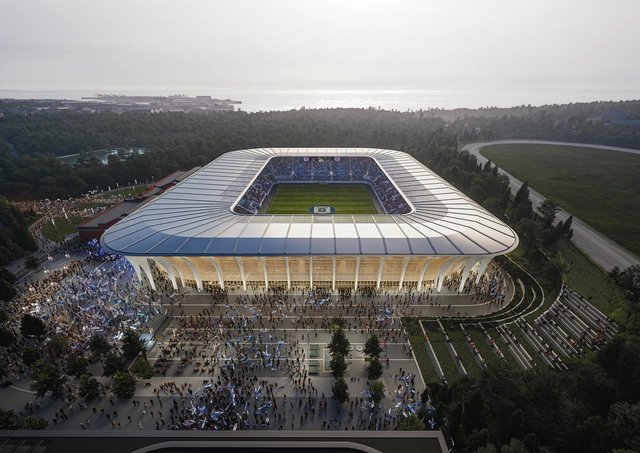
In collaboration with architecture and engineering consultancy Sweco and landscape architects Tredje Natur, Zaha Hadid Architects was selected to deliver the new Aarhus football stadium in Denmark. Dubbed the "Arena of the Forest," the stadium will be embedded within the city's Marselisborg forest, offering public and ticketed spaces all year round while revealing glimpses of the surrounding landscape. Scheduled for opening in 2026, the complex will cover 69,912 square meters, including the Aarhus arena and the renovation of the adjacent 'Stadionhallerne' building completed in 1918 by architect Axel Høgh-Hansen.

Zaha Hadid Architects, Sweco and Tredje Natur Selected to Design the New Aarhus Stadium in Denmark - Image 1 of 4Zaha Hadid Architects, Sweco and Tredje Natur Selected to Design the New Aarhus Stadium in Denmark - Image 2 of 4Zaha Hadid Architects, Sweco and Tredje Natur Selected to Design the New Aarhus Stadium in Denmark - Image 3 of 4Zaha Hadid Architects, Sweco and Tredje Natur Selected to Design the New Aarhus Stadium in Denmark - Image 4 of 4Zaha Hadid Architects, Sweco and Tredje Natur Selected to Design the New Aarhus Stadium in Denmark - More Images+ 3

Herzog & De Meuron Updates the FC Basel Stadium in Switzerland

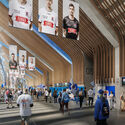
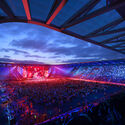
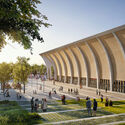
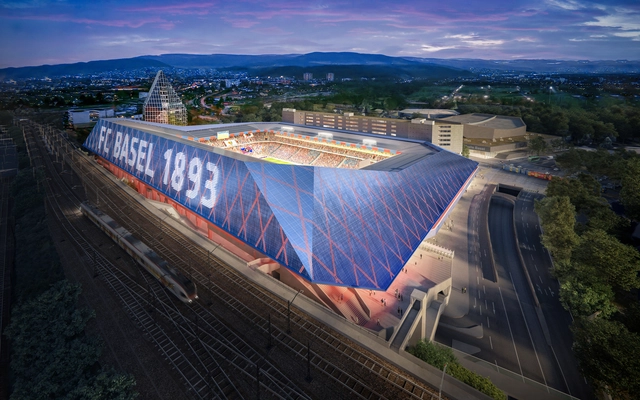
The Jakob-Park Stadium, home of FC Basel, is getting an update to extend its lifespan after 20 years of use. Originally designed by Herzog & de Meuron, the architecture reform aims to provide better hospitality to visitors by restructuring the access and optimizing security to keep the stadium open even on non-match days. The proposal also contemplates replacing the iconic facade with a sweeping roof to give the stadium a unified appearance and broadcast the events outside.

Herzog & De Meuron Updates the FC Basel Stadium in Switzerland - Image 1 of 4Herzog & De Meuron Updates the FC Basel Stadium in Switzerland - Image 2 of 4Herzog & De Meuron Updates the FC Basel Stadium in Switzerland - Image 3 of 4Herzog & De Meuron Updates the FC Basel Stadium in Switzerland - Image 4 of 4Herzog & De Meuron Updates the FC Basel Stadium in Switzerland - More Images+ 3