Housing for the low-income urban population is a central concern for contemporary Brazilian policymakers and urbanists. Over the last few decades, by focusing on building social housing complexes in peripheral areas lacking transit and sanitation infrastructure, the state has actively contributed to worsening the problem.
https://www.archdaily.com/1121851/criminalized-in-brazil-the-downtown-homeless-movement-is-featured-at-the-chicago-biennialMarisa Moreira Salles e Tomas Alvim
In early 2020, Rio de Janeiro will become the global stage for debates on contemporary cities and the future of urban environments. As host of the 27th World Congress of Architects, UIA2020RIO, the city also celebrates its designation as the first World Capital of Architecture by UNESCO and the International Union of Architects (UIA).
Last week, we announced the 15 finalists for the 2019 Obra do Ano, an award celebrating the best of Lusophone architecture by inviting our readers to vote for their favorite projects built in Portuguese-speaking countries. Today, we reveal the winners of ODA19.
This year, three Brazilian projects received the most votes. In addition to showcasing architectural diversity, they exemplify the public impact that architecture should deliver. Meet the three winners below!
There are various ways to position a residence on a lot. It can be built along the side boundaries, set back from the rear or one of the sides, aligned with the street, or freestanding on the plot. Each strategy presents its own advantages and drawbacks. On smaller plots, introducing courtyards is an effective way to site a house, particularly for maximizing natural light and ventilation.
The global need to find more sustainable ways to meet new demands is one of the most compelling catalysts for the reuse of materials or structures in contemporary architecture. In the field of scenography, repurposing materials to construct stage sets has long been a reality. Professional practice in this field deals with the representation of a scene, using temporary elements designed to stimulate the spectator's imagination. In this context, the work of scenographer Renata Mota has paired repurposing with the reuse of materials—either discarded or donated—that have lost their original function, using them to craft sets for performances, exhibitions, and other events.
The governor of Espírito Santo, Renato Casagrande, signed a decree this week mandating the installation of solar energy harvesting systems in new state buildings. The law also applies to facilities constructed with state funds transferred to municipalities through agreements, accords, or covenants.
Deconstructivist architecture by Daniel Libeskind. Royal Ontario Museum, Toronto, Canada. Image: Alexandre Kozoubsky/Flickr
Modernism has ceased to exist as a movement in architecture and urbanism since at least the 1980s. In architecture, movements such as Japanese Metabolism and deconstructivism helped to move past the remnants of modern architecture. In urban planning, figures like Jane Jacobs and Christopher Alexander, as early as the 1960s, helped bury the premises of modern urbanism.
https://www.archdaily.com/1121820/after-all-why-do-we-still-talk-about-modernismPaulo Sa Vale
Eight months after the agreement was signed, São Paulo City Hall will finally assume ownership of the Parque Augusta site, which until now has been held by developers Setin and Cyrela. The signing of the deed will take place next Saturday, April 6, during a ceremony held on the site itself.
In recent years, we have witnessed a steady increase in the number of registered architects and urban planners across professional regulatory bodies. Within this significant pool, young architects and urban planners—meaning professionals up to 40 years old—represent a substantial share and hold a strong presence in the market. Against this backdrop, we have followed the creation of awards dedicated specifically to this demographic, and, most notably, their active participation in biennials and triennials—events aimed at driving discussions on the future of architecture.
Vista marquise a partir da via pública. Image Cortesia de Coletivo de Arquitetos
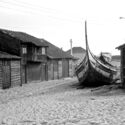
The design for a square in the village of Crasto proposes a new cultural, sports, and leisure space for this fishing community located on the southern coast of Sergipe. The project also addresses accessibility issues, interconnecting the new plaza with the pre-existing built environment.
The New Urban Agenda, a document adopted in October 2016 at the United Nations Conference on Housing and Sustainable Urban Development - Habitat III, was recently launched in Portuguese by the United Nations Human Settlements Programme (UN-Habitat) office in Brazil.
Joel Carlos Borges Street, in São Paulo. Photo: Pedro Mascaro/WRI Brasil
The latest Global Status Report on Road Safety from the World Health Organization (WHO) showed that over the last 15 years, the traffic mortality rate has remained stable relative to the world's population. While the fact that these numbers have not increased might sound positive, it is important to remember that this still represents the death of 1.35 million people annually, alongside 50 million injuries.
https://www.archdaily.com/1121788/traffic-deaths-are-not-decreasing-complete-streets-can-helpWRI Brasil
The Instituto Tomie Ohtake Leroy Merlin Design Award has opened registrations for its second edition, launching with a debate on Contemporary Design. The event features Marta Porto, journalist and specialist in communication, art, and culture policies, as well as an exhibition and art project curator; Ricardo Abramovay, professor in the Department of Economics at FEA and author of "Muito Além da Economia Verde"; and Raquel Rolnik, architect, urbanist, and former National Secretary of Urban Programs at the Ministry of Cities. The discussion will be moderated by Priscyla Gomes, curator at the Instituto Tomie Ohtake.
For some time now, cycling infrastructure planning has become a priority for several countries around the world seeking to seriously mitigate the challenges of rapid urbanization. In this regard, it is worth looking at which countries are expanding their cycling networks and understanding the development patterns established for each of them. OpenCycleMap is a project that makes it possible to clearly identify these countries and analyze their networks in great detail.
https://www.archdaily.com/1121824/bike-paths-of-the-world-discover-opencyclemapPedro Vada
One of the most significant contributions of modern architecture to global practice was the five points proposed by the Swiss-French architect Le Corbusier. This set of guidelines represented the formal expression of the ideals and principles of contemporary architectural thought, finding its paradigmatic application in the Villa Savoye, the iconic residence designed by the modern master in Poissy, France.
Although Juscelino Kubitschek is remembered for executing the project for Brasília, he was not its creator. The political will to build a new capital in the country's interior dates back to 1808, driven by the desire to elevate Brazil's international standing and symbolize its post-independence development. This developmentalist ethos, or rather the pursuit of the new, underpinned the arguments of most advocates for the relocation, each proposing a different approach.
The Atlas of Urban Expansion platform uses maps, satellite imagery, and spatial change data to showcase the growth of hundreds of cities worldwide. Developed since 2012 by New York University, UN-Habitat, and the Lincoln Institute of Land Policy, the primary goal of the Atlas is to analyze performance and identify trends in the implementation of the New Urban Agenda.
Gustavo Capanema Palace, a global icon of Modernism. Photo: Oscar Liberal / Iphan
Today marks the beginning of another phase of work on the building that serves as a symbol of Brazilian Modernism, the Gustavo Capanema Palace, in downtown Rio de Janeiro. This will be the final stage of a series of interventions carried out on the building by the National Institute of Historic and Artistic Heritage (Iphan), ensuring its complete restoration and emphasizing its importance as an architectural icon.
Brodie Vissers / Stocksnap.io. Image Cortesia de Arquicast
This biweekly episode features a lighthearted discussion on a topic of great interest to architects. Inspired by the article published on ArchDaily, "11 Ways to Become a Better Architect (Without Doing Architecture)", we invited journalist Ana Paula Capellano to explore unconventional ways of acquiring general skills that can be applied to the field of architecture and urbanism. We discuss the eleven topics proposed in the text, sharing our personal experiences and, naturally, some lighthearted disagreements.
The XI BIAU - Ibero-American Biennial of Architecture and Urbanism has announced the winners of the Ibero-American Architecture and Urbanism Award. César Ortiz-Echagüe Rubio and Jorge Enrique Scrimaglio were selected from among 38 professionals competing for the award.
Architects, urbanists, and students in the field have much to learn from the construction models of the first inhabitants of the Brazilian territory, who have long built shelters adapted to their local contexts. Establishing a common set of characteristics for indigenous architectural solutions proves to be a highly superficial approach, as the shapes and dimensions of indigenous ocas or malocas vary depending on the community and the number of people living there. However, by studying the diverse examples of indigenous architecture, it is possible to rethink the notion of “advanced technology” and assimilate sustainable solutions adapted to environmental conditions.
1° Lugar - Vinicius Ferreira de Oliveira, Gabriela Geraldelli Tocalino Silva, Gustavo Catapani Jarra e Mariane Banin de Carvalho. Image Cortesia de Projetar.org
For its 31st competition, organized in partnership with the Associação Parque Minhocão, the Projetar.org portal invited students and young professionals to envision what the Minhocão Park could be. In total, 310 students participated, representing 74 cities, 13 states, and 51 universities.
An alternative for students who choose to study away from their hometowns, student housing acts as an extension of educational institutions. Emerging almost concurrently with the first universities, these spaces have evolved over the years to adapt to societal shifts, such as the rise of co-ed dormitories.