Kabage Karanja, co-founder and director of Cave_bureau based in Nairobi, Kenya, and Kathyrn Yusoff, professor of Inhuman Geography at the University of London, are the curators of the British Pavilion at the 19th Venice Architecture Biennale. Together, they form the UK-Kenya curatorial team behind GBR – Geology of Britannic Repair, an exhibition that rethinks the Pavilion as both a symbolic and material site. Their approach reflects on Britain's architectural legacy and its entanglement with histories of colonialism, geological extraction, and the urgency of the climate crisis. In recognition of their exploration of the relationship between Great Britain and Kenya, focusing on themes of reparation and renewal, the Pavilion curators and commissioner were awarded a Special Mention for National Participation by the Biennale jury. While on site in Venice, ArchDaily's editors had a chance to discuss with the curators about the ideas that shaped the British Pavilion.
University of London: The Latest Architecture and News
“A Site of Destruction, a Site of Opportunity”: In Conversation With Kabage Karanja and Kathryn Yusoff, Curators of the British Pavilion


Foster + Partners Designs VARID: A VR/AR Toolkit for Inclusive Design
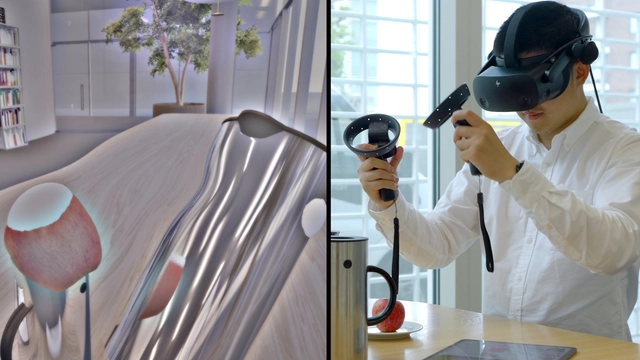
Foster + Partners Applied Research + Development team has created VARID (Virtual and Augmented Reality for Inclusive Design). Designed in collaboration with City, University of London (City) and UCL’s PEARL Lab, VARID is a design toolkit that uses virtual and augmented reality technologies. Its objective is to support academics, designers, and architects in better understanding how people with vision impairments perceive their environment.
Forensic Architecture Digitally Reconstruct Secret Syrian Torture Prison from the Memories of Survivors
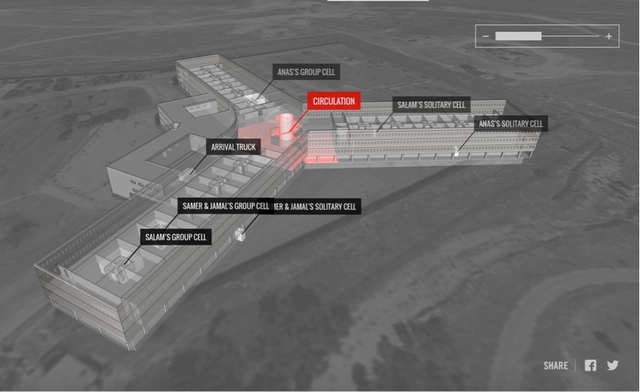
Forensic Architecture, a research agency based at the University of London, in collaboration with Amnesty International, has created a 3D model of Saydnaya, a Syrian torture prison, using architectural and acoustic modeling. The project, which was commissioned in 2016, reconstructs the architecture of the secret detention center from the memory of several survivors, who are now refugees in Turkey.
Since the beginnings of the Syrian crisis in 2011, tens of thousands of Syrians have been taken into a secret network of prisons and detention centers run by the Assad government for a variety of alleged crimes opposing the regime. After passing through a series of interrogations and centers, many prisoners are taken to Saydnaya, a notoriously brutal “final destination,” where torture is used not to obtain information, but rather only to terrorize and often kill detainees.
Located about 25 kilometers north of Damascus, Saydnaya stands in a German-designed building dating from the 1970s. In recent years, no meaningful visits from independent journalists or monitoring groups have been permitted, so no recent photographs or other accounts exist of its interior space, except for the memories of Saydnaya survivors.
Shortlisted Designs Revealed for Goldsmiths College Art Gallery

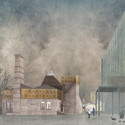
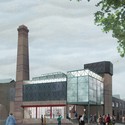
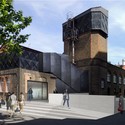
The shortlisted projects in the competition to design a new art gallery for Goldsmiths College at the University of London have been revealed. The project will see a new 400 square metre gallery created in the back of what was formerly a Victorian bath-house, and is now the college's Grade-II listed art studios. Six shortlisted practices were given six weeks to design a gallery which works with the existing industrial structures - including the building's old water tanks.
The designs will now be judged by Goldsmiths' competition jury, a panel which includes David Chipperfield and sculptor Antony Gormley.
Read on after the break for details of all six proposals