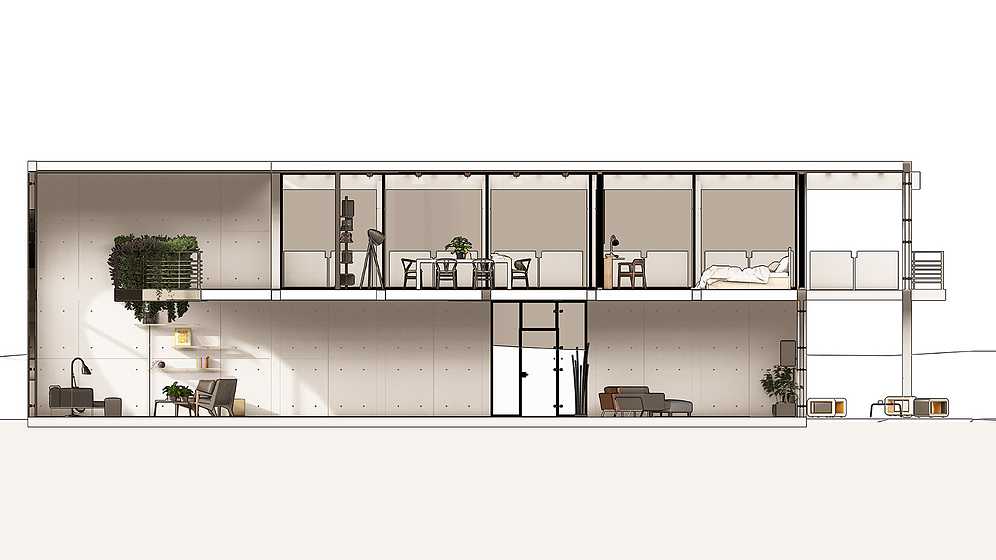
Produce personalized presentation boards that distill complex concepts into simple visual representations with a few helpful tools and effects.


Produce personalized presentation boards that distill complex concepts into simple visual representations with a few helpful tools and effects.
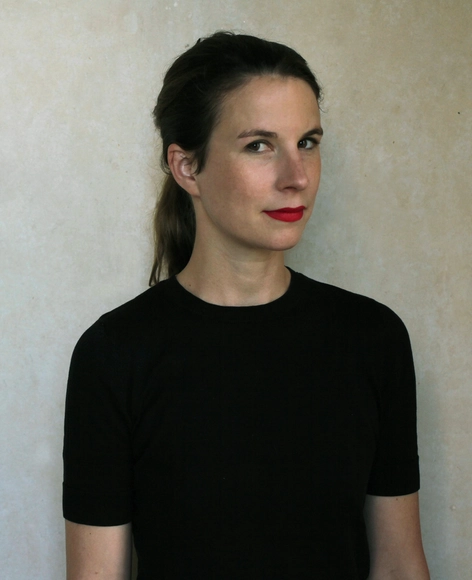
Belgian architect Aude-Line Dulière has been selected as the winner of Harvard University Graduate School of Design’s 2018 Wheelwright Prize. The $100,000 award supports travel-based research and investigative techniques to further explore contemporary design. Dulière’s winning proposal Crafted Images: Material Flows, Techniques, and Uses in Set Design Construction, aims to “examine construction methods and supply systems in the global film industry, engaging the space-making elements of film and set design as well as potential innovations around material use and reuse throughout architecture and construction generally.”

Throughout the spring and summer of 2018, seventeen US cities will host “Hip Hop Architecture Camps,” an initiative founded by the Urban Arts Collective seeking to address the lack of diversity in America’s architectural community. As reported by CNET, the architecture camps will be sponsored by Autodesk, makers of the architectural software AutoCAD.
Hip Hop Architecture Camps are geared towards students between the ages of 10 and 17, introducing students to architecture and urban planning by analyzing the structure and rhythm of rap music. By demonstrating a connection between music and architecture, the organizers hope to ignite a design flair in young students, helping to create a future where local communities have a stronger input into how urban areas are shaped or altered.

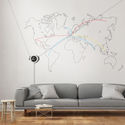
Carlo Ratti Associati (CRA) has unveiled Scribit, a “writing robot” which draws images and text on any wall surface, turning office, living, and bathroom walls into a blank canvas for artistic expression. Using in-built engines, Scribit can draw, cancel, and re-draw new content an infinite number of times, allowing users to print different images, messages, or feeds every day.
Scribit is always connected to the internet, allowing users to download, upload or source any online content. Operating in real time, Scribit immediately reproduces any data sent to it by the user, be it a restaurant posting the day’s menu, a financial firm posting stock market updates in its lobby, or an art enthusiast projecting their own content on the living room wall.

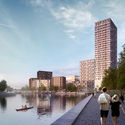
Rotterdam-based Barcode Architects have designed a new 110-meter-tall triangular shaped residential tower to become an icon in the city’s skyline. The tower, which has been named CasaNova, features a large plinth and a building base which tapers down four stories to meet the ground with a sharp angular form.

There's an old, weary tune that people sing to caution against being an architect: the long years of academic training, the studio work that takes away from sleep, and the small job market in which too many people are vying for the same positions. When you finally get going, the work is trying as well. Many spend months or even years working on the computer and doing models before seeing any of the designs become concrete. If you're talking about the grind, architects know this well enough from their training, and this time of ceaseless endeavor in the workplace only adds to that despair.
Which is why more and more architects are branching out. Better hours, more interesting opportunities, and a chance to do more than just build models. Furthermore, the skills you learn as an architect, such as being sensitive to space, and being able to grasp the cultural and societal demands of a place, can be put to use in rather interesting ways. Here, 3 editors at ArchDaily talk about being an architect, why they stopped designing buildings, and what they do in their work now.

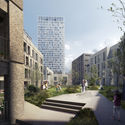
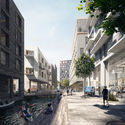
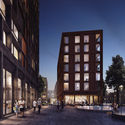
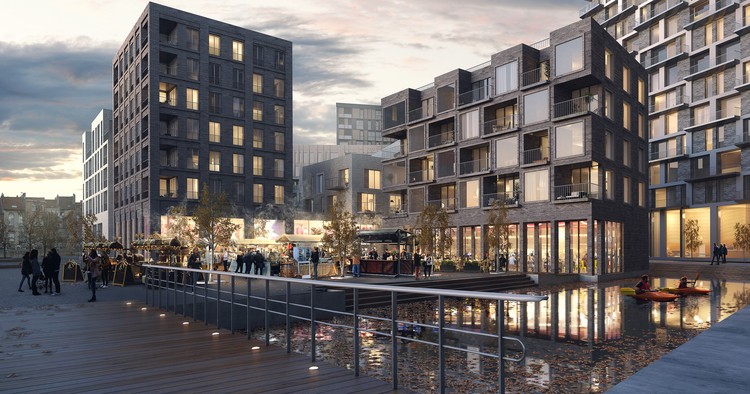
Danish firm Henning Larsen has released images of their competition-winning Key West urban development, seeking to revitalize a socio-economically challenged area of the Belgian capital Brussels. Developed in collaboration with A2RC Architects, the masterplan aims to balance urban and recreational life along the Brussels Canal Zone through a combination of housing, schools, urban farming, and a market hall.
Like many European cities, Brussels is moving towards a post-industrial economy, giving new opportunities to old industrial areas such as the Canal Zone. The Henning Larsen redevelopment seeks to remodel the area as an urban center, tying the urban areas west of the canal to central Brussels.
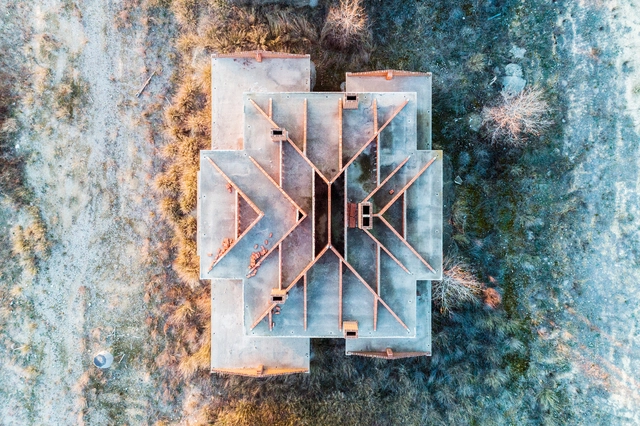
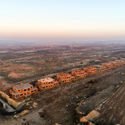
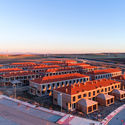
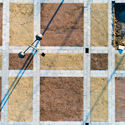
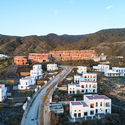
The winners of the DJI Drone Photography Award have been announced, a competition calling for ideas to make creative use of drone photography, and to explore subject matters impossible to experience on foot. This year, the two winning projects consisted of a new perspective on Spain’s 3.4 million abandoned houses, and the documentation of salt production across Europe.
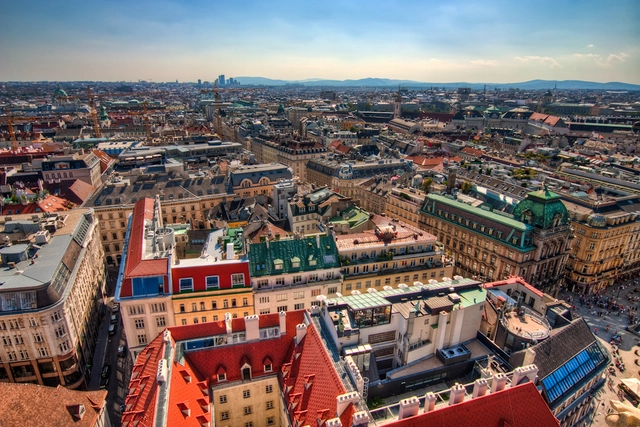
For the ninth consecutive year, Vienna has placed first in Mercer rankings on cities with the best quality of life in the world. Despite the current economic volatility in the European continent, the Austrian capital joins eight other European cities in the top ten.
This is the 20th edition of the Mercer Rankings. The consultancy, which specializes in advising multinational companies in the transfer of employees, evaluated more than 450 cities around the world. Their rankings take into account 39 factors divided into 10 categories, including political and economic environment, socio-cultural status, sanitation, educational and leisure opportunities, housing markets and natural disasters.
At the regional level, Vancouver (5th), Singapore (25th), Montevideo (77th) and Port Louis (83rd) are the highest ranking cities in North America, Asia, Latin America and Africa respectively. According to Mercer, the twenty cities with the best quality of life in the world are:
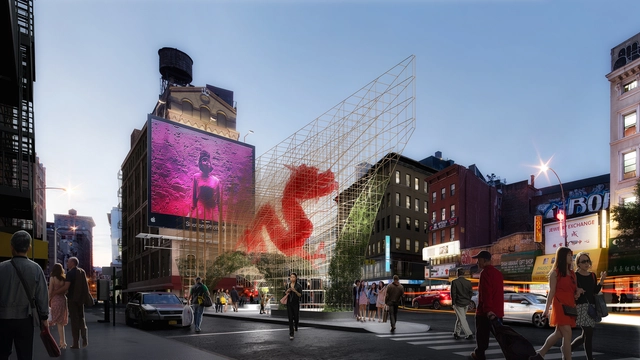
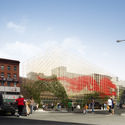
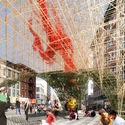
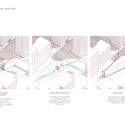
ODA New York has released images of its proposed “Dragon Gate” pavilion for New York’s Chinatown, seeking to act as a symbolic gateway to the famous Manhattan neighborhood. Using modern materials and forms to invoke symbols of traditional Chinese culture, the scheme seeks to capture Chinatown’s remarkable duality: a community of tradition resistant to change, yet one regarded as a uniquely contemporary phenomenon showcasing New York’s inclusive diversity.
Situated on a triangular traffic island at the intersection of Canal, Baxter, and Walker Streets, ODA’s scheme seeks to activate a currently-underused pedestrian space. The Dragon Gate consists of a triangular form adhering to a three-dimensional, gridded structure formed from interwoven, tubular, bronze steel inspired by bamboo scaffolding. As the structure densifies, selected pieces will be painted red to create the illusion of a dragon in mid-flight.


_-_The_Mastaba_(Project_for_London__Hyde_Park__Serpentine_Lake)_(1).jpg?1522847854&format=webp&width=640&height=580)
Artist Christo has released images of his proposed temporary sculpture for Hyde Park, London, to become his first major outdoor public sculpture in the United Kingdom. Titled “The Mastaba (Project for London, Hyde Park, Serpentine Lake)," the sculpture will consist of 7,506 horizontally-stacked barrels floating on the Serpentine Lake throughout the summer of 2018.
“The Mastaba” will coincide with an exhibition of Christo and Jeanne-Claude’s work at the Serpentine Galleries, featuring sculptures, drawings, collages and photographs spanning more than 60 years. Supported by Bloomberg Philanthropies, the exhibition will be the artists’ first in a UK public institution since 1979 and will showcase their long-running exploits with barrel forms, chosen initially for their sculptural effect and low cost.
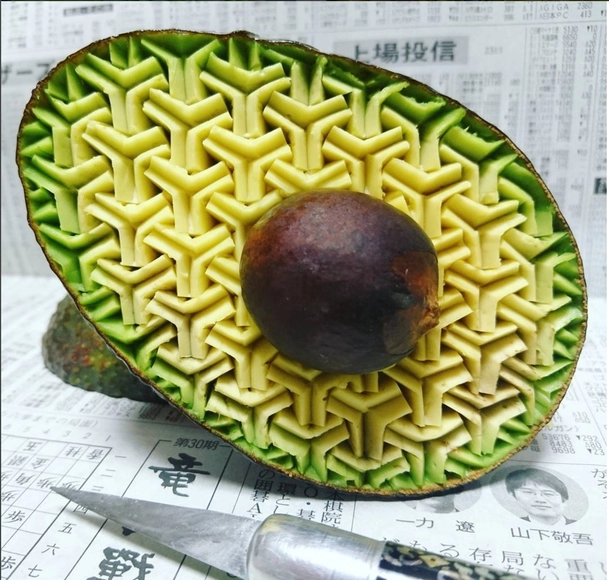
I happened to be in architecture school when the laser cutter was still a bit of a novelty for the inexperienced students in their first years of study. Sure, it saved you a lot up-close-and-personal-time with the X-Acto knife, but to unlock the true potential of the laser cutter one had to introduce a level of detail into the design or model that would otherwise be a nightmare to create by hand.
But here comes Japanese Instagram Fruit and Vegetable Carver gaku carving to make our jaws drop. How?! Why!? And on such an ephemeral canvas?! Who knows. But holy fractal if it isn't a work of geometric perfection. These videos capture levels of patience and precision that many only dream of.
Spoon & Tamago explains,
Japan has a rich tradition of food carving called mukimono. If you’ve ever eaten at a fancy restaurant in Japan you might have found a carrot carved into a bunny, garnishing your plate. But in the hands of Japanese artist Gaku, the art of fruit and vegetable carving is elevated to a new realm of edible creations.
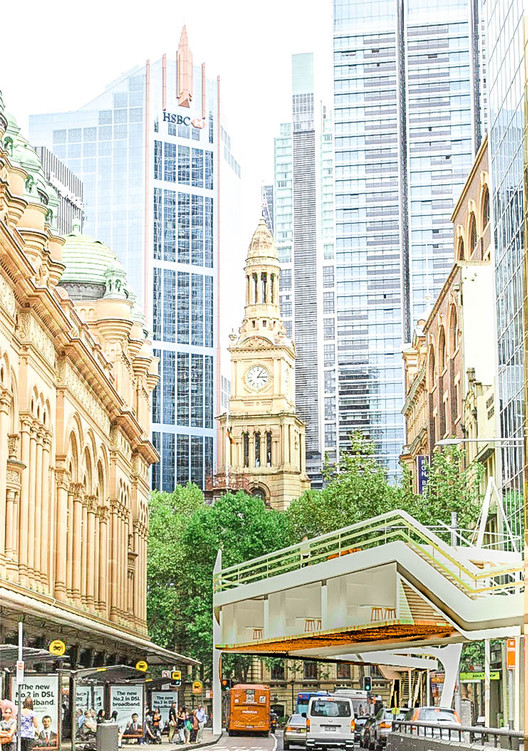
Bee Breeders has announced the winners of the recent Sydney Affordable Housing Challenge. The international architecture competition asked entrants to address the growing affordable housing crisis in Sydney. The challenge aimed at "garnering global attention to the important issue of housing in Sydney, Australia, where the economy is strong but the residential market is among the least affordable, according to surveys of major metropolitan markets."
_Ross_Duggan.jpg?1522798592&format=webp&width=640&height=580)
On The Desert Island in Cottesloe Beach, Australia, a 72-meter wall of mirrors partitions out a section of the sand, creating a cove of its own. The wall faces the Indian Ocean, and the curved reflection of sand merging with the soft-blue waters and the horizon beyond creates an illusion of an enclosed space; a desert island floating in an endless sea.
Conceived of by the Danish architecture studio Gjøde & Partnere Arkitekter, the installation was part of the annual Sculpture By The Sea exhibition in Australia last month. It is the largest free public sculpture exhibition in the world, and anyone can submit their ideas. As beachgoers stumbled upon this panorama of the shore upon sand, they danced, took photos, and watched the sunset from the wavering reflections of the mythical island.
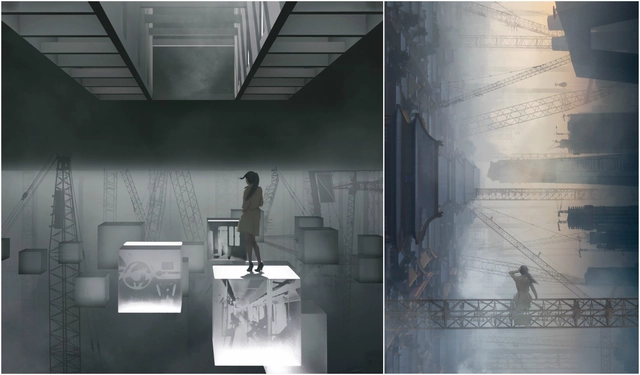
Blank Space, in collaboration with The National Building Museum, has announced winners of their fifth annual Fairy Tales competition, unveiled in front of a live audience at the Washington D.C. National Building Museum. The competition saw submissions from 65 countries, with 3 prize winners, a runner-up, and 9 honorable mentions chosen for their exploration of current events and the creative process through well-crafted short stories and artwork. The winners were chosen by a jury of 20 leading architects, including Daniel Libeskind, Bjarke Ingels, and Maria Aiolova.
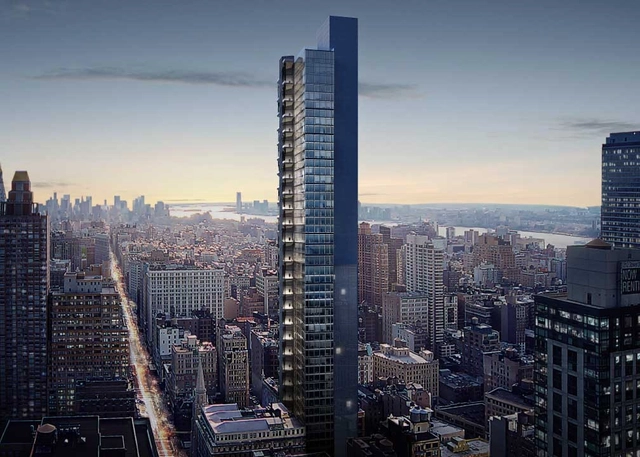
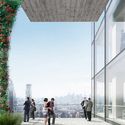
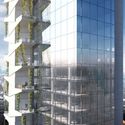
New York YIMBY has revealed initial renderings of BIG’s proposed office skyscraper at West 29th Street, New York, on the site of the old Bancroft Bank Building. Officially named “29th and 5th,” the scheme will offer a LEED-certified design focused on wellness and sustainability, featuring outdoor terraces stacked alongside a glass curtain façade.
Since the devastating Grenfell Tower fire in June 2017, the people of London have been searching for an answer to the exact cause of the fire that killed 71 people. Now Forensic Architecture—the Goldsmiths, University of London-based research group headed by Eyal Weizman—seeks to aid in the search for answers with their new Grenfell Media Archive. This online crowdsourcing database intended to collect people's first-person accounts in order to map them onto a 3D model of the tower and analyze exactly what happened to the tower.

Digital technology has broken into the timber construction scene at ETH Zurich, where a research team is using programmed robots to construct load-bearing timber modules. These modules are being used to stabilize the top two levels of their DFAB HOUSE project, a three-story residential unit located in Dübendorf, which aims to bring a variety of digital construction methods together under one roof.
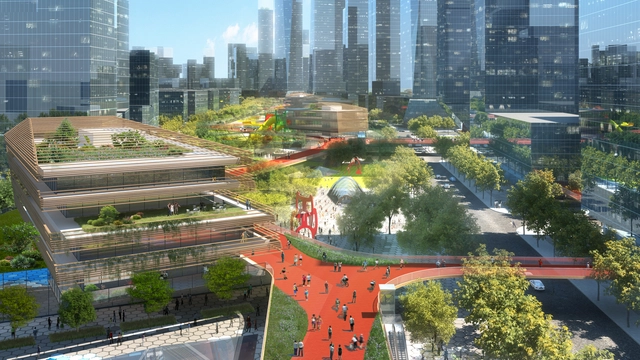
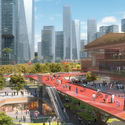
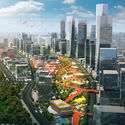
HASSELL has won a competition for the design of the Qianhai Mawan Mile, a business district for the Chinese “gateway city" of Shenzhen. Stretching over one mile (1.6 kilometers), the masterplan seeks to combine “lush parklands, new cultural buildings, and a meandering skydeck” in a vision centered on human-wellbeing.
Aimed particularly at attracting young, mobile residents in a rapidly-changing urban environment, the Mawan masterplan consists of integrated public spaces, neighborhood zones, pavilion buildings, and a mile-long (1.6-kilometer-long) skydeck weaving throughout the development.
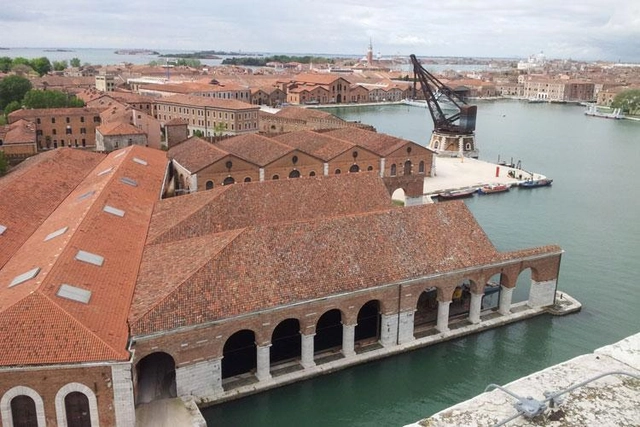
The Venice Biennale has released a list of 13 Collateral Events that will take place alongside the 16th International Architecture Exhibition, FREESPACE, curated by Yvonne Farrell and Shelley McNamara and chaired by Paolo Baratta. Previews of the main event begin May 24th and 25th, with the exhibition open to the public from May 26th to November 25th, 2018.
The collateral events, each promoted by a non-profit sponsor, will take place across the city in an attempt to enrich the diversity of voices that characterize the Biennale.
The complete list of events can be found below, and make sure to follow ArchDaily's complete coverage of the Venice Biennale.
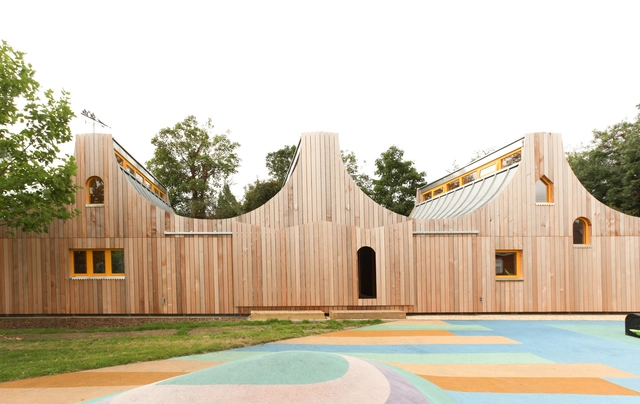
Since 1996, the Royal Institute of British Architects (RIBA) has hosted awards for exemplary buildings across the UK by RIBA Chartered Architects and RIBA International Fellows. This year, 93 projects were shortlisted out of 203 entries for the 2018 RIBA London Awards; including designs by Foster + Partners, Hawkins\Brown, Allford Hall Monaghan Morris, and Make Architects. Each project will be visited by one of five London juries during the month of April. Winners will be announced at the award ceremony on May 15th at the RIBA headquarters at 66 Portland Place, London.
Scroll down to see a complete list of the shortlisted architectural works.
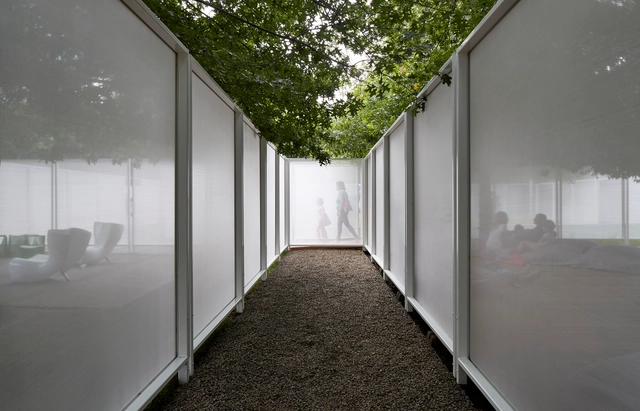
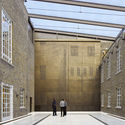
Other Architects and Retallack Thompson designed a site-specific installation in the sculpture garden at the National Gallery of Victoria in Melbourne for their inaugural NGV Triennial; an exhibition of international, contemporary art and design. Their concept? An "anti-pavilion."
.jpg?1521824916&format=webp&width=640&height=580)
The development company Fisher Brothers' "Beyond the Centerline" competition was launched in October 2017 as an open call to "enliven and activate the medians for a new generation of New Yorkers." The competition addresses the Park Avenue commercial district, which sits between 46th and 57th Streets.
Out of nearly 150 submissions, an eight-person jury narrowed the field down to 17 finalists, details of which can be found here. Two designs have since been selected as winners, with "Park Park" by Maison winning the jury selection, and "Park River" by Local Architects winning the popular vote.

Spanish architect Anna Puigjaner has revealed how she is applying her “Kitchenless” housing typology within her own projects in a recent interview with Metropolis Magazine as one of their 2018 Game Changers. After receiving funding from the Harvard GSD Wheelwright Prize for her controversial proposition in 2016 (after which ArchDaily published an interview with her), Puigjaner talks about the time she spent traveling the world and visiting the many different cultures that share her idea of communal cooking, adding that millennials are more inclined to co-habit or share resources.
The kitchen is the most provocative part of the house. It has been used as a political tool for a long time, to the point that nowadays we can’t accept living without a kitchen.

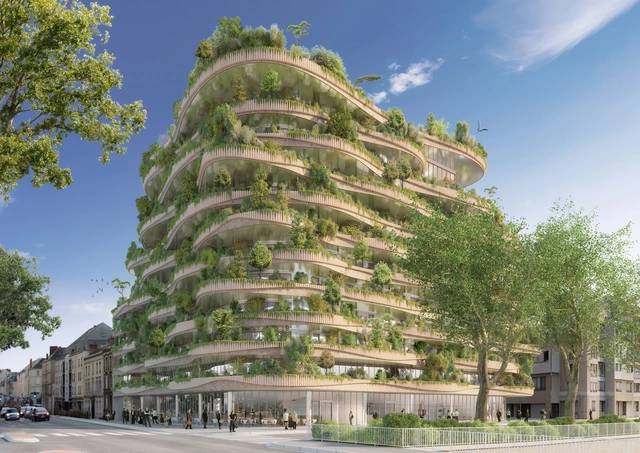
For the "Imagine Angers" international design competition, Vincent Callebaut Architectures worked in collaboration with Bouygues Immobilier group to submit a proposal for the French city at the intersection of social and technological innovation, with a focus on ecology and hospitality. Named Arboricole, meaning “tree” and “cultivation,” this live-work-play environment gives back as much to the environment as it does its users. Although WY-TO prevailed in the competition, the Callebaut scheme succeeded in winning the public vote.





_-_The_Mastaba_(Project_for_London__Hyde_Park__Serpentine_Lake).jpg?1522848242 "Courtesy of Christo")
_-_The_site_of_The_Mastaba_in_Serpentine_Lake.jpg?1522848328 "Courtesy of Christo")
_-_The_Mastaba_(Project_for_London__Hyde_Park__Serpentine_Lake)_(5).jpg?1522848162 "Courtesy of Christo")
_-_The_Mastaba_(Project_for_London__Hyde_Park__Serpentine_Lake)_(4).jpg?1522848063 "Courtesy of Christo")
_-_The_Mastaba_(Project_for_London__Hyde_Park__Serpentine_Lake)_(1).jpg?1522847854)
_David_Dare_Parker.jpg?1522822132 "© David Dare Parker")
_Richard_Watson.jpg?1522822056 "© Richard Watson")
_Richard_Watson.jpg?1522822029 "© Richard Watson")
_Gj%C3%B8de___Partnere_Arkitekter.jpg?1522822514 "© Gjøde & Partnere Arkitekter")
_Ross_Duggan.jpg?1522798592)









.jpg?1521824976 "Park Park. Image © Maison")
.jpg?1521824927 "Park Park. Image © Maison")
.jpg?1521824988 "Park River. Image © Local Architects")
.jpg?1521825000 "Park River. Image © Local Architects")
.jpg?1521824916)


