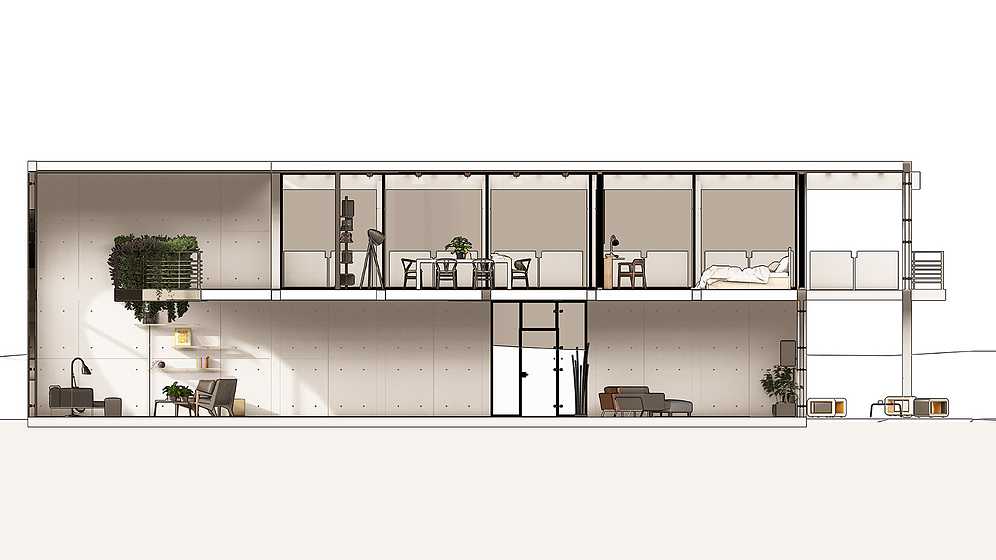
Produce personalized presentation boards that distill complex concepts into simple visual representations with a few helpful tools and effects.


Produce personalized presentation boards that distill complex concepts into simple visual representations with a few helpful tools and effects.
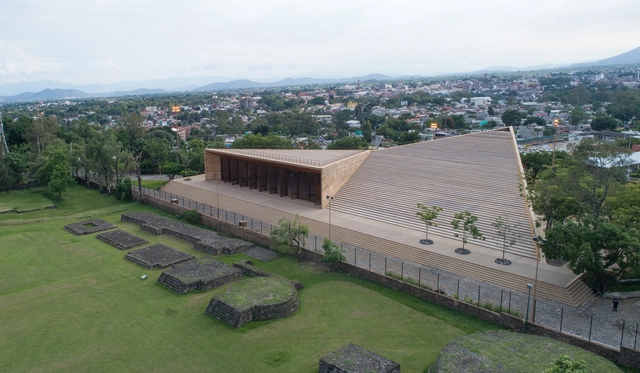
Minutes ago in Detroit, Director Dirk Denison and 2018 MCHAP Jury Chair Ricky Burdett announced the six finalists of the 2018 edition of the Mies Crown Hall America Prize. Selected from a longer list of 31 projects announced earlier this summer in Venice, these outstanding works of architecture will compete for the top honor, the MCHAP Award, which will be announced in October. The authors of the winning award will take home $50,000 to fund research and a publication and will be recognized as the MCHAP Chair in IIT’s College of Architecture.
The six finalist buildings were completed between January 2016 and December 2017. The descriptive texts, provided by the MCHAP jury, celebrate the merits of each individual project.
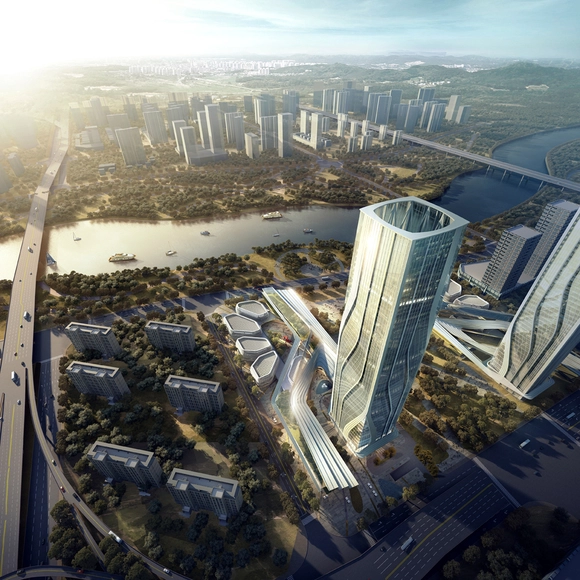
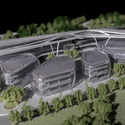
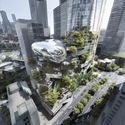
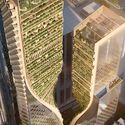
Chinese cities have been on a stride for decades, and are expected to become the world’s leading economy within the next few years. With all the ongoing architectural developments, nature remained key in most architects’ design developments, honoring the Chinese landscape and integrating it within their projects. The Zhangjiang New District is one of China’s new ongoing developments, housing numerous structures and architectural installations. Architecture firm UM has been selected to design the “City Gate,” a new iconic landmark in the New District, which will act as a transition between the extensive urbanism of Gan Zhou and its surrounding nature.
One of the main purposes of the project was to create an environment that caters to both the residential and commercial needs of the region, making the best of the project’s prominent location. The project, which was inspired by Ximeng Wang’s “Thousand Miles of Mountains and Rivers,” a timeless piece of Chinese art, reconnects the occupants with nature and allows them to experience its offerings with all their senses.

Vatican City participated in the Venice Architecture Biennale for the first time this year, inviting the public to explore a sequence of unique chapels designed by renowned architects including Norman Foster and Eduardo Souto de Moura. Located in the woods that cover the island of San Giorgio Maggiore, the chapels offer interpretations of Gunnar Asplund’s 1920 chapel at Woodland Cemetery in Stockholm, a seminal example of modernist memorial architecture set in a similarly natural wooded context.
A new video produced by Spirit of Space offers a brief virtual tour of the structures that make up the Holy See’s pavilion, lingering on each just long enough to show different views and angles. As members of the public circulate through the chapels in each shot, the scenes give an impression of how each chapel guides circulation.

The Hungarian artist László Moholy-Nagy was one of the most influential thinkers, designers and art educators of the first half of the twentieth century. His experimentation with light, space and form generated international attention. Among those impressed by Moholy-Nagy's work was Walter Gropius, German architect and founder of the Bauhaus School, who made Moholy-Nagy one of the youngest instructors in the history of the Bauhaus. In his time at the Bauhaus, Moholy-Nagy utilized multi-disciplinary art practices to revolutionize abstract artistic media.
But who was the man?

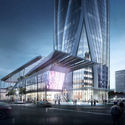
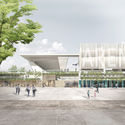
Los Angeles-based studio EC3 has revealed its design entry for a new 14.5-acre, cultural & sports center in Shenzhen’s growing Dalang neighborhood, hosted by the Shenzhen Longhua District Government and the Vanke Real Estate Co.
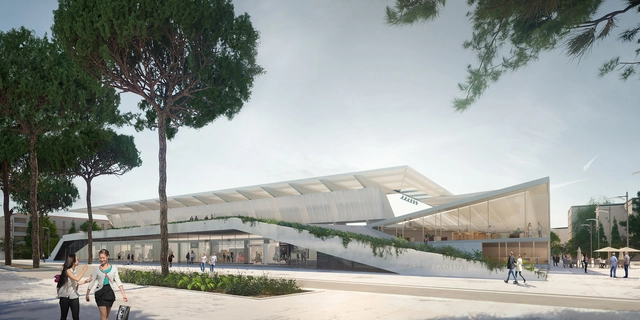
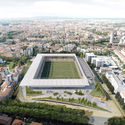
Iotti + Pavarani Architetti have designed a 'New Pisa Stadium' for A.C. Pisa on an existing stadium just 200 meters away from Piazza dei Miracoli (home to the Leaning Tower of Pisa). After winning the first prize in a restricted competition in 2017, the project is currently under feasibility study, awaiting construction development.

Thyssenkrupp Elevator, one of the world’s largest elevator companies, has revealed images of their proposed headquarters near The Battery Atlanta in Cobb County, Georgia. The headquarters will take the form of a “state-of-the-art 420-foot (128-meter)-tall elevator qualification and test tower, the tallest of its kind in the U.S. and one of the tallest in the world."
Featuring 18 shafts, the tower will be a testing ground for new concepts and product pilots, including high-speed elevators, two-cabins-per-shaft systems, and the world’s first cable-free and sideways-moving elevator systems.





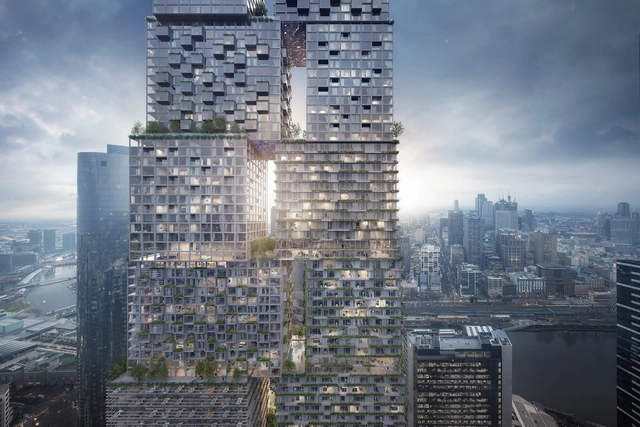
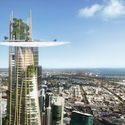
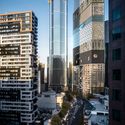
A prominent shortlist including BIG, OMA, and UNStudio have revealed their visions for Melbourne’s landmark Southbank Precinct overhaul. The $2 billion project will be the largest single-phase project in the history of Victoria, Australia, intended as “a state-of-the-art, mixed-use environment” to be “centered around innovation in architecture and design.”
The six shortlisted schemes include twisting towers, interlocking blocks, and stacked neighborhoods, all focusing on the 6,000-square-meter BMW Southbank site. The designs were revealed at a public symposium on July 27th featuring speakers from the shortlisted firms.
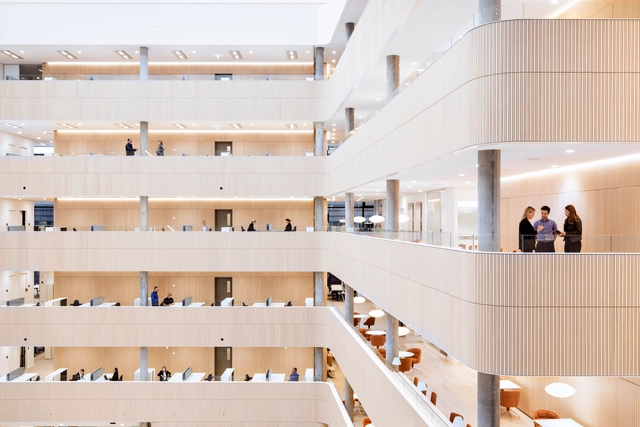
On July 2nd, the National Council of Architectural Registration Boards (NCARB) released a new set of model ethical standards that they hope will be adapted by their regional licensing boards, in turn setting a precedent for ethical standards across the American architecture profession. While in the past, the NCARB’s ethical standards have largely addressed professional issues like the role of the architect to ensure public safety and his or her transparency when interacting with clients, the updated document focuses on personal concerns that often overlap with the workplace.
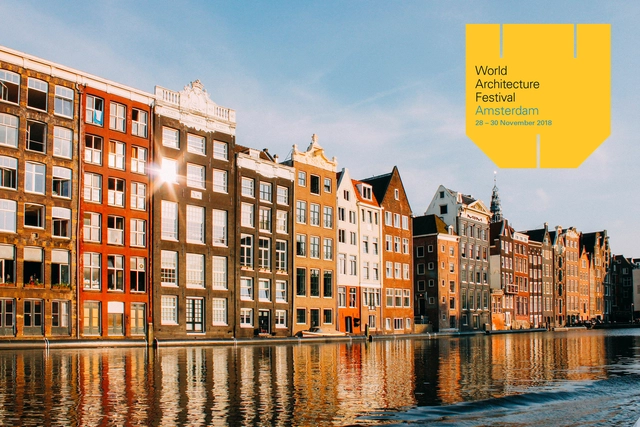
After two years in Berlin, the World Architecture Festival will move their 2018 edition to Amsterdam for three days of talks, design presentations, and award ceremonies featuring cutting-edge contemporary works and some of the most prominent figures in architecture today.
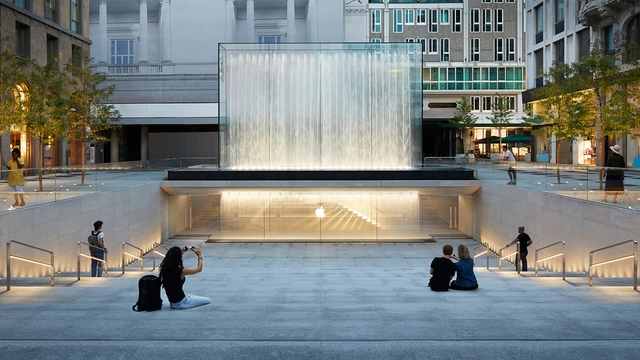
Apple’s Piazza Liberty Store, designed by Foster + Partners, has opened to the public in Milan, Italy. The scheme is located under an existing piazza close to the Corso Vittorio Emanuele, one of the most popular pedestrian streets in Milan.
The store is defined by a dramatic waterfall which surrounds the entrance while forming the backdrop to a large outdoor amphitheater. Piazza Liberty is the first Apple Store to be constructed in Italy following their retail design collaboration with Foster + Partners.
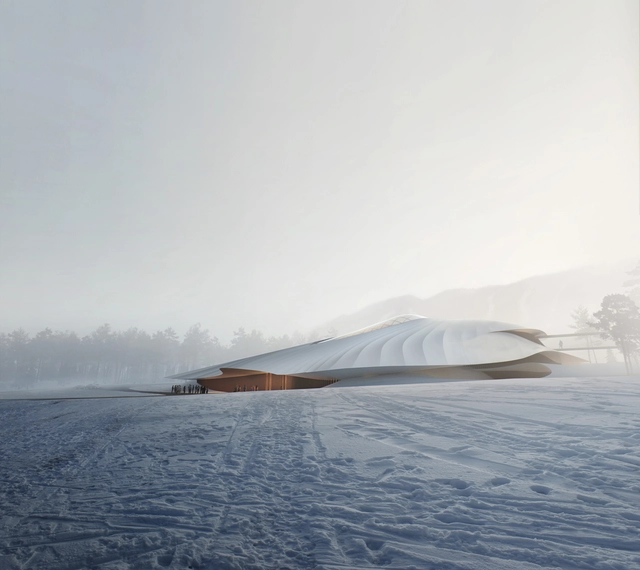
The groundbreaking ceremony has occurred for MAD Architects’ China Entrepreneur Forum Conference Centre, settled in the mountains of Yabuli in Northeastern China. A snow-capped mountainous landscape known for its rugged terrain and freezing temperatures, Yabuli is home to the annual summit of the China Entrepreneur Forum (CEF) considered to be the “Davos of Asia.”
MAD’s scheme, also referred to as the “Yabuli Conference Centre” seeks to embody and showcase the “ambitions, ideologies, and forward critical thinking of CEF members” through a tent-like structure defined by soft, sloping lines.
.jpg?1532615893&format=webp&width=640&height=580)
The Harvard Graduate School of Design (Harvard GSD) has selected Herzog & de Meuron and Beyer Blinder Belle as the design team for a “significant transformation” of the School’s iconic Gund Hall campus building.
The proposed expansion will include the integration of a new space into the School’s existing structure, with the goal of creating a facility which “will embody the School’s visionary and cross-disciplinary work at the intersection of design, pedagogy, research, and practice."
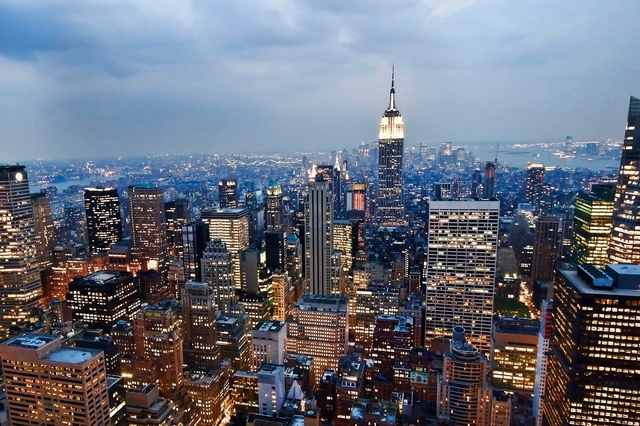
The Center for Globalization and Strategy from Barcelona’s IESE Business School has unveiled its annual list of the world’s smartest cities. In its fifth year, the IESE Cities in Motion Index has calculated the performance scores for 165 cities across 80 countries based on an exhaustive rubric of economic and social indicators. Familiar global power centers have maintained their position at the top of the heap, while expanded categories of assessment have helped a few small cities advance their position drastically.
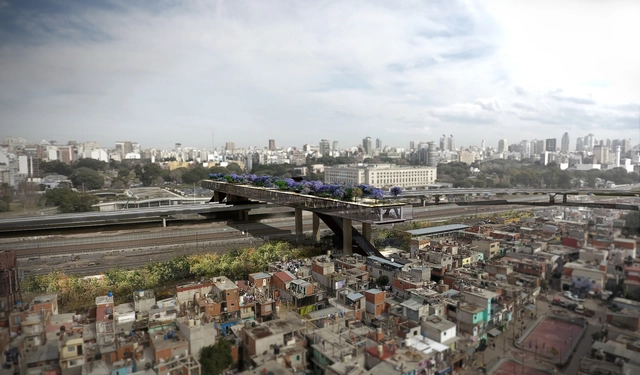
ELEMENTAL, the architecture office led by Alejandro Aravena, has proposed a solution to the physical integration of Villa 31 in the city of Buenos Aires. The building includes a raised linear park that aims to be the new headquarters for the Southern Cone of the Inter-American Development Bank Group and to facilitate access of the residents of the neighborhood to other areas of the city.
Learn more about the project, below.

Cornell University has named J. Meejin Yoon as the next dean for the School for Art, Architecture and Planning. Yoon, co-founder of Boston-based practice Höweler + Yoon, is the first woman to be named dean in the school’s 122-year history. She moves to Cornell after serving as dean for the architecture School at MIT, where she has been on faculty since 2001.
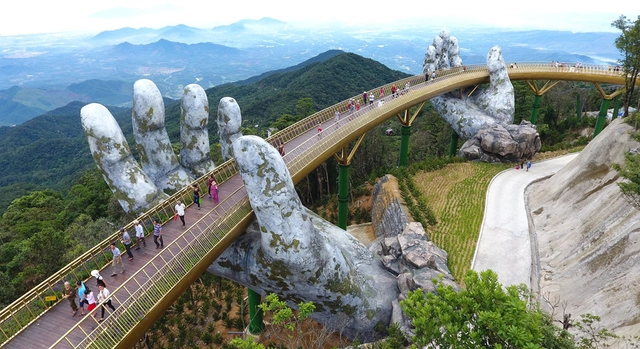
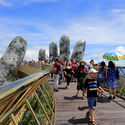
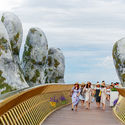
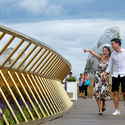
In the mountains above Da Nang, Vietnam sits a unique piece of bridge design. Winding its way around a 150-meter course lined with flowers, a golden bridge shimmers against the Ba Na Hills, supported by a pair of giant hands.
The Golden Bridge opened to visitors in early June, in the tourist retreat of Thien Thai Garden. The bridge sits 1,400 meters above sea level, an altitude which creates the illusion of a silk strip hiding in the clouds above Da Nang.

AI SpaceFactory has released details of their proposed cylindrical huts for the Planet Mars, designed as part of the 3D Printed Habitat Challenge organized by NASA. Project MARSHA (Mars HAbitat) was endorsed by NASA with a top prize of almost $21,000, one of five designs selected from a field of seventeen.
The competition asked participants to design an effective habitat for a crew of four astronauts to be located on the Red Planet, using construction techniques enabled by 3D printing. The submitted schemes were then ranked based on their innovation, architectural layout, and level of detail in BIM modeling.
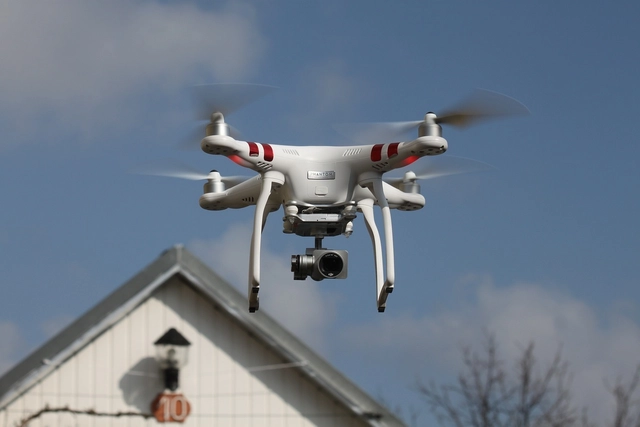
On construction sites, workers are increasingly using drones to do what humans can’t. In the past, we’ve covered brick-laying drones, their impact (for better or worse) on the urban environment, and how the technology can help improve the accuracy of architectural renders. CNBC recently reported on how drones can be used to take aerial photos of construction sites at hard-to-reach angles—an innovation that has caused drone sales to sharply increase. According to the article, "construction drone usage has skyrocketed by 239 percent year over year."
A skyscraper in Guiyang, China, has attracted headlines thanks to a daring water feature built into its facade. On one side, the 121-meter (397-foot) tall Liebian Building in Guiyang, China, features a spectacular waterfall, providing a dramatic spectacle from the plaza below. At 108-meters (350-feet), the waterfall is among the tallest artificial waterfalls in the world—and easily the largest artificial waterfall located in an urban area, with other record breakers being artificial additions to river and canal networks.
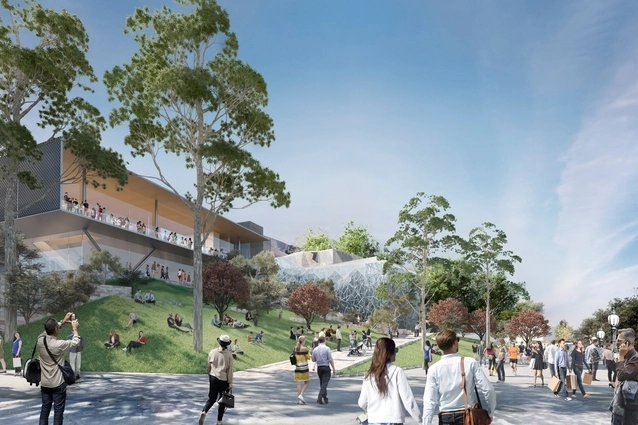
New images have emerged of the revised Foster + Partners-designed Apple Global Flagship Store at Federation Square in Melbourne after the original proposal attracted criticism and comparisons to a “Pizza Hut Pagoda.”
The revised scheme has been the result of workshops involving Fed Square Management, the Victorian Government, the City of Melbourne, and Apple, with input from Donald Bates, chair of architectural design at the University of Melbourne.
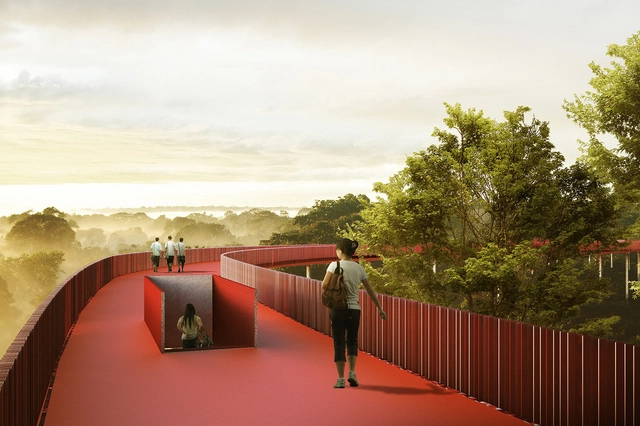
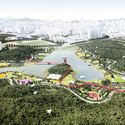
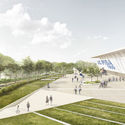
LOLA Landscape Architects, Taller Architects, and L+CC have released images of their competition-winning design for a 600-hectare forest and sports park in Guang Ming, Shenzhen, China. Commissioned in response to the exploding technology industry in the Shenzhen metropolitan area, the park will place an emphasis on health, sports, and nature to offer an ecological counterpoint to dense urban surroundings.
The winning collaboration saw off competition from JCFO, SWA, and TCL, with the competition jury praising the scheme for its “fresh approach and [for] being highly attentive to local ecology [while] meanwhile incorporating romantic techniques and realistic urban visions.”
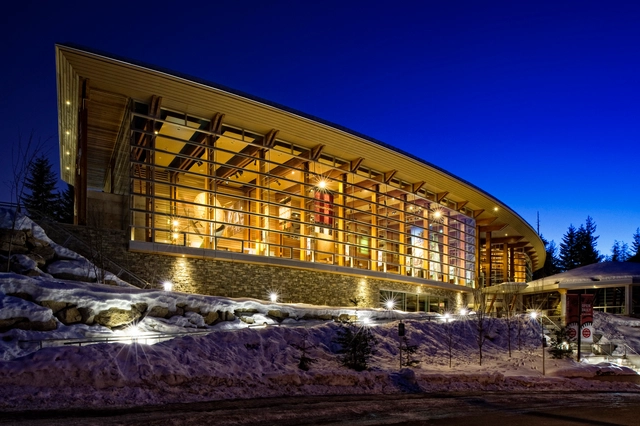
Indigenous co-design—a more specific form of the general concept of co-design in which an architect collaborates with a stakeholder community—is a collaborative design process between architects and the Indigenous community as the client. The Royal Architectural Institute of Canada (RAIC) recently released a unique resource aimed at designers, clients, funders and policymakers looking for a guide in Indigenous co-design.
Four Case Studies Exemplifying Best Practices in Architectural Co-design and Building with First Nations builds on the success of the RAIC International Indigenous Architecture and Design Symposium held in May 2017. The four case studies set out to explore best practices in Indigenous co-design in the context of three First Nations and one Inuit community in Canada, with one case study selected from each of the four asset classes: "schools, community and cultural centers, administration and business centers, and housing."








.jpg?1532615939 "The Trays at Gund Hall. Image Courtesy of Harvard GSD")


.jpg?1532615893)